
FREE SHIPPING
within mainland USA
within mainland USA

Comparing an outdoor sofa vs loveseat vs sectional is less about finding the configuration with the most seats and more about identifying how your household actually uses the patio. The right choice should support your normal number of users, preferred style of conversation or lounging, and desired layout flexibility without overwhelming the space.
This scenario-based comparison will help you identify the strongest starting configuration. Once you have a leading option, you can evaluate individual products against your patio’s measurements, circulation paths, and focal points.
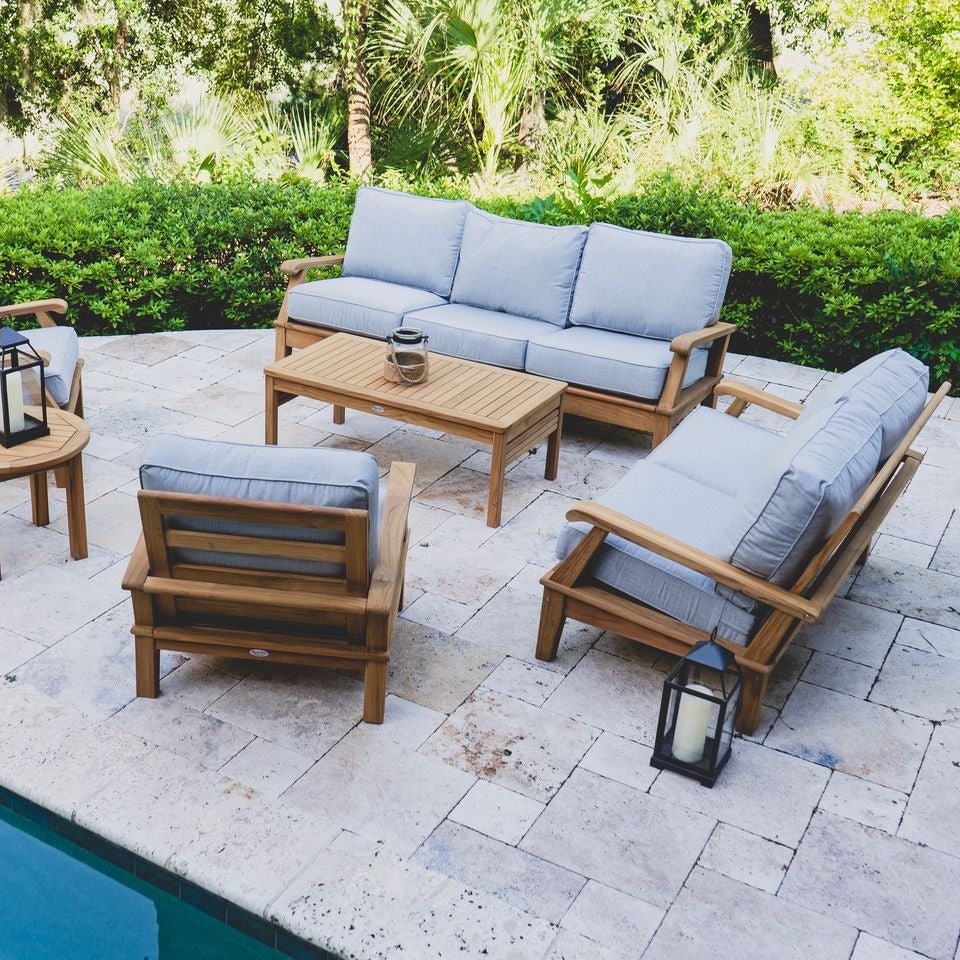 Start with the people and activities that define an ordinary week—not the largest gathering you might host once or twice a year. A central seating piece that suits daily life can often be supplemented with separate chairs when more guests arrive.
Ask how many people regularly sit together on the patio. A couple may be well served by a loveseat, while a household that routinely gathers three or more people may benefit from a sofa or sectional. Then consider peak occupancy separately: if larger gatherings are occasional, movable chairs may be more practical than permanently dedicating the patio to a large sectional.
Nominal seat count is only a starting point. Cushion divisions, arm placement, individual comfort preferences, and the way people spread out can all affect usable capacity. Confirm the specifications of the particular product rather than assuming every sofa, loveseat, or sectional accommodates the same number of people.
Conversation-oriented patios usually benefit from seats facing one another. A sofa or loveseat can act as one side of that arrangement, with chairs positioned across from or beside it.
Shared lounging creates a different priority. If household members regularly stretch out, put their feet up, or settle in together for long evenings, a sectional’s connected seating may be valuable. A sofa paired with an ottoman can preserve more layout flexibility, but it will not create the same continuous corner arrangement.
A dedicated lounge area can support a stable, substantial configuration. A multipurpose patio used for entertaining, dining overflow, or changing seasonal activities generally benefits from furniture that is easier to move and reorient.
The more often the space changes roles, the more valuable separate pieces become. That does not automatically rule out a sectional, but it raises the importance of confirming whether the specific sectional is modular and how its individual components can be arranged.
A full-size outdoor sofa is often the strongest all-around choice when you want meaningful seating capacity without committing the patio to a corner-shaped arrangement. It establishes an obvious visual anchor while leaving other sides of the conversation area available for chairs, tables, or open circulation.
A sofa is especially well suited to households that want:
You can begin by comparing available teak outdoor sofas, but check each product’s stated capacity, overall dimensions, cushion configuration, and assembly details individually.
A sofa can establish the main orientation of the space while separate teak club chairs complete the conversation area. The chairs can face the sofa for a traditional arrangement, turn toward a view, or move closer together when a smaller group wants a more intimate setting.
This approach is useful when weekday and entertaining needs differ. The permanent central piece remains simple, while the surrounding seats absorb changes in group size. The tradeoff is that the group will not have the same continuous, connected seating surface provided by a sectional.
A loveseat is not merely a compromised sofa. It can be the most deliberate choice for a couple’s retreat, a compact conversation zone, or a patio where the central seat should support rather than dominate the overall design.
Choose a loveseat when two adults are the typical users and they primarily sit upright, read, talk, or enjoy a drink together. It can provide a more intimate center than separate chairs while preserving room for circulation, tables, planters, or an open view.
A loveseat can also serve as the main piece when guests are usually accommodated in separate chairs. Buyers who recognize this use pattern can compare teak outdoor loveseats without assuming that all models have identical dimensions or seating proportions.
On a larger patio, a loveseat can define one side of a conversation area without creating the visual weight of a full sofa. It may also support a smaller zone located apart from the primary entertaining area, such as a garden-facing corner or quiet space near a bedroom.
The main limitation is capacity. If three or more household members routinely want to share the central seat, a loveseat may create daily competition for space. In that scenario, a sofa is usually the more balanced choice unless substantial companion seating is already part of the layout.
A loveseat’s smaller relative footprint does not guarantee that it will fit comfortably. Arm width, frame depth, cushion profile, and surrounding pathways vary. Treat “loveseat” as a configuration category—not a substitute for checking the exact product and patio dimensions.
A sectional is the strongest candidate when people regularly want to sit together in one connected arrangement. It can make a lounge area feel cohesive, make productive use of a corner, and support the relaxed behavior of a household that spends long stretches outdoors.
A sectional becomes especially compelling when:
These are stronger reasons than seat count alone. A sectional can provide numerous sitting positions, but corner areas and personal-space preferences may affect how many people use it comfortably at the same time.
A sectional influences more than the area beneath its frame. Its shape establishes an orientation, occupies two directions at once, and can affect how people move into and through the seating area. This can be an advantage in a generous, dedicated lounge zone but a constraint on a narrow or multipurpose patio.
It can also be less convenient when you frequently turn seating toward different focal points. Before choosing one, confirm whether the particular product is modular. Do not assume that every component can be separated, reversed, or rearranged in every direction.
If connected seating matches your household’s habits, compare the component structures and stated specifications of available teak sectional sets.
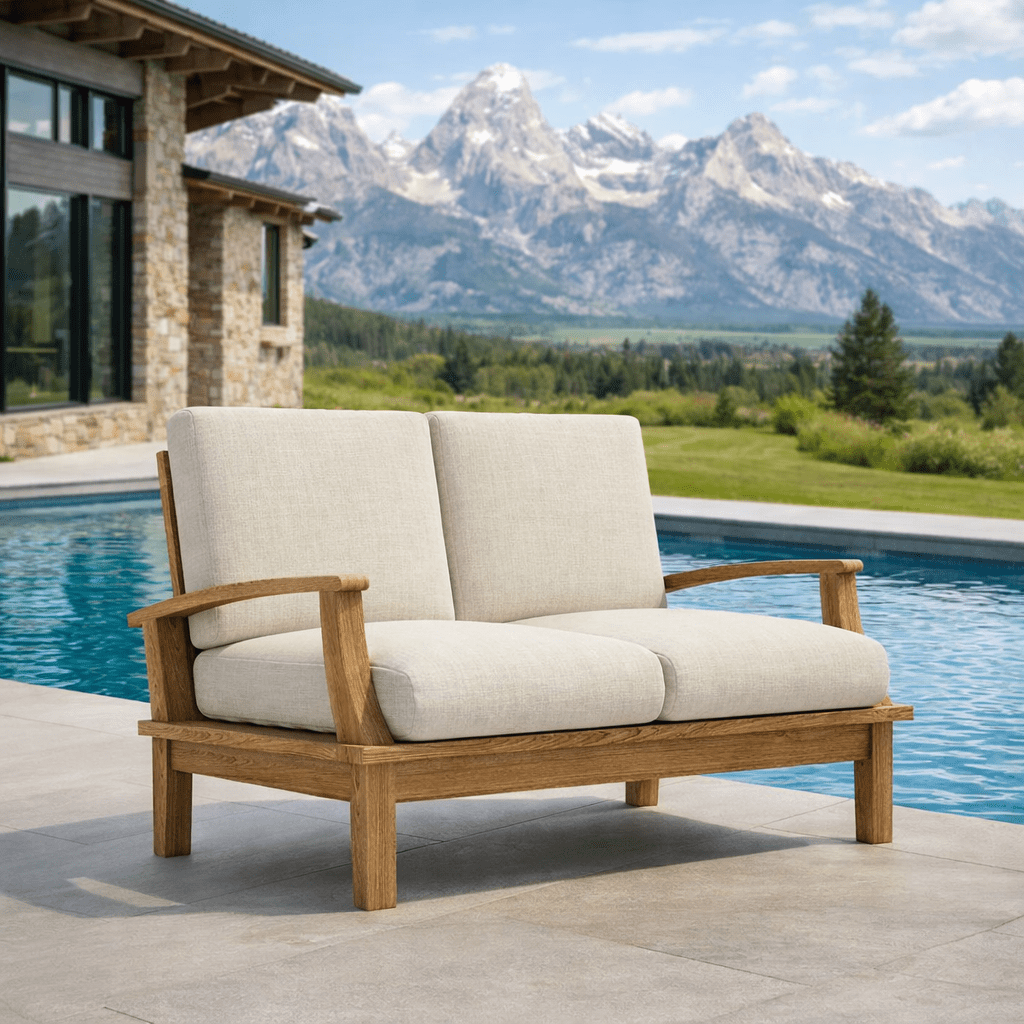 The best configuration becomes clearer when you compare how each option behaves in the space rather than simply counting advertised seats. Use the following matrix as a starting point, then verify the individual product’s specifications.
| Decision factor | Loveseat | Sofa | Sectional |
|---|---|---|---|
| Typical users | A couple or small household with companion chairs | A household wanting balanced everyday capacity | A household or group that regularly sits together |
| Social style | Intimate seating or a smaller conversation zone | Conversation centered on one clear anchor | Connected, cohesive group seating |
| Lounging behavior | Best when two-person upright seating is sufficient | Supports sitting or individual lounging | Strong for shared lounging and corner seating |
| Visual presence | Relatively restrained | Substantial but straightforward | Usually the strongest spatial and visual anchor |
| Orientation flexibility | Easy to use as a main or secondary anchor | Easy to point toward one focal feature | More dependent on component shape and modularity |
| Ease of reconfiguration | High when paired with movable chairs | High to moderate, depending on companion pieces | Product-dependent; verify whether pieces are modular |
| Main buying risk | Too little everyday central seating | Assuming all sofas have the same capacity | Underestimating its effect on circulation and orientation |
A useful decision rule is to choose the smallest central configuration that comfortably supports recurring use while preserving the flexibility you value. That may still be a sectional for a family that lounges together daily. For a couple that entertains occasionally, it may be a loveseat or sofa supported by movable chairs.
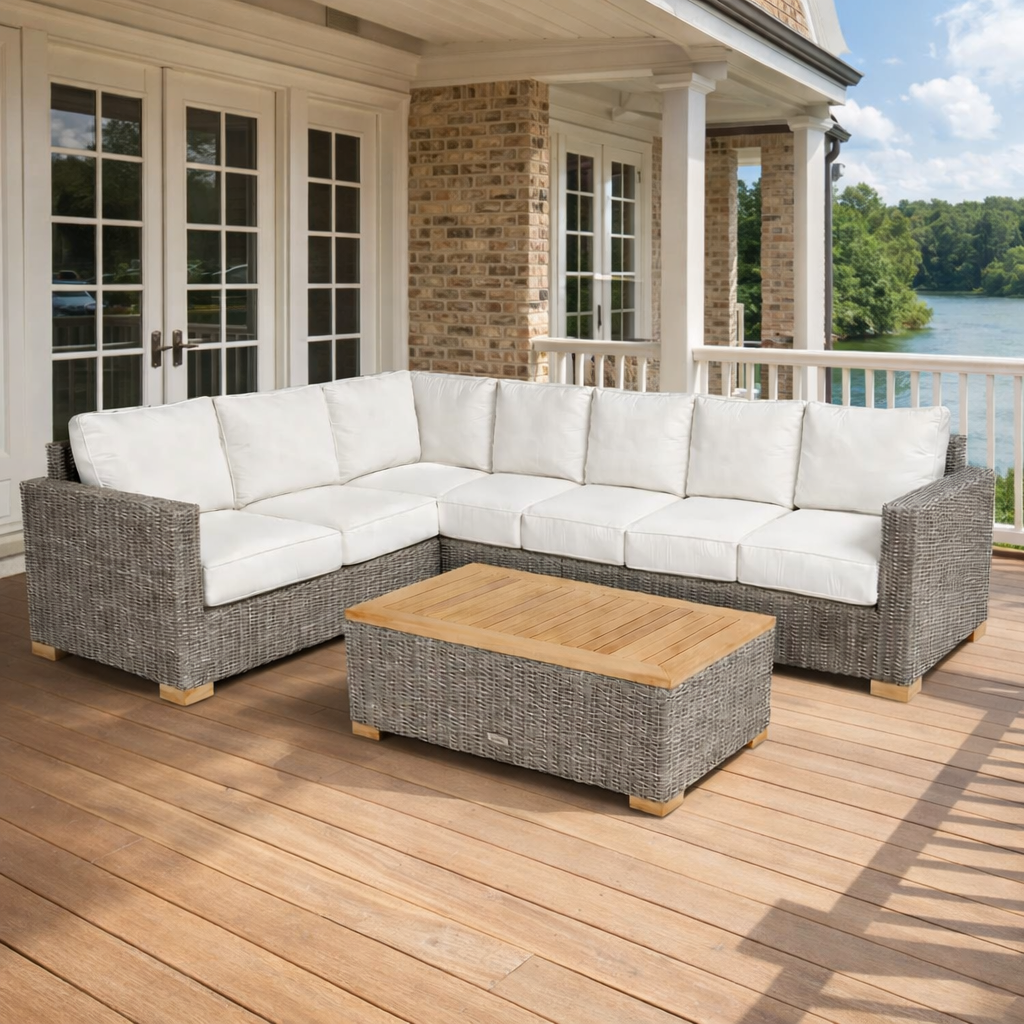 These common scenarios can help you identify a leading option. They are starting points rather than universal prescriptions because the final answer still depends on the particular furniture and patio.
Start with a loveseat if two-person conversation is the patio’s primary purpose and both users prefer upright seating. Choose a sofa instead if either person likes to stretch out or if a third household member joins regularly. A sectional is more likely to be worthwhile when the couple frequently lounges for extended periods and wants a generous, connected arrangement.
Start with a sofa when the goal is to establish one clear central piece and arrange separate chairs around it. This format distributes people across the conversation area and allows chairs to move as the group changes.
If the family strongly prefers sitting together instead of facing one another, a sectional may better reflect actual behavior. The deciding factor is not which option appears to hold more people, but whether the household prefers connected lounging or a flexible face-to-face layout.
Start with a sectional when gatherings consistently form one large, informal group and the patio has a dedicated place for it. Start with a sofa plus chairs when guests tend to form smaller conversations or when the layout needs to change between events.
If the next question is whether to obtain coordinated companion pieces or select each item independently, treat that as a separate purchasing decision. TeakHQ’s multi-piece teak lounge sets provide one browsing path, while individual pieces allow a more customized combination.
Start with a sofa when most users should face one view or focal feature. Its single-direction form makes the orientation easy to understand, while movable chairs can turn toward either the focal point or the other guests.
A loveseat provides the same directional clarity with less visual presence. A sectional can work well if its return follows the edge of the patio without placing too many users sideways to the view. Component orientation matters more here than nominal capacity.
Start with a sofa or loveseat supported by separate chairs. This keeps the everyday layout proportional to the household while allowing more seats to be introduced or repositioned for guests. A sectional is the stronger option only if its connected form remains useful during both quiet weekdays and larger gatherings.
The outdoor sofa vs loveseat vs sectional decision should follow your household’s recurring use pattern. Choose a sofa for balanced capacity and a clear focal point, a loveseat for intentional two-person or secondary seating, or a sectional for connected group lounging in a space that can support its stronger footprint.
Once you can name a leading configuration, verify it against the actual patio and product specifications. You can then compare the appropriate collection or browse the broader selection of teak patio seating to see how each format could function in your outdoor space.
It can be, but comfort depends on the loveseat’s dimensions, cushion layout, and how each person prefers to sit. A loveseat is generally better for two adults sitting together than for both adults stretching out, so check the specifications of the individual product.
No. Sectionals often offer more sitting positions, but corners, component shapes, and personal-space preferences affect usable capacity. Compare the stated capacity and configuration of the specific sectional and sofa rather than relying on the category name.
A sofa or loveseat paired with separate chairs is usually the most flexible arrangement. Sectional flexibility varies by product, so confirm whether its components are modular and which arrangements they support.
Yes. A loveseat can be the main piece for a couple, a compact conversation area, or a patio where guests use separate chairs. It is less suitable when three or more people regularly expect to share the central seat.
Usually. A sofa faces one primary direction, making it a straightforward anchor for a view or fireplace. A sectional can also work, but its return may position some users sideways unless the component arrangement suits the focal point.
A sofa or loveseat with movable chairs usually adapts best to changing needs. The central piece serves the everyday household, while chairs can be repositioned or added for larger gatherings.
Yes. Separate chairs can expand capacity and create a more adaptable conversation area around a loveseat or sofa. This approach is particularly useful when guest seating is needed occasionally rather than every day.


