
FREE SHIPPING
within mainland USA
within mainland USA
Home ▸ Teak Outdoor Furniture ▸ By Location ▸ San Diego, California
San Diego gives homeowners an unusually long outdoor-living season, but the furniture environment changes quickly between oceanfront neighborhoods and warmer inland communities. Coastal air, sun exposure, marine-layer moisture, poolside use, and occasional dry offshore weather all deserve consideration when furnishing a patio, terrace, deck, or backyard. Premium Grade A teak is especially worth considering here because it combines natural outdoor durability with a warm material character that fits everything from La Jolla coastal homes to Rancho Santa Fe estates.

San Diego is often described simply as having mild weather, but that description is not specific enough for someone investing in premium outdoor furniture. A patio near the ocean in La Jolla or Coronado experiences a different combination of moisture, marine air, morning cloud cover, and salt exposure than a larger backyard farther inland. Furniture selection should account for where the property sits, how exposed the space is, and whether the furniture will serve as occasional seating or effectively function as another room of the home.
One of the most useful distinctions to make is not simply “San Diego versus somewhere else,” but coastal San Diego versus inland San Diego. Pacific influence moderates temperatures near the coast, while inland properties can experience considerably warmer, drier afternoons. Coastal furniture may spend more time around moist air and morning cloudiness; inland furniture may receive longer periods of direct sun and heat.
That difference affects more than durability. It influences cushion use, shade planning, furniture placement, and how often surfaces need cleaning. A homeowner near Del Mar may prioritize airflow and easy cleanup from coastal residue, while someone in Poway or an inland Rancho Santa Fe property may think first about shade and direct afternoon exposure.
San Diego's marine layer commonly brings low clouds and moist coastal air during portions of the year, especially near the ocean. That does not mean outdoor furniture needs to be stored every night, but it does make materials that tolerate routine outdoor moisture more attractive. It also makes ventilation important: cushions, furniture covers, and tightly enclosed patio areas should be allowed to dry rather than remaining damp for extended periods.
For oceanfront or near-ocean homes, salt carried by air and spray adds another practical issue. No outdoor material should be treated as immune to salt accumulation. Periodic rinsing and cleaning remain sensible, particularly around hardware, moving components, and frequently touched surfaces.
Cool ocean breezes can make an exposed San Diego patio feel comfortable even while furniture is receiving hours of sunlight. That distinction is easy to overlook. Comfort for people and exposure for furniture are not the same thing.
Premium outdoor materials should therefore be selected for sustained sun exposure as well as temperature. Grade A teak is designed for year-round outdoor use and can withstand sun and changing weather. Its appearance will evolve: untreated teak naturally transitions from its original golden-brown color toward a silver-gray patina. Buyers who want the original color should plan for optional cosmetic maintenance rather than assuming any natural wood will remain visually unchanged outdoors.
Pool patios are common in San Diego's larger residential properties and introduce repeated wet-dry cycles, damp towels, bare feet, and furniture that may be moved frequently. The best poolside layout is therefore not simply the one that fits the maximum number of loungers. Good spacing, circulation, side-table access, and a practical route between the pool and house are equally important.
For poolside furniture, we would generally favor outdoor-rated materials that are comfortable to live with even when frequently exposed to water. Teak's natural moisture resistance makes it a particularly logical wood choice for this environment.
Several premium materials can work well in San Diego. Aluminum offers a lighter, more contemporary feel, while synthetic materials can reduce some maintenance concerns. Teak becomes especially compelling when a homeowner wants the warmth and architectural presence of real wood without choosing a species that requires artificial stain or extensive protection simply to remain outdoors.
 Premium Grade A teak has a dense grain structure and is naturally high in oils. Those characteristics contribute to its resistance to moisture, rotting, insects, and warping and are a major reason teak has such a long history as an outdoor wood.
That matters in San Diego because furniture can move through several environmental conditions without ever leaving the patio: cool damp mornings, bright afternoon sun, seasonal rain, and repeated use around pools. A material that is fundamentally suited to outdoor exposure is more practical than one that depends on a fragile surface coating for basic durability.
Outdoor buyers sometimes treat any visible weathering as deterioration. With teak, that is an important misconception to avoid. Natural unfinished teak gradually develops a silver-gray patina when exposed to the elements. That color change is expected and does not mean the furniture has ceased to be appropriate for outdoor use.
Homeowners who like the relaxed appearance of weathered teak can allow the process to happen naturally. Those who prefer the original golden color can use appropriate teak care products. The advantage is choice: maintenance can be driven largely by the appearance you want rather than by a requirement to paint or artificially stain the wood for durability.
Teak's natural moisture and rot resistance is particularly useful around coastal patios, outdoor showers, pools, and spaces that experience marine moisture. That should not be interpreted as permission to ignore cleaning or drainage. Organic debris can still collect, cushions still need to dry, and coastal residue should still be removed periodically.
The more useful point is that the wood itself is designed for outdoor exposure. For homeowners who want substantial furniture that can remain outside through San Diego's normal seasonal changes, that simplifies ownership.
Teak is heavier and more substantial than many lightweight patio-furniture options. On small balconies where furniture is frequently rearranged, lighter pieces can sometimes be more convenient. On larger terraces, exposed decks, pool areas, and permanent entertaining spaces, however, the sturdier feel of teak can be an advantage.
This is one reason we tend to like teak most in outdoor areas that are treated as real extensions of the home rather than temporary seasonal setups.
Premium Grade A teak has a higher initial price than many mass-market outdoor furniture materials, so the appropriate question is not whether teak costs more upfront. It usually does. The better question for a long-term San Diego homeowner is how many years the furniture is expected to serve the property.
Quality teak furniture can last for decades rather than seasons. For homeowners furnishing a permanent pool deck, ocean-view patio, or estate terrace, that longer ownership horizon can make the initial investment easier to justify.
| San Diego Challenge | Why Premium Grade A Teak Performs Well |
|---|---|
| Coastal moisture | Naturally high oils and dense grain help resist moisture and rot. |
| Marine-layer mornings | Designed for year-round outdoor exposure and changing weather. |
| Direct sunshine | Built for outdoor sun exposure; untreated teak naturally develops a silver-gray patina. |
| Poolside wet-dry cycles | Natural moisture resistance makes teak well suited to regularly wet outdoor areas. |
| Seasonal rain | Teak can remain outdoors without paint or artificial stain for durability. |
| Temperature changes | Dense Grade A teak is resistant to warping and designed for temperature fluctuations. |
| Coastal residue | Durable outdoor construction allows routine cleaning; salt accumulation should still be rinsed away. |
If we were walking a San Diego property with you, we would not start by asking which furniture collection you like. We would start with three questions: where do you naturally spend time outside, where does the afternoon sun land, and how many people does the space need to handle on a normal weekend versus a larger gathering? Those answers usually determine the furniture plan more reliably than patio dimensions alone.
A common mistake in large outdoor spaces is furnishing the perimeter first and figuring out the purpose later. We would reverse that process. Identify the activity that draws people outdoors—dinner, conversation, swimming, sunset views, grilling—and make that the primary zone.
For many San Diego homes, outdoor dining deserves first priority. A six- or eight-person teak dining area works well for family meals without overwhelming the patio, while homeowners who regularly host extended family or larger gatherings may want ten or more seats.
San Diego's long outdoor season means the patio often has to work for both ordinary weekday dinners and larger weekend gatherings. That makes extendable teak dining tables especially useful: the table does not need to occupy its maximum footprint every day simply because you occasionally host a crowd.
This is one of the more practical planning principles for high-end outdoor spaces: size furniture for how you live most of the time, then build flexibility for the exceptions. Oversizing every piece for your largest annual party can make a patio less pleasant for the other 360-plus days of the year.
On larger properties, we would rarely make a dining set do all the work. A separate deep-seating area gives guests somewhere to move after dinner and makes the outdoor room useful even when no meal is being served.
Place this area according to the property rather than automatically centering it under a patio cover. Ocean-view homes may orient seating outward. Pool properties often work better with the seating turned partly toward the pool so adults can converse while maintaining visual connection to swimmers. Courtyards can use inward-facing seating to create a more intimate room.
If the home has a pool, we would dedicate actual square footage to lounging rather than squeezing chairs into whatever remains after dining furniture is installed. Allow walking paths behind loungers and include a side surface for drinks, phones, sunscreen, and towels.
Another useful rule is to match the number of loungers to real use, not the number that physically fits. Four well-spaced loungers with accessible tables often create a better pool deck than six crowded into the same footprint.
The final layer is usually not another large furniture group. It is the smaller piece that makes the main seating more useful: a side table beside a club chair, an ottoman, a serving surface near the dining area, or a bench at a garden edge.
Those secondary pieces matter particularly on San Diego properties with multiple outdoor destinations. A bench overlooking landscaping or a pair of chairs positioned for sunset can turn an otherwise decorative part of the yard into a place people actually use.
Start with the collection that supports your most frequent outdoor activity. Frequent hosts should begin with dining sets or extendable tables; pool-focused homes should begin with chaise loungers; large covered patios and resort-style backyards often benefit most from sectional or multi-piece lounge seating. Smaller complementary collections can then be added around that primary use instead of furnishing the entire property at once.
Outdoor living in San Diego is less seasonal than it is in much of the country, which changes how furniture should be planned. Instead of pulling a patio set out for a short summer, many homeowners use outdoor spaces repeatedly across the year—for dinners, pool afternoons, neighborhood gatherings, quiet mornings, and evenings with guests. That encourages more permanent, room-like layouts.
In many climates, outdoor dining furniture is event furniture: it comes out when the weather is ideal. San Diego patios can serve a more routine role. Breakfast outside, weekend lunches, family dinners, and evening entertaining can all happen in the same space across much of the year.
That makes dining comfort and table scale more important than they might appear in a showroom. If the table will be used weekly rather than occasionally, allow enough clearance for chairs to pull out comfortably and enough tabletop space that guests do not feel crowded around serving dishes.
In larger inland and estate properties, the pool deck frequently functions as more than a place to swim. It becomes a social zone where adults sit, children move between water and patio, food is served, and guests remain for hours.
For that reason, pool furniture should include more than loungers. A complete plan may combine chaises with a deep-seating group, side tables, shade, and a nearby dining zone. The strongest pool layouts separate active circulation from relaxed seating rather than forcing everyone through the same narrow path.
La Jolla, Del Mar, Point Loma, Coronado, Encinitas, and other coastal communities introduce a design problem worth treating differently: the view may be the most valuable feature of the outdoor space. Furniture should support it rather than compete with it.
That often means avoiding an oversized seating group directly against the view corridor. Lower lounge furniture, carefully positioned dining tables, or pairs of chairs can preserve sightlines while still making the terrace comfortable. In a view property, open space can be part of the furniture plan.
San Diego homes with built-in grills, bars, pizza ovens, or outdoor kitchens benefit from treating cooking and dining as connected but separate zones. Give the cook room to work without forcing guests to cross the cooking area every time they reach their seats.
Bar- and counter-height teak furniture can be particularly useful beside an outdoor kitchen because it creates casual seating without replacing the main dining table. It also gives guests a place to gather while food is prepared.
The most useful furniture category depends less on the ZIP code than on the type of outdoor space within the property. San Diego's mix of oceanfront decks, hillside terraces, courtyards, covered patios, pools, and estate yards rewards a zone-by-zone approach.
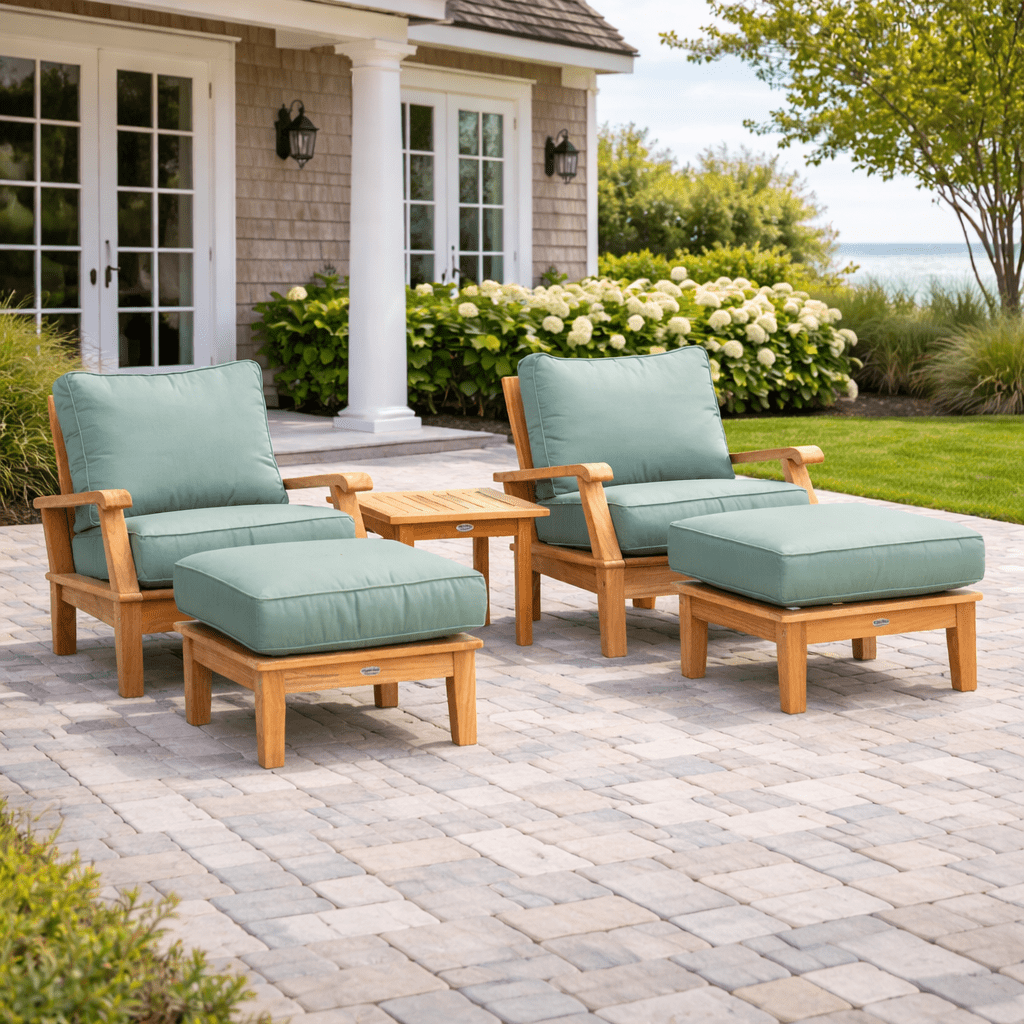 A covered patio that functions as an outdoor family room is one of the strongest places to use substantial lounge furniture. Multi-piece seating provides flexibility, while a teak sectional can create a more defined conversation zone on larger footprints.
Pair the main seating with a coffee table and accessible side tables rather than relying on one central surface. If people routinely bring drinks, phones, books, or appetizers outside, convenient table placement contributes more to everyday comfort than adding another chair.
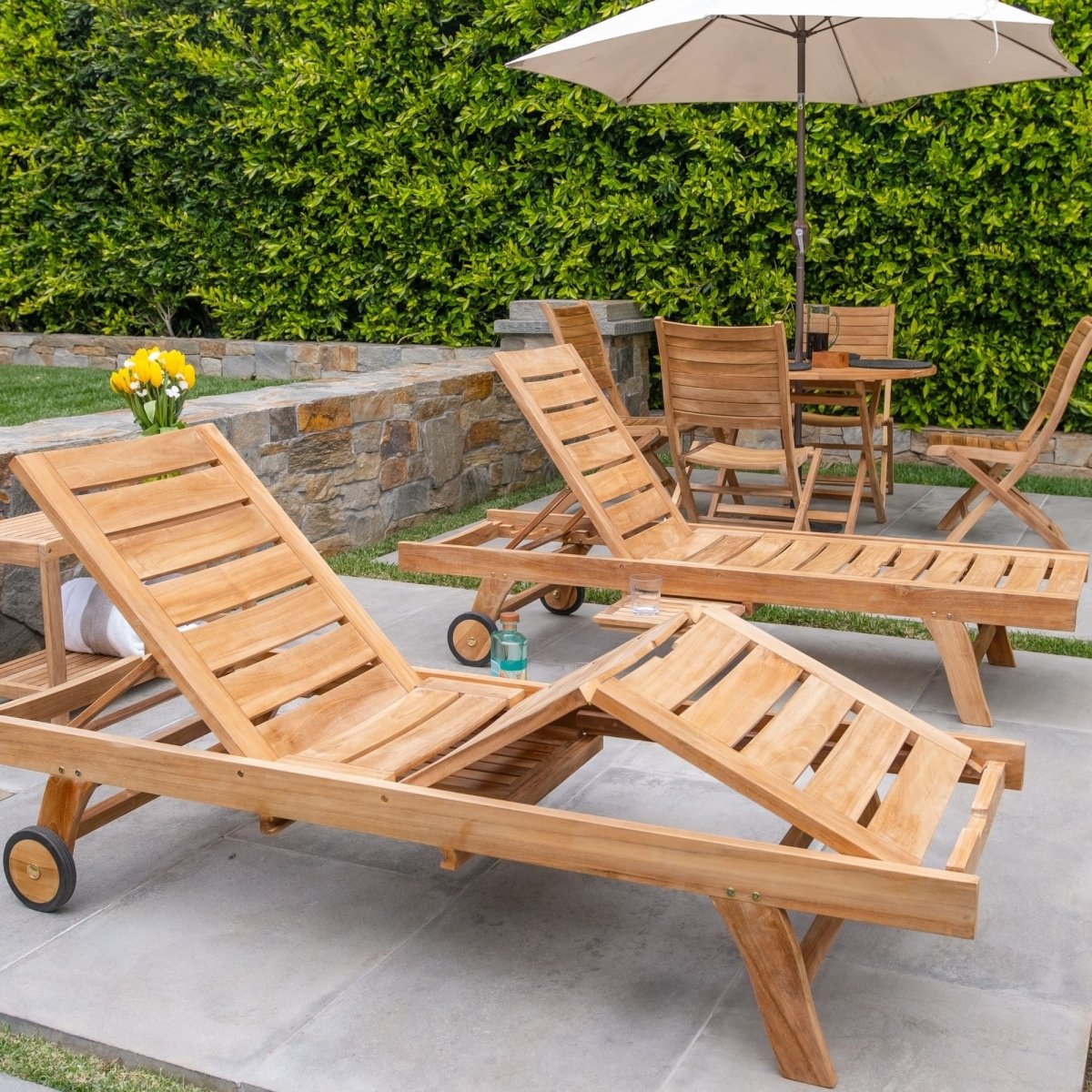 For pools, begin with teak chaise loungers and the circulation space around them. Adjustable loungers make sense for reading, sunning, and conversation, while side tables reduce the temptation to place drinks or personal items on the ground.
If the pool is the center of entertaining, add lounge seating beyond the splash zone. Guests who are dressed for dinner should have somewhere comfortable to sit without occupying the same chairs used by swimmers.
On a deck with a meaningful ocean or bay view, we often prefer smaller groupings rather than the largest sectional available. Two lounge chairs with a side table, a loveseat with two chairs, or a streamlined dining set can preserve more of the visual openness.
Also consider wind exposure before using umbrellas or light accessories. Teak itself has a reassuringly substantial feel, but removable cushions, umbrellas, and smaller accessories still need sensible handling during stronger conditions.
Courtyards in older or Spanish-influenced homes can work beautifully with teak because natural wood complements stucco, tile, stone, and planting without forcing the space into either a traditional or contemporary style.
A smaller round dining table or intimate conversation group usually works better than filling every wall. Leave enough negative space for doors, planting, and walking paths. A courtyard should feel like an outdoor room, not furniture storage.
Rancho Santa Fe and other larger-lot communities can support multiple outdoor rooms rather than one oversized patio setup. We would commonly divide the property into dining, conversation, pool, and garden destinations.
The most important design move is to give each area a reason to exist. A second seating group should offer a different experience—perhaps the best sunset view, proximity to a fire feature, or a quiet garden setting—rather than simply duplicating the primary patio farther across the yard.
San Diego architecture is varied, but natural teak has an unusual ability to bridge many of the region's common looks. Its warm wood character works naturally beside Spanish and Mediterranean-inspired materials, while simpler teak silhouettes can sit comfortably within contemporary coastal and modern homes.
Stucco walls, terracotta tones, tile, stone, courtyards, and mature landscaping create a natural setting for teak's warmer color. In these spaces, furniture does not need to imitate the architecture. A relatively simple teak dining or lounge silhouette often provides enough contrast while still feeling connected to the materials around it.
If the teak is allowed to age to silver-gray, the relationship changes but can remain attractive, especially where stone and weathered finishes already form part of the landscape.
Modern coastal architecture often benefits from fewer furniture pieces with stronger proportions. Teak can introduce natural warmth against glass, concrete, light stucco, metal railings, and pale stone without sacrificing the clean geometry of the space.
This is where restraint matters. Rather than filling a contemporary deck with many small objects, one substantial seating group and a few purposeful tables can create a calmer result.
For a pool-centered property, think in terms of visual rhythm. Repeated chaise loungers create order around the pool, while a larger lounge group establishes a separate destination. Matching every item is not necessary, but repeating materials helps connect the zones.
A teak dining set, teak loungers, and teak-framed lounge seating can make a large property feel intentionally designed even when the pieces come from different collections.
San Diego landscapes may include palms, citrus, succulents, drought-conscious planting, lush courtyard gardens, or more formal estate landscaping. Natural wood tends to sit comfortably beside vegetation because it reads as a material rather than a decorative color.
A strategically placed teak garden bench can be particularly effective where the landscape already creates a destination—a shaded tree, view corridor, fountain, garden path, or quiet corner away from the main patio.
San Diego's mild climate can make outdoor furniture seem like an easy purchase. In practice, the very fact that homeowners can use patios so often means planning mistakes are experienced more frequently. The goal is not simply to buy weather-capable furniture, but to create spaces that continue to work comfortably over years of regular use.
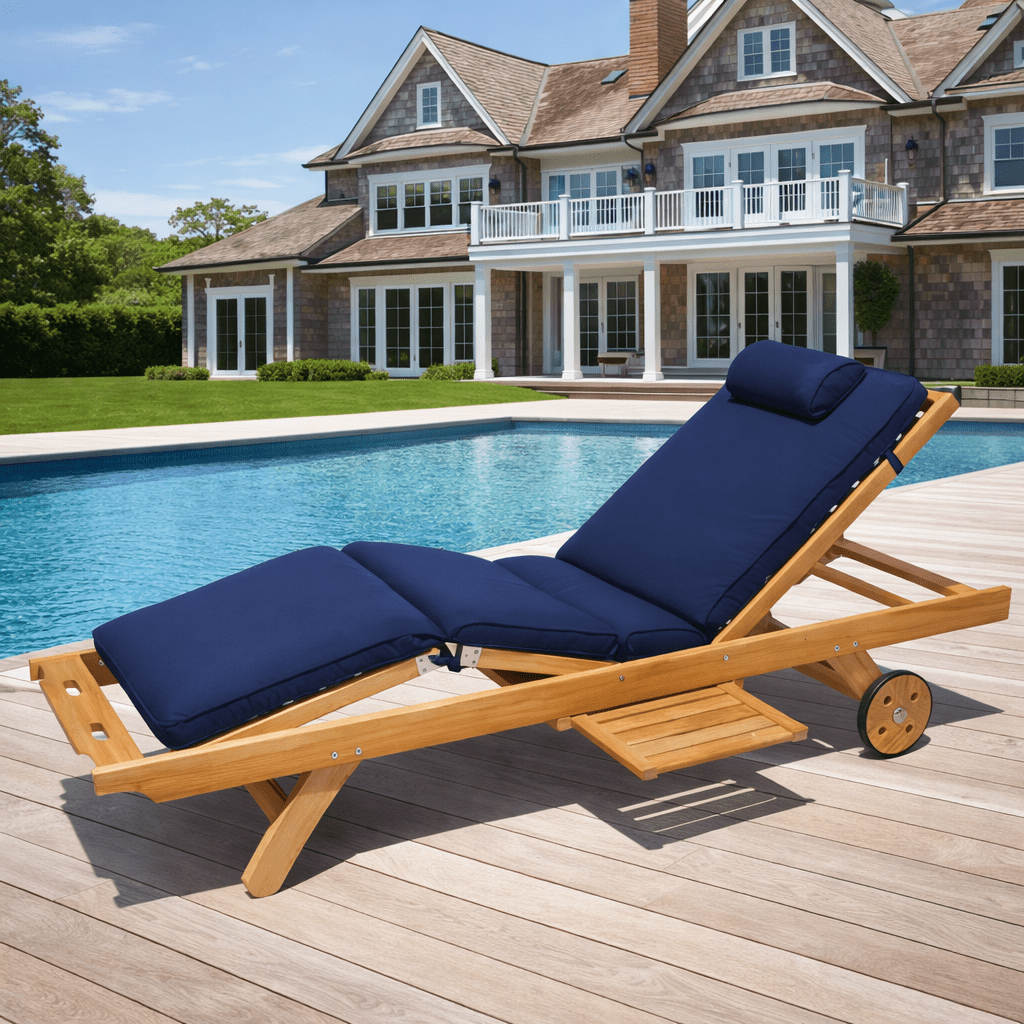 A coastal terrace and an inland backyard may be only a short drive apart but behave differently. Ocean-adjacent properties need to think more about marine moisture and salt residue, while inland patios may place more emphasis on direct sun and afternoon heat.
Choose materials and maintenance habits for the actual exposure of the patio rather than the general reputation of San Diego weather. Teak works across both conditions because it is made for outdoor sun, rain, moisture, and temperature changes, but cleaning and shade strategies can still differ.
Homeowners with generous patios sometimes buy the largest dining set or sectional that will physically fit because they can imagine hosting a major gathering. The result can be an outdoor room that feels crowded during ordinary use.
A better strategy is to build the permanent layout around typical household use and use flexible capacity—such as an extendable table, additional chairs, dining benches, or secondary seating—for larger events.
Pool furniture often looks spacious on an empty plan and congested once people, towels, drinks, and children are added. Allow space behind chaise loungers and keep major walking routes clear.
The memorable rule here is simple: design the pool deck for wet people, not empty furniture. Someone coming out of the water occupies more functional space than the chair itself because they are carrying towels, moving barefoot, and often stopping beside other guests.
Most TeakHQ deep seating includes Sunbrella cushions, which are designed for outdoor use and resist weather, fading, UV exposure, and water. But fabric and solid teak still have different care needs.
Let cushions dry thoroughly after they become wet and store or protect them when appropriate for your use pattern. The teak frame itself can remain outdoors year-round, so there is no reason to make the entire furniture set harder to own simply because the soft goods deserve additional attention.
Some buyers become concerned when natural teak begins changing color and assume maintenance has been neglected. In reality, silver-gray weathering is a normal option for unfinished teak.
Decide before purchasing which appearance you prefer. If you like weathered gray, you can embrace the natural aging process. If the original golden color is important to the design, plan for optional teak care rather than waiting until the color begins changing and treating it as a surprise.
Teak care in San Diego is generally straightforward because premium Grade A teak does not require paint, artificial stain, or sealing simply to remain durable outdoors. Maintenance should instead focus on cleanliness, the appearance you prefer, and a few location-specific habits around coastal residue, dampness, and cushions.
There is no useful universal calendar that says every San Diego teak set must be cleaned on the same schedule. A sheltered inland dining set and an ocean-facing deck experience different amounts of dust, marine residue, leaves, food, and moisture.
Inspect the furniture periodically and clean it when dirt or environmental buildup becomes visible. Properties near the ocean may benefit from more frequent fresh-water rinsing to remove salt residue, especially around hardware and joints.
Morning coastal moisture, shaded patios, and wet pool areas make airflow important. Avoid leaving damp towels on furniture for long periods, and do not trap wet cushions underneath impermeable coverings.
If you choose to use furniture covers, make sure the furniture is reasonably dry before covering it and avoid turning the cover into a permanent moisture trap. Covers are optional for teak durability, not mandatory.
Untreated teak naturally changes toward silver-gray as it weathers. Many coastal homeowners prefer that appearance because it works well with stone, stucco, ocean-facing decks, and relaxed California landscapes.
If you prefer the original teak color, appropriate teak care products can become part of the routine. This is largely an aesthetic decision; an artificial stain is not required to make TeakHQ's Grade A teak suitable for outdoor use.
Sunbrella cushions used on many TeakHQ lounge pieces are outdoor fabrics, but they should still be treated as upholstery rather than lumber. Remove debris, allow wet cushions to dry, and follow the care guidance applicable to the specific cushion and furniture piece.
Dining chairs and loungers often do not include cushions, although cushions may be offered separately on many pieces. That can be an advantage around pools or exposed patios where homeowners prefer fewer soft goods to manage.
San Diego homeowners generally do not need to create a seasonal indoor-storage plan for the teak frame itself. TeakHQ's Grade A teak is designed for year-round outdoor use and can withstand rain, sun exposure, and temperature fluctuations.
That changes the ownership experience compared with outdoor furniture that must be moved or protected simply because the calendar changes. Seasonal attention can focus on cleaning, cushions, and the appearance of the wood rather than dismantling the patio every winter.
The right outdoor furniture for San Diego should fit more than the weather. It should match the way you actually use the property: family dinners, pool afternoons, coastal sunsets, outdoor cooking, visiting guests, or quiet time in the garden. Premium Grade A teak is especially compelling when you want real wood, long-term outdoor durability, substantial construction, and the flexibility to maintain a golden finish or simply let the furniture weather naturally.
Start with the activity that matters most, choose the furniture scale around everyday use, and build the rest of the patio around that decision. The result is more likely to feel like a genuine outdoor room—and less like a collection of patio furniture.
Several premium materials can work well in San Diego, including quality aluminum and teak. Grade A teak is especially attractive for homeowners who want real wood because its natural oils and dense grain help it resist moisture, rot, insects, and warping while remaining suitable for year-round outdoor exposure.
Yes. Teak's natural moisture resistance makes it well suited to coastal outdoor use. Oceanfront furniture should still be cleaned periodically to remove salt and other coastal residue, including buildup around hardware and joints.
Start with comfortable loungers and enough circulation space to move safely around the pool. A complete pool area often combines chaise loungers, side tables, shade, and a separate conversation or dining area rather than relying on one furniture type.
Yes. TeakHQ's Grade A teak furniture is designed for year-round outdoor use and can withstand rain, sun exposure, moisture, and temperature fluctuations. Protective covers are optional rather than required for the wood's basic durability.
It can, particularly near the coast. Marine-layer conditions can leave outdoor spaces cooler and damper during mornings, so good airflow and moisture-tolerant materials are useful. Cushions and covered furniture should be allowed to dry rather than remaining trapped in damp conditions.
Yes, if left untreated. Natural teak gradually weathers to a silver-gray patina outdoors. The change is cosmetic and expected; homeowners who prefer the original golden teak color can use appropriate care products to help maintain that appearance.
If your guest count changes considerably, an extendable teak table is often the more flexible choice. It allows you to size the patio for everyday use while still creating additional seating space for larger gatherings.
Neither material is automatically right for every homeowner. Aluminum is lighter and often has a more contemporary feel. Teak is heavier, warmer, natural, and has a more substantial architectural presence. Buyers who prioritize authentic wood and long-term outdoor durability often prefer teak.
No. Teak does not need to be sealed for basic outdoor durability. Sealing or other teak care is optional and is primarily useful when you want to maintain a particular appearance rather than allow the wood to age naturally.
Quality Grade A teak furniture can last for decades when appropriately used and cared for. That longevity is a major reason homeowners furnishing permanent outdoor spaces may accept a higher initial cost than they would for more temporary patio furniture.


