
FREE SHIPPING
within mainland USA
within mainland USA
Home ▸ Teak Outdoor Furniture ▸ By Location ▸ 30A / Florida Emerald Coast
Outdoor spaces along 30A combine Gulf air, humidity, strong sun, frequent rain, pools, and a lifestyle built around porches, decks, outdoor meals, and visiting guests. Beach houses and vacation homes also tend to ask more of furniture than a lightly used residential patio. Material quality, furniture weight, layout, and maintenance flexibility therefore deserve careful consideration. Premium Grade A teak is especially worth evaluating because it combines a natural coastal appearance with the moisture and weather resistance needed for demanding outdoor use.

Choosing outdoor furniture along 30A is less about finding something labeled “outdoor” and more about understanding what the furniture will experience week after week. Gulf Coast exposure combines moisture, humidity, sun, wind-driven rain, airborne salt near the water, sand, pool use, and long periods when outdoor rooms are actively used.
Humidity and rain influence far more than whether furniture can simply “get wet.” They affect how quickly surfaces dry, whether debris remains trapped against furniture, how cushions should be handled, and how much maintenance a material may require. Shaded porches can remain damp longer than exposed pool decks, while Gulf-facing spaces can encounter moisture from several directions rather than only from rainfall.
That makes moisture resistance an important material criterion. Dense Grade A teak has naturally high oil content and is resistant to moisture, rot, insects, and warping, making it well suited to furniture intended to remain outdoors through changing Gulf Coast conditions.
A Gulf-front deck and a protected patio several blocks inland are not identical environments. The closer a property is to open water, the more attention we would give to salt residue on furniture, fabrics, hardware, and other outdoor components. Furniture should also be easy to rinse and clean rather than dependent on delicate decorative finishes.
Teak's advantage here is partly simplicity. Its outdoor durability does not depend on an artificial stain or painted surface. Royal Teak and Anderson Teak pieces use stainless-steel hardware, while Verandis Teak uses brass hardware. Routine cleaning is still sensible in salty environments, but the wood itself is designed for year-round outdoor use.
Many 30A outdoor spaces function as transitions between the house, pool, outdoor shower, and beach. Someone may sit down in a damp swimsuit, place a wet towel over a chair, or walk directly from the pool onto a deck. This is different from furnishing a formal covered patio that sees occasional evening use.
Materials should therefore be judged for repeated real-world exposure rather than showroom appearance alone. Teak withstands sun, rain, and temperature fluctuations and can be left unfinished without needing paint or stain for durability. Where upholstered seating is preferred, many TeakHQ lounge pieces include Sunbrella cushions, while availability and included cushions vary by product.
Premium material selection does not eliminate the need for storm preparation. Outdoor furniture of any material should be considered part of a property's severe-weather plan. Teak is naturally heavier than lightweight aluminum furniture, which many homeowners appreciate during everyday use, but furniture should never be assumed safe to leave unsecured during significant tropical weather.
For second homes and rentals, this is worth solving before purchasing: decide who moves or secures furniture, where cushions go, and which pieces can realistically be handled when severe weather approaches. A beautiful furniture plan is incomplete if the property-management plan cannot support it.
There are several legitimate premium materials for a Florida coastal property. Aluminum is lightweight and works particularly well with modern architecture, while quality synthetic materials can reduce certain maintenance concerns. Teak becomes especially compelling when homeowners want natural wood, substantial furniture, flexible maintenance, and a material intended to remain outdoors year-round.
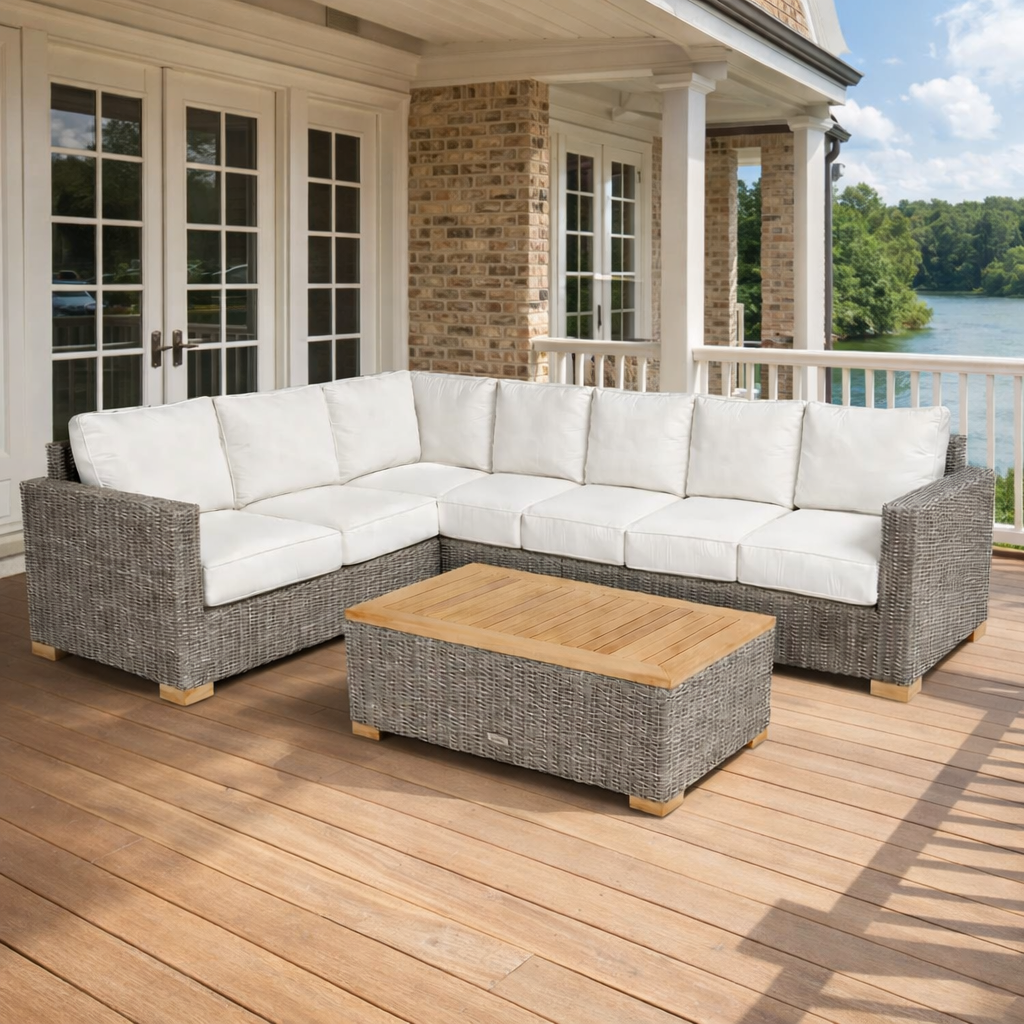 Grade A teak has a dense grain structure and naturally high oil content. Those characteristics contribute to its resistance to moisture, rotting, insects, and warping. On 30A, that matters because exposure is rarely limited to an occasional rainstorm. Humid air, damp decks, pool use, and changing weather are routine parts of outdoor ownership.
The practical benefit is not that teak becomes immune to dirt, salt, mildew on surface debris, or normal weathering. Rather, its durability does not depend on maintaining a painted exterior coating. That gives owners considerably more flexibility in deciding how much cosmetic maintenance they want to perform.
One of the most important things to understand before buying teak is that unfinished teak naturally weathers to a silver-gray patina. That is normal and does not mean the wood has failed. For a weathered coastal home, many owners intentionally allow this change because the gray tone works naturally with white exteriors, pale stone, sandy colors, and coastal landscaping.
Homeowners who prefer teak's original warmer color can use appropriate teak care products and follow the manufacturer's directions. This is an appearance decision rather than a requirement for the wood's outdoor durability.
Outdoor furniture continually cycles between wet and dry conditions. Teak's dense grain structure and resistance to warping are useful where furniture is exposed to rain, sun, humidity, and temperature changes over many years.
This becomes particularly relevant with larger dining tables, sofas, sectionals, and loungers—the pieces around which an entire outdoor room is planned. A premium furniture purchase should be evaluated over a long ownership horizon, not simply by how it looks during its first season.
A primary residence and a professionally managed vacation home may need different maintenance strategies. Fortunately, teak allows either a relatively hands-off approach or a more appearance-focused routine. It can be left untreated to develop its natural gray patina, or owners can choose to maintain more of the original teak color.
That flexibility is useful along 30A because not every owner lives nearby. The simplest strategy for many second homes is to accept natural weathering, clean furniture periodically, and concentrate maintenance effort on keeping cushions, surfaces, and the surrounding outdoor area clean.
Grade A teak costs more upfront than many outdoor furniture materials, so it makes the most sense when the buyer values longevity. Properly chosen teak furniture can last for decades rather than seasons. For an outdoor area that is integral to the home—especially a large pool deck, porch, or Gulf-view terrace—buying around a long ownership period can be more rational than repeatedly replacing lower-cost furniture.
| 30A Challenge | Why Premium Grade A Teak Performs Well |
|---|---|
| Humidity | Naturally high oils and dense grain provide strong moisture resistance. |
| Frequent rain | Designed for year-round outdoor use and exposure to rain. |
| Salt-air environment | Durability does not rely on paint or an artificial exterior stain. |
| Strong sun | Handles outdoor sun exposure and can weather naturally to silver-gray. |
| Wet poolside use | Resists moisture, rot, and warping. |
| Changing weather | Designed to withstand outdoor temperature fluctuations. |
| Long ownership cycles | Premium teak furniture can provide decades of useful life. |
We would begin with how people actually move through the property, not with a furniture catalog. On many beach-house layouts, the most successful outdoor spaces separate eating, dry lounging, and wet pool traffic instead of trying to make one large patio perform every function.
If a home has a generous covered porch, that is usually where we would place the primary conversation zone. A teak patio seating arrangement with a sofa or loveseat, club chairs, and practical tables creates an outdoor family room without using valuable pool-deck space.
For larger homes, resist the temptation to push every seat against the perimeter. A defined conversation group feels more intentional and lets people actually talk. Leave circulation paths behind or beside the group so guests traveling between the house and pool are not walking through the middle of it.
30A homes often need to serve two different household sizes: the people who use the house normally and the larger group that arrives on vacation. That makes an extendable teak dining table especially practical. It can remain proportional to the patio during normal use while providing more capacity when relatives or friends arrive.
If entertaining is consistently large, choose the table around realistic maximum seating rather than squeezing extra chairs into a six-person layout. Just as important, measure the space with chairs pulled back from the table. Dining capacity is useful only when guests can comfortably stand and circulate.
For a pool property, we would create a deliberate wet zone using teak chaise loungers and side tables rather than extending upholstered conversation furniture all the way to the water. This keeps wet-body traffic concentrated where it belongs and makes towel, drink, and sunscreen placement more intuitive.
This is one of the most useful planning distinctions for a coastal home: furniture should follow whether people are likely to be wet or dry. A beautiful sofa may technically fit beside the pool, but a chaise is usually the better tool for someone who just got out of the water.
If the home is a short-term rental, prioritize layouts that guests can understand without instructions. Clear dining, lounge, and pool zones are easier to reset than an elaborate arrangement with many small movable components.
Also consider what a cleaner or property manager must move. Furniture that looks impressive but requires complicated rearranging after every guest stay adds friction. Premium furniture works best when the layout is as durable and understandable as the material itself.
Start with the part of the property that drives outdoor life. Pool-focused homes will usually benefit most from loungers and conversation seating; large family beach houses should solve dining capacity early; homes built around covered porches may begin with deep seating or sectionals. Then add secondary pieces that make those primary zones easier to use rather than simply filling every open area.
Outdoor living along 30A often sits somewhere between everyday residential use and resort use. Even a private beach house may regularly host extended family, visiting friends, children moving between the pool and beach, and long meals that stretch into the evening. Second homes and rentals add another factor: the same furniture may need to work comfortably for different groups from one week to the next.
A coastal second home can feel quiet with one couple during one visit and full with several families during the next. That variation should influence furniture selection. Flexible dining capacity, extra lounge chairs, and seating that works without a perfectly fixed arrangement are often more useful than furnishing precisely for the property's average occupancy.
Think in terms of “normal capacity” and “guest capacity.” The home should feel comfortable at normal capacity without looking empty, while still having a credible way to accommodate a larger gathering.
A covered porch can be more valuable than an exposed terrace during the hottest, wettest parts of the year because it keeps the outdoor room usable in more conditions. Deep seating makes sense here, especially when the porch is visually connected to the kitchen or interior living room.
These spaces benefit from the same planning principles used indoors: comfortable conversation distance, tables within reach, sufficient walking room, and an obvious relationship between seating and the view.
Poolside living is less formal. People recline, move chairs, carry towels, eat snacks, supervise children, and repeatedly transition between wet and dry. Chaise loungers and easy-access side tables generally earn their footprint better here than oversized formal seating.
Where the pool deck is large enough, a second dry conversation zone set farther back from the water can create a useful distinction between swimming and socializing.
Outdoor dining is especially valuable in a beach destination because meals often become part of the experience rather than simply a place to eat quickly. A family returning from the beach may want an easy dinner outside; another group may spend an entire evening talking around the table.
For that reason, comfort and circulation matter as much as maximum seat count. An enormous table that blocks the route from the house to the pool can make the entire patio less functional.
Furniture should follow the property's architecture and use pattern. A Gulf-front home with multiple decks does not need the same pieces in every outdoor space, and a compact Rosemary Beach courtyard should not be furnished like a large WaterColor pool terrace.
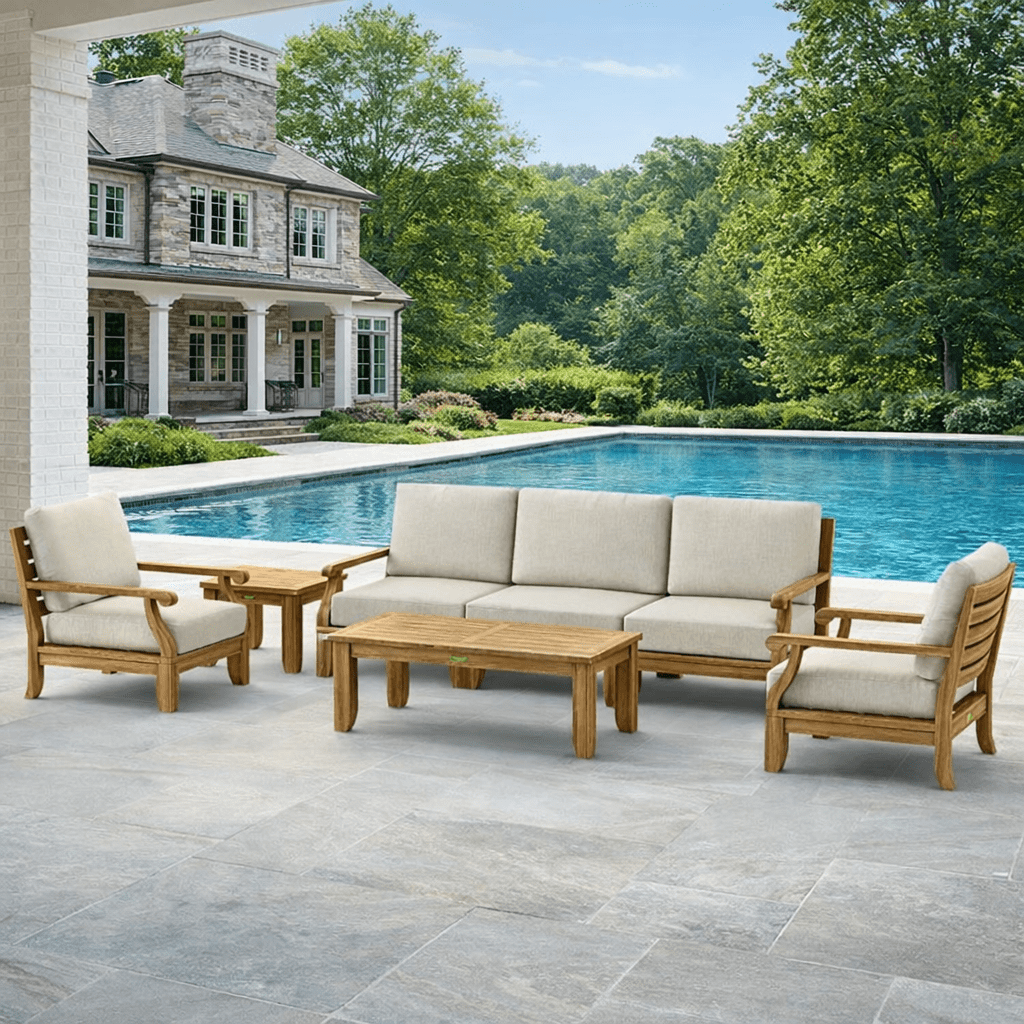 Large porches are natural candidates for teak sectional sets, especially when the primary goal is relaxed family seating. A sectional can define a substantial conversation area while using a corner efficiently. On an especially wide porch, pair it with club or swivel chairs rather than simply making the sectional larger and larger.
Coffee tables and side tables complete the arrangement because they give every seat somewhere practical for drinks, books, or phones. The goal is an outdoor room, not merely a row of seats.
For homes where meals drive outdoor entertaining, begin with teak outdoor dining sets sized around realistic household and guest counts. Six seats can work well for a smaller residence; larger vacation homes may genuinely benefit from eight, ten, or more.
A useful rule is to protect circulation before adding another chair. Measure paths to doors, stairs, grills, and pools. If adding two seats forces everyone else into a narrow passage, a different table shape or extendable configuration is usually the better solution.
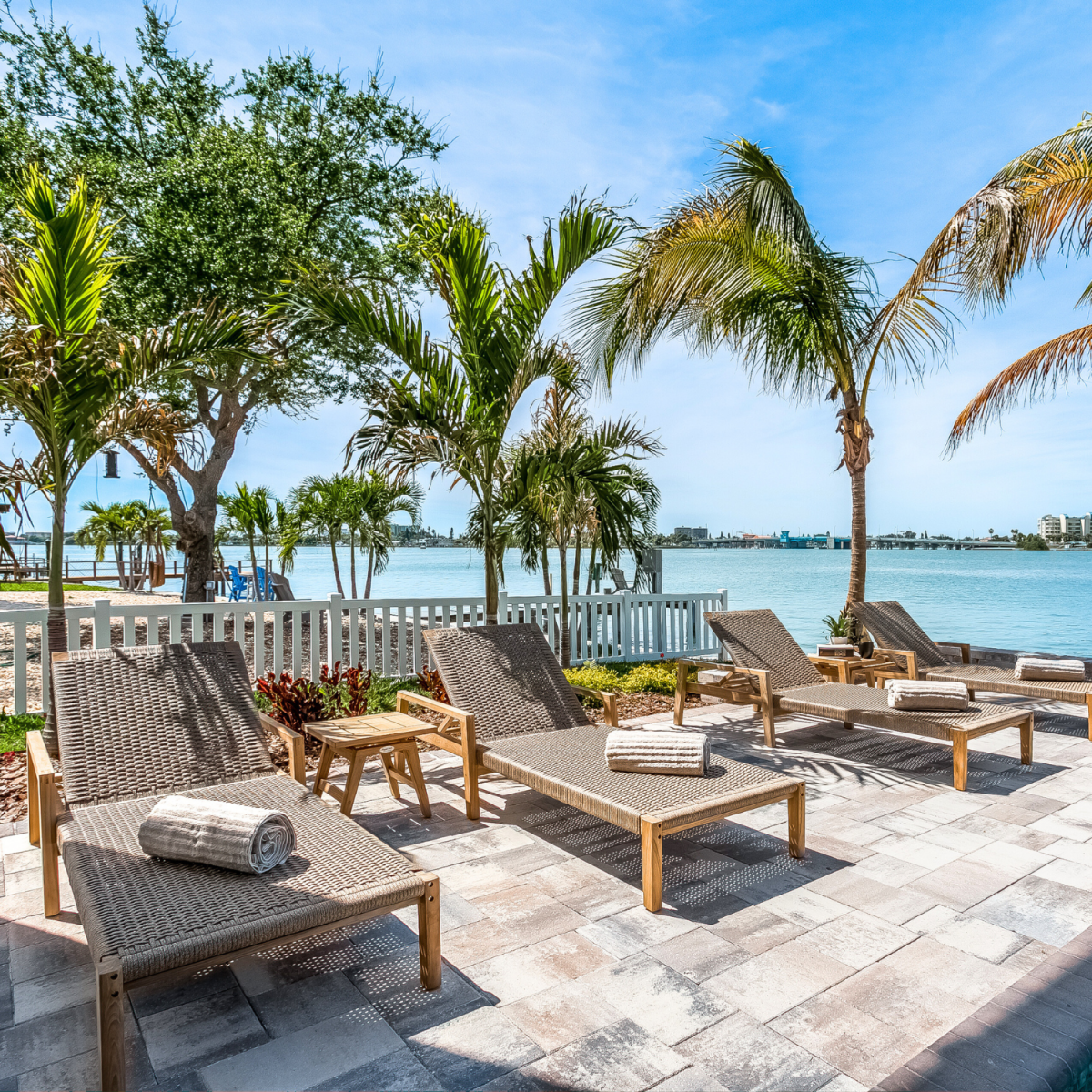 Use chaise loungers in pairs or repeated groups rather than scattering unrelated chairs around the deck. Symmetry is not mandatory, but repeated furniture types make a pool area feel calmer and help guests immediately understand how the space is intended to work.
Give each pair convenient table access. That small detail often matters more in daily use than adding another decorative chair.
Upper-level decks often benefit from a smaller furniture footprint. Two chairs with a table may preserve the Gulf view and circulation better than a complete sofa arrangement. Where rail heights and views make standard dining furniture less effective, teak bar and counter-height dining can be worth considering if the dimensions of the particular deck support it.
Always assess sightlines from the seated position, not while standing. A furniture arrangement can appear perfect during installation yet put the railing directly through the view once everyone sits down.
For vacation properties, favor complete, intuitive zones over an abundance of miscellaneous furniture. One well-planned dining area, one conversation group, and a clear set of pool loungers can serve guests better than chairs and tables distributed everywhere simply because space is available.
This is also where robust furniture carries value beyond appearance. The ownership question is not merely, “Will my family enjoy this?” but “Will this layout remain understandable and useful when different people use the home every week?”
30A's architecture ranges from traditional coastal cottages and porch-oriented beach houses to highly refined contemporary properties. That variety actually suits teak well because natural wood does not require a single architectural language. Its warmth can soften a crisp modern exterior or feel completely at home beside traditional coastal details.
On homes with white masonry, simple geometric forms, large openings, and restrained landscaping, keep furniture layouts similarly disciplined. Straight-lined teak sofas, sectionals, dining tables, and loungers add warmth without introducing a competing visual theme.
Avoid filling every architectural recess. Negative space is part of a clean design, particularly around pools and courtyards.
Porches, railings, shutters, and landscaped entries naturally accommodate more traditional teak forms. Rockers, dining chairs, benches, and classic lounge seating can feel appropriate without turning the space into a themed “beach” setting.
The wood itself provides enough coastal character. There is rarely a need to reinforce the setting with excessive nautical decoration.
Teak also pairs comfortably with sandy neutrals, light stone, dune-inspired planting, wood decking, and understated pool finishes. Owners who allow the teak to develop a silver-gray patina can create an especially relaxed relationship between the furniture and the coastal palette.
If maintaining warmer teak tones, treat that as an intentional design commitment. Both appearances can work; consistency is usually more important than choosing one as universally preferable.
On a view-oriented property, furniture should frame the Gulf, pool, courtyard, or landscape rather than become the focal obstruction. Low-profile seating can preserve sightlines, while swivel chairs can make it easier to alternate between conversation and scenery.
One of the simplest designer habits is to sit in every proposed chair location before finalizing the plan. The best view from the patio may not be the best view from a 17-inch-high seat.
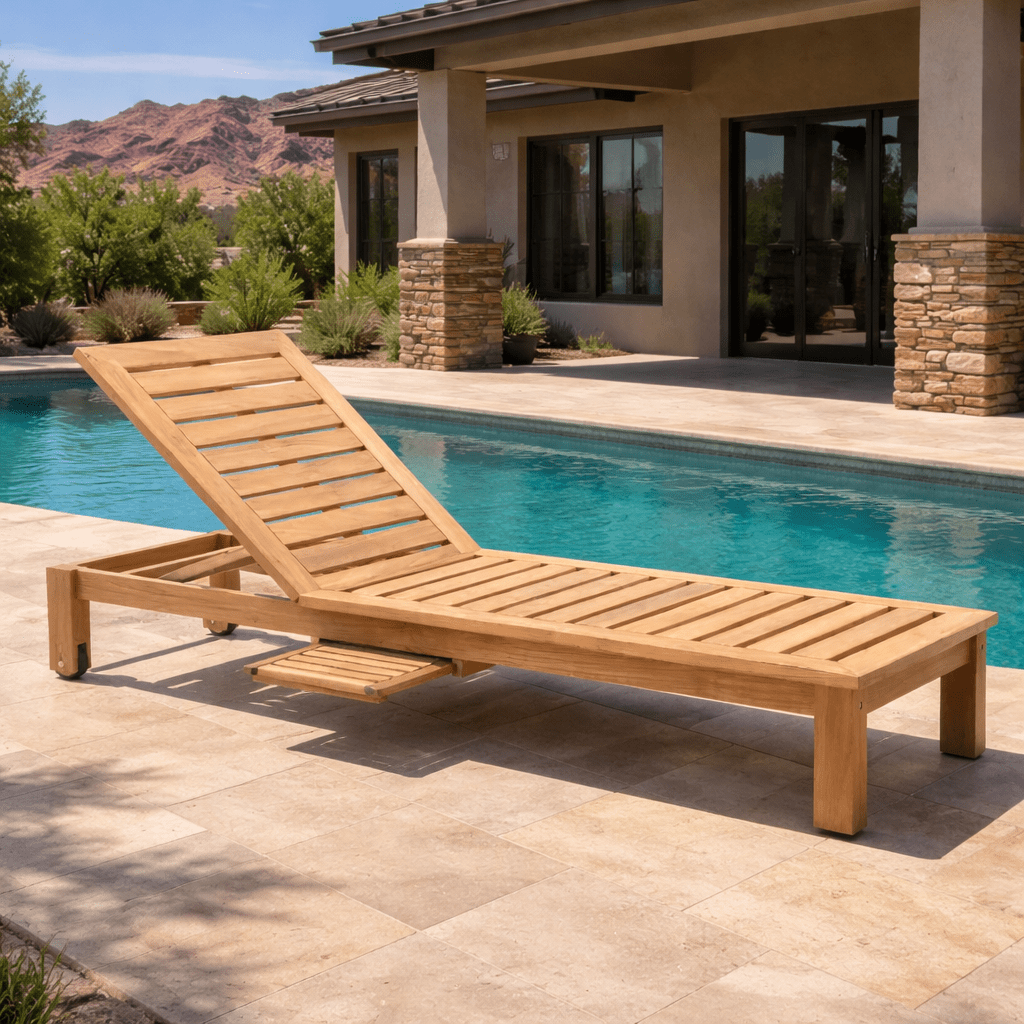 A common planning mistake is treating the entire outdoor area as one living room. Around a beach or pool property, people repeatedly move through the space wet. Placing the most upholstery-dependent furniture directly in that route can create unnecessary cleaning and cushion management.
Use moisture-resistant teak loungers and practical tables in the wet zone, then position cushioned conversation furniture where swimmers are less likely to pass through it.
A second home occupied by four people most of the time may regularly host ten. Furnishing only for the average visit can leave the house awkward whenever extended family arrives.
That does not mean every patio needs a ten-person table. Extendable tables, movable chairs, and complementary seating areas can provide guest capacity without making the property feel over-furnished during quieter weeks.
Even premium furniture benefits from a patio that drains well and dries efficiently. Avoid layouts that trap leaves or organic debris underneath pieces or keep cushions unnecessarily damp. Surface mildew can develop on accumulated dirt or organic matter even when the underlying outdoor material is moisture resistant.
Teak's natural resistance to moisture and rot is valuable, but good housekeeping remains part of coastal ownership.
Homeowners sometimes ask only whether the furniture material tolerates coastal conditions. Salt and moisture also interact with hardware, cushions, nearby fixtures, covers, and accessories. Consider the complete furniture system.
TeakHQ's Royal Teak and Anderson Teak products use stainless-steel hardware, while Verandis Teak uses brass hardware. Periodic rinsing and cleaning are still sensible when salt residue is visible.
Teak has a heavier, more substantial feel than lightweight aluminum, but weight should never be mistaken for a severe-weather rating. Tropical weather requires a property-specific plan for securing or relocating outdoor furniture and accessories.
This is especially important for absentee owners. Decide who is responsible for preparation before the forecast becomes urgent.
Large patios can still have narrow functional paths because doors, stairs, outdoor kitchens, pool gates, and deck edges dictate movement. A beautiful sectional or dining table becomes frustrating if guests constantly squeeze around it.
Measure furniture in its working position—including dining chairs pulled out and recliners extended—not merely by the footprint shown in a product diagram.
Teak does not need an elaborate preservation routine to survive outdoors, but coastal homes benefit from regular cleaning habits. The distinction is important: much of your maintenance along the Emerald Coast is about keeping salt, sand, pollen, organic debris, food residue, and cushion surfaces clean rather than continually “protecting” the teak itself.
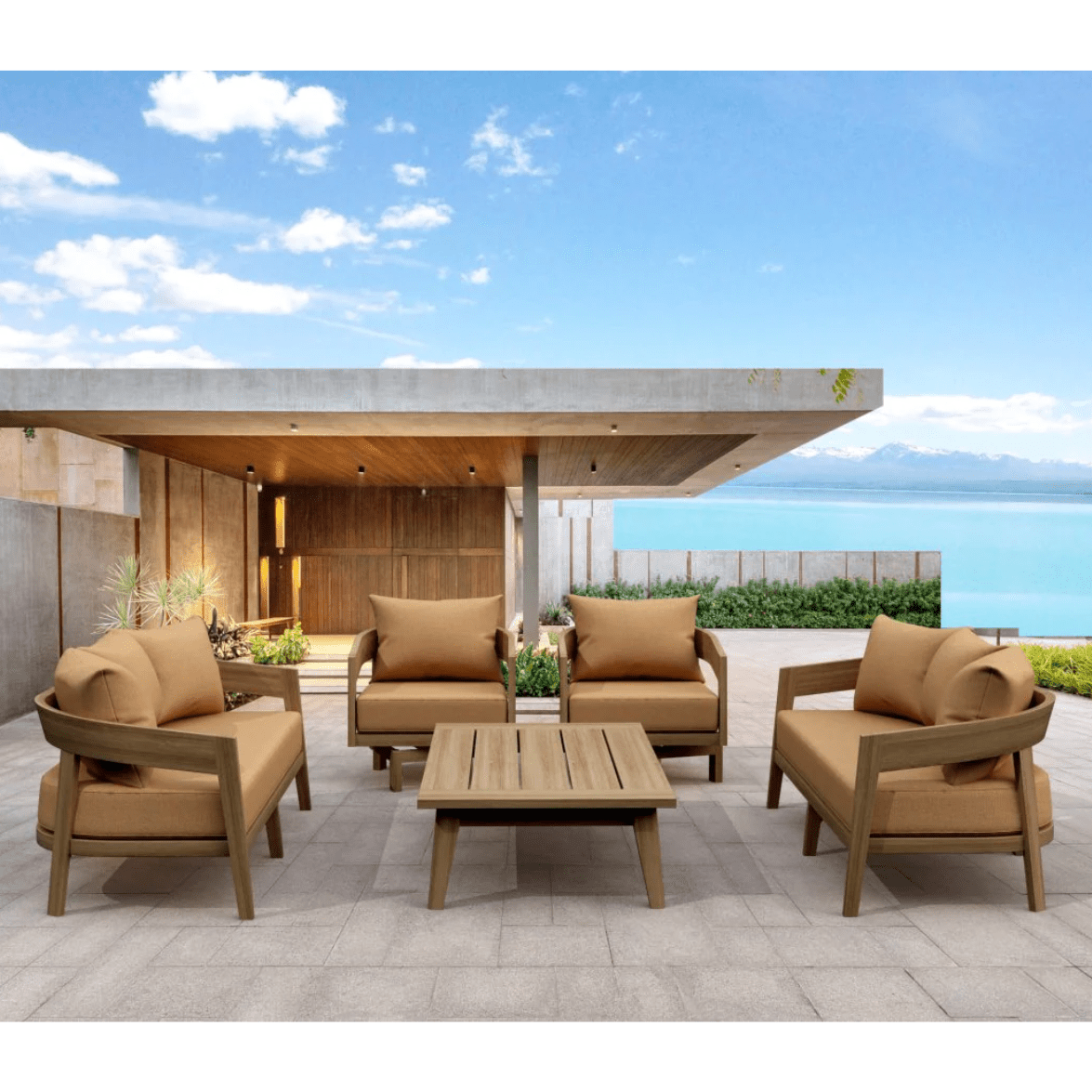 Inspect exposed furniture regularly during periods of frequent use. If a Gulf-facing property accumulates salt film, sand, or wind-blown debris, rinse or clean it rather than allowing residue to build up.
There is no benefit to inventing an unnecessarily rigid schedule. A directly exposed Gulf-front deck may need attention more frequently than a sheltered porch farther inland.
Leaves, pollen, soil, food, and other organic material can hold moisture against outdoor surfaces. Sweep or rinse these materials away and pay attention to joints, table surfaces, areas beneath cushions, and shaded locations that dry slowly.
If surface mildew appears on dirt or residue, clean the affected area appropriately rather than assuming the wood itself is rotting.
Untreated teak naturally transitions toward a silver-gray patina. Owners who like that appearance can allow the process to occur rather than repeatedly trying to reverse it. The furniture does not require artificial stain for durability.
If retaining more of the original golden teak appearance matters to you, use suitable teak care products according to the product directions. Make that decision based on the appearance you want and the maintenance commitment you are comfortable making.
Many TeakHQ patio seating pieces include Sunbrella cushions, while cushion inclusion varies by model. Sunbrella is weather-, fade-, UV-, and water-resistant, but “water resistant” should not be interpreted as a reason to leave cushions unnecessarily saturated.
After heavy rain or pool use, allow cushions to dry properly. Owners who are away for extended periods may also prefer a designated storage location for removable cushions, especially when severe weather is expected.
Teak does not require a cover in order to be suitable for year-round outdoor use. A cover may still be useful when the owner's goal is reducing cleaning, pollen, leaf debris, bird droppings, or periods of non-use.
If covers are used in a humid environment, do not let them become a method for trapping persistent dampness or dirty cushions underneath. Clean, dry furniture before extended covered storage whenever practical.
For a second home or vacation rental, the best maintenance routine is one that somebody will actually perform. Give the property manager a short list: keep surfaces clear of debris, report visible issues, dry or store cushions when appropriate, and follow the property's storm plan.
That is generally more effective than specifying an elaborate teak-finishing program that changes with every turnover.
Start with the way your property is actually used: how many people gather there, who comes from the pool or beach, where meals happen, which spaces stay shaded, and how the home is managed when you are away. Then choose furniture that fits those realities. Premium Grade A teak is particularly well suited to 30A homeowners who want natural materials, long service life, substantial construction, and the freedom to maintain a warm teak appearance or simply let the wood weather naturally.
Look for materials that tolerate humidity, rain, sun, and repeated outdoor exposure while fitting the property's maintenance expectations. Premium aluminum and quality synthetic materials can be legitimate options. Grade A teak is especially attractive when you want natural wood, substantial furniture, moisture resistance, and long-term outdoor durability.
Yes. Grade A teak's natural oils, dense grain, moisture resistance, and ability to remain outdoors without relying on paint or artificial stain make it a strong choice for coastal properties. Salt residue should still be rinsed or cleaned from furniture and hardware when needed.
Chaise loungers are usually the first category we would prioritize because they match how people actually use a pool deck. Add accessible side tables and, if space permits, place a separate conversation group farther from wet traffic. Browse teak chaise loungers for pool-focused layouts.
Plan around realistic peak guest use rather than only average occupancy. If the home typically sleeps or hosts a larger group, an eight- or ten-person arrangement may make sense. An extendable dining table can provide additional capacity without permanently dominating the patio.
Yes. TeakHQ's Grade A teak furniture is designed for year-round outdoor use and withstands rain, sun exposure, and temperature fluctuations. Severe tropical weather is a separate issue: furniture should still be incorporated into the property's storm-preparation plan.
Yes. Natural unfinished teak gradually weathers to a silver-gray patina. This is normal weathering rather than an indication that the furniture has failed. Owners who prefer the original warmer teak color can choose an appropriate maintenance routine.
No. Teak does not require sealant for outdoor durability. Sealing or other teak-care treatments are optional choices for owners who want to maintain a particular appearance. Teak can also be left untreated and allowed to weather naturally.
Both can be appropriate premium choices. Aluminum is lighter and often has a more contemporary feel. Teak is heavier, warmer, natural, and more organic in appearance. Homeowners who prioritize genuine wood, a substantial feel, and decades-long ownership often find Grade A teak especially appealing.
Keep the routine simple enough for a property manager or cleaning team to perform consistently. Remove sand and organic debris, clean visible salt residue, let wet cushions dry, report damage promptly, and have a clear severe-weather procedure. Teak can be left untreated if maintaining its original color is not a priority.
Covers are optional rather than required for the teak itself. They can reduce accumulated debris during long periods of non-use, but furniture and cushions should be clean and reasonably dry before extended covering in a humid environment. For owners who prefer uncomplicated year-round teak ownership, leaving the wood uncovered is also an option.


