
FREE SHIPPING
within mainland USA
within mainland USA
Home ▸ Teak Outdoor Furniture ▸ By Location ▸ Aspen, Colorado
Furnishing an outdoor space in Aspen means planning for a combination few luxury markets share: intense mountain sun, substantial winter snow, large seasonal temperature swings and a relatively short but highly valued warm-weather entertaining season. From contemporary mountainside homes to historic in-town properties and second homes near the ski areas, furniture often needs to feel refined without becoming overly delicate. Premium Grade A teak is especially compelling here because it combines natural warmth with the weather resistance and maintenance flexibility needed for demanding mountain conditions.

Aspen is not simply a colder version of a typical four-season furniture market. High elevation, strong sun, winter snow, freezing temperatures and rapid seasonal transitions place very different demands on furniture than homeowners encounter in Denver, the Front Range or lower elevations of the Roaring Fork Valley. The best outdoor furniture here needs to make sense during beautiful summer afternoons while also being practical when the patio disappears beneath winter weather.
In many warm-weather markets, furniture selection centers on sun, rain and humidity. In Aspen, winter logistics deserve equal attention. Snow may accumulate around furniture, melt against it during sunny periods and refreeze as temperatures fall. That makes moisture resistance and structural stability more important than they might appear during a showroom-style summer evaluation.
Placement matters too. A dining table positioned directly beneath a roof-shedding area can create unnecessary winter management, while a seating group tucked beneath a covered terrace may remain substantially easier to use during shoulder seasons. Furniture planning should therefore begin with the architecture and snow-management plan rather than simply filling whatever patio area is available.
A clear mountain afternoon can feel mild while still exposing furniture to substantial sunlight. Materials, finishes and fabrics should therefore be selected with repeated sun exposure in mind. Premium outdoor materials such as teak, quality powder-coated metals and appropriately specified synthetic products can all be reasonable candidates, although they offer very different aesthetics and ownership experiences.
Teak is particularly useful when homeowners want the warmth of real wood without relying on an artificial stain for durability. Grade A teak can be exposed to sun and weather and naturally transition toward a silver-gray patina if left untreated.
Aspen furniture may experience warm summer afternoons, freezing winter nights and rapid changes during spring and fall. Those swings favor materials with a strong outdoor track record rather than furniture designed primarily for sheltered or seasonal indoor-outdoor spaces.
Premium Grade A teak has a dense grain structure, natural oils and resistance to warping and weather exposure. Those characteristics make it a sensible natural-wood option where furniture is expected to remain outside through significant temperature fluctuations.
Homes above the valley floor or on open terraces may also experience more wind than protected courtyard-style spaces. Teak's comparatively substantial, architectural feel is useful in this setting, although no homeowner should treat furniture weight as a substitute for sensible storm preparation. Cushions, umbrellas and loose accessories deserve particular attention when a property will be vacant between visits.
Several premium materials can work well in mountain environments. Aluminum offers a clean modern aesthetic and is easier to move; high-quality synthetic furniture can reduce some maintenance concerns. Teak becomes especially attractive when the goal is a natural material with substantial outdoor durability, visual warmth and the ability to remain outside year-round.
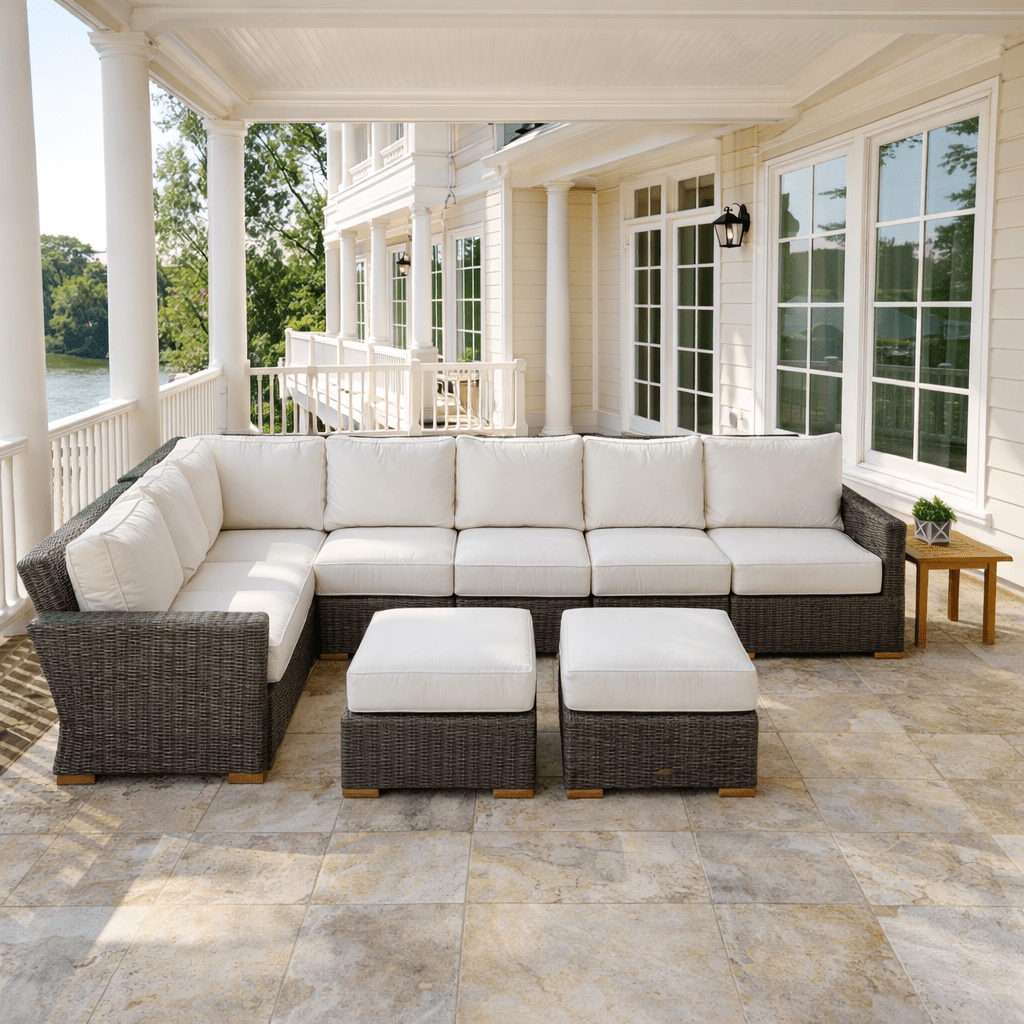 Grade A teak is naturally high in oils and has a dense grain structure. Those properties contribute to its resistance to moisture, rot, insects and warping without requiring paint or an artificial stain for durability.
That matters in Aspen because precipitation is only part of the moisture story. Snow can sit nearby for extended periods, melt on sunny days and introduce repeated wet-dry cycles around patios and decks. A material intended for year-round outdoor exposure provides more flexibility than one that depends on being moved inside every time the season changes.
Premium Grade A teak is designed to withstand rain, sun exposure and temperature fluctuations. It can remain outdoors year-round, although homeowners may still choose to cover furniture or move cushions inside for convenience and cleanliness.
The distinction is important: leaving teak outdoors does not mean ignoring seasonal preparation. It means the wood itself does not require the same storage-first ownership strategy demanded by many less durable materials.
Untreated teak gradually develops a silver-gray patina. In Aspen, that weathered appearance can work especially well alongside natural stone, darker metal, weathered timber and subdued mountain palettes. Homeowners who prefer teak's original golden tone can instead use appropriate teak-care products to manage its appearance.
Neither approach is inherently better. The decision is aesthetic rather than a prerequisite for outdoor durability.
Furniture in a second home often faces an unusual requirement: it may receive intense use during family visits and holidays, then sit unattended for extended periods. A material that can tolerate outdoor exposure without a demanding maintenance schedule simplifies ownership.
Premium teak also makes sense when the objective is to furnish a property for decades rather than replace lower-cost patio sets every few seasons. The initial investment is higher, but teak's long service life changes the lifetime-cost calculation for homeowners furnishing permanent, high-end spaces.
| Aspen Challenge | Why Premium Grade A Teak Performs Well |
|---|---|
| High-elevation sun | Designed for sun exposure and can weather naturally to a silver-gray patina. |
| Snow and melting moisture | Natural oils and dense grain provide strong moisture and rot resistance. |
| Freeze/thaw conditions | Teak is designed for outdoor temperature fluctuations and resists warping. |
| Seasonal rain | Premium teak is intended for year-round outdoor weather exposure. |
| Long winter off-season | The wood can remain outdoors rather than requiring seasonal indoor storage. |
| Exposed mountain terraces | Teak has a heavier, sturdier feel than many lightweight furniture materials. |
| Variable maintenance schedules | It may be maintained for color or left untreated to weather naturally. |
If we were helping furnish an Aspen property, we would begin with the way the house is actually used—not with a furniture catalog. A full-time residence, ski home occupied on winter weekends and large second home hosting extended families may all need completely different layouts even when their terraces are similar in size.
In a mountain home, the view is often the most valuable piece of the outdoor room. We would therefore establish the primary sightline first and arrange furniture second. A common mistake is placing a sofa or tall dining group exactly where it interrupts the view from inside the house.
For a large terrace, we would often use a teak sectional or deep-seating arrangement perpendicular to the strongest view rather than directly across it. That keeps the scenery visible from both the furniture and the adjoining interior rooms.
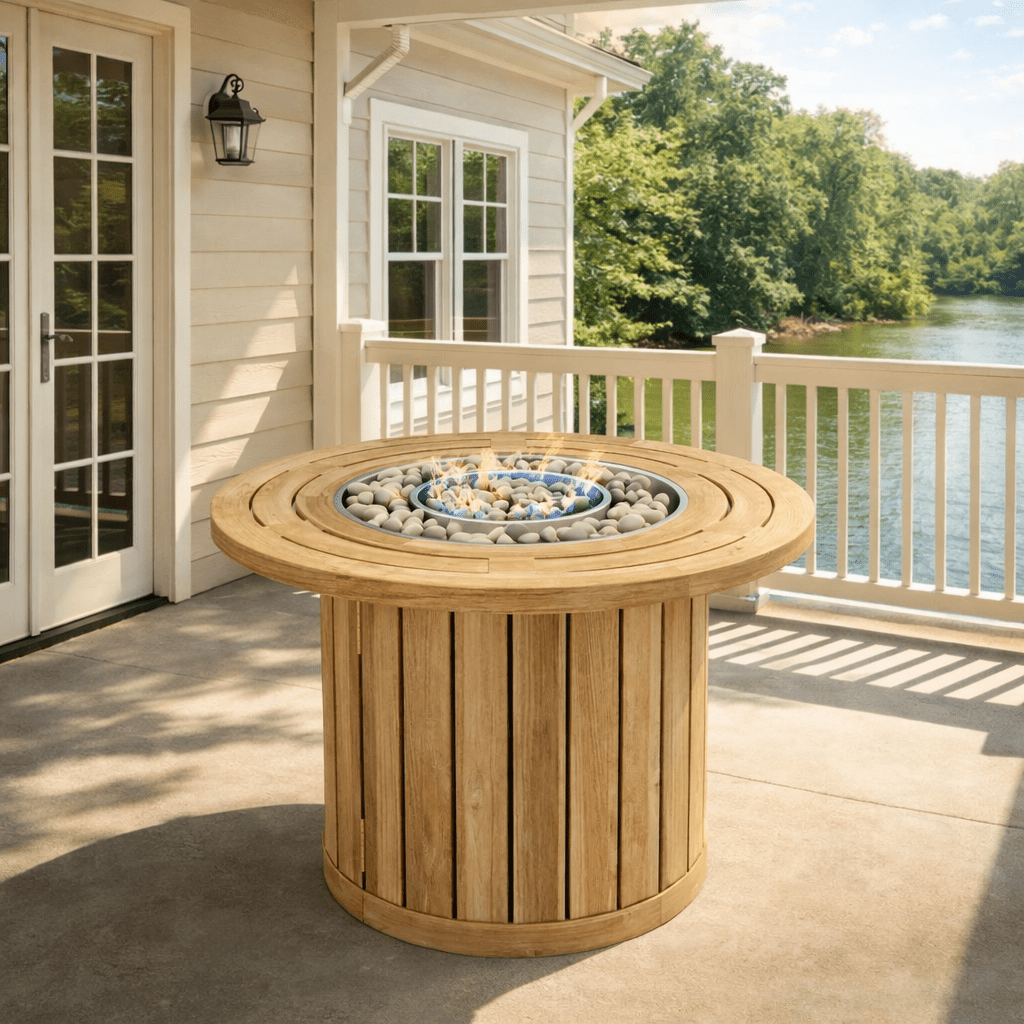
Aspen evenings can shift quickly from comfortable to cool, making conversation areas especially valuable when they are organized around a fire feature. Rather than scattering lounge chairs across an oversized terrace, we would create a tighter social zone where people naturally face one another.
A teak fire pit table paired with club chairs, a sofa or sectional can establish that center. The important design principle is not simply adding fire; it is using the feature to make a large mountain terrace feel intimate after sunset.
Second homes often create a sizing dilemma. A table for ten may feel excessive when only two or four people are at the property, but a six-person table quickly becomes inadequate when children, friends or extended family arrive.
This is where extendable teak dining tables can be especially useful. They allow the patio to function comfortably during quieter stays while providing additional capacity during holidays and summer gatherings.
One of the most useful Aspen-specific planning questions is simple: where will the snow go? Before committing to furniture placement, identify roof-shedding zones, snow-storage areas, pathways that must remain clear and access needed for shoveling or snow removal.
That single exercise can prevent a beautiful summer arrangement from becoming a winter obstacle. It can also reveal where covered seating, movable accent chairs or more compact secondary furniture makes greater sense than another permanent full-size grouping.
For large Aspen homes, begin with lounge seating or sectionals if the terrace is primarily about conversation, scenery and evening gatherings. Dining-focused homes should start with the number of guests they realistically host during peak visits—not the number who live there day to day—while smaller decks and secondary terraces benefit from club chairs, Adirondack seating and flexible accent pieces. Fire pit tables and deck boxes become especially useful where cool evenings and seasonal storage shape how the outdoor space functions.
Aspen outdoor living is highly seasonal but hardly secondary. Summer and early fall can turn terraces, decks and gardens into some of the most memorable rooms on the property, while sunny winter days can still draw people outside for après-ski conversation. The result is a market where outdoor furniture is often used intensely rather than continuously.
Because warm outdoor evenings are valuable, homeowners often get more from one properly planned dining area than from several smaller, disconnected tables. A generous table near the kitchen works well for casual breakfasts, dinners after hiking or biking and larger gatherings when friends are visiting.
If the property regularly shifts between couples-only weekends and full-house visits, expandable dining capacity is more useful than simply buying the largest table that fits.
Outdoor furniture is not strictly a summer asset in Aspen. Sheltered terraces with favorable sun exposure may become appealing gathering spaces on clear winter afternoons. Deep seating and fire-centered layouts translate particularly well to this use because guests are usually gathering rather than sitting down for a formal meal.
For these spaces, accessibility from the house matters. A beautiful seating area at the far end of a snow-covered terrace is less useful in January than a protected zone immediately outside the main living area.
Vacation properties often swing between very low and very high occupancy. A terrace might serve one couple one weekend and three generations the next. Furniture that can support those changes—sectionals, supplemental club chairs, extendable tables, ottomans and movable side tables—usually works better than a rigid arrangement designed around a single head count.
Aspen's most successful outdoor rooms are effectively designed twice: once for how people gather in summer and once for how the space behaves in winter. Summer emphasizes circulation, views and entertaining. Winter emphasizes access, snow management, cushion storage and keeping furniture away from areas that must remain clear.
That dual-season planning is one of the biggest differences between furnishing Aspen and furnishing a warmer resort market.
The right category depends more on the property's outdoor architecture than on the size of the house itself. A large estate can still have a narrow view terrace, while a compact in-town home may have a surprisingly generous garden courtyard. Start with the function of each outdoor zone and then choose the furniture footprint.
 For broad terraces facing mountain or valley views, we would generally prioritize conversation seating before adding secondary furniture. A multi-piece teak lounge set works well when flexibility matters; a sectional makes more sense when the architecture clearly defines one large seating zone.
Pair either layout with coffee and side tables so guests do not have to leave the conversation area for drinks, phones or small plates. On very large terraces, resist the temptation to spread every piece toward the perimeter. Furniture usually feels more inviting when the primary gathering group is relatively compact.
For homes that entertain during summer visits, teak outdoor dining sets in the six- to ten-seat range are a natural starting point. Large households and frequent hosts may want additional capacity, particularly if the table must accommodate multiple families at once.
Leave enough circulation around the table for chairs to pull back comfortably without sending guests into planting beds, stair approaches or railing zones. Mountain terraces sometimes look enormous in architectural photographs but offer less usable furniture depth once circulation and snow-management areas are accounted for.
Fire-centered seating is particularly well suited to Aspen because it supports the transition from sunny afternoon to cool evening. Four club chairs create a more conversational arrangement, while a sofa-and-chair combination accommodates larger groups.
Swivel chairs can also be useful where guests alternate between facing the fire and turning toward the view. This is one of the rare settings where the ability to change orientation without repositioning furniture can materially improve how the space is used.
Not every outdoor area needs to become a full room. A pair of teak Adirondack chairs can make more sense at a secondary overlook, garden edge or informal fire-pit area than a full lounge set.
These smaller destinations help large properties feel intentional without over-furnishing them. They also allow homeowners to place seating where the best sunset or mountain view occurs rather than forcing every activity onto the main terrace.
Aspen architecture ranges from historic Victorian homes in town to rustic mountain residences, contemporary glass-and-stone houses and highly refined modern alpine estates. That variety rewards furniture with simple material authenticity rather than a style that depends on one narrow architectural trend.
Contemporary mountain houses often pair expansive glazing with stone, steel and restrained wood finishes. Clean-lined teak seating adds warmth without competing with those materials. On a modern terrace, simpler furniture silhouettes and neutral cushions usually allow the architecture and landscape to remain dominant.
Traditional mountain homes can support more substantial furniture forms, especially where heavy timber, natural stone and fireplaces already establish visual weight. Teak's natural grain feels at home in these settings without requiring a faux-rustic finish.
Allowing the wood to weather toward gray can create an especially understated relationship with stone and naturally aged exterior materials.
Properties closer to central Aspen may have smaller decks, gardens and terraces than newer estates outside the downtown core. Here, scale matters more than visual impact. Compact dining tables, club chairs and benches can preserve circulation while still creating a complete outdoor room.
Mountain scenery already supplies the visual drama. Outdoor furniture rarely needs to compete with it. Natural teak, subdued cushions and simple layouts generally create a calmer foreground for views of forest, mountains and landscaped gardens.
 One of the easiest mistakes is designing the entire patio during summer and never considering how snow will be cleared in winter. Furniture positioned beneath roof-shedding areas or across primary clearing routes can become an obstacle for months.
Premium teak can remain outdoors, but thoughtful placement still matters. Designate snow-storage and access areas before deciding where permanent seating groups belong.
A second home occupied by four people may routinely host eight or twelve during holidays. Buying every piece around the normal household count can leave the outdoor area undersized precisely when it matters most.
Use flexible capacity instead. Extendable tables, additional club chairs and ottomans let the space expand during guest-heavy weekends without making it feel like a resort dining hall the rest of the time.
A dramatic outdoor sectional may look impressive on the terrace yet become frustrating if its back interrupts the principal mountain view from the living room. Furniture elevations and sightlines should be evaluated from indoors as well as outdoors.
Lower-profile seating, carefully oriented sofas and open pathways can preserve the architecture's relationship with the landscape.
Maintenance can become disproportionately inconvenient at a vacation home. A material that requires frequent cosmetic attention may be neglected simply because the owner is not present often enough to manage it.
Grade A teak offers a useful alternative: maintain the original appearance if desired, or allow it to weather naturally to a silver-gray patina. Its durability does not depend on maintaining an artificial stain.
Teak and outdoor cushions do not require identical care. Many TeakHQ lounge pieces include weather-resistant Sunbrella cushions, but even outdoor fabrics benefit from sensible protection during extended vacancy, snow season or prolonged periods of non-use.
When furnishing a second home, decide where cushions will go before buying the furniture. A practical storage plan is part of the furniture plan, not an afterthought.
Aspen's climate does not require an elaborate teak-maintenance program. The greater challenge is coordinating maintenance with a property that may sit vacant for weeks or months and preparing soft goods for periods of snow and non-use.
 Routine cleaning is generally more useful than aggressive refinishing. Remove accumulated dirt, pollen, leaves and organic debris as needed, especially before an extended period when the home will be unoccupied.
A spring cleaning after snow season and another cleaning before winter preparation is a practical rhythm for many mountain properties, with spot cleaning during the primary outdoor season as needed.
Untreated teak naturally transitions toward silver gray. That color change is normal weathering rather than an indication that the furniture has failed.
If you like the patina, allow it to develop. If you prefer the warmer original teak color, appropriate teak care products can be incorporated into your maintenance routine. The choice is primarily about appearance.
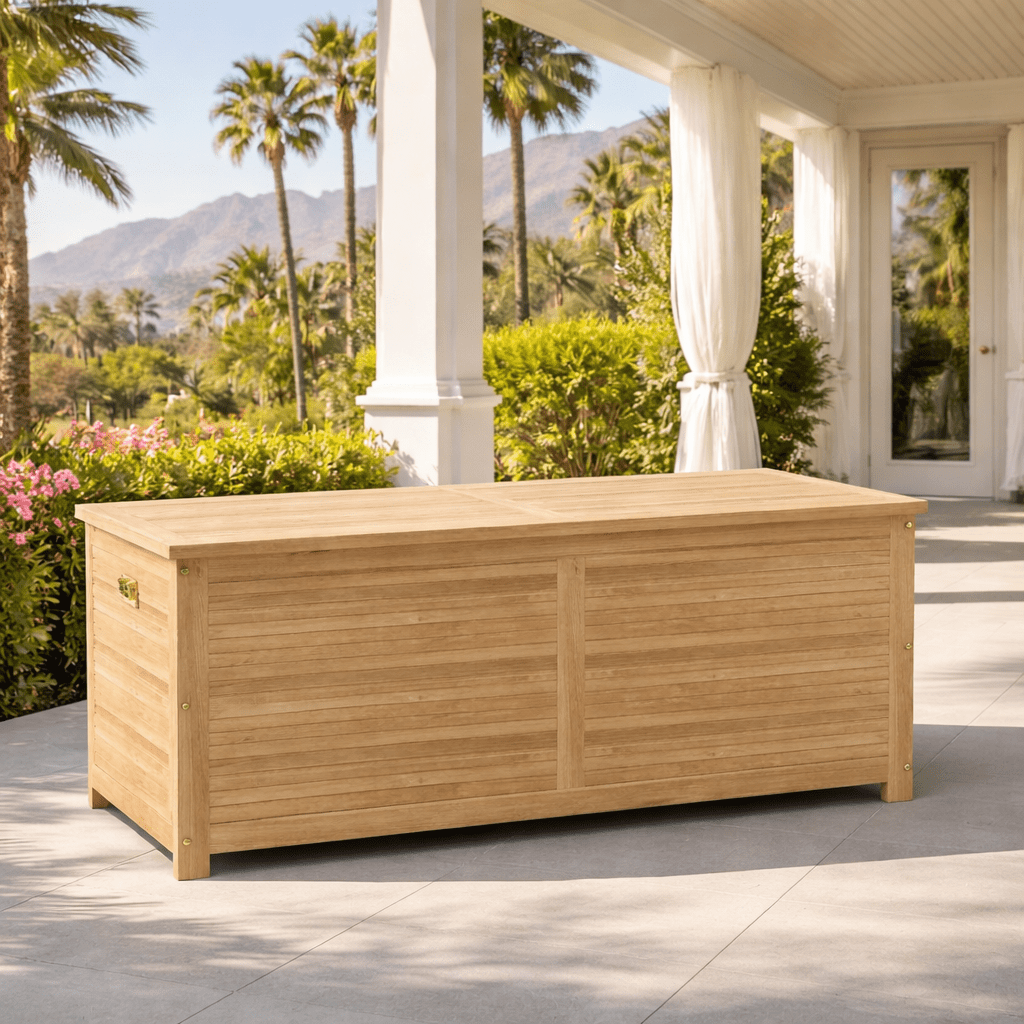
During long winter vacancies, storing cushions in a dry protected location is usually the simplest approach. A deck box may be convenient during the active season, but storage practices should always reflect the specific box, cushions and winter exposure at the property.
Before storage, allow fabrics to dry and remove debris rather than sealing damp cushions away for an extended period.
Premium teak does not require a protective cover for durability. Some Aspen homeowners nevertheless use covers because they can reduce cleaning and keep furniture more immediately usable during shoulder seasons.
If covers are used, fit and ventilation matter. Avoid creating conditions where moisture remains trapped against furniture for long periods.
The most useful winter-care step may have little to do with refinishing. Remove loose accessories, secure or store umbrellas, put cushions away where appropriate and verify that the furniture does not interfere with snow removal.
This distinction is worth remembering: Aspen winter preparation is largely an outdoor-room management problem. High-quality teak substantially simplifies the wood-maintenance part of that equation.
The strongest Aspen outdoor spaces begin with how the property is actually used: where people gather after a day outside, which views deserve to remain open, how many guests arrive during peak visits and what happens to the terrace once snow returns. Premium Grade A teak is particularly well suited to homeowners who want natural materials, substantial furniture and the flexibility to leave pieces outdoors while choosing whether to maintain their original color or let them weather naturally. Start with the primary gathering zone, then build dining, fireside and secondary seating around it.
Premium teak, quality aluminum and well-made synthetic outdoor materials can all be appropriate. Grade A teak is especially attractive for Aspen homeowners who want real wood because its natural oils, dense grain, moisture resistance and ability to withstand temperature fluctuations make it suitable for year-round outdoor exposure.
Yes. Premium Grade A teak is designed for year-round outdoor use and can withstand rain, sun and temperature fluctuations. You may still choose to cover it for cleanliness, and furniture should be positioned so it does not interfere with snow removal or sit unnecessarily beneath roof-shedding areas.
That depends on the material. Furniture not intended for severe outdoor exposure may benefit from storage. Premium Grade A teak itself does not require seasonal indoor storage, although cushions, umbrellas and loose accessories are usually better protected during extended winter non-use.
No. Teak does not need to be sealed for durability. Homeowners who want to preserve more of its original golden color may choose appropriate teak cleaners or sealers, while others simply allow the wood to weather naturally.
Yes. Unfinished teak naturally develops a silver-gray patina as it weathers outdoors. This color change is normal and does not mean the furniture has lost its outdoor durability.
Flexible configurations are particularly useful. Consider deep seating for everyday lounging, supplemental club chairs for guests and an extendable dining table when household occupancy changes significantly between quiet weekends and larger family visits.
Protect the view first. Establish important sightlines from both the terrace and adjoining interior rooms, then position sofas, sectionals and dining furniture so their backs do not unnecessarily block those views. Perpendicular arrangements often work well on scenic terraces.
They can be particularly useful because cool evenings make fire-centered conversation spaces appealing through more of the outdoor season. A teak fire pit table surrounded by lounge chairs or deep seating can create a defined gathering area on a larger terrace.
There is no universal required schedule. Clean it when dirt, pollen, leaves or other debris accumulates. For seasonal properties, a thorough cleaning after winter and another before extended winter non-use can provide a practical baseline.
It can be when longevity, natural materials and low-maintenance flexibility are priorities. Premium teak has a higher upfront cost than many outdoor furniture materials, but it can last for decades and does not depend on paint or artificial stain for outdoor durability.


