
FREE SHIPPING
within mainland USA
within mainland USA
Home ▸ Teak Outdoor Furniture ▸ By Location ▸ Atlanta, Georgia
Atlanta outdoor spaces have to handle more than summer heat. Humidity, frequent rain, strong sun, shaded tree-covered patios, seasonal pollen, and occasional winter freezes all influence how furniture ages and how much upkeep it requires. From Buckhead estates and covered porches to suburban pools and outdoor kitchens, many Atlanta homes are designed for frequent gatherings. Premium Grade A teak is especially worth considering here because it combines natural weather resistance with the substantial, architectural character that fits both traditional Southern homes and contemporary outdoor spaces.

Atlanta presents a demanding combination for outdoor furniture: substantial summer heat, humid air, regular rainfall, intense periods of sun, abundant tree cover, and long stretches when patios remain usable. The challenge is not one single extreme. It is repeated exposure to moisture, drying, sunlight, organic debris, and temperature changes over many seasons.
Atlanta is different from a dry-climate furniture market because surfaces do not always dry quickly after rain or morning moisture. A patio beneath mature trees may remain shaded and damp noticeably longer than an exposed pool deck only a few yards away. That makes material choice, airflow, drainage, and routine cleaning more important than they would be in a consistently arid environment.
When evaluating premium outdoor furniture here, we would pay particular attention to materials intended for repeated outdoor moisture exposure rather than simply asking whether something is described as “weather resistant.” Grade A teak is naturally high in oils, has a dense grain structure, and is resistant to moisture and rotting, making it particularly appropriate for this cycle of wet and dry conditions.
A covered porch solves direct-rain exposure but not Atlanta humidity. Conversely, furniture beside a sunny pool may get soaked during a storm and then dry relatively quickly. Those are two different furniture environments, even on the same property.
This is an important planning distinction: roof coverage does not automatically mean a dry furniture environment. A deeply shaded porch can actually warrant more attention to airflow and surface cleaning than a sunnier open terrace. When positioning lounge seating, allow air to move around and beneath pieces rather than packing furniture tightly against walls, dense shrubs, or permanently damp corners.
Open pool patios, terraces, and west-facing outdoor kitchens receive more direct UV exposure, while many established Atlanta neighborhoods have extensive mature tree canopies. Furniture in direct sun needs to tolerate sunlight and temperature fluctuations; furniture under trees accumulates pollen, leaves, sap, and other organic material more quickly.
Grade A teak can withstand sun exposure and naturally weathers to a silver-gray patina when left untreated. For cushioned seating, Sunbrella-equipped pieces can also be useful in exposed locations because the fabric is weather resistant, fade resistant, UV resistant, and water resistant.
One of the most practical Atlanta-specific considerations is not dramatic weather at all: it is what lands on the furniture. Spring pollen can coat dining tables, chair arms, cushions, and horizontal surfaces surprisingly quickly, while heavily landscaped properties deal with leaves and organic debris later in the year.
This should influence furniture selection. Elaborate pieces with numerous hard-to-reach recesses create more cleaning work than straightforward designs with accessible surfaces. It also argues for treating cleaning as routine housekeeping rather than waiting for furniture to look dirty.
Atlanta allows significantly more outdoor use through the shoulder seasons than colder northern markets, but freezing conditions can still occur. Furniture intended for permanent outdoor placement should therefore handle more than summer weather alone. Premium Grade A teak is designed for year-round outdoor use and withstands temperature fluctuations, so homeowners do not need to move the wood furniture indoors simply because the season changes.
The case for premium teak in Atlanta is strongest when considered as a response to the city's repeated moisture, sun, heat, and seasonal exposure rather than as a purely aesthetic preference. Other premium materials can work here—aluminum is a legitimate choice for homeowners who want a lighter, more contemporary look, for example—but Grade A teak offers an unusually useful combination of natural weather resistance, substantial weight, and traditional-to-modern design flexibility.
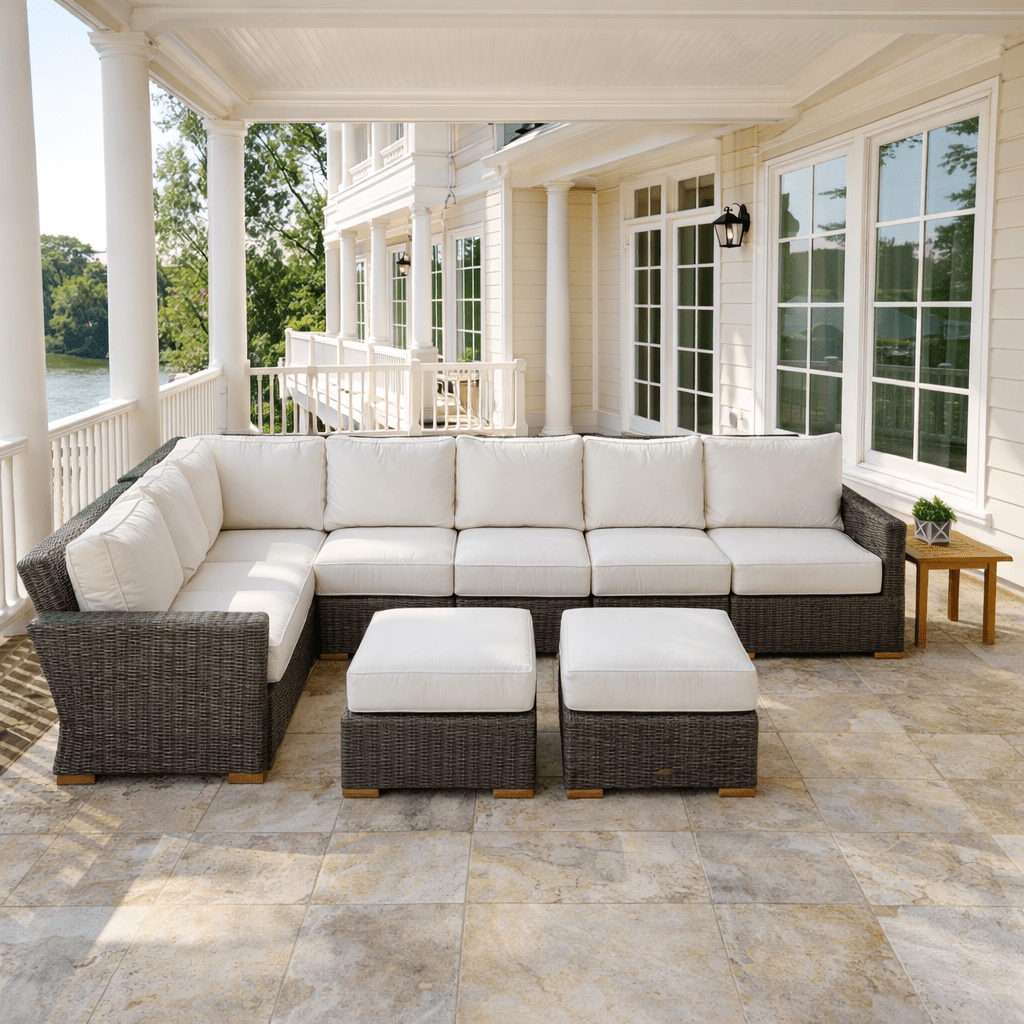 Grade A teak naturally contains a high level of oils and has a dense grain structure. Those characteristics contribute to resistance to moisture, rotting, insects, and warping. In Atlanta, where furniture can repeatedly move from a wet afternoon to a hot sunny day and back into humid conditions, that natural resistance is more meaningful than it might be in a consistently dry climate.
It also means the wood does not require an artificial stain to remain durable. That is useful for homeowners who want high-quality natural wood without committing to a complicated protective finishing schedule.
A large Atlanta property often contains several furniture environments: a shaded porch, open pool terrace, garden, and uncovered dining area. Grade A teak can be used across those spaces because it is designed for year-round outdoor use and withstands rain, sun exposure, and temperature fluctuations.
That flexibility is especially valuable when trying to create visual continuity across a property. Rather than selecting a completely different material for every exposure level, homeowners can use teak as a common architectural material and vary the furniture form, cushion configuration, and scale.
Untreated teak naturally changes from its original warm wood color toward a silver-gray patina. That change is normal weathering rather than evidence that the furniture has stopped performing properly.
Atlanta homeowners therefore have two legitimate approaches. Leave the furniture untreated and accept the evolving gray appearance, or use appropriate teak care products if maintaining more of the original color is important. The better choice is primarily aesthetic, which provides considerably more ownership flexibility than a material whose protective finish is essential to its durability.
Teak has a heavier, sturdier, more architectural feel than lightweight outdoor furniture. That characteristic works particularly well on large patios, around substantial homes, and in spaces designed as permanent outdoor rooms rather than temporary seasonal setups.
There is a tradeoff: heavier furniture is less convenient if you routinely rearrange or store every piece. If frequent portability is your highest priority, lightweight aluminum may make more sense. If the furniture will largely remain in a planned arrangement, teak's substantial character is often an advantage.
Premium teak costs more upfront than many outdoor-furniture alternatives, so the useful question is not simply “Which set costs less today?” Teak furniture can last for decades, making lifetime ownership a more appropriate comparison for someone furnishing a long-term home.
This is particularly relevant when an outdoor area is already receiving significant investment in masonry, landscaping, a pool, outdoor kitchen, pergola, or covered porch. Furniture that is expected to remain part of the space for many years often makes more sense than treating it as a replaceable accessory.
| Atlanta Challenge | Why Premium Grade A Teak Performs Well |
|---|---|
| Summer humidity | Natural oils and dense grain help resist moisture and rot. |
| Frequent rain | Designed for year-round exposure to outdoor weather. |
| Strong sun | Withstands sun exposure and can weather naturally. |
| Wet-dry cycles | Resistant to warping and temperature fluctuations. |
| Shaded patios | Moisture-resistant wood suits areas that dry more slowly. |
| Seasonal temperature changes | Designed to remain outdoors through changing conditions. |
| Long ownership horizon | Premium teak furniture can last for decades. |
If we were planning an Atlanta outdoor space from scratch, we would begin with how the property is actually used rather than choosing individual pieces first. Many homes benefit from treating the backyard as several connected rooms: dining near the kitchen, conversation seating where people naturally linger, and secondary seating around a pool, garden, or fire feature.
Atlanta homes are often furnished too much around the everyday household and not enough around the way the patio is used when people visit. A family of four may still need an eight-person table if weekends regularly involve relatives, neighbors, cookouts, or game-day gatherings.
For that reason, we would usually prioritize a generous teak outdoor dining area before filling the property with smaller accent pieces. If guest counts change considerably, an extendable teak dining table is particularly practical: keep circulation space open during normal use, then expand the table when the backyard fills up.
A common mistake on larger patios is trying to make one furniture grouping perform every job. Dining chairs are not where most guests want to spend an entire evening, while a low sectional is awkward for dinner. If space allows, create separate destinations.
Place dining near the kitchen or grill to reduce the distance food has to travel. Then position a deep-seating lounge set farther into the patio, beneath a covered area, beside a fire feature, or where it takes advantage of the best garden or pool view.
Covered porches remain one of the most useful Atlanta outdoor spaces because they provide shade during summer and shelter from passing rain. We would resist the temptation to treat the porch merely as leftover space between the house and backyard.
On a deeper porch, club chairs, a loveseat, or sofa create an everyday sitting room. On a traditional front or side porch, teak porch swings or rockers often fit the architecture more naturally. The furniture should match the function of that particular porch rather than repeating the main patio arrangement.
When a property includes a pool, keep actual lounging furniture close enough to the water that swimmers can use it without crossing the primary dining area. Chaise lounges work best in the sunniest portions of the deck, while conversation seating often benefits from afternoon shade.
One useful planning rule is to divide the pool deck according to how long people remain in each position. Sun loungers can occupy the exposed perimeter; the furniture where people talk for hours should usually receive the more comfortable shade location.
Begin with the area your household uses most. Frequent hosts should usually start with dining sets or extendable tables; households that spend long evenings outside may get more value from sectional or multi-piece lounge seating. Pool owners can then add chaise lounges, while traditional porches and landscaped properties are natural settings for swings and garden benches.
Atlanta outdoor living is less about one uninterrupted year-round season and more about making the most of a long sequence of usable periods. Spring and fall can make patios the preferred room of the house, summer pushes activity toward shaded and covered spaces, and cooler evenings make conversation seating and fire features appealing later in the year.
For many Atlanta properties, the most important furniture question is not whether the household eats outdoors every night. It is whether the space can comfortably absorb additional people when everyone comes over. Cookouts, birthdays, family visits, football Saturdays, and informal neighborhood gatherings reward layouts that can expand without becoming congested.
This is why circulation deserves as much attention as seating count. Leave obvious walking routes between the house, grill, dining table, lounge area, and pool. A patio that technically seats twelve but forces guests to weave around chairs will feel smaller than a better-planned space seating ten.
In the hottest part of summer, covered porches, pergolas, umbrellas, and tree shade often determine which furniture actually gets used. Place the most comfortable conversational seating where people will realistically want to sit at 3 p.m., not only where it looks best during a cool spring morning.
Dining can tolerate slightly more exposure when it is used primarily in the evening. Deep seating, where someone may remain for several hours, generally deserves the most comfortable microclimate on the patio.
An outdoor kitchen works best when the cook is part of the gathering rather than isolated from it. Bar or counter-height seating can provide an informal transition around a grill island, while a conventional dining table nearby handles full meals. A serving or buffet table can also keep food and beverages off the primary dining surface.
The key is avoiding duplicate zones that compete for the same function. If the kitchen island already seats four casually, use the remaining patio space for proper dining or deep seating rather than adding another small bar-height group.
Atlanta's outdoor spaces should not be furnished solely around July. Comfortable shoulder-season weather gives dining areas and conversation patios substantial value beyond summer, and a teak fire pit table can turn a lounge grouping into a natural evening destination when temperatures cool.
This longer usage horizon is another reason we would favor permanent, substantial furniture over pieces selected primarily for easy seasonal storage.
 The most useful teak furniture configuration depends less on ZIP code than on the relationship between the house, patio, pool, garden, and entertaining areas. Atlanta's housing stock ranges from compact in-town properties to large Northside estates, so scale should follow the property rather than a one-size-fits-all formula.
For larger properties in areas such as Buckhead, Sandy Springs, Milton, or north Atlanta's estate neighborhoods, we would usually establish two substantial furniture groups rather than scattering many small pieces around the yard.
A six- to ten-person dining set can anchor meals and larger gatherings. A separate teak sectional or multi-piece lounge arrangement creates the second destination. Coffee tables and side tables then make the lounge area functional without overwhelming it.
Atlanta's older and traditionally styled homes naturally accommodate furniture with a warmer, architectural character. Teak works with brick, painted siding, stone, traditional columns, and established landscaping without requiring the entire exterior to adopt a coastal or resort look.
Use a porch swing or rockers when the porch is primarily a place to sit for two or three people. A deeper covered veranda that functions as an outdoor living room justifies club chairs, loveseats, or a sofa instead.
Pool furniture should be planned around two different activities: being in and out of the water, and spending extended time socializing nearby. Teak chaise lounges address the first use well, while a shaded lounge group handles the second.
Avoid filling every linear foot of pool deck with identical loungers simply because that is common in resort design. Residential pools generally benefit from a mix of loungers, side tables, and conversational seating that reflects how the family actually uses the space.
In neighborhoods with smaller lots, the challenge is preserving openness. A round four-person table can make circulation easier than a large rectangle, and chairs that fold or stack can create flexibility when the patio needs to serve multiple purposes.
For a narrow patio, a loveseat plus two chairs can often be arranged more effectively than a sectional. The broader lesson is to buy for usable clearance, not just furniture dimensions. Include the space chairs require when pulled out and the paths people need to move between zones.
Mature landscapes are one of Atlanta's strongest outdoor assets. A teak garden bench can create a useful destination away from the primary entertaining area—along a path, beneath trees, near a planting bed, or at a quiet edge of the yard.
These smaller destinations are most successful after the primary patio has been solved. They should enhance how someone moves through and experiences the property rather than functioning as isolated furniture displays.
Atlanta does not have one dominant residential aesthetic. Traditional brick homes, historic garden neighborhoods, large estate properties, renovated bungalows, transitional houses, and contemporary new construction can all sit within the same metropolitan market. That variety favors outdoor furniture with enough material authenticity to work across changing architectural styles.
On brick, Georgian-inspired, Colonial Revival, and other traditional properties, teak's natural wood character can soften masonry and complement established landscapes. Dining sets, benches, swings, and classic lounge silhouettes generally integrate naturally without making the outdoor area look overly themed.
Areas influenced by Atlanta's garden-suburb tradition often combine substantial homes with mature trees, curved streets, lawns, and layered landscaping. In these settings, outdoor furniture should support the landscape rather than compete with it.
Natural teak is particularly effective when repeated selectively: perhaps a dining group near the house and one garden bench deeper in the property. Allowing untreated teak to develop a silver-gray patina can also produce a quieter appearance within mature plantings.
Teak does not require traditional styling. Cleaner-lined sectionals, sofas, dining tables, and teak-and-wicker combinations work well with contemporary renovations and newer construction. Compared with aluminum, teak creates a warmer and more organic impression; aluminum remains a legitimate alternative when light weight or a strongly modern material palette is the priority.
Atlanta's mature trees are both an amenity and a practical constraint. Instead of placing every furniture group where the patio was easiest to build, consider views, afternoon shade, leaf drop, drainage, and walking routes. The best location for a dining table may not be the best location for upholstered lounge seating.
A useful design hierarchy is simple: give the best shade to the furniture used for the longest periods, give the easiest kitchen access to dining, and give the best view to the seating intended for quiet conversation.
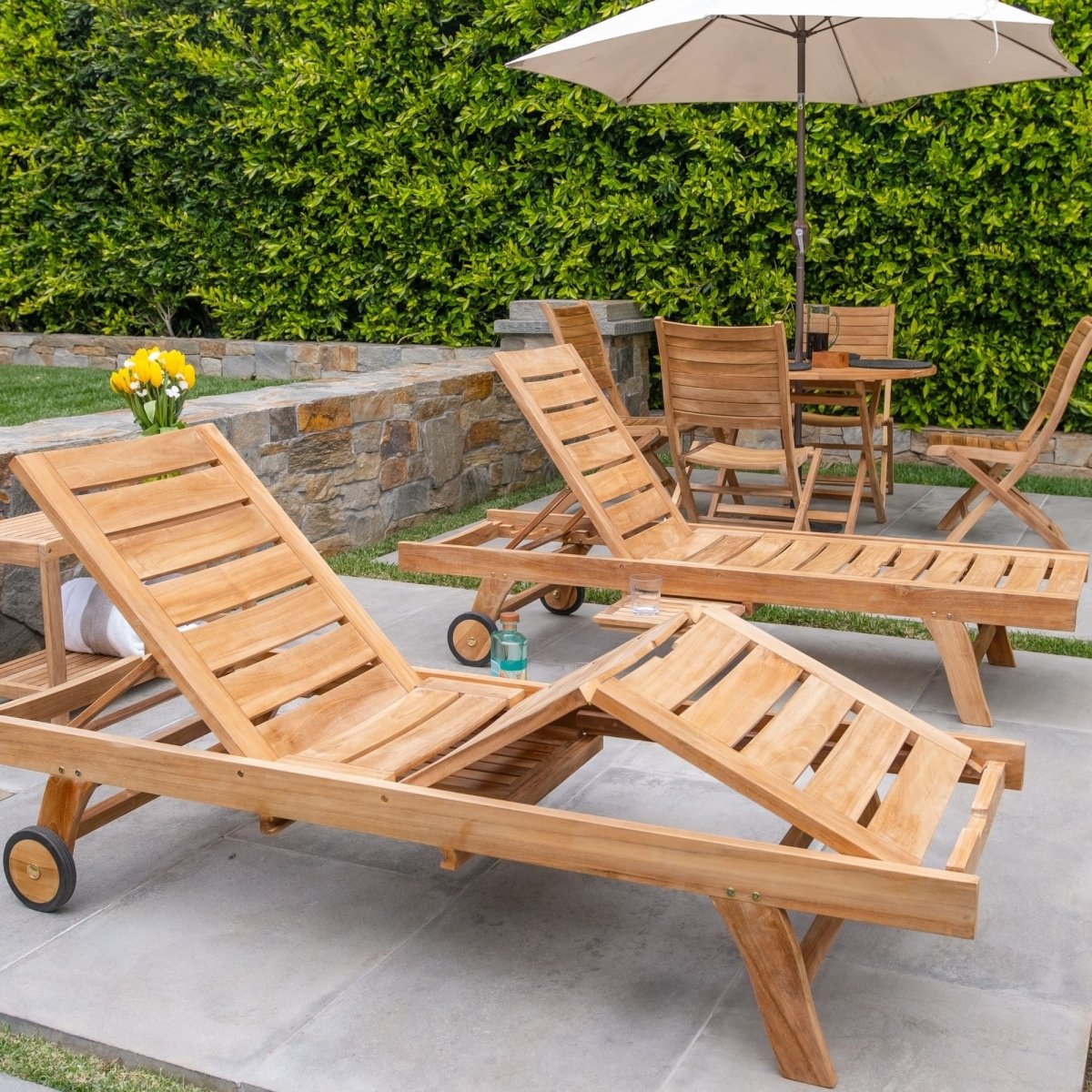 A covered or tree-shaded patio may look like the safest location for furniture, but shade can prolong dampness after rain. Packing furniture tightly into a shaded corner or against dense landscaping can further reduce airflow.
Choose outdoor materials intended for moisture exposure and provide room around furniture for air circulation. Grade A teak's moisture and rot resistance makes it well suited to these conditions, although surfaces should still be kept clean.
If the entire patio is optimized around pool season, homeowners can miss some of Atlanta's most enjoyable outdoor months. Spring and fall favor dining, conversation seating, porch use, gardens, and fire-centered gatherings.
Permanent teak seating and dining furniture can serve throughout these changing seasons because it is designed for year-round outdoor use rather than requiring routine seasonal relocation.
Pollen and tree debris are maintenance issues even when the furniture material itself is highly durable. Allowing organic material to accumulate makes the patio look neglected and can encourage surface staining or mildew on grime and debris.
Select furniture you can easily access for cleaning. Teak's maintenance flexibility helps because the wood does not require paint or artificial stain for durability, but low maintenance should never be confused with never cleaning.
A visually impressive sectional can be a poor purchase if it consumes the walking route between the kitchen and pool. Likewise, a four-person dining table may feel undersized the first time a large family gathering moves outside.
Measure the complete activity zone rather than the furniture footprint alone. Include chair pullback, serving space, paths to doors, grill clearance, and access to the pool or yard. TeakHQ offers furniture as both individual pieces and multi-piece configurations, making it easier to build around the actual space instead of forcing a predetermined package.
Protective covers can reduce exposure and cleaning, but they are optional for teak rather than necessary for its durability. In a humid climate, a cover also needs to be used sensibly: covering damp furniture or trapping persistent moisture underneath can undermine the reason for covering it in the first place.
Think of a cover as a convenience for reducing debris, pollen, and weather exposure—not as a substitute for appropriate outdoor materials.
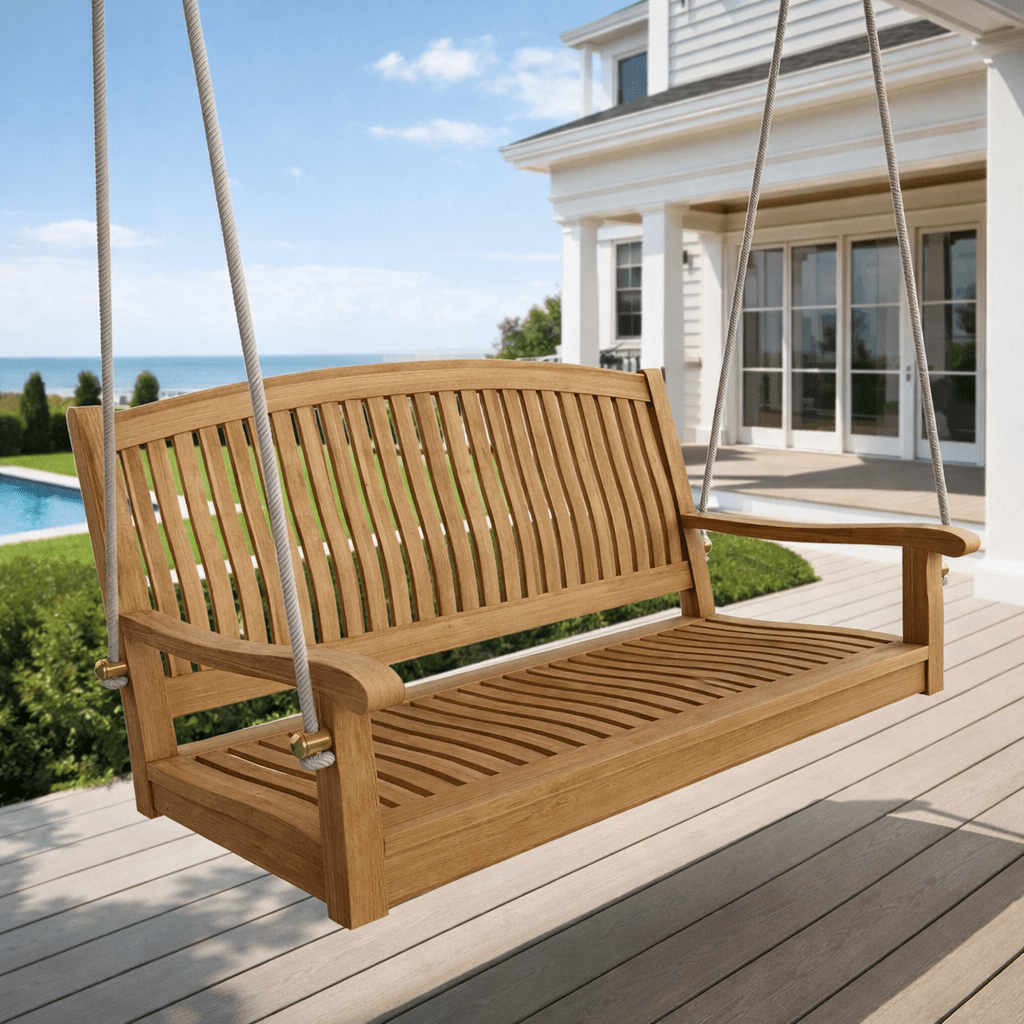 There is no useful Atlanta rule saying teak must be cleaned on one fixed monthly schedule. A table beneath oak trees may need attention much sooner than a lounge chair on an open terrace. Inspect surfaces and clean when pollen, grime, leaves, food residue, or organic debris begins accumulating.
Spring often warrants more frequent surface cleaning because pollen can build quickly. After major leaf drop or extended wet periods, another inspection is sensible.
Teak itself is naturally resistant to moisture and rot, but humid conditions still make basic patio hygiene important. Remove leaves and debris instead of allowing them to remain wet against furniture surfaces, and avoid creating permanently damp pockets around planters, walls, or dense vegetation.
Cushions deserve separate attention from the teak frame. Many TeakHQ patio seating pieces include Sunbrella cushions, which are weather resistant, fade resistant, UV resistant, and water resistant. Even so, allowing cushions to dry and keeping them clean is good ownership practice in humid conditions.
One of the most important teak-care decisions is aesthetic. Untreated teak naturally develops a silver-gray patina. Homeowners who like that appearance can allow the change to occur without applying artificial stain for durability.
If you prefer the warmer original teak color, appropriate sealing or oiling can be used as an optional appearance-maintenance strategy. TeakHQ also offers teak care products for owners who choose that route.
Premium Grade A teak is designed for year-round outdoor use, so moving every wooden piece into a garage each winter is not required. Atlanta's occasional freezing weather does not by itself create a need for seasonal teak storage.
Some homeowners may still store removable cushions, accessories, or lightly used pieces to reduce cleaning and exposure. That is an ownership preference rather than a requirement for the teak wood itself.
Covers can be worthwhile on heavily exposed furniture, under pollen-producing trees, or on pieces that may go unused for extended periods. They reduce how much debris reaches the furniture and can simplify spring cleanup.
Allow furniture and cushions to dry before enclosing them for a prolonged period, especially in humid weather. Teak does not require a cover to remain outdoors, so there is no reason to keep a damp setup unnecessarily enclosed.
The right outdoor furniture should fit the way your property works: where the shade falls, how people move between the house and yard, how many guests actually gather, and which spaces remain comfortable throughout Atlanta's changing seasons. Premium Grade A teak is a strong long-term option for homeowners who value natural materials, substantial construction, weather resistance, and the freedom to either maintain the original wood color or let it age naturally.
Start with the area that matters most—dining, conversation seating, poolside lounging, or porch living—and build the rest of the outdoor space around it.
Materials intended for repeated moisture exposure should be prioritized. Premium Grade A teak is particularly well suited because its natural oils and dense grain make it resistant to moisture, rotting, insects, and warping. High-quality aluminum and synthetic materials can also be appropriate depending on the desired look and ownership priorities.
Yes. Premium Grade A teak is designed for year-round outdoor use and withstands rain, sun exposure, and temperature fluctuations. Atlanta homeowners do not need to move teak furniture indoors every winter simply to protect the wood.
For an everyday sitting porch, club chairs, loveseats, sofas, rockers, and porch swings are practical choices. Deep porches can support complete conversation groups, while narrower front porches usually work better with two or three individual seating pieces.
Grade A teak is naturally resistant to moisture and rotting because of its natural oils and dense grain structure. Humidity still makes routine cleaning and airflow worthwhile, particularly in heavily shaded locations where leaves or debris can remain damp.
Clean according to exposure rather than following an arbitrary schedule. Furniture beneath trees may need more frequent attention during spring pollen and autumn leaf drop, while an open patio may require less frequent cleaning. Remove accumulated pollen, dirt, food residue, and organic debris when they become noticeable.
Not necessarily. Grade A teak does not require a cover for outdoor durability, although covers can reduce pollen, leaf debris, and general cleaning. In humid weather, allow furniture and cushions to dry before covering them for extended periods.
Both can be appropriate premium materials. Teak is natural, warmer in appearance, heavier, and more architectural. Aluminum is lighter and often suits a more explicitly modern aesthetic. Homeowners prioritizing natural material, substantial weight, and long-term wood furniture often prefer teak; those prioritizing easy movement may prefer aluminum.
Buy for your realistic gathering size rather than everyday household size. Six- to eight-person tables work well for many families, while frequent hosts may prefer seating for eight to ten or an extendable dining table that stays smaller during everyday use.
Yes. Untreated teak naturally develops a silver-gray patina with outdoor exposure. This is normal weathering rather than a sign of structural deterioration. Owners who prefer the original warmer appearance can choose optional teak sealing or oiling.
Start with dedicated chaise loungers for swimmers, then add a separate conversation area if space permits. Place loungers where sun exposure is desirable and reserve comfortable shade for seating where people are likely to spend longer periods talking or relaxing.


