
FREE SHIPPING
within mainland USA
within mainland USA
Home ▸ Teak Outdoor Furniture ▸ By Location ▸ Austin, Texas
Austin outdoor spaces have to work through intense summer sun, long stretches of heat, sudden rain, and changing seasons while still feeling inviting for dinners, pool days, and evenings outside. From shaded West Austin terraces to Lake Travis properties and suburban backyards built around pools and outdoor kitchens, placement and material choice both matter. Premium Grade A teak is a strong option because it combines natural weather resistance with the substantial, architectural feel many of these spaces call for.

Austin asks more of outdoor furniture than its relatively mild winters might suggest. The biggest challenge is not simply that summers are hot; it is the combination of prolonged heat, strong sun, exposed patios, intermittent heavy rain, thunderstorms, and long periods when homeowners actually want to use their outdoor spaces. Furniture may spend months outdoors through conditions that alternate between intense drying and sudden moisture.
Austin's summer climate changes the way we evaluate a patio set. Materials are not simply sitting in pleasant sunshine; exposed pieces can spend day after day absorbing heat and receiving direct UV. Finishes, synthetic components, cushions, and lower-quality woods may therefore demand more attention than shoppers expect.
Shade matters almost as much as material. A beautiful dining set placed against an unshaded west-facing wall may technically withstand the outdoors yet still become a space nobody wants to use at 6 p.m. in July. When we plan an Austin patio, we first identify where afternoon shade arrives and then decide which activities belong in that zone.
Central Texas can move between dry weather and substantial rain events quickly. That makes drainage and drying important. Furniture should not be positioned where irrigation, roof runoff, or poor patio drainage repeatedly leaves its feet sitting in water.
Premium Grade A teak is particularly useful in this cycle because its naturally high oil content and dense grain make it resistant to moisture, rotting, and warping. It can be used outdoors year-round, although cushions and accessories still deserve sensible storm preparation.
Austin and Houston are both hot Texas markets, but the furniture problem is not identical. Houston's coastal influence makes persistent humidity a more dominant concern. Austin more often combines powerful sun and heat with alternating dry periods, storms, and Hill Country exposure. That shifts more attention toward UV exposure, shade planning, temperature swings, and keeping furniture comfortable enough to use during hot weather.
Austin is not a cold-weather market, but occasional freezing conditions mean furniture should not be selected as though temperatures never change. Water trapped in containers, accessories, or poorly draining spaces can become more troublesome during a freeze. Premium teak is designed for year-round outdoor use and withstands temperature fluctuations, making seasonal furniture removal optional rather than part of the basic ownership routine.
Several premium outdoor materials can work well here. Quality aluminum can be practical for homeowners who prefer lightweight, modern furniture, while high-quality synthetic materials appeal to people who prioritize minimal upkeep. Grade A teak makes a particularly compelling case when the goal is a natural material with substantial weight, long service life, and the ability to remain outdoors through Austin's changing conditions.
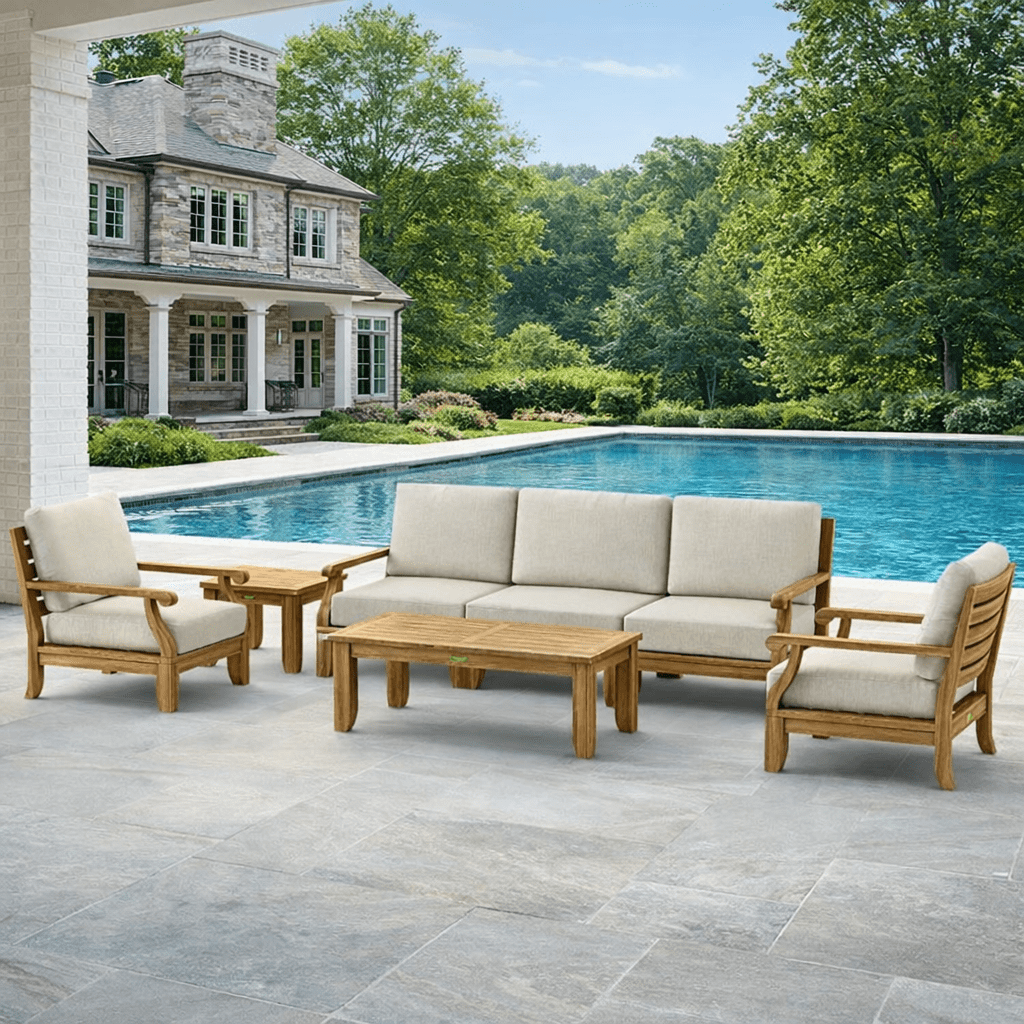 Grade A teak has naturally high oil content and a dense grain structure. Those characteristics make the wood resistant to moisture, rot, insects, and warping without requiring an artificial stain for durability. In Austin, that matters because an outdoor set may move repeatedly from intense sunshine to rain and back to dry heat.
The distinction between teak and many lower-grade outdoor woods becomes important over years rather than weeks. A material that requires a protective finish to remain viable outdoors creates a different ownership routine than one designed to weather naturally.
One of the most important things to understand before buying teak is that unfinished teak naturally weathers toward a silver-gray patina. That is expected aging, not automatically a sign that the furniture is deteriorating.
Homeowners who like the weathered appearance can allow that process to occur. Those who want to retain more of teak's original golden color can use appropriate teak care products and a sealer or oil according to the desired finish. Austin's abundant sunshine simply makes deciding which appearance you prefer especially worthwhile before furnishing a large space.
Lightweight furniture has obvious benefits when it needs to be moved frequently. The tradeoff is that Austin thunderstorms and gusty weather can make very light patio pieces less convenient than they first appeared in a showroom.
Teak has a heavier, sturdier, more architectural feel than lightweight alternatives such as aluminum. That does not eliminate the need to prepare a patio for severe weather, especially loose cushions and umbrellas, but many homeowners prefer furniture that feels permanently integrated into the outdoor room.
The strongest case for teak is not that it requires no care. It is that the homeowner has choices. Premium teak can remain unfinished and develop its natural patina, or it can receive periodic cosmetic care to preserve more of its original tone.
For an Austin homeowner furnishing several outdoor zones, that flexibility can be valuable. A large dining table, sectional frame, pool furniture, and garden seating do not have to become recurring refinishing projects simply to remain suitable for outdoor use.
| Austin Challenge | Why Premium Grade A Teak Performs Well |
|---|---|
| Strong summer sun | Designed for outdoor sun exposure and can weather naturally to a silver-gray patina. |
| Prolonged heat | Dense natural teak is designed for year-round outdoor conditions and temperature fluctuations. |
| Sudden heavy rain | Natural oils and dense grain provide strong moisture and rot resistance. |
| Wet-to-dry cycles | Grade A teak is naturally resistant to warping and outdoor weather exposure. |
| Seasonal humidity | Natural moisture and rot resistance are useful during damp periods. |
| Outdoor insects | Teak's natural characteristics provide insect resistance. |
| Occasional freezes | Teak is designed to remain outdoors through normal temperature fluctuations. |
If we were walking an Austin property with a homeowner, we would not begin by asking which furniture collection they liked. We would begin with three questions: Where does the afternoon sun hit? Where do people naturally gather after coming out of the house? And how many people are realistically using the space on a normal weekend versus a party weekend?
Our most important Austin recommendation is simple: assign furniture according to the movement of shade, not just the shape of the patio. The most comfortable evening zone deserves the furniture you use longest.
For many households, that means placing the main outdoor dining set under a covered patio, pergola, or naturally protected portion of the terrace. An exposed sunny zone can then serve as poolside or occasional seating rather than forcing everyone to eat in direct late-day heat.
On a larger West Austin, Lakeway, Bee Cave, or Hill Country property, we usually prefer two distinct furniture zones rather than one oversized cluster. The dining area should connect logically to food preparation. The lounge area should face the pool, landscape, view, television, or fire feature that gives people a reason to stay after dinner.
A teak sectional works particularly well when the lounge zone is large and clearly defined. On narrower covered patios, a sofa or loveseat paired with club or swivel chairs may preserve circulation better.
Austin homes often need to function differently on Tuesday evening than they do during a weekend barbecue, football gathering, birthday, or family visit. Furnishing only for the largest imaginable party can leave the patio feeling crowded every other day.
An extendable teak dining table is one solution because it allows the everyday footprint to remain manageable while providing more dining capacity when guests arrive. Another is combining a standard dining table with nearby bar seating that can absorb overflow without permanently enlarging the primary table.
For pool-oriented properties, resist pushing every chair against the water's edge. Leave a comfortable circulation path and establish a dedicated lounging zone instead. Chaise lounges make sense on the sunnier side of the pool, while the conversation area generally benefits from more shade.
This is one of the easiest ways to make a backyard feel intentionally designed: dining, lounging, swimming, and conversation each receive a clear zone instead of competing for the same square footage.
Start with the way your household uses the patio most often. Frequent hosts will usually get the most value from dining sets, extendable tables, sectionals, and flexible bar seating; pool-focused homes should give chaise lounges equal priority. For larger Hill Country or suburban properties, fire pit tables and secondary garden seating can then turn underused parts of the yard into separate destinations rather than simply adding more furniture to the main patio.
Austin's outdoor culture translates naturally to the home. Patios are not simply decorative extensions of the house; they often become places for meals, grilling, watching games, cooling off around the pool, hosting friends, and stretching an evening long after dinner is finished. The most successful furniture plans account for those different activities instead of treating the backyard as a single seating area.
In homes with a built-in grill or outdoor kitchen, seating should support the cooking zone without crowding it. We like to keep the primary dining table close enough for serving but far enough away that guests are not standing in the cook's work path.
Counter-height seating can create an informal transition between cooking and dining. It is especially useful when hosts want guests nearby while food is being prepared, rather than having everyone migrate to the dining table before the meal is ready.
A good Austin pool patio typically needs three types of space: somewhere to lie in the sun, somewhere to sit in shade, and somewhere to put drinks, towels, phones, and food. Filling the entire deck with chaise lounges addresses only the first need.
We would usually combine several loungers with side tables and a shaded conversation area. If the patio is large enough, keeping dining slightly removed from wet pool traffic makes both areas more comfortable.
Summer gets most of the attention, but Austin's outdoor furniture earns much of its value during the shoulder seasons. Pleasant spring and fall periods are ideal for long dinners, gatherings, and evenings outside, while winter can still provide usable patio days between colder weather events.
That broad seasonal usefulness is one reason we prefer creating genuine outdoor rooms rather than temporary summer arrangements. A permanent-quality table and lounge area can remain ready whenever conditions are inviting.
A Lake Travis or western Hill Country property may place more emphasis on views, open terraces, pools, and sunset conversation than a compact central-city home. In those settings, furniture orientation matters as much as furniture style. Chairs should face the reason the patio exists.
That sounds obvious, yet it is surprisingly common to see every seat organized around the architecture while turning its back on the landscape. On a view property, begin with sightlines and circulation, then fit the furniture to them.
 The right furniture mix depends less on ZIP code than on the physical relationship between the house, shade, pool, kitchen, and yard. Austin's variety of urban homes, large suburban lots, lake properties, and Hill Country estates makes flexible furniture planning particularly useful.
Dining should usually get first priority here. A six- or eight-person table works for many households, while frequent hosts may prefer larger configurations or an extendable design. Pair the table with bar and counter-height teak furniture when an outdoor kitchen island or serving counter creates a natural second seating zone.
A serving or buffet table can also be more useful than adding another row of dining chairs. It gives food and drinks a destination away from the tabletop and keeps the dining area usable during larger gatherings.
Start with dedicated teak chaise loungers and small side tables, then add shaded seating if space allows. Four loungers arranged in a clean row can create a resort-style pool edge without overwhelming circulation.
If the pool is the visual centerpiece of the backyard, orient nearby lounge seating toward it. Swivel chairs can be useful where occupants naturally turn between a television, conversation group, pool, and landscape rather than facing one fixed direction.
Large patios are easier to under-furnish than many homeowners realize. One furniture set floating in the center can make a substantial terrace feel unfinished. We would instead establish separate dining and conversation zones, using rugs, planters, tables, or the architecture itself to visually define them.
A sectional works well for a large conversation zone. A sofa-and-chair arrangement provides more flexibility if sightlines or doorways make a sectional difficult to position. Either can be paired with coffee tables and side tables so every seat functions comfortably.
Cooler evenings create a different reason to use the backyard. A teak fire pit table can establish a destination separate from the primary dining area, particularly on larger properties where the patio transitions into a lawn or landscaped yard.
Think carefully about traffic around the fire feature. Seating should feel conversational without forcing people to squeeze between chairs and the table. A generous circulation ring also makes the area easier to use when several guests arrive at once.
Not every outdoor seat needs to be part of the main patio. Hill Country properties, mature West Austin landscapes, and larger suburban yards may have secondary places worth using: a shaded oak, garden edge, overlook, or quiet corner away from the pool.
A bench or pair of chairs can make these areas useful without turning them into another fully furnished room. This is often a better investment than continuing to add pieces to a primary patio that is already complete.
Austin outdoor design covers a wide range: contemporary architecture, traditional Texas homes, limestone and stucco Hill Country residences, remodeled mid-century properties, lake houses, and newer suburban builds. Teak's natural wood appearance fits unusually well across that spectrum because it can read as warm and traditional without requiring ornate styling.
Natural stone, limestone, warm masonry, stucco, exposed wood, and earth-toned landscapes are common visual references around the western Austin area. Natural teak sits comfortably beside those materials because the furniture contributes another authentic texture rather than competing with them.
Allowing teak to weather toward silver-gray can create an especially relaxed look beside stone and native landscaping. Keeping more of the original golden tone creates stronger contrast and a more finished appearance.
Modern architecture does not require metal furniture. Clean-lined teak pieces can soften concrete, glass, steel, and large expanses of masonry while preserving a contemporary feel. This can be especially effective when the house already contains substantial hard surfaces and the patio needs visual warmth.
For a contemporary layout, we would keep furniture groupings simple and intentional rather than filling every corner. Larger statement pieces often work better than many small unrelated pieces.
Outdoor rooms surrounded by live oaks, grasses, stone, and informal planting generally benefit from materials that do not feel overly manufactured. Teak's natural grain and changing patina complement that approach without requiring the furniture itself to imitate rustic design.
A garden bench, Adirondack-style seating, or a compact conversation group can also help connect the main patio to the landscape rather than concentrating every activity immediately outside the back door.
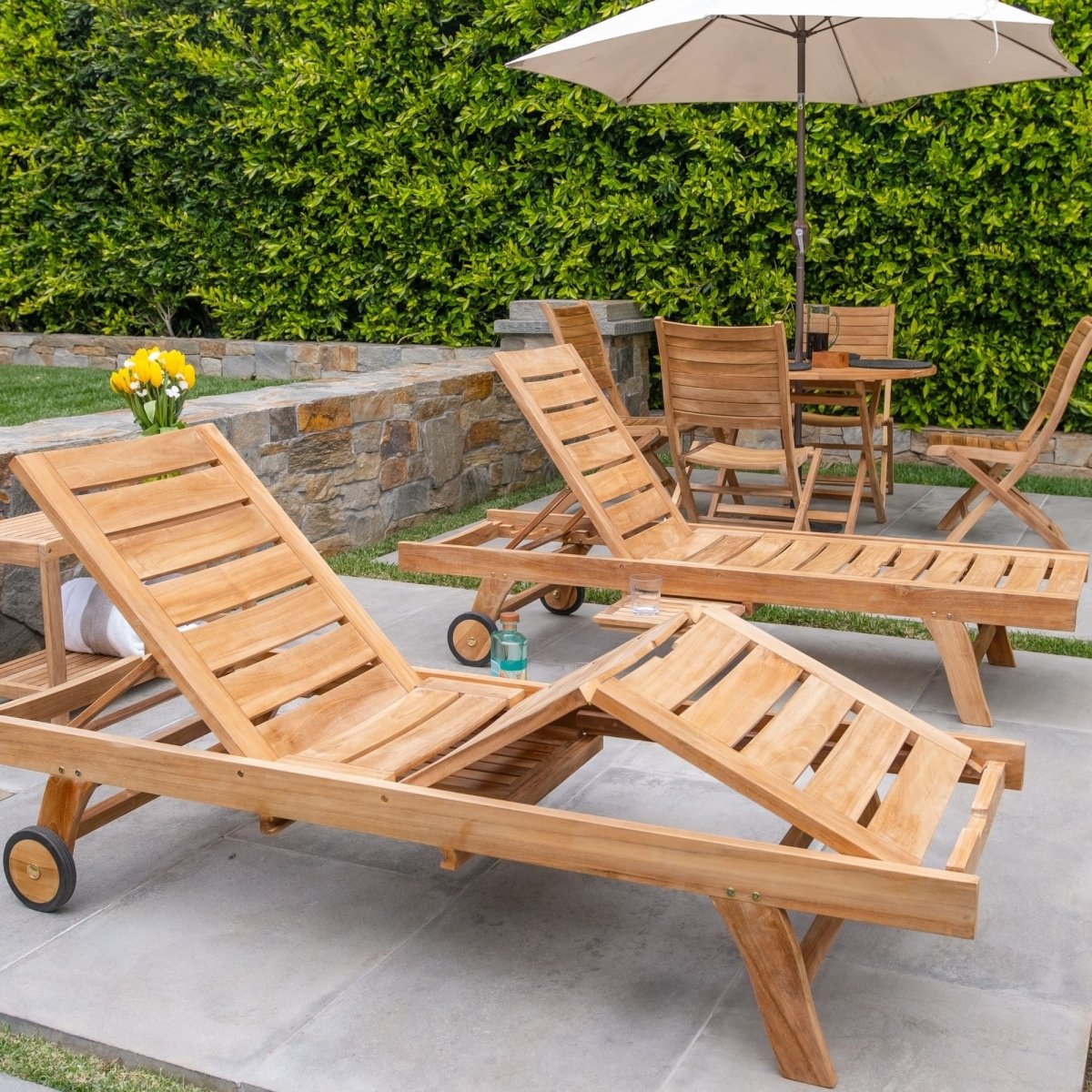 The easiest mistake to make is putting the most-used furniture where it looks best on a floor plan rather than where it feels best in summer. West-facing exposure can turn a dining or conversation area into the hottest part of the yard precisely when people want to use it.
Map morning and late-afternoon sun before choosing the layout. Premium teak is designed for sun exposure, but material durability does not make direct summer sun comfortable for people. Give dining and long-duration seating the best shade whenever possible.
A patio designed around an occasional 20-person gathering can feel cluttered the remaining 350 days of the year. Oversized tables also consume circulation space and can make it harder to create a separate lounge area.
Choose furniture around normal household use first, then add adaptable capacity through extendable tables, benches, counter seating, stackable chairs, or movable accent pieces.
Outdoor furniture can handle rain without being intentionally placed in poor drainage. Downspouts, roof valleys, irrigation heads, low patio spots, and pool splash zones can repeatedly expose one small part of a furniture set to more water and debris than the rest.
Grade A teak is naturally moisture- and rot-resistant, but good placement still improves the ownership experience. Fix drainage problems rather than asking the furniture to compensate for them.
Very lightweight furniture can be convenient to rearrange, but the same characteristic can become inconvenient when thunderstorms arrive. Teak's heavier, sturdier feel is attractive to homeowners who prefer a more permanent outdoor installation.
That does not mean everything can be ignored during severe weather. Loose cushions, umbrellas, accessories, and lightweight objects should still be secured or moved when conditions warrant it.
Natural unfinished teak changes color outdoors. If you specifically want the original golden-brown appearance, plan for cosmetic maintenance rather than discovering the patina after the furniture has already begun weathering.
If you prefer silver-gray teak, the simpler choice is to let the material age naturally. Neither approach is inherently better; the mistake is buying without deciding which appearance you actually want.
One reason teak works well for substantial Austin outdoor spaces is that care can be matched to the homeowner's preferred appearance. The furniture does not require an artificial stain for outdoor durability, so maintenance can focus primarily on cleanliness and aesthetics.
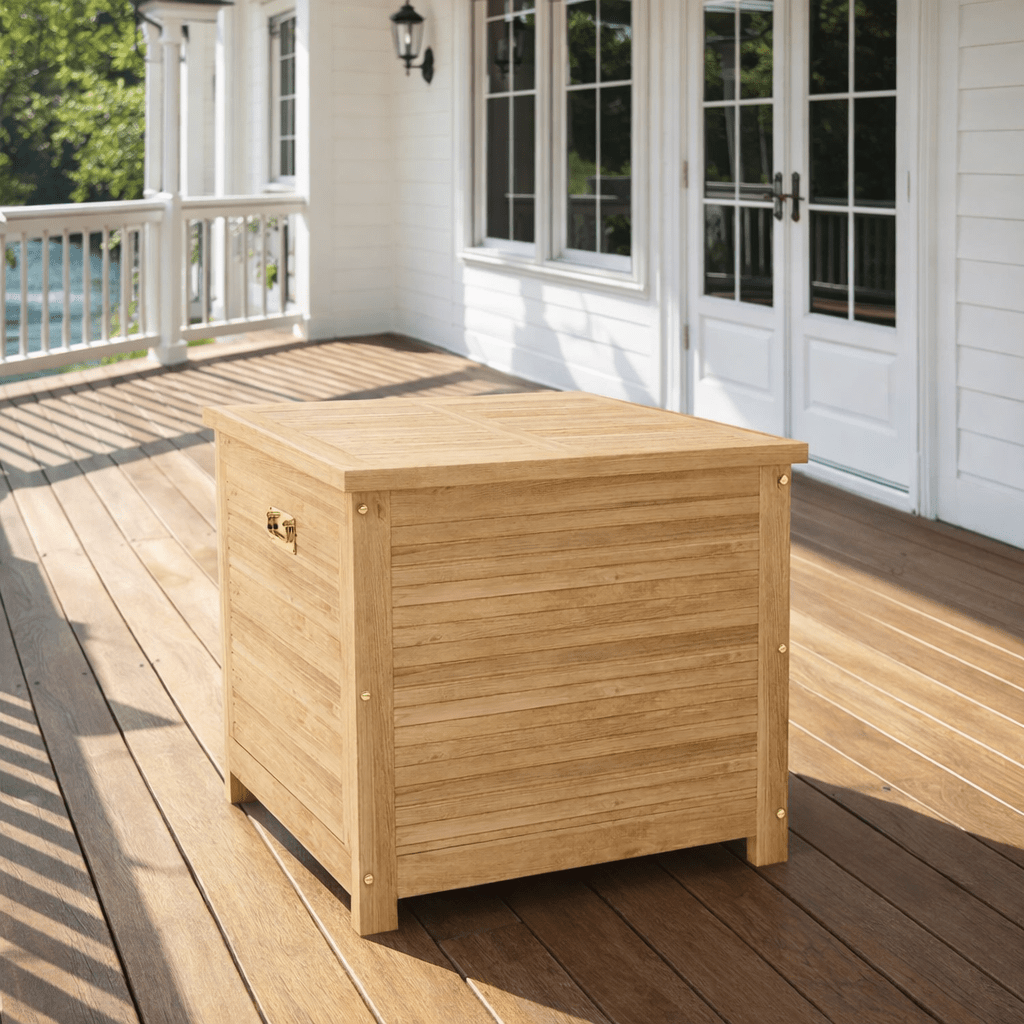 Austin patios can collect pollen, dust, leaves, seeds, and other organic debris. Rather than following an arbitrary cleaning calendar, inspect the furniture periodically and clean when buildup becomes visible.
Pay extra attention to horizontal surfaces, joints, shaded areas, and places beneath cushions or accessories where debris remains damp longer. Keeping surfaces reasonably clean helps prevent dirt and organic material from becoming harder to remove.
Untreated teak naturally develops a silver-gray patina. Homeowners who like that appearance can allow it to weather without continually trying to restore the original color.
If retaining a warmer golden appearance matters to you, use appropriate teak care products according to the product instructions. Treat this as an aesthetic choice rather than a requirement for the wood to remain suitable outdoors.
Do not assume the furniture frame and cushion should receive identical care. Most TeakHQ patio seating includes Sunbrella cushions, although specifications vary by product. Sunbrella is weather-, fade-, UV-, and water-resistant, but sensible storage can still reduce unnecessary exposure and cleaning.
Before major storms or when a patio will sit unused for an extended period, moving loose cushions to a protected location is a practical habit. Deck boxes or indoor storage can also keep accessories from becoming scattered during windy weather.
TeakHQ's Grade A teak furniture is designed for year-round outdoor use, so Austin homeowners generally do not need a seasonal ritual of moving large teak frames indoors. Covers are optional rather than required for the teak itself.
During unusual freezing or severe-weather events, concentrate on accessories, standing water, umbrellas, cushions, and anything loose. Furniture covers can be useful for keeping dirt and debris off a set when it will not be used for a while, but they are a convenience rather than a prerequisite for owning premium teak.
The best Austin patio is not the one with the most furniture. It is the one that puts dining, shade, conversation, cooking, poolside lounging, and views in the places where they work naturally. Once that plan is right, premium Grade A teak provides a durable, substantial foundation that can remain outdoors, age naturally, and support years of everyday meals and larger gatherings.
There is no single appropriate material for every homeowner. High-quality aluminum and premium synthetic furniture can work well, but Grade A teak is particularly attractive for Austin because it combines natural moisture, rot, insect, and warping resistance with the ability to remain outdoors through sun, rain, heat, and temperature changes.
Yes. TeakHQ's Grade A teak furniture is designed for year-round outdoor use and can withstand rain, sun exposure, and temperature fluctuations. Moving the teak frames indoors for winter is generally unnecessary, although loose cushions and accessories may benefit from protected storage during severe weather.
Premium Grade A teak is designed for outdoor sun exposure. Unfinished teak will gradually change appearance and develop a silver-gray patina. Homeowners who prefer the original golden color can use appropriate teak care products to maintain that appearance.
Not necessarily for material protection, but shade can dramatically improve comfort. In Austin, we would generally reserve the best afternoon shade for dining and deep seating, then use sunnier parts of the patio for pool loungers or shorter-duration seating.
Start with chaise lounges and side tables for the sunny portion of the deck, then add shaded conversation seating if space permits. Keep clear walking routes around the water and avoid filling the entire pool perimeter with furniture. Browse teak loungers and deck chairs for pool-oriented configurations.
Both can be appropriate premium choices. Teak is natural, warmer in appearance, heavier, and has a more substantial architectural feel. Aluminum is lighter and often suits homeowners looking for a distinctly modern appearance. The better choice depends on aesthetic preference, furniture weight, and the desired feel of the outdoor space.
No. Premium teak does not need to be sealed for outdoor durability. Sealing or oiling is optional and is primarily useful when a homeowner wants to retain more of teak's original color instead of allowing a silver-gray patina to develop.
Create separate zones instead of one oversized furniture group. Put dining near the kitchen, establish a conversation area around a sectional or sofa-and-chair grouping, reserve pool edges for loungers, and consider a separate fire feature or garden seating area on larger properties.
They can be especially practical for households that alternate between everyday family meals and larger weekend gatherings. An extendable teak table provides additional guest capacity without permanently consuming the patio space required by a very large table.
Quality teak furniture can last for decades rather than just a few seasons. Its higher upfront cost is therefore best evaluated as a long-term purchase, particularly for homeowners who want to avoid repeatedly replacing lower-quality outdoor furniture.


