
FREE SHIPPING
within mainland USA
within mainland USA
Home ▸ Teak Outdoor Furniture ▸ By Location ▸ Boca Raton, Florida
Choosing outdoor furniture in Boca Raton means planning for more than sunshine. Persistent humidity, frequent rain, strong sun, Atlantic salt exposure near the coast, and pool-centered outdoor spaces all influence which materials and layouts make sense long term. Waterfront estates, Mediterranean-inspired homes, modern residences, and condos also use outdoor space differently. Premium Grade A teak is particularly well suited to this environment because it combines natural weather resistance with the substantial, architectural look many Boca Raton properties call for.

Boca Raton presents an unusually demanding combination for outdoor furniture: warm temperatures, high humidity, regular rain, strong sun, abundant swimming pools, and—in eastern neighborhoods—proximity to the Atlantic Ocean and Intracoastal Waterway. None of those conditions alone is unique to South Florida. What matters is that outdoor furniture here often experiences several of them at once, while remaining in regular use for much of the year.
Humidity is one of the first things we would consider when evaluating outdoor furniture in Boca Raton. Furniture may look dry on the surface while cushions, joints, shaded areas, and spaces beneath furniture remain damp longer than they would in a dry climate. Materials and construction that tolerate repeated moisture exposure therefore matter more here than they might in Scottsdale or Palm Springs.
That does not mean every premium material performs poorly. Quality aluminum, synthetic outdoor materials, and properly selected woods can all be legitimate choices. The important distinction is whether the material requires coatings, finishes, or careful protection to maintain its outdoor performance. A homeowner who plans to leave furniture outside through most of the year should weigh that differently from someone furnishing a seasonal patio in a drier climate.
Boca Raton is not one uniform furniture environment. A home near the ocean, Lake Boca Raton, or the Intracoastal has different exposure than a residence several miles inland. Salt carried through coastal air can leave residue on furniture and hardware, while wind-driven weather can increase the amount of moisture that reaches exposed terraces and patios.
This is an important distinction between Boca Raton and many inland South Florida communities. For an eastern waterfront property, we would place greater emphasis on outdoor materials that tolerate moisture naturally and on hardware suited to outdoor use. TeakHQ's Royal Teak and Anderson Teak pieces use stainless-steel hardware, while Verandis Teak furniture uses brass hardware.
Outdoor furniture here can go from strong sun to a rain shower and back to sun again without ever being moved indoors. That repeated wet-dry cycle favors furniture designed to live outdoors rather than indoor-style furniture that happens to be marketed for a patio.
Premium Grade A teak is designed for year-round outdoor use and can withstand rain, sun exposure, and temperature fluctuations. For homeowners comparing materials, that flexibility is valuable because it reduces the need to plan the entire patio around protecting the furniture itself.
A pool deck deserves to be treated as a separate furnishing zone. Chairs and tables may be splashed regularly, towels are placed on them while wet, and loungers often sit in strong sun with little overhead protection. Drainage and airflow also matter because water tends to collect around chair feet and under cushions.
The practical takeaway is simple: choose furniture for the way the space will actually be used. A covered loggia and an uncovered pool deck may sit only 20 feet apart, but they place different demands on furniture and cushions.
Premium Grade A teak earns its place in Boca Raton because its natural properties line up unusually well with the area's outdoor conditions. It is not the only premium choice, but it offers an appealing combination of moisture resistance, substantial construction, natural appearance, and maintenance flexibility.
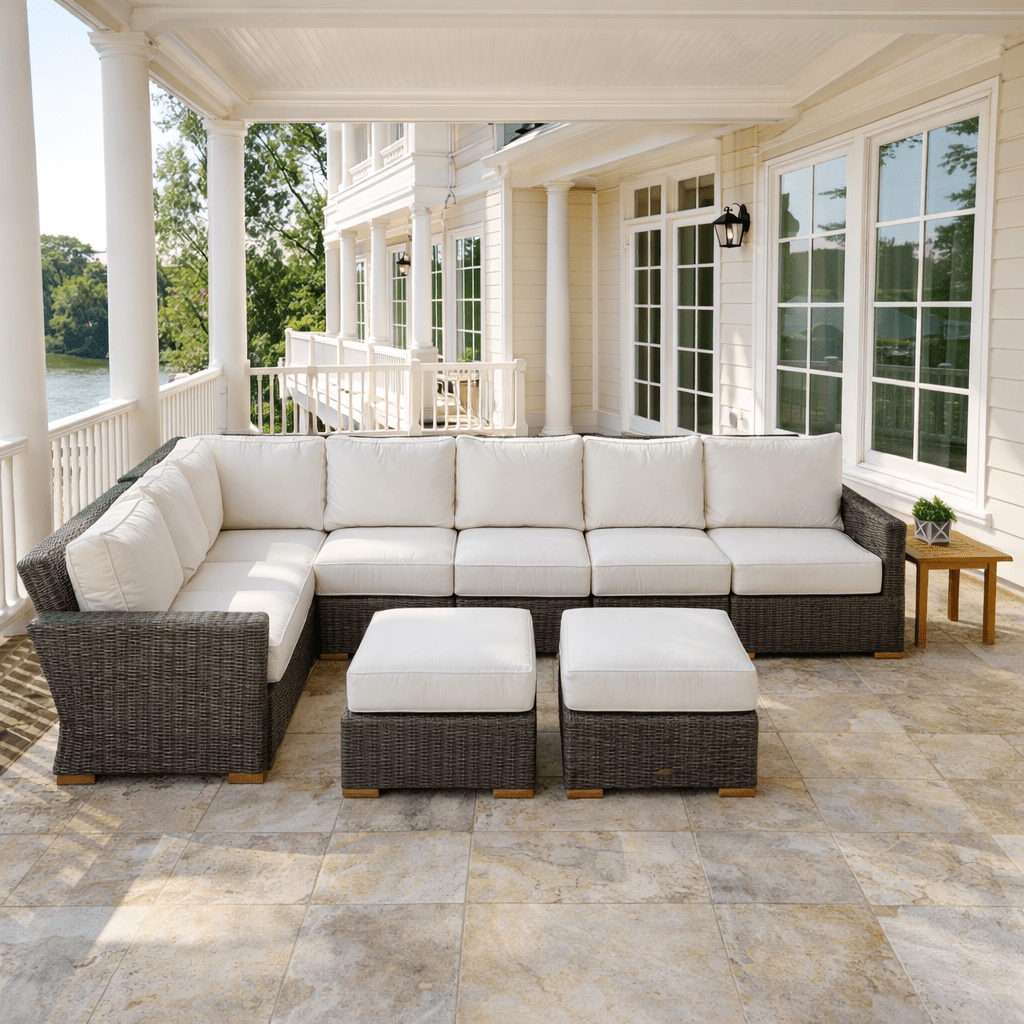 Grade A teak is naturally high in oils and has a dense grain structure. Those characteristics help make teak resistant to moisture, rotting, insects, and warping. In Boca Raton, where an outdoor set may experience rain, humidity, wet swimsuits, and pool splashes in the same week, that natural resistance is more useful than a finish-dependent material that requires a protective coating to remain suitable outdoors.
This is also why teak can work across multiple zones of the same property—from an uncovered pool terrace to a partially sheltered outdoor dining area.
Teak does not require artificial stain for durability. It can be left unfinished outdoors and allowed to weather naturally, or homeowners who prefer the original golden-brown appearance can use appropriate teak care products to help maintain that look.
That choice is especially valuable in South Florida. Instead of making furniture maintenance a fixed obligation, homeowners can decide how much appearance maintenance they want to take on. For a second home or a property where outdoor living should remain relatively uncomplicated, that flexibility can matter as much as the material's initial appearance.
Natural teak exposed to weather gradually develops a silver-gray patina unless it is maintained to preserve its original color. That weathering should be viewed as an appearance decision rather than evidence that the furniture has failed.
For Boca Raton homeowners, we would decide this preference before purchasing. Silver-gray teak can look excellent beside pale stone, coastal landscaping, and contemporary architecture. Golden teak can provide warmer contrast against white stucco, tile, and Mediterranean Revival details. Both approaches can be legitimate; they simply imply different maintenance choices.
Teak has a heavier, sturdier, more architectural feel than lightweight outdoor furniture. That is particularly attractive on large Boca Raton patios, where furniture needs enough visual presence to feel proportional to expansive pool decks, covered loggias, and estate-scale landscaping.
Furniture weight should never be treated as hurricane protection, and outdoor items should be secured or moved as appropriate when severe weather threatens. During normal use, however, many homeowners prefer the substantial feel of real wood to furniture that shifts easily whenever it is repositioned or bumped.
Quality teak furniture can last for decades rather than merely a few seasons. That matters in a luxury market because the more useful comparison is often lifetime ownership rather than initial purchase price. Replacing several lower-cost patio sets over time may be less appealing than furnishing the space once with material selected for long-term outdoor use.
| Boca Raton Challenge | Why Premium Grade A Teak Performs Well |
|---|---|
| High humidity | Natural oils and dense grain help resist moisture and rot. |
| Frequent rain | Designed for year-round outdoor exposure and wet-dry cycles. |
| Strong sun | Suitable for sun exposure; unfinished teak naturally develops a silver-gray patina. |
| Coastal conditions | Real Grade A teak naturally tolerates outdoor moisture; outdoor-rated hardware supports long-term use. |
| Poolside moisture | Moisture resistance makes teak practical around splash-prone spaces. |
| Temperature changes | Designed to withstand normal outdoor temperature fluctuations. |
| Insects and decay | Teak is naturally resistant to insects and rotting. |
| Long outdoor season | Can remain outdoors year-round without mandatory sealing or covering. |
We would begin with the property's outdoor routine rather than with a furniture catalog. Is the pool terrace used every afternoon? Do dinners move outdoors in winter? Do guests gather around the outdoor kitchen while someone cooks? Is the home on the Intracoastal, or is the main outdoor space a sheltered courtyard or country-club patio? Those answers tell us more than square footage alone.
For many Boca Raton properties, the pool is not an accessory to the patio—it is the organizing feature of the outdoor space. We would first determine the primary circulation route between the house, pool, and yard, then position loungers where they receive useful sun without narrowing those paths.
Two chaise lounges may be sufficient for a couple, but four or more often make more sense for a household that regularly hosts adult children, grandchildren, or weekend guests. A small side table between pairs of loungers is also more useful than it appears; it prevents drinks, phones, books, and sunscreen from ending up on the deck.
A large patio is often less successful when every chair is pointed toward the pool. We usually recommend creating a distinct conversation area with a sofa, sectional, club chairs, or swivel chairs arranged around a coffee table. TeakHQ's teak patio seating works well for this because the individual pieces can be selected around the actual footprint instead of forcing one oversized set into the space.
Swivel chairs are particularly useful where guests may alternate between conversation, the pool, a television, or a waterfront view. A sectional makes more sense when the goal is to anchor one larger social zone and accommodate several people at once.
Boca Raton's long outdoor season makes dining furniture worth treating as a permanent living area rather than occasional overflow seating. We would position the table near the kitchen or outdoor cooking area but avoid placing it in the main traffic path between the house and pool.
For households that entertain unpredictably, extendable teak dining tables are especially practical. The table can remain appropriately scaled for everyday meals while still accommodating larger dinners when family or seasonal guests arrive.
Waterfront properties often have an obvious temptation: line every piece of furniture up toward the water. That can produce a beautiful photograph but an awkward place to socialize. We prefer to reserve one or two seating positions specifically for the view while keeping the main lounge group oriented toward one another.
This is a small design decision with a large effect. A successful outdoor room should let people appreciate the Intracoastal, canal, garden, or pool without requiring every conversation to happen shoulder-to-shoulder.
Begin with the part of the property you use most. Pool-centered homes should usually start with chaise lounges and lounge seating; frequent hosts may get more value from dining furniture or a sectional; waterfront terraces often benefit from swivel seating that can face either the view or the conversation. From there, build complementary zones rather than trying to make one furniture set perform every job.
Boca Raton outdoor spaces often function more like additional rooms than seasonal patios. Pools, covered terraces, outdoor kitchens, waterways, golf-oriented communities, and an extended outdoor season encourage homeowners to create separate places for dining, lounging, conversation, and quiet relaxation.
In many parts of the country, chaise lounges are specialty furniture used mainly during a short summer. In Boca Raton, pool furniture can be part of ordinary daily living for much more of the year. That changes how we would allocate the budget. Seating used several days a week deserves the same attention to quality and comfort as the main dining area.
It also favors a deliberate mix of upright seating and reclining furniture. Loungers are ideal when someone wants sun or quiet time; club chairs and sofas are better when several people want to talk. A pool deck equipped only with chaises often feels surprisingly limited once guests arrive.
South Florida homes often experience fluctuating occupancy. A couple may use the patio most days, then suddenly need seating for visiting children, grandchildren, friends, or houseguests. Buying every piece for maximum capacity can overcrowd the space; buying only for everyday occupancy can leave it unprepared for gatherings.
A better strategy is to create a comfortable everyday core and add flexible capacity. An extendable dining table, stackable or movable dining chairs, ottomans, benches, and secondary lounge chairs can absorb additional guests without making the patio feel permanently furnished for a party.
Where an outdoor kitchen or built-in grill is present, we generally separate the cook-side social zone from the main dining table. Bar or counter seating gives a few guests somewhere to gather while food is being prepared, while the dining area remains available for the meal itself.
This is often more useful than simply buying the largest possible table. The best Boca Raton patios support several smaller activities at once: cooking, conversation, swimming, dining, and relaxing.
On canal, lake, and Intracoastal properties, the view is a genuine part of the room. Swivel chairs, movable club chairs, and secondary seating near the water allow the furniture arrangement to adapt throughout the day. Guests can turn toward the water, toward a conversation group, or back toward the house without rearranging the entire patio.
The best furniture configuration depends more on the property's outdoor zones than on the home's overall size. We would furnish an expansive waterfront estate differently from a condo terrace, even if both owners want the same premium Grade A teak.
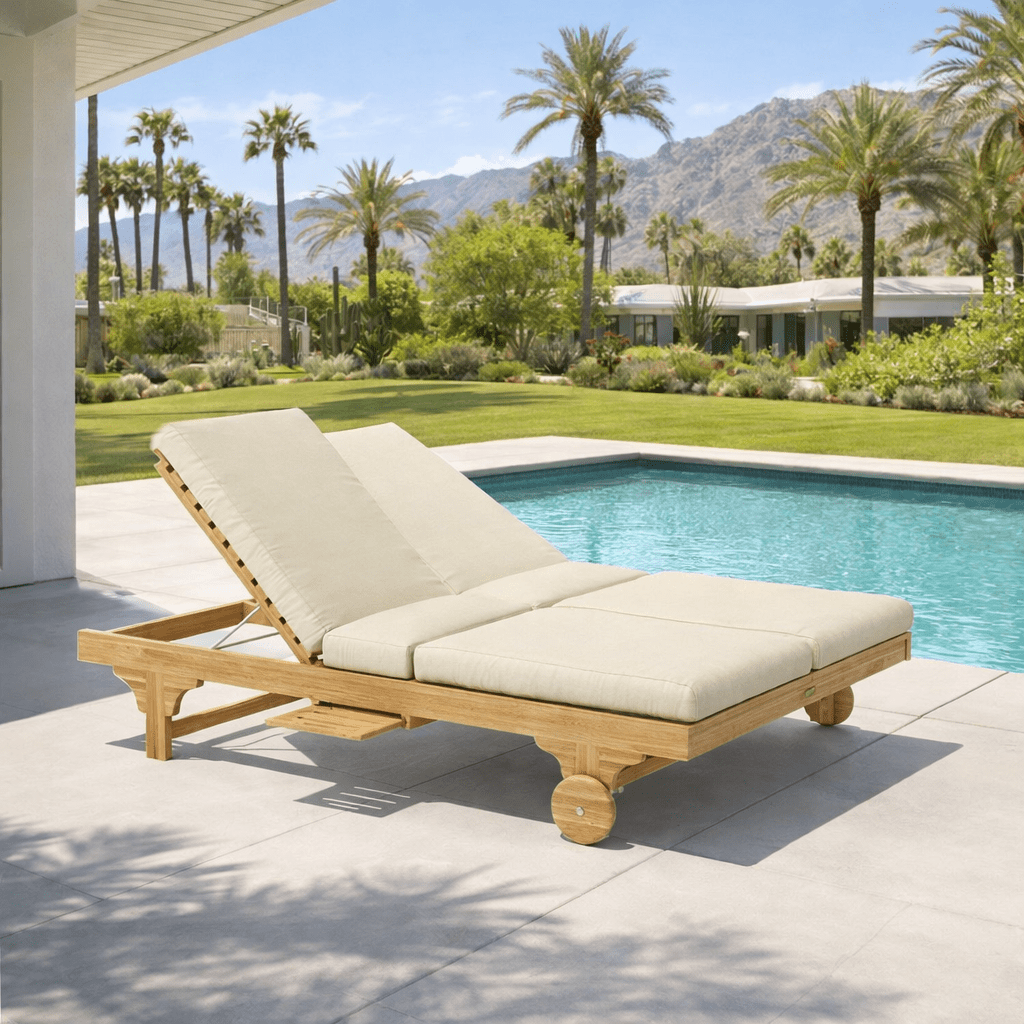 For a pool-centered property, begin with teak chaise loungers and work outward. Leave enough deck area around them for circulation, pool access, and moving chairs as sun conditions change. If the pool receives regular group use, consider multiple loungers rather than one oversized daybed so each guest can position seating independently.
Then add a small table beside every one or two loungers. The point is not decoration; it is function. A pool area without reachable surfaces quickly becomes cluttered with drinks, towels, and personal items on the ground.
Covered patios and loggias are excellent locations for a substantial conversation group. A teak sectional can define a large seating area, while sofas paired with club chairs are easier to reconfigure when the patio serves different purposes.
For cushion-based lounge seating, check the individual product specifications rather than assuming every model includes cushions. Most TeakHQ patio seating pieces include Sunbrella cushions, but not all do. Sunbrella fabric is weather-, fade-, UV-, and water-resistant, making it well suited to outdoor use.
 A dining table should be sized for the household's normal use first and occasional events second. If six people use the table most often but ten gather several times a year, an extension table may be more comfortable than living permanently with a table sized for ten.
Homeowners who frequently host larger dinners can explore teak outdoor dining sets by seating capacity. On larger patios, keeping dining and lounge seating as separate visual zones usually produces a more intentional result than surrounding one table with miscellaneous extra chairs.
Where the Intracoastal, a canal, or a lake view competes with the conversation area for attention, teak swivel chairs solve a layout problem more elegantly than constantly dragging furniture around. They can face inward when guests are talking and turn outward toward the water afterward.
This is one of the few cases where the movement of the chair itself should influence the entire floor plan. Allow enough clearance behind and beside each swivel chair so it can rotate naturally.
Not every outdoor space needs a complete furniture group. A teak bench overlooking landscaping, two chairs beneath a tree, or a small table in a courtyard can create a destination away from the main pool patio. Boca Raton's lush landscaping can make these secondary spaces especially appealing during quieter parts of the day.
Boca Raton has a particularly strong architectural identity. Its Mediterranean Revival heritage is closely associated with Addison Mizner, while today's residential market also includes coastal contemporary homes, modern estates, waterfront residences, country-club properties, and condominium terraces. Teak works across these settings because its appearance can shift substantially depending on furniture lines, cushions, surrounding materials, and whether the wood is maintained golden or allowed to weather gray.
Mediterranean-inspired architecture already provides plenty of visual detail through stucco, arches, tile, columns, courtyards, and landscaping. Outdoor furniture does not need to compete with it. Clean teak dining and lounge furniture can add warmth without turning the patio into another decorative focal point.
We would generally let the architecture carry the ornamentation and use furniture to provide simpler structure. Golden teak pairs naturally with warm stone and terracotta tones; weathered gray teak can provide a quieter counterpoint.
Modern Boca Raton residences often use large glass openings, pale stone, simple pool geometry, and restrained landscaping. Here, teak adds natural texture to spaces that might otherwise consist mostly of glass, concrete, metal, and water.
Sectionals, streamlined sofas, sling seating, and simple dining tables tend to make more sense than heavily traditional silhouettes. The wood does not need to look rustic to feel natural.
A luxury condo balcony or terrace can have an exceptional view but still have strict spatial limits. Oversized lounge sets can consume useful circulation space surprisingly quickly. Begin with the clear walking path, then determine what remains for furniture.
For smaller terraces, two comfortable chairs and a side table may create a better outdoor room than a compact sofa forced against a wall. Foldable dining furniture can also be useful where dining is occasional rather than daily.
Boca Raton's palms, tropical planting, hedges, and mature greenery can already create substantial visual texture. Natural teak generally works best when it feels integrated with that landscaping instead of isolated on a bare slab. Planters, shade, stone, and planting beds can help a large patio feel like a series of outdoor rooms rather than a single furniture showroom.
 A set can look excellent in a showroom and still be poorly suited to a humid, rain-prone outdoor environment. Before comparing colors or silhouettes, ask what the underlying material is, how it handles regular outdoor exposure, what maintenance it requires, and whether finishes are essential to its durability.
Grade A teak is useful here because its outdoor performance comes from the natural wood itself rather than a decorative surface coating.
Large Boca Raton pool decks create the impression that they can accommodate almost unlimited furniture. The more important measurement is usable circulation space. Guests need clear paths between the house, seating, outdoor kitchen, and water.
Buy for zones, not acreage. Four well-positioned chaises plus a separate conversation area often function better than eight loungers spread across every available edge.
Even high-quality outdoor cushions benefit from sensible moisture management. Do not leave cushions trapped where water cannot drain or air cannot circulate, and pay particular attention to covered areas that receive wind-driven rain but little direct sun afterward.
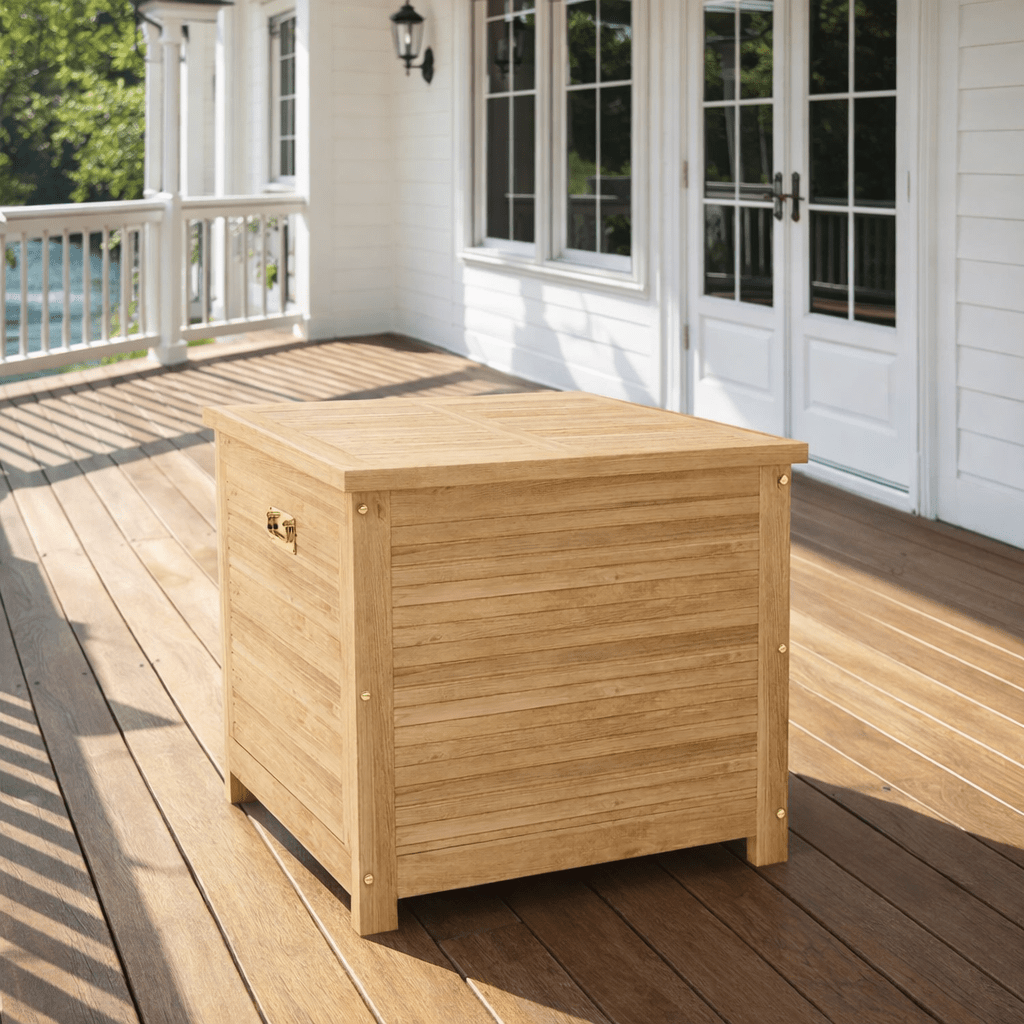
During periods when a property is unoccupied, a practical storage plan can be just as valuable as the furniture itself. TeakHQ offers teak deck boxes for outdoor storage needs.
Waterfront homeowners sometimes arrange every chair toward the Intracoastal or canal. The result is excellent for two people looking outward and awkward for six people trying to talk.
Reserve dedicated view seating, but arrange the main lounge area around human interaction. Swivel chairs are especially useful because they allow the same seat to serve both purposes.
Unfinished teak naturally changes from its original golden tone to a silver-gray patina over time. Homeowners who do not know this sometimes interpret normal weathering as deterioration and begin unnecessary maintenance.
Decide which look you want in advance. If you like silver-gray teak, the natural aging process can reduce appearance-related upkeep. If retaining the original color matters to you, plan for appropriate care from the beginning.
No outdoor furniture material should be treated as a substitute for hurricane preparation. Teak's substantial weight can be attractive during ordinary use, but severe weather requires separate planning.
Know ahead of time which pieces can be moved, where cushions and smaller accessories will go, and how the patio will be cleared or secured when necessary. A storm plan made while the weather is calm is far easier than improvising one under a deadline.
Teak maintenance in Boca Raton is less about protecting the wood from ordinary outdoor life and more about keeping the furniture clean, managing moisture around cushions and shaded areas, and deciding whether you want the teak to weather naturally or retain more of its original color.
There is no useful one-size-fits-all cleaning calendar. An uncovered waterfront chaise may collect salt residue and organic debris faster than a dining table beneath a covered terrace. Inspect the furniture periodically and clean it when dirt, pollen, leaves, bird debris, or environmental residue begins to accumulate.
Homes close to the ocean may benefit from more frequent freshwater rinsing when salt residue is noticeable. The goal is routine cleanliness, not constant refinishing.
High humidity makes airflow important. After heavy rain, allow wet cushions and surrounding areas to dry rather than leaving moisture trapped beneath cushions for extended periods. Covered patios deserve attention too because shade can slow drying even when the furniture itself receives less direct rain.
Most TeakHQ lounge seating cushions are Sunbrella, although individual products vary. Always review the specific product details for cushion inclusion and construction.
If left untreated, natural teak will develop a silver-gray patina. That approach is appropriate for homeowners who like the weathered look and prefer less appearance maintenance. Teak can also be sealed or oiled when maintaining the original coloration is the priority.
Neither approach should be selected out of fear that teak requires a finish for basic outdoor durability. It does not. This is primarily an aesthetic choice.
Protective covers are optional rather than required for teak's outdoor durability. Some homeowners still find them useful for reducing cleaning, especially during extended absences or periods of heavy organic debris.
If covers are used in Boca Raton's humid environment, they should not become a way to trap persistent dampness against cushions or furniture. Allow wet furniture to dry appropriately rather than sealing moisture underneath immediately after rain.
Second-home owners should think differently from full-time residents. Before leaving for an extended period, clear loose patio items, store or manage cushions according to their care requirements, remove debris, and make sure drainage areas around the furniture are open.
The memorable rule for Boca Raton is this: maintain the patio according to how long moisture can remain there, not simply according to how much rain falls. A shaded terrace that stays damp can deserve more attention than a sunny pool deck that gets wetter but dries quickly.
Start with the way you actually use the property—pool time, outdoor meals, waterfront views, visiting family, or quiet evenings—then choose furniture for those specific zones. Premium Grade A teak gives Boca Raton homeowners a durable, naturally weather-resistant foundation that can work across dining areas, covered terraces, pool decks, and garden spaces while allowing each area to serve a different purpose.
Explore TeakHQ's teak outdoor dining furniture, lounge seating, loungers, tables, and accessories to build the combination that fits your property rather than forcing the entire patio into one matching set.
Look for materials designed for repeated exposure to humidity, rain, strong sun, and year-round outdoor conditions. Premium Grade A teak is a strong option because its natural oils and dense grain help resist moisture, rot, insects, and warping without requiring paint or artificial stain for durability.
Yes. Grade A teak's natural oils and dense grain structure make it resistant to moisture and rot, which is particularly useful in Boca Raton's humid environment. Good airflow and routine cleaning are still sensible, especially around cushions and shaded areas.
Chaise loungers, side tables, and a separate conversation group are usually more functional than filling the entire deck with one furniture type. Premium teak is well suited to poolside use because it is naturally moisture resistant and designed for outdoor exposure. Browse teak chaise loungers for dedicated pool seating.
Yes. TeakHQ's Grade A teak furniture is designed for year-round outdoor use and can withstand rain, sun exposure, and normal temperature fluctuations. Covers and sealers are optional rather than required for basic durability.
Teak itself is naturally suited to moist outdoor conditions, but homeowners near the Atlantic or Intracoastal should still clean noticeable salt residue periodically and pay attention to furniture hardware. Royal Teak and Anderson Teak use stainless-steel hardware, while Verandis Teak uses brass hardware.
Do not point every seat toward the water. Create a primary conversation area with sofas, sectionals, or club chairs, then reserve selected chairs for the view. Swivel chairs are particularly useful because guests can alternate between the conversation and waterfront scenery.
Teak does not require covers for basic outdoor durability. Covers may reduce cleaning or help during extended absences, but avoid trapping persistent moisture beneath covers or around cushions in humid weather.
Unfinished teak naturally weathers to a silver-gray patina over time. This is normal. Homeowners who prefer the original golden-brown appearance can use appropriate teak care products, while those who like the weathered look can allow the color to change naturally.
All three can fit different priorities. Aluminum is lighter and often has a more modern appearance, while poly furniture is synthetic and typically chosen for low-maintenance convenience. Teak offers real natural wood, a warmer and more substantial feel, natural weather resistance, and long-term durability. The better choice depends on whether authenticity, weight, appearance, or minimum upkeep matters most to you.
Size the table around your normal household first, then account for seasonal visitors and larger gatherings. If everyday occupancy is much lower than your occasional guest count, an extendable teak dining table can provide a better balance than keeping a maximum-capacity table on the patio year-round.


