
FREE SHIPPING
within mainland USA
within mainland USA
Home ▸ Teak Outdoor Furniture ▸ By Location ▸ Cape Cod, Massachusetts
Outdoor furniture on Cape Cod has to fit a distinctly coastal way of life: breezy decks, salt-laden air, damp mornings, summer gatherings, and an off-season that can bring cold, wind, rain, and snow. Waterfront exposure can be especially demanding, while sheltered inland and bayside properties face a somewhat different ownership environment. Premium Grade A teak is particularly well suited to this mix because it combines natural weather resistance with the warm, understated look that feels at home beside weathered shingles, gardens, beaches, and traditional Cape architecture.

Cape Cod is not simply a New England market with an ocean nearby. Its long coastline means outdoor furniture can spend months exposed to moving marine air, wind-driven moisture, bright summer sun, damp shade, falling organic debris, and dramatic seasonal changes. Conditions also vary significantly from property to property. A bluff-top deck in Truro, a harbor-facing terrace in Chatham, and a sheltered garden in Sandwich do not put furniture through exactly the same stresses.
The first question we would ask a Cape homeowner is not simply, “Are you near the ocean?” It is, “How exposed is your furniture to moving marine air?” A house directly facing Nantucket Sound, Cape Cod Bay, Buzzards Bay, or the Atlantic can experience far more salt deposition than a protected property several streets inland. The same is true of hardware: exposed coastal locations make material quality more consequential.
This distinction matters because “coastal furniture” is too broad a category. An attractive set that performs adequately on a sheltered suburban patio may require much more attention on an open waterfront deck. Natural Grade A teak is useful in both settings because its dense grain and natural oils provide resistance to moisture, rot, insects, and weather without requiring paint or an artificial stain for durability.
On Cape Cod, outdoor furniture can be damp even when it has not just rained. Humid air, fog, dew, shaded locations, and vegetation can slow drying. That makes drainage and airflow nearly as important as the material itself. Furniture squeezed against walls or buried beneath dense plantings can remain damp longer than the same furniture in an open location.
For upholstered seating, think about cushions separately from the furniture frame. Most TeakHQ patio seating includes weather-resistant Sunbrella cushions, but even outdoor fabrics benefit from airflow and sensible storm preparation. A deck box or protected storage location can make day-to-day ownership easier.
Cape properties with open water views often have an exposure that inland patios do not. That is one reason we generally favor substantial furniture rather than building an entire outdoor room around very lightweight pieces. Teak has a heavier, sturdier, more architectural feel than lightweight aluminum furniture, although furniture should still be secured, relocated, or otherwise prepared when severe weather threatens.
Umbrellas deserve particular caution. The fact that a dining table has an umbrella opening does not mean an umbrella should remain deployed—or even outdoors—during strong winds.
Many Cape Cod buying decisions are made in July but should be evaluated with January in mind. Outdoor furniture may encounter rain, snow, freezing temperatures, temperature fluctuations, and coastal storms long after summer guests have left. Grade A teak is designed for year-round outdoor use, so the furniture itself does not require seasonal indoor storage for durability.
That does not mean every accessory should be treated the same way. Cushions, loose décor, umbrellas, and lightweight accessories are much easier to preserve when homeowners have a realistic off-season plan.
The case for teak becomes strongest when the material is evaluated against the actual ownership conditions of the Cape. Aluminum and poly lumber can also be legitimate premium choices. Aluminum is lighter and can suit contemporary homes; poly furniture offers a synthetic, low-maintenance approach. Teak stands apart for homeowners who want a natural material, substantial feel, classic appearance, and the flexibility to leave the wood outdoors through changing seasons.
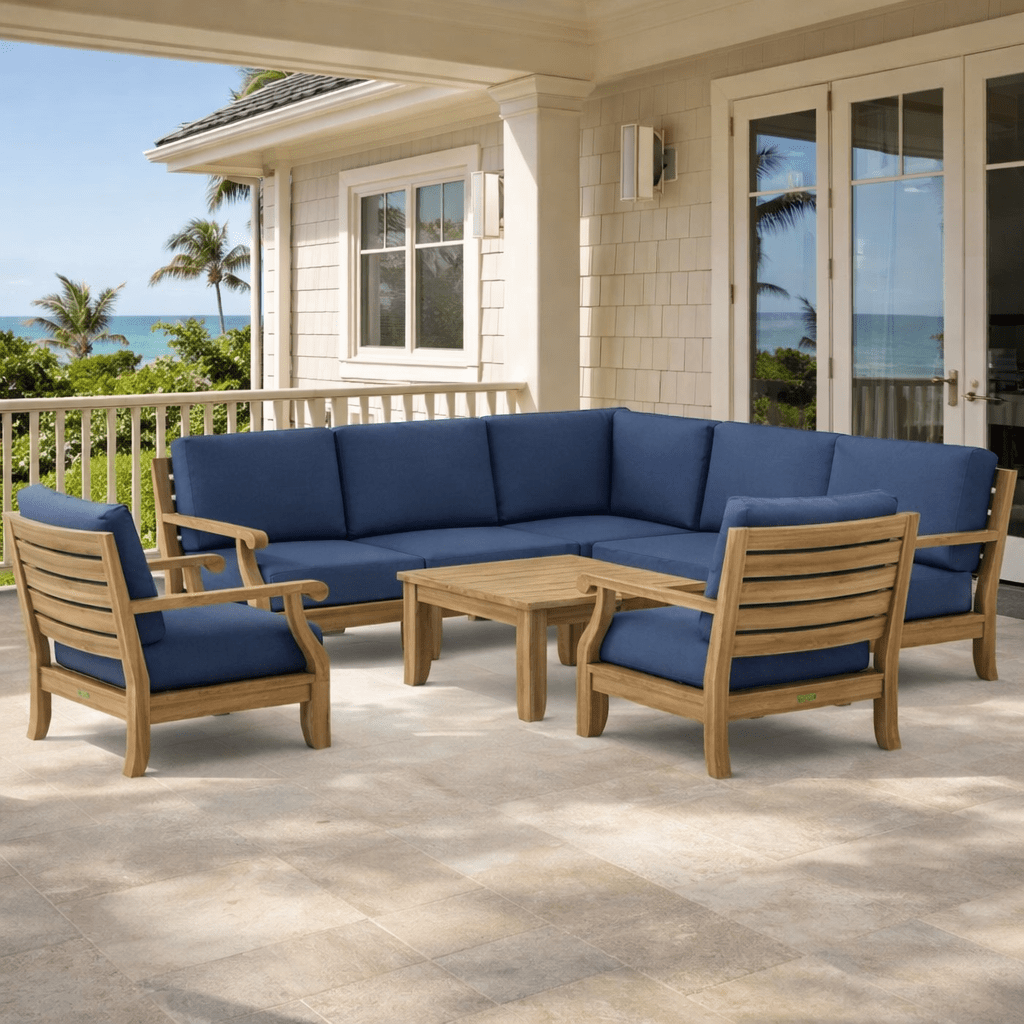 Grade A teak naturally contains a high level of oils and has a dense grain structure. Those characteristics contribute to resistance to moisture, rot, insects, and warping. On a Cape property, where dampness can come from rain, humidity, dew, and marine exposure, that is a more meaningful advantage than it would be in a consistently dry climate.
It is important, however, not to confuse moisture resistance with an excuse to ignore the surrounding space. Keep leaves and debris from accumulating beneath furniture, allow air to circulate, and avoid creating areas where water continually pools around furniture legs.
Teak can withstand sun exposure and general outdoor weather without relying on artificial stain for durability. What changes is its appearance. Untreated natural teak gradually develops a silver-gray patina.
For Cape Cod specifically, many homeowners consider that aging process an aesthetic advantage. Silvering teak can sit comfortably beside weathered cedar shingles, pale stone, dune grasses, hydrangeas, and the understated palettes common throughout the region. Homeowners who prefer the original golden-brown appearance can instead use appropriate teak care products to maintain it.
The Cape asks furniture to transition from warm summer afternoons into cold, wet winter weather. Premium Grade A teak is designed for year-round outdoor use and withstands rain, sun exposure, and temperature fluctuations. Its structural stability and resistance to warping make it particularly logical for homeowners who do not want to move a substantial dining table or lounge set into storage every autumn.
For a primary residence, long ownership life reduces the frustration of repeatedly replacing outdoor furniture. For a Cape vacation property, longevity has another benefit: fewer furniture replacement projects competing with everything else that must be handled during a short spring opening or summer season.
Premium teak carries a higher upfront cost than many outdoor furniture materials, but properly chosen teak furniture can last for decades rather than seasons. That makes lifetime value—not simply purchase price—a more useful comparison for homeowners planning to keep the property.
| Cape Cod Challenge | Why Premium Grade A Teak Performs Well |
|---|---|
| Coastal moisture | Natural oils and dense grain provide strong moisture and rot resistance. |
| Salt-laden air | Real teak is naturally weather resistant; premium collections use stainless steel or brass hardware depending on brand. |
| Summer sun | Teak is designed for sun exposure and can weather naturally without artificial stain. |
| Damp conditions | Teak resists moisture and rot, although routine cleaning and airflow remain important. |
| Temperature changes | Dense Grade A teak provides structural stability and resistance to warping. |
| Winter weather | Grade A teak is designed for year-round outdoor use. |
| Seasonal ownership | The wood can remain untreated and age naturally, reducing mandatory maintenance. |
We would start with the property, not the furniture catalog. The most important questions are where people naturally gather, where the wind comes from, how many guests regularly stay at the house, and whether the property is a full-time residence or a seasonal home. On the Cape, a beautiful ocean view can tempt homeowners to put everything at the exposed edge of a deck; sometimes the more usable outdoor room is actually a few steps closer to the house where it is better protected.
For many Cape homes, we would make the dining table the anchor. Seafood dinners, cookouts, visiting relatives, and long evenings outdoors reward a table sized for more than the immediate household. A six-person household that routinely hosts another couple or visiting family can quickly outgrow a six-seat table.
That is where extendable teak dining tables become especially useful. They allow a deck to function comfortably for everyday meals without permanently dedicating the entire space to a ten-person footprint.
A common planning mistake is treating the entire deck as one furniture arrangement. If space permits, we prefer a dining zone and a distinct sitting zone. The second area can be built with club chairs, a loveseat, sofa, or one of TeakHQ's multi-piece teak lounge sets.
On waterfront properties, orient the lounge area toward the view but do not automatically put it at the windiest edge of the property. A protected corner that still captures water views may be used far more often than a spectacular but constantly exposed perch.
Not every attractive outdoor location needs a full furniture set. A pair of teak Adirondack chairs can turn a lawn edge, dune-facing area, fire pit, or quiet corner into a destination without visually dominating the landscape. Garden benches work similarly along paths, beside hydrangeas, or overlooking marsh and water views.
This is one of the most useful Cape Cod design principles: put the largest furniture where people actually live, then use smaller pieces to make the property's best views usable.
Start with the way your Cape property is actually used. Frequent summer hosts should begin with dining sets or extendable tables; waterfront decks and larger patios often benefit from lounge seating, while quieter lawns and garden settings are natural places for Adirondack chairs or benches. Seasonal homeowners should also consider storage early rather than treating it as an accessory decision after the main furniture arrives.
The Cape's outdoor season is highly social but not uniform. A house occupied by two people most of the year may suddenly host children, grandchildren, friends, or rental guests for summer weekends. Outdoor rooms therefore need to handle both quiet weekday use and substantially larger gatherings without feeling permanently overfurnished.
A Cape vacation home often has two different occupancy levels: normal and “everyone is here.” Furniture planning should anticipate the second. An extendable table, a few dining chairs that can be repositioned, and small tables that serve multiple seating areas often work better than filling every square foot with permanent seating.
This is especially helpful in properties where the same outdoor area handles breakfast, post-beach drinks, dinner, and evening conversation over the course of one day.
Waterfront living naturally pulls chairs toward the view. The useful trick is to think about sight lines from a seated position rather than arranging furniture solely to look good from inside the house. Low-profile lounge furniture, Adirondack chairs, steamers, and chaise lounges can preserve visual openness while creating comfortable places to stay outside.
On exposed sites, wind should influence orientation too. Even moving a seating group behind a corner of the house or slightly inland can create a noticeably more comfortable outdoor room.
Cape Cod entertaining often revolves around food without requiring a formal outdoor kitchen. A grill near the house, a generous dining table, and a nearby serving surface can handle a surprising range of gatherings. For households that entertain often, a buffet or cart can reduce the constant trip between the kitchen and deck.
The important planning measurement is not simply the table itself. Allow room for guests to pull chairs back and still circulate comfortably. On narrow decks, a smaller everyday table that extends when needed can be more practical than a permanently oversized set.
Spring and fall can offer some of the Cape's most appealing outdoor moments, but they also make wind exposure and evening temperature more noticeable. A protected conversation area becomes valuable outside peak summer, particularly when paired with comfortable seating. The goal is not merely to maximize seats—it is to extend the number of days those seats are pleasant to use.
 Cape Cod properties range from compact cottages to substantial waterfront estates, so there is no single correct furniture package. We would match furniture scale to the usable outdoor room rather than the size or value of the house itself. A large home can still have a narrow deck; a modest cottage may have an exceptional lawn and patio.
For a primary deck close to the kitchen, begin with teak outdoor dining sets. Four to six seats suit smaller cottages and couples who entertain occasionally. Six to eight is often a more flexible family configuration, while larger properties designed around multigenerational summer gatherings can justify ten or more.
Measure circulation before choosing capacity. A large table that technically fits but leaves no comfortable route behind occupied chairs will make a deck feel smaller every day of the season.
Deep seating works particularly well where the objective is reading, drinks, conversation, and enjoying a harbor, marsh, bay, or ocean view. Larger patios may suit a sectional, while narrow decks often work better with separate club chairs and a loveseat because individual pieces can be positioned around doors, railings, and circulation paths.
Homeowners with generous entertaining areas can explore teak sectional sets, but modular scale should be checked carefully. A sectional should define an outdoor room, not consume it.
Teak chaise loungers are a natural fit around pools and sunny terraces, while steamers and Adirondack chairs suit spaces where upright lounging and scenery matter more than sunbathing. Small side tables are especially valuable here; a lounger without somewhere to put a drink, book, sunglasses, or phone is less functional than it first appears.
If swimmers or beachgoers routinely move through the space, leave a clear wet-traffic route to the house rather than forcing everyone between furniture pieces.
A Cape property often has outdoor experiences beyond the main deck. A teak garden bench can make a hydrangea garden, lawn edge, wooded path, or marsh viewpoint usable without creating another full outdoor room.
This is also where the natural aging of teak can be especially attractive. Teak allowed to develop its silver-gray patina tends to sit quietly within the weathered, planted character associated with many traditional Cape landscapes.
Cape Cod's visual identity is unusually compatible with natural materials. Weathered shingles and clapboards, simple gable forms, traditional cottages, maritime details, understated coastal colors, stone, and informal plantings create a setting where furniture generally looks strongest when it complements the house rather than competing with it.
The classic Cape Cod house developed around simple forms suited to the region, and weathered shingles remain one of the area's defining visual materials. Teak works particularly well in this environment because it introduces another authentic natural material rather than trying to imitate wood.
For traditional cottages, we tend to favor straightforward silhouettes: dining tables, slatted chairs, Adirondacks, rockers, benches, and restrained lounge arrangements. Teak does not need elaborate coastal motifs to belong in the setting.
Contemporary renovations and newer waterfront homes can take a cleaner approach. Large panes of glass, simpler decks, modern railings, and restrained landscaping pair well with substantial teak sectionals, geometric dining tables, and uncluttered lounge layouts.
The contrast can be useful: warm natural wood prevents a contemporary outdoor room from becoming visually cold without undermining the home's cleaner architecture.
Cape landscapes frequently provide their own visual interest through hydrangeas, ornamental grasses, evergreens, sandy soils, stone, coastal vegetation, and mature plantings. Outdoor furniture rarely needs to be the loudest element.
A practical design approach is to establish the view, circulation, and plantings first, then use teak to create destinations within that landscape. Furniture should frame the marsh, garden, bay, or sunset rather than block it.
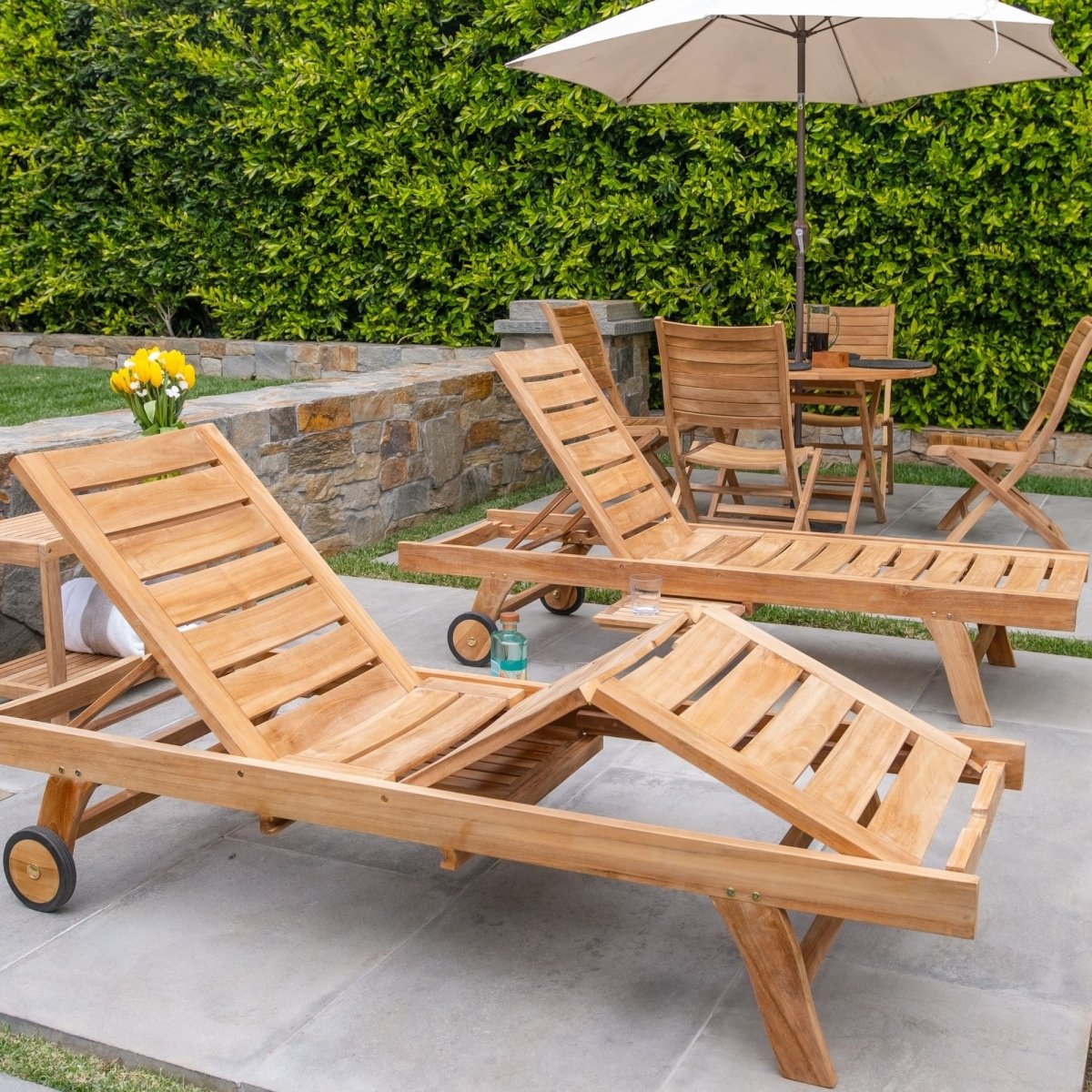 Furniture purchased during perfect summer weather still has to live through rain, dampness, falling leaves, cold temperatures, and potentially harsh coastal weather. Choosing solely for appearance in peak season can create unnecessary off-season work.
Grade A teak is designed for year-round outdoor use, making it especially useful when owners would rather store cushions and accessories than an entire patio set.
A waterfront deck that looks calm during a showroom-style planning session may behave very differently on windy days. Lightweight furniture and unsecured accessories can become annoying well before conditions qualify as severe weather.
Teak's heavier, sturdier character is an advantage over lightweight furniture, although no material eliminates the need to prepare outdoor spaces when major storms are forecast.
Buying a four-person dining set because four people live in the house can be a mistake at a property that regularly hosts another family all summer. The better number is peak realistic entertaining capacity, balanced against the size of the deck.
When the everyday and peak numbers differ significantly, extendable dining furniture can solve the problem without consuming unnecessary space throughout the season.
Even moisture-resistant furniture benefits from a well-planned environment. Leaves packed around legs, cushions left continuously damp, or furniture pressed into vegetation create unnecessary maintenance.
Leave breathing room around furniture, keep drainage paths open, and clean away organic material before it becomes embedded grime. Choosing teak addresses the material question; good placement addresses the site question.
A protected Osterville garden and an ocean-facing Outer Cape deck should not receive identical planning simply because both are on Cape Cod. Exposure, wind direction, shade, salt deposition, deck dimensions, and seasonal occupancy all change the furniture decision.
Evaluate the exact furniture location before buying. This one step usually improves the recommendation more than adding another generic “coastal” feature to a shopping checklist.
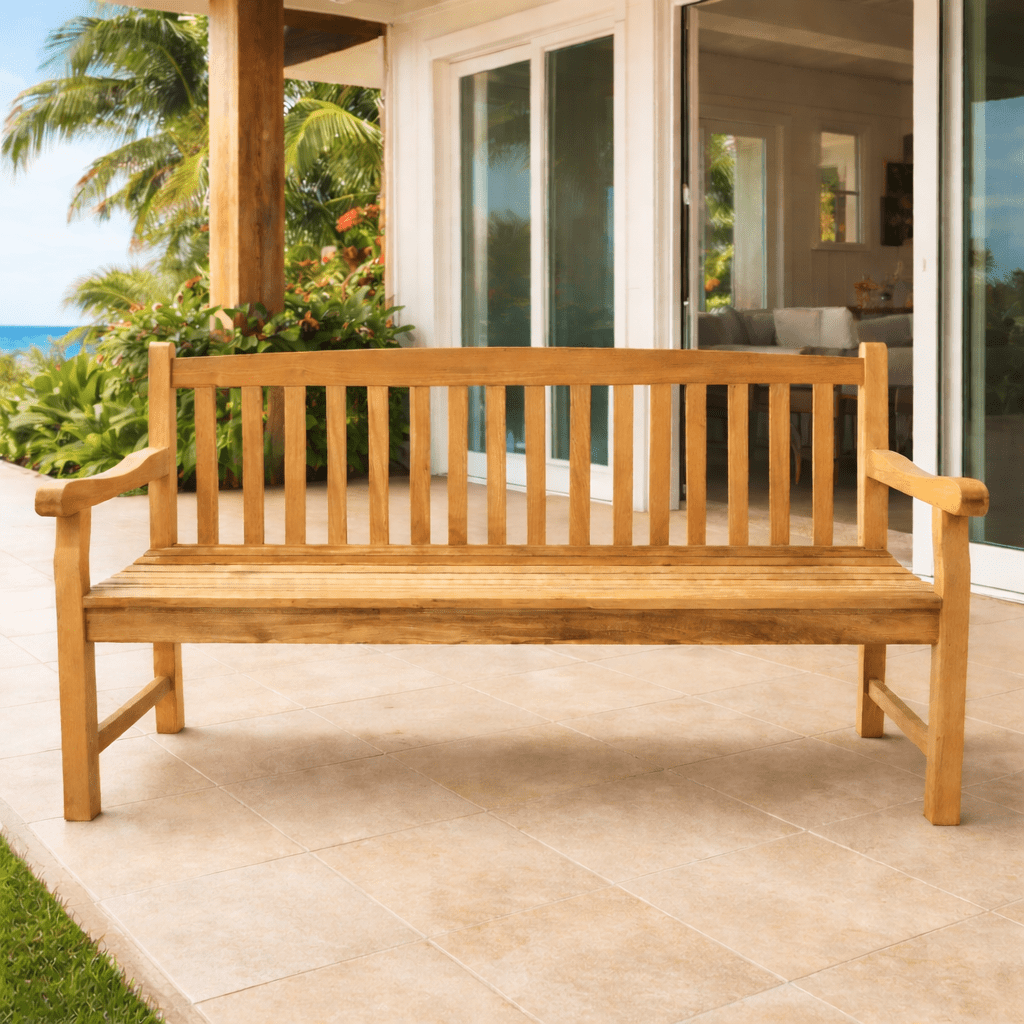 Teak ownership on the Cape can be surprisingly simple because cosmetic maintenance is largely optional. The key is deciding whether you want to preserve teak's original warm color or allow it to age naturally, then adjusting routine cleaning to the property's actual exposure.
There is no useful Cape-wide cleaning calendar. An exposed waterfront home may collect salt film and windblown material much faster than a sheltered inland patio. Inspect the furniture periodically and clean when dirt, salt residue, pollen, or organic debris becomes visible rather than maintaining it according to an arbitrary date.
Owners who arrive for the season often find that a spring inspection and cleaning is the logical starting point, followed by lighter cleaning as conditions require.
Furniture subject to obvious salt spray or heavy marine residue can be rinsed with fresh water when appropriate. Likewise, remove leaves, pollen, pine needles, bird residue, and other organic material rather than allowing it to sit through damp periods.
Pay particular attention to joints, horizontal surfaces, and the areas where furniture meets the deck or patio.
Untreated teak will naturally develop a silver-gray patina. This does not mean the furniture has failed or that it must immediately be refinished. On Cape Cod, many homeowners intentionally choose this appearance because it complements weathered shingles and coastal landscapes.
If you want to maintain more of teak's original golden color, appropriate teak care products can be used. The important point is that maintaining the original color is an aesthetic choice rather than a requirement for the wood's basic outdoor durability.
Do not base your cushion routine on what the teak frame can tolerate. Most TeakHQ patio seating uses weather-resistant Sunbrella cushions, but storing cushions during extended periods of nonuse, severe weather, or the off-season can keep the outdoor room cleaner and easier to reopen.
A teak deck box or another suitable protected storage location can be particularly valuable at vacation properties where cushions otherwise need to be carried through the house each time owners leave.
Grade A teak can remain outdoors year-round, so indoor storage or protective covers are optional rather than required for the furniture itself. If covers are used, choose and manage them so moisture is not unnecessarily trapped against the furniture for long periods.
Before closing a seasonal home, clean away organic debris, allow furniture and cushions to dry, store loose accessories, secure anything vulnerable to wind, and decide whether cushions will remain in protected storage. That short closing routine is generally more useful than trying to make every piece of teak look untouched by winter.
The right outdoor furniture should make a Cape home easier to enjoy, not give its owner another seasonal maintenance project. Start with the space you use most, choose capacity around realistic summer gatherings, account for wind and coastal exposure, and then select furniture that fits the architecture and level of upkeep you actually want.
TeakHQ offers premium Grade A teak dining, lounge, deck, garden, and storage furniture for homeowners who value natural materials, long service life, and the flexibility to maintain teak's warm original color or simply let it age naturally.
There is no single material for every property, but Grade A teak, premium aluminum, and quality synthetic materials can all be reasonable choices. Teak is particularly attractive for Cape Cod because it combines natural moisture and weather resistance, structural stability, substantial weight, and a traditional natural appearance that works well with coastal homes.
Yes. Grade A teak's natural oils, dense grain, moisture resistance, and rot resistance make it well suited to coastal outdoor environments. For highly exposed properties, occasional cleaning of salt residue and debris is still sensible.
Yes. TeakHQ's Grade A teak furniture is designed for year-round outdoor use and can withstand rain, sun exposure, temperature fluctuations, and winter weather. Indoor seasonal storage is not required for the teak itself.
Substantial furniture is generally preferable on exposed decks. Teak has a heavier, sturdier feel than lightweight aluminum furniture, but even heavy furniture should be appropriately prepared when severe coastal storms are expected. Umbrellas and loose accessories require particular attention.
Plan around realistic peak occupancy rather than the number of permanent residents. If a six-person household regularly becomes a ten-person household on summer weekends, an extendable dining table can provide guest capacity without occupying maximum space every day.
Yes. Natural unfinished teak gradually develops a silver-gray patina when left untreated outdoors. That color change is normal. Homeowners who prefer teak's warmer original appearance can use suitable cleaning and care products to help maintain it.
No. Sealing is optional rather than required for durability. Teak can be left untreated and allowed to weather naturally, or homeowners can use appropriate teak care products when they want to maintain its original color.
Grade A teak does not require a cover for outdoor durability. Covers are optional. If you use them, avoid creating conditions that unnecessarily trap prolonged moisture against the furniture, and clean and dry the furniture before extended covering.
Prioritize circulation before maximum seating. A four-person or compact dining set, foldable or extendable table, pair of Adirondack chairs, and small side tables can often create a more usable deck than one oversized lounge arrangement. Explore four-person teak dining sets when space is limited.
Clean away salt and organic debris, let furniture dry, store cushions and loose accessories where practical, close or remove umbrellas, and prepare the property for wind and storms. Grade A teak furniture itself can remain outdoors through the off-season.


