
FREE SHIPPING
within mainland USA
within mainland USA
Home ▸ Teak Outdoor Furniture ▸ By Location ▸ Central Florida
Central Florida outdoor spaces have to handle a demanding combination of strong sun, high humidity, frequent warm-season rain, and long stretches of usable patio weather. Screened lanais, pools, outdoor kitchens, and covered patios make the backyard an extension of the home, which means furniture is often used heavily rather than seasonally. Premium Grade A teak is especially well suited to that environment because it combines genuine wood character with natural resistance to moisture, rot, insects, warping, and everyday outdoor weather.

Central Florida is not simply a warm place where almost any outdoor furniture will do. The bigger challenge is the combination of heat, moisture, frequent wetting, strong sunshine, and long periods when furniture remains outdoors and in active use. Unlike coastal Florida, most homes around Orlando and the inland communities do not face routine salt spray. Instead, moisture management, sun exposure, storm preparation, and the realities of furnishing screened pool enclosures become the more important considerations.
Humidity matters because outdoor furniture may remain damp longer after rain, especially beneath covered lanais or in shaded portions of a screened pool enclosure. Materials that depend heavily on coatings, finishes, or perfectly dry conditions can demand more attention than homeowners initially expect. Dense, naturally oily Grade A teak is attractive here because moisture resistance is a property of the wood itself rather than something created solely by a surface finish.
One overlooked Central Florida issue is that a roof or pool screen does not necessarily mean the furniture stays dry. Wind-driven rain can reach surprisingly far into a lanai, while screened enclosures can reduce direct debris yet still leave humid air circulating around furniture. When we plan these spaces, we think about airflow and drainage almost as much as shelter.
Central Florida's warm season commonly brings frequent showers and thunderstorms rather than an occasional all-day rain. For furniture, that means repeated exposure to moisture followed by heat and sun. Furniture intended for permanent outdoor placement should be selected with those cycles in mind rather than treated like indoor furniture that happens to sit beneath a roof.
This is also why the entire furniture system matters. Frames, cushions, hardware, placement, and drainage all deserve consideration. Even excellent outdoor materials benefit from enough spacing for air circulation and from avoiding locations where irrigation or roof runoff repeatedly soaks the same area.
A pool deck can contain several distinct furniture environments. Chaise lounges may sit in full sun, a dining set may live beneath the lanai roof, and deep seating may occupy a screened corner that rarely receives direct sunlight. Furniture does not have to solve exactly the same problem in all three areas.
Direct-sun areas deserve particular attention to UV exposure and surface aging. Grade A teak is designed for outdoor use and withstands sun exposure, while most TeakHQ lounge cushions use weather-, fade-, UV- and water-resistant Sunbrella fabric. Shade remains valuable for human comfort and can also reduce exposure for cushions and other soft goods.
Central Florida homeowners also need a realistic severe-weather plan. No premium patio material should be treated as a substitute for storm preparation. Teak has a heavier, sturdier feel than many lightweight furniture options, but loose furniture and accessories should still be handled appropriately when dangerous winds are expected.
If the home is occupied only part time—or serves as a vacation rental—the storm plan deserves consideration before buying. Think about which pieces can be repositioned, where cushions and smaller accessories can go, and whether the furniture layout leaves enough room to carry items through doors without dismantling an entire patio.
Premium outdoor furniture can be made from several legitimate materials. Quality aluminum is light and practical, while poly lumber appeals to buyers who prefer a synthetic, lower-maintenance material. For homeowners who specifically want natural wood, however, Grade A teak is unusually well matched to Central Florida because its dense grain and naturally high oil content help it tolerate moisture, sun, temperature fluctuations, insects, and outdoor exposure without relying on an artificial stain for durability.
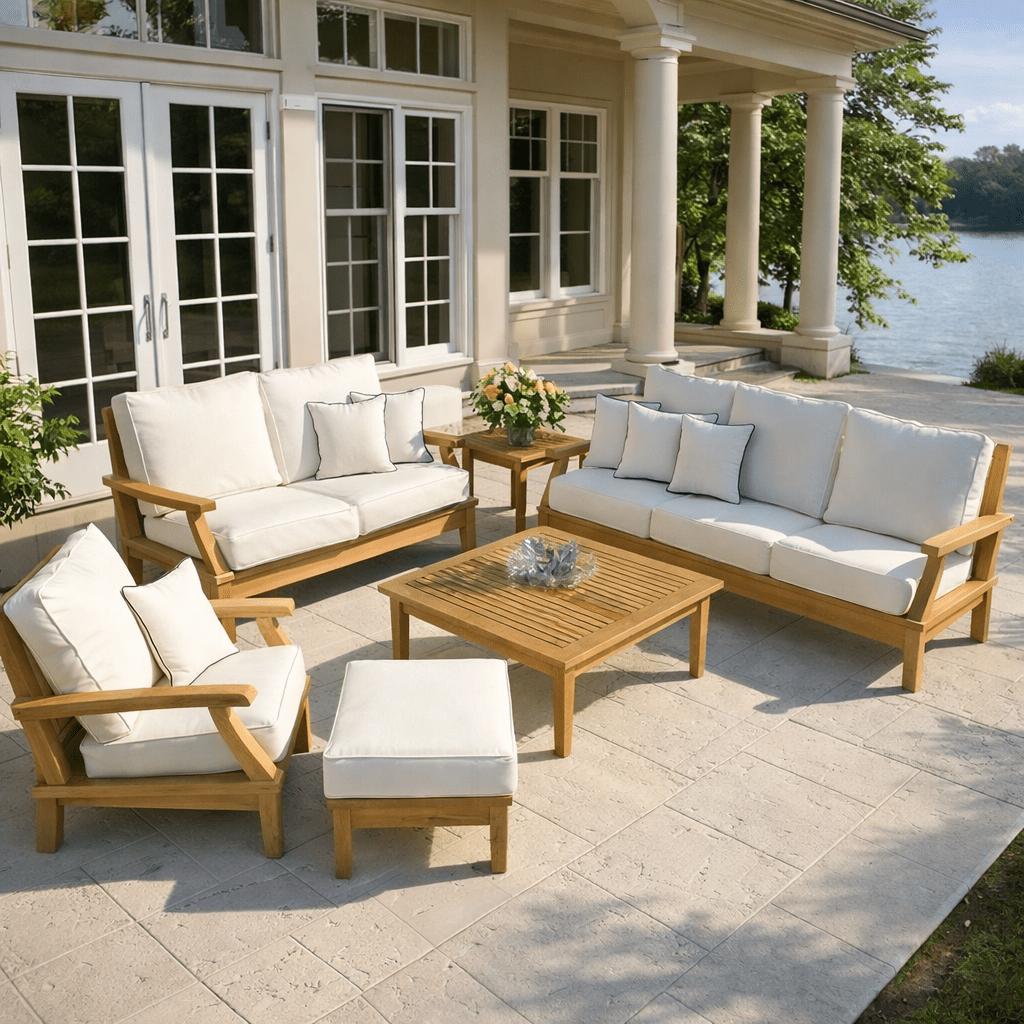 Teak's natural oils are one of the primary reasons it has long been valued for outdoor applications. TeakHQ's Grade A teak is naturally resistant to moisture, rotting, insects, and warping—useful qualities in an environment where outdoor furniture may encounter humid air and repeated rain for much of the year.
That does not make teak magically immune to dirt, pollen, surface mildew, or staining. Those are ownership and cleaning issues rather than reasons to expect the furniture itself to remain pristine without attention. The practical advantage is that owners can clean the furniture as needed without depending on a painted surface to make the underlying wood suitable for outdoor use.
Central Florida sun also influences how outdoor materials age. Grade A teak is designed for year-round outdoor use and withstands sun exposure without requiring an artificial stain for durability. Over time, unfinished teak naturally transitions from its original warm color to a silver-gray patina.
That color change is normal weathering rather than an indication that the wood has reached the end of its useful life. Homeowners who love the silver-gray appearance can allow it to develop. Those who prefer the original teak color can use appropriate teak care products or a sealer. This choice between maintaining the original look and allowing natural aging is one of teak's practical advantages.
Many Central Florida patios are effectively outdoor rooms. A covered lanai may contain a television, outdoor kitchen, dining zone, conversation seating, and direct access to the pool. In that setting, disposable or short-lived furniture can feel out of step with the investment made in the rest of the property.
Premium Grade A teak costs more upfront than many mass-market furniture materials, but it is intended to last for decades rather than a few seasons. That makes the value equation different: the useful comparison is not simply today's purchase price, but how often a homeowner expects to replace lower-cost furniture over the life of the outdoor space.
Teak's substantial feel also works well when furniture tends to stay in place. Unlike a rooftop terrace where every pound matters, many Central Florida pool decks and ground-level patios can accommodate furniture with more visual and physical weight. Teak therefore works particularly naturally in permanent dining areas, deep-seating arrangements, and poolside layouts.
It is still important to distinguish sturdiness from storm resistance. Furniture should be secured, relocated, or otherwise prepared appropriately when severe weather threatens. Teak's weight can make it feel more planted during everyday use; it should not be viewed as hurricane protection.
| Central Florida Challenge | Why Premium Grade A Teak Performs Well |
|---|---|
| High humidity | Naturally oily, dense teak resists moisture, rot and warping. |
| Frequent rain | Designed for year-round outdoor use and repeated weather exposure. |
| Strong sunshine | Handles sun exposure without paint or artificial stain for durability. |
| Wet-and-dry cycles | Dense grain provides good structural stability outdoors. |
| Insects | Grade A teak has natural resistance to insects. |
| Long outdoor seasons | Long service life suits furniture that stays outside throughout the year. |
| Appearance changes | Can weather naturally to silver-gray or be maintained closer to its original color. |
If we were starting with a Central Florida home from scratch, we would not begin by choosing individual chairs. We would first divide the property into functional zones: where people eat, where they gather before and after meals, where they sit around the pool, and which spaces receive full sun versus lanai cover. That prevents the common mistake of filling the patio with attractive furniture without creating an outdoor room that actually works.
The covered lanai is usually the most valuable square footage because it remains useful through more weather conditions. We would normally give that protected zone to the furniture people use longest: an outdoor dining area, lounge seating, or both. If meals are central to the way the household entertains, a teak outdoor dining set near the kitchen creates a natural extension of the indoor dining space.
Do not automatically buy the largest table the patio can physically hold. Measure the room with chairs pulled out and people circulating around them. Central Florida outdoor rooms often connect several destinations—the kitchen, pool, lawn, side yard and indoor living area—so circulation space can be more valuable than two additional seats that are rarely used.
For larger covered patios, we would usually separate eating from lounging. A sofa or modular teak sectional with club or swivel chairs creates a place for coffee, drinks, conversation, or watching a game while keeping the dining table available for meals.
This separation is especially useful for households that entertain extended family or weekend guests. One group can stay at the table while another moves to the lounge area, allowing the patio to support a gathering naturally instead of functioning as one oversized seating arrangement.
The pool deck has a different job. Here we would prioritize reclining comfort and convenient surfaces rather than trying to repeat the furniture beneath the lanai. Pairs or groups of chaise lounges with side tables work well because swimmers can sit down without occupying the primary conversation seating.
Keep enough open deck space for circulation and pool access. A pool patio often looks enormous when empty but becomes crowded quickly once loungers are fully reclined. Planning around the furniture's working footprint—rather than its footprint in a product photo—is one of the simplest ways to avoid an expensive layout mistake.
Central Florida homes frequently accommodate visiting family, vacation guests, or larger weekend gatherings, but that does not mean every seat has to be present every day. A better strategy is often to create a comfortable everyday layout with flexible capacity: an extendable table, movable dining chairs, an ottoman that doubles as occasional seating, or chairs that can be repositioned between zones.
This makes the patio feel intentional when four people are outside without leaving it incapable of accommodating ten when everyone arrives.
Start with the part of your outdoor space that receives the most use. Pool-centered homes will often get the greatest immediate value from chaise lounges and a shaded conversation set, while frequent hosts may want to establish the dining zone first. Larger lanais can support sectional seating and extendable dining furniture together; smaller patios usually benefit from choosing one primary function and adding flexible secondary pieces rather than trying to fit every category at once.
Central Florida's outdoor lifestyle is strongly tied to the pool, lanai, backyard, and the ability to move between indoor and outdoor spaces. The region also has an unusually broad mix of primary residences, retirement communities, lake homes, vacation properties, and short-term rentals. That makes furniture planning less about following a single regional look and more about matching the outdoor room to how the property is actually used.
For many local homes, the pool deck and covered lanai operate as one connected living environment. The most successful layouts recognize the distinction between them. The lanai provides shade and shelter for dining or cushioned seating, while the open pool deck is better suited to loungers and furniture that supports shorter periods of use between swims.
That division also keeps wet swim traffic from cutting through the center of the main conversation area. When possible, leave a direct path between the pool, exterior door, outdoor shower or towel-storage area without routing everyone around the dining table.
Outdoor kitchens are another natural anchor for Central Florida patios. When a grill, refrigerator, counter seating, and television already occupy one side of the lanai, the furniture should work with that architecture rather than compete with it.
Dining furniture is most useful close enough to the cooking area for easy serving but far enough away that pulled-out chairs do not block the cook's workspace. Bar- or counter-height seating can supplement the main dining arrangement when guests like to gather near the kitchen.
Large gatherings rarely stay seated around one table. Adults may gather beneath the lanai, children move between the pool and yard, and another group watches a game near the outdoor television. Furniture works better when those activities have obvious places to happen.
This is why we generally favor a few complete, well-defined zones over a collection of unrelated chairs around the perimeter. A dining table, a conversation grouping, and several pool loungers make the outdoor space intuitive for guests.
Properties near Orlando's major resort and attraction areas introduce another consideration: the person using the patio may not be the person maintaining it. For vacation homes and short-term rentals, straightforward layouts and durable materials become especially important.
Choose furniture that is easy for guests to understand and difficult to rearrange into chaos. Provide obvious places for dining, lounging, and pool use. If cushions or accessories need to be moved during severe weather, make their storage location easy for owners, managers, or maintenance crews to access.
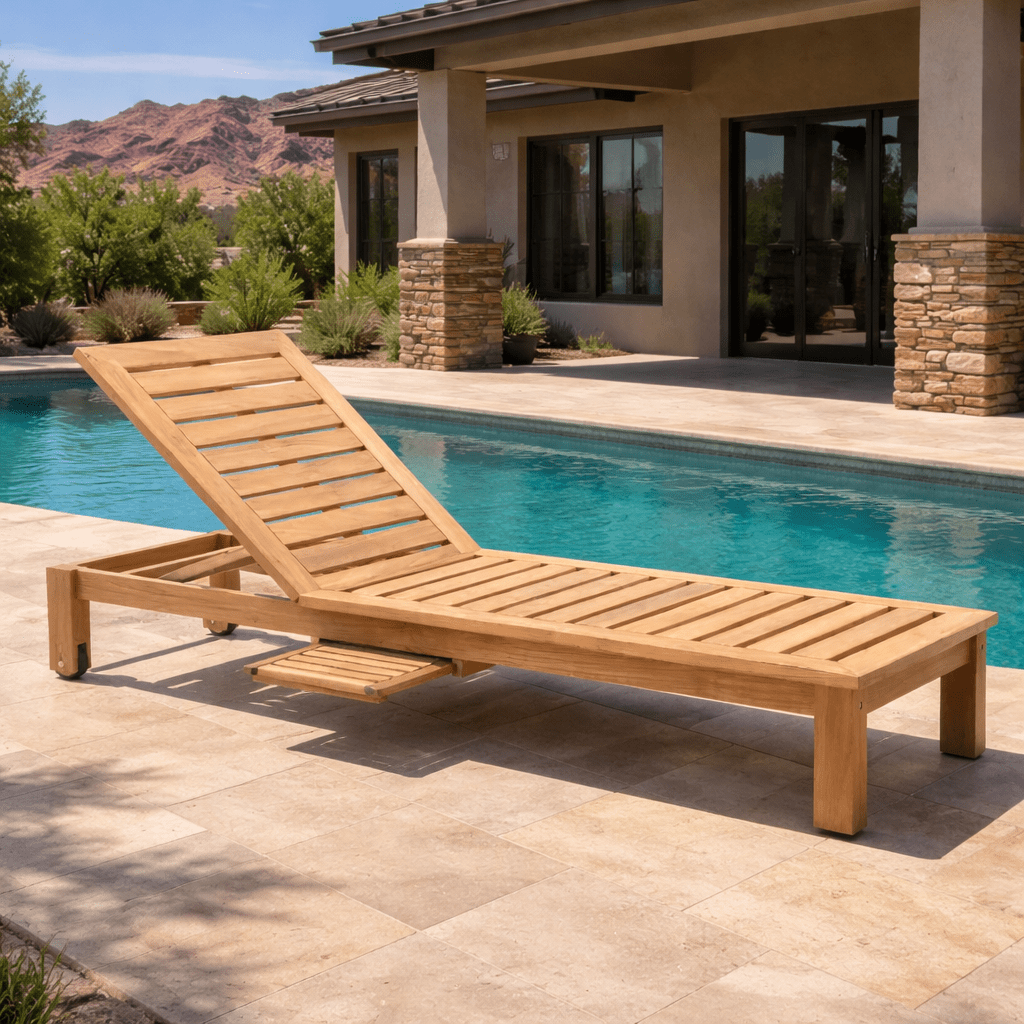 The right mix of furniture depends less on the size of the house than on the relationship among the lanai, pool, kitchen, and yard. We would prioritize pieces according to how many hours people are likely to spend in each zone rather than attempting to furnish every empty section of paving.
For a pool-focused backyard, start with teak chaise loungers. They directly support one of the area's most common outdoor activities and can be grouped in pairs or arranged in a row along a larger resort-style pool.
Add side tables wherever people will need a place for drinks, phones, books, or sunglasses. Leave enough clearance behind each chaise for reclining and enough room in front for safe pool-deck circulation.
The covered portion of the patio is where we would put the most comfortable long-duration seating. A teak patio seating arrangement works well for conversation, morning coffee, evening drinks, or an outdoor television.
Large spaces can support a sectional, while a sofa with two club or swivel chairs can preserve more flexible circulation. Swivel chairs are especially useful when one seating area needs to face both a conversation group and another feature such as a pool or television.
For homeowners who regularly eat outdoors, teak dining furniture deserves a permanent place beneath the lanai or another comfortable dining area. Six seats often work well for everyday family use, while larger households and frequent hosts may prefer eight or more.
The more useful question is not “How many chairs fit?” but “How many people do we seat most weeks?” Buy for that number first. Occasional capacity can then be added with an extendable teak dining table or additional movable seating rather than sacrificing patio space all year for the largest possible gathering.
Bar- and counter-height furniture makes sense when the outdoor kitchen already establishes a standing-height social zone. It can create a secondary place to eat breakfast, have drinks, or talk with the cook without requiring another full dining arrangement.
For homes with both a dining table and outdoor-kitchen seating, keep the two roles distinct. The counter is an informal gathering spot; the dining table remains the more comfortable choice for a full meal.
Central Florida's many lakes create another furnishing situation. Rather than filling the best sightline with a large dining set, consider lower-profile lounge seating, paired chairs, or a strategically placed bench facing the water. Put taller dining furniture slightly behind the primary view when the layout allows it.
This is a useful design rule even away from the water: assign the best view to the furniture where people linger rather than automatically placing the largest piece of furniture there.
Central Florida outdoor design ranges from traditional porches and mature oak-shaded yards to contemporary pool homes, planned communities, Mediterranean-influenced architecture, lakefront estates, and resort-style vacation properties. Natural teak adapts well because its visual character is architectural without requiring the entire patio to follow a nautical or tropical theme.
Screen enclosures are one of the most recognizable features of Florida outdoor living. Visually, they already introduce a strong grid of dark structural lines. Furniture with natural wood tones can soften that framework and make the space feel more like an outdoor room than an enclosure filled with patio equipment.
Because screened rooms often contain several furniture zones within one visual field, coordination matters. Repeating teak across the dining and lounge areas creates continuity while upholstery, cushions, rugs, and accessories can distinguish one zone from another.
Natural teak works easily with brick pavers, stucco, stone, traditional porches, mature landscaping, and warm exterior finishes. Dining sets, rockers, benches, and classic lounge furniture can reinforce a more established residential look without feeling overly formal.
Aged silver-gray teak can also work particularly well around homes where the homeowner wants furniture to recede visually into landscaping rather than dominate it.
For newer, cleaner-lined homes, the same material can be used differently. Choose simpler silhouettes, lower-profile seating, uncluttered sectional layouts, and fewer but more substantial pieces. Teak introduces warmth against concrete, large-format pavers, glass doors, dark screen framing, and neutral exterior finishes.
This is one reason the material is useful for long-term furnishing projects: homeowners can choose a more traditional or contemporary furniture design without giving up the underlying advantages of genuine Grade A teak.
Palms, flowering shrubs, broad-leaf plants, and dense subtropical landscaping already supply plenty of visual detail. The furniture does not need to compete with it. Natural teak, neutral cushions, and a restrained number of accent pieces usually create a calmer foundation.
Planter boxes and movable accessories can help connect hardscape areas to surrounding greenery, but leave breathing room around furniture. Dense planting immediately against a shaded seating area can increase leaf litter and keep the area damp longer after rain.
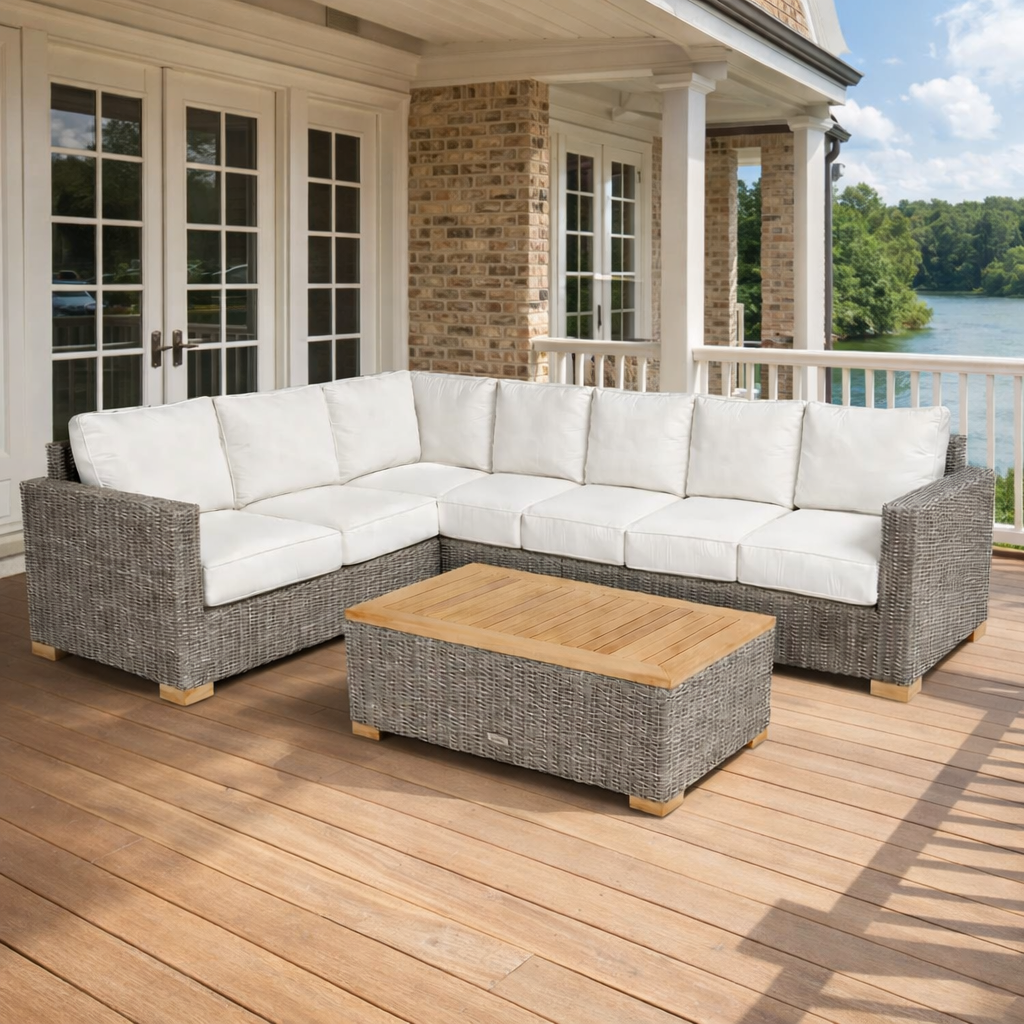 Central Florida patios are forgiving in one respect: they can be used during much of the year. That also means a poor furniture decision has plenty of time to become annoying. The most expensive mistakes usually involve layout and ownership expectations rather than choosing the wrong decorative style.
A deep lanai provides valuable protection, but humid air and wind-driven rain still reach outdoor furniture. Screen enclosures also do not stop moisture. Buying indoor-style furniture simply because the area has a roof can create unnecessary maintenance problems.
Use materials genuinely designed for outdoor conditions. Grade A teak is made for year-round outdoor use and naturally resists moisture and rot, making it a more appropriate choice for semi-protected spaces.
Pool decks require more circulation than homeowners often expect. Chairs move. Chaise lounges recline. People carry food from the kitchen and wet swimmers cross the deck. Furniture that looks perfectly proportioned on an empty floor plan can feel crowded in use.
Choose fewer complete furniture groupings and preserve obvious walkways. A high-quality dining set and lounge area with comfortable circulation usually feel more luxurious than a patio containing the maximum number of pieces.
Shade is valuable in Florida, but the most shaded corner is not automatically the best location for every piece of furniture. Areas that receive little sun and minimal airflow may remain damp after a storm. Organic debris can also collect around furniture legs or beneath cushions.
Teak's moisture and rot resistance helps, but good placement still matters. Allow air to circulate, remove accumulated debris, and avoid letting sprinklers repeatedly soak furniture unnecessarily.
A 12-seat table can sound ideal when imagining holiday gatherings, but it can overwhelm a patio used by two to six people most of the year. Central Florida's long outdoor season makes everyday usability more important than exceptional capacity.
Consider flexible furniture instead: an extendable table, movable chairs, or separate lounge and dining zones that can accommodate guests together when needed.
Homeowners sometimes make a furniture plan for beautiful weather and an emergency plan only when a storm is already approaching. Large cushions, umbrellas, small tables, planters, and other movable items all need a logical destination.
Think through that process before furnishing. Premium teak's heavier construction is useful for everyday stability, but severe weather still requires proper preparation. No outdoor furniture should simply be assumed safe because it feels substantial.
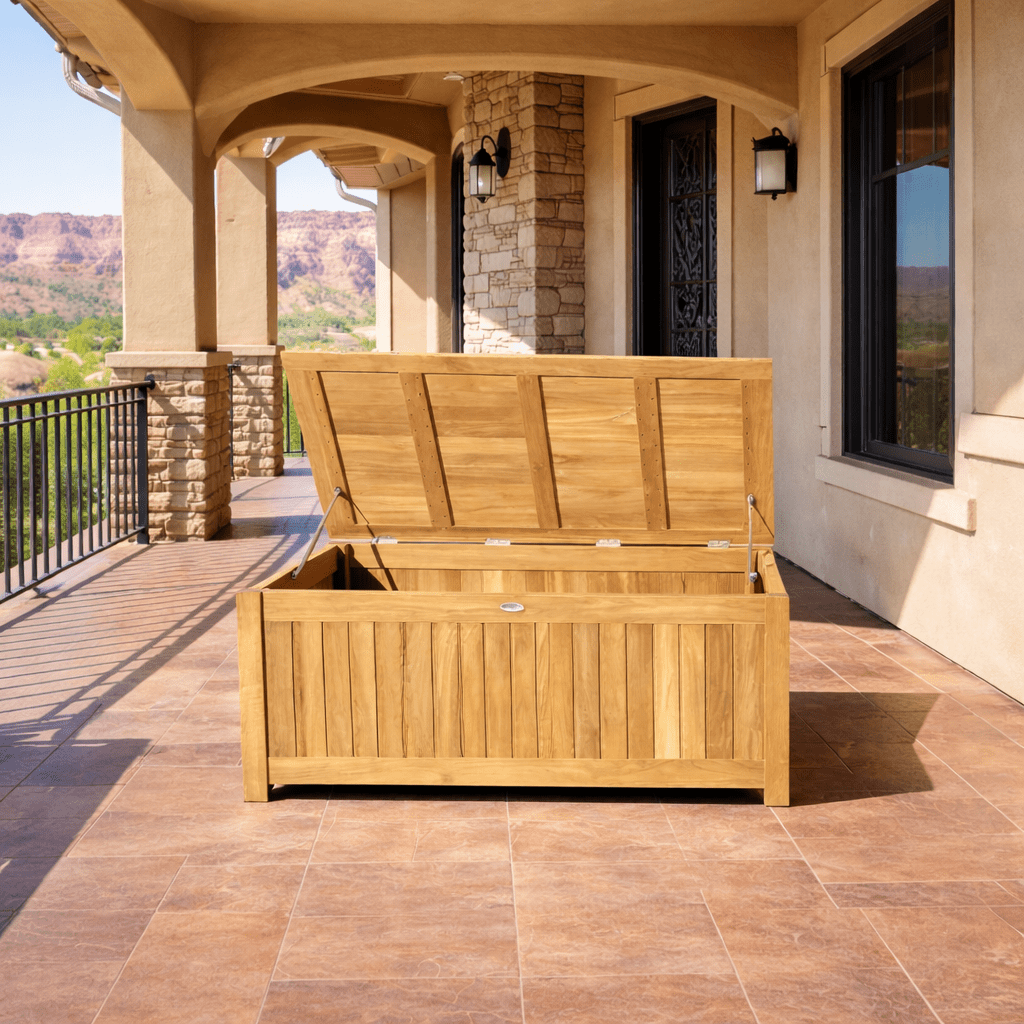 Central Florida does not require an elaborate teak-maintenance ritual. The most useful routine is simply to keep furniture reasonably clean, deal with organic debris before it accumulates, and decide whether you prefer the original teak color or the natural silver-gray patina. Maintenance for appearance is optional; basic cleaning is still worthwhile.
There is no universal cleaning calendar that every Central Florida homeowner needs to follow. A screened lanai in a relatively open yard may stay clean much longer than furniture beneath mature oaks or beside dense landscaping.
Inspect the furniture periodically and clean it when dirt, pollen, leaves, bird residue, or other organic material begins accumulating. Shaded and humid areas deserve closer attention because surface mildew or grime may become noticeable sooner even though teak itself naturally resists rot.
Untreated teak naturally develops a silver-gray patina as it weathers outdoors. That transformation is expected and does not mean the furniture must be replaced or refinished.
If you prefer that appearance, you can allow the teak to weather naturally. If retaining more of the original golden-brown tone is important, appropriate teak care products can be used. The important point is that sealing or oiling is an appearance choice rather than a requirement for making Grade A teak suitable for outdoor use.
Most TeakHQ patio seating includes Sunbrella cushions, although cushion inclusion varies by product. Sunbrella fabric is designed to be weather-, fade-, UV- and water-resistant, but water resistance does not mean homeowners have to leave cushions exposed unnecessarily through every major storm.
Allow wet cushions to dry thoroughly and follow the care directions supplied with the specific furniture and fabric. During severe storms or extended periods when the property is unoccupied, storing removable cushions can simplify cleanup and reduce exposure.
Central Florida's off-season question is different from that of a northern climate. Homeowners generally do not need to move teak indoors simply because winter has arrived; the furniture is designed for year-round outdoor use. The more important seasonal planning revolves around major storms.
Have a place for umbrellas, cushions, and smaller loose pieces before severe weather approaches. Protective covers can be used when desired, but they are not required for teak's durability. If you do cover furniture, make sure moisture is not being unnecessarily trapped beneath a poorly ventilated cover.
Furniture beside a pool naturally sees more splashes and moisture than furniture under a distant porch. Routine splashing is not a reason to avoid teak, but furniture should still be rinsed or cleaned when it becomes visibly soiled.
Also check sprinkler patterns. Outdoor furniture that is naturally capable of handling rain does not benefit from being sprayed by irrigation every morning. Correcting unnecessary exposure reduces water spotting, dirt accumulation, and cleaning work regardless of which premium material you select.
The strongest Central Florida outdoor spaces are designed around how people actually live: meals under the lanai, afternoons beside the pool, friends around the outdoor kitchen, and quiet evenings outside when the weather cooperates. Start with the zones you use most, protect comfortable circulation, and choose furniture whose materials match the realities of humidity, rain, sunshine, and year-round exposure.
For homeowners who want the warmth and authenticity of real wood without treating outdoor furniture as a short-term purchase, premium Grade A teak offers a compelling balance of durability, weather resistance, flexible maintenance, and timeless design.
There is no single correct material for every homeowner. Quality aluminum can be practical when low weight and a modern appearance are priorities, while poly lumber appeals to buyers who prefer synthetic materials. Premium Grade A teak is particularly strong for homeowners who want genuine wood because it naturally resists moisture, rot, insects, and warping while handling year-round outdoor exposure.
Look for furniture genuinely designed for outdoor moisture rather than indoor-style furniture intended only for a covered area. Dense Grade A teak performs well because its natural oils and grain structure provide moisture resistance without requiring a painted coating for durability.
Yes. TeakHQ's Grade A teak furniture is designed for year-round outdoor use and can withstand rain, sun exposure, and temperature fluctuations. Severe-weather preparation is still important when tropical storms or hurricanes threaten.
Yes. Screened lanais can still be humid and receive wind-driven rain, so outdoor-rated furniture remains important even beneath an enclosure. Teak's natural resistance to moisture and rot makes it particularly appropriate for this type of semi-protected outdoor room. Explore teak patio seating for covered conversation areas.
Begin with the way the pool is used. Chaise loungers and side tables work well for sunbathing and swimming, while deep seating is usually more comfortable beneath the covered lanai. Keep generous circulation space between the house, pool, furniture, and outdoor kitchen.
No. Grade A teak does not require sealing for durability. Unfinished teak can be left outdoors and will naturally develop a silver-gray patina. A suitable teak sealer or care product can be used if you prefer to maintain more of the wood's original color.
Yes. Natural unfinished teak gradually weathers to a silver-gray patina when exposed outdoors. This is a normal appearance change rather than a sign that the furniture has failed. Homeowners can embrace the patina or maintain the original look with appropriate care products.
Teak does not require a protective cover for durability because it is designed for outdoor weather exposure. Covers remain optional for homeowners who want to reduce dirt and weather exposure. If a cover is used, avoid trapping persistent moisture beneath it.
Do not assume any outdoor furniture is safe simply because it is heavy. Follow local emergency guidance and appropriately secure, relocate, or store outdoor furniture, umbrellas, cushions, accessories, and other movable items before dangerous winds arrive. Planning a storage location before hurricane season makes the process considerably easier.
It can be for homeowners who value natural wood and expect to keep their furniture long term. Premium Grade A teak has a higher upfront cost than many mass-market alternatives, but it is intended to last for decades rather than seasons and does not require artificial stain for outdoor durability.


