
FREE SHIPPING
within mainland USA
within mainland USA
Home ▸ Teak Outdoor Furniture ▸ By Location ▸ Charlotte, North Carolina
Charlotte homeowners ask outdoor furniture to handle a surprisingly broad range of conditions: hot, humid summer afternoons, frequent rain, strong sun, falling leaves and pollen, followed by cool winters and occasional freezes. At the same time, established tree-lined neighborhoods, newer suburban homes and lake-area properties make patios, porches, decks and backyard entertaining spaces an important extension of the home. That combination rewards furniture chosen for long-term outdoor exposure rather than a single season. Premium Grade A teak is particularly well suited to that job.

Charlotte is not an extreme environment in the way a beachfront property or desert patio can be, but it presents a demanding combination for outdoor furniture. Summer heat arrives with humidity and thunderstorms, rain occurs throughout the year, sunny spaces receive substantial exposure, and winter brings enough cold weather and occasional freezing conditions to make seasonal change relevant. The result is a climate where furniture repeatedly gets hot, wet, dry and cool rather than experiencing one dominant condition.
For Charlotte patios, moisture is more important than simply asking whether furniture can “get wet.” Summer humidity, rainfall and shaded yards can keep surfaces and cushions damp longer than they would in a dry climate. Materials that depend heavily on coatings or finishes deserve careful scrutiny because outdoor furniture here experiences repeated moisture exposure over many years.
This is one reason premium woods such as Grade A teak deserve consideration alongside quality aluminum and synthetic outdoor materials. Teak's naturally high oil content and dense grain make it resistant to moisture and rot without requiring an artificial stain for durability.
A Charlotte backyard can move between intense summer sunshine and a soaking thunderstorm in short order. Exposed decks and pool patios therefore need furniture designed for both sun and rain, not simply furniture marketed for covered outdoor spaces.
Placement matters too. A set under a deep covered porch experiences a much easier environment than the same set beside a pool or on an uncovered deck. When comparing outdoor furniture, evaluate the actual exposure of each furnishing zone rather than treating the entire backyard as one environment.
One of Charlotte's distinctive considerations is the mature tree canopy found around many established residential areas. Tree shade can make a patio dramatically more comfortable in July, but it also means pollen, leaves and other organic debris can accumulate on furniture. Shaded surfaces may also dry more slowly after rain.
That makes cleanability especially important in neighborhoods with heavily landscaped lots. The practical question is not whether furniture will ever get dirty; it is whether routine cleaning is simple enough that you will realistically do it.
Charlotte's outdoor season is much longer than in colder northern markets, yet winter cannot be ignored. Temperatures can fall below freezing, and furniture left outdoors experiences meaningful seasonal temperature changes. Buyers who do not want to move large furniture indoors every winter should prioritize pieces genuinely designed for year-round outdoor use.
Premium Grade A teak fits Charlotte particularly well because its strengths correspond to the area's combination of moisture, sun and seasonal temperature changes. It is not the only premium outdoor material worth considering: quality aluminum can be an excellent choice for buyers who prefer lightweight furniture and a more contemporary look, while synthetic materials can reduce some maintenance concerns. Teak's advantage is the combination of natural material, substantial feel and long outdoor service life.
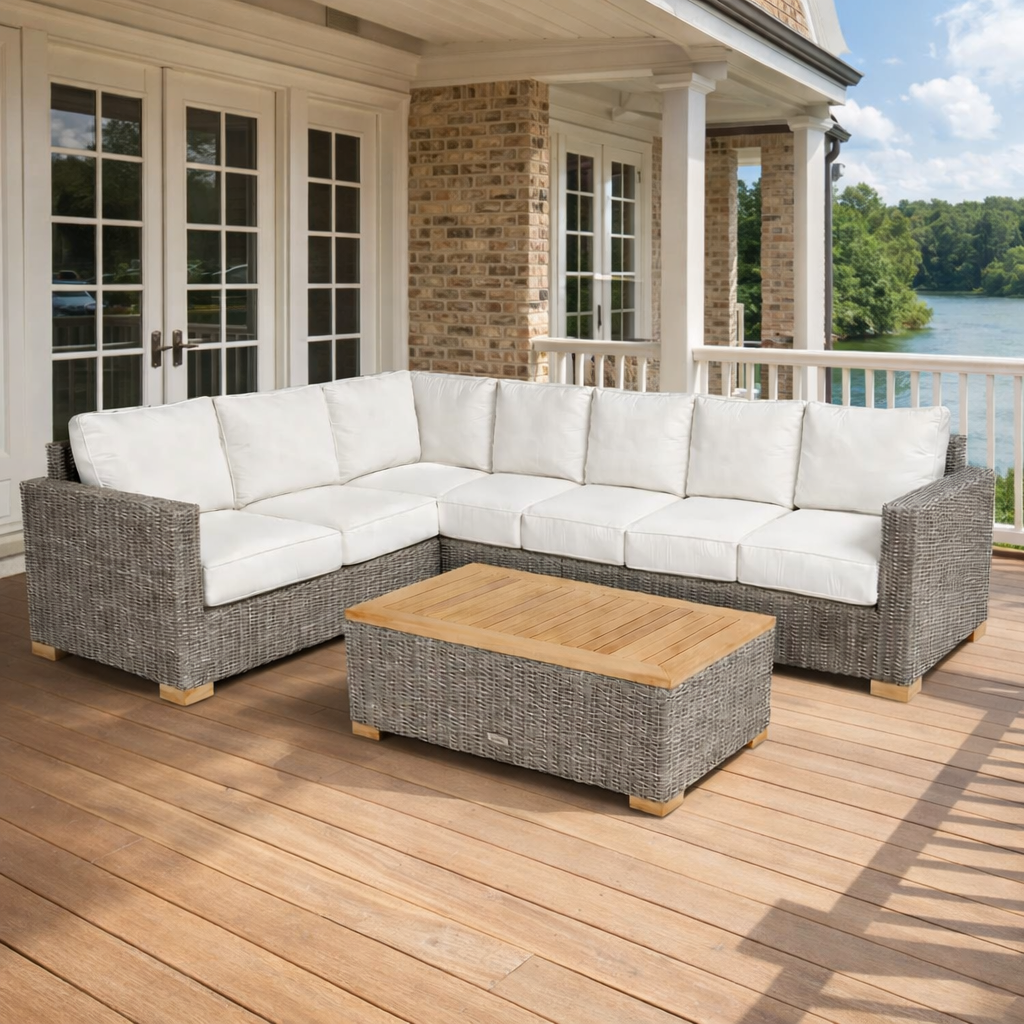 Grade A teak contains naturally high levels of oils and has a dense grain structure. Those characteristics help it resist moisture, rot and warping—valuable qualities where humid summer air and regular rainfall are part of outdoor ownership.
The distinction matters because teak does not need an artificial stain to make the wood suitable for outdoor use. Homeowners can instead make finish decisions primarily around appearance.
Quality outdoor furniture in Charlotte needs to tolerate more than summer. Teak is designed for year-round outdoor use and withstands rain, sun exposure and temperature fluctuations. Its structural stability makes that especially useful for substantial dining tables, lounge seating and other pieces that homeowners may prefer to leave in place rather than repeatedly move into storage.
Natural teak exposed outdoors gradually develops a silver-gray patina. That weathering is expected and does not mean the furniture has failed. Homeowners who like the weathered appearance can leave teak untreated; those who prefer its original warmer color can use appropriate teak care products.
This choice is particularly useful when furnishing multiple Charlotte outdoor zones. A formal covered terrace might be maintained closer to its original appearance while garden furniture elsewhere on the property can be allowed to weather naturally.
Premium Grade A teak carries a higher upfront cost than many mass-market outdoor materials, so it makes the most sense for homeowners who are furnishing for the long term. Proper teak furniture can last for decades rather than seasons. For an established patio, outdoor kitchen or permanent entertaining area, the better comparison is often cost over years of ownership rather than purchase price alone.
| Charlotte Challenge | Why Premium Grade A Teak Performs Well |
|---|---|
| Summer humidity | Natural oils and dense grain help resist moisture and rot. |
| Frequent rainfall | Teak is designed for outdoor exposure to rain. |
| Strong summer sun | Outdoor exposure naturally weathers teak to a silver-gray patina. |
| Temperature changes | Teak withstands temperature fluctuations and resists warping. |
| Shaded, damp patios | Natural moisture resistance suits areas that can dry slowly. |
| Pollen and tree debris | Solid teak surfaces can be cleaned as part of routine seasonal care. |
| Year-round exposure | Grade A teak is designed for year-round outdoor use. |
We would start with how you actually use the backyard, not with a furniture catalog. In Charlotte, a well-designed outdoor space often needs to work for ordinary family evenings, weekend entertaining and seasonal gatherings without feeling oversized when only two or four people are outside.
For a typical detached home with a reasonably generous backyard, our first priority would usually be two distinct areas: dining and conversation. Put the outdoor dining furniture closest to the kitchen or outdoor cooking area so carrying food and dishes remains easy. Place lounge seating slightly farther out, where it can function independently after dinner.
This separation is more useful than filling one large patio with a single oversized furniture group. It lets six people eat together and then move naturally into a more relaxed seating arrangement without making either zone do two jobs poorly.
For households that frequently host relatives, neighbors or friends, we would lean toward a six- or eight-seat table—or an extendable teak dining table that stays more compact for everyday use. Extendability is particularly practical when the difference between Tuesday dinner and a weekend cookout may be several extra guests.
Our planning rule is simple: size permanent furniture for normal life, then build flexibility for peak gatherings. Buying every piece for your largest annual party often makes the patio less comfortable the other 364 days.
For lounge seating, start with sight lines rather than furniture count. A sofa or sectional facing several chairs works well for larger patios, while a loveseat with club or swivel chairs can preserve circulation in tighter spaces. Browse teak patio seating by thinking first about how many people regularly sit together and where they naturally face.
Swivel chairs are especially useful when one seating area needs to relate to several focal points—perhaps the conversation group in one direction and a pool, television or fire feature in another.
Established Charlotte properties often have opportunities away from the primary entertaining area: a front porch, shaded garden edge or quiet spot beneath mature trees. Those locations do not need another complete furniture set. A pair of rockers, a porch swing or one well-placed teak garden bench can make an otherwise decorative part of the property genuinely usable.
Begin with the space that gets the most use. Frequent hosts should usually solve dining first; families who spend evenings talking outside may get more value from a deep-seating set or sectional. Larger properties can combine both, while flexible dining tables, swivel chairs, porch seating and fire pit tables help adapt Charlotte outdoor spaces to different seasons and group sizes.
Charlotte's outdoor spaces often function less like occasional fair-weather patios and more like seasonal extensions of the house. Spring and fall can be particularly appealing for long meals and gatherings, while covered or shaded spaces make summer use more comfortable. The best furniture plan recognizes that how a patio is used changes through the year.
For many households, the useful question is not “dining or lounging?” but how to accommodate both without crowding the patio. Outdoor kitchens and grills naturally create a dining anchor, while a separate conversation group gives guests somewhere to settle before and after the meal.
This is where complete teak dining sets can simplify the first zone, leaving the rest of the patio available for lounge furniture rather than trying to coordinate every chair and table independently.
Covered back porches are valuable in Charlotte because they solve two different problems: shade during hot summer afternoons and shelter during passing rain. They are excellent locations for upholstered lounge seating, especially when homeowners want a comfortable transition between indoor and outdoor living.
A covered space should not automatically be filled to its edges. Preserve generous walking routes between doors, cooking areas and the yard. Furniture that looks appropriately scaled in an open showroom can feel surprisingly large once placed between porch columns and traffic paths.
By early fall, the same outdoor area used for summer dining may become a gathering place for football weekends and cooler evenings. Furniture arranged strictly around a summer pool view may perform poorly when everyone wants to face an outdoor television or fire feature.
Flexible chairs and modular seating are useful here. A few seats that can change orientation can make the entire patio more adaptable without requiring a completely movable furniture plan.
Homes around Lake Norman and other lake-oriented parts of the metro can have several outdoor destinations: an upper deck, main patio, pool area and spaces closer to the water. Resist the temptation to furnish each as a miniature version of the main patio. Give each zone one clear purpose—dining, conversation, lounging or enjoying the view—and the property will feel more intentional.
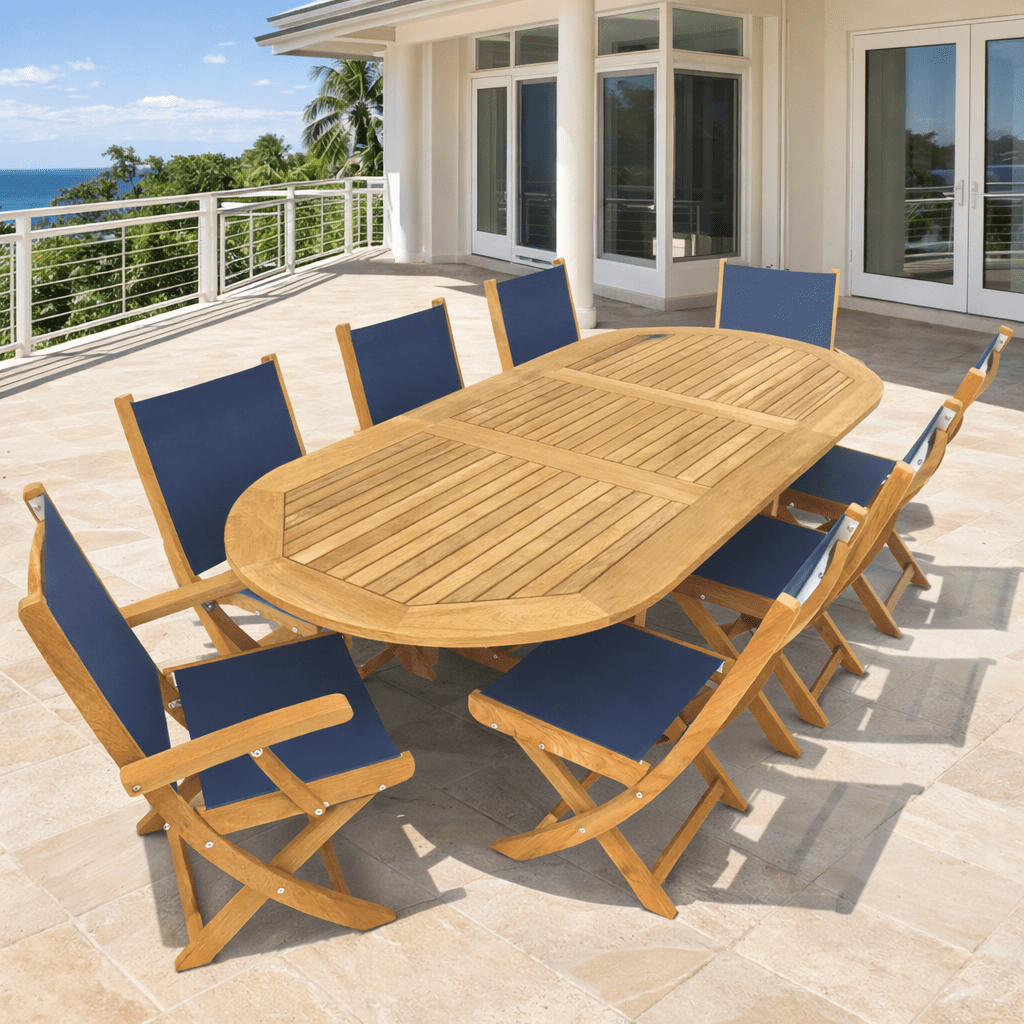 Charlotte has enough variation in housing and lot size that there is no single ideal furniture set. The right configuration for a tree-shaded Myers Park backyard is different from a newer suburban patio or a Lake Norman deck. Match furniture to the function and scale of each space before choosing a style.
A six-person table is a versatile starting point for many households, while larger families and frequent hosts may prefer eight seats or an extendable design. Leave enough clearance around the table that occupied chairs do not block doors, grill access or the route back to the kitchen.
For larger entertaining spaces, a serving or buffet table can be more valuable than simply buying an even larger dining table. It gives food and drinks their own landing zone and keeps the dining surface available for guests.
Deep seating works best when it creates a defined conversation area rather than lining furniture around the patio perimeter. A sofa or loveseat paired with two club chairs creates a natural group; larger spaces can support teak sectional seating.
Add a coffee table for the center of the group and side tables wherever a seated guest would otherwise have nowhere to put a drink. Those smaller functional decisions often determine whether a beautiful patio is actually comfortable to use.
Poolside furniture should prioritize lounging and circulation. Rather than crowding the water with general-purpose seating, dedicate the sunniest portion of the patio to teak chaise loungers and keep dining or deep seating where shade is easier to provide.
Teak's substantial, architectural feel also works well where homeowners do not want lightweight-looking furniture to dominate a carefully landscaped pool environment.
Charlotte's established neighborhoods can reward a less formal approach. Rocking chairs fit naturally on traditional porches, while swings and benches can turn shaded secondary areas into destinations. These pieces work especially well when positioned toward a garden, mature trees or another view rather than simply against an unused wall.
Charlotte's residential landscape spans early twentieth-century homes in established neighborhoods, traditional and transitional suburban architecture, contemporary infill and lake-area properties. Teak is useful across that range because the material itself provides warmth without dictating one architectural style.
In areas such as Myers Park and other mature neighborhoods, outdoor spaces often benefit from furniture that feels permanent rather than temporary. Natural teak complements brick, painted siding, stone, traditional porches and established landscaping without requiring everything outdoors to match the architecture literally.
For these properties, we would generally favor classic dining proportions, club seating, benches, swings and rockers over trying to make the backyard feel like a commercial resort.
Cleaner-lined teak seating and simpler dining tables can work equally well with newer construction. Teak's warm wood grain provides contrast against large expanses of glass, masonry, neutral finishes and modern outdoor kitchens.
If the architecture already contains many materials, keep the furniture palette restrained. Repeating teak across dining and lounge zones can create visual continuity without requiring identical furniture collections.
Lake-area homes and larger pool properties can support more destination-oriented layouts: dining near the house, a sectional or deep-seating group for conversation, and loungers where the view or sun is strongest. The goal should be to let the landscape determine where people naturally want to sit.
A common design mistake is positioning every chair toward the house because that makes the furniture plan look symmetrical. On a view property, start with the view and circulation first; symmetry is secondary.
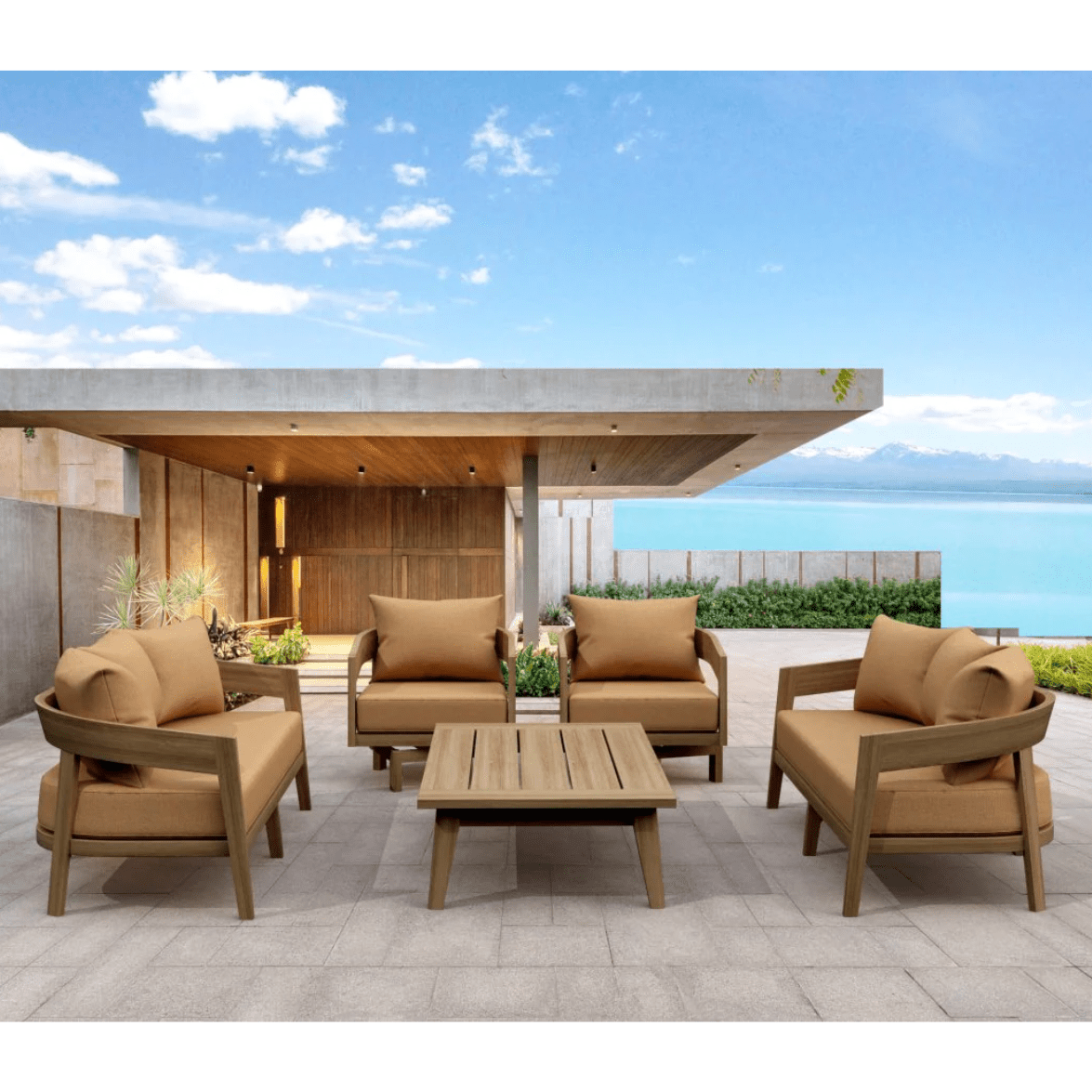 A tree-shaded patio may be cooler and more inviting in summer, but it can stay damp longer after rain. Furniture selection should account for moisture exposure, and cushions should be allowed to dry rather than remaining continuously damp. Grade A teak's natural moisture and rot resistance makes it a strong frame material for these settings.
Homeowners sometimes size the entire patio around Thanksgiving weekend, a graduation party or another occasional gathering. The consequence is oversized furniture and awkward circulation during normal family use. An extendable table, movable dining chairs and flexible lounge seating usually solve occasional capacity more gracefully.
A covered porch, uncovered pool deck and shaded garden corner have different exposures and different jobs. Buying matching sets for all three can produce a coordinated photograph but a less functional home. Use teak as the unifying material if desired, while varying furniture categories according to how each zone is actually used.
Furniture beneath mature trees will need cleaning. Choosing an expensive outdoor set does not eliminate pollen, leaves or surface debris. Solid teak offers the advantage of a durable outdoor material that can be cleaned as needed, but owners should still expect routine seasonal upkeep.
A patio designed exclusively around July may miss some of Charlotte's most comfortable outdoor periods. Dining furniture, conversation seating and a fire feature can make the same area useful during cooler spring and fall evenings. Teak fire pit tables can provide a natural gathering point where appropriate.
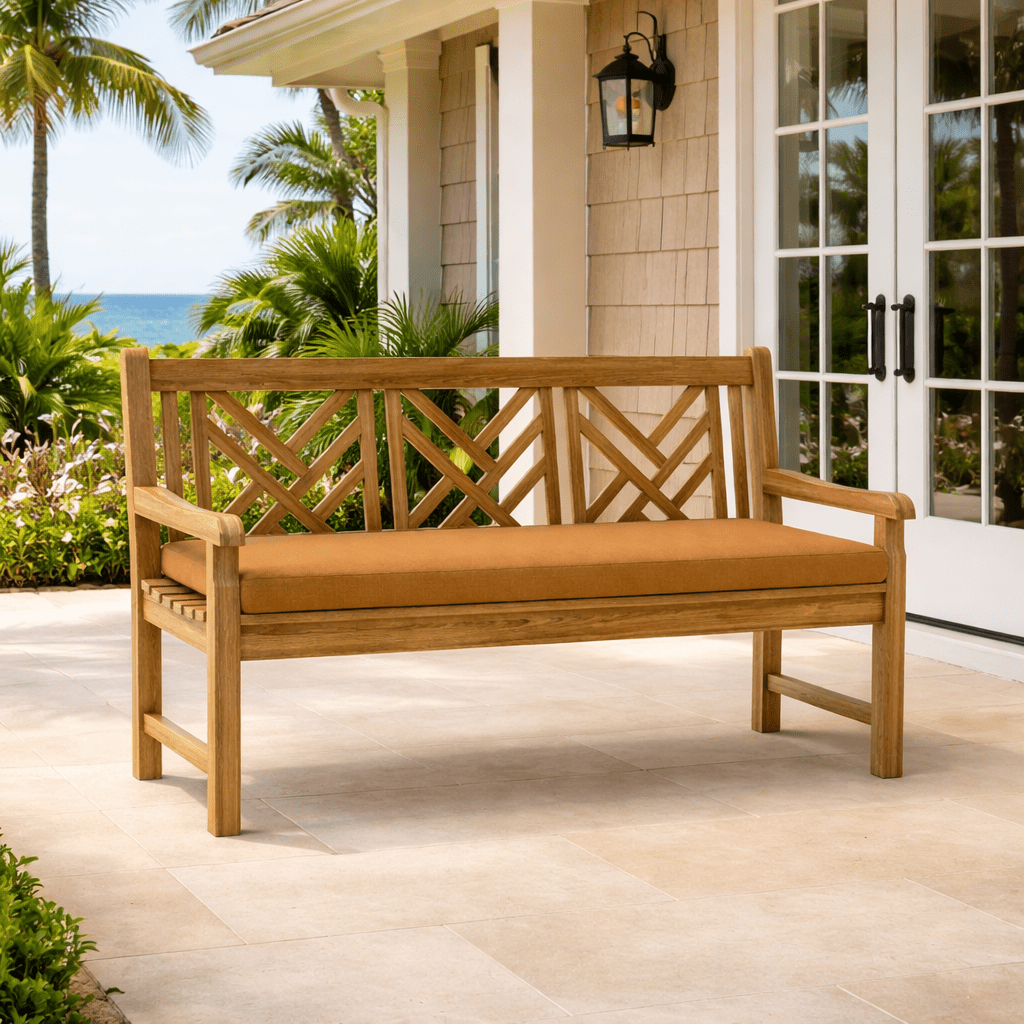 Teak does not require an elaborate maintenance schedule to remain suitable for outdoor use. Charlotte owners should think of care primarily as cleaning away the material the local environment deposits on furniture and deciding whether they want natural weathering or a maintained teak color.
There is no useful one-size-fits-all cleaning calendar. A covered porch set may need much less attention than furniture beneath trees. Inspect exposed pieces during spring pollen season and after periods when leaves or organic debris have accumulated, and clean when necessary rather than automatically applying products on a rigid schedule.
Most TeakHQ patio seating includes Sunbrella cushions, although cushion inclusion varies by product. Sunbrella fabric is weather-, fade-, UV- and water-resistant, but water resistance does not mean cushions should be treated as incapable of getting wet. After heavy rain, allow cushions and the area around them to dry.
Protective covers are optional rather than required for the teak itself. Some homeowners still use them to reduce cleaning or protect cushions and furniture from debris during periods of low use.
Untreated teak naturally weathers toward a silver-gray patina. That is an appearance change, not a requirement to refinish the furniture. If you like the weathered look, allow the process to occur naturally. If you prefer the original warmer teak color, appropriate sealing or oiling can be used according to the care product and furniture instructions.
Grade A teak furniture is designed for year-round outdoor use, so Charlotte homeowners do not need to move substantial tables and seating indoors simply because winter arrives. If cushions or accessories will not be used for an extended period, storing them can reduce weather exposure and spring cleaning.
The useful distinction is between protecting furniture because it requires indoor storage and protecting it because you want less cleaning. With outdoor-grade teak, winter storage of the wood furniture is a choice rather than a basic requirement for durability.
The strongest outdoor spaces are not the ones with the most furniture. They are the ones that make dining, conversation, summer shade and cooler-season gatherings easy. Start with the area your household will use most, choose a configuration that fits everyday life, and build outward from there. Premium Grade A teak is especially compelling when you want natural furniture designed to remain part of that outdoor space for decades rather than a few seasons.
Look for materials designed to handle humidity, rain, sun and temperature changes. Premium Grade A teak is particularly well suited because its natural oils and dense grain help resist moisture, rot and warping. Quality aluminum and synthetic outdoor materials can also be legitimate choices depending on the look, weight and maintenance characteristics you prefer.
Yes. Grade A teak is designed for year-round outdoor use and can withstand rain, sun exposure and temperature fluctuations. Charlotte homeowners do not need to move the teak furniture indoors each winter simply to preserve it.
Deep seating, loveseats, club chairs, swivel chairs, rockers and porch swings are all strong choices. Covered porches generally benefit from furniture arranged for conversation rather than simply lining chairs against the walls. Explore teak patio seating for larger conversation areas.
Yes. Grade A teak's naturally high oil content and dense grain structure make it resistant to moisture and rot, which is useful in Charlotte's humid, rainy environment. Furniture in heavily shaded locations should still be kept reasonably clean and free of accumulated organic debris.
Choose for your normal household and entertaining pattern rather than your largest annual gathering. Six-person tables are versatile, while frequent hosts may prefer eight seats or an extendable table that provides additional capacity only when needed.
Yes, unfinished teak naturally weathers toward a silver-gray patina when exposed outdoors. This is normal. You can leave the wood untreated if you like that appearance or use appropriate teak care products if you prefer to maintain a warmer teak color.
Water-resistant outdoor cushions are designed for outdoor conditions, but they should still be allowed to dry after heavy rain. If cushions will not be used for extended periods, covered storage can reduce exposure to rain, pollen, leaves and other debris.
A cover is optional rather than necessary for the teak's basic outdoor durability. Covers can still be useful if your goal is to reduce winter debris and cleaning. If you cover furniture, follow the cover manufacturer's directions and avoid creating conditions that unnecessarily trap moisture.
It depends on your priorities. Aluminum is lighter and often has a more modern appearance, while poly furniture offers a synthetic, lower-maintenance alternative. Teak provides real natural wood, a warmer and more substantial feel, natural weather resistance and decades-long potential service life, making it particularly attractive for permanent high-end outdoor spaces.
Start by giving each outdoor area a specific job. Dining furniture works well near the house and kitchen, lounge seating can anchor a primary conversation deck, and teak loungers and deck chairs fit spaces devoted to sun, relaxation or the view. Avoid duplicating a full furniture set at every outdoor destination.


