
FREE SHIPPING
within mainland USA
within mainland USA
Home ▸ Teak Outdoor Furniture ▸ By Location ▸ Chesapeake Bay
Outdoor furniture around Chesapeake Bay has to suit more than a coastal look. Waterfront decks and patios may face humid summers, frequent moisture, seasonal storms, strong sun, and varying brackish or salt exposure depending on where a home sits along the Bay. At the same time, these spaces often serve as extensions of the home for outdoor meals, boating weekends, sunset gatherings, and relaxed waterfront entertaining. Premium Grade A teak is particularly well suited to that combination of weather exposure, natural surroundings, and long-term outdoor use.

Choosing outdoor furniture for Chesapeake Bay is partly a material decision and partly a site-planning decision. A protected porch along a wooded creek and an exposed deck facing open water may be only a few miles apart, yet the furniture in those two spaces can experience very different amounts of moisture, wind, sun, and salt or brackish residue. That variation is one of the most important things to understand before furnishing a Bay property.
The Chesapeake is an estuary, so homeowners should resist treating every Bay property as though it has the same marine environment. Upper-Bay and tributary properties can have relatively fresh conditions, much of the central Bay is brackish, and exposure becomes saltier toward the lower Bay. An open-water property near Cape Charles therefore presents a different furniture environment than a protected creek near the upper reaches of the Bay.
The practical lesson is to evaluate the actual placement of the furniture. Ask whether the space faces open water, sits behind the house, lies beneath a roof, receives wind-driven spray, or stays damp because of shade. Those answers are often more useful than simply asking whether a home is “coastal.”
Warm-weather humidity and recurring moisture make quick drying and material durability important. Covered porches may receive less direct rain than open decks, but shade can allow dampness to linger longer after storms. Furniture tucked beneath trees or close to vegetation can also collect pollen, leaves, and organic debris that hold moisture against surfaces.
This is one reason material choice matters even beneath a roof. Protection from rainfall does not necessarily mean a consistently dry environment.
Bay-view patios and decks earn their views by being exposed. They can receive more direct sun, stronger breezes, and wind-driven weather than protected courtyards or porches. Lightweight furniture may be convenient to move, but a more substantial piece can feel better suited to a large waterfront setting.
For exposed locations, we would prioritize outdoor materials intended for long-term weather exposure, then consider furniture weight, cushion management, drainage around the furniture, and whether movable accessories can be secured before storms.
Unlike subtropical coastal markets, Chesapeake Bay homes experience a real seasonal transition. Furniture may move through hot, humid weather, fall leaf drop, cold winter periods, and repeated temperature changes during the same year.
That makes year-round outdoor suitability particularly valuable for homeowners who would rather not relocate an entire dining or lounge collection every fall. Cushions and small accessories can be handled separately while the primary furniture remains outdoors when appropriate.
Premium Grade A teak fits this region because its advantages line up closely with the conditions waterfront homeowners actually encounter: moisture, sun, changing temperatures, and long periods outdoors. Its value is not that it eliminates every maintenance decision. Its value is that the wood itself is naturally suited to outdoor service.
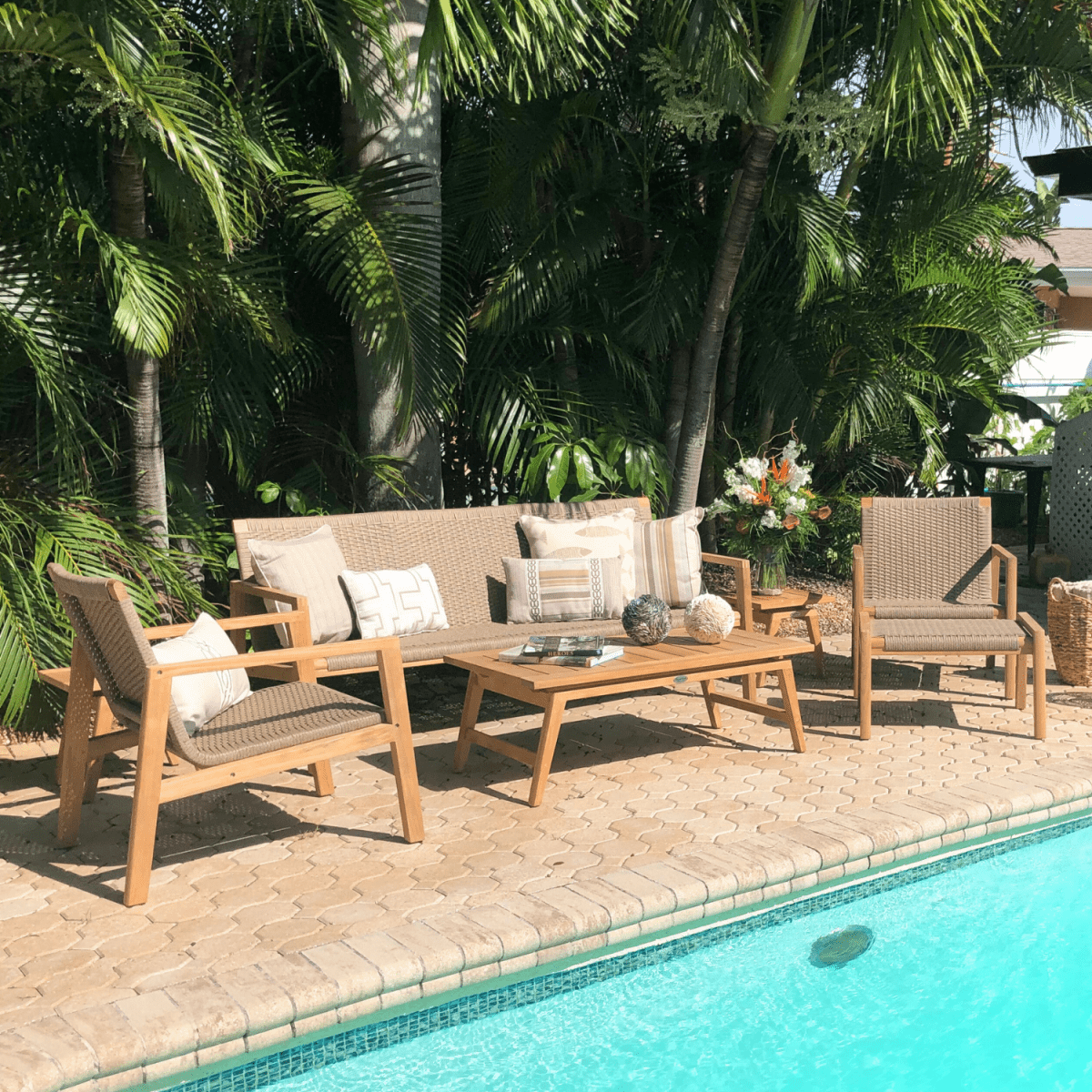 Grade A teak contains naturally high levels of oils and has a dense grain structure. Those qualities help the wood resist moisture, rotting, insects, and warping without requiring an artificial stain for durability.
That is especially useful around Chesapeake Bay, where furniture may be repeatedly exposed to rain, humid air, morning moisture, and the occasional wind-driven storm. Teak can remain outdoors year-round, so homeowners are not forced to treat every forecast as a furniture-moving event.
Premium teak is designed to withstand outdoor sun, rain, and temperature fluctuations. That makes it appropriate for open decks, pool patios, dock-adjacent seating areas, and terraces where furniture receives considerably more exposure than it would beneath a screened or covered porch.
Teak's appearance will change outdoors. Unfinished natural teak gradually weathers toward a silver-gray patina. Some homeowners specifically want that softer weathered tone on a Chesapeake waterfront property; others prefer the warmer original color and choose optional teak care products or treatments accordingly.
A waterfront furnishing plan should be evaluated over years rather than simply through the first season. Premium Grade A teak is a denser, heavier natural material with an architectural feel, and quality teak furniture can last for decades with appropriate ownership and care.
That higher initial investment can make sense for a primary residence, established second home, or professionally designed waterfront property where replacing an entire outdoor collection every few seasons would be frustrating as well as expensive.
One of teak's most useful qualities is that owners can choose how involved they want to be with appearance maintenance. Leaving natural teak unfinished allows it to weather gradually. Homeowners who prefer the original golden-brown appearance can take a more active approach to cleaning and optional sealing or oiling.
This flexibility is valuable for second homes in particular. The wood does not depend on constant cosmetic treatment for its basic outdoor durability, even though routine cleaning is still sensible in a humid waterfront environment.
| Chesapeake Bay Challenge | Why Premium Grade A Teak Performs Well |
|---|---|
| Frequent moisture | Natural oils and dense grain help resist moisture and rot. |
| Humid summers | Teak is naturally suited to long-term outdoor exposure. |
| Brackish or salty exposure | Teak's natural weather resistance suits waterfront settings; routine cleaning removes surface residue. |
| Direct sun | Teak withstands sun exposure and can weather naturally to a silver-gray patina. |
| Temperature changes | Grade A teak is resistant to warping and designed for temperature fluctuations. |
| Seasonal storms | Substantial teak furniture has a heavier, sturdier feel than many lightweight alternatives. |
| Year-round exposure | Teak is designed for year-round outdoor use. |
| Long ownership horizon | Quality teak furniture can last for decades rather than seasons. |
We would begin with the way you actually use the property. A family gathering place near Annapolis needs a different plan than a compact St. Michaels cottage or a large lower-Bay home designed around views and boating. The first decision is therefore not “Which collection do I like?” It is “Which outdoor activity deserves the best part of my space?”
For many Chesapeake properties, we would put the primary outdoor dining area close to the kitchen, grill, or outdoor cooking zone rather than automatically placing it at the absolute edge of the water. A beautiful view is valuable, but carrying food and dishes across a large property every time you eat outside becomes old quickly.
For homeowners who regularly host family, friends, or crab feasts, a generously sized teak outdoor dining set is usually the most useful anchor. An extendable table can be particularly practical when ordinary weeknight occupancy is much smaller than weekend entertaining.
The prime water view is often better used for lingering than for serving dinner. Deep seating, Adirondack chairs, or a pair of loungers can create a dedicated place for morning coffee, post-boating relaxation, or sunset conversation.
If the property has enough depth, we prefer treating dining and lounging as two outdoor rooms. A teak patio seating group oriented toward the water can remain conversational, while the dining zone stays connected to the house.
Waterfront homes frequently have movement patterns that generic patio plans ignore: people carrying coolers, towels, fishing gear, life jackets, or food between the house, lawn, dock, and boat. Do not allow a sectional or oversized table to become an obstacle in the most frequently traveled route.
A useful rule is to map those paths before ordering furniture. The most expensive furniture arrangement can still feel wrong if everyone has to squeeze behind chairs whenever they head toward the dock.
Porches, garden edges, and small landings do not necessarily need another complete furniture set. A bench, pair of rockers, or two Adirondack chairs can make a quiet secondary space useful without competing with the main patio.
That approach works particularly well on larger Bay properties, where several small seating destinations can take advantage of changing sun, shade, breezes, and views throughout the day.
Start with the part of your property that gets the most real use. Frequent hosts should usually begin with dining; homeowners who spend long evenings overlooking the water may get more value from lounge seating or a sectional; properties centered on a dock, pool, or sunny waterfront terrace may justify loungers first. Smaller seating pieces, tables, porch furniture, and storage can then complete the space without overcrowding it.
The Bay tends to blur the line between recreation and home life. A Saturday may move from coffee on the porch to boating, lunch outside, an afternoon swim, and dinner with friends without anyone really “leaving” the outdoor living space. Good furniture planning supports those transitions rather than creating one formal patio that only works for a single activity.
A Chesapeake dining space often needs more flexibility than its everyday household size suggests. The table may serve four people most days and then become the center of a much larger gathering when children, grandchildren, boating friends, or weekend guests arrive.
That is why we would size dining around realistic entertaining patterns rather than the number of permanent residents. If larger gatherings happen regularly, an extendable teak dining table can preserve usable deck space during quieter periods without forcing every gathering indoors.
Waterfront furniture often serves people who are wet, carrying gear, or moving repeatedly between the house and water. That makes circulation, easy-to-reach side tables, and places to temporarily set towels or drinks unusually important.
It also argues against decorating every available square foot. On a boating-oriented property, useful open space is part of the furniture plan.
Covered and screened porches are especially useful around the Bay because they provide outdoor connection when direct sun, insects, or passing showers make an uncovered deck less comfortable. These protected areas are natural locations for lounge seating, rockers, dining furniture, or a smaller morning-coffee arrangement.
Furniture beneath a roof still needs to tolerate humid outdoor conditions, however. “Covered” should not automatically be interpreted as “indoor environment.”
For a vacation or weekend home, we would place more weight on furniture that can remain in place and still look appropriate after long periods between visits. Owners often have better things to do on Friday night than move an entire patio collection in and out of storage.
Teak's ability to remain outdoors and weather naturally can simplify that ownership pattern, while removable cushions and smaller accessories can receive more protective storage when the property is vacant.
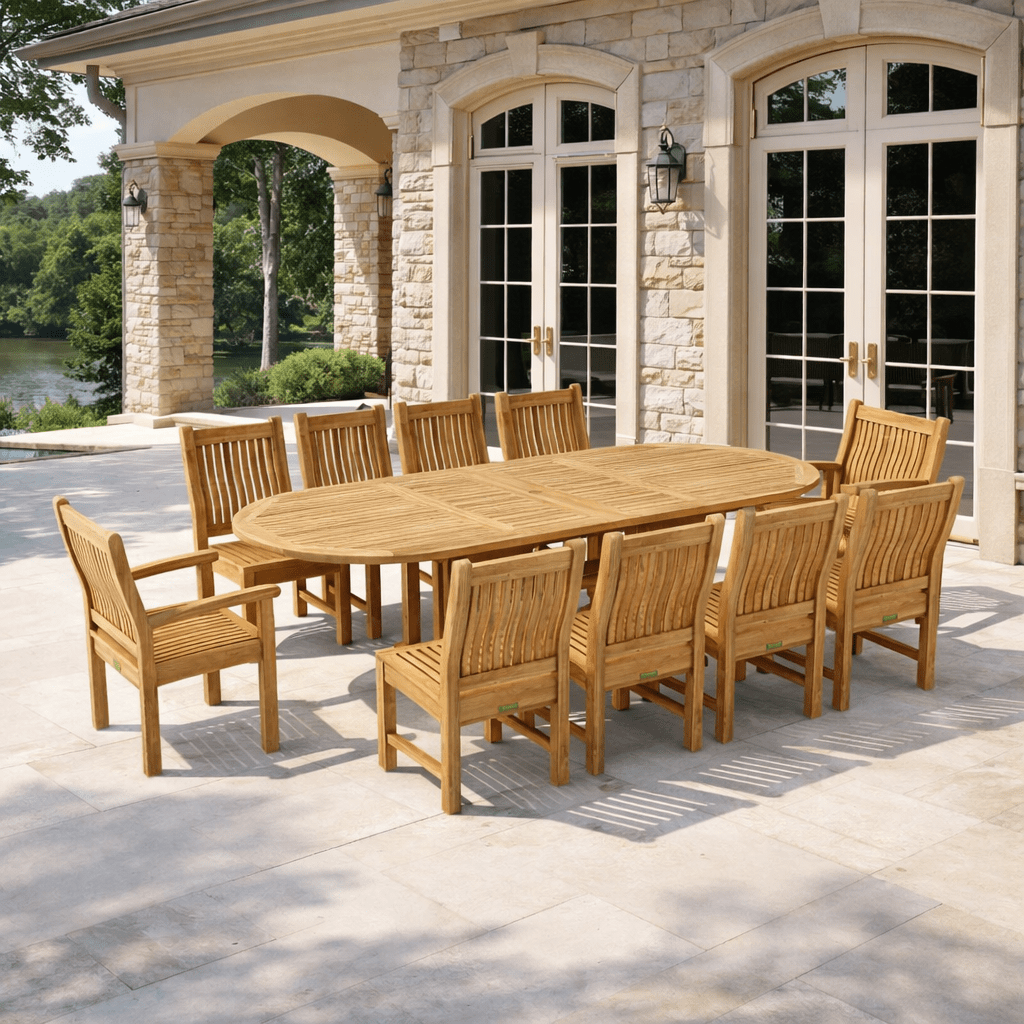 The best Chesapeake Bay furniture plan usually combines one substantial gathering area with one or two smaller places to enjoy the water. Rather than repeating identical seating across the property, give each zone a clear purpose.
For a large primary deck, a dining set paired with deep seating creates the most versatile arrangement. Dining handles meals and gatherings; sofas or club chairs make the space comfortable after the dishes are cleared.
If the view is panoramic, orient lounge seating toward both the scenery and the people using the space. A straight sofa facing the Bay may look wonderful in a photograph but can be awkward for conversation. On larger patios, teak outdoor sectionals can define a conversational zone without requiring a wall or architectural divider.
Loungers make sense where people genuinely spend time in the sun, especially near pools or broad waterfront terraces. On working docks, however, we would be more selective. Fishing, loading a boat, handling lines, and carrying gear require clear space.
When relaxation space is separate from dock operations, teak chaise loungers with nearby side tables can create a simple waterfront retreat without the scale of a full lounge collection.
Deep seating works well on substantial screened porches, while narrower spaces may be better served by club chairs, rockers, or a loveseat. Porch swings can also feel particularly natural with traditional Chesapeake architecture.
Measure usable depth carefully. A porch may look large on a floor plan but lose meaningful space to door swings, screens, columns, circulation paths, and the need to walk around seated guests.
Some of the best Chesapeake seating is not on the main patio at all. A pair of Adirondack chairs overlooking a creek, or one of TeakHQ's teak garden benches near a garden or shoreline viewpoint, can make an otherwise unused part of the property a favorite place to sit.
This is where furniture placement should respond to the property rather than symmetry. Follow the shade, breeze, sunset, or view.
Chesapeake properties span historic streets, traditional waterfront houses, cottage-style retreats, contemporary renovations, and large custom homes. The most successful outdoor spaces generally respect that architecture rather than introducing an unrelated “resort” theme simply because the house is near water.
Natural teak works comfortably with clapboard siding, brick, painted trim, porches, cottage architecture, and established landscaping. Its warm wood tone adds texture without demanding that every other outdoor element match it.
For a traditional property, simple dining silhouettes, benches, Adirondack chairs, rockers, and classic lounge furniture tend to feel more natural than overly complicated arrangements.
Modern waterfront homes can take the same material in a different direction. Cleaner-lined sofas, sectionals, large rectangular tables, and restrained furniture groupings can balance glass, metal, stone, and simplified architecture.
Teak does not need a nautical theme around it. In many modern Chesapeake settings, allowing the wood to be the warm natural element is enough.
Waterfront design has an unusual temptation: homeowners often point every chair directly toward the water. That works for solitary viewing but can make a social space surprisingly uncomfortable.
A better approach is usually to preserve the primary view through the furniture arrangement while angling seats toward one another. Guests can see the Bay without spending the evening sitting shoulder-to-shoulder like spectators. That small distinction separates a scenic patio from a genuinely usable outdoor room.
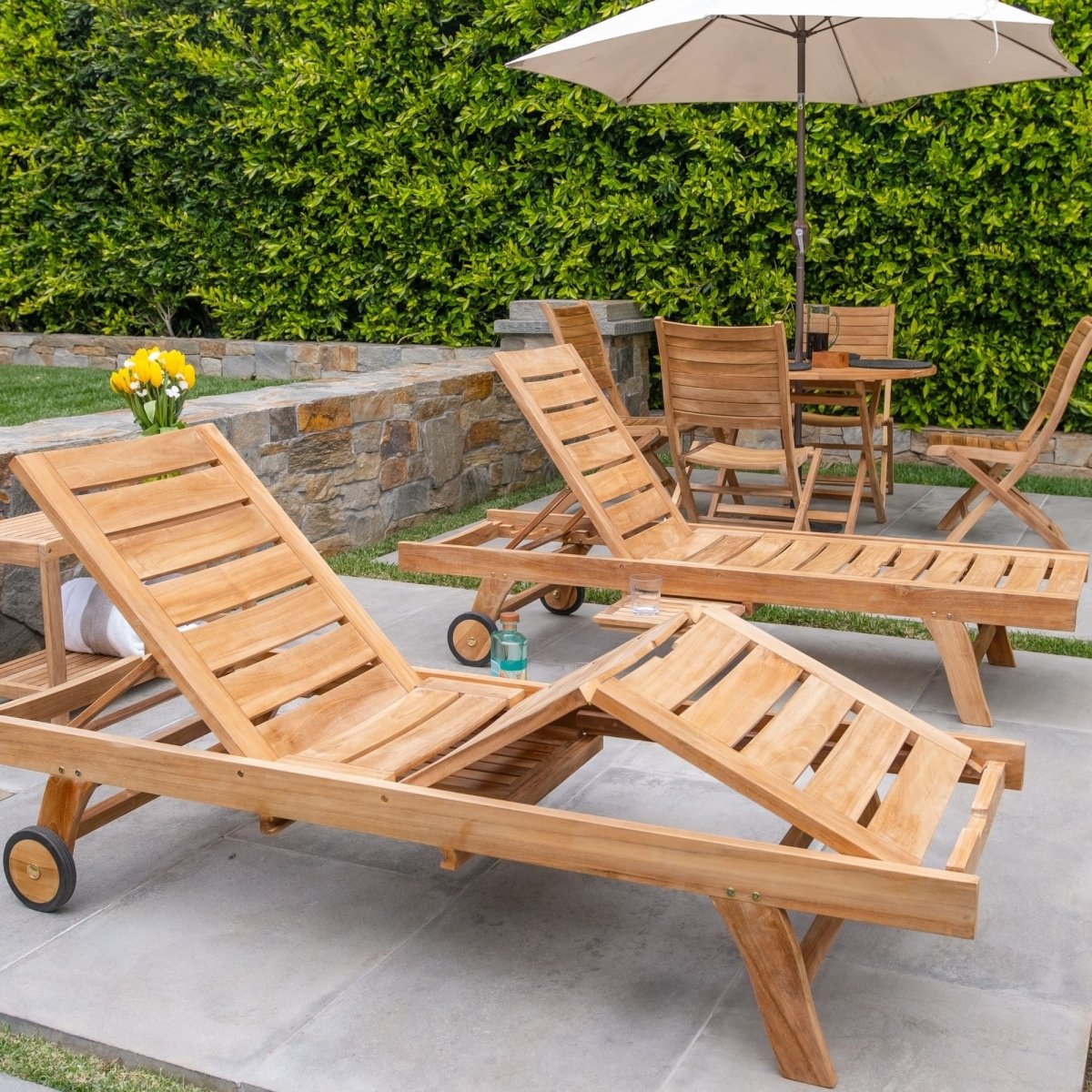 One of the biggest mistakes is assuming “Chesapeake Bay” automatically means the same salt exposure everywhere. A sheltered tributary, central-Bay shoreline, and lower-Bay waterfront site can have meaningfully different conditions.
Evaluate the actual site: wind direction, proximity to open water, salt or brackish residue, sun, shade, and direct rainfall. Grade A teak is well suited to outdoor weather and moisture, but your cleaning routine and cushion management should still reflect the specific location.
Large furniture can look perfectly proportioned on an empty deck and still create problems once people start walking from the house to the grill, lawn, pool, or dock. Waterfront properties often have more functional traffic than conventional backyard patios.
Plan circulation first and furniture second. Teak is a premium long-term purchase, so choosing the correct scale before ordering is more useful than trying to solve an overcrowded layout afterward.
A couple with a second home may still need seating for ten every summer weekend. Conversely, an enormous dining set can waste valuable space when large gatherings happen only once a year.
Base capacity on recurring behavior. Extendable dining tables, movable chairs, benches, and secondary seating can provide flexibility without making the patio feel permanently set for a party.
A covered porch is protected from much of the direct rain, but humidity, wind-driven moisture, wet clothing, pollen, and organic debris can still affect the space. Furniture should therefore be selected as outdoor furniture rather than indoor furniture that happens to sit beneath a roof.
Premium teak's moisture and rot resistance makes it appropriate for those semi-protected environments while preserving the look of natural wood.
The wood frame and the cushion are two different maintenance decisions. Many TeakHQ lounge pieces include Sunbrella cushions, while others offer cushions separately. Sunbrella is weather-, fade-, UV-, and water-resistant, but homeowners may still prefer to protect cushions from prolonged wet weather or during periods when a second home is vacant.
Before buying a large lounge collection, decide where loose cushions will go. That simple decision can be more important to day-to-day convenience than choosing between two nearly identical sofa styles.
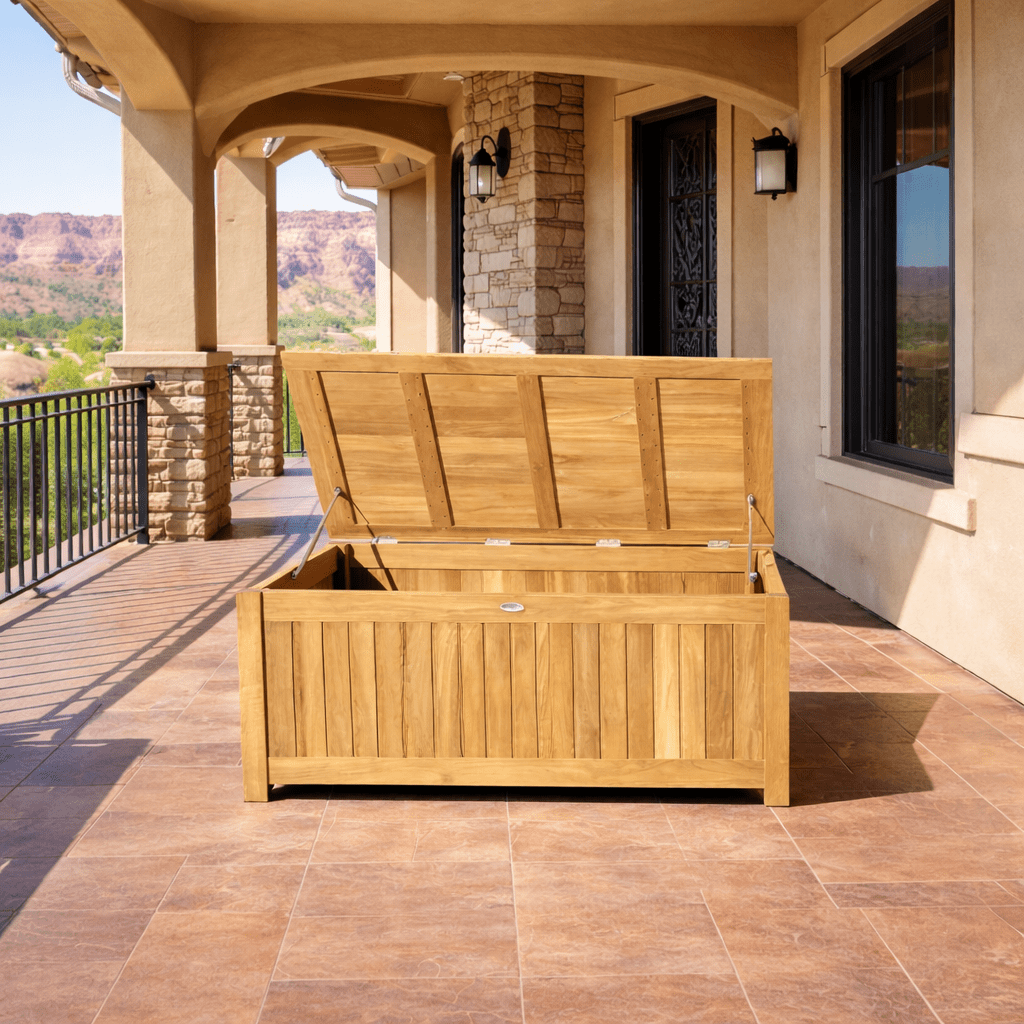 Teak does not require an elaborate Chesapeake-specific maintenance program. The useful difference is knowing when the local environment justifies a little more attention—particularly on exposed waterfront properties where surface residue, pollen, moisture, and debris accumulate more quickly.
There is no reason to clean teak on an arbitrary calendar if the furniture remains clean. Inspect it periodically and wash it when dirt, pollen, bird droppings, organic debris, or waterfront residue accumulates.
Furniture facing open water may need attention more often than the same furniture on a screened porch. Protected furniture can still collect pollen and mildew-promoting debris, so “covered” should not mean “ignored.”
On properties subject to noticeable brackish or salt residue, occasional rinsing helps keep deposits from accumulating on furniture and hardware. This becomes more relevant as exposure increases toward saltier portions of the lower Bay or on sites receiving wind-driven spray.
Royal Teak and Anderson Teak products use stainless-steel hardware, while Verandis Teak products use brass hardware. Follow the specific product's care guidance rather than assuming every piece uses identical fittings.
Natural unfinished teak does not have to remain golden brown. Left untreated outdoors, it will gradually develop a silver-gray patina. Many waterfront homeowners like that appearance because it settles naturally into weathered decking, coastal landscaping, and muted waterfront architecture.
If you prefer teak's original warmer tone, maintenance becomes more appearance-focused. Optional teak cleaners and sealers can be used as appropriate. Treatment is a cosmetic choice rather than a requirement for the wood's basic outdoor durability.
Grade A teak can remain outdoors year-round, so storing every wood furniture frame indoors is not necessary. Homeowners may still choose protective covers, particularly to reduce cleaning or keep furniture ready for use, but covers are optional rather than essential to teak's durability.
If you use covers, avoid turning them into moisture traps. Furniture should be reasonably clean and dry, and the covering system should be appropriate for outdoor use. Removable cushions, pillows, and lightweight accessories can be stored separately when extended winter use is unlikely.
The right Chesapeake Bay furniture plan starts with your property, not with a catalog. Consider where the water is, where people naturally gather, how guests move between the house and shoreline, how exposed each outdoor zone is, and how much maintenance you actually want to perform.
Once those decisions are clear, premium Grade A teak becomes a compelling fit: natural wood with the durability, weather resistance, substantial feel, and design flexibility needed for waterfront dining, relaxed lounge spaces, porches, gardens, and long-term outdoor living.
Look for materials intended for long-term outdoor exposure to humidity, rain, sun, and changing temperatures. High-quality aluminum and synthetic materials can be legitimate options, while premium Grade A teak is especially appealing to homeowners who want natural wood, substantial construction, moisture resistance, and long-term durability.
Yes. Grade A teak is naturally high in oils, has a dense grain structure, and resists moisture, rot, insects, and warping. Those characteristics make it well suited to waterfront patios, decks, porches, and other outdoor areas around Chesapeake Bay.
No. Conditions vary considerably around the Bay. Upper portions are fresher, much of the Bay is brackish, and salinity generally increases toward the lower Bay and Atlantic. A home's exposure to open water, prevailing wind, and spray can therefore matter more than simply being located somewhere in the Chesapeake region.
Yes. Premium Grade A teak is designed for year-round outdoor use and withstands rain, sun, and temperature fluctuations. Covers are optional, although some owners use them to reduce dirt and seasonal cleanup. Cushions and lightweight accessories may be stored separately.
Start with how you use the deck. Frequent hosts often benefit from a teak dining area plus separate conversation seating. Smaller decks may work better with club chairs, a loveseat, Adirondack chairs, or compact dining furniture while preserving a clear route to the yard or dock.
Only if larger groups visit regularly. Size furniture around typical weekend occupancy rather than the number of permanent residents. An extendable dining table can be a particularly practical compromise for homes that alternate between quiet weekends and large family gatherings.
No. Teak does not require sealing for basic outdoor durability. You can leave natural teak untreated and allow it to weather to a silver-gray patina, or use optional care products if you prefer to preserve more of its original warm color.
Remove dirt, pollen, organic debris, and visible waterfront residue as needed. More exposed lower-Bay or open-water properties may benefit from more frequent rinsing than protected porches or inland-facing patios. Always follow the care instructions for the specific furniture and hardware.
Each material has tradeoffs. Aluminum is lighter and often more contemporary, while poly furniture offers a synthetic, lower-maintenance approach. Teak provides real natural wood, a warmer appearance, greater heft, natural weather resistance, and the ability to age to a silver-gray patina. The better choice depends on which characteristics matter most to you.
Quality teak furniture can last for decades with appropriate ownership and care. That longevity is one reason the higher upfront cost can make sense for established Chesapeake Bay homes where homeowners prefer to invest once in substantial outdoor furniture rather than replace short-lived sets repeatedly.


