
FREE SHIPPING
within mainland USA
within mainland USA
Home ▸ Teak Outdoor Furniture ▸ By Location ▸ Colorado Front Range
Outdoor furniture along Colorado's Front Range has to handle more than a pleasant summer patio season. Strong sun, dry air, rapid weather changes, snow, freezing temperatures and occasional severe storms can all affect how furniture ages outdoors. From Denver-area patios to Boulder foothill properties, Fort Collins backyards and Colorado Springs decks, the best choices balance year-round durability with spaces designed for dining, relaxing and gathering. Premium Grade A teak is especially worth considering because it combines substantial natural wood construction with weather resistance and flexible maintenance.

The Colorado Front Range creates an unusual outdoor-furniture environment because several stresses can occur within the same year—and sometimes within a short span of time. Furniture may spend weeks in intense summer sun, encounter afternoon thunderstorms or hail, sit through dry periods, then remain outdoors through snow and freezing winter weather. That combination matters more than any single temperature reading.
Colorado homeowners often think first about snow, but sun exposure deserves equal attention when choosing premium patio furniture. Much of the Front Range sits at substantial elevation with abundant clear-weather exposure, so uncovered patios and south- or west-facing decks can receive sustained sunlight. This matters particularly for finishes, fabrics and furniture that depends on surface coatings for its appearance or protection.
Shade structures, umbrellas and covered patios can improve comfort, but they do not eliminate the need for materials designed for outdoor exposure. If a patio receives direct afternoon sun, we would prioritize the furniture frame first and treat shade as an additional comfort feature rather than the furniture's primary protection.
A Front Range patio does not experience one steady climate. Warm afternoons can give way to much cooler evenings, and seasonal transitions can be abrupt. Outdoor furniture therefore benefits from materials that tolerate temperature fluctuations without requiring constant movement indoors and outdoors.
This is one reason to separate furniture-frame decisions from cushion decisions. A durable frame can remain outdoors year-round while removable cushions can be handled more selectively during snow, extended wet weather or the off-season.
Snow itself is only part of the winter equation. Furniture can also experience melting snow, refreezing moisture and repeated wet-dry cycles as sunny periods interrupt cold weather. For wood furniture, the quality and natural properties of the wood matter greatly. Premium Grade A teak is naturally resistant to moisture, rotting and warping and is designed for year-round outdoor use.
Good placement still matters. Furniture should not be positioned where roof runoff, persistent snow piles or irrigation repeatedly concentrate moisture around the legs. Even durable outdoor furniture benefits from sensible drainage and airflow.
Front Range homeowners also need to think beyond everyday weather. Thunderstorms can arrive quickly, and exposed properties may experience hail or strong winds. No premium material should be treated as immune to storm damage, so we would not buy outdoor furniture based on an assumption that it is indestructible.
Instead, prioritize substantial furniture and develop a storm plan for lighter accessories, umbrellas and removable cushions. This is one area where teak's heavier, sturdier feel can be appealing compared with very lightweight furniture, although umbrellas and other movable accessories should still be secured appropriately.
Several premium outdoor-furniture materials can work well in Colorado. Aluminum can be a sensible choice when low weight and a contemporary look matter, while quality synthetic materials can reduce some routine maintenance. Premium Grade A teak becomes especially compelling when the goal is a natural material that can remain outdoors, tolerate changing weather and age gracefully without relying on an artificial stain for durability.
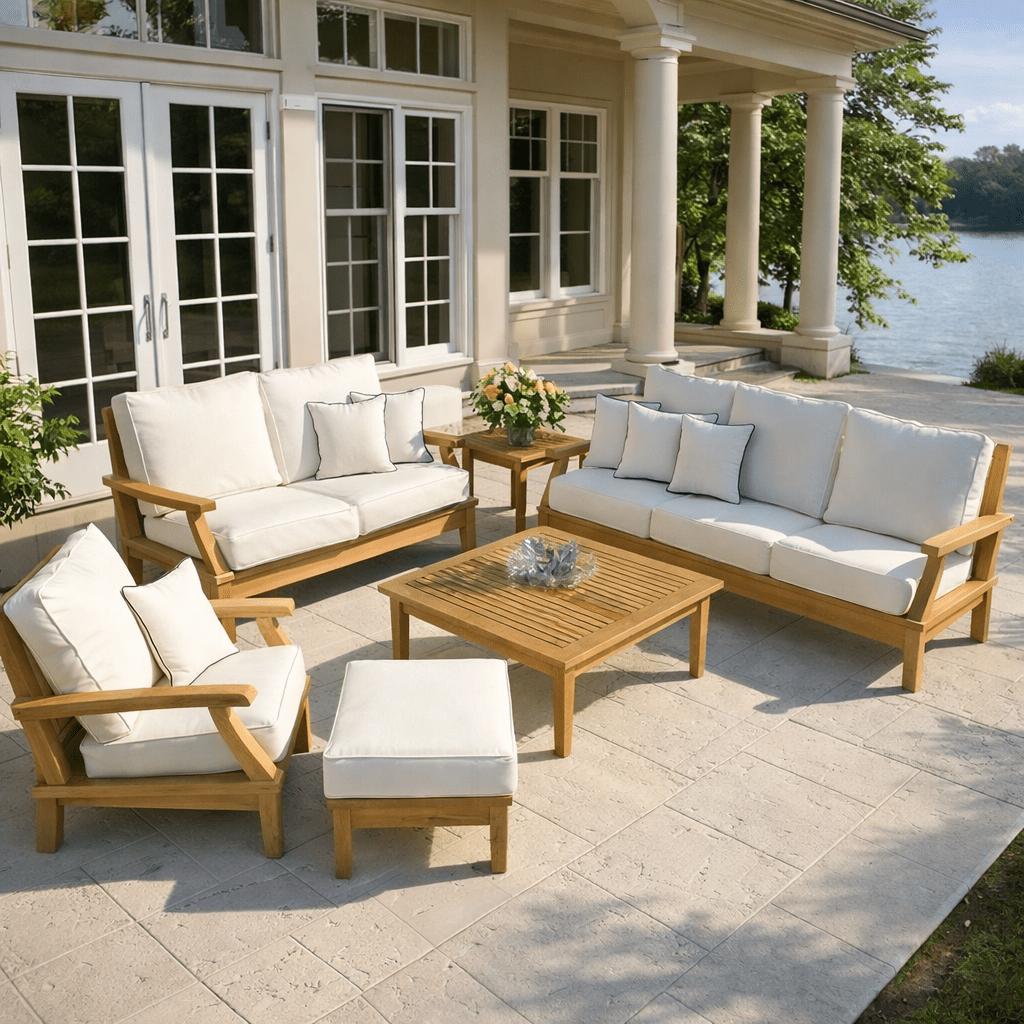 Grade A teak has naturally high oil content and a dense grain structure. Those characteristics contribute to its resistance to moisture, rotting, insects and warping. On the Front Range, that matters because the furniture is asked to move repeatedly between dry sun, rain or melting snow, cold weather and warm conditions.
Unlike an outdoor material that depends entirely on a painted or stained surface to protect the underlying structure, teak can be left unfinished. That simplifies one of the more important Colorado ownership decisions: whether you want to maintain a particular color or simply allow the furniture to age naturally.
Teak is designed for year-round outdoor use and withstands sun exposure, rain and temperature fluctuations. That combination is useful on patios that homeowners actually want to use rather than continually prepare for changing weather.
The distinction is important: weather resistance does not mean nothing will change visually. Natural teak gradually develops a silver-gray patina when left untreated. Some owners prefer the original golden-brown appearance and choose to use appropriate teak-care products; others intentionally allow the patina to develop. Both approaches can be legitimate because preserving the original color is an aesthetic choice rather than a requirement for basic durability.
The Front Range favors outdoor materials that can cope with a broad range of conditions rather than excelling only during summer. Grade A teak's resistance to moisture and warping makes it well suited to furniture expected to remain outside as temperatures and weather change.
This also influences what we would buy first. Instead of spending heavily on furniture that must be treated as highly seasonal, we would put more of the budget into a durable permanent frame—such as a teak patio seating group or dining set—and handle cushions and accessories according to the forecast and season.
Premium teak costs more upfront than many mass-market outdoor materials, so the relevant question is not whether it is inexpensive. It is whether the homeowner expects to keep and use the furniture long enough for longevity to matter. Quality teak furniture can last for decades rather than just a few seasons.
For a homeowner building a long-term outdoor living space, that changes how we would evaluate price. Furniture that fits the patio well, complements the architecture and can remain part of the property for many years can make more sense than repeatedly replacing lower-cost sets.
| Colorado Front Range Challenge | Why Premium Grade A Teak Performs Well |
|---|---|
| Strong sun exposure | Designed for outdoor sun exposure and can weather naturally without requiring artificial stain for durability. |
| Dry conditions | Dense Grade A teak offers substantial natural wood construction suited to long-term outdoor use. |
| Rain and melting snow | Natural oils and dense grain help resist moisture, rotting and warping. |
| Temperature fluctuations | Teak is designed to withstand changing outdoor temperatures year-round. |
| Winter exposure | The teak frame can remain outdoors rather than requiring seasonal indoor storage. |
| Variable appearance preferences | Leave teak untreated for a silver-gray patina or maintain its original color with optional care. |
| Wind-prone patios | Teak has a heavier, sturdier feel than many lightweight furniture options. |
We would start with how the property is actually used, not with a catalog. A Denver suburban patio built around an outdoor kitchen needs a different plan from a Boulder foothill deck, a compact Golden terrace or a large Castle Rock backyard. The common thread is that furniture should work during Colorado's excellent outdoor months without becoming a burden every time the weather changes.
On a reasonably sized Front Range patio, our first priority would usually be one dining zone and one conversation zone. Dining furniture belongs close enough to the kitchen or grill that carrying food is easy. Lounge seating works better slightly farther away, where it can face a view, fireplace, fire table or the rest of the yard.
This division prevents a common planning problem: buying one oversized set and asking it to do everything. A dining table is excellent for meals but rarely becomes the place everyone wants to remain for two hours afterward. Deep seating solves a different problem.
Colorado households that entertain outdoors often need more seats occasionally than they need every day. Rather than permanently filling a patio with a very large table, an extendable teak dining table can be a smarter solution. Keep the everyday footprint manageable, then add capacity for family visits, neighborhood dinners or summer gatherings.
If the patio is large and entertaining is frequent, a complete teak outdoor dining set offers a straightforward way to coordinate table scale and seating from the beginning.
Along the foothills and elevated Front Range neighborhoods, orientation may matter as much as furniture style. Before choosing a sectional configuration, stand where the seating will go and identify what people naturally want to look toward. Mountain views, open-space corridors, gardens and sunsets can all justify an outward-facing arrangement rather than the inward-facing layouts shown in many furniture displays.
Swivel chairs are especially useful when one seat needs to participate in a conversation and also turn toward a view, outdoor television, fireplace or activity elsewhere in the yard.
A Front Range patio should not be designed only for the warmest afternoons of July. Spring and fall can offer excellent outdoor time, but evenings cool quickly. Comfortable lounge seating around a fire feature can extend the usefulness of the patio without requiring the entire space to revolve around a permanent built-in fireplace.
If that is how you use your yard, treat the fire/conversation area as a primary zone rather than an accessory squeezed into whatever space remains.
Start with the activity that defines your patio. Frequent hosts should begin with dining sets or extendable tables; homeowners who use the backyard primarily for conversation and relaxing should start with lounge sets or sectionals. For large Front Range patios, the strongest plan is often a combination: one purposeful dining zone, one comfortable seating zone and a fire feature or flexible accent pieces that make the space useful across more of the year.
Front Range outdoor living tends to be highly seasonal without being strictly seasonal. Summer naturally gets the most attention, but sunny spring and fall days can make patios useful well outside a narrow three-month window. The result is a market where homeowners benefit from furniture that can stay in place while the way the patio is used changes throughout the year.
For many Front Range homes, outdoor dining is the most useful place to start because it connects naturally with grilling, outdoor kitchens and backyard entertaining. A six-person table often works well for normal family use, while eight- and ten-person configurations make more sense when the patio regularly hosts extended family or friends.
The mistake is assuming the largest table that physically fits is automatically the best table. Leave generous circulation around chairs, especially on patios where people move repeatedly between the house, grill and yard.
Colorado's dry climate and cooler evenings can make lounge seating particularly useful after dinner. Sofas, club chairs and swivel chairs create a second destination where guests can settle in after leaving the table. A coffee table or fire table helps anchor the grouping and prevents the seating from looking like unrelated pieces positioned around a patio.
This is also where substantial furniture pays off aesthetically. Teak's warmer, natural character works especially well beside stone, brick, stucco and other materials commonly used in Colorado outdoor spaces.
A well-equipped outdoor kitchen does not automatically create a comfortable entertaining space. We frequently see the cooking zone planned carefully while the seating around it is treated as an afterthought.
If the cook is meant to remain part of the gathering, orient dining or lounge furniture so the grill station is adjacent to—not isolated from—the social area. Teak bar and counter-height furniture can work particularly well around outdoor counters, while a nearby dining table handles full meals.
One of the most useful Front Range design principles is to distinguish between permanent furniture and movable weather-sensitive items. The teak frame can serve as the permanent architecture of the patio. Cushions, umbrellas and accessories can be stored or protected more selectively.
That is generally more practical than designing the whole patio around the assumption that every piece must be moved indoors whenever the forecast changes.
The right teak collection depends less on ZIP code than on the property's layout, exposure and social habits. The recommendations below are the configurations we would consider first for the kinds of outdoor spaces common from Fort Collins through Denver and south toward Colorado Springs.
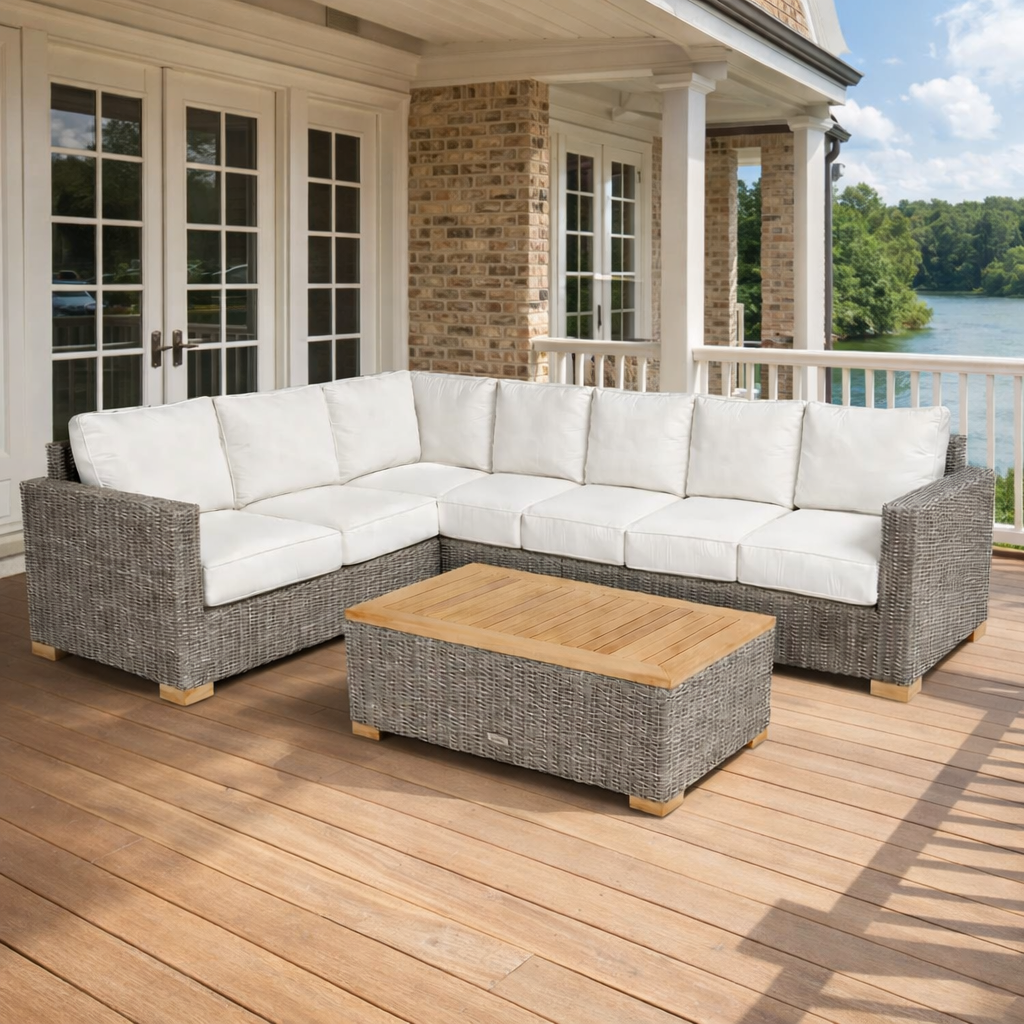 For a large suburban patio, start with an outdoor dining table positioned near the kitchen or grill, then create a separate lounge area several feet away. A multi-piece teak lounge set works well when you want a balanced sofa-and-chair arrangement; a sectional makes more sense when you want to define the edge of a large patio or maximize continuous seating.
Do not automatically push every piece against the house. On a generous patio, floating the lounge group inward can create clearer circulation and make the seating feel like a deliberate outdoor room.
For foothill homes around Boulder, Golden, Morrison, Castle Rock and similar elevated areas, we would make view orientation part of the furniture decision. A straight sofa with swivel chairs may preserve sightlines better than a large U-shaped sectional. Swivel seating also lets guests alternate between conversation and scenery.
Where space allows, a small secondary seating destination—a pair of Adirondack chairs, for example—can take advantage of a view that does not align with the main patio.
Extendable tables are particularly useful for homeowners whose entertaining ranges from quiet weekday meals to larger weekend gatherings. If eight people visit only occasionally, there is little benefit in allowing a ten-person table to dominate the patio every day.
For frequent hosts, however, scale up deliberately. TeakHQ offers dining sets for eight to ten people as well as larger options, making it possible to build the space around the household's actual entertaining pattern.
For shoulder-season evenings, we like a sofa or loveseat paired with two chairs around a coffee table or fire table. This creates an enclosed conversational footprint without requiring a sectional.
A teak fire pit table can make sense where the goal is to combine a gathering surface with a fire feature. Follow all manufacturer placement requirements and local fire restrictions rather than treating the furniture layout alone as the deciding factor.
Where a Front Range home includes a pool, swim spa or hot tub, choose pieces that are easy to use while moving between wet and dry areas. Chaise lounges fit dedicated sunning areas, while side tables and benches can provide practical places for towels and personal items.
Teak's moisture resistance makes it naturally relevant around these spaces, although cushions and fabric accessories should still be managed according to weather and product-care instructions.
Front Range residential design covers everything from traditional brick homes and newer suburban construction to contemporary foothill architecture. Teak works across that range precisely because it does not demand one architectural style. The warmer natural wood can soften contemporary hardscaping while also looking at home beside stone, masonry and traditional landscaping.
Modern mountain-adjacent homes often combine large windows, stone, metal, concrete and clean architectural lines. Natural teak adds warmth without forcing the design toward rustic furniture. Look for simpler silhouettes, substantial lounge seating and uncluttered table designs rather than overly decorative pieces.
For established Denver-area and northern Front Range neighborhoods, classic teak dining furniture, benches and deep seating work naturally with brick patios, mature landscaping and more traditional architecture. Here, proportion matters more than chasing a specific trend.
If the landscape is already mature, use furniture to support it rather than dominate it. A garden bench placed beneath trees or along a planting bed can create a useful secondary destination without converting every part of the yard into another full furniture group.
Newer homes in communities such as Parker, Castle Rock, Highlands Ranch and northern Front Range growth areas often provide enough patio area to create multiple functions. Instead of scattering separate chairs and tables around a large slab, organize the space into identifiable zones.
Repeating teak across the dining and lounge areas can visually connect those zones even when the individual furniture collections are not identical.
The finish decision can become part of the architecture. Fresh natural teak provides warm contrast against gray stone, concrete and dark exterior finishes. Silver-gray teak creates a quieter, more weathered appearance that can blend especially well with contemporary landscapes and muted mountain-inspired palettes.
Neither choice is inherently better. Decide early whether maintaining the original color matters to you, because that preference determines your care routine much more than Colorado's climate does.
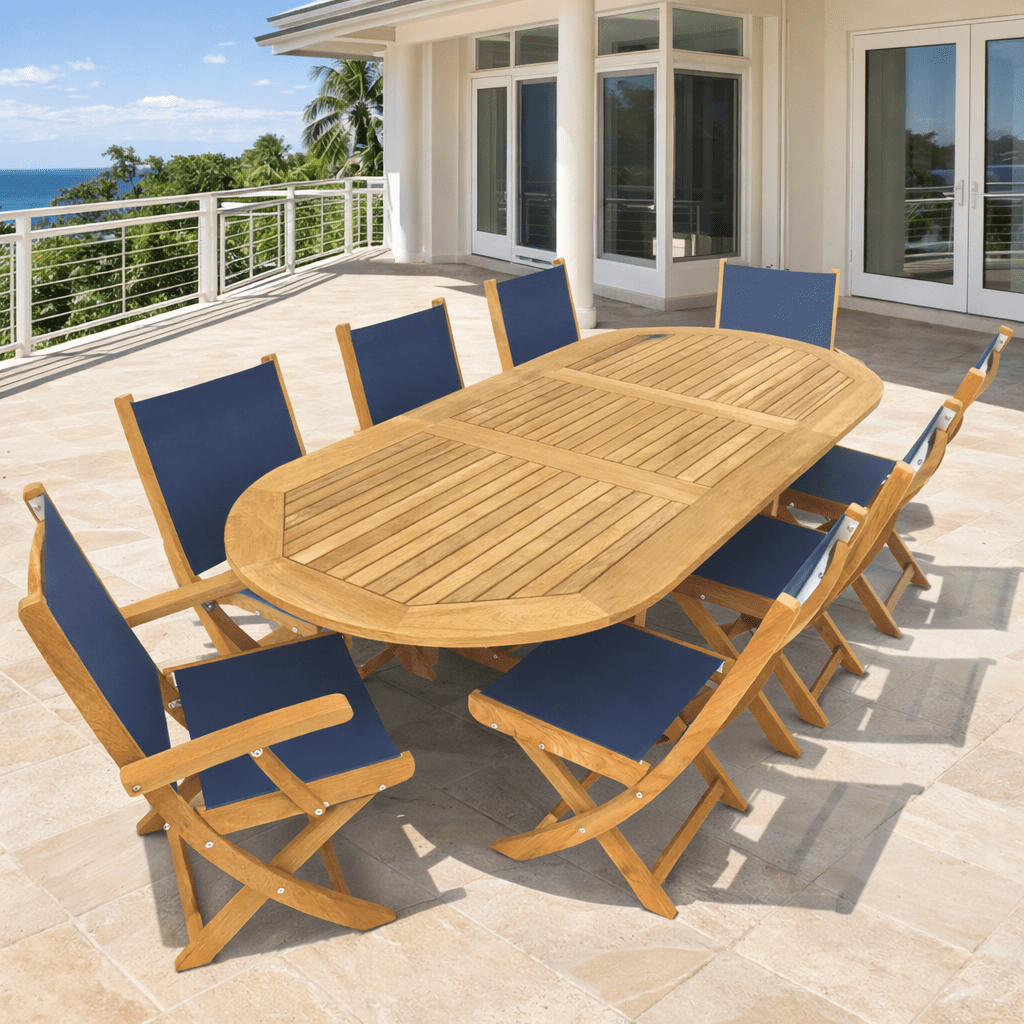 A patio set can look perfectly suitable in July and still be inconvenient once Colorado's weather changes. Furniture that requires complete seasonal relocation creates a much larger ownership burden than many shoppers anticipate.
If you want the main frames to remain outdoors, choose furniture designed for year-round exposure. Grade A teak can stay outside through changing temperatures, rain and sun, reducing the need to move the primary furniture every season.
Two patios in the same neighborhood can have very different furniture environments. A covered north-facing patio and an uncovered west-facing deck should not be furnished exactly the same way.
Before buying, note where direct afternoon sun actually falls. That will help determine where you want shade, how you manage cushions and whether maintaining teak's original golden color will require more attention than you want to provide.
Large Colorado backyards can tempt homeowners to buy oversized furniture simply because there is room. But the relevant measurement is not the patio's total square footage—it is the circulation space remaining once chairs are pulled away from the table.
When entertaining varies significantly, an extendable table often gives you a better everyday layout than permanently dedicating the center of the patio to maximum seating capacity.
One of the easiest ways to simplify ownership is to recognize that the teak frame and textile components have different care needs. Most TeakHQ lounge seating includes Sunbrella cushions, but cushions should still be handled sensibly during snow, prolonged wet weather and severe storms.
The furniture itself can remain outside. Cushions are easier to bring under cover or place in storage when conditions warrant.
Substantial furniture may feel secure on an ordinary day, but umbrellas, loose cushions and decorative accessories present a different issue when gusty thunderstorms arrive. Do not assume the weight of the main furniture means everything around it can remain unsecured.
Developing a simple storm routine—close or secure umbrellas, store loose textiles and clear lightweight accessories—can matter more than buying unnecessary protection for the teak itself.
Colorado does not require an elaborate teak-maintenance routine. The most important choice is whether you want the wood to age naturally or retain more of its original golden-brown appearance. After that, care is primarily about cleaning, managing cushions and responding sensibly to seasonal debris and weather.
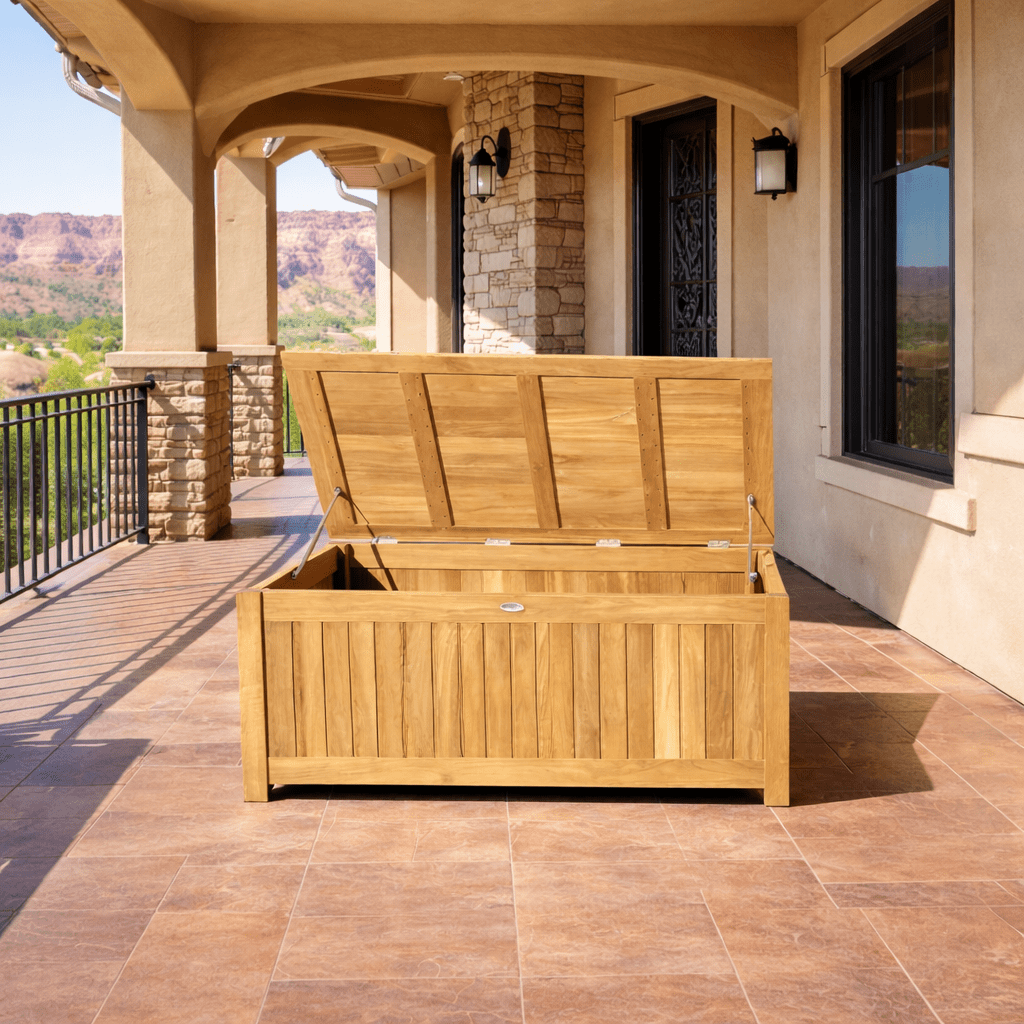 There is no reason to create an aggressive cleaning schedule merely because the furniture lives outdoors. Clean teak as needed when dust, pollen, leaves or ordinary outdoor grime accumulate. Properties close to open space, landscaping or construction may need attention more often than a protected urban patio.
Use products appropriate for teak and follow the furniture manufacturer's recommendations. Over-maintaining outdoor wood can create work without producing a meaningful ownership benefit.
Untreated teak naturally weathers to a silver-gray patina. If you like that appearance, you can allow the process to occur rather than repeatedly trying to preserve the freshly milled color.
If you prefer the original golden tone, optional sealing or teak-care products can help maintain the look. The important distinction is that this is primarily an appearance decision; artificial stain is not required for the teak's durability.
Grade A teak can remain outdoors year-round, so a homeowner does not need to relocate a full dining set or sectional simply because winter arrives. Remove excessive accumulations when practical and avoid situations where furniture sits in chronically trapped runoff or against large piles of snow.
Protective covers are optional rather than mandatory for the teak itself. If you use them, choose covers intended for outdoor furniture and make sure moisture is not being unnecessarily trapped beneath them.
Cushions deserve a different winter strategy from the teak frames. During extended periods when the patio is not being used, keeping cushions clean and dry under cover can reduce unnecessary exposure and make spontaneous warm-weather use easier.
A covered storage area or teak deck box can make cushion management more convenient, provided the specific cushion and storage-product instructions are followed.
A useful Front Range routine is a simple seasonal reset rather than an elaborate winterization process. At the end of heavy-use season, clean the furniture as necessary, decide where cushions and accessories will live, secure or store umbrellas, and leave the teak frames in place.
Then repeat a quick inspection when outdoor season ramps up again. That approach preserves one of teak's biggest practical advantages: outdoor furniture that does not have to become a seasonal moving project.
The best Front Range outdoor space is not the one with the most furniture. It is the one that remains comfortable, useful and manageable as the seasons change. Start with the way you actually use your patio—dining, conversation, views, grilling or fireside evenings—then choose premium Grade A teak pieces that give those activities permanent, durable places within the landscape.
Look for materials that can handle strong sun, precipitation, freezing temperatures and substantial seasonal temperature changes. Premium Grade A teak is a strong option because it is naturally resistant to moisture, rotting and warping and is designed for year-round outdoor use. High-quality aluminum and synthetic materials can also be appropriate depending on the look and ownership experience you prefer.
It depends on the material. Grade A teak furniture can remain outdoors year-round and is designed to withstand rain, sun and temperature fluctuations. Removable cushions and lightweight accessories are better handled separately during extended winter weather.
No. Protective covers are optional for quality teak rather than required for durability. If you use covers for convenience or cleanliness, use properly fitted outdoor-furniture covers and follow the manufacturer's care recommendations.
Teak is designed for outdoor sun exposure. Its appearance will naturally change over time, however: untreated teak develops a silver-gray patina. Homeowners who prefer the original golden-brown color can use appropriate teak care products.
Prioritize furniture specifically intended for outdoor use across changing temperatures rather than materials that require highly controlled conditions. Grade A teak is well suited to this environment because it withstands temperature fluctuations and can remain outdoors through the seasons.
Choose based on the layout rather than the climate. A teak sectional works well for large patios where you want continuous seating or a defined conversation zone. Sofas with individual or swivel chairs provide more flexibility when mountain views, fireplaces or multiple focal points matter.
Choose for your normal household first, then consider how often you host. A six- to eight-person table suits many family patios, while an extendable table can provide additional capacity for larger gatherings without occupying maximum space every day.
No. Teak does not need to be sealed for basic durability. Leave it untreated if you like the natural silver-gray patina, or use an appropriate sealer or care product if maintaining more of the original teak color is important to you.
When severe weather or extended snow is expected, moving removable cushions under cover is a sensible precaution. Most TeakHQ lounge seating includes Sunbrella cushions, which are weather-, fade-, UV- and water-resistant, but sensible storage can reduce unnecessary exposure and keep cushions ready for use.
Each has tradeoffs. Aluminum is lighter and often has a more modern appearance, while poly furniture offers a synthetic, lower-maintenance alternative. Teak is heavier, warmer and made from natural wood, making it particularly attractive to homeowners who value an authentic material, substantial feel and decades-long service life.


