
FREE SHIPPING
within mainland USA
within mainland USA
Home ▸ Teak Outdoor Furniture ▸ By Location ▸ Dallas-Fort Worth, Texas
Dallas-Fort Worth outdoor spaces have to function through intense summer sun, stretches of high heat, spring and fall storms, and occasional winter cold snaps. At the same time, many North Texas homes devote substantial backyard space to covered patios, pools, outdoor kitchens, and gathering areas built for family meals and entertaining. That combination makes material quality, furniture weight, shade planning, and layout especially important. Premium Grade A teak is a strong option because it offers the weather resistance and long-term flexibility needed for a climate that can change dramatically across the year.

Dallas-Fort Worth is not a one-condition furniture market. A patio can spend weeks under powerful summer sun and high temperatures, then encounter thunderstorms, wind-driven rain, sharp temperature changes, and brief winter freezes. That variability matters because outdoor furniture is not simply being asked to tolerate heat; it has to tolerate repeated transitions between hot, wet, dry, windy, and occasionally freezing conditions.
Summer is the first filter we would use when evaluating outdoor furniture for North Texas. Dallas-Fort Worth regularly experiences prolonged hot weather, with July and August providing especially strong sun exposure. Furniture on an uncovered west- or south-facing patio receives a substantially different workload than furniture beneath a deep roofline.
Sun exposure affects more than appearance. Repeated heating and cooling can challenge lower-quality wood, finishes, plastics, woven materials, adhesives, and joints. That is one reason we would prioritize a material designed for outdoor temperature fluctuations rather than choosing primarily by showroom appearance.
DFW's rain often arrives differently from the gentle, persistent moisture associated with some coastal climates. Thunderstorms can bring a rapid combination of rain, wind, debris, and then strong sun again. Furniture should therefore be selected with drainage, drying, structural quality, and practical cleanup in mind.
The overlooked issue is often not whether a chair can get wet. Most legitimate outdoor furniture can. The better question is how comfortably the entire setup handles the cycle of getting soaked, drying, collecting debris, and returning to use. Large cushions, tightly crowded furniture, and poorly drained patio areas can create considerably more ownership work than the furniture material itself.
Dallas-Fort Worth receives Gulf moisture during the warm season, but this is not the same furniture environment as Houston or the Texas Gulf Coast. There is no routine salt-air exposure inland, and periods of intense summer heat can also be comparatively dry. For DFW homeowners, the more useful concerns are heat, sunlight, intermittent moisture, humidity, and weather swings rather than marine corrosion.
That distinction matters when comparing advice online. A furniture guide written for coastal Texas may overemphasize salt spray, while a desert-climate guide may underestimate moisture and storms. North Texas sits between those extremes.
Winters are generally much easier on outdoor spaces than summers, but Dallas-Fort Worth can experience abrupt cold fronts and occasional freezing or wintry conditions. Furniture that remains outdoors therefore needs to accommodate a much broader temperature range than furniture in consistently warm climates.
For homeowners, that argues for durable materials and simple seasonal routines rather than furniture that must be moved indoors whenever the forecast changes. Loose cushions, umbrellas, lightweight accessories, and decorative pieces may still need more active weather management than the furniture frames themselves.
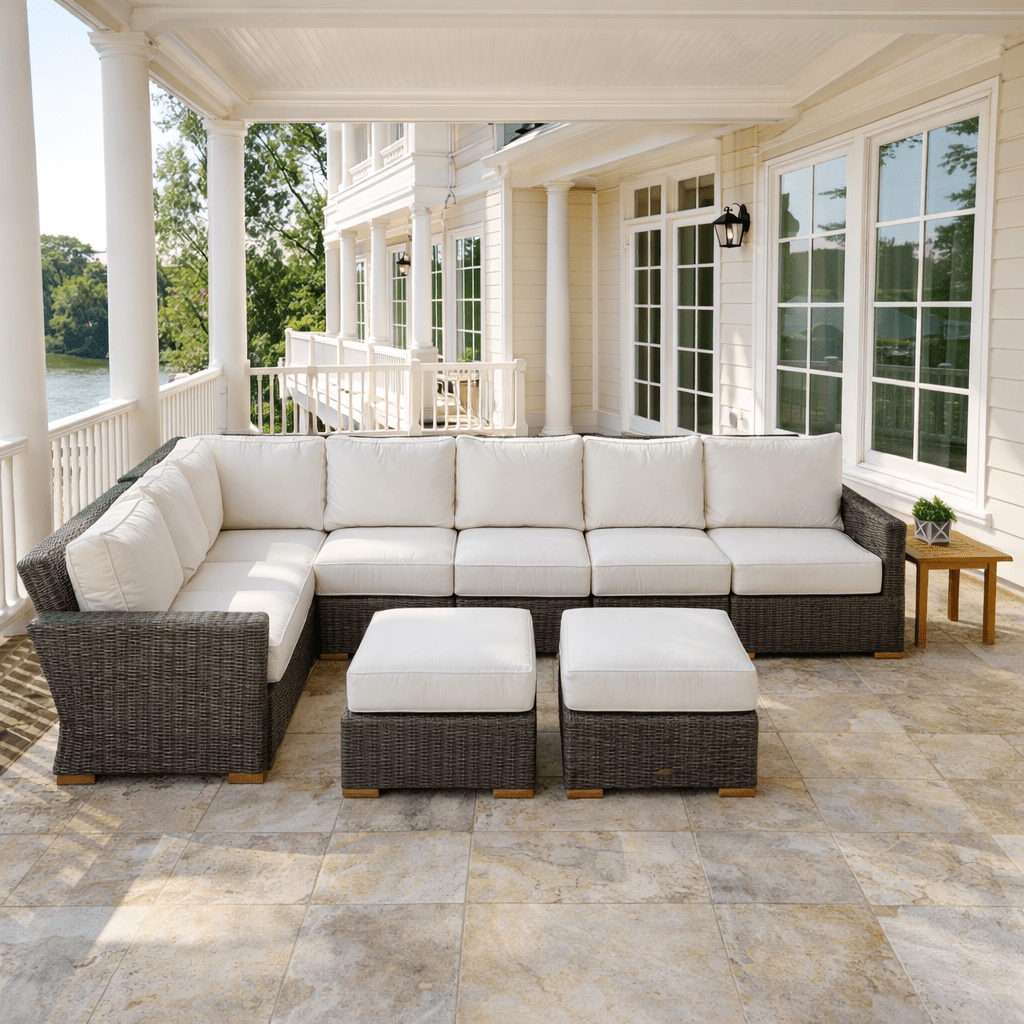 Grade A teak has a dense grain structure and naturally high oil content that contribute to its resistance to moisture, rot, insects, and warping. Those characteristics are useful in DFW because the furniture may move repeatedly between hot sun, humid air, thunderstorms, and dry periods rather than remaining in one stable environment.
Teak does not require an artificial stain, paint, or protective coating simply to remain suitable for outdoor use. That removes one potential maintenance dependency for homeowners who would rather spend their time using the patio than repeatedly refinishing it for protection.
Premium Grade A teak is designed for year-round outdoor use and can withstand sun exposure and temperature fluctuations. In Dallas-Fort Worth, that is particularly relevant for uncovered patios, pool decks, courtyards, and furniture positioned beyond the roofline of a covered outdoor living area.
The surface color will change with exposure. Untreated teak naturally develops a silver-gray patina over time. That is an appearance change rather than a requirement to replace or refinish the furniture. Homeowners who prefer the original warmer teak color can choose appropriate teak care products or sealing treatments instead.
The usefulness of teak after a North Texas thunderstorm is less about making an unrealistic claim that weather no longer matters and more about simplifying the furniture decision. The wood itself is naturally moisture- and rot-resistant, so normal rain exposure does not require the same protective strategy as more vulnerable woods.
Cushions are a separate consideration. Many TeakHQ lounge pieces include Sunbrella cushions, which are weather-, fade-, UV-, and water-resistant, but cushion handling and drying still deserve attention after heavy rain. Wood frames and soft goods should be thought of as two different maintenance systems.
DFW luxury outdoor spaces can involve a surprising amount of furniture: a dining group near the outdoor kitchen, a lounge zone beneath the patio cover, chaise lounges at the pool, and smaller accent seating elsewhere in the yard. Replacing all of those pieces every few seasons can become expensive and disruptive.
Premium teak costs more initially, but quality teak furniture can last for decades rather than seasons. That long ownership horizon is one of its strongest arguments for homeowners furnishing a large, permanent outdoor environment.
| Dallas-Fort Worth Challenge | Why Premium Grade A Teak Performs Well |
|---|---|
| Intense summer sun | Designed for outdoor sun exposure; untreated teak can weather naturally to silver-gray. |
| High summer temperatures | Dense teak is designed to withstand outdoor temperature fluctuations. |
| Thunderstorms | Natural oils and dense grain contribute to moisture and rot resistance. |
| Humid periods | Teak's moisture resistance suits repeated exposure to changing outdoor conditions. |
| Rapid wet-dry cycles | Grade A teak is intended for year-round outdoor use rather than seasonal indoor storage. |
| Occasional freezes | Teak is designed to withstand outdoor temperature changes across seasons. |
| Strong winds | Teak has a heavier, sturdier feel than lightweight furniture, although severe-weather precautions still matter. |
| Long ownership horizon | Quality teak can last for decades with appropriate care. |
If we were planning a DFW backyard from scratch, we would not begin by choosing individual chairs. We would first identify where people naturally gather during three different conditions: a hot summer afternoon, a pleasant spring or fall evening, and a large weekend gathering. Those answers usually reveal which areas deserve the most furniture investment.
The most important DFW planning decision may happen before the furniture is purchased: decide where people will realistically sit at 4 p.m. in July. A beautiful conversation set placed in an exposed section of hardscape can receive far less use than a simpler arrangement beneath a covered patio.
We would put the highest-use lounge furniture in shade first, then let dining and pool furniture occupy areas where use is more time-specific. That makes the entire backyard more functional instead of treating every square foot of patio as equally comfortable.
For households that regularly host family, neighbors, or friends, we would make the dining area one of the largest permanent zones. A six-person table may be adequate day to day but feel undersized the first time several families come over. An extendable teak dining table provides a useful compromise: normal proportions for ordinary meals and additional capacity when the backyard fills up.
For homeowners who prefer a coordinated starting point, complete teak dining sets simplify the sizing relationship between the table and chairs. On larger patios, we would leave generous circulation between the dining area, grill, doors, and pool rather than using the maximum possible table size.
Dining chairs are useful while people eat; they are rarely where guests want to spend the next three hours. DFW outdoor rooms work better when dining and lounging are treated as separate functions. Under a substantial covered patio, a sofa or sectional with club or swivel chairs can create the outdoor equivalent of a family room.
A teak sectional is especially effective where a defined corner or television wall already establishes the room. In a more open patio, individual lounge pieces can preserve sight lines and make conversation groups easier to rearrange.
If the property has a pool, resist the temptation to push every remaining chair against the pool edge. The better layout creates distinct functions: dry conversation seating, sun-oriented lounging, clear circulation, and enough open deck to move comfortably around wet swimmers.
Dedicated teak chaise loungers make sense for the sun zone because they serve a different purpose from covered lounge seating. A side table between every one or two loungers also prevents drinks, phones, towels, and sunscreen from migrating to the ground.
Begin with the activity that defines your backyard. Frequent hosts should look first at dining sets or extendable tables; homeowners whose patio functions as an outdoor family room may get more value from lounge seating or a sectional. Pool-focused properties should prioritize dedicated loungers, while outdoor kitchens often benefit from bar-height seating and serving furniture. The goal is not to own every category—it is to give each major outdoor activity a properly furnished zone.
In Dallas-Fort Worth, outdoor living tends to be less about a tiny seasonal patio and more about extending the house into the backyard. Covered rooflines, pools, grills and outdoor kitchens, televisions, fireplaces, and multiple seating areas are common ingredients in more ambitious outdoor projects. The furniture works best when it supports those distinct activities instead of creating one oversized collection in the middle of the patio.
In many higher-end DFW backyards, grilling is not isolated from entertaining. Outdoor kitchens are often integrated with covered patios, bar counters, pools, or lounge areas. That changes furniture placement: the cook should remain part of the gathering rather than facing a row of guests across a traffic corridor.
Counter-height seating can work well along an island or adjacent serving area, while the main dining table remains a few steps away. This creates two levels of interaction—casual seating while food is being prepared and a larger table when everyone sits down.
Football season overlaps with some of North Texas's most pleasant outdoor weather. If the covered patio includes a television, furniture should be arranged more like a living room than a formal terrace. Sofas, sectionals, swivel chairs, and side tables allow people to watch the screen without turning the entire patio into rows of chairs.
This is also one place where swivel seating earns its footprint. A chair can face the television during a game and turn back toward the pool, dining table, or conversation group afterward.
Summer may be the season that determines material durability, but spring and fall often provide the conditions that make a well-planned DFW patio feel especially worthwhile. Comfortable evenings encourage longer dinners, neighborhood gatherings, and time around fire features.
That seasonal pattern is why we would not design the backyard exclusively around surviving summer. Shade and durable materials solve the harsh-weather problem; lounge seating, dining capacity, and fire-oriented conversation areas determine how enjoyable the space becomes when the weather is at its best.
On larger suburban properties in places such as Southlake, Colleyville, Flower Mound, and parts of North Dallas and Fort Worth, the pool may occupy only one part of an expansive backyard. A complete pool environment generally benefits from both sun furniture and shaded seating.
Think of the covered patio as the living room and the chaise area as the sun deck. When those functions are intentionally separated, swimmers, supervising adults, and guests who would rather stay in the shade can all use the backyard comfortably at the same time.
 For a substantial covered patio, our preferred starting point is usually two zones rather than one: a dining group close to the kitchen and a separate teak patio seating area positioned for conversation, television viewing, or the pool.
The memorable planning rule is this: size the dining table for the people you invite, but size the lounge area for the people who stay afterward. Dinner may require ten seats for an hour; the rest of the evening may involve six people sitting comfortably around a coffee table. Those are different furniture problems.
An extendable dining table is particularly useful for households that entertain at very different scales. Keep it compact enough for normal family meals, then expand it when relatives, neighbors, or friends arrive. Large fixed tables are appropriate when the patio genuinely has the room, but an oversized table should not consume the circulation route between the back door, grill, pool, and seating areas.
A serving or buffet table can also solve a surprisingly common problem: putting food on the dining table leaves less room for diners, while placing serving dishes on the outdoor kitchen counter can interfere with cooking. A dedicated serving surface creates a useful transition between food preparation and dining.
Covered patios tend to be the most valuable real estate in a DFW backyard during the hottest part of the year. Give that space to the furniture you use longest. Deep seating, sectionals, club chairs, and swivel chairs generally deserve priority over occasional accent pieces.
For larger covered structures, a sectional can define the seating area without requiring many individual pieces. On patios open to the pool or yard on multiple sides, sofas and swivel chairs may preserve better visual connections.
Pool furniture should not compete with the main patio furniture for space. Two to four chaise loungers positioned along a clear portion of the pool deck create an identifiable sun zone while leaving the covered area free for people who prefer shade.
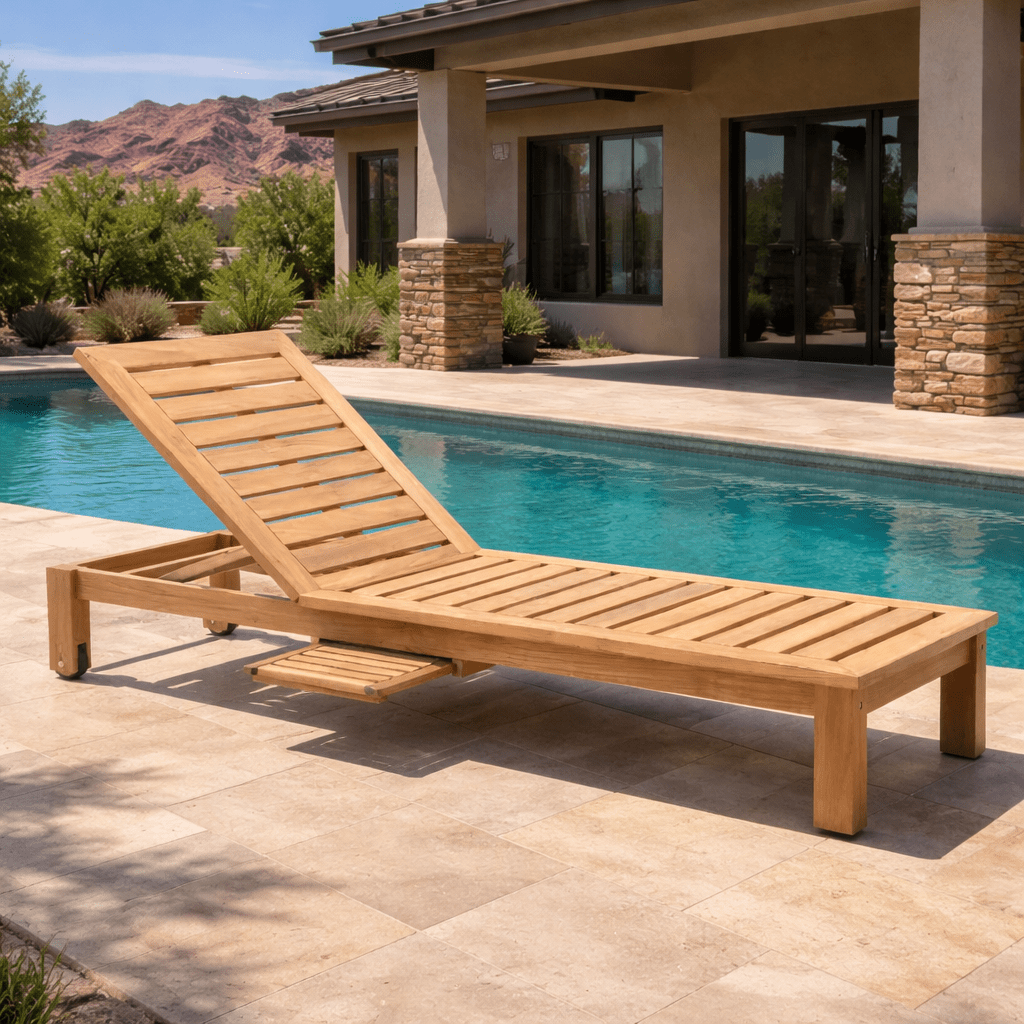 Teak is particularly appealing visually beside stone, concrete, tile, water, and landscaping because the natural wood introduces warmth into otherwise hard-surfaced pool environments. When possible, leave enough room beside each lounger for a table rather than packing chairs together simply because they fit.
A North Texas patio should not be planned only for August. Fire tables and conversation seating can make cool spring, fall, and winter evenings much more inviting. The best arrangement is usually broad enough for conversation rather than placing every seat directly toward the flame.
Teak fire pit tables can become the center of a dedicated secondary lounge area, particularly on larger properties where the main covered patio already handles dining and television viewing.
Dallas-Fort Worth does not have a single architectural identity. Traditional brick homes, Texas-influenced estate homes, transitional construction, modern residences, ranch-inspired properties, and more formal luxury homes can all be found within the metroplex. That variety favors furniture with enough material warmth to complement masonry and landscaping but enough restraint to work with cleaner contemporary architecture.
Natural teak works easily with brick, limestone, stucco, painted siding, and the layered landscaping common around established North Texas homes. Traditional furniture silhouettes can reinforce the architecture, while cleaner teak profiles prevent a transitional patio from becoming overly formal.
The key is repetition. If warm wood already appears in doors, ceilings, beams, pergolas, or landscape structures, teak can continue that material language into the furniture without requiring an exact color match.
On contemporary properties, teak can soften large expanses of concrete, glass, stucco, stone, and metal. A restrained sectional, low coffee table, or linear dining table often works better than adding many small decorative pieces.
For these homes we would generally emphasize fewer, larger furniture forms and stronger negative space. The natural grain becomes the visual texture rather than relying on ornamental detailing.
Pool-oriented backyards benefit from a consistent relationship between hardscape, planting, shade, and furniture. Teak's warm natural appearance can keep a large pool deck from feeling too much like a commercial space, particularly when the same material is repeated in loungers, side tables, and the nearby dining or lounge area.
Larger lots in parts of the metroplex offer enough space for secondary destinations: a garden bench, fire area, pool lounge, or small seating group away from the house. These should not simply duplicate the main patio. Give each area a reason to exist—a view, shade tree, garden, fire feature, or quieter conversation setting.
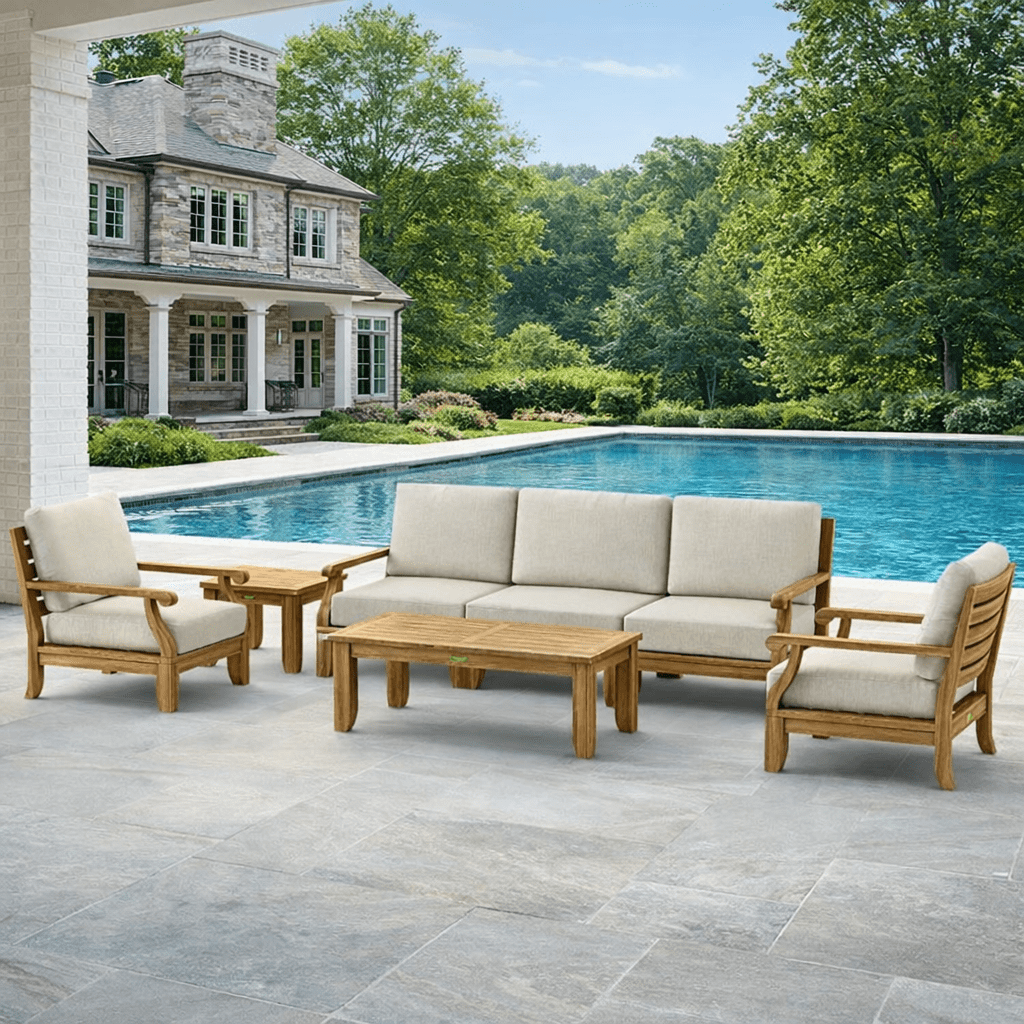 The furniture layout that feels perfect on a 75-degree spring evening may be nearly unusable under exposed afternoon sun in July. Before buying, study where the roofline, house, trees, or other shade actually falls during the hottest hours.
Teak addresses the durability side of strong sun exposure, but it does not eliminate the human need for shade. Put long-duration seating where people will be comfortable and use exposed areas for activities such as pool lounging that are intentionally sun-oriented.
A furniture plan based only on the household size often underestimates how a DFW backyard is used. If four people live in the home but twelve routinely attend family dinners or neighborhood gatherings, a permanent four-seat arrangement creates a predictable shortage.
The solution is not necessarily an enormous table. Extendable dining furniture, benches, bar seating, and a separate lounge group can distribute guests naturally across the space.
A single dining set cannot comfortably substitute for dining, lounging, pool seating, and television viewing. Large outdoor areas become more useful when they behave like a house: dining room, living room, sun deck, and perhaps a secondary conversation space.
TeakHQ offers individual furniture pieces as well as coordinated sets, which makes it possible to build those zones gradually rather than purchasing one oversized matched collection for the entire yard.
Teak has a heavier, sturdier feel than lightweight outdoor furniture, which can be useful in everyday conditions. That should not be mistaken for storm-proofing. Severe weather can move furniture, cushions, umbrellas, décor, and other outdoor objects.
Pay particular attention to lightweight accessories. Furniture selection can reduce day-to-day fuss, but a sensible severe-weather routine is still part of owning an outdoor space in North Texas.
Outdoor-rated cushions are designed to tolerate outdoor exposure, but repeated heavy rain, debris, and prolonged dampness can still create unnecessary cleaning work. During wet periods, allow cushions to drain and dry rather than leaving them trapped against surfaces where air cannot circulate.
If your lounge furniture sits beneath a covered patio, use that protection strategically. Reserve the most cushion-heavy arrangement for the protected zone and use less fabric-dependent furniture in fully exposed areas.
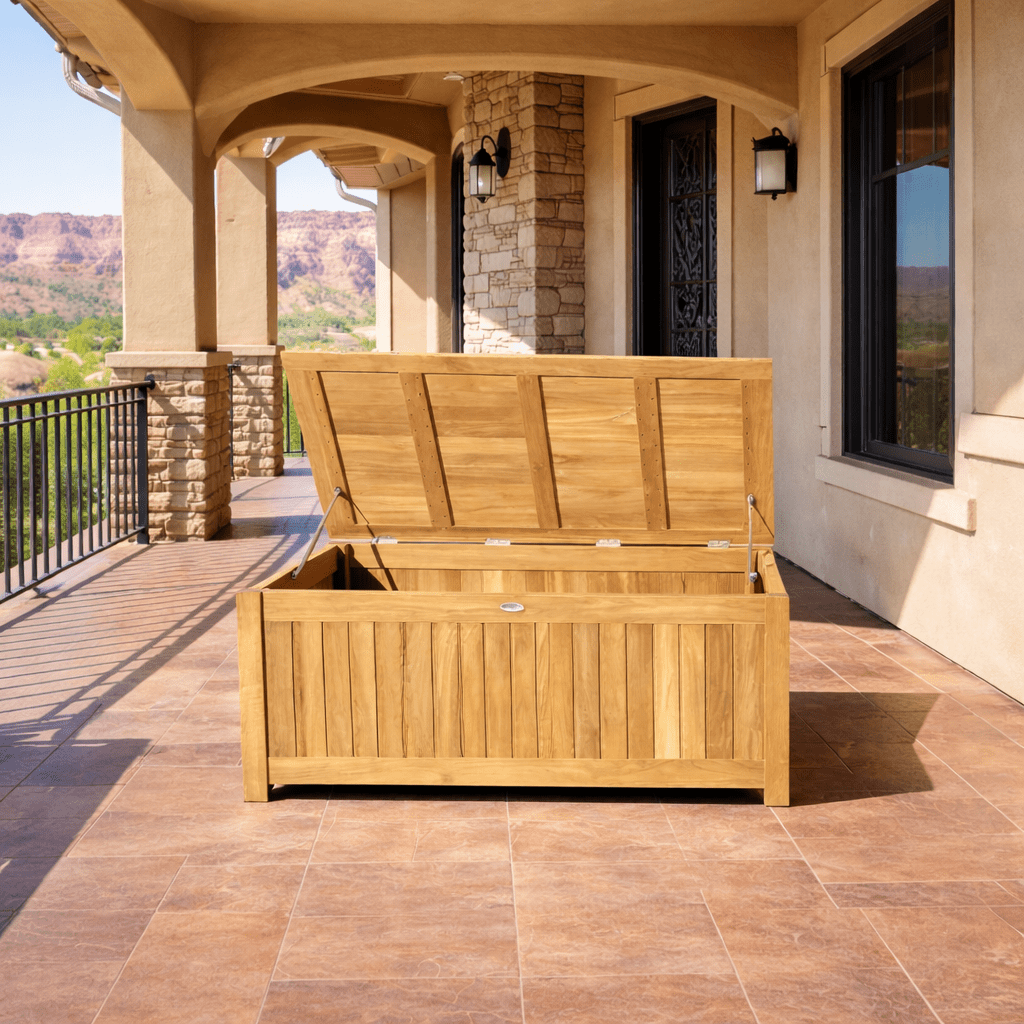 DFW furniture can collect pollen, dust, leaves, and storm debris quickly. Instead of following an arbitrary cleaning schedule, inspect the furniture after high-pollen periods, major storms, or long stretches of outdoor use and clean it when buildup becomes visible.
Routine cleaning is primarily about appearance and keeping surface debris from accumulating. Teak does not require paint or artificial stain for outdoor durability.
Untreated natural teak gradually weathers to a silver-gray color. Some homeowners prefer that mature appearance, especially with limestone, modern concrete, or muted pool finishes. Others want to retain more of the original warm teak tone.
Make that choice intentionally. If you like the gray patina, the wood can be allowed to weather naturally. If you prefer the original appearance, appropriate teak care products can become part of your maintenance routine.
During humid or rainy stretches, good airflow is helpful around furniture and cushions. Avoid creating areas where wet cushions, leaves, or organic debris remain pressed against furniture for long periods. After storms, a simple inspection and reset of the patio can prevent small maintenance jobs from becoming larger cleaning projects.
Grade A teak is designed for year-round outdoor use, so DFW homeowners do not need to plan seasonal indoor storage simply to protect the teak frames. That is particularly valuable with large dining tables, sofas, and sectionals that are impractical to move several times a year.
Cushions, umbrellas, and portable accessories are different. Storing or securing those items during severe storms, prolonged non-use, or unusual winter weather can reduce cleaning and weather exposure.
Protective covers are optional rather than required for teak durability. A cover may be useful if your goal is to reduce pollen, leaves, bird debris, or general cleanup on a fully exposed patio. If covers are used, follow the cover manufacturer's directions and avoid trapping persistent moisture beneath them.
For many covered DFW patios, the roof itself provides enough day-to-day protection that owners may prefer simply to clean the furniture as needed and let the teak age naturally.
The best outdoor furniture plan for Dallas-Fort Worth starts with how the backyard is actually used: where the shade falls, how many people gather, whether the pool or outdoor kitchen is the social center, and how much furniture you want to maintain over the long term. Premium Grade A teak is especially well suited to homeowners who want natural wood, substantial construction, flexible maintenance, and furniture designed to remain outdoors through North Texas's changing seasons.
Start with the zone that matters most—dining, covered-patio lounging, poolside seating, or entertaining—and build the rest of the outdoor space around it.
Look for materials that can tolerate strong sun, summer heat, rain, humidity, and substantial temperature changes. Premium Grade A teak is a strong choice because its dense grain and natural oils contribute to moisture, rot, insect, and warping resistance, and it is designed for year-round outdoor use.
It depends on the material. Grade A teak is designed to remain outdoors year-round and withstand rain, sun, and temperature fluctuations. Cushions, umbrellas, and lightweight accessories may still benefit from storage or securing during severe weather.
Covered patios are ideal places for the furniture people use longest, such as deep seating, sofas, club chairs, swivel chairs, or sectionals. Dining furniture can then occupy an adjacent area near the outdoor kitchen, with dedicated loungers around the pool.
Plan around your normal entertaining group rather than household size alone. If four people live in the home but you frequently host eight to twelve, consider a larger or extendable teak table instead of designing solely for four everyday seats.
Premium Grade A teak is designed for outdoor sun exposure. Untreated teak will naturally change from its original warm color to a silver-gray patina over time. Homeowners who prefer the original color can use appropriate teak care or sealing products.
No. Teak does not need to be sealed for outdoor durability. It can be left untreated to develop a natural silver-gray patina, or homeowners can choose to seal or care for it if they want to preserve more of the original teak color.
Both can be legitimate premium outdoor choices. Aluminum is lighter and often creates a more modern visual effect. Teak provides natural wood character, a warmer appearance, and a heavier, more substantial feel. The better choice depends on the home's design, desired maintenance approach, and whether the owner prefers natural or manufactured materials.
Poly lumber offers a synthetic, lower-maintenance approach, while teak provides real natural wood and a more traditional premium material experience. For homeowners prioritizing authenticity, natural grain, and long-term outdoor furniture, Grade A teak is often the stronger fit.
Teak itself can tolerate normal rain exposure. Remove leaves or debris, allow the area to dry naturally, and make sure cushions have adequate airflow after heavy rain. Covers are optional for teak and may be used primarily to reduce cleanup rather than because the wood requires them for durability.
Quality teak furniture can last for decades rather than only a few seasons. That long service life is one reason its higher initial cost can make sense for homeowners investing in a permanent outdoor dining, lounge, or pool environment.


