
FREE SHIPPING
within mainland USA
within mainland USA
Home ▸ Teak Outdoor Furniture ▸ By Location ▸ Denver, Colorado
Denver outdoor spaces deal with a combination that deserves more thought than simply choosing something labeled “weather resistant”: strong high-altitude sun, dry air, summer storms, winter snow, and frequent temperature changes. From covered patios in established neighborhoods to expansive suburban backyards and foothill-view decks, furniture often needs to work across very different seasons and uses. Premium Grade A teak is especially well suited to that challenge because it combines natural weather resistance with the warmth and substantial feel many Colorado outdoor spaces call for.

Denver is not a coastal-humidity environment, a desert climate, or a high-country mountain climate. Its outdoor furniture challenge comes from the combination of elevation, relatively dry air, strong sunshine, abrupt weather changes, and a true winter season. Furniture that spends the year outside may move repeatedly from warm, dry sun to rain or snow and then back to dry conditions.
Colorado's elevation makes sun exposure an important consideration when choosing outdoor furniture. On an uncovered south- or west-facing Denver patio, finishes, fabrics, and synthetic materials can receive substantial direct exposure over the course of a season. The practical question is not simply whether furniture can sit in the sun, but how its appearance will change after years of doing so.
That distinction matters with teak. Natural teak is designed for outdoor exposure, but sunlight and weather gradually change its golden-brown color toward a silver-gray patina. Homeowners who like that look can allow the process to occur naturally. Those who prefer the original color should plan for periodic cosmetic care rather than assuming the wood will remain honey-colored indefinitely.
Denver furniture does not simply experience one long period of frozen weather. A typical exposed patio can move through snow, melting moisture, sunshine, dry air, and another freeze. That makes resistance to moisture and temperature fluctuations more useful than furniture that performs well only when kept perfectly dry.
This is also where Denver differs from Colorado's higher mountain communities. Snow may remain much longer at higher elevations, while metro-area patios often go through more frequent wet-dry and freeze-thaw transitions. For year-round furniture, the ability to tolerate changing conditions is at least as important as handling snow itself.
Humidity-driven mildew is generally less central to the Denver buying decision than it would be along the Gulf Coast or in the Southeast. Instead, the combination of low humidity and temperature fluctuation makes dimensional stability important, particularly with natural wood furniture. Lesser outdoor woods may require more protective finishing and closer maintenance to remain dependable outdoors.
Premium Grade A teak is naturally dense and oil-rich and is resistant to moisture, rot, insects, and warping. Those characteristics make it a particularly practical natural-wood option for a climate that repeatedly shifts between very dry conditions and periods of rain or snow.
Warm-season outdoor living can be interrupted quickly by thunderstorms, gusty winds, or hail. No furniture material should be treated as storm-proof, and lightweight accessories, umbrellas, and cushions deserve particular attention when severe weather approaches.
For the permanent furniture itself, we generally favor substantial pieces over highly lightweight setups on open decks and exposed patios. Teak has a naturally heavier, sturdier feel than lightweight aluminum, which can be appealing in Denver spaces where furniture is expected to remain in place through changing weather.
The case for teak in Denver is not that it makes Colorado weather irrelevant. It is that high-quality teak addresses several of the conditions that create the most ownership headaches here while still providing the appearance of real wood.
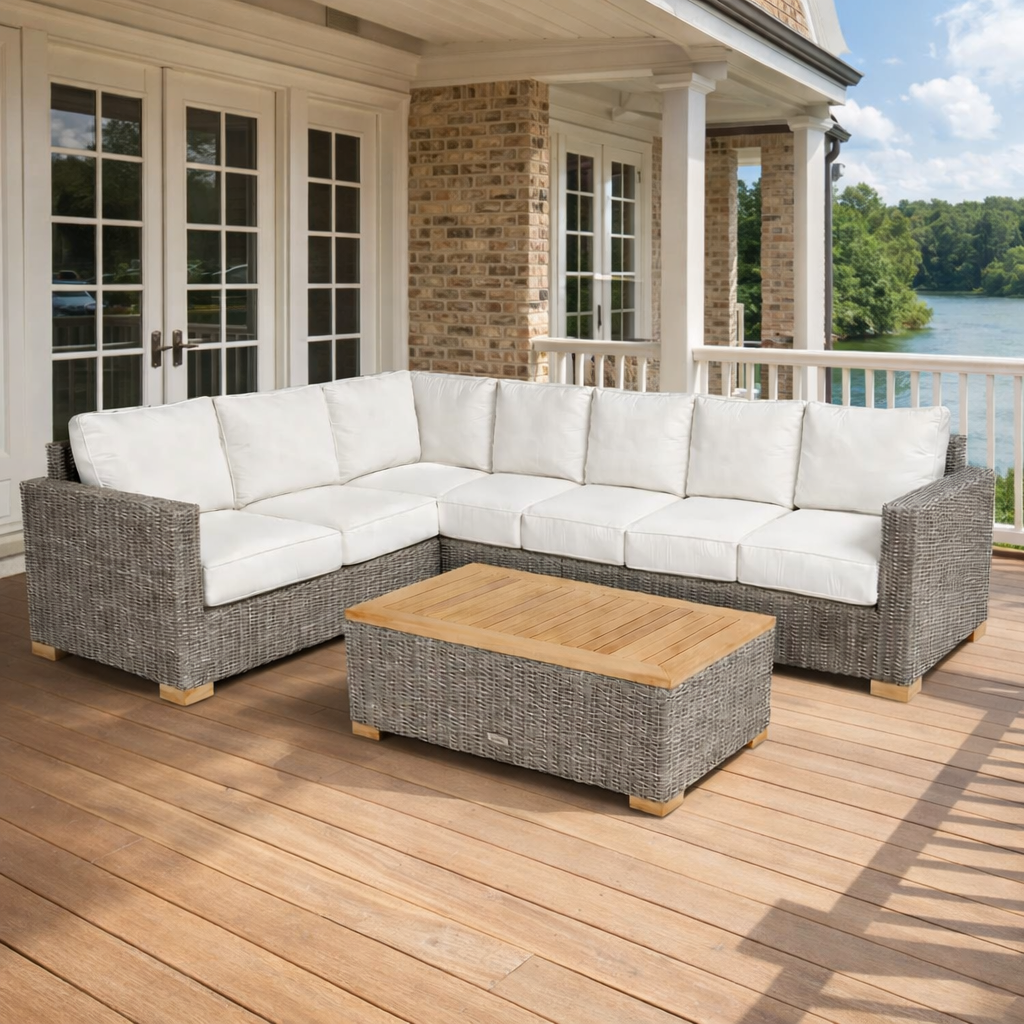 Grade A teak contains naturally high levels of oils and has a dense grain structure. Those qualities contribute to its resistance to moisture, rot, insects, and warping without requiring an artificial stain to make the wood suitable for outdoor use.
That is particularly useful in Denver because the same furniture may encounter intense sunshine in July, rain during an afternoon storm, and freezing conditions several months later. Teak is designed for year-round outdoor use and can withstand rain, sun exposure, and temperature fluctuations.
Denver's moisture challenge is episodic rather than constant. Snow melts, storms wet an exposed patio, irrigation reaches furniture, and then the environment can dry rapidly. Premium teak's moisture and rot resistance makes this wet-dry cycle easier to manage than it can be with outdoor woods that depend heavily on protective coatings.
That does not eliminate good housekeeping. Leaves, soil, food spills, and accumulated debris should still be removed. The benefit is that maintaining teak does not have to revolve around continually protecting the wood from ordinary outdoor weather.
Denver buyers should understand one important point before purchasing teak: weathered teak looks different from new teak. Natural unfinished teak gradually develops a silver-gray patina as it is exposed outdoors. For some Colorado homes—especially contemporary, mountain-modern, and naturalistic landscapes—that weathered color can look particularly appropriate.
If you prefer teak's original golden appearance, maintenance products can be used to preserve or restore that look. That is primarily an aesthetic decision. Teak does not require artificial stain for durability, so owners can choose between a maintained golden finish and a naturally weathered appearance.
Temperature fluctuation is part of Denver ownership. Teak's dense grain and natural resistance to warping make it well suited to furniture expected to remain outdoors rather than move into storage whenever the forecast changes.
For buyers comparing premium options, aluminum can also be a legitimate outdoor material and offers a lighter, often more contemporary feel. Poly lumber offers low-maintenance synthetic construction. Teak makes the most sense when you want the durability of a purpose-built outdoor material but also value natural wood, weight, warmth, and a more architectural presence.
Premium teak costs more initially than many mass-market outdoor materials, so it should be evaluated differently. The relevant question is not merely, “What does this patio set cost today?” but, “How many times am I willing to replace outdoor furniture over the life of this space?”
Well-made teak furniture can last for decades. For homeowners already investing significantly in a patio, landscape, outdoor kitchen, or custom home, that longer ownership horizon can make the upfront premium easier to justify.
| Denver Challenge | Why Premium Grade A Teak Performs Well |
|---|---|
| High-altitude sun | Designed for sun exposure; natural teak can weather to a silver-gray patina. |
| Dry air | Dense grain and natural oils support dimensional stability and resistance to warping. |
| Rain and summer storms | Naturally resistant to moisture and rot. |
| Snow and winter moisture | Designed for year-round outdoor use and changing weather. |
| Temperature swings | Teak is suited to outdoor temperature fluctuations. |
| Exposed patios | Heavier, sturdier construction provides a substantial furniture feel. |
| Long ownership cycles | Quality teak furniture can provide decades of service. |
We would begin with how you actually use the property, not with a furniture catalog. Denver homes vary from compact city lots and historic porches to large suburban patios and west-metro properties with foothill views. The best plan usually comes from identifying one primary activity zone and then adding secondary spaces around it.
If dinners and family cookouts drive most of your outdoor use, we would devote the best kitchen-adjacent area to teak outdoor dining furniture. Six-person seating is comfortable for many households, while larger patios can support eight or more without making everyday meals feel oversized.
An extendable teak dining table is especially useful when your normal household is much smaller than your guest list. Instead of permanently filling a patio with a ten-person table, you can keep the everyday footprint more manageable and expand it for holidays, neighborhood dinners, or visiting family.
On a larger suburban patio, we would rarely spend the entire furniture budget on dining. Denver's comfortable sunny afternoons and cooler evenings make a separate lounge zone valuable. A sofa or loveseat with club chairs around a coffee table creates a place that still works after dinner is finished.
For a broad rectangular patio, teak sectional seating can efficiently define that zone. On a smaller patio, a loveseat and two chairs provide much of the same function without visually overwhelming the space.
A common planning mistake is orienting every seat toward the house simply because that is the easiest furniture layout. On properties with western foothill views, mature landscaping, or a particularly attractive garden, we would first decide what people should look at while seated and build the arrangement around that sightline.
At the same time, west-facing spaces can receive strong afternoon sun. Shade from a roof, pergola, or umbrella can make the furniture substantially more usable. Treat shade as part of the furniture plan rather than something to solve after the seating is installed.
One of Denver's better outdoor-living opportunities is the temperature drop after a warm day. Rather than planning the patio solely for midday use, create a comfortable evening destination. Deep seating arranged around a teak fire pit table can turn the lounge area into a separate gathering space during spring and fall as well as summer evenings.
Keep circulation in mind. A fire feature, sofa, chairs, and side tables require more room than their individual dimensions suggest. Leave enough walking space that guests can move between the house, dining area, and conversation area without cutting through the center of the seating group.
Start with the part of your outdoor space that gets used most. Frequent hosts will usually get the most value from dining furniture or an expandable table, while homeowners who spend evenings outside may prioritize deep seating and a fire-centered conversation area. Larger Denver-area properties can support both zones; smaller patios are often better served by one excellent primary arrangement plus flexible accent seating rather than several undersized groups.
Denver's outdoor lifestyle is seasonal, but it is not limited to a short summer window. Sunny spring and fall days can be excellent for patio use, while summer shifts naturally between daytime dining and cooler evening gatherings. That makes flexibility more valuable than furnishing exclusively for one season or one type of event.
For many Denver-area homes, dining is the most practical place to start because it supports ordinary family meals as well as larger gatherings. A table close to the kitchen or grill reduces back-and-forth traffic and makes the patio feel like a functional extension of the home rather than a separate destination.
Think about the guest count you have most weeks—not the largest party you host once a year. If six seats handle normal use but ten are occasionally needed, an extendable table is often more sensible than permanently dedicating the patio to a ten-person footprint.
Outdoor dining and outdoor lounging solve different problems. Dining chairs are excellent during a meal, but guests tend to stay outside longer when there is a second, more relaxed place to move afterward. This is particularly useful on Denver evenings when temperatures become more comfortable as the sun drops.
A deep-seating group with a sofa or sectional, club chairs, coffee table, and side tables gives the patio a second purpose. If space allows, orient it toward a fireplace, fire table, mountain view, garden, or other visual focal point.
Central Denver lots often reward disciplined furniture sizing. A historic bungalow or Denver Square may have a welcoming porch and a modest backyard rather than one enormous patio. In these spaces, a compact dining group, loveseat-and-chair arrangement, or garden bench can provide more usable seating than an oversized sectional.
Suburban properties in communities such as Highlands Ranch, Centennial, and the south metro often provide room for distinct dining, grilling, and lounge zones. The challenge there is almost the opposite: do not scatter small furniture groups across a large patio. A few substantial, clearly defined zones usually look more intentional and are easier to use.
Urban terraces and rooftop spaces should be planned around circulation, sun exposure, and wind before furniture style. Choose the essential function first—typically dining or conversation seating—and avoid filling every edge. The best rooftop layout often has fewer pieces than a similarly sized ground-level patio because unobstructed pathways and open views contribute so much to the experience.
 The right category depends as much on the architecture and dimensions of your outdoor room as on the weather. We would prioritize pieces that make a space easier to use repeatedly rather than trying to fill every available square foot.
A large covered patio is one of the easiest Denver spaces to furnish well because it supports multiple uses while providing shade from intense midday and afternoon sun. Place dining closest to the kitchen, then use a separate teak patio seating group farther out to establish a conversation area.
If the patio is deep rather than wide, resist the temptation to line furniture around the perimeter. Two intentional zones—one for eating and one for relaxing—usually create a more cohesive room than a collection of unrelated chairs and tables.
Open decks face more sun, snow, and wind, so we generally favor uncomplicated layouts and furniture that can remain outdoors. A four- to six-person dining group works well on medium decks, while two club chairs or Adirondack-style chairs with a side table can create a smaller viewing area without consuming the entire deck.
On west-facing properties, determine whether the view or afternoon shade is the higher priority. Sometimes moving the seating only a few feet—or rotating the group—creates a better compromise between mountain views and direct sun.
For a generous yard, treat the patio as several rooms rather than one enormous furniture zone. A dining set can serve the outdoor kitchen, deep seating can surround a fire feature, and a pair of teak Adirondack chairs can occupy a quieter edge of the yard.
This approach also makes a large property easier to furnish over time. Finish the primary zone first, live with it for a season, and add the secondary area once you understand where people naturally gather and where sun, shade, and wind make sitting most comfortable.
Denver's older neighborhoods often call for a lighter touch. A full outdoor living room is not always appropriate on a traditional front porch. Rocking chairs, a garden bench, or compact lounge chairs can complement the architecture without competing with it.
In landscaped backyards, a bench positioned away from the main patio can be surprisingly useful. It creates a destination within the garden and provides occasional seating without requiring another complete furniture grouping.
Denver does not have one dominant outdoor design language. Historic brick homes, Craftsman bungalows, Denver Squares, ranch homes, contemporary infill, and mountain-influenced suburban architecture all appear across the metro. Teak works particularly well in that mix because natural wood can look traditional or contemporary depending on the furniture's lines and surrounding materials.
Traditional Denver homes often have strong architectural character before any furniture is added. On a Craftsman porch, brick bungalow, or Denver Square, simple teak benches, dining furniture, and classic lounge seating tend to work better than trying to make the patio visually louder than the house.
Natural teak also pairs comfortably with brick, stone, painted trim, and established landscaping. If allowed to weather gray, it becomes quieter visually; if the warmer original color is maintained, it can provide contrast against masonry and darker exterior finishes.
Contemporary Denver infill and newer suburban homes often suit teak furniture with simpler profiles, straight lines, and uncluttered arrangements. Pairing teak with concrete, steel, large-format pavers, or modern outdoor kitchens creates a useful contrast: the architecture stays crisp while the wood prevents the patio from feeling overly hard or commercial.
As you move west toward Lakewood and Golden, outdoor spaces increasingly interact visually with foothills, native-looking landscapes, stone, and broader views. Furniture does not need to imitate “mountain lodge” design to fit that setting. Often the stronger approach is simply to use authentic materials and let the landscape provide the regional character.
Teak's natural wood grain works particularly well in that role because it can complement both rugged stone and contemporary architecture without requiring an overtly rustic style.
A useful Denver design rule is to choose furniture after identifying the property's strongest natural or architectural feature. If the yard has a mountain view, mature tree canopy, dramatic fireplace, or well-designed garden, arrange seating to engage with it. Furniture should organize the experience of the space, not simply occupy the open area on a patio plan.
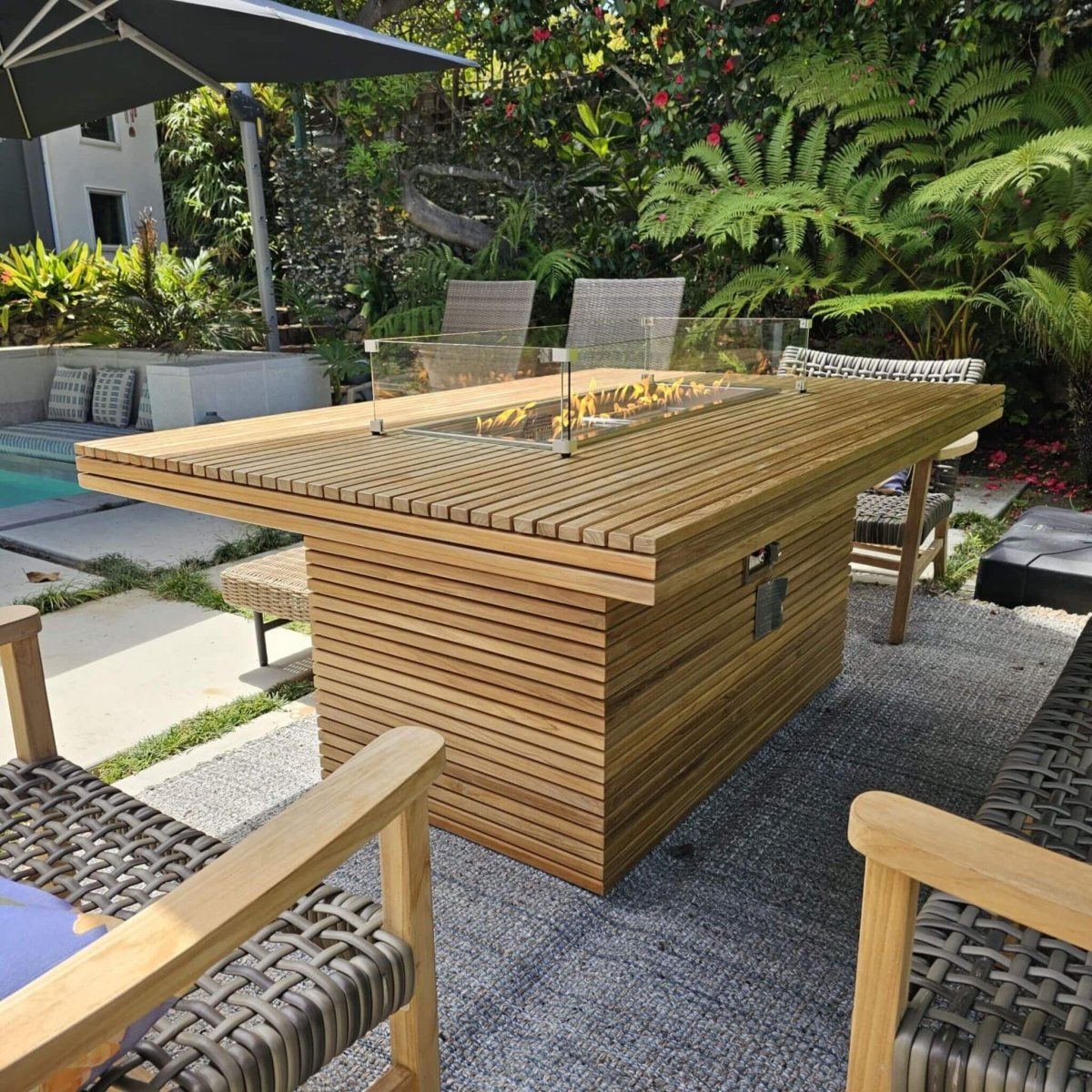 An uncovered patio that looks comfortable in the morning can become much less inviting under direct afternoon sun. Buying furniture without considering orientation can lead to a beautiful arrangement that is rarely used during the hottest, brightest part of the day.
Plan shade and seating together. Teak itself is designed for sun exposure, while Sunbrella cushions included with many TeakHQ lounge pieces provide weather-, fade-, UV-, and water-resistant performance. Shade can still improve comfort and help make the entire space more usable.
Furniture chosen exclusively for hot-weather lounging misses one of Denver's best opportunities: cool spring, fall, and summer evenings. A conversation area, substantial lounge seating, and a fire feature can make the patio useful at times when pool-oriented or sunbathing-focused furniture would receive little use.
We would generally prioritize dining and conversation furniture before dedicating a large share of a Denver patio to chaise lounges unless a pool is genuinely central to the property.
Homeowners sometimes size every piece of furniture around their largest annual gathering. The result can be a patio dominated all year by chairs that are empty most of the time.
Furnish for normal use first. Extendable dining tables, movable chairs, benches, and secondary seating can absorb occasional guests without requiring the everyday layout to feel like an event venue.
On a large property, one massive furniture grouping can actually make entertaining less comfortable. Dining, conversation, cooking, and quieter seating work better when each has a clear purpose.
Use teak furniture to establish two or three deliberate zones rather than spreading miscellaneous pieces everywhere. The result is typically easier to navigate and gives guests natural choices about where to gather.
Outdoor cushions, umbrellas, serving pieces, and lightweight accessories should not be treated the same way as a substantial teak frame. Fast-moving storms, wind, hail, or snow can make a cushion-storage strategy valuable even when the underlying furniture is designed to remain outside.
A deck box or convenient indoor storage location reduces the friction of putting soft goods away. The easier storage is to use, the more likely it becomes part of the household routine.
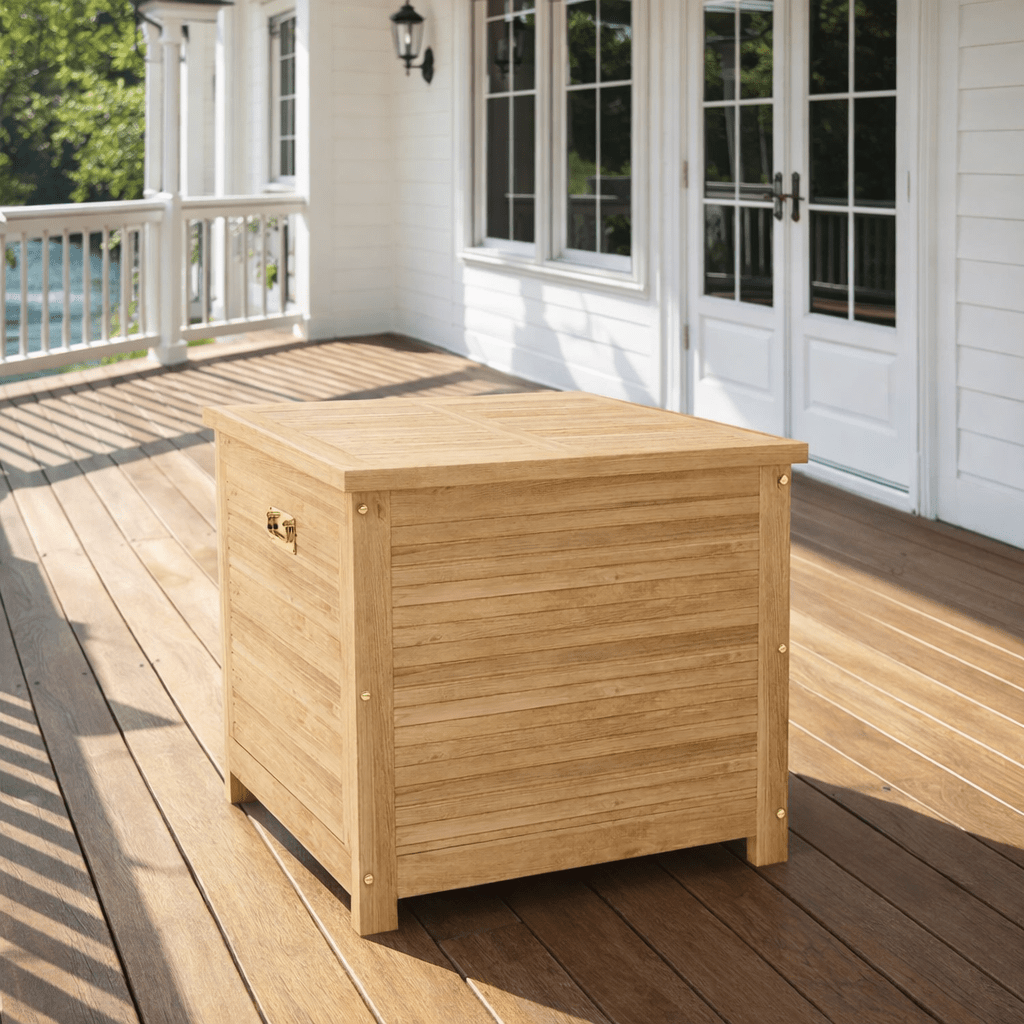 Denver's relatively dry climate makes teak care straightforward, but the combination of dust, intense sunlight, storms, snow, and seasonal debris still calls for basic cleaning. The most important choice is aesthetic: decide whether you want to maintain teak's warmer original color or allow it to develop its natural silver-gray patina.
There is no need to clean teak on an arbitrary weekly schedule. A covered patio may require attention mainly when dust, pollen, food spills, or debris accumulate, while uncovered furniture beneath trees may need cleaning more frequently.
Routine cleaning should focus on removing dirt and organic material rather than repeatedly refinishing the furniture. Teak's outdoor durability does not depend on maintaining an artificial stain.
Strong Colorado sun and outdoor weather will gradually change unfinished teak's appearance. If you like a silver-gray patina, the furniture can be left untreated. If retaining the original golden tone is important, periodic use of appropriate teak care products can be incorporated into your maintenance routine.
Make that choice before buying rather than after the color begins changing. Neither look is inherently more correct; they simply require different expectations.
Premium Grade A teak is designed for year-round outdoor use, so the furniture itself does not have to be moved indoors each winter solely for durability. Homeowners may still choose to cover or store furniture for convenience, cleanliness, or to keep snow off seating surfaces.
Cushions deserve separate consideration. Even weather-resistant performance fabric benefits from being protected during extended periods when the patio is not in use, particularly through snowstorms and long winter stretches.
Unlike coastal markets, Denver furniture is not continuously exposed to salt air. The more relevant salt concern is deicing material that can be tracked or splashed onto patios near walkways, stairs, and driveways. If residue reaches furniture, clean it away rather than allowing it to accumulate through the winter.
Protective covers are optional rather than necessary for teak's outdoor durability. They can still be useful if your priority is keeping furniture cleaner between uses or reducing the amount of snow and debris that reaches it.
If frequent covering and uncovering would make you less likely to use the patio, simplicity may be more valuable. One of teak's advantages is that the furniture can function as genuine outdoor furniture rather than something that must be constantly moved whenever conditions change.
The most successful Denver patios are not necessarily the ones with the most furniture. They are the ones planned around how the household actually lives: where people eat, where they gather after dinner, which direction they want to face, when they need shade, and how they use the space as seasons change.
Premium Grade A teak is a strong fit for that approach because it combines the authenticity and warmth of real wood with the weather resistance and longevity expected from serious outdoor furniture. Choose the right configuration first; then choose pieces you will be comfortable living with for many years.
Look for materials that can handle strong sun, dry air, rain or snow, and substantial temperature changes. Premium Grade A teak is a strong natural-wood option because it is resistant to moisture, rot, insects, and warping and is designed for year-round outdoor use. Quality aluminum and poly furniture can also be appropriate, particularly when lower weight or a synthetic low-maintenance material is preferred.
That depends on the material. Premium Grade A teak is designed for year-round outdoor use and can remain outside through rain, snow, sun exposure, and temperature fluctuations. Cushions and accessories may still be more convenient to store when they will not be used for extended periods.
Yes. Strong sun exposure should influence both material choice and patio layout, especially on uncovered south- and west-facing spaces. Natural teak can remain outdoors in sun, although its color will gradually weather toward a silver-gray patina. Shade can also improve comfort and reduce exposure for cushions and other patio materials.
Premium Grade A teak is designed to withstand outdoor temperature fluctuations and is naturally resistant to moisture and warping. That makes it well suited to Denver's changing winter conditions. Normal cleaning and keeping debris from accumulating are still sensible parts of ownership.
No. Teak does not require sealing or artificial stain for outdoor durability. You can leave it untreated and allow it to develop a natural silver-gray patina, or use teak care products if maintaining the warmer original color is important to you.
Outdoor teak naturally weathers toward silver-gray as it is exposed to sun and weather. Because sun exposure varies dramatically by patio orientation and amount of cover, there is no single timetable that applies to every Denver property. An exposed west-facing deck will have a different weathering environment than a deeply covered patio.
Covered patios are especially well suited to outdoor dining and deep seating because shade makes both more comfortable through the warmer months. On larger patios, consider pairing a teak dining set with a separate lounge group so the space works for meals and after-dinner conversation.
It is sensible to protect cushions when severe storms, hail, or extended winter weather are expected, even when the fabric is designed for outdoor use. Most TeakHQ lounge seating includes Sunbrella cushions, which are weather-, fade-, UV-, and water-resistant, but convenient cushion storage can still keep the patio cleaner and ready for use.
Each can be a legitimate premium choice. Aluminum is lighter and often has a more contemporary appearance, while poly furniture is synthetic and generally chosen for low-maintenance ownership. Teak is the better fit when you specifically value authentic natural wood, a warmer appearance, substantial weight, weather resistance, and the possibility of decades of use.


