
FREE SHIPPING
within mainland USA
within mainland USA
Home ▸ Teak Outdoor Furniture ▸ By Location ▸ Destin, Florida
Outdoor furniture in Destin lives close to the Gulf, which changes what matters most when choosing it. Salt-laden air, humidity, intense sun, frequent rain, and tropical weather all favor materials that can handle repeated outdoor exposure without demanding constant attention. At the same time, many local patios are designed around pools, Gulf views, vacation gatherings, and outdoor meals. Premium Grade A teak is especially well suited to that combination of coastal exposure, frequent use, and relaxed outdoor living.

Destin is not simply a warm-weather furniture market. It is a coastal one, and the difference matters. Furniture near the Gulf may spend months exposed to humid air, wind-driven moisture, strong sun, rain, airborne salt, sand, and the occasional severe storm. A material that performs well on a protected inland patio can require a very different ownership routine when it sits on an open deck a short distance from saltwater.
The closer a property is to the Gulf, Destin Harbor, or another saltwater exposure, the more carefully we would evaluate materials and hardware. Salt does not make quality outdoor furniture impossible to own, but it makes material selection more consequential. Lightweight furnishings and components that depend heavily on vulnerable coatings or finishes may deserve more scrutiny in an exposed location.
For a beachfront or harbor-side property, we would prioritize furniture whose durability comes from the underlying material itself rather than from a decorative surface treatment. That is one reason dense natural teak is such a logical material to consider in Destin.
Warm, humid conditions make moisture management important even when furniture is technically weather resistant. The issue is not simply whether a chair survives getting wet; it is whether the entire setup can repeatedly get wet, drain, dry, and return to normal use without becoming a maintenance project.
Pay attention to the whole environment around the furniture. Deep shade, tightly packed furniture, wet cushions, leaves trapped beneath pieces, and poor deck drainage can keep an otherwise good outdoor setup damp longer than necessary. On a Destin patio, airflow is part of furniture planning.
Two patios only a few blocks apart can create very different furniture conditions. A covered balcony may receive little direct midday sun, while an uncovered pool deck can experience hours of intense exposure. Gulf-facing decks can also combine sun with wind and salt at the same time.
That means “outdoor rated” should be the beginning of the buying decision rather than the end. Consider where each piece will actually sit, how much shade it receives, and whether cushions can be protected during periods when the property is not being used.
Destin homeowners also have to think about tropical weather in a way that many inland buyers do not. No patio furniture should be treated as hurricane equipment. Even substantial furniture should be secured, moved, or stored according to your storm plan when dangerous winds are expected.
This creates an important tradeoff: heavier furniture can feel reassuring during ordinary breezy coastal weather, but weight should never become an excuse to leave furnishings unsecured during a major storm.
Several premium furniture materials can work in coastal Florida. High-quality aluminum, for example, can be attractive when low weight and a contemporary appearance are priorities. Synthetic materials can reduce certain maintenance concerns. Premium Grade A teak earns our recommendation for many Destin properties because its natural characteristics line up particularly well with moisture, sun exposure, frequent outdoor use, and the desire for a substantial, natural-looking piece of furniture.
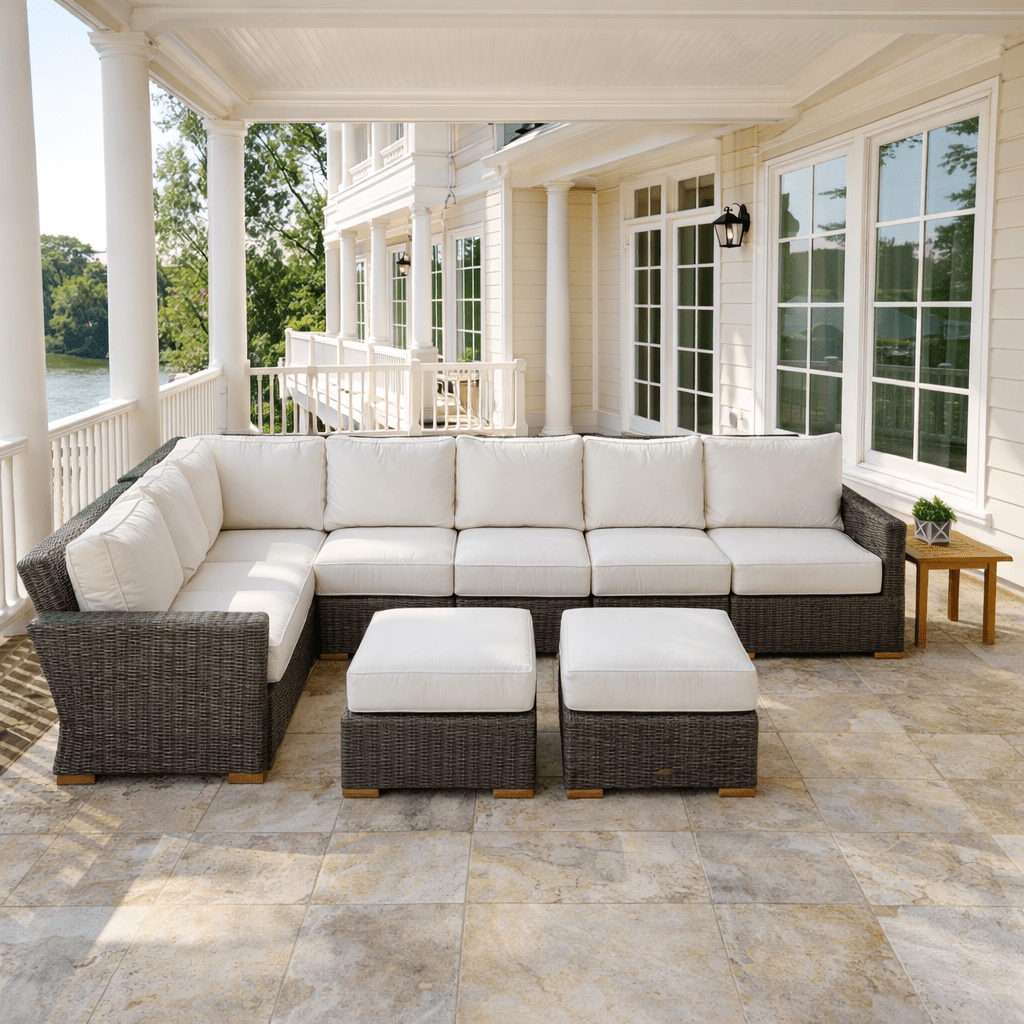 Grade A teak is naturally dense and rich in oils. Those characteristics help it resist moisture, rotting, insects, and warping without requiring an artificial stain for durability. That distinction is particularly useful in Destin, where repeated exposure matters more than surviving one isolated rainstorm.
The benefit is practical: the wood itself is intended for outdoor use. You are not relying on a painted surface to turn an unsuitable wood species into outdoor furniture.
Destin patios routinely move between sunshine, humidity, rain, and drying periods. Premium teak is designed to withstand rain, sun exposure, and temperature fluctuations, making it well matched to furniture that may remain outdoors throughout the year.
That does not eliminate sensible care. Keeping surfaces reasonably clean and allowing cushions and surrounding areas to dry still improves the ownership experience. It simply means the furniture frame does not need to be treated like an indoor object every time rain appears in the forecast.
Natural teak gradually develops a silver-gray patina when left untreated outdoors. Some homeowners consider that weathered appearance ideal for a Gulf Coast home; others prefer the warmer original teak color. Both approaches are legitimate.
If maintaining the original color is important, appropriate teak care products can be used. If not, the wood can be allowed to weather naturally. That flexibility is valuable for second homes and vacation properties because the maintenance strategy can match the owner's priorities instead of dictating them.
Premium teak carries a higher initial cost than many mass-market patio materials, but quality teak furniture can last for decades. For homeowners furnishing a long-term residence, luxury vacation property, or heavily used family gathering space, that lifespan changes how the purchase should be evaluated.
Instead of asking only what a patio set costs this year, consider how often you want to replace the major furniture itself. In a coastal environment, buying fewer times can be a meaningful form of convenience.
| Destin Challenge | Why Premium Grade A Teak Performs Well |
|---|---|
| Humid coastal air | Dense teak with natural oils is resistant to moisture and rot. |
| Frequent rainfall | Grade A teak is designed for year-round outdoor exposure. |
| Strong sunshine | Teak tolerates sun exposure and can weather naturally to a silver-gray patina. |
| Repeated wet/dry cycles | Teak resists warping and handles normal outdoor temperature and moisture changes. |
| Saltwater setting | Durability comes from the natural wood rather than an artificial exterior stain. |
| Long outdoor season | Furniture can remain outdoors year-round with optional rather than mandatory sealing. |
| Frequent guest use | Teak has a substantial, sturdy feel suited to regularly used outdoor spaces. |
If we were starting with an empty Destin outdoor space, we would not begin by choosing individual chairs. We would begin by identifying what the property does most often: meals, pool time, sunset conversation, rental turnover, or large family visits. Once that priority is clear, the furniture plan becomes much easier.
Destin has an unusually strong reason to orient outdoor rooms deliberately: many properties have a focal point worth preserving, whether that is the Gulf, harbor, pool, canal, sunset direction, or landscaped courtyard. A common mistake is centering furniture geometrically on the patio when the better arrangement is to center the experience on the view.
For conversation seating, we would usually angle chairs and sofas so guests can talk without forcing half the group to sit with their backs permanently toward the water. Teak sectional seating works especially well where a larger deck allows an L-shaped arrangement that frames rather than blocks the view.
A large Destin patio is usually more useful when treated as several outdoor rooms instead of one oversized furniture grouping. Place dining closer to the kitchen or outdoor cooking area. Move lounge seating toward the strongest view or evening gathering point. Keep chaise loungers closer to the pool.
This separation also helps vacation properties. Ten guests do not necessarily want to do the same thing at once. A dining table, conversation area, and poolside zone let several smaller groups use the property comfortably at the same time.
For primary residences, size outdoor dining around normal household use plus the guests you realistically entertain. For a vacation home, think differently: the house's sleeping capacity may be a more useful starting point. If a property comfortably sleeps ten people but the patio table seats six, outdoor meals become awkward precisely when the house is full.
That is where extendable teak dining tables can be particularly useful. They allow a table to remain manageable most of the time while giving owners more seating capacity when extended family or vacation guests arrive.
One of the most useful Destin-specific decisions happens before furniture arrives: decide where loose cushions will go when a tropical system approaches or the property will sit vacant. A beautiful deep-seating set becomes inconvenient if there is nowhere practical to move the soft goods.
That storage route should be easy enough that owners, guests, or property managers will actually use it. A nearby garage, owner's closet, weather-protected storage area, or teak deck box can be more valuable than squeezing one additional chair onto the patio.
For a pool-centered home, we would begin with chaise loungers and then add a conversation zone. For a Gulf-view home used for entertaining, start with lounge seating or a sectional and add dining as the second major zone. Larger vacation homes should generally begin with the number of people the property regularly hosts, then choose outdoor dining sets and lounge configurations that let the full group use the exterior comfortably without overcrowding it.
Outdoor space in Destin often functions as more than a backyard. It can be the breakfast room after an early beach walk, the gathering place after boating, the waiting area while dinner comes off the grill, and the place everyone drifts back to at sunset. Furniture should be selected for those actual patterns of use rather than for how a patio looks when nobody is sitting on it.
Destin has a substantial vacation-home and condominium market, so outdoor furniture frequently serves rotating groups rather than the same household every day. That makes intuitive layouts especially valuable. Guests should be able to understand the space immediately: eat here, lounge here, dry off here, and move between the door and pool without navigating an obstacle course.
For rental properties, we would favor complete furniture groupings over collections of unrelated pieces. A cohesive lounge set is easier for guests to use and easier for a property manager to restore to the intended arrangement.
A dining chair beside a pool is not a substitute for a lounger. If the pool is a major amenity, treat it as its own outdoor room and give it furniture designed around reclining, towels, drinks, and wet users.
A row of teak chaise loungers with small side tables creates a more functional pool deck than filling the entire area with one large conversation set. Keep enough open deck around the group for circulation and pool access.
After beach and boating activities wind down, the patio often changes jobs. Deep seating becomes more useful than loungers, especially for families sharing drinks, desserts, or conversation at the end of the day.
If your property has both a strong daytime pool culture and an active evening gathering pattern, do not force one furniture set to do both jobs. A smaller dedicated lounge grouping can add more value than simply buying additional pool chairs.
Condo balconies and smaller Gulf-view terraces create the opposite challenge from large vacation-home patios. Here, preserving circulation and sightlines matters more than maximizing seating count. Smaller club chairs, a loveseat, or compact dining pieces may serve the space better than a deep sectional.
Before purchasing, measure door swing, railing clearance, walking width, and the path furniture must take through the unit. A piece that technically fits the balcony dimensions can still be impractical if it cannot be delivered through the available route.
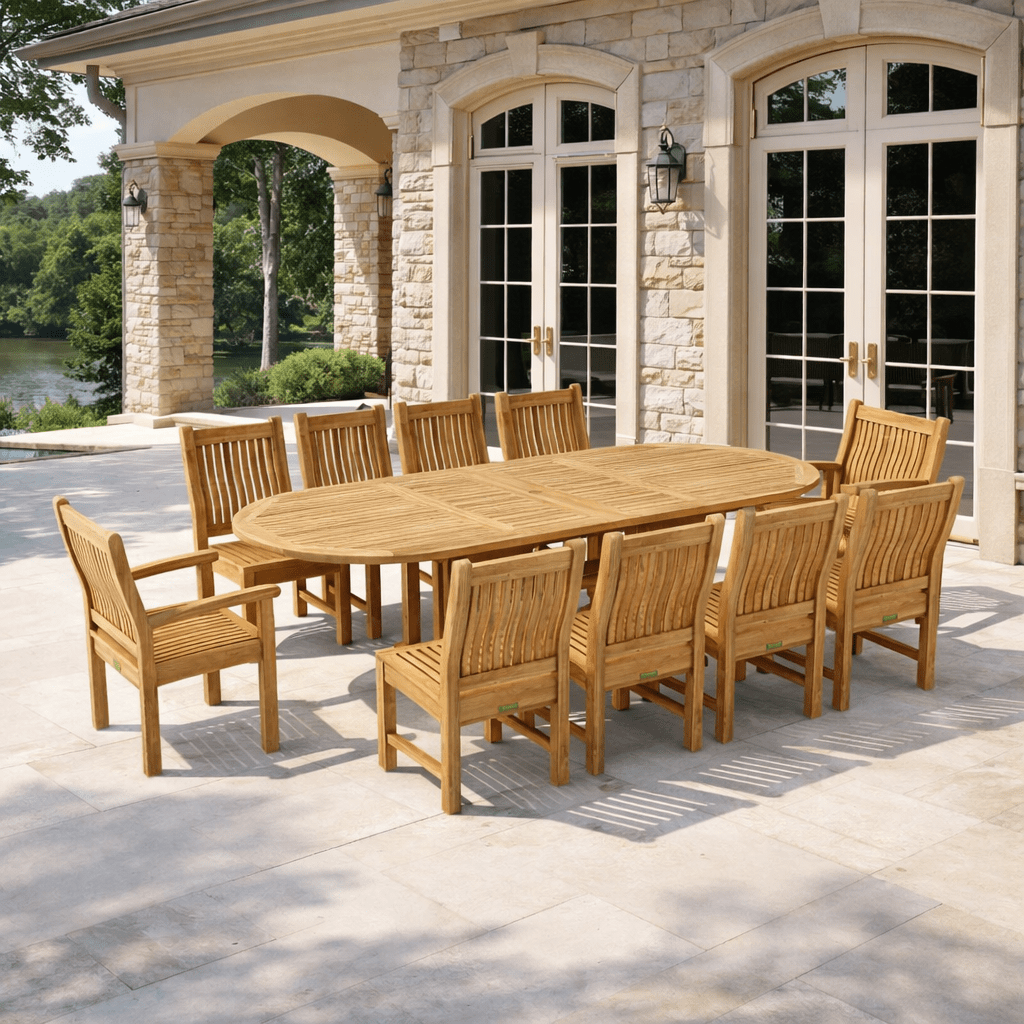 The most useful teak configuration depends less on the ZIP code than on what part of the property you are furnishing. A Gulf-facing deck, pool patio, covered porch, and condo balcony can all exist in the same market yet need very different furniture.
For an open deck with a valuable view, we prefer furniture that creates conversation without building a visual wall. Two club chairs and a sofa, a modest sectional, or a loveseat-and-chair arrangement can preserve more open sightline than an oversized U-shaped setup.
Pair the seating with teak side and end tables rather than relying only on one large central coffee table. On a vacation patio, guests appreciate having a place for a drink within arm's reach instead of repeatedly crossing the group.
Use chaise loungers as the primary furniture if swimming and sunning are major activities. Deep seating can then occupy a shaded edge of the pool deck rather than competing with the water's perimeter.
A practical configuration is two to four loungers with side tables, followed by a separate sofa-and-chair grouping beneath an overhang or umbrella. This gives wet swimmers and dry conversational seating different zones.
Covered areas are natural locations for dining because they offer shade and keep the table close to cooking and serving areas. If the household regularly entertains, a six- or eight-person table may be more useful than several smaller pieces.
For homes that alternate between quiet weekends and large visits, expandable dining creates flexibility without permanently devoting the patio to a banquet-size table. A nearby serving or buffet table can also keep food, drinks, and serving pieces off the main dining surface.
For a large rental or multigenerational beach house, we would often pair three distinct groups: a generous outdoor dining set, a multi-piece teak lounge set, and pool loungers if the property has a pool. That may sound like more furniture than a typical residence needs, but it solves a specific hospitality problem: a large group should not have to choose between everybody eating outside and everybody relaxing outside.
The memorable planning rule is simple: furnish for simultaneous use, not total seat count. Twelve seats scattered around a property are not equivalent to eight seats around one dinner table when eight people want to eat together.
Destin outdoor spaces tend to benefit from a lighter design hand. The water, sky, white sand, landscaping, and architecture already provide plenty of visual character. Teak works well because it introduces natural warmth without requiring the outdoor space to become overtly rustic or nautical.
There is a difference between designing for the coast and decorating with a beach theme. Natural teak pairs easily with white, cream, blue, gray, sandy neutrals, and green landscaping without requiring anchors, shells, or other literal coastal motifs.
That makes it useful for both traditional beach houses and more contemporary properties. The wood provides warmth while the architecture and view remain the defining elements.
On cleaner-lined modern homes and condominiums, select teak furniture with relatively simple profiles and allow the grain to provide visual texture. Teak can soften hard surfaces such as concrete, stone, tile, and large expanses of glass without undermining a contemporary design.
Porches, balconies, and cottage-style homes can comfortably support more classic teak silhouettes, including dining armchairs, garden benches, and rocking furniture. These pieces work especially well when the surrounding architecture already includes railings, columns, broad porches, or traditional trim.
Think about teak color at the design stage rather than treating weathering as an afterthought. Fresh teak brings warm golden-brown contrast to white and pale coastal finishes. Naturally weathered teak shifts toward silver-gray and can blend more quietly with an understated coastal palette.
Neither approach is inherently better. Decide which appearance belongs in the design, then choose a maintenance routine that supports it.
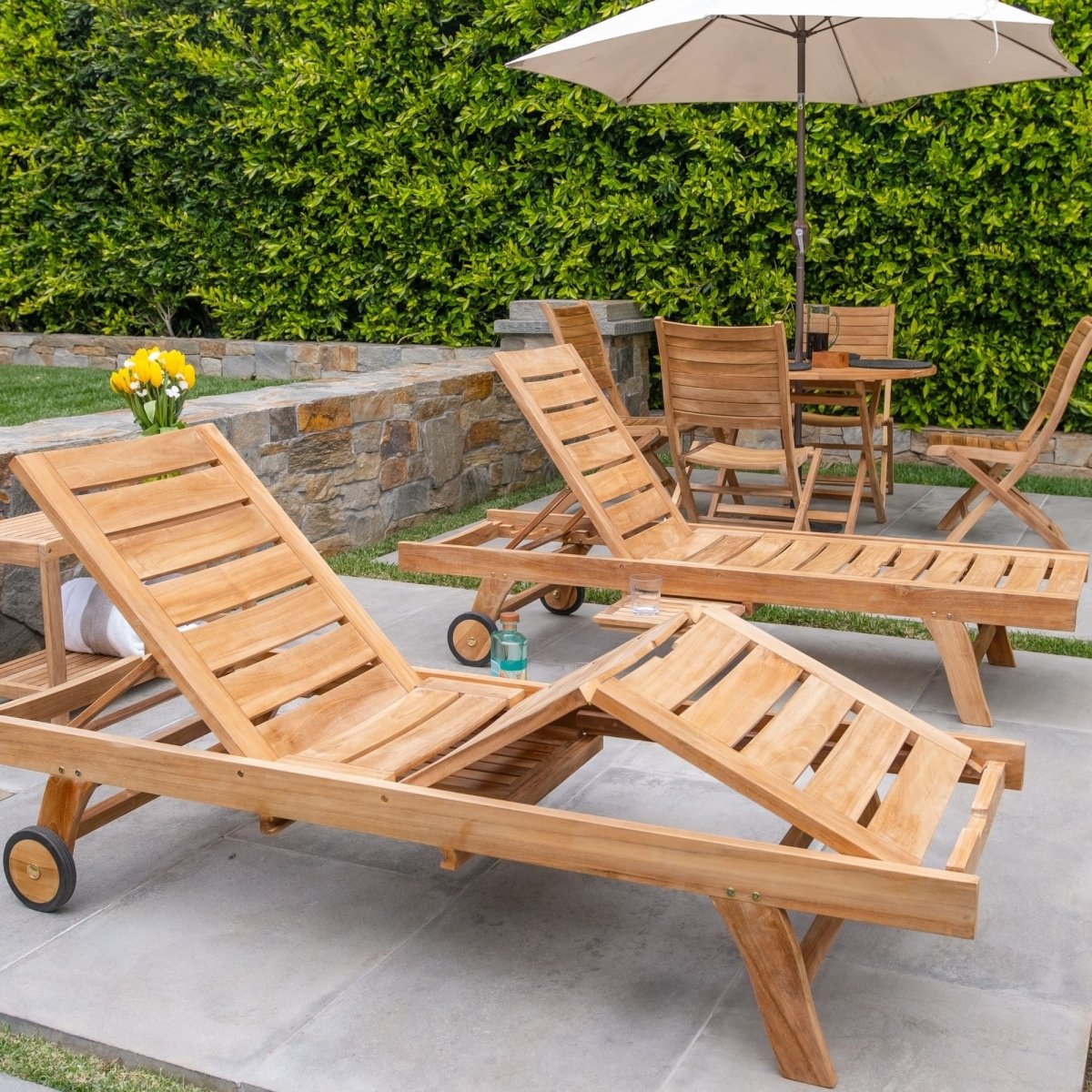 A covered inland-feeling courtyard and an exposed Gulf-front deck may be only minutes apart but create different furniture conditions. Choosing solely by appearance ignores salt exposure, wind, sun, and rain.
Grade A teak helps simplify that decision because the wood itself is intended for year-round outdoor use. Even so, placement and storm planning should still reflect the exposure of the specific patio.
Another common error is purchasing for the owner's normal household rather than the property's realistic guest capacity. A beach house that sleeps twelve but provides four comfortable outdoor dining seats creates a bottleneck every time the home is full.
Use sleeping capacity and typical group size as planning inputs. An extendable table or larger dining set can provide capacity without forcing every outdoor zone to be oversized.
Deep furniture is comfortable, but it can be visually expensive. Placing a tall sofa directly across the primary Gulf or harbor view may technically maximize seating while degrading the feature that makes the outdoor space special.
Orient the largest pieces parallel to important sightlines when practical, and use lower-profile chairs, loungers, or tables where preserving openness matters most.
Weather-resistant fabric reduces day-to-day worry, but a cushion is still easier to manage when it has somewhere convenient to go. Leaving every cushion exposed through prolonged wet periods, vacancies, or approaching severe weather creates unnecessary work.
Most TeakHQ lounge seating includes Sunbrella cushions, which are weather-, fade-, UV-, and water-resistant, but owners should still plan sensible drying and storage practices.
Teak has a substantial feel compared with many lightweight furniture types, which can be pleasant during ordinary coastal breezes. That does not make any patio set safe to leave unsecured during dangerous tropical weather.
Furniture should be moved, stored, or otherwise handled according to your property's hurricane plan when severe winds threaten. Material quality does not replace storm preparation.
Teak is comparatively flexible to own because its durability does not depend on continual sealing or refinishing. Destin's coastal environment still rewards a simple routine focused on cleaning, airflow, salt and debris removal, and cushion management.
There is no need to invent a rigid cleaning calendar. Instead, inspect furniture periodically and clean it when salt film, pollen, sand, food residue, bird droppings, or other debris accumulates. Properties directly exposed to Gulf breezes may benefit from attention more often than sheltered inland patios.
Gentle routine cleaning is preferable to allowing layers of organic debris to sit in joints or shaded surfaces for long periods.
On exposed coastal properties, periodically rinsing or cleaning accumulated salt and keeping the area around the furniture free of trapped debris is sensible. Allow surfaces and cushions to dry thoroughly after wet weather.
Do not crowd upholstered pieces so tightly beneath a covered patio that airflow disappears. The wood handles outdoor moisture well, but a better-ventilated patio is easier to keep clean and pleasant overall.
Unfinished teak can be left outdoors and allowed to weather naturally to a silver-gray patina. Sealing or oiling is optional rather than required for durability. Owners who prefer the original warm teak color can use appropriate care products to maintain that appearance.
The key is consistency of expectations. A second-home owner who wants minimal intervention may be happiest embracing the patina. Someone who strongly prefers freshly finished golden teak should plan for an ongoing appearance-maintenance routine.
Protective covers are optional for teak rather than necessary to make the wood outdoor-capable. They can nevertheless reduce cleaning, pollen, sand, and direct exposure during extended periods when a property is unoccupied.
If you use covers, follow the cover manufacturer's instructions and avoid trapping persistent moisture underneath. Cushions may also be stored separately during long vacancies or severe-weather preparations.
When a major storm threatens, normal furniture care becomes storm preparation. Remove cushions and loose accessories, and move or secure furniture according to the property's hurricane plan. Umbrellas should never be treated as permanent fixtures during high winds.
This is another reason we like planning storage before furnishing a Destin property. The best storm routine is the one that can be carried out quickly when owners or property managers have many other tasks competing for attention.
The strongest outdoor spaces in Destin are not necessarily the ones with the most furniture. They are the ones where the material suits the coast, the layout respects the view, and every major activity—dining, lounging, swimming, and gathering—has an intentional place. Explore TeakHQ's teak patio seating, dining furniture, loungers, tables, and accessories to build a setup around how your property is actually used.
Premium Grade A teak is particularly compelling here because it combines natural weather resistance, long-term durability, substantial construction, and a look that fits coastal architecture without requiring homeowners to treat the furniture as fragile. Choose the configuration first; then choose the pieces that make that plan work.
Look for materials that can tolerate humidity, frequent rain, strong sun, and coastal exposure. Several premium materials can work, but Grade A teak is particularly well suited because it naturally resists moisture, rot, insects, and warping and is designed for year-round outdoor use.
Prioritize durable materials, practical hardware, easy-to-manage cushions, and furniture substantial enough for normal coastal use. For seating, teak patio furniture is a strong option because the wood's outdoor durability comes from its natural properties rather than an artificial stain.
Yes. TeakHQ's Grade A teak furniture is designed for year-round outdoor use and can withstand rain, sun exposure, and normal temperature fluctuations. Severe tropical weather is different: furniture should still be moved or secured according to your storm plan when dangerous winds are expected.
No. Sealing is optional rather than required for durability. Untreated teak will naturally weather toward a silver-gray patina. Owners who prefer the original warmer teak color can use appropriate teak care products.
Yes. Natural unfinished teak gradually develops a silver-gray patina when exposed outdoors. That color change is normal. If you want to preserve more of the original golden-brown appearance, a teak care routine can be used instead.
Start with dedicated chaise loungers and small side tables where people can recline, dry off, and keep drinks nearby. If space allows, add a separate shaded deep-seating area rather than asking one furniture group to serve both pool use and evening conversation.
Use the property's realistic guest capacity as your starting point. If a home regularly accommodates eight or ten people, provide at least one outdoor area where a meaningful portion of that group can gather together. Dining capacity is especially important because scattered chairs do not solve the problem of a group wanting to eat at one table.
Both can be appropriate premium materials. Teak provides a warmer, more natural appearance and a heavier, more substantial feel. Aluminum is lighter and often suits a more overtly modern aesthetic. The better choice depends on the property's design, exposure, and the owner's material preferences.
Covers are optional for the teak itself. They can be useful for reducing cleaning and exposure when a property is vacant, but they are not required to make Grade A teak suitable for outdoor use. Make sure any cover is used in a way that does not unnecessarily trap persistent moisture.
Remove loose cushions and accessories and move or secure outdoor furniture according to your property's storm-preparation plan. Do not assume that teak's weight makes furniture safe to leave unsecured in dangerous winds, and bring umbrellas into a protected location.


