
FREE SHIPPING
within mainland USA
within mainland USA
Home ▸ Teak Outdoor Furniture ▸ By Location ▸ Florida Gulf Coast
Outdoor furniture on Florida's Gulf Coast has to live comfortably with heat, humidity, frequent rain, strong sun, and—in waterfront settings—salt-laden air. It also tends to work harder than furniture in more seasonal climates, serving lanais, pool decks, covered patios, and outdoor dining areas for much of the year. That makes material quality, drainage, furniture configuration, and realistic storm planning especially important. For homeowners who prefer natural materials, premium Grade A teak is a particularly strong long-term option for this environment.

Choosing outdoor furniture on Florida's Gulf Coast is less about finding something labeled "outdoor" and more about understanding what happens when moisture, sun, salt, frequent use, and storm seasons overlap. A patio in Naples, Sarasota, or St. Petersburg may stay furnished for far more of the year than one in a northern climate, so small weaknesses in materials, drainage, finishes, or upkeep have more opportunities to become noticeable.
Humidity matters because outdoor furniture rarely gets the long, dry recovery periods common in arid climates. A shaded lanai can remain damp after rain, while furniture near landscaping or a pool may repeatedly encounter moisture even on otherwise pleasant days. Materials and finishes that depend on staying consistently dry can therefore demand more attention than homeowners initially expect.
This is one reason material selection matters more here than it does in a dry inland environment. Premium aluminum, certain high-quality synthetics, and appropriately selected natural materials can all make sense, but the homeowner should evaluate how each handles moisture rather than choosing primarily by appearance.
A home directly on the Gulf, a canal, a bay, or a barrier island faces a different furniture environment than a house several miles inland. Salt carried in coastal air can settle on furniture, cushions, hardware, and nearby surfaces. The closer and more exposed the property is to open water, the more important routine rinsing and corrosion-resistant hardware become.
This is a useful distinction within the Gulf Coast itself. A protected suburban patio in eastern Tampa or inland Sarasota County should not automatically be treated like an exposed Sanibel or Marco Island deck. Buy for the conditions at your property, not simply for the Florida ZIP code.
Frequent rainfall does not only test the furniture frame. It tests the entire setup: cushions, furniture placement, patio drainage, covered versus uncovered zones, and whether water can remain trapped against surfaces. Pool decks add another source of repeated wetting.
For cushioned lounge furniture, consider how easily cushions can be removed or protected before prolonged rain. Many TeakHQ patio seating pieces include weather-resistant Sunbrella cushions, but water resistance should not be confused with a reason to leave soft goods unnecessarily saturated.
One of the most important Gulf Coast buying insights is to separate everyday weather performance from hurricane preparation. Furniture that is well suited to humidity, sunshine, and ordinary rain should still be moved, secured, or otherwise handled according to an appropriate storm plan when severe weather threatens.
Teak is heavier and more substantial than many lightweight patio-furniture options, which can be desirable in normal use. That does not make outdoor furniture hurricane-proof. Before buying a large sectional, dining table, or collection of loungers, ask where those pieces will go when a named storm requires the patio to be cleared. On the Gulf Coast, that storage question belongs in the purchasing decision from day one.
Once the local conditions are considered independently, premium Grade A teak becomes a logical material to evaluate. Its advantages are particularly relevant in a region where furniture encounters moisture, sunshine, changing weather, and near-continuous outdoor use.
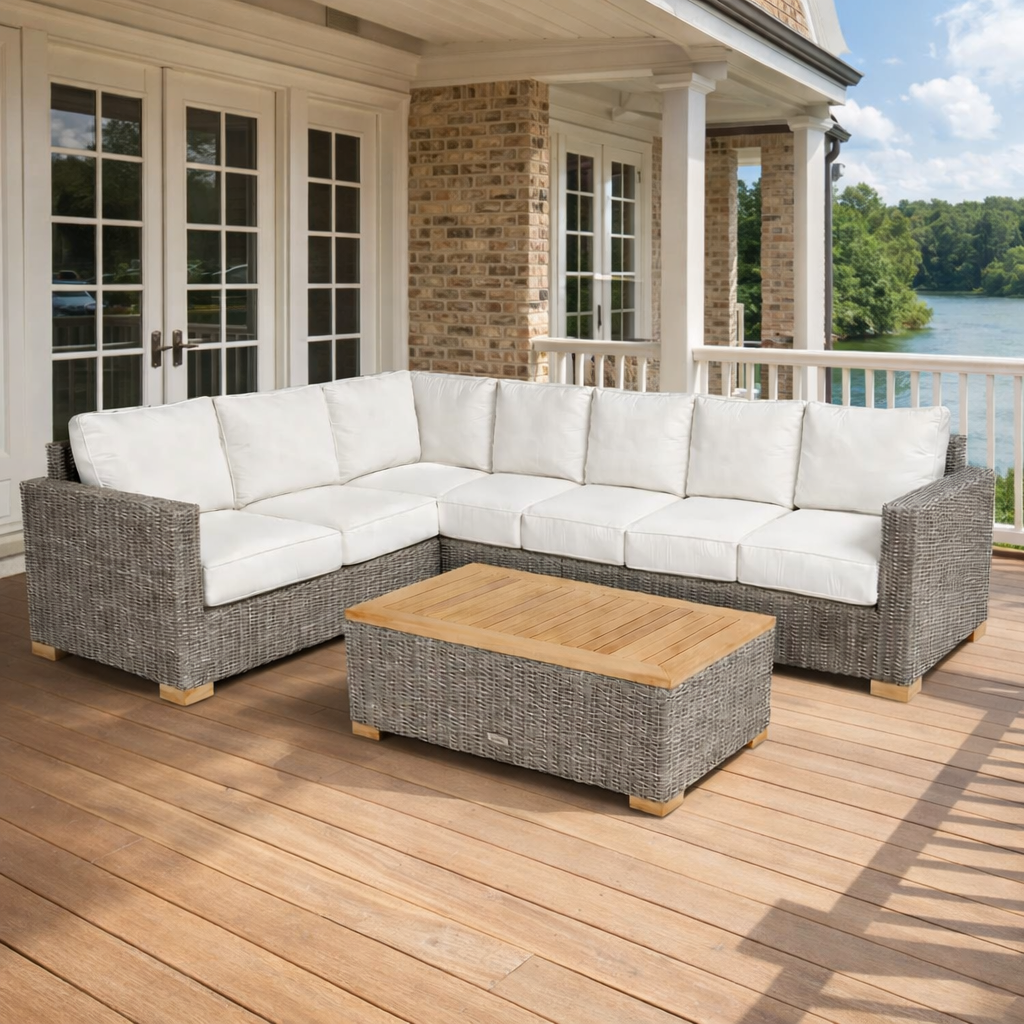 Grade A teak is naturally high in oils and has a dense grain structure. Those characteristics contribute to its resistance to moisture, rotting, insects, and warping. On the Gulf Coast, where repeated dampness is more relevant than an occasional rain shower, that natural material performance is a meaningful advantage.
Unlike a coating-dependent wood finish, teak does not require artificial stain to make the underlying wood suitable for outdoor use. That simplifies the ownership decision: maintenance can focus largely on cleanliness and appearance rather than continually creating the wood's basic weather resistance.
Outdoor furniture near pools, uncovered patios, docks, and lanais regularly alternates between wet and dry conditions. Premium teak's natural moisture resistance makes it well suited to that pattern. Its resistance to warping and structural stability are especially useful when furniture is expected to stay outdoors rather than being treated as seasonal equipment.
This does not eliminate sensible placement and cleaning. Standing debris, persistent dampness, and neglected cushions can create housekeeping problems around any furniture. The advantage is that the teak itself was selected because it is naturally capable of outdoor exposure.
Florida sun will affect the appearance of outdoor materials. With natural teak, the expected change is straightforward: unfinished teak gradually weathers from its original warm color toward a silver-gray patina when left untreated.
That is an aesthetic change rather than a requirement to replace the furniture. Homeowners who enjoy the weathered coastal look can allow the process to occur naturally. Those who prefer the original teak color can choose appropriate care products and maintain the appearance more actively.
Premium Grade A teak carries a higher initial cost than many outdoor-furniture materials, so it makes the most sense for homeowners who think in years rather than seasons. Proper teak furniture can last for decades, making it especially logical for primary residences, long-held second homes, and outdoor spaces where the owner would rather furnish carefully once than repeatedly cycle through lower-cost sets.
That does not mean teak is universally superior. High-quality aluminum can be an excellent choice when low weight and a more contemporary metal aesthetic are priorities. Poly lumber minimizes certain maintenance concerns. Teak's case is strongest when the homeowner wants genuine wood, substantial construction, natural weather resistance, and a material that fits both coastal and traditional architecture.
| Florida Gulf Coast Challenge | Why Premium Grade A Teak Performs Well |
|---|---|
| High humidity | Natural oils and dense grain help resist moisture and rot. |
| Frequent rain | Designed for year-round outdoor exposure and repeated weather changes. |
| Strong sunshine | Can weather naturally to a silver-gray patina without artificial stain for durability. |
| Poolside moisture | Natural moisture resistance suits repeated wet-dry conditions. |
| Coastal environments | Real Grade A teak avoids dependence on painted or artificial wood finishes. |
| Insects and rot | Teak is naturally resistant to insects and rotting. |
| Year-round use | Structural stability and long service life suit heavily used outdoor spaces. |
We would start with how the property is actually used—not with a furniture catalog. On many Gulf Coast homes, the outdoor area functions as another living room: dining may happen under a covered lanai, conversation seating may face the pool or water, and loungers occupy the sunniest edge of the deck. The best layout gives each activity its own zone without making the patio feel crowded.
For a typical home with a covered or screened lanai, we would usually establish the dining area first. It tends to be the most structured zone and often sits closest to the kitchen or outdoor cooking area. A teak outdoor dining set for six or eight people works well for households that routinely host family, neighbors, or seasonal visitors.
If the guest count changes substantially throughout the year, an extendable teak dining table is often smarter than permanently filling the patio with the largest table you could possibly need. That preserves circulation on ordinary days while allowing the dining area to expand for holidays, snowbird visitors, and family gatherings.
On waterfront properties, resist the instinct to point every chair in exactly the same direction. Gulf, bay, canal, and sunset views matter, but people also need to talk to one another. A conversation grouping positioned at an angle to the view often works better than a straight row of seats facing the water.
For larger patios, teak sectional seating can define a lounge zone without requiring numerous individual pieces. On narrower lanais, a sofa or loveseat with two chairs may preserve better pathways.
Pool furniture should not simply be whatever space remains after dining and lounge seating are placed. Leave enough clearance for people to walk comfortably around wet surfaces, and keep loungers from creating bottlenecks between the house and pool.
A pair or group of teak chaise loungers works naturally in the sun zone, while shaded seating belongs closer to the covered portion of the patio. Small tables between loungers are worth prioritizing because they give drinks, sunscreen, books, and phones somewhere other than the pool deck.
Large teak furniture has the substantial feel many premium buyers want, but that same substance means homeowners should decide in advance how they will handle severe-weather preparation. Measure garage doors, storage rooms, lanai openings, and other routes before choosing especially large configurations.
This is one of the most practical differences between furnishing a Gulf Coast patio and furnishing a similar-looking space in a climate without tropical storms: the ideal everyday layout should also have a realistic contingency plan.
Begin with the area your household uses most. Pool-focused homes may get the greatest everyday value from chaise lounges and deep seating, while homeowners who regularly host dinners should begin with dining furniture and size it around their normal guest count rather than their single largest annual gathering. Large lanais and waterfront patios can support multiple coordinated zones; smaller screened spaces usually benefit from fewer, more versatile pieces.
The Gulf Coast outdoor lifestyle is unusually varied because the same patio may serve breakfast, swimming, afternoon shade, sunset drinks, and dinner. In many homes, outdoor furniture is not a seasonal accessory; it is part of the home's regular living space. That makes comfort, circulation, and adaptability just as important as weather resistance.
A well-planned lanai often gets used at several different times of day. Morning coffee may happen at a compact table in the shade, afternoon activity shifts toward the pool, and evenings bring people back together for dining or conversation. Instead of asking which single furniture set looks best, ask which activities need dedicated space and which pieces can serve more than one purpose.
West-facing properties have an obvious focal point: the evening sky. Conversation seating is especially useful here because it lets guests enjoy the view without turning outdoor gatherings into rows of people facing the horizon. Swivel chairs can also be useful where a seat needs to alternate between the conversation and the water.
Southwest and west-central Florida include many second homes and properties that experience periods of heavier occupancy. Furniture that works beautifully for two people but becomes awkward when children, grandchildren, or visiting friends arrive may prove frustrating.
The answer is not always a gigantic permanent dining set. Extendable tables, movable chairs, flexible lounge groupings, and occasional seating can increase capacity without making the space feel like an event venue during ordinary weeks.
For higher-end vacation properties, simplicity matters. Guests should immediately understand where to dine, where to lounge, and where wet poolside items belong. Durable natural materials and straightforward furniture groupings can reduce visual clutter while creating the substantial outdoor environment guests expect from a premium Gulf Coast property.
Furniture should follow the architecture of the outdoor space. The needs of a narrow screened lanai differ from a sprawling Naples pool deck, and a waterfront terrace has different sightline priorities than an enclosed courtyard. Teak works across these settings because its natural appearance can bridge coastal, transitional, traditional, and cleaner contemporary designs.
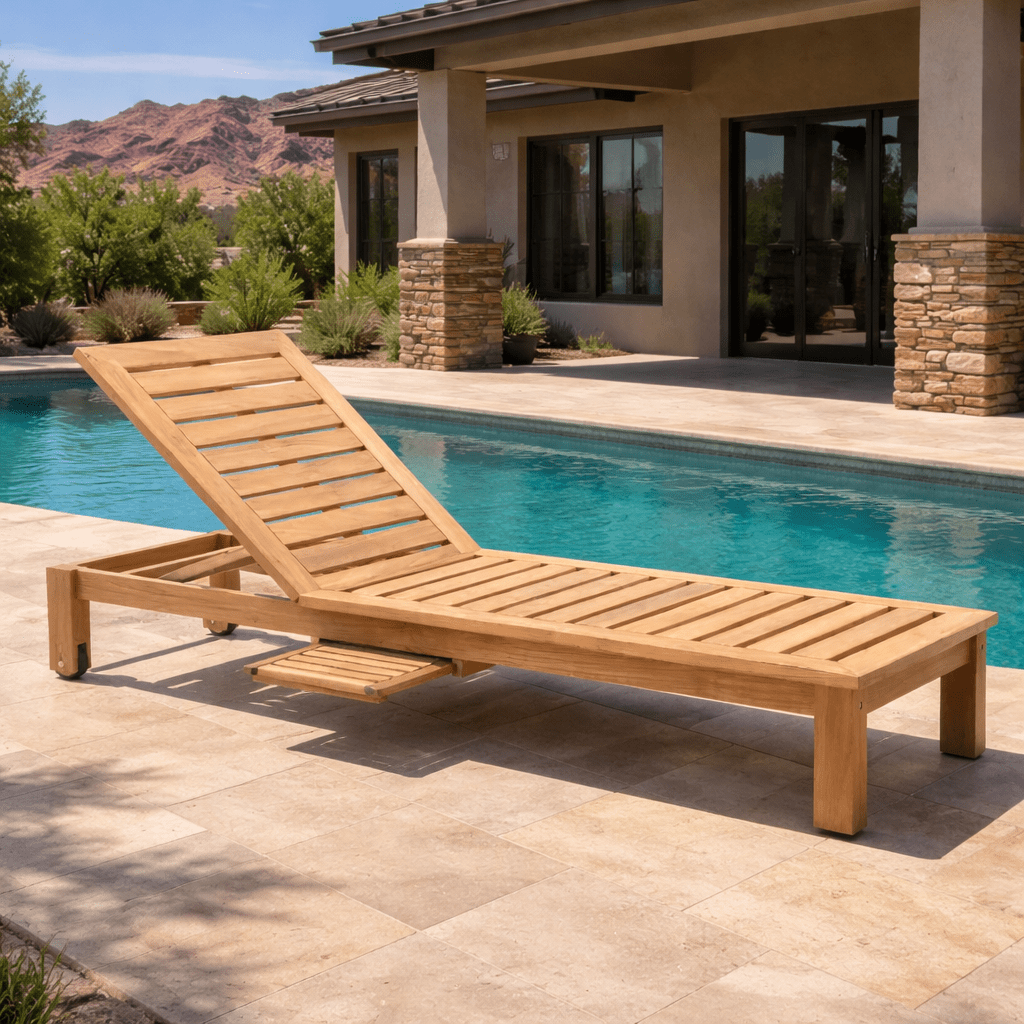 For pool-centered properties, start with the way people move around the water. Chaise lounges belong where sun exposure is desirable but should not consume the primary walking path. Pair them with teak side and end tables so everyday items have a dry, accessible landing spot.
If the pool deck is large enough, create a second upholstered conversation zone under the lanai rather than trying to make loungers serve as social seating. This separation makes the patio feel more like a series of outdoor rooms.
The covered lanai is usually the best location for cushioned seating because it combines shade, proximity to the house, and some protection from direct rainfall. A sofa or sectional with a coffee table can create the outdoor equivalent of a family room, while swivel chairs are useful when people regularly turn between a television, conversation area, pool, and view.
For homeowners who expect the lounge area to be the social center of the patio, explore teak patio seating as a coordinated group rather than collecting unrelated pieces one at a time. Maintaining consistent seat proportions and table heights usually produces a more comfortable room.
Place dining furniture close enough to the outdoor kitchen that serving feels natural, but leave the cook adequate circulation. Bar-height seating can work well at counters, while the main table should remain a separate destination when the household regularly hosts full meals.
For frequent entertaining, capacity should be based on the number of people who dine together regularly. Occasional overflow can often be accommodated more elegantly with an expandable table or additional chairs than with an oversized table occupying valuable patio space every day.
At waterfront homes, furniture orientation matters nearly as much as furniture type. Keep the best sightline visible from inside the house when possible, and avoid placing tall-backed furniture where it unnecessarily blocks a prized water view.
Small lounge groupings, swivel chairs, Adirondack-style seating, or paired chaises can work well in secondary waterfront locations. More formal dining and cushioned lounge areas generally make sense closer to the house, where serving, shade, and storage are easier.
Large properties should resist filling the entire terrace with one massive furniture arrangement. Separate dining, conversation, and sun-lounging zones usually feel more intentional and make it easier for several activities to happen simultaneously. Repeating teak across those zones visually connects the space even when the furniture collections are not identical.
The region includes everything from Mediterranean-inspired estates and traditional coastal houses to contemporary waterfront builds and relaxed island homes. The most successful outdoor spaces usually respond to the architecture rather than attempting to overpower it. Natural teak is versatile in this respect: warm new teak can feel polished and architectural, while weathered silver-gray teak fits naturally into lighter coastal palettes.
White exteriors, pale stone, tropical landscaping, and water views pair naturally with teak because the wood adds warmth without requiring a strongly themed "beach" look. Allowing teak to weather toward silver-gray can further soften the palette for homeowners who prefer an understated coastal appearance.
Traditional Gulf Coast homes often include stucco, tile roofs, arches, stone, and substantial covered patios. Teak's visual weight works well in these spaces. Larger dining tables, deep lounge seating, and classic chairs can feel appropriately scaled where lightweight furniture would look undersized.
Modern homes benefit from restraint. Straightforward teak forms can warm glass, concrete, stone, and metal without making the space feel rustic. In these settings, use fewer furniture types and repeat materials deliberately rather than filling every open area.
Dense palms and tropical planting already contribute color and texture, so furniture does not need to compete with the landscape. Natural teak, neutral cushions, and simple arrangements allow greenery and water to remain the visual focus while giving the patio a finished architectural structure.
Most expensive outdoor-furniture mistakes on the Gulf Coast are planning mistakes rather than style mistakes. Homeowners often focus on how a collection looks in ideal weather but give less thought to rain, circulation, guest capacity, cushion management, or what happens when a tropical system approaches.
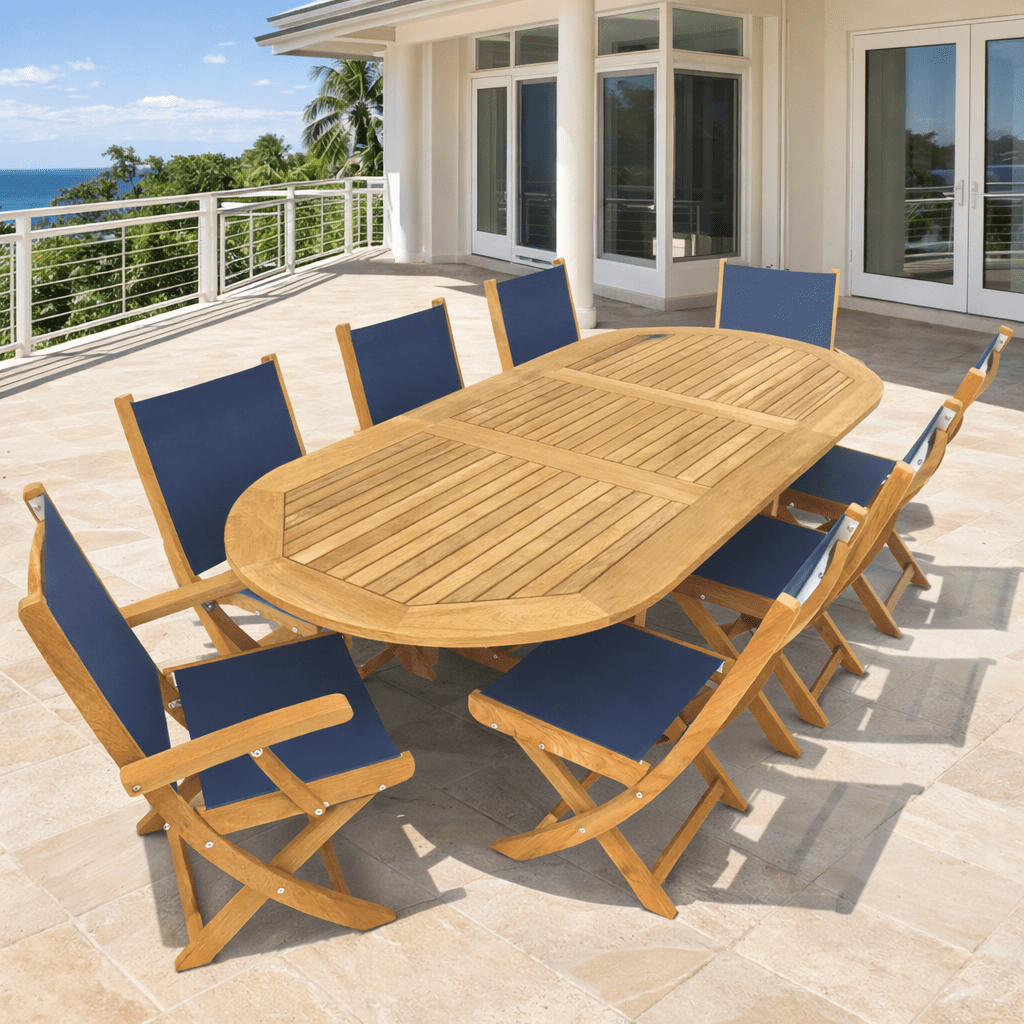 A substantial dining set or sectional may be ideal for everyday use, but you should know how severe-weather preparation will work before delivery day. Measure the route to protected storage, determine what can realistically be moved, and avoid assuming that weight alone makes furniture safe to leave exposed during extreme winds.
Teak's heavier construction can feel reassuring during ordinary outdoor use, but storm preparation is a separate responsibility. This distinction is particularly important for waterfront and barrier-island properties.
Not every Gulf Coast home receives the same salt exposure. Owners sometimes overgeneralize the region and either worry unnecessarily about an inland patio or underestimate the upkeep of furniture directly beside the Gulf, bay, canal, or beach.
For exposed properties, routinely removing salt residue from furniture and hardware is a sensible practice. Choosing real Grade A teak also avoids relying on an artificial wood-look surface to create the desired appearance.
A 10- or 12-person dining table may sound appealing for holiday gatherings, but it can reduce circulation every other day of the year. This is especially noticeable on screened lanais, where walls and screen enclosures create harder boundaries than an open backyard.
Choose around normal occupancy first. If your guest count expands periodically, an extendable table or supplemental seating may create a much better everyday patio.
Weather-resistant outdoor fabric is valuable, but it does not make housekeeping disappear. Frequent rain and humidity mean cushions benefit from drying, airflow, and sensible protection when prolonged bad weather is expected.
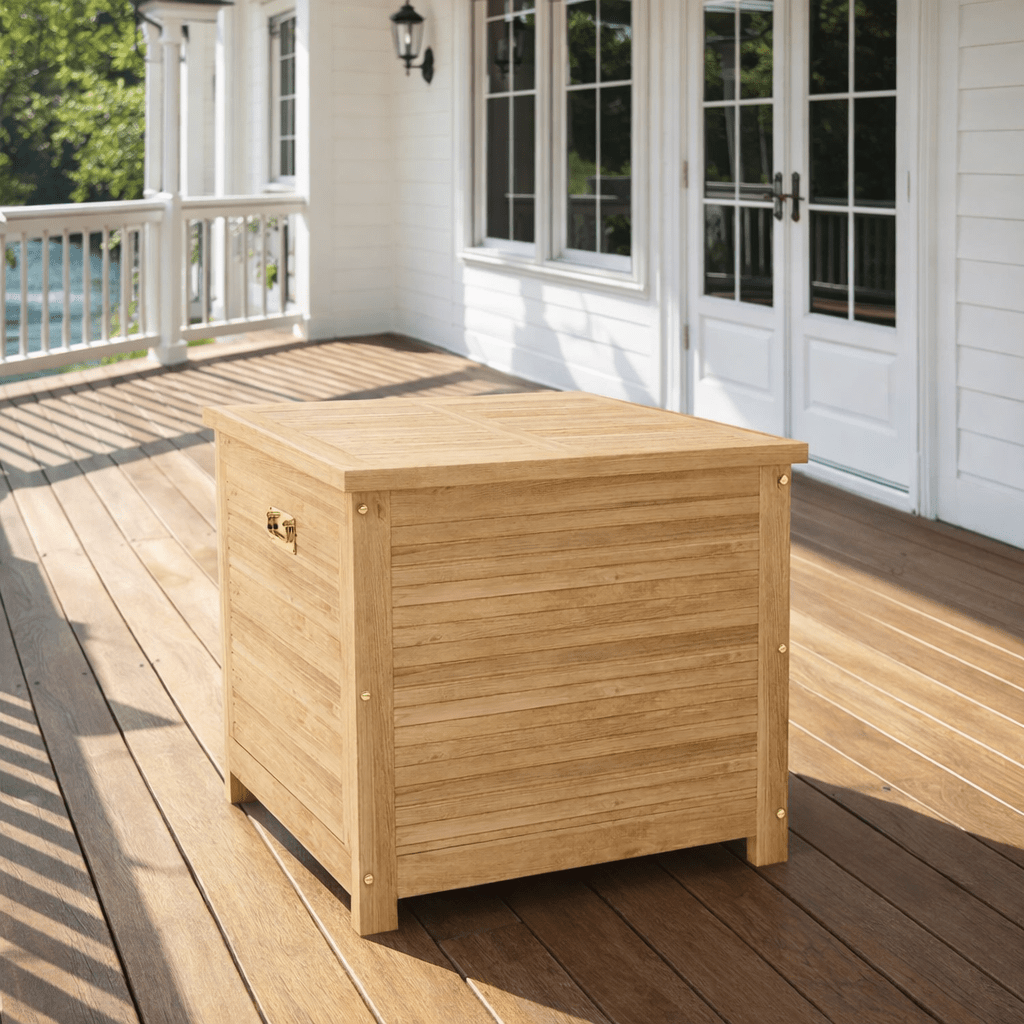
If your preferred seating uses cushions, decide in advance where they will go. A nearby storage area—or a teak deck box where appropriate—can make the routine far easier than carrying cushions through the house after the sky has already darkened.
Pool decks are especially vulnerable to overcrowding. A beautiful row of loungers becomes frustrating if swimmers must weave between chair legs, dining chairs, and side tables with wet feet.
Measure furniture in its in-use position, not only its nominal dimensions. Dining chairs pull backward. Chaise lounges extend. Reclining pieces change length. Those operational dimensions determine whether the patio actually works.
Grade A teak offers unusually flexible ownership because it does not need to be sealed or painted for basic outdoor durability. Gulf Coast care is therefore less about protecting teak from every raindrop and more about keeping surfaces clean, managing salt and organic buildup, allowing good airflow, and deciding what appearance you prefer.
 There is no single cleaning schedule appropriate for every Gulf Coast property. A sheltered lanai in an inland neighborhood may need relatively routine cleaning, while an exposed waterfront deck may accumulate salt and debris more quickly.
Use the furniture's actual condition as your guide. Remove dirt, pollen, leaf residue, spills, and coastal deposits before they become a persistent film. Homeowners seeking more active appearance maintenance can also use appropriate teak care products.
At waterfront properties, periodic freshwater rinsing is a sensible habit for the complete furniture piece, including hardware and nearby surfaces. Royal Teak and Anderson Teak furniture uses stainless-steel hardware, while Verandis Teak uses brass hardware. Keeping salt deposits from accumulating is still good coastal housekeeping regardless of hardware choice.
Humidity makes airflow important. Avoid creating unnecessary pockets where damp leaves, towels, cushions, or other organic material remain pressed against furniture for extended periods. After substantial rain, allowing cushions and surrounding surfaces to dry can help keep the entire patio cleaner.
Covered and screened lanais deserve attention precisely because they can be deceptive: furniture receives less direct rain, but shaded areas may also dry more slowly than an open sunlit deck.
Unfinished teak naturally changes from its original warm tone toward silver-gray as it weathers. For many coastal homes, that patina is part of the appeal. If you like it, you can allow the teak to age naturally rather than turning color maintenance into another recurring chore.
If preserving a warmer original appearance is important to your design, choose a compatible maintenance approach and expect to maintain that appearance periodically. The key is recognizing that the choice is largely aesthetic; teak does not need artificial stain for outdoor durability.
Teak furniture can be left outdoors year-round and protective covers are optional rather than required for the wood itself. Covers may nevertheless be convenient for keeping furniture cleaner or reducing the amount of debris that accumulates between uses.
If you do use covers in a humid climate, avoid turning them into moisture traps. Follow the cover manufacturer's instructions and give furniture appropriate opportunities to dry rather than sealing persistent dampness underneath.
Routine teak maintenance and tropical-storm preparation are different jobs. When significant severe weather threatens, follow local emergency guidance and make an appropriate plan for outdoor furniture and loose patio items.
The most useful preparation happens long before a forecast changes: know which pieces can be relocated, who can move them, where they fit, and what other outdoor objects need attention. That planning is more valuable than discovering during storm preparation that a large table will not fit through the intended doorway.
The right outdoor furniture for a Florida Gulf Coast home should suit more than the weather. It should fit the way your household moves between the lanai, pool, kitchen, and water; accommodate the people you actually entertain; and have an ownership routine you are comfortable maintaining for years. Premium Grade A teak is particularly compelling when you want the warmth of real wood, substantial construction, flexible maintenance, and furniture intended for long-term outdoor use.
Start with your most-used outdoor zone, choose the right furniture category for that space, and build the rest of the patio around how you genuinely live.
There is no single best material for every homeowner. Premium aluminum and certain high-quality synthetics can work well, but Grade A teak is particularly attractive for buyers who want real wood with natural resistance to moisture, rot, insects, warping, sun, rain, and changing outdoor conditions.
Yes. Grade A teak's natural oils, dense grain, moisture resistance, and resistance to rot make it well suited to humid Gulf Coast environments. Good housekeeping and airflow are still important, especially on shaded or screened patios that dry slowly.
Choose materials and hardware intended for outdoor exposure, then account for how close the property is to open water. Coastal deposits should be periodically removed rather than allowed to accumulate. Teak is a strong natural-wood option; TeakHQ's Royal Teak and Anderson Teak pieces use stainless-steel hardware, while Verandis Teak uses brass.
Yes. TeakHQ's Grade A teak furniture is designed for year-round outdoor use and can withstand rain, sun exposure, and temperature fluctuations. Hurricanes and severe tropical weather are a separate issue, and outdoor furniture should be included in an appropriate storm-preparation plan.
You should have a specific severe-weather plan for outdoor furniture and follow local emergency guidance when storms threaten. Do not assume a heavy piece of furniture is hurricane-proof. Before purchasing very large pieces, consider where and how they could be moved or secured when necessary.
For many lanais, start with dining near the kitchen and create a separate conversation zone facing the pool or view. Preserve clear paths between doors, the dining area, and pool. If space is limited, flexible pieces and extendable dining tables can provide capacity without permanently crowding the enclosure.
No. Grade A teak does not need to be sealed for basic outdoor durability. Sealing or other appearance-focused care is optional for homeowners who prefer to maintain more of teak's original warm color rather than allowing it to weather naturally.
Yes. Unfinished teak naturally develops a silver-gray patina with outdoor weathering. This is an expected aesthetic change. Homeowners who like the weathered coastal appearance can leave it untreated, while those who prefer the original color can maintain it more actively.
Start with chaise loungers for the sun zone, convenient side tables, and separate conversation seating in shade or beneath the lanai when space allows. Leave generous circulation around the pool rather than maximizing the number of furniture pieces.
It can be for homeowners prioritizing long-term ownership. Premium teak costs more initially than many outdoor-furniture options, but quality teak can last for decades. Its strongest value proposition is for buyers who want natural wood, outdoor durability, substantial construction, and the flexibility to maintain its original appearance or let it weather naturally.


