
FREE SHIPPING
within mainland USA
within mainland USA
Home ▸ Teak Outdoor Furniture ▸ By Location ▸ Georgia Coast
Outdoor furniture on the Georgia Coast has to work in a setting shaped by humidity, frequent moisture, strong sun, salt exposure near the water, and the realities of coastal storms. Just as important, it needs to fit the way these homes are used—from shaded Savannah porches and marsh-view patios to St. Simons pool decks and Tybee beach houses. Premium Grade A teak is a particularly practical option because it combines a natural, substantial appearance with the weather resistance and ownership flexibility coastal outdoor spaces demand.

The Georgia Coast is not one uniform furniture environment. A shaded porch in Savannah, a marsh-facing patio near Richmond Hill, and an exposed deck on Tybee or St. Simons may be only a modest distance apart, yet they place very different demands on furniture. The closer a space sits to open water—and the more exposed it is to wind-driven moisture—the more material selection, placement, drainage, and storm preparation matter.
In a dry climate, homeowners often focus first on sun exposure. Along coastal Georgia, moisture deserves equal attention. Humidity can keep furniture, cushions, shaded decking, and the spaces beneath furniture damp long after a passing shower has ended. Materials that depend heavily on a perfectly dry environment or protective surface coating can require more attention here.
This is especially relevant on covered porches. One of the most useful distinctions for Georgia Coast homeowners is that covered does not mean dry. A deep porch may receive little direct rainfall yet still live in humid outdoor air every day. Furniture for these spaces should therefore be selected as true outdoor furniture rather than treated like indoor furniture that happens to sit beneath a roof.
Salt air matters most on properties closest to beaches, sounds, tidal waterways, and open marsh. An inland Savannah patio does not experience the same exposure as an ocean-facing Tybee deck, so there is little reason to treat every coastal home identically.
For highly exposed properties, pay attention not only to the furniture's primary material but also to hardware, moving parts, and accessories. Solid wood avoids the large painted or powder-coated metal surfaces found on some alternatives, while TeakHQ's Royal Teak and Anderson Teak pieces use stainless steel hardware and Verandis Teak uses brass hardware. Hardware should still be inspected and cleaned as part of coastal ownership.
Rain itself is only part of the issue. Shaded patios beneath mature trees, deep verandas, courtyards, and north-facing spaces can dry more slowly. Leaves, pollen, soil, and other organic debris may then sit against damp furniture surfaces.
The practical response is not simply to buy something labeled “weather resistant.” Look for furniture that tolerates outdoor moisture, then arrange it so air can circulate and routine cleaning remains easy. That matters as much for ownership satisfaction as the material specification.
A substantial piece of outdoor furniture may feel reassuring in normal coastal breezes, but no patio set should be treated as hurricane protection. When severe coastal weather threatens, loose outdoor items need their own storage or securing plan. This is an important distinction: choose durable furniture for the other 360-plus days you use the patio, but also know exactly what you will do with cushions, umbrellas, accessories, and furniture when a serious storm approaches.
Premium Grade A teak is particularly well matched to coastal Georgia because many of its inherent characteristics address the problems created by repeated moisture, changing weather, and outdoor exposure. The advantage is not that teak requires no thought or care. It is that the wood itself does not depend on paint or an artificial stain to make it suitable for outdoor use.
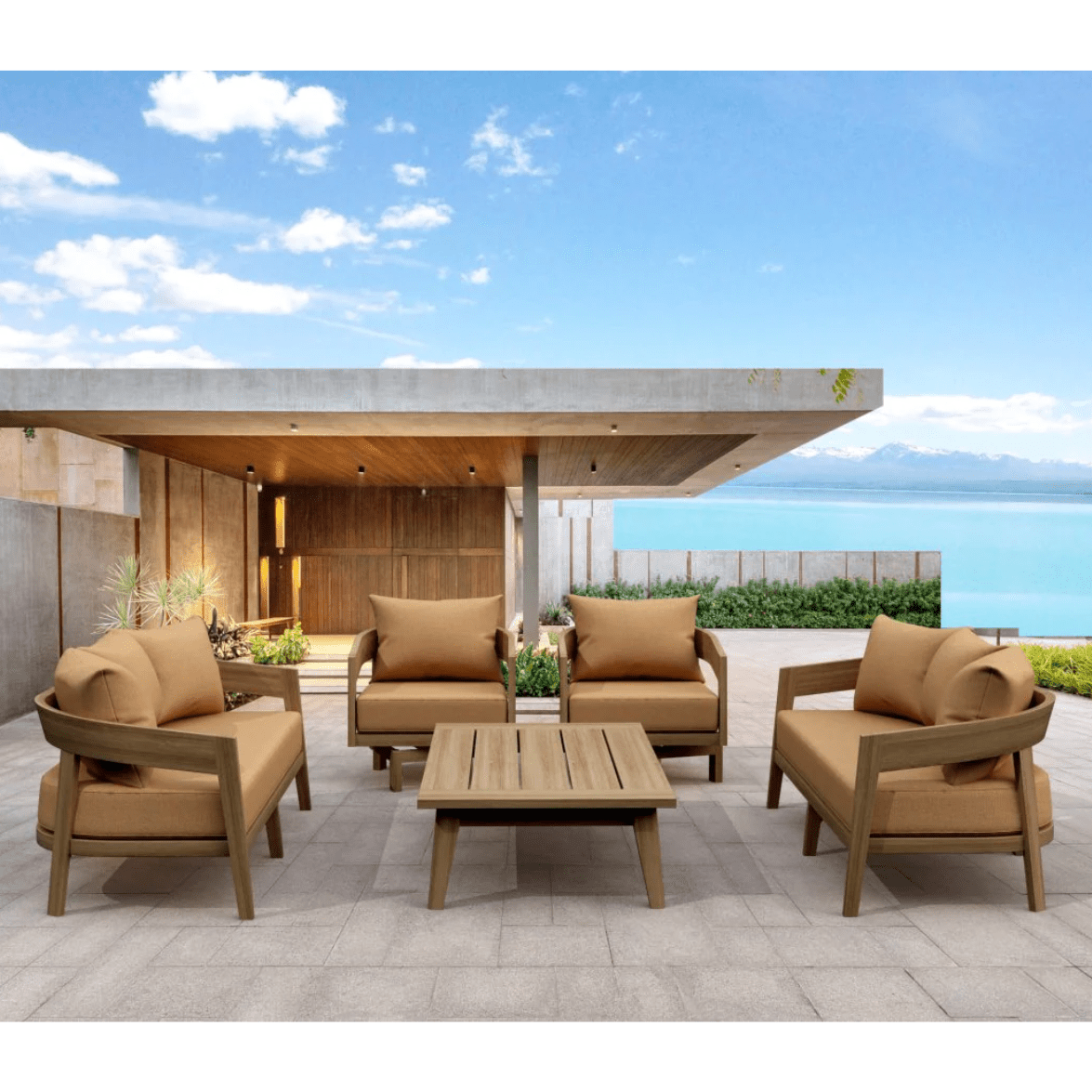 Grade A teak contains naturally high levels of oils and has a dense grain structure. Those characteristics contribute to its resistance to moisture, rotting, insects, and warping—useful qualities in an environment where outdoor furniture regularly moves through sun, rain, humidity, and periods of slower drying.
That is one reason teak has a different ownership profile from less durable woods that may depend more heavily on coatings. TeakHQ's natural teak furniture can be used outdoors without an artificial stain being required for durability.
Georgia sunshine and weather will change the appearance of unfinished teak over time. Rather than peeling like a painted surface, natural teak gradually develops a silver-gray patina if it is left untreated. Some homeowners actively prefer that softer weathered appearance for coastal architecture.
If you want to preserve more of the original warm teak color, you can use appropriate teak care products or seal the wood. The important point is that appearance maintenance is a choice rather than a requirement for the wood's basic outdoor suitability.
The combination of dense Grade A teak and natural resistance to warping makes teak well suited to furniture that repeatedly experiences wet and dry conditions. For teak patio seating, dining furniture, benches, and loungers that may remain outdoors year-round, that stability is especially valuable.
Teak also has a heavier, more architectural feel than many lightweight outdoor furniture options. That can be appealing on substantial porches and patios, although weight should never be confused with storm security; furniture still needs to be addressed when dangerous winds are forecast.
For homeowners furnishing an $8,000–$20,000 outdoor space, replacement frequency matters. Premium teak costs more up front than many entry-level patio materials, but it is intended to last for decades rather than a few seasons. That shifts the buying decision from “What survives this summer?” to “What do I want to live with for a long time?”
That distinction is especially relevant at coastal homes and vacation properties, where replacing multiple pieces of outdoor furniture can become a recurring maintenance project of its own.
| Georgia Coast Challenge | Why Premium Grade A Teak Performs Well |
|---|---|
| High humidity | Natural oils and dense grain help resist moisture and rot. |
| Frequent rain | Designed for year-round outdoor use and changing weather. |
| Sun exposure | Handles outdoor sun while naturally weathering toward a silver-gray patina. |
| Wet/dry cycles | Dense teak is naturally resistant to warping. |
| Insects | Grade A teak has natural resistance to insect damage. |
| Waterfront exposure | The teak itself is solid natural wood rather than a painted metal surface. |
| Long outdoor season | Furniture is designed to remain outdoors year-round. |
We would start with the architecture and how you actually spend time outside—not with a catalog. The right plan for a Savannah veranda differs from the right plan for a Sea Island pool terrace or a Tybee rental house, even when the furniture material is identical.
For a larger coastal home, we would usually decide first whether outdoor dining or relaxed conversation is the primary activity. If family meals, seafood dinners, cookouts, and visiting guests dominate, dining deserves the best connection to the kitchen and easiest circulation path. If evenings are more often spent talking, reading, watching the marsh, or having drinks, deep seating may deserve the prime view instead.
Do not automatically place the biggest furniture group where the view is best. Sometimes the smarter plan is to keep the dining table closer to the doors and give the lower-profile lounge furniture the uninterrupted view.
Second homes and coastal properties often alternate between quiet weekdays and busy weekends. That makes flexible capacity more valuable than permanently filling the patio with seats that are rarely used. An extendable teak dining table is especially useful when a household of four regularly becomes a dinner group of eight or ten.
On smaller porches, folding or stackable seating can solve the same problem without consuming circulation space every day.
On larger properties, we would resist the temptation to build one enormous furniture arrangement. A dining zone, a deep-seating conversation area, and perhaps a pair of loungers or porch chairs usually make the property feel more usable than one oversized group.
This also lets you respond to microclimates. A shady porch may be ideal for lounge seating at midday, while an open terrace may become the better dinner location in the evening.
The most overlooked coastal furniture question is often not “Will this material survive outdoors?” but “What will I do when a major storm is coming?” Decide where cushions, umbrellas, serving pieces, and lighter accessories can go before you furnish the space. A beautiful patio that takes hours to dismantle under a storm warning is poorly planned.
We would favor a durable core of substantial furniture for daily use, then keep the removable layer—cushions and accessories—simple enough that the property can be secured without an elaborate project.
Start with the part of the property you use most. Frequent hosts and larger households will usually get the most value from full dining sets or expandable dining arrangements, while porch- and view-oriented homes may benefit more from deep seating, sofas, swings, or rockers. Pool and resort-style properties should then add loungers, while deck boxes and secondary pieces can solve the practical storage and serving needs that become more important in a humid coastal setting.
Coastal Georgia outdoor spaces often function less like occasional patios and more like additional rooms. Porches provide shade, decks capture marsh or water views, pool areas become daytime gathering zones, and dining terraces take over when the weather is comfortable. The most successful furniture plans acknowledge those different rhythms instead of furnishing every space for the same purpose.
In Savannah and many surrounding communities, a porch is not simply decorative architecture. It can be one of the most comfortable places to sit when an uncovered patio feels too exposed. That favors furniture with genuine sitting comfort—rockers, club chairs, sofas, loveseats, or swings—rather than filling every porch with a dining table.
Pay particular attention to depth. A generous lounge chair can be wonderful on a deep veranda but awkward on a narrow porch once you account for doors, steps, columns, and walking paths.
Marsh, river, and ocean views reward a different furniture arrangement than an inward-facing suburban patio. Rather than automatically placing chairs around a central focal point, consider orienting seats toward the landscape. Swivel chairs are particularly useful when people want to alternate between conversation and the view.
Low-profile pieces can also preserve sightlines from inside the house. That matters on properties where the outdoor furniture should enhance the view rather than become the view.
Vacation houses and family gathering properties often have uneven occupancy. A patio may serve two or four people most of the week and a much larger group on weekends or holidays. Extendable tables, movable chairs, ottomans, and secondary seating provide capacity without permanently crowding the property.
A pool patio works best when lounging and conversation are separated from the primary traffic path around the water. Chaise loungers belong where they can recline without obstructing doors or walkways; small side tables make those seats substantially more useful. If the pool area is also used for meals, keep dining furniture far enough away that pushed-back chairs do not interfere with circulation.
The strongest furniture plan usually combines two or three categories rather than repeating one type of seating everywhere. Think of the property as a series of outdoor rooms and match each collection to what happens there.
 For households that regularly eat outdoors, begin with teak outdoor dining furniture sized for normal use—not the largest gathering of the year. A six- or eight-seat arrangement often makes more sense than permanently dedicating the entire patio to an oversized table. Extendable options can provide occasional extra capacity.
Allow generous room behind chairs. Coastal entertaining tends to involve people moving between the house, grill or outdoor kitchen, table, and conversation area, so circulation space can matter more than squeezing in two additional permanent seats.
Deep seating, loveseats, sofas, rockers, and teak porch swings are natural fits for shaded spaces where the goal is unhurried sitting rather than maximum dining capacity. Traditional teak forms work comfortably with historic or Lowcountry-influenced architecture, while cleaner-lined pieces can create a more transitional look.
For cushion-equipped lounge furniture, remember that a roof does not eliminate humidity. Most TeakHQ patio seating includes Sunbrella cushions, which are weather-, fade-, UV-, and water-resistant, but removable cushions still benefit from good airflow and sensible storage during prolonged bad weather.
A row of teak chaise loungers makes sense where the pool is a major part of daily outdoor life. Leave enough spacing for people to move between loungers without stepping over furniture, and pair them with small side tables so drinks, books, and towels have a dedicated surface.
Where the terrace is fully exposed, consider whether a sling-style seat or easily removable cushion fits your ownership habits better than a heavily cushioned arrangement.
For a deck overlooking tidal marsh or water, we prefer furniture that lets the view dictate orientation. A sofa facing the scenery, two swivel chairs angled toward both the sofa and the water, and a coffee table can create a more natural arrangement than a symmetrical four-chair circle.
On smaller viewing decks, two substantial chairs and a side table may outperform a full lounge set simply because they preserve openness.
Practical furniture is particularly useful at coastal properties. A teak deck box, serving table, side table, or cart can reduce the number of items that need to travel back and forth from the house. The key is to use these pieces to support the main activity rather than filling unused corners simply because space is available.
Coastal Georgia spans historic Savannah streets, traditional residential neighborhoods, barrier-island cottages, landscaped estates, resort properties, and newer waterfront homes. Teak works particularly well across that range because the same natural material can read as traditional, coastal, transitional, or modern depending on the furniture lines around it.
Historic Savannah and traditional Southern architecture generally benefit from furniture that feels substantial without competing with the house. Classic dining chairs, benches, rockers, and porch swings can echo the permanence of older architecture more naturally than highly stylized furniture.
If the home already contains strong architectural detail, let the furniture remain comparatively simple. Natural teak provides warmth without requiring decorative ornament on every piece.
On raised coastal homes, broad porches, and marsh-facing properties, the outdoor space often has strong horizontal sightlines. Keep furniture groupings visually organized and avoid creating a wall of tall chair backs between the interior and the landscape.
Natural teak also pairs comfortably with common coastal materials such as painted siding, brick, stone, neutral fabrics, and lush landscaping without requiring the entire property to adopt a nautical theme.
Sea Island, St. Simons, and other higher-end coastal properties may support larger pool terraces and multiple outdoor zones. Here, repetition can create cohesion: use related teak forms in the dining area, pool seating, and conversation zone while changing the configuration to suit each use.
The result generally feels more intentional than furnishing each portion of the property with an unrelated material and style.
Savannah's intimate courtyards and landscaped garden spaces call for restraint. A bench, pair of chairs, or compact table can make a small garden usable without overwhelming the planting. Teak's natural tone also works well where greenery—not furniture—is intended to be the visual focus.
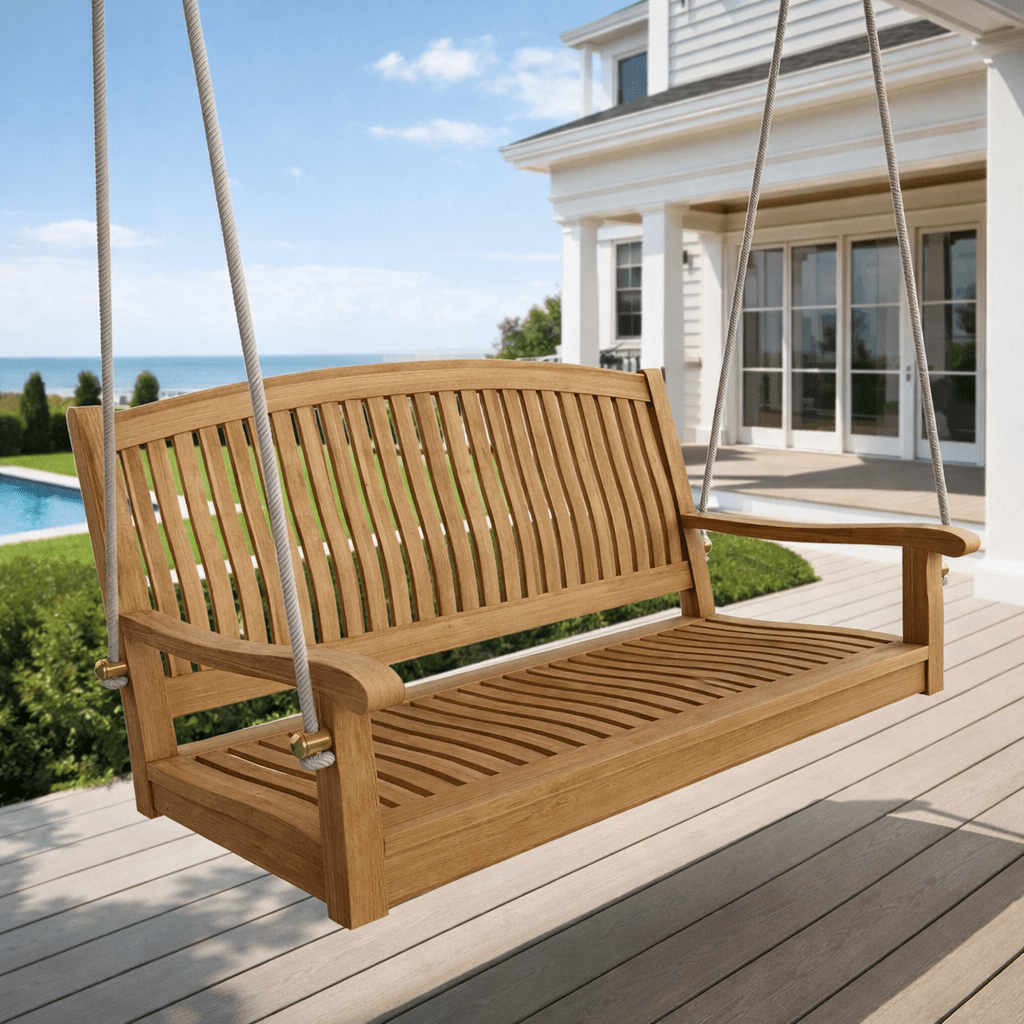 A porch roof blocks much of the direct rain and sun, but it does not remove humidity, wind-driven moisture, pollen, or temperature changes. Furniture designed primarily for indoor conditions can still have a difficult life there.
Choose genuine outdoor materials even for protected areas. Grade A teak can remain outdoors year-round, which makes it suitable for the “in-between” environment of a covered coastal porch.
Homeowners sometimes size every furniture group for the biggest gathering they can imagine. The result is a patio that feels crowded on the 350 days when that crowd is not present.
Build the everyday layout first, then create flexible overflow capacity with extendable tables, movable chairs, benches, or ottomans. Comfortable circulation is a luxury feature too.
Heavy outdoor furniture should not create false confidence during tropical weather. When serious winds threaten, outdoor objects can become hazards regardless of how durable their material may be.
Know where removable cushions, umbrellas, décor, and lighter pieces will go. For the furniture itself, follow an appropriate property-specific storm plan. Daily weather durability and hurricane security are two separate buying considerations.
Deep cushions make lounge furniture comfortable, but an entirely cushion-dependent patio requires more management during repeated rain. On the most exposed spaces, consider mixing cushioned seating with teak dining chairs, sling or synthetic-rope seating, benches, or loungers that fit your willingness to move soft goods.
The furniture arrangement should match your maintenance personality. A patio that is beautiful only when someone has spent twenty minutes setting it up will often be used less.
Even a naturally rot-resistant outdoor wood should be kept reasonably clean. Pollen, leaves, soil, food residue, and other material can accumulate in corners and remain damp in shaded areas.
Give yourself enough space around furniture to clean beneath and behind it. Periodic washing is easier than allowing a season's worth of debris to become part of the patio.
Some buyers assume teak must constantly be oiled to survive outdoors. It does not. Teak may be left untreated and allowed to develop its natural silver-gray patina.
If you prefer the original warmer color, maintenance products are an aesthetic choice. Use appropriate teak care products rather than treating every color change as damage.
Coastal care should focus less on creating a flawless furniture surface and more on keeping the furniture clean, allowing it to dry, and preventing debris or soft goods from remaining wet unnecessarily. Teak's natural outdoor durability gives homeowners flexibility in how much appearance maintenance they want to perform.
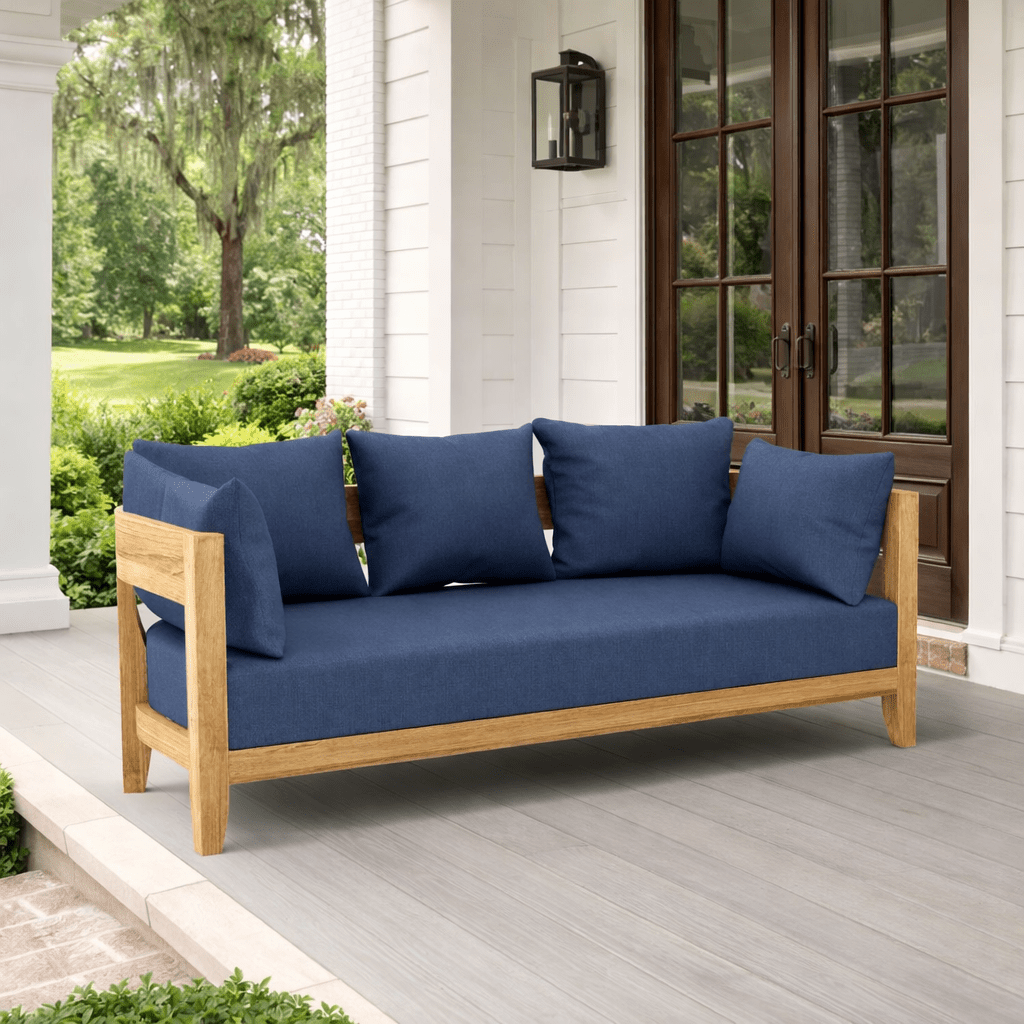 There is no single cleaning calendar that makes sense for every Georgia Coast property. An ocean-adjacent deck exposed to spray, pollen, and rain may need attention more frequently than a deeply covered Savannah porch.
Inspect the furniture periodically and clean it when dirt, pollen, organic debris, or surface buildup is noticeable. Pay extra attention to joints, horizontal surfaces, and areas shaded by cushions.
At beachfront or highly exposed waterfront properties, rinse away noticeable salt deposits rather than allowing them to accumulate indefinitely. Include hardware in those inspections, especially on pieces with moving or adjustable components.
Salt exposure usually becomes less significant farther from direct ocean influence, so an inland property does not need to be maintained as though it sits directly on the beach.
Air circulation matters in humid conditions. Avoid leaving wet leaves or debris packed against furniture, and do not leave damp cushions compressed against wood for extended periods.
After prolonged rain, allowing soft goods and surrounding surfaces to dry is more useful than repeatedly applying products to the teak itself.
Untreated natural teak gradually develops a silver-gray patina. That is normal weathering, not an indication that the furniture has stopped being suitable for outdoor use.
If you prefer the original warmer wood color, teak may be sealed or maintained accordingly. Make that decision based on the look you want rather than assuming treatment is structurally required.
Protective covers are optional rather than required for TeakHQ's Grade A teak furniture. If you choose to cover furniture during periods of non-use, avoid creating conditions where moisture remains trapped against the furniture or cushions.
During severe storm preparation, do not assume a furniture cover secures the furniture. Loose covers and outdoor objects require their own wind plan.
For most Georgia Coast homeowners, cushions and smaller accessories deserve storage attention before the teak furniture itself. Grade A teak is designed for year-round outdoor use, while keeping removable soft goods clean and dry can make the patio easier to use when good weather returns.
The right Georgia Coast patio is not simply the one with the most weather-resistant furniture. It is the one that works comfortably through humid afternoons, shaded porch mornings, family dinners, visiting guests, pool days, and the practical realities of coastal ownership.
TeakHQ's premium Grade A teak collections provide a durable natural foundation for those spaces, whether your priority is dining, deep seating, porch relaxation, or poolside lounging. Start with the zone you use most, choose the right scale for everyday life, and build the rest of the outdoor space around it.
Look for materials that tolerate humidity, frequent rain, sun, and long-term outdoor exposure. Premium Grade A teak is a strong choice because its natural oils and dense grain help it resist moisture, rot, insects, and warping. Quality aluminum and synthetic materials can also be appropriate depending on the design and construction.
Yes. Grade A teak is naturally moisture- and rot-resistant and is designed for year-round outdoor use. Those characteristics make it particularly practical for humid patios, decks, and porches along the Georgia Coast.
Yes. TeakHQ's Grade A teak furniture is designed for year-round outdoor use and can withstand rain, sun exposure, and temperature fluctuations. Covers are optional rather than required.
For a deep covered porch, consider lounge chairs, sofas, loveseats, rockers, or teak porch swings. On narrower porches, measure walking clearance carefully before choosing deep seating.
Prioritize true outdoor materials, manageable cushion use, easy circulation, and a practical storm-storage plan. Dining furniture, substantial lounge seating, chaise loungers, and flexible side tables work well when matched to the property's available space and exposure.
No. Teak does not require sealing for outdoor durability. It can be left untreated and allowed to weather to a silver-gray patina. Sealing or maintaining the warmer original color is optional.
On highly exposed waterfront properties, periodically rinse away noticeable salt deposits and inspect hardware and moving parts. Properties farther from direct ocean exposure generally require less salt-specific attention.
Yes. Unfinished teak naturally develops a silver-gray patina as it weathers outdoors. This is normal. Homeowners who prefer the original warm teak color can use appropriate teak care products.
Do not rely on a cover as storm protection. When severe winds are expected, cushions, umbrellas, accessories, and other loose items should be stored or secured according to an appropriate storm plan. Furniture covers are primarily an optional everyday protection choice.
Each can work outdoors. Teak provides real natural wood, a warmer appearance, greater heft, and decades-long ownership potential. Aluminum is lighter and often more contemporary, while poly furniture offers a synthetic, lower-maintenance approach. The best choice depends on the look, weight, maintenance preference, and material feel you want for the property.


