
FREE SHIPPING
within mainland USA
within mainland USA
Home ▸ Teak Outdoor Furniture ▸ By Location ▸ The Hamptons, New York

The Hamptons is not simply a “beach climate.” Outdoor furniture here moves through a demanding annual cycle: warm, humid summer use; salt and moisture near the water; rain and coastal storms; cooler shoulder seasons; and real winter freezing conditions. Bridgehampton, for example, has historically experienced many days below freezing, while nor’easters are a recurring East Coast weather hazard, particularly from fall through spring. That combination makes year-round material performance more important than it would be in a purely seasonal warm-weather market.
A house in Amagansett near the ocean presents a different furniture environment from an inland Bridgehampton estate. The closer a patio or deck is to open water, the more attention we would give to salt residue, exposed hardware and how easily furniture can be rinsed and cleaned. Even properties that do not receive obvious salt spray can experience salty, moisture-laden air.
This is one reason material selection should begin with the property's exposure rather than its ZIP code. Stainless hardware, durable natural materials and simple surfaces are especially useful near the coast. Teak's naturally high oil content and resistance to moisture make it a strong candidate for these settings.
Summer humidity and damp mornings matter because outdoor furniture rarely experiences weather as isolated rainstorms. Cushions, shaded surfaces and areas beneath dense landscaping can remain damp longer than homeowners expect. Furniture that depends on a vulnerable surface finish or that traps moisture in complicated joints can demand more attention.
Premium Grade A teak does not need a painted protective coating for outdoor durability. That reduces one maintenance variable, although the furniture still benefits from periodic cleaning—especially beneath cushions, around shaded areas and after prolonged damp weather.
One of the easiest mistakes in a summer-oriented market is buying furniture as though August conditions were the entire climate. The East End also experiences cold temperatures and winter storms. Furniture that stays outside therefore has to tolerate broad temperature fluctuations rather than simply sunshine and humidity.
Grade A teak is designed for year-round outdoor use and can withstand rain, sun and temperature fluctuations. Owners may still choose to cover furniture or move cushions indoors during the off-season for cleanliness and convenience, but the teak itself does not have to be treated as delicate seasonal furniture.
Exposed waterfront and ocean-facing properties deserve a separate wind plan. Teak has a heavier, sturdier feel than lightweight aluminum furniture, which can be useful on open terraces and decks, but no outdoor setup should be treated as storm-proof. Umbrellas, cushions and loose accessories should be secured or brought in when severe weather is expected.
Several premium materials can work well here. Powder-coated aluminum offers a crisp contemporary look and relatively low weight. High-quality synthetic materials can reduce some maintenance. But for homeowners who want natural wood, visual warmth and furniture that can move comfortably between shingled cottages, modern coastal homes, traditional estates and landscaped gardens, premium Grade A teak has an unusually good combination of practical and aesthetic advantages.
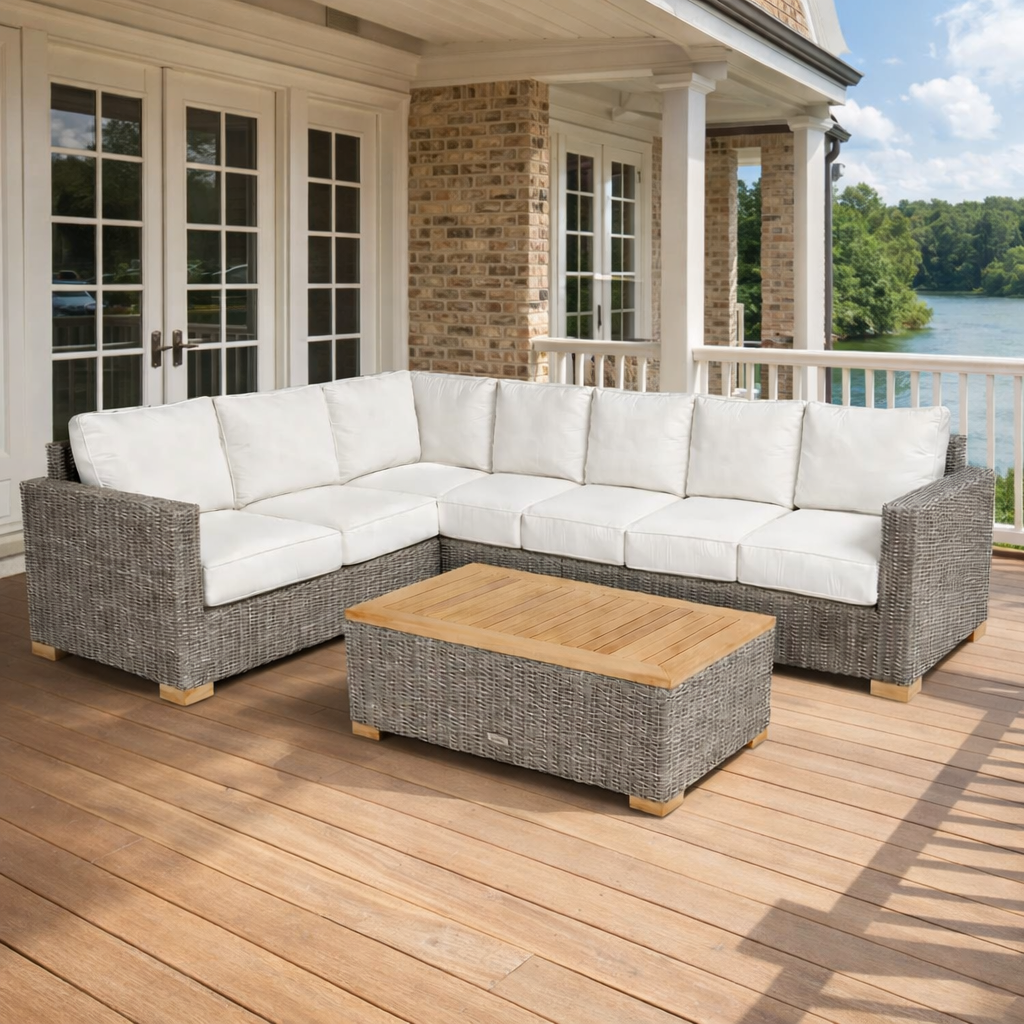 Grade A teak contains naturally high levels of oils and has a dense grain structure. Those characteristics contribute to resistance against moisture, rotting, insects and warping without requiring an artificial stain for durability. That matters in the Hamptons because furniture may move repeatedly between summer sun, damp evenings, rainfall and cold-season weather.
In coastal settings, we prefer materials whose durability is inherent rather than heavily dependent on maintaining a decorative surface coating. Teak can be left unfinished and allowed to weather naturally. Over time, its warm golden-brown color gradually develops a silver-gray patina.
That change is cosmetic rather than a sign that the teak has stopped performing outdoors. Homeowners who prefer the original color can use appropriate teak care products, while those who like a more weathered coastal appearance can allow the patina to develop.
Outdoor wood repeatedly absorbs and releases moisture as conditions change. Premium Grade A teak is valued in part for its dimensional stability and resistance to warping. That becomes especially relevant in a four-season coastal market where the same dining table may experience humid July evenings, autumn rain and freezing winter temperatures.
The useful comparison is not simply teak versus a less expensive set on purchase day. Teak furniture is intended to last decades rather than seasons. For a homeowner furnishing an established patio, pool area or terrace—and particularly someone who does not want to redesign that space every few years—the higher initial investment can make more sense when considered over the furniture's service life.
| The Hamptons Challenge | Why Premium Grade A Teak Performs Well |
|---|---|
| Salt-laden coastal air | Dense, naturally oily teak resists moisture and outdoor weathering. |
| Humid summer conditions | Teak naturally resists moisture, rot and warping. |
| Rain and damp periods | No painted finish is required for durability. |
| Summer UV exposure | Teak is designed for sun exposure and can weather naturally to a silver-gray patina. |
| Winter temperatures | Grade A teak is designed for year-round outdoor use and temperature fluctuations. |
| Changing seasons | Its structural stability suits repeated shifts between wet, dry, warm and cold conditions. |
| Long-term ownership | Premium teak can last decades with appropriate ownership and care. |
We would begin with how you actually use the property, not with a furniture catalog. A Southampton estate designed for twelve-person dinners needs a different plan from a Montauk deck used mostly by a couple, and a Bridgehampton pool terrace needs a different layout from a shaded Sag Harbor garden. The most successful Hamptons spaces usually work in zones: dining, conversation, lounging and smaller destinations within the landscape.
For a larger property, we would usually solve dining first. Summer weekends can change a household from four people at breakfast to ten or twelve at dinner, so an extendable teak dining table is especially practical. It avoids sizing the patio permanently around your largest possible gathering while still giving you the capacity when guests arrive.
Where space is already generous and entertaining is frequent, a dedicated 10+ person teak dining set can become the visual anchor of the terrace. Leave enough circulation around it that people can pull out chairs and still move comfortably between the house, grill, pool and lawn.
Dining chairs are not a substitute for relaxed evening seating. On larger Hamptons terraces, we would normally establish a second zone with a sofa, club chairs or a teak sectional, then add coffee and side tables so drinks do not migrate onto dining surfaces.
This separation matters more than it first appears. A long dinner can naturally transition into conversation without requiring everyone to remain at the table. It also lets different generations or groups use the same patio simultaneously.
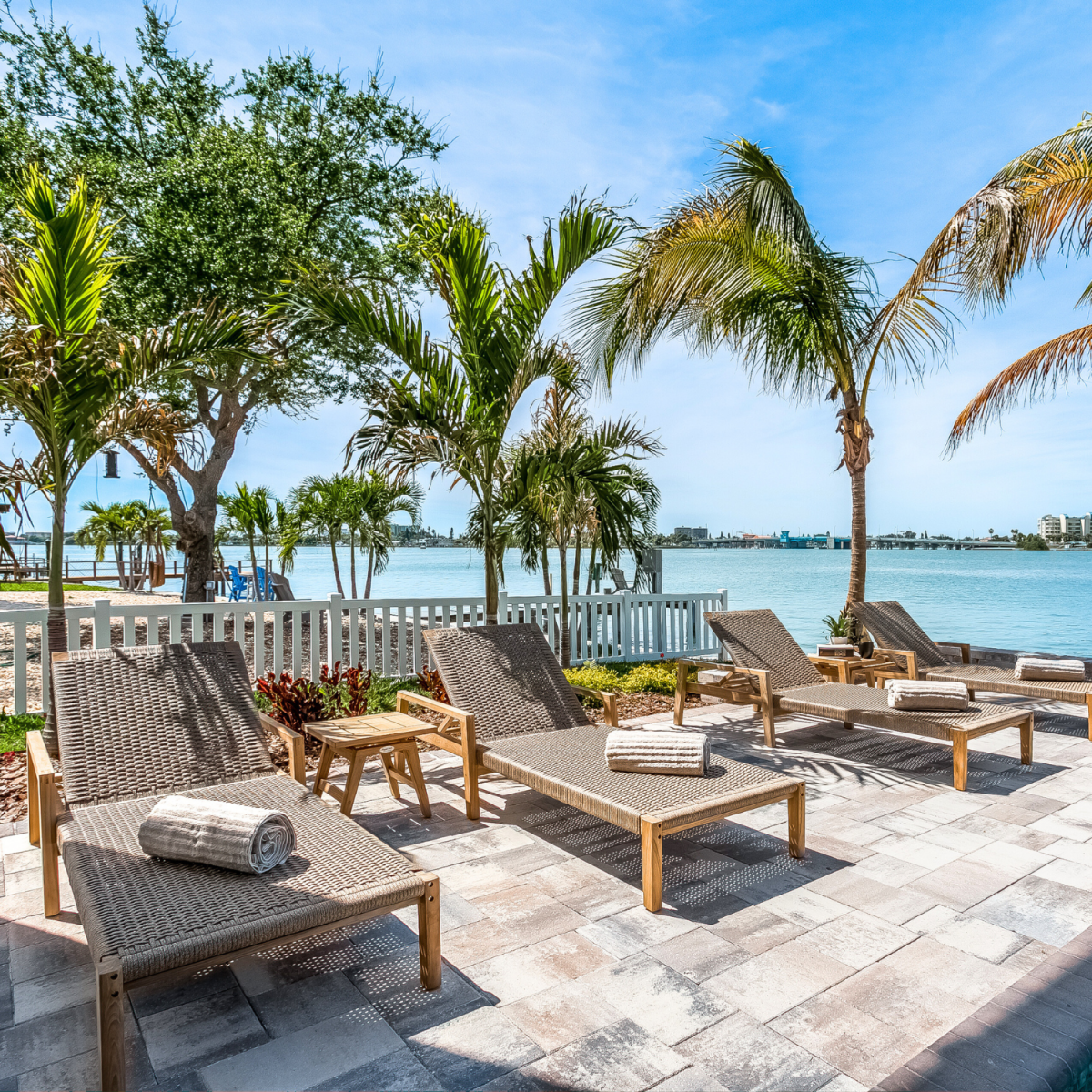
On properties with a pool, resist the temptation to scatter a couple of loungers wherever space remains. Give the pool a deliberate furniture plan. Pairs or groups of teak chaise loungers with accessible side tables create a much more functional zone for reading, towels, drinks and visiting.
If the pool sits away from the house, consider whether that zone also needs a small table, umbrella or storage location. The farther guests have to walk for basic items, the less comfortably the outdoor plan functions.
Many Hamptons properties have enough garden depth to support small seating destinations away from the main terrace. A teak Adirondack grouping facing the lawn, a garden bench near mature plantings, or two chairs positioned for sunset can make the property feel much larger without adding another major entertaining area.
A useful rule is to furnish the places where people naturally pause. If a path, hedge opening or garden edge already makes you stop and look, that is often a better location for secondary seating than an arbitrary empty patch of hardscape.
Start with the collection that solves your property's primary use. Frequent hosts should begin with dining capacity; pool-focused homes with loungers; larger terraces with lounge or sectional seating. From there, add complementary pieces rather than trying to make one furniture group perform every job. For many Hamptons properties, the strongest plan combines substantial dining with a separate conversation zone and dedicated pool or garden seating.
Outdoor living here is intensely seasonal, but that does not make it casual or temporary. The East End includes communities stretching from Westhampton toward Montauk, with ocean, bay and inland settings that create noticeably different property experiences. A well-furnished outdoor space often has to accommodate ordinary family mornings, pool afternoons and suddenly much larger weekend gatherings without feeling like an event venue the rest of the week.
Dining capacity tends to matter more in a destination market because occupancy changes. A table that is perfectly adequate for the household on Wednesday can become undersized when friends arrive Friday evening. That is why we place more value on expandable dining here than we would for a home where the same four people use the patio every day.
The memorable insight is simple: size Hamptons dining furniture for the home's social rhythm, not its bedroom count. A couple with three guest rooms may routinely entertain more people outdoors than a larger year-round household elsewhere.
A pool terrace works best when it supports several activities at once. Some guests want full-sun chaise lounges, others want a shaded conversation area, and families often need a surface for towels, drinks and food. Planning those functions separately makes the pool feel more like an outdoor room and less like a deck with furniture around its perimeter.
Second homes and summer houses often need furniture that remains comfortable when the guest count doubles. Flexible seating is valuable: club chairs can join a sofa grouping, dining chairs can handle occasional overflow, and smaller side tables can move wherever they are needed.
Large fixed pieces still have a role, particularly on expansive terraces, but flexibility around those anchors keeps the property functional for both quiet weekdays and busy weekends.
Do not design the entire outdoor space only for high summer. Spring and early fall can favor sunny seating areas that might be too exposed in July, while cooler evenings make conversation seating around a fire feature more appealing. Furniture that can stay outdoors as the seasons change extends the usefulness of the space even when cushions and accessories are managed more selectively.
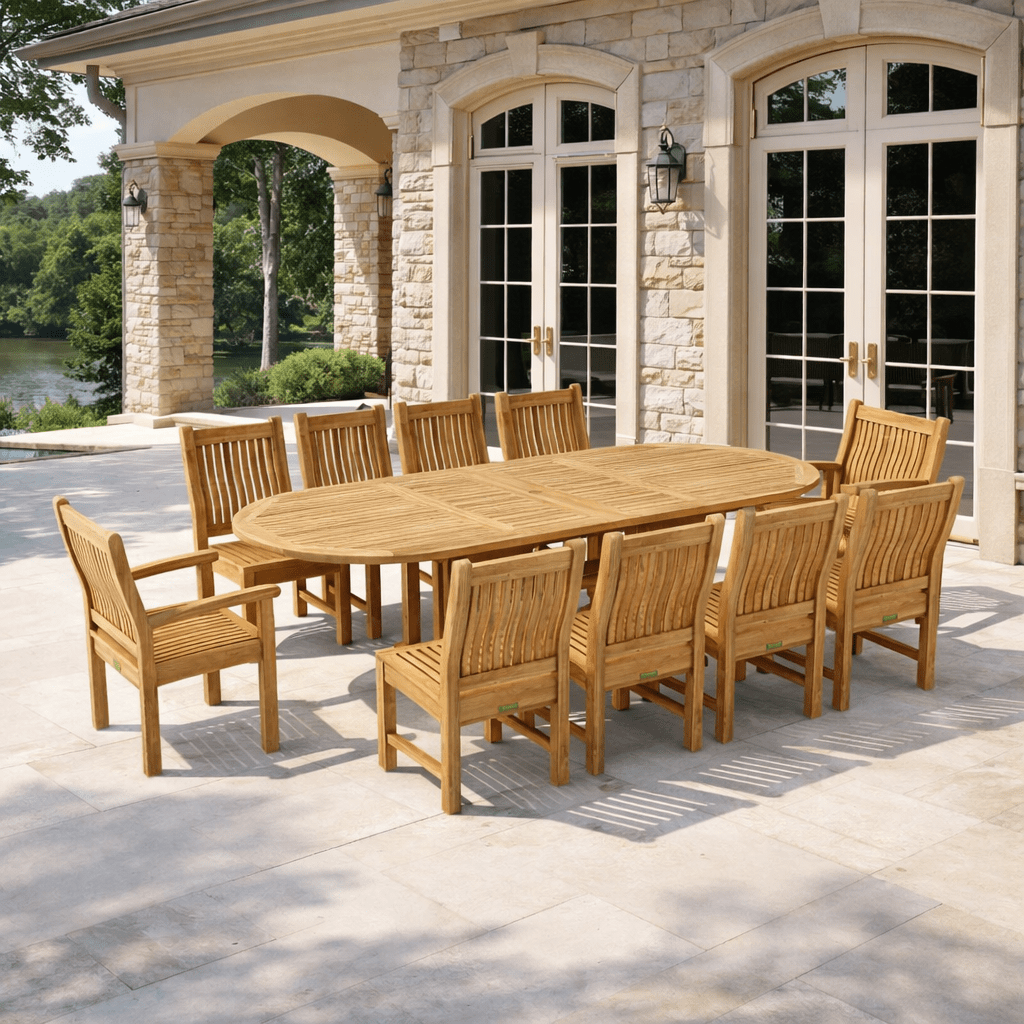 The right configuration depends less on whether the home is technically “coastal” and more on what happens outside its doors. We would divide most larger Hamptons properties into distinct zones and choose furniture specifically for each one.
For a terrace directly outside the kitchen, a six-person set can be appropriate for everyday household use, but regular hosts should look seriously at eight-, ten- or larger-capacity arrangements. An outdoor teak dining set creates a coordinated starting point, while an extendable table is useful when the guest count changes dramatically from one weekend to the next.
For very large spaces, avoid automatically buying the longest table that fits. Measure the chair-pullout and circulation zone first. A slightly smaller table with comfortable movement around it usually performs better than maximum seating squeezed against doors, grills or pool traffic.
Use chaise lounges where people genuinely want to remain for an hour or more, not simply where symmetry looks good in a photograph. Pair them with small side tables and place at least part of the lounge zone where shade can be introduced during peak sun.
If the pool is the social center of the property, combine loungers with a nearby deep-seating group. One supports reclining; the other supports conversation. Trying to make one furniture type serve both purposes usually compromises both.
Covered outdoor rooms are good candidates for deeper upholstered seating because the architecture already provides some protection from direct exposure. Teak sofas, loveseats, club chairs and coffee tables can create a comfortable room-like arrangement while keeping the natural material connection to the surrounding landscape.
Many TeakHQ lounge pieces include Sunbrella cushions; availability varies by product. These fabrics are weather-, fade-, UV- and water-resistant, but cushions still benefit from sensible management during extended storms and the winter off-season.
On more exposed decks, we favor fewer, well-chosen pieces rather than an accumulation of lightweight accessories. Teak's heavier feel is useful here, and Adirondack chairs, deck chairs and compact tables can create a relaxed waterfront setup without overfilling the view.
Keep movable accessories genuinely movable. The furniture plan should make it easy to secure cushions, umbrellas and loose items when coastal weather approaches rather than turning storm preparation into a major project.
A landscaped estate often deserves seating beyond the primary patio. teak garden benches work naturally along paths, near hedges, at the edge of a lawn or at a secondary viewpoint. Adirondack chairs can create a less formal destination for reading, coffee or sunset drinks.
These secondary zones should remain simple. Two or three pieces placed intentionally can make a large property feel discovered rather than decorated.
The Hamptons encompasses historic Shingle-style homes, weathered coastal cottages, traditional estates, modern glass-and-wood houses and contemporary interpretations of barns and farmhouses. Shingle-style architecture has deep roots in the area, including preserved examples in Water Mill, while high-end properties commonly emphasize the relationship between house, garden, pool and outdoor gathering spaces. Teak works across these styles because it reads first as natural wood rather than as a strongly themed design material.
Natural teak pairs comfortably with cedar shingles, painted trim, stone terraces and traditional garden planting. We would usually favor classic dining forms, slatted seating, garden benches and restrained cushion colors rather than trying to make every piece visually dominant.
The silver-gray patina that untreated teak develops can also feel especially natural in this setting. Homeowners who prefer a warmer contrast against gray shingles can instead maintain more of teak's original color.
For cleaner modern homes, the key is silhouette. Straight-lined teak sofas, sectionals, dining tables and sling seating add warmth without fighting contemporary architecture. Teak can be particularly effective where the building already uses large expanses of glass, concrete or pale stone because the wood introduces texture without adding another synthetic-looking finish.
Hamptons gardens often function as architecture themselves, using hedges, specimen plantings, lawns and defined outdoor rooms. Recent coverage continues to highlight highly designed estate landscapes and pool environments as important parts of the area's luxury-property culture. Furniture should reinforce that structure rather than interrupt it.
A useful approach is to align major dining or lounge groups with the geometry of the house, pool or hedge lines, then use benches and smaller seating more loosely within the garden. That creates order near the architecture and discovery farther into the landscape.
 The biggest conceptual mistake is choosing outdoor furniture only for sunny summer weekends. The furniture may remain outside through rain, autumn moisture and freezing winter conditions. Materials intended for year-round exposure therefore deserve more weight than seasonal showroom appearance alone.
Grade A teak is designed for year-round outdoor use and temperature fluctuations, making it a more appropriate long-term choice than wood furniture whose durability depends on maintaining a vulnerable exterior coating.
A six-person dining table can feel generous during the week and undersized the moment a weekend house fills. Before buying, think through the largest gathering that happens often enough to matter. If that number varies substantially, expandable dining is usually more intelligent than permanently dedicating the terrace to the maximum guest count.
Wood species gets most of the attention, but hardware matters too. Near the coast, exposed metal deserves consideration. Royal Teak and Anderson Teak products use stainless steel hardware, while Verandis products use brass. Both are more appropriate choices for premium outdoor furniture than treating fasteners as an afterthought.
Even so, coastal furniture benefits from periodic rinsing and cleaning where salt residue is present.
Four chaise lounges do not create a complete outdoor living space. Pools need lounging, but most households also need conversation seating and useful surfaces nearby. Build distinct functions around the pool rather than lining every edge with the same furniture type.
Weather-resistant fabric reduces worry; it does not eliminate common sense. Cushions that remain wet or collect organic debris will require more cleaning than cushions allowed to dry properly. During prolonged storms or the winter off-season, indoor or protected storage reduces unnecessary maintenance.
On an ocean-facing deck or carefully landscaped estate, empty space has value. A common luxury-design mistake is assuming that every usable square foot requires furniture. Preserve sight lines and circulation first; then furnish the places where people naturally eat, talk, recline and pause.
 Teak does not require complicated seasonal refinishing to remain durable outdoors, but “low maintenance” should not be confused with “never clean it.” Coastal residue, pollen, leaves, food and damp organic material can collect on any outdoor surface. A simple routine is usually more effective than waiting for a major restoration project.
There is no useful one-size-fits-all cleaning calendar. An exposed Montauk deck may need attention more often than a protected inland terrace. Inspect the furniture periodically and clean when salt film, pollen, dirt or organic debris begins to accumulate.
Pay particular attention to horizontal surfaces, joints and areas beneath cushions where moisture and debris can linger.
For ocean- or bay-exposed properties, occasional fresh-water rinsing helps remove salt residue. This is especially sensible after periods of noticeable spray or wind-driven coastal weather. Avoid assuming that rainfall alone will always leave surfaces clean.
After rain, allow cushions and teak surfaces to dry rather than trapping moisture beneath tightly fitted covers. In shaded areas, move cushions when necessary so the wood underneath can dry and accumulated debris can be removed.
Untreated teak naturally weathers to silver-gray. If you like that appearance, you can allow the process to occur without applying an artificial stain for durability. If you prefer teak's original golden color, use appropriate teak cleaning and care products according to their directions.
The important distinction is aesthetic versus structural maintenance: preserving the original color is optional; it is not what makes Grade A teak suitable for outdoor use.
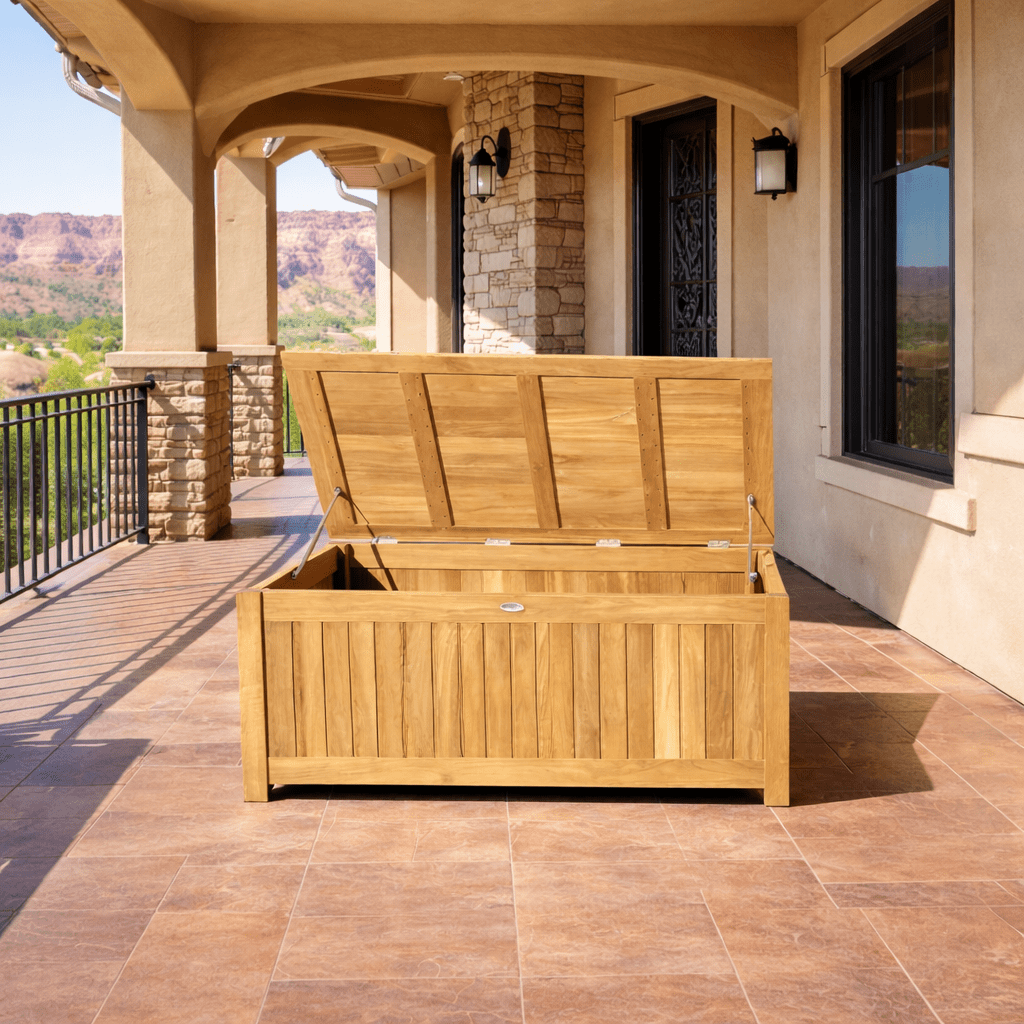
The teak furniture itself can remain outdoors year-round. The items we would prioritize for off-season storage are cushions, umbrellas and loose accessories. Keeping them protected reduces cleaning and weather exposure and makes spring setup easier.
Protective furniture covers are optional rather than required for teak durability. If you use them, choose a breathable approach and avoid trapping persistent moisture against the furniture.
The best outdoor furniture plan for a Hamptons home begins with the property: its exposure, entertaining pattern, pool or garden layout, guest count and preferred level of maintenance. Premium Grade A teak is especially compelling when you want natural materials, year-round outdoor capability and furniture that can remain relevant as the home and landscape evolve. Explore the collections that match how you actually use your outdoor space, then build outward from those primary zones rather than furnishing the entire property at once.
There is no single correct material for every property. High-quality aluminum, synthetic materials and premium teak can all be appropriate. For homeowners who want natural wood, substantial construction, resistance to moisture and weather, and a look that works with both traditional and modern coastal architecture, Grade A teak is particularly well suited to the Hamptons.
Look for furniture made from materials that handle moisture and coastal exposure well, and pay attention to hardware as well as the main frame material. Grade A teak is naturally resistant to moisture, rot and warping. Royal Teak and Anderson Teak products use stainless steel hardware, while Verandis uses brass.
Yes. Premium Grade A teak is designed for year-round outdoor use and can withstand rain, sun and temperature fluctuations. Cushions, umbrellas and loose accessories are better candidates for protected winter storage.
Covers are optional rather than necessary for teak durability. If you use them to reduce dirt and seasonal cleanup, choose a breathable cover and avoid trapping prolonged moisture against the furniture.
Plan around your recurring weekend guest count rather than only the number of full-time occupants. If gatherings vary from small weekday meals to larger weekend dinners, an extendable teak table can provide flexibility without permanently consuming the entire terrace.
A complete pool area usually benefits from more than chaise lounges. Combine dedicated loungers with side tables and, where space permits, a separate conversation group. This allows guests to recline, talk, read and set down drinks without forcing one furniture arrangement to serve every purpose.
Yes. Unfinished teak naturally weathers from its original golden-brown color to a silver-gray patina over time. This is a normal cosmetic change. Homeowners who prefer the original color can use appropriate teak care products; those who prefer the weathered look can leave the teak untreated.
Teak itself remains a low-maintenance outdoor material, but coastal exposure can leave salt residue on furniture. On more exposed ocean- or bay-facing properties, periodic fresh-water rinsing and ordinary cleaning are sensible.
It depends on your priorities. Aluminum is lighter and often has a more contemporary feel. Teak is heavier, warmer and made from natural wood, with a more substantial architectural presence. Homeowners seeking natural materials and long-term outdoor durability often prefer teak; those prioritizing very light furniture may prefer aluminum.
Base the answer on how the home is actually occupied during busy weekends. Provide enough dining seats for recurring gatherings, then create separate lounge and pool seating rather than expecting dining chairs to handle every social activity. For larger properties, multiple smaller furniture zones usually work better than one oversized grouping.


