
FREE SHIPPING
within mainland USA
within mainland USA
Home ▸ Teak Outdoor Furniture ▸ By Location ▸ Hilton Head Island, South Carolina
Outdoor furniture on Hilton Head Island lives in a distinctly coastal environment: warm humid summers, frequent moisture, salt-laden air near the water, strong sun, and the possibility of tropical weather. It also tends to work hard, serving pool patios, screened porches, golf-course homes, vacation properties, and gathering spaces built for visiting family and friends. Those conditions favor furniture that can remain outdoors confidently without demanding constant cosmetic upkeep. Premium Grade A teak is especially well suited to that combination of moisture, sun exposure, coastal style, and long outdoor seasons.

Hilton Head Island asks more of outdoor furniture than a location where the main concern is simply summer sunshine. The island combines a coastal setting with substantial humidity, regular rain, strong seasonal sun, mature landscaping, pools, and exposure to tropical weather. Furniture may spend months outdoors in conditions that alternate between wet and sunny without ever becoming truly dry for long periods.
Moisture is the first filter we would use when evaluating patio furniture here. On a shaded porch, beneath live oaks, or beside landscaping, furniture can remain damp much longer than it would in a dry inland climate. That matters because moisture-sensitive materials may require more attention to finishes, joints, fasteners, and surfaces.
For Hilton Head homeowners, the practical question is not merely whether furniture can get wet. Almost any outdoor product can survive an occasional shower. The better question is how comfortably the material handles repeated cycles of humidity, rain, drying, and renewed moisture throughout a long outdoor season.
Exposure varies considerably across the island. An oceanfront deck in Sea Pines or Forest Beach has a different furniture environment from a protected patio farther inland. Homes near the Atlantic, Calibogue Sound, Port Royal Sound, Broad Creek, or other tidal water should give additional consideration to salt exposure.
Wood, quality aluminum, synthetic materials, and other premium options can all be appropriate outdoors, but their ownership experience differs. Teak is particularly appealing when the homeowner wants a natural material that does not depend on an applied paint or artificial stain for outdoor durability.
The most demanding spaces are often not the ones receiving the most sun. Full sun creates UV exposure, but it also helps surfaces dry. Heavily shaded patios can be cooler and more comfortable while holding moisture and organic debris longer. That distinction matters on wooded Hilton Head properties, where mature trees are an important part of the setting.
Furniture planning should therefore be space-specific. A pool deck, covered porch, wooded garden area, and ocean-facing terrace may all benefit from different cushion strategies and cleaning routines even when the underlying furniture material is the same.
Tropical weather creates a separate issue from everyday durability: movable outdoor objects must be incorporated into the home's storm plan. Hilton Head Island's emergency guidance advises residents to bring outdoor furniture and other loose items inside when evacuating before a hurricane. Furniture weight can be useful during ordinary breezy days, but no patio set should be treated as hurricane-proof.
This is one reason we recommend thinking about storm logistics before furnishing a large property. Know which pieces can be moved, where cushions will go, and where smaller accessories can be secured rather than discovering the problem while preparing for a storm.
Hilton Head's conditions play directly to several established strengths of premium Grade A teak. Its dense grain and naturally high oil content make it resistant to moisture, rotting, insects, and warping, while the material is designed to handle rain, sun, temperature fluctuations, and year-round outdoor use. That combination is valuable in a location where furniture is rarely exposed to only one environmental stress at a time.
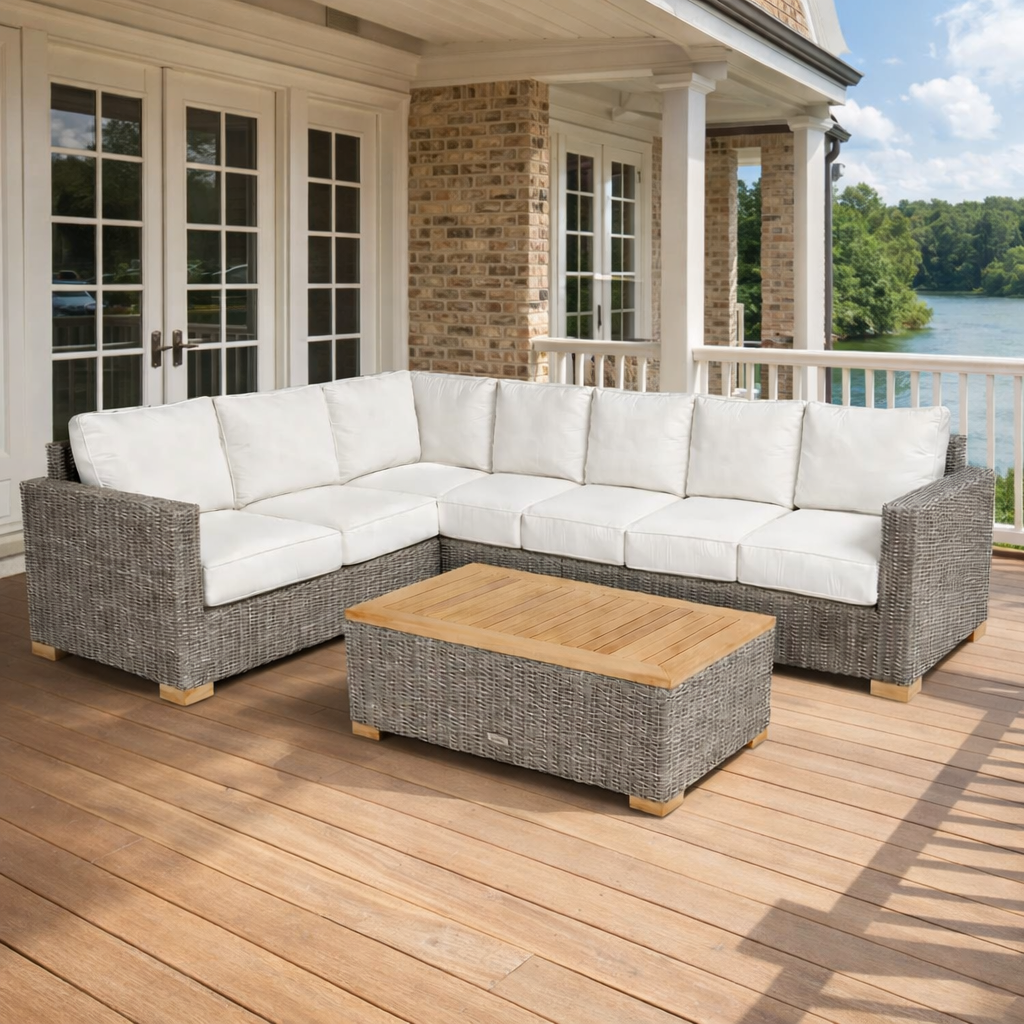 Teak's natural oils and dense grain structure help it resist moisture and rot. In a humid coastal environment, that reduces reliance on painted or stained finishes as the material's primary defense. Most TeakHQ pieces are natural, unfinished teak and do not require artificial stain for durability.
This distinction matters on porches and patios where furniture may encounter rain, damp air, wet bathing suits, and slow drying. Teak does not become maintenance-free, but the maintenance decision is primarily about the appearance you prefer rather than continually maintaining a protective painted finish.
Teak is designed for outdoor sun exposure. Over time, untreated teak naturally develops a silver-gray patina. Some homeowners consider that weathered color ideal for coastal architecture; others prefer the warmer golden appearance of newer teak.
Neither preference changes the underlying durability proposition. Owners who like the patina can allow the wood to age naturally. Those who want to preserve more of the original color can use appropriate teak care products or treatments. This flexibility is particularly useful for Hilton Head homes ranging from traditional Lowcountry settings to cleaner contemporary coastal designs.
Quality furniture in this market should be evaluated in years rather than vacation seasons. Grade A teak's resistance to warping and its suitability for temperature fluctuations make it a sensible material for furniture expected to stay outdoors rather than continually moving between patio and storage.
Teak also has a heavier, more architectural feel than lightweight outdoor furniture. That does not eliminate the need for storm preparation, but many homeowners prefer the substantial feel for everyday use on decks, terraces, and pool patios.
Premium teak carries a higher initial cost than many mass-market alternatives, but the relevant comparison for a long-term Hilton Head property is replacement frequency. Well-made teak furniture can last for decades. For a primary residence, second home, or premium vacation property, that can make the purchase easier to evaluate as part of the outdoor space itself rather than as short-cycle seasonal furniture.
The same logic applies aesthetically. Teak works comfortably with traditional, transitional, modern, and coastal environments, so a future renovation of cushions, hardscape, or exterior colors does not necessarily require replacing the furniture framework.
| Hilton Head Island Challenge | Why Premium Grade A Teak Performs Well |
|---|---|
| High humidity | Natural oils and dense grain help resist moisture and rot. |
| Frequent rain | Designed for year-round outdoor exposure and wet weather. |
| Coastal conditions | Natural wood requires no painted finish for durability. |
| Strong sun | Handles outdoor sun exposure and can weather naturally. |
| Temperature changes | Grade A teak is resistant to warping and structurally stable. |
| Long outdoor seasons | Teak is intended for long-term, year-round outdoor use. |
| Insects and organic setting | Teak is naturally resistant to insects and rotting. |
We would start with the way your property is actually used, not with a furniture catalog. On Hilton Head, that usually means identifying three things first: where people eat, where they gather after the meal, and where they spend time around the pool or view. Once those zones are clear, furniture selection becomes much easier.
Many Hilton Head properties are designed around recreation and guests: beach days, golf outings, boating, pool afternoons, and extended-family visits. We would therefore avoid creating one oversized furniture cluster that attempts to serve every purpose.
A better plan is usually a dining zone plus a separate conversation zone. Explore teak outdoor dining furniture for the meal area, then use lounge seating where people naturally migrate after dinner. Keeping those functions distinct makes a large patio feel more intentional and allows different groups to use the space at the same time.
If the home regularly shifts between two residents and a houseful of visitors, permanent maximum seating is not always the smartest answer. An extendable teak dining table can make more sense than dedicating the entire terrace to a very large fixed table.
For a full-time residence, six to eight dining positions may be enough most days. For a second home where children, grandchildren, or friends arrive together, the ability to expand becomes far more valuable. This is one of the most useful distinctions between furnishing a Hilton Head vacation property and furnishing an ordinary suburban patio.
Where there is a private pool, we would treat poolside seating as a separate functional category rather than simply placing leftover chairs near the water. Teak chaise loungers create a clear relaxation zone and work particularly well when paired with small side tables for drinks, books, and sunscreen.
Leave enough open circulation around them for wet feet and towels. On rental properties, also think about how guests will reposition chairs throughout the day; layouts that are simple and obvious tend to stay more orderly.
A covered or screened porch can support softer lounge seating because it receives less direct rain, while an exposed pool deck benefits from simpler configurations and easier-to-manage accessories. A front or side porch may call for rockers or a swing rather than duplicating the backyard seating arrangement.
The memorable Hilton Head approach is to think of the property as several small outdoor rooms. Furnish each for the activity that naturally happens there instead of buying one matching collection and spreading it around the entire house.
Start with the collection that solves your property's primary use. Frequent hosts should begin with dining sets or extendable tables; pool-focused homes should prioritize chaise loungers; and large covered patios often benefit most from multi-piece lounge seating or sectionals. Vacation-home owners should put extra weight on flexible seating capacity, intuitive layouts, and furniture that can serve many different groups without constant rearranging.
Outdoor living on Hilton Head is closely tied to the island's resort rhythm. A patio may serve breakfast after a bike ride, become the landing place after a beach or golf day, host dinner for visiting family, and finish the evening as a conversation space. That range of uses makes flexibility more valuable than designing around a single formal occasion.
Hilton Head has a substantial vacation-home and villa culture, including everything from condos and townhouses to large oceanfront homes. That matters because outdoor furniture in a second home may be used very differently from furniture at a primary residence.
A household of two can become a household of eight when children, grandchildren, or friends arrive. For that reason, we generally favor seating plans that expand gracefully: extendable tables, additional dining chairs that can be stored or stacked where appropriate, and lounge arrangements that do not depend on one specific seating position.
At many resort-style homes, the pool deck is not an accessory to the outdoor space—it is one of its primary living areas. The best layouts give loungers a dedicated position without forcing people walking between the house and pool to weave through furniture.
A pair of loungers may be enough for a couple's property, while larger family or rental homes often benefit from four or more positions. Side tables matter more than homeowners initially expect because they keep drinks, phones, sunglasses, and books off wet decking.
Hilton Head's warm-season lifestyle makes outdoor meals a natural part of the home's social life. Covered porches and shaded patios can extend usability beyond the most comfortable shoulder-season days, while nearby pools and grills turn dinner into part of a longer outdoor afternoon.
We would prioritize a dining table according to the home's realistic guest count, not simply the number of bedrooms. A three-bedroom vacation home occupied by multiple families can easily need more outdoor dining positions than a much larger year-round residence.
Lowcountry architecture and outdoor life give porches a role that is different from the pool deck. Rocking chairs and porch swings make sense where the goal is coffee, reading, conversation, or simply sitting in the shade. These quieter pieces can give a large property a second outdoor experience instead of making every area feel like an extension of the pool.
The most useful furniture recommendations come from matching the collection to a specific zone of the property. Hilton Head homes often have several very different outdoor environments within the same lot, so there is little reason to force one configuration everywhere.
 For a main terrace or covered dining patio, a six- to eight-person teak dining set is a strong starting point. Larger homes used for reunions or multi-family vacations may justify eight to ten or more seats, particularly when outdoor meals are a central part of the stay.
Position the table close enough to the kitchen or grill that serving does not become a long traffic route. On large patios, resist the temptation to center the table simply because the architecture is symmetrical; circulation from the house to the pool often matters more than visual centering.
Covered porches and generous patios are natural locations for multi-piece teak lounge sets. Sofas or loveseats paired with club chairs let people face one another more naturally than a straight row of seating, while coffee and side tables give the arrangement a clear center.
Most TeakHQ patio seating includes Sunbrella cushions, though inclusion varies by product. In Hilton Head's humid environment, cushions still deserve thoughtful management. Weather-resistant fabric is helpful, but keeping cushions dry when prolonged rain is expected can reduce unnecessary cleaning and extend the periods when the seating looks ready for guests.
Large sectionals make the most sense when the patio itself is generous and one zone is clearly devoted to conversation. They are especially effective beside outdoor kitchens, under large covered structures, or on broad pool terraces where smaller individual pieces can feel visually scattered.
Do not choose a sectional simply because the house is large. Measure walking routes, door swings, pool access, and the distance between dining and lounge areas. A sectional should define a room without becoming an obstacle.
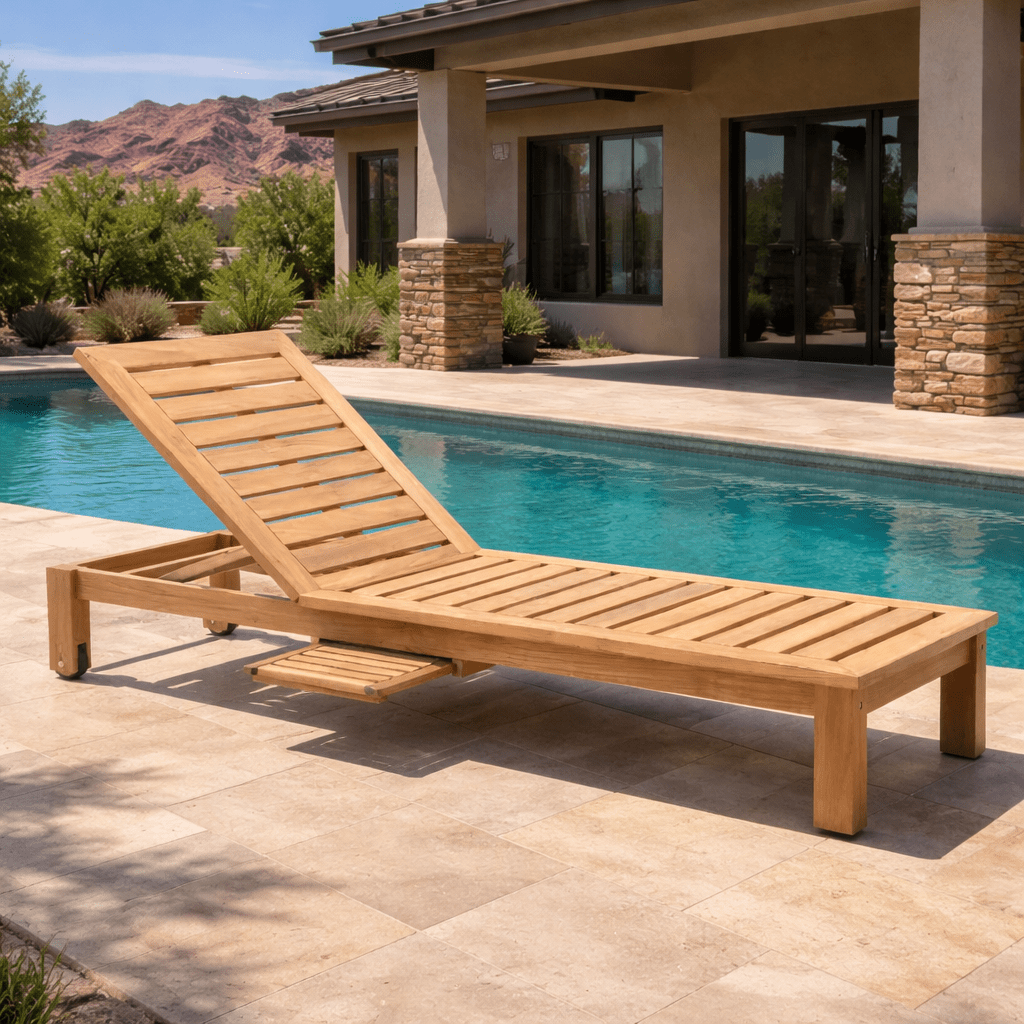 Chaise loungers are one of the most naturally appropriate categories for Hilton Head's private pools and resort-style properties. Two can create a quiet retreat, while four provide a more convincing poolside setup for visiting families.
Where practical, orient loungers so people can see the pool without blocking the primary walkway from the house. This small planning choice matters more than perfectly lining furniture up with the pool edge.
Teak swivel chairs are useful where the view and the conversation area pull in different directions. A chair can face Broad Creek, a lagoon, golf course, garden, pool, or marsh during quiet hours and rotate back toward the group when people gather.
That adaptability is particularly useful on view lots, where permanently orienting every seat toward either the scenery or the conversation area forces an unnecessary compromise.
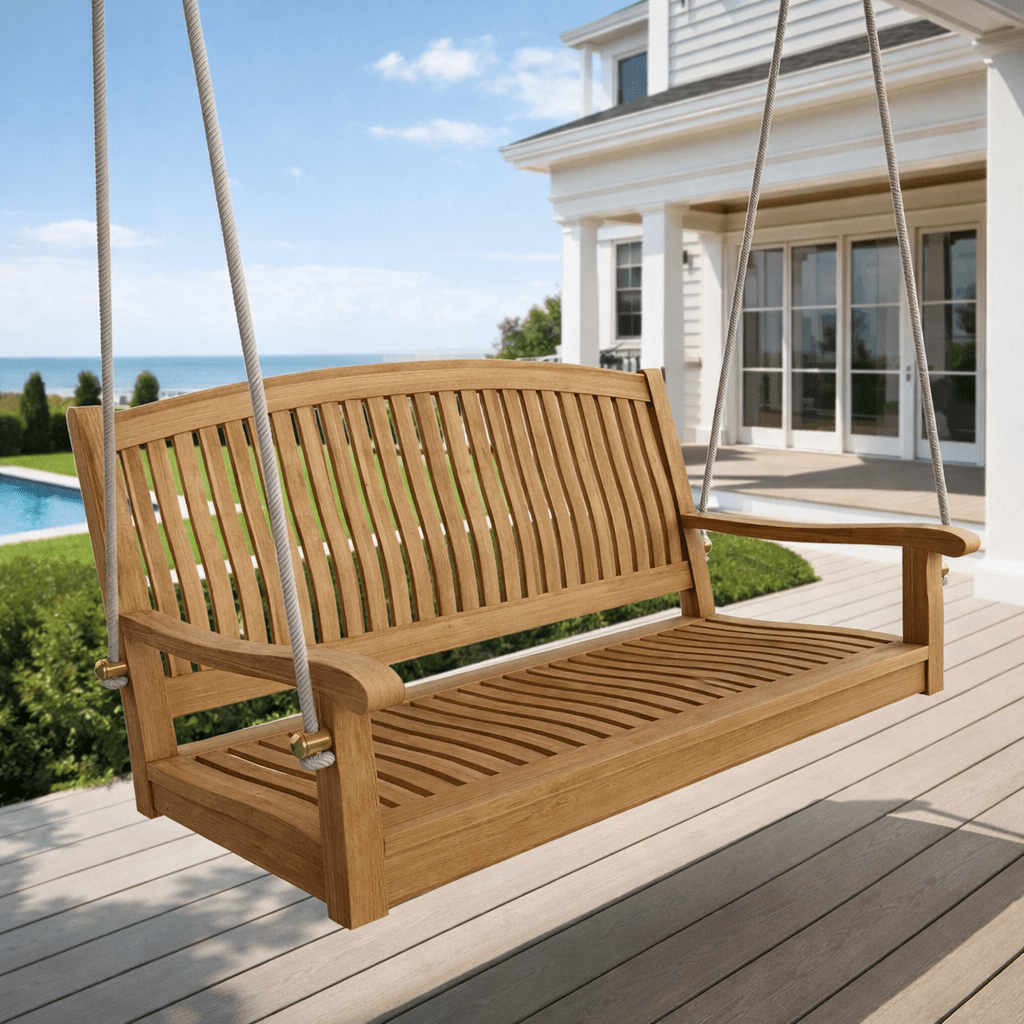
For covered porches, swings and rocking chairs fit the Lowcountry setting without feeling ornamental. They work best as a secondary seating destination: somewhere for morning coffee, reading, or a quiet conversation apart from the larger backyard gathering.
A porch does not need to replicate the furniture capacity of the patio. Two comfortable seats and a place to set a drink can make it one of the most-used spaces on the property.
Hilton Head's outdoor design language tends to work best when it respects the landscape rather than competing with it. Coastal architecture, mature trees, lagoon and marsh settings, golf-course views, shaded porches, and resort-style pools all favor materials that feel substantial but natural.
Traditional coastal and Lowcountry homes tend to benefit from furniture with visible natural material rather than pieces that feel visually disconnected from porches, brick, wood siding, shutters, and mature landscaping. Teak's warm natural appearance fits comfortably in those settings without requiring the entire space to adopt a nautical theme.
As teak develops its silver-gray patina, it can take on an even more relaxed coastal character. Homeowners who prefer a warmer or more formal appearance can instead maintain more of the original teak color.
Teak is not limited to traditional porches. Cleaner-lined teak furniture also works well with contemporary coastal homes, large windows, simplified hardscaping, and modern pools. In these spaces, the wood often serves as the warm natural element against stone, concrete, stucco, glass, or darker architectural finishes.
The key is to let the furniture silhouette match the architecture. Simple deep seating and streamlined dining collections generally make more sense in a modern setting than highly decorative pieces.
One of the most important Hilton Head design lessons is that the property often already has a focal point. It may be a live oak, golf fairway, lagoon, marsh, pool, or ocean view. Furniture should support that focal point rather than creating an artificial one.
A bench beneath trees, swivel chairs facing both a view and conversation area, or loungers positioned toward the pool can feel more intentional than arranging every piece according to the geometry of the house.
Natural teak pairs easily with coastal neutrals, white and cream fabrics, muted blues, greens, and other colors borrowed from the surrounding landscape. TeakHQ seating is available with cushion options that allow homeowners to adjust the look without changing the furniture itself.
For rental properties, a restrained base palette can also be practical. Cushions and accessories can be refreshed more easily than replacing a complete furniture collection when tastes or exterior finishes change.
 Homeowners often focus entirely on rain and overlook drying conditions. A heavily shaded porch or patio may remain damp much longer than an open pool deck, particularly when leaves and pollen accumulate.
Choose furniture materials that tolerate moisture well and keep debris from collecting against surfaces. Premium teak's natural resistance to moisture and rot is valuable here, but routine cleaning still matters.
A second home occupied by two people most of the year may still host eight people repeatedly. Buying a four-person table because only two owners live there can create a predictable problem every holiday or family trip.
Plan around your common peak—not the absolute maximum number of people you could possibly host. Extendable dining tables are especially useful because they allow the patio to remain appropriately scaled most days while providing additional capacity when needed.
A screened porch, exposed pool deck, oceanfront terrace, front porch, and garden path do not need identical furniture. Matching everything can actually make the property less useful.
Choose by activity instead. Deep seating belongs where people talk for an hour; dining furniture belongs along the food-service route; loungers belong where people sun or watch the pool; benches, swings, and rockers suit quieter secondary spaces.
Weather-resistant cushions are designed for outdoor use, but Hilton Head's humidity and periods of rain make it wise to think beyond fabric specifications. Cushions left continuously damp or covered with organic debris will require more attention than cushions allowed to dry and kept clean.
For a vacation property, create an obvious cushion-storage routine that guests or property managers can follow. A teak deck box or another dry protected storage location can be more valuable than adding another decorative accessory.
The worst time to decide where outdoor furniture and accessories will go during tropical weather is while preparing to leave the island. Hilton Head's official emergency guidance specifically includes bringing outdoor furniture and other loose objects inside before evacuation.
Before purchasing a very large configuration, identify what can be moved, what must be disassembled if necessary, where cushions and umbrellas will be stored, and how smaller pieces will be secured. Teak's substantial everyday feel should never be mistaken for permission to leave furniture unsecured during a hurricane.
One advantage of Grade A teak is that Hilton Head homeowners can choose a maintenance approach based largely on appearance. Teak does not need artificial stain, paint, or sealing for durability. It can be allowed to weather naturally or treated if you prefer to retain more of its original golden tone.
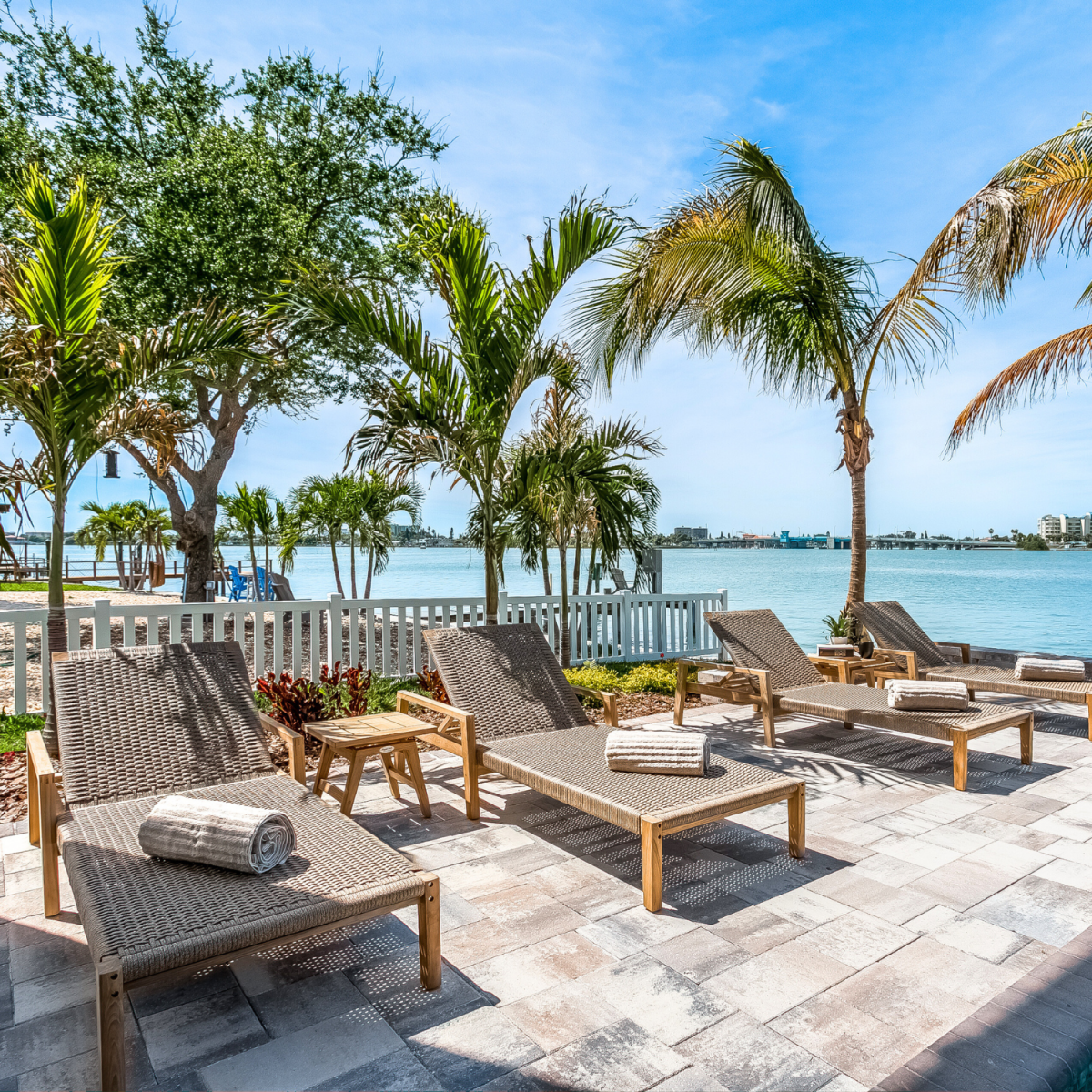 There is no universal Hilton Head cleaning schedule because exposure differs dramatically by property. An open pool deck may collect sunscreen and splash residue; an ocean-facing patio may see more airborne salt; a shaded porch beneath trees may collect pollen, leaves, and organic debris.
Inspect the furniture periodically and clean when accumulation becomes visible rather than maintaining an arbitrary calendar. Areas that stay shaded and damp deserve closer attention than dry, open areas.
Homes receiving meaningful salt exposure benefit from occasional fresh-water rinsing to remove accumulated residue from furniture surfaces and hardware. The need will be greater for properties close to exposed water than for protected inland portions of the island.
Royal Teak and Anderson Teak pieces use stainless-steel hardware, while Verandis Teak uses brass hardware. Regardless of the collection, keeping accumulated coastal grime from sitting indefinitely on furniture is sensible routine care.
Mildew concerns around outdoor spaces are often less about the teak itself than about accumulated dirt, fabrics, and areas that stay damp. Keep leaves and organic matter from remaining beneath cushions or against furniture, and allow air to circulate when possible.
If cushions become saturated, give them the opportunity to dry rather than immediately sealing them into an unventilated space. Sunbrella fabrics used on many TeakHQ seating pieces are weather-, fade-, UV-, and water-resistant, but sound moisture management remains worthwhile.
Untreated teak naturally changes from its original warm color toward silver gray. Hilton Head homeowners often find that this weathered appearance fits coastal homes beautifully. If that is the look you want, there is no need to repeatedly oil the furniture simply because its color is changing.
If you prefer the original golden appearance, appropriate teak care products can be incorporated into your maintenance routine. Make the decision intentionally at the beginning; otherwise owners sometimes treat perfectly normal patina as a sign that the wood is failing.
Teak furniture is designed for year-round outdoor use, so winter storage is not inherently required for the wood itself. Hilton Head's off-season question is more often about keeping the outdoor space clean and guest-ready than protecting teak from ordinary winter weather.
Protective covers are optional rather than required for teak durability. If you use covers, follow good moisture-management practices and avoid creating conditions where dampness and debris remain trapped beneath them for extended periods.
Routine year-round outdoor exposure and hurricane preparation are two different subjects. Furniture that can stay outside through ordinary rain and sun should still be incorporated into the property's storm plan. Cushions, umbrellas, small tables, accessories, and other movable items should be secured or brought inside when severe tropical weather threatens.
The right Hilton Head Island furniture plan begins with the property: how close it is to salt water, how much shade the patio receives, whether a pool drives daily outdoor activity, and how many guests the home routinely hosts. From there, premium Grade A teak offers a durable natural foundation for dining, lounging, poolside living, and the quieter porches that make Lowcountry homes distinctive.
Choose the collection that solves your most important outdoor-living need first, then build complementary zones around it. A well-planned patio should feel like part of the property for years—not a set of furniture that happens to be sitting outside.
For homeowners prioritizing long-term durability and a natural appearance, premium Grade A teak is especially well suited to Hilton Head's combination of humidity, rain, sun, and coastal exposure. Quality aluminum and premium synthetic materials can also be appropriate, but teak offers a heavier, natural-wood alternative that does not depend on paint or artificial stain for durability.
Yes. Grade A teak's natural oils, dense grain, moisture resistance, and outdoor durability make it a practical option for coastal properties. Homes receiving significant airborne salt should still rinse accumulated coastal residue periodically and keep furniture hardware and surfaces clean.
Chaise loungers paired with side tables are particularly useful around private pools, while a separate deep-seating area works well when the deck has enough room. Browse teak chaise loungers for dedicated poolside seating rather than using dining chairs as all-purpose furniture.
Yes. TeakHQ's Grade A teak furniture is designed for year-round outdoor use and can withstand rain, sun exposure, and temperature fluctuations. Tropical storms and hurricanes are different: furniture and loose outdoor objects should be incorporated into your property's severe-weather plan.
No. Covers are optional rather than required for teak's durability. If you choose to use them, avoid trapping damp debris or prolonged moisture underneath the cover.
Base capacity on the number of people who commonly stay at the property rather than the number of permanent residents. Six- to eight-person dining sets are versatile for many homes, while large multi-family properties may need eight, ten, or more seats. An extendable teak table is useful when occupancy changes frequently.
Yes. Untreated teak naturally develops a silver-gray patina with outdoor exposure. That color change is normal and does not mean the furniture is deteriorating. You can allow the patina to develop or use appropriate teak care products if you prefer to preserve more of the original golden tone.
Keep pollen, leaves, dirt, and other organic debris from accumulating, especially in shaded areas that dry slowly. Allow cushions to dry after heavy rain and maintain airflow around furniture. Regular cleaning is especially important on covered porches and heavily landscaped patios.
Yes. Hilton Head Island emergency guidance advises residents to bring outdoor furniture and other loose items inside before evacuation. Do not assume heavy teak furniture is hurricane-proof; plan in advance for furniture, cushions, umbrellas, and smaller accessories.
Both can be legitimate premium choices. Aluminum is lighter and often has a more modern appearance, while teak is heavier, warmer, natural wood with a more organic feel. Homeowners who value a substantial natural material, long service life, and the option to let the surface weather naturally often prefer teak.


