
FREE SHIPPING
within mainland USA
within mainland USA
Home ▸ Teak Outdoor Furniture ▸ By Location ▸ Houston, Texas
Houston outdoor spaces ask a lot from furniture: prolonged summer heat, strong sun, high humidity, sudden downpours and periods of intense storm weather can all occur in the same season. At the same time, covered patios, pools, outdoor kitchens and large suburban backyards make outdoor living an important extension of many homes. The right furniture therefore needs to balance weather performance with comfort, flexibility and entertaining capacity. Premium Grade A teak is especially well suited to that combination because it is naturally moisture resistant, durable outdoors and adaptable to both covered and open-air spaces.

Houston is not simply a “hot-weather” furniture market. The more important combination is prolonged heat, abundant moisture, strong sun and weather that can change quickly. A patio set may spend days drying between ordinary summer use, then be exposed to a sudden downpour, wind-driven rain or a long stretch of humid air. That changes what matters when comparing outdoor materials.
High temperatures naturally receive most of the attention, but furniture buyers should evaluate heat together with moisture. A material that performs well in a dry desert climate is not automatically the best choice for Houston. Here, outdoor furniture often remains warm and damp for extended periods, especially beneath tree cover, beside landscaping or on partially shaded patios where surfaces dry more slowly.
That makes moisture resistance, dimensional stability and sensible construction more important than simply choosing something labeled “outdoor.” Premium materials such as quality teak, well-built aluminum and certain synthetic products can all be legitimate options, but they create different ownership experiences. Aluminum is light and modern; synthetic materials can minimize wood care; teak offers the feel and weight of natural wood while being naturally suited to outdoor exposure.
Houston homeowners frequently design outdoor rooms around covered patios, roof extensions and outdoor kitchens, but “covered” does not necessarily mean “dry.” Wind-driven rain can reach furniture several feet beneath a roofline, while uncovered dining areas and pool decks may become saturated quickly during a downpour.
Furniture materials therefore need to tolerate repeated wetting and drying rather than relying on homeowners to move everything indoors whenever rain is possible. Premium Grade A teak's natural oils and dense grain help make it resistant to moisture and rotting, which is one reason it has practical appeal for furniture that will remain outdoors.
Houston properties often contain several distinctly different micro-environments. A west-facing pool deck may receive intense afternoon sun, while a deep covered patio stays shaded and humid. A dining set beneath a roof may experience far less UV exposure than loungers several yards away around the pool.
This is worth considering before buying matching furniture for every zone. The material can remain consistent while cushions, shade and furniture configuration change by exposure. Teak itself can withstand outdoor sun and naturally changes appearance over time, while Sunbrella cushions offered with many TeakHQ lounge pieces are designed for outdoor use with UV-, fade-, water- and weather-resistant fabric.
Houston's severe-weather potential adds a consideration that shoppers in calmer climates may not think about: furniture weight and storm preparation should be evaluated separately. Heavier furniture is appealing for everyday stability, and teak has a sturdier, more architectural feel than lightweight furniture. But no outdoor dining set, sectional or lounger should be treated as storm-proof.
When significant tropical weather threatens, follow local emergency guidance and secure, relocate or otherwise prepare outdoor furnishings and loose accessories appropriately. Umbrellas, cushions, serving pieces and other lighter items deserve especially deliberate planning.
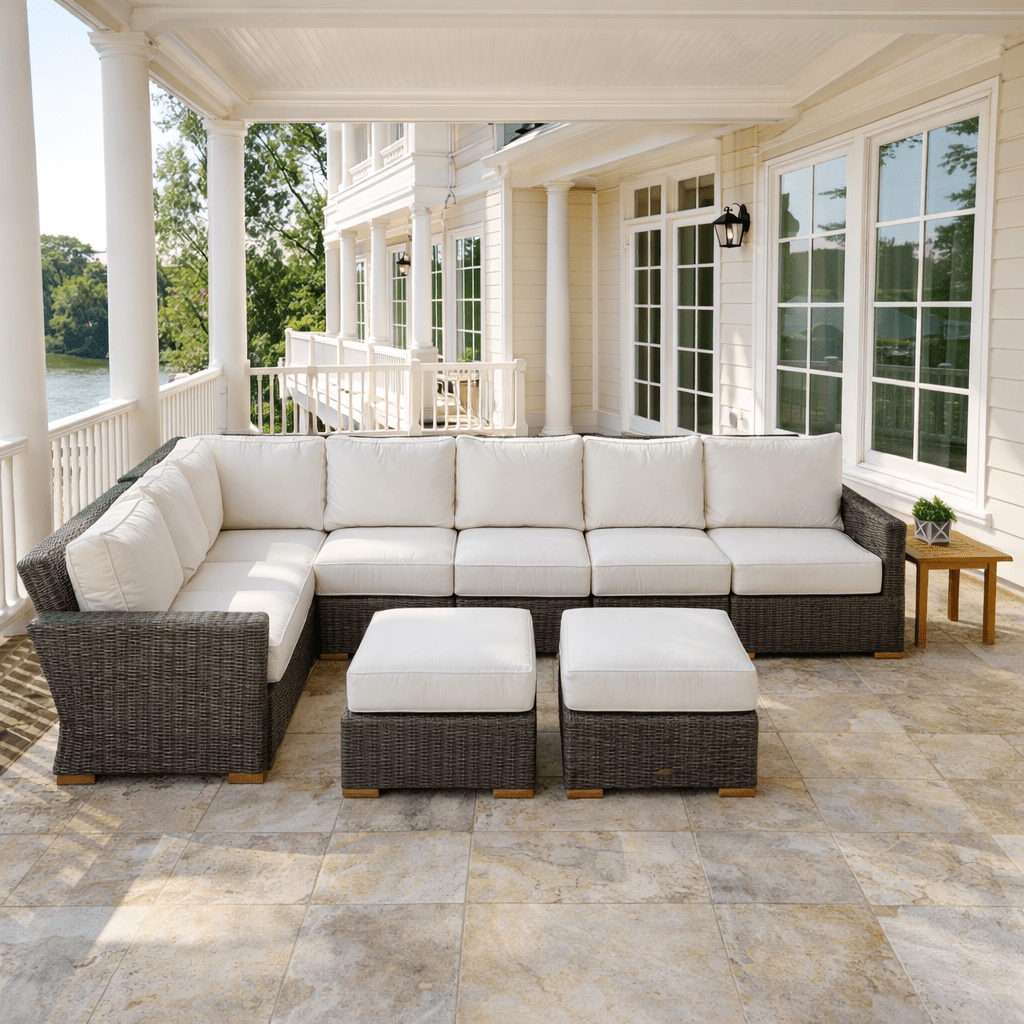 The strongest case for teak in Houston begins with moisture rather than appearance. Grade A teak has a dense grain structure and naturally high oil content that helps it resist moisture, rot, insects and warping. That combination matters in a climate where furniture can encounter humidity, rainfall, wet pool decks and repeated wet-dry cycles.
This does not mean teak should be ignored after a storm or allowed to sit beneath piles of wet leaves. Good drainage and occasional cleaning still matter. The advantage is that weather resistance is inherent to the wood rather than dependent on an artificial stain simply to make the furniture suitable for outdoor use.
Premium Grade A teak is designed for year-round outdoor use and can withstand rain, sun exposure and temperature fluctuations. Houston homeowners therefore do not need to approach teak furniture as something that must routinely be moved indoors whenever the forecast changes.
That can be especially useful on large properties where an outdoor room may include a dining table, eight or more chairs, a sofa group, coffee tables and pool loungers. A material that is fundamentally intended to live outdoors simplifies the furnishing strategy considerably.
Sun does affect teak's appearance, but not in the same way many buyers associate with an exterior finish failing. Natural teak gradually weathers toward a silver-gray patina when left untreated. Some homeowners actively prefer that mature appearance; others prefer the original warmer teak color and can use appropriate care products to help maintain it.
This creates useful flexibility in Houston. Furniture exposed beside the pool can be allowed to weather naturally, while pieces in a more formal covered entertaining area can be maintained closer to their original appearance if that better suits the design.
One of teak's practical advantages is that maintaining the original color and maintaining the furniture's outdoor durability are not the same requirement. Teak does not need paint, artificial stain or mandatory sealing simply to survive outside. Homeowners may leave it untreated and accept the silver-gray patina or use teak-specific products to maintain the warmer color.
For an expensive outdoor installation, that distinction matters. A homeowner who enjoys detailed maintenance can preserve a particular aesthetic, while someone who wants a simpler routine can let the wood age naturally.
| Houston Challenge | Why Premium Grade A Teak Performs Well |
|---|---|
| High humidity | Natural oils and dense grain provide strong moisture resistance. |
| Frequent rain | Teak is designed for outdoor exposure and resists moisture and rot. |
| Strong sunshine | Teak withstands sun exposure and can weather naturally to a silver-gray patina. |
| Wet-dry cycles | Dense Grade A teak is naturally resistant to warping. |
| Poolside moisture | Natural moisture resistance suits frequently wet outdoor environments. |
| Insects | Teak's natural properties provide resistance to insects. |
| Year-round exposure | Premium teak is designed to remain outdoors through changing conditions. |
If we were planning a Houston backyard from scratch, we would not begin by choosing individual pieces. We would first divide the property into activity zones: eating, conversation, cooking, pool use and flexible overflow seating. Houston's larger suburban properties often have enough room to support several of these functions, and treating them as separate outdoor rooms usually creates a more useful result than spreading miscellaneous furniture around one large patio.
For many Houston homes, the covered patio is the outdoor equivalent of a family room. It is protected from the strongest midday sun, close to the house and frequently adjacent to the grill or outdoor kitchen. That makes it the logical place for the furniture used most often.
We would normally choose between two anchors based on how the household actually lives: a substantial teak dining area for families who frequently eat outside, or a deep-seating lounge arrangement when conversation, television and casual gatherings dominate. On a generous patio, both can coexist as clearly separated zones.
A common furnishing mistake is sizing an outdoor table around the number of people who live in the house rather than the number who regularly gather there. Houston backyards are often used for birthdays, weekend barbecues, neighborhood gatherings, football games and extended-family meals. A family of four may therefore get far more value from a six- or eight-person table than a four-person set.
If guest counts change considerably, extendable teak dining tables are particularly useful. They allow the patio to feel appropriately scaled during ordinary use without sacrificing capacity when friends or family arrive.
Dining chairs are not substitutes for comfortable lounge seating. If space allows, we would place a sofa, loveseat, sectional or several lounge chairs in a distinct conversation area, ideally oriented toward a television, fireplace, pool or landscaped view rather than simply facing the dining table.
A sectional works well on a broad covered patio because it efficiently defines a large seating zone. A sofa-and-club-chair arrangement is often more flexible when pathways, doors or structural columns interrupt the space. Swivel chairs can be especially practical between two focal points—for example, the television in one direction and the pool in another.
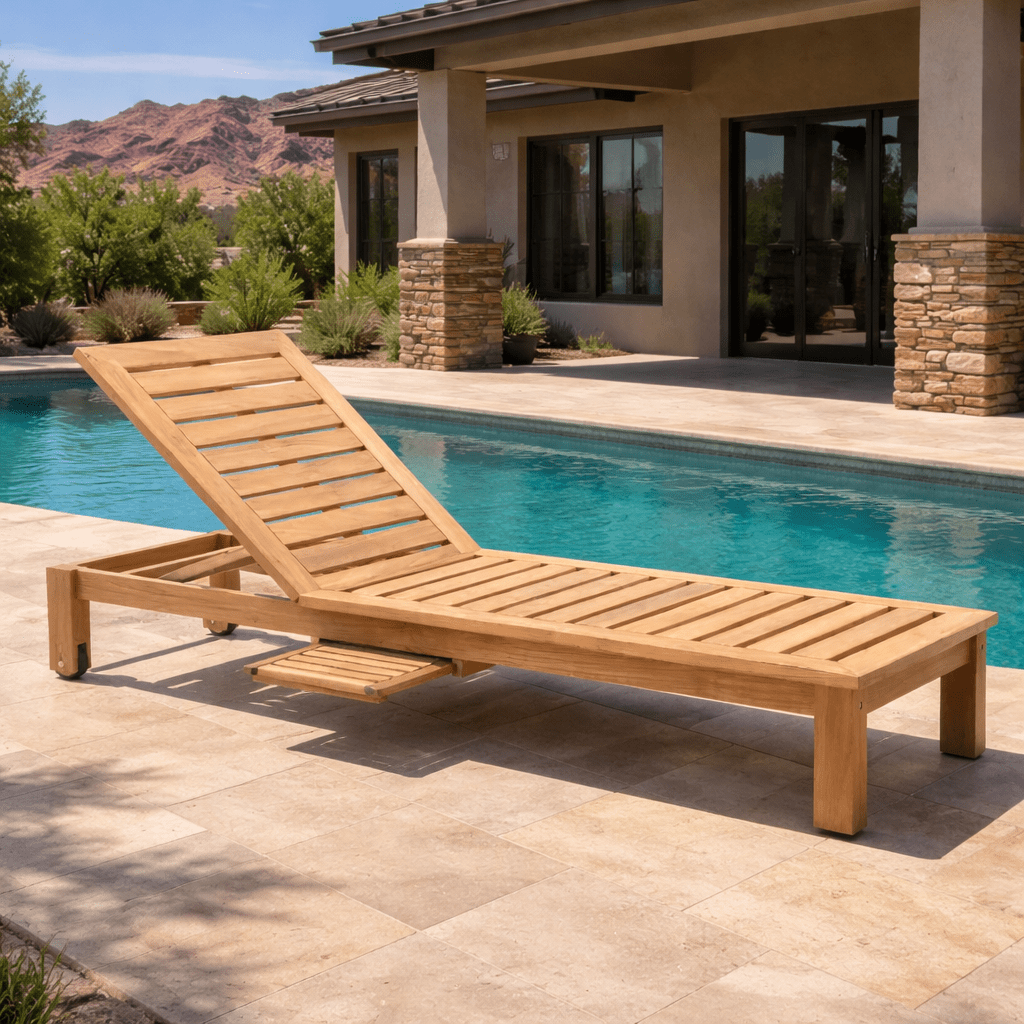
Pool furniture should not consume every available square foot around the water. Preserve circulation first, then create concentrated lounging zones where people actually sit. Two to four teak chaise loungers with small tables can provide more practical value than a crowded ring of assorted chairs.
This is also a good place to think about exposure independently from the covered patio. Pool loungers typically receive more direct sun and water, so cushion choices, shade and the homeowner's preferred teak-aging strategy may differ even if the furniture throughout the property uses the same wood.
Begin with the activity that defines your outdoor space. Frequent hosts should usually start with dining capacity or a substantial conversation set; pool-focused households may prioritize loungers; compact patios may get more value from flexible seating and smaller tables. For larger Houston properties, the best result often comes from combining two or three coordinated collections rather than asking one furniture set to handle dining, lounging and entertaining equally well.
Houston outdoor living is heavily shaped by shade, space and gathering size. The climate makes protected areas especially valuable, while the metro's mix of established neighborhoods, master-planned suburbs and lake-area communities creates everything from compact urban patios to broad pool-centered backyards. Furniture planning should respond to how those spaces are actually used.
Shade is not merely decorative in Houston; it changes how often a space gets used. A well-furnished covered patio can function as an outdoor living room for much of the year, particularly when ceiling fans, an outdoor kitchen and comfortable seating are integrated into the space.
That favors furniture with enough substance to feel permanent rather than temporary. Deep seating, coffee tables and dining furniture tend to make more sense here than constantly movable folding pieces unless floor space is limited.
Houston's suburban backyards can shift quickly from ordinary family use to a much larger gathering. A table for six may handle Wednesday dinner, while a birthday, graduation party or game-day gathering puts demand on every available seat.
Instead of filling the patio with maximum-capacity furniture every day, combine permanent seating with flexible pieces. Benches, dining stools, club chairs and ottomans can supplement primary seating without making the everyday arrangement feel oversized.
When a grill island or full outdoor kitchen is part of the patio, dining placement should respond to the cooking zone. Keep enough room for the person cooking to move between appliances, prep surfaces and the house without cutting through seated guests.
Counter-height seating can work particularly well at the edge of an outdoor kitchen because it creates a second social zone without requiring another full dining table. It is useful for drinks, appetizers or conversations with the cook while the main table remains available for meals.
A pool-centered yard rarely needs one enormous furniture grouping. It usually works better as several destinations: loungers for sun, shaded chairs for conversation, a dining area away from splash traffic and a table close enough to hold drinks and towels.
The memorable planning rule is simple: furnish the dry patio and the wet patio as two different rooms. They may share the same design language, but their exposure, traffic and daily uses are different. That distinction leads to better furniture choices than treating every square foot around the pool as interchangeable.
 For a large covered patio, we would typically anchor the space with either a six- to ten-person teak dining set or a substantial lounge grouping. If the footprint supports both, maintain a clear walkway between them rather than allowing dining chairs to back directly into lounge seating.
Rectangular and oval tables work particularly well on long patios because they naturally follow the architecture. Round tables are useful where circulation is more important or where a square patio would otherwise leave awkward corners.
Chaise loungers are the obvious first choice beside a pool, but side tables are what make the arrangement genuinely usable. Every one or two loungers should have a convenient surface for drinks, sunscreen, books and phones. If the pool area regularly hosts groups, a separate set of upright lounge chairs can keep wet guests from occupying cushioned seating on the covered patio.
For households that spend entire afternoons outside, consider a small shaded conversation group in addition to loungers. That gives people a comfortable alternative when they want to remain near the pool without staying in direct sun.
A dedicated dining table remains the most versatile choice for meals, but Houston outdoor kitchens frequently benefit from a secondary counter-height zone. Teak bar and counter-height furniture can help bridge the cooking area and the rest of the patio while keeping guests out of the cook's primary work path.
A serving or buffet table can also solve an overlooked problem: the dining table should not have to function simultaneously as seating, food service and drink station. Separating those tasks reduces congestion during larger gatherings.
For broad suburban patios, a sectional can create an immediate sense of place. The best sectional layout is not necessarily the largest one that fits; preserve open corners and walking routes to the house, pool and yard.
Where flexibility matters more than maximum seating, a sofa or loveseat paired with swivel chairs is often easier to reorient. Swivel seating is particularly useful on patios where guests alternate between conversation, television and watching activity around the pool.
Not every seat needs to be under the primary patio roof. A teak garden bench beneath mature landscaping or along a quieter part of the yard can turn an otherwise unused area into a destination. Because teak can remain outside and weather naturally, secondary seating does not have to create a major maintenance project simply to justify its existence.
Houston does not have one dominant residential style. That is an advantage for teak: natural wood can sit comfortably beside traditional brick, stucco, contemporary architecture, transitional homes and heavily landscaped backyards without forcing the entire property toward a single theme.
In areas such as River Oaks, Memorial, West University Place and Bellaire, mature landscaping and established architecture often benefit from furniture that feels substantial without being visually loud. Natural teak works particularly well because it adds warmth and texture while allowing the home and landscape to remain the dominant design elements.
Traditional furniture profiles can reinforce classic architecture, while simpler slatted teak forms provide a useful bridge for renovated or transitional homes where older exterior architecture meets a newer pool or patio.
The Woodlands, Katy, Cypress and Sugar Land include extensive suburban development where outdoor spaces are often planned around covered patios, pools, lawns and outdoor kitchens. Here, furniture scale matters. A small café set can look lost on a broad patio just as an oversized sectional can overwhelm a tighter one.
We would generally choose fewer, more intentional furniture groups rather than filling every edge of the hardscape. A large dining zone plus lounge seating typically looks more cohesive than several unrelated small sets.
For modern homes, teak's warmth can keep stone, concrete, glass and metal-heavy outdoor spaces from feeling overly hard. Clean-lined teak sectionals, dining tables and sling seating fit particularly well without requiring the homeowner to switch to an all-metal aesthetic.
Transitional spaces have even more flexibility. Natural teak works easily with neutral cushions and understated landscaping, while the eventual silver-gray patina can create a quieter, weathered appearance if the homeowner chooses not to preserve the original golden tone.
Houston's lush residential landscaping creates beautiful patio settings, but furniture beneath trees also receives pollen, leaves and organic debris. Leave enough clearance around furniture to make routine cleaning practical, and avoid arranging heavy pieces where sprinklers repeatedly soak them unnecessarily.
A little negative space around the furniture often improves both appearance and maintenance. The goal is to let furniture sit within the landscape, not become difficult-to-reach infrastructure inside it.
 Buying for a “hot climate” can lead homeowners toward products suited to dry heat without considering Houston's moisture. Humidity, rain and slow drying are equally important. Look for materials genuinely designed for repeated outdoor exposure, not simply surfaces that tolerate sunshine.
Grade A teak addresses both sides of the equation: it withstands sun and temperature changes while its natural oils and dense grain provide resistance to moisture, rot and warping.
A four-person household does not necessarily need a four-person outdoor table. If the patio routinely hosts relatives, neighbors or friends, furniture that works perfectly on ordinary weekdays can become frustrating every weekend.
Choose capacity around realistic entertaining patterns. An extendable teak table can be a better compromise than permanently dedicating the patio to a very large table.
Deep roof coverage is valuable, but Houston rain can arrive with wind. Furniture near the outer edge of a covered patio may still get wet, and high ambient humidity reaches everything under the roof.
Choose genuinely outdoor-rated furniture throughout the patio rather than using indoor furniture simply because the space is covered. Teak's outdoor durability makes this distinction easier, while cushions and accessories should still be managed according to their specific care instructions.
A photograph of a resort lined with loungers can make dense pool seating look appealing. A residential pool needs more open movement space. People walk barefoot, carry towels, supervise children and move between water and patio; narrow gaps around furniture become annoying quickly.
Use fewer, better-positioned loungers and give each one useful access to a table. The empty walking space is part of the design.
Heavy furniture can feel reassuring in everyday wind, but severe storms require a separate plan. No furniture material should be treated as an excuse to disregard tropical-weather preparation.
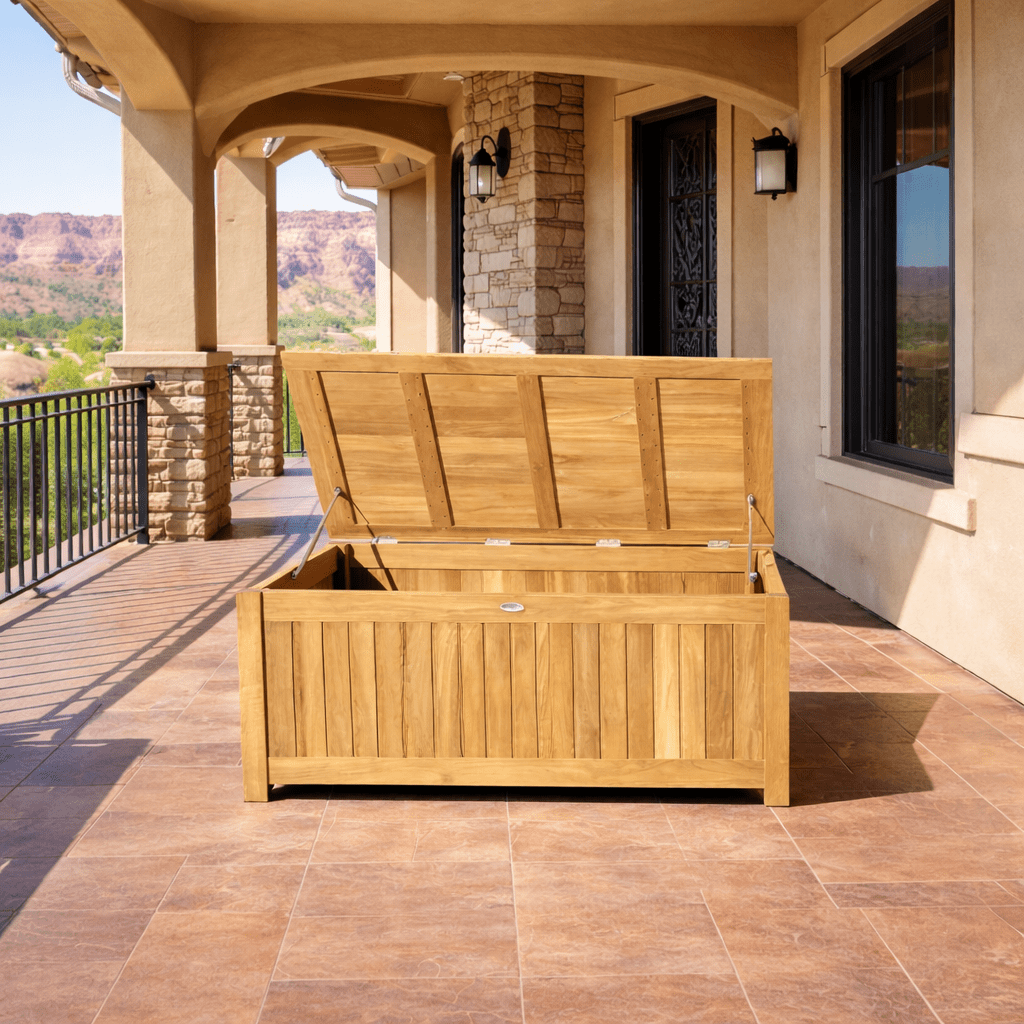
Know in advance what will happen to umbrellas, cushions, lightweight accessories and freestanding pieces when severe weather is forecast. A teak deck box can help organize appropriate outdoor items during normal use, but storm preparation should follow the circumstances and local guidance.
 There is no useful Houston rule that says every teak table must be cleaned on the same fixed schedule. A set beneath a deep roof may remain clean for long periods, while furniture under trees or near a pool can accumulate pollen, leaves, moisture and everyday residue much faster.
Inspect the furniture periodically and clean when conditions require it. Removing organic debris promptly is particularly sensible in shaded, humid areas because it allows surfaces to dry more readily.
After rain or cleaning, avoid creating conditions that unnecessarily trap moisture against the furniture. Maintain reasonable airflow, clear wet debris and correct patio drainage problems that repeatedly leave furniture feet in standing water.
Teak is naturally moisture resistant, but good outdoor-space management still matters. Durable material and sensible drainage should work together rather than one being expected to compensate for the other.
Mold or mildew can develop on outdoor surfaces in warm, damp environments, particularly where organic material accumulates. Regular visual inspection and cleaning are more useful than assuming any outdoor material can remain indefinitely beneath wet debris without attention.
Covered furniture also deserves inspection because shade slows drying. A covered patio protects from direct rainfall and UV exposure, but the reduction in sun can create a different maintenance environment.
Houston owners have two legitimate approaches. Leave natural teak untreated and allow it to develop its silver-gray patina, or use appropriate teak care products if preserving more of the original warm color is important. Neither approach requires painting the furniture for durability.
The easiest time to make that decision is before purchasing multiple furniture groups. If dining, lounge and pool furniture will receive very different amounts of sun, decide whether you are comfortable with them weathering at different rates or whether you plan to maintain a more consistent appearance.
Protective covers are optional rather than necessary for teak's durability. If you use them for convenience or cleanliness, choose covers intended for outdoor furniture and follow their ventilation and installation instructions rather than improvising with non-breathable sheeting that may trap moisture.
Cushions deserve separate treatment from the teak frames. Many TeakHQ lounge products include Sunbrella cushions, while other products offer cushions separately or use sling or synthetic-rope seating. Follow the care requirements of the cushion or seating material rather than assuming every component has identical maintenance needs.
Houston homeowners generally have less need for a traditional months-long furniture-storage season than homeowners in colder climates. Grade A teak is designed for year-round outdoor use, so moving a large dining or lounge set into storage simply because winter arrives is not required for the wood itself.
Instead, use the cooler season as a convenient time for inspection, cleaning or appearance maintenance. After unusual severe weather or a hard freeze, checking furniture and the surrounding patio is sensible even though teak is designed to tolerate temperature fluctuations.
The best Houston patio is not the one with the most furniture. It is the one that remains comfortable, useful and manageable through real Houston conditions while giving your household the right places to eat, gather, lounge and entertain.
Premium Grade A teak is a strong long-term option for that job because its natural weather resistance, substantial feel and flexible maintenance approach suit both Houston's demanding climate and its outdoor-living culture. Start with the activity your family uses most, size that zone correctly, and build the rest of the patio around it.
The best materials are those designed for heat, humidity, rain and repeated outdoor exposure. High-quality teak, aluminum and premium synthetic materials can all be appropriate. Grade A teak is especially attractive when you want natural wood because its oils and dense grain help resist moisture, rot, insects and warping while allowing year-round outdoor use.
Yes. Premium Grade A teak is naturally high in oils and has a dense grain structure that provides resistance to moisture and rotting. That makes it well suited to Houston's humid environment, though normal cleaning, drainage and removal of wet organic debris are still sensible.
Furniture specifically designed for year-round outdoor use can. Grade A teak is made to withstand rain, sun exposure and temperature fluctuations and does not need to be moved indoors for routine weather. Severe tropical weather is different: prepare or secure outdoor furnishings according to the storm and local guidance.
Start with how you use the space. Frequent outdoor diners may benefit most from a six- to ten-person dining set, while households focused on relaxing or entertaining may prefer sofas, club chairs or a sectional. Larger covered patios often work best with separate dining and conversation zones.
No. Premium teak does not require sealing for outdoor durability. It can be left untreated and allowed to weather naturally, or homeowners can use appropriate teak care products if they prefer to maintain more of the wood's original color.
Yes. Natural unfinished teak gradually develops a silver-gray patina when exposed to the weather. This is a normal appearance change. Homeowners who prefer the warmer original teak color can choose a maintenance routine intended to preserve it.
Buy for your realistic gathering size rather than just your household size. If four people live in the home but eight regularly gather for barbecues, birthdays or game days, a larger or extendable dining table will usually serve the patio better.
Begin with chaise loungers and small side tables, then add shaded upright seating if space allows. Avoid lining the entire pool perimeter with furniture; preserving generous walking and circulation space usually produces a safer, more comfortable residential layout. Teak chaise loungers are well suited to poolside environments because the wood is naturally moisture resistant.
There is no universally best material. Aluminum is lighter and often suits a more contemporary aesthetic, while poly furniture is synthetic and can appeal to buyers prioritizing simplified maintenance. Teak is natural wood, heavier and warmer in appearance, with an architectural feel and long outdoor lifespan. The better choice depends on which qualities matter most to you.
Premium teak furniture can last for decades with appropriate ownership and care. Its higher initial cost should therefore be evaluated against long-term service life rather than compared only with the purchase price of furniture intended to last fewer seasons.


