
FREE SHIPPING
within mainland USA
within mainland USA
Home ▸ Teak Outdoor Furniture ▸ By Location ▸ Jackson Hole, Wyoming
Outdoor furniture in Jackson Hole has to fit a distinctly mountain lifestyle: sunny summer days, cool evenings, snow-heavy winters, temperature swings, and outdoor spaces designed around exceptional views. Patios and terraces here often serve as extensions of mountain homes, cabins, ranch properties, and second homes rather than simple seasonal backyards. That makes material quality, furniture weight, year-round weather exposure, and flexible entertaining layouts especially important. Premium Grade A teak is a strong option because it combines substantial construction, natural weather resistance, and a warm material character that fits both rustic and contemporary mountain architecture.

Jackson Hole asks more of outdoor furniture than a mild, low-elevation climate. The important issue is not any single weather condition; it is the combination of prolonged winter exposure, strong seasonal sun, large temperature changes, moisture from snow and spring melt, and a relatively short but highly valued outdoor-living season. Furniture that works well here needs to tolerate those transitions without requiring homeowners to treat every weather change as an emergency.
In many markets, winter furniture planning simply means deciding whether to put the patio set away. In Jackson Hole, that question deserves more thought. Large pieces on expansive terraces may be impractical to move every fall, while second-home owners may not be present whenever the first storm arrives. A better approach is to choose furniture that is fundamentally suited to outdoor exposure, then decide whether covers or seasonal storage are worth using for cleanliness and convenience rather than because the underlying furniture cannot handle being outside.
This is where material choice becomes important. Real Grade A teak can be used outdoors year-round and is naturally resistant to moisture, rotting, insects, and warping. That does not mean cushions, accessories, or every component should simply be ignored through winter. It means the wood itself does not require the same defensive routine that some less weather-capable materials do.
Snowy winters can make Jackson Hole seem like a cold-weather furniture market, but summer sun is an equally practical consideration. Open terraces, south- and west-facing decks, and properties with broad mountain views may receive substantial direct sunlight. Furniture finishes and fabrics therefore matter during the very months homeowners use their spaces most.
Teak can remain exposed to sun and naturally transitions toward a silver-gray patina when left unfinished. For cushioned seating, many TeakHQ lounge pieces include Sunbrella fabric, which is designed to resist fading, UV exposure, and water. Homeowners who prefer less fabric maintenance can also consider selected seating with sling or synthetic-rope surfaces.
One overlooked Jackson Hole buying consideration is that furniture may experience very different conditions without ever moving. A dining table can sit through warm summer afternoons, chilly nights, autumn frosts, winter snow, and spring melt. That favors materials that are naturally stable rather than products whose outdoor suitability depends primarily on a surface coating.
Grade A teak's dense grain and natural oils help it resist moisture and warping. For a mountain property, that matters because the goal is not merely surviving one summer; it is choosing a material that can remain part of the outdoor architecture for many years.
Open ranch properties, elevated terraces, and exposed view lots can make lightweight outdoor furniture less appealing. Weight is not a substitute for sensible storm preparation, but substantial furniture generally feels more at home in these settings than pieces that seem temporary or easily displaced.
Teak is heavier and more architectural in feel than lightweight aluminum. Aluminum remains a legitimate premium option for homeowners who want a crisp contemporary look and easier furniture movement. Teak is especially attractive when the priority is a warmer natural material with visual and physical substance.
Premium teak fits Jackson Hole especially well because its strongest characteristics line up with the realities of mountain ownership. The benefit is not that teak somehow eliminates weather; it is that the wood itself requires relatively little intervention to remain appropriate for outdoor use through changing seasons.
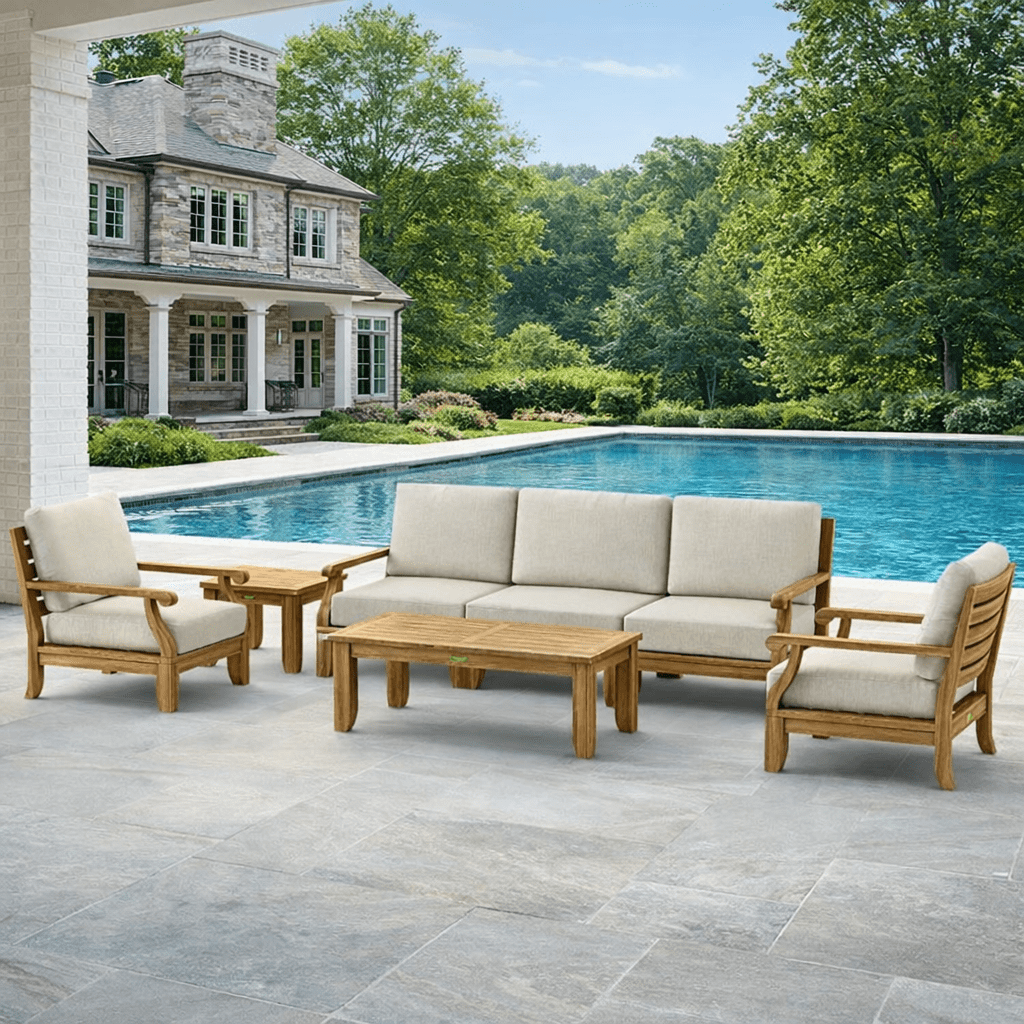 Grade A teak has naturally high oil content and a dense grain structure. Those characteristics contribute to resistance against moisture, rot, insects, and warping. In Jackson Hole, that gives homeowners an important advantage: the wood's outdoor durability does not depend upon maintaining a painted surface or artificial stain.
That is particularly useful for vacation properties. A homeowner who is away for part of the season does not need to schedule routine coating simply to preserve the wood's basic outdoor durability.
Snowfall gets much of the attention in a mountain climate, but transitions can be harder on outdoor furnishings than steady cold. Snow accumulates, melts, refreezes, and eventually gives way to spring moisture. Teak's natural resistance to moisture and rot makes it well suited to those changing conditions.
Good placement still matters. Furniture should not be treated as a substitute for proper patio drainage, and cushions should be handled according to how frequently the property is occupied. The point is that the teak frame itself is designed for year-round outdoor use.
Natural unfinished teak changes appearance outdoors. Instead of requiring stain for durability, it can be allowed to weather toward a silver-gray patina. Some Jackson Hole homeowners prefer that aged tone because it integrates naturally with stone, weathered timber, and subdued mountain palettes. Others prefer teak's warmer original color and can use appropriate care products or sealing practices to help preserve that appearance.
This flexibility is valuable because it separates an aesthetic decision from a durability decision. You do not have to keep teak golden simply to keep it functional outdoors.
For a carefully designed mountain home, outdoor furniture often makes more sense as a long-term furnishing choice than as a disposable seasonal purchase. Premium teak costs more upfront than many mass-market materials, but quality teak furniture can last for decades. That changes how it should be evaluated.
Instead of asking only, “What does this patio set cost today?” consider how often lower-cost furniture would be replaced, whether its style will still suit the home in several years, and how much seasonal maintenance it requires. For homeowners already investing heavily in terraces, landscaping, stonework, outdoor kitchens, and mountain views, furniture longevity can be more important than minimizing the initial purchase price.
| Jackson Hole Challenge | Why Premium Grade A Teak Performs Well |
|---|---|
| Snow and winter moisture | Naturally resistant to moisture and rot and designed for year-round outdoor use. |
| Freeze/thaw transitions | Dense Grade A teak resists warping through changing outdoor conditions. |
| Strong seasonal sun | Can remain outdoors in sun and weather naturally to a silver-gray patina. |
| Long off-season exposure | Does not require paint or artificial stain for outdoor durability. |
| Open, exposed patios | Teak has a heavier, sturdier feel than lightweight furniture. |
| Changing mountain seasons | Designed to withstand rain, sun exposure, and temperature fluctuations. |
We would begin with the way you actually use the property, not with a furniture catalog. A full-time family home in Wilson has different priorities from a slopeside residence in Teton Village, and a large vacation property designed for extended-family visits needs a different plan than a quiet two-person retreat.
The most memorable Jackson Hole patios are often organized around what lies beyond the property. If the Tetons, a wooded slope, an open meadow, or a river corridor is the visual focal point, we would establish the primary seating orientation before deciding where every table and chair goes.
That frequently favors an L-shaped sectional or a loose teak lounge set positioned so people can converse without placing their backs to the scenery. Avoid the temptation to push every chair against the house. A floating furniture arrangement often makes a large stone terrace feel more intentional and creates better sightlines.
On a generously sized patio, one giant furniture grouping rarely performs as well as two purposeful zones. We would usually establish a dining space closer to the kitchen or outdoor cooking area, then position deep seating where guests naturally migrate after dinner.
A teak outdoor dining set works well as the anchor for meals, while lounge seating creates a distinctly different destination. Coffee tables or a fire pit table can reinforce the separation without building permanent walls between the spaces.
Second homes and vacation properties often alternate between quiet weekdays and busy weekends. Designing everything for the largest possible gathering can leave the patio feeling oversized when only two or four people are present.
One of the most useful Jackson Hole strategies is to make the core layout comfortable at normal occupancy and add flexibility for larger groups. An extendable teak dining table, extra dining chairs stored nearby, movable club chairs, ottomans, and small side tables can absorb guests without making the everyday layout feel like banquet seating.
Outdoor living here is often less about escaping heat and more about extending comfortable time outside as temperatures fall. That makes conversation seating and fire-oriented layouts unusually important.
A teak fire pit table can become the evening center of the patio, especially when paired with club chairs or a sectional. Leave enough circulation space around the grouping so guests can move comfortably even when additional chairs are pulled in.
Start with the activity that defines your outdoor space. For a large mountain home built around entertaining, sectionals or multi-piece lounge sets usually establish the main gathering zone; dining-focused households should begin with a full dining set or extendable table. Fire pit tables and Adirondack chairs are particularly useful for cool-evening spaces, while side tables and deck boxes solve the less glamorous—but important—questions of drink placement, accessories, and seasonal organization.
Outdoor time in Jackson Hole is valuable precisely because it is seasonal. Homeowners tend to make deliberate use of good-weather days: meals move outside, friends gather after hiking or fishing, summer visitors stay late into cool evenings, and patios become quieter places to enjoy the landscape once the day's activity ends. That rhythm should influence furniture planning.
Mountain homes frequently need to work for two very different modes: everyday life and visitor weekends. A patio that is comfortable for a couple on Thursday may need to handle children, adult guests, or extended family by Saturday.
That makes flexible furniture more useful than simply maximizing permanent seating. Swivel or club chairs can be redirected toward different conversation areas, ottomans can provide occasional seating, and an extendable table lets the dining area grow only when necessary.
When the weather is good, outdoor dining becomes one of the simplest ways to use a mountain property more fully. The best location is usually close enough to the kitchen or grill that serving does not become a chore, while still preserving a view or sense of separation from indoor space.
Large households should consider an eight- or ten-person configuration when entertaining is frequent. Smaller households may get more day-to-day value from a six-person table that expands when guests arrive.
Jackson Hole patios are often used after the day's activity rather than only during it. That makes relaxed seating unusually valuable. Deep seating around a coffee table or fire feature gives guests somewhere to settle after dinner and turns the terrace into a genuine second living room during summer and shoulder-season evenings.
A vacation property should not require a lengthy reopening routine every time the owner arrives. Furniture materials, cushion storage, and placement should all be planned around that reality. The fewer essential maintenance tasks required between visits, the more likely the outdoor space is to be used immediately rather than treated as another chore.
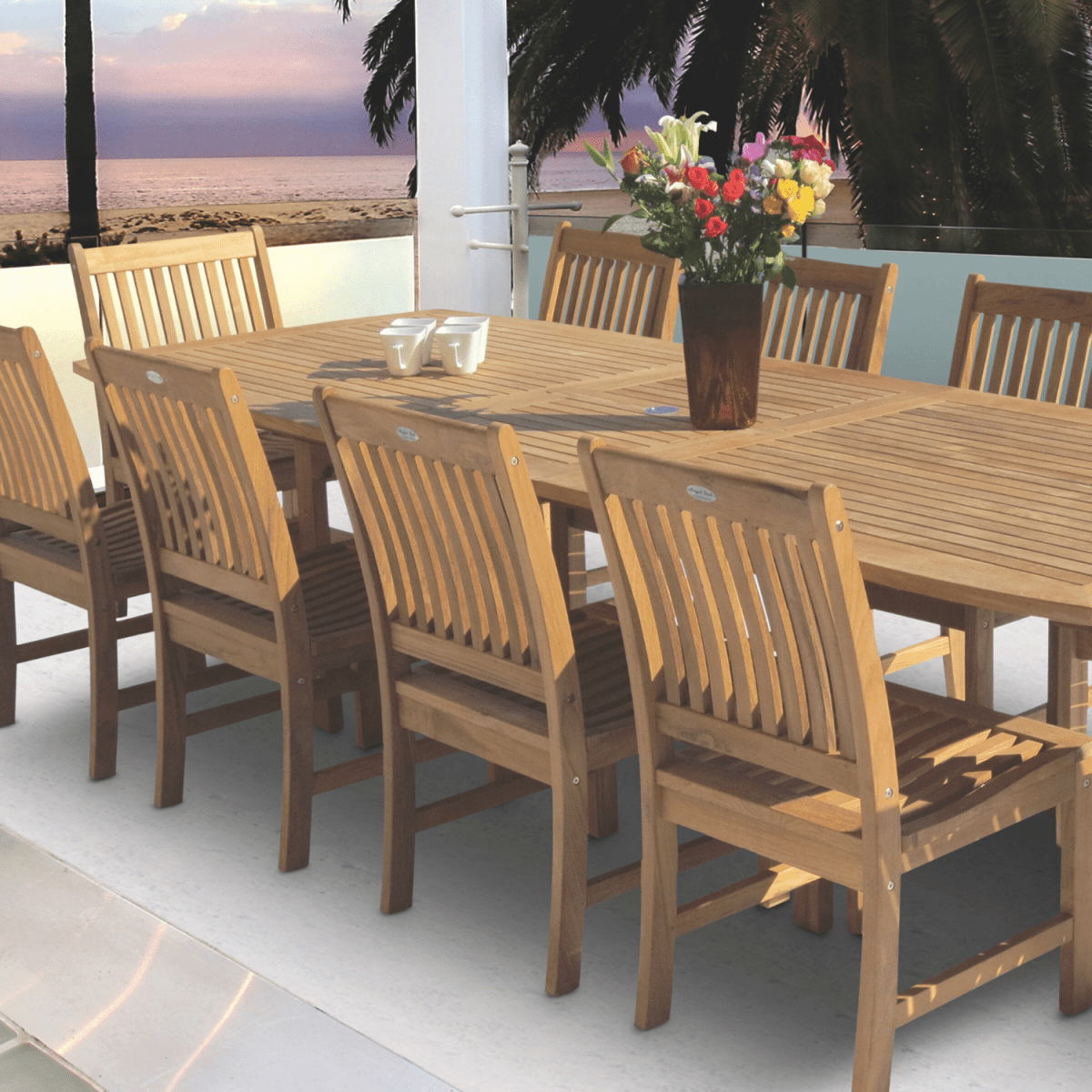 The most successful furniture plan usually combines one primary gathering area with one or two secondary uses rather than filling every available square foot. Jackson Hole properties can have substantial outdoor spaces, but open space itself is part of the appeal. Furniture should frame the landscape rather than compete with it.
For a large terrace with an important view, begin with teak sectionals or a multi-piece conversation set. An L-shaped layout works especially well when one side can face the scenery while the other maintains face-to-face conversation.
Pair the primary seating with a coffee table and several side tables rather than relying on one large central surface. Guests should be able to set down a drink without leaning across an oversized grouping.
Dining furniture should be scaled to the household's realistic entertaining pattern. For owners who host frequently, large rectangular or oval tables create generous serving space and fit substantial patios well. If guest counts fluctuate, an extendable table is usually more useful than a permanently oversized one.
Place the dining group near cooking and serving areas, but do not crowd the grill. A separate console or buffet table can provide useful landing space for serving dishes without sacrificing seats at the dining table.
A fire-oriented space works especially well with movable chairs. Club chairs, Adirondack chairs, or a combination of lounge chairs and ottomans can form a looser circle than a sectional and make it easy to adjust seating when additional guests arrive.
Consider sightlines before creating the circle. If the fire pit occupies the center of an exceptional view, keep chair backs low enough and spacing wide enough that the grouping does not visually wall off the landscape.
Not every Jackson Hole property has an estate-sized patio. Condominiums, townhomes, and compact decks benefit from disciplined furniture selection. A pair of lounge chairs with a side table or a smaller dining configuration may provide more actual use than attempting to reproduce a full backyard layout in limited space.
Small-space owners can browse teak side and end tables for useful surfaces without sacrificing circulation.
Secondary seating does not need to be elaborate. A pair of Adirondack chairs or a well-positioned garden bench can turn a quiet corner of a property into one of its most-used spaces. On large properties, we would often rather create one small destination with a strong view than scatter decorative furniture around areas nobody naturally visits.
Jackson Hole architecture spans traditional log and timber homes, ranch-influenced residences, stone-heavy mountain lodges, and increasingly clean-lined contemporary mountain designs. Teak works across those styles because it reads as a real natural material without requiring rustic detailing.
Traditional mountain architecture already contains a strong palette of timber, stone, metal, and landscape. Outdoor furniture does not need to imitate the architecture to fit it. In fact, straightforward teak pieces often work better than heavily themed “lodge” furniture because the natural wood adds warmth without making the patio feel staged.
Allowing teak to weather toward silver-gray can create an especially quiet relationship with stone terraces, weathered siding, and muted mountain colors.
Modern Jackson Hole homes often pair expansive glass with restrained forms and natural materials. For these properties, choose teak with cleaner silhouettes and limit the number of furniture styles competing within one sightline.
A large sectional, simple rectangular dining table, and low-profile accent tables can feel more appropriate than filling the patio with many small decorative pieces. The wood introduces warmth against glass, steel, and stone while retaining the clean geometry of the architecture.
Open landscapes benefit from furniture with enough visual presence to feel intentional. A substantial dining table or deep-seating group can define an outdoor room even when there are few physical boundaries around the patio.
This is also where scale matters. Furniture that appears appropriately sized in a showroom may look undersized against a large terrace, broad meadow, and distant mountain backdrop. Before ordering, map the complete furniture footprint on the patio rather than evaluating pieces individually.
The most useful design rule in Jackson Hole is also the simplest: the outdoor furniture should make the view easier to enjoy, not become the view itself. Favor fewer complete furniture zones over many scattered pieces, preserve generous walking paths, and avoid placing tall furnishings where they interrupt important sightlines from inside the house.
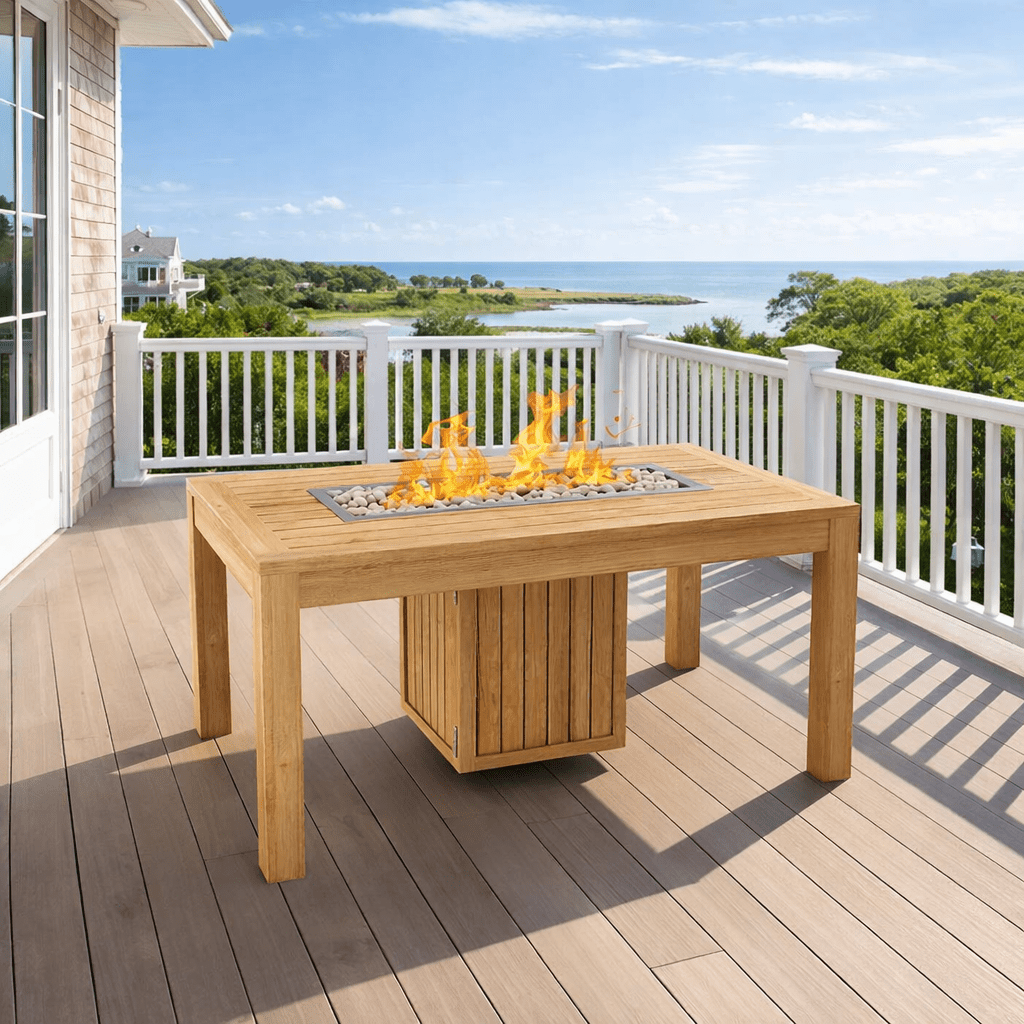 A patio may be purchased in July, but the furniture will experience a much broader range of conditions. Choosing a material solely because it looks good during dry summer weather can create maintenance or storage problems once snow and seasonal moisture arrive.
Premium teak helps by being designed for year-round outdoor use and by resisting moisture, rot, and warping. Seasonal covers or storage can still be used for convenience, but the wood does not depend on them for basic outdoor suitability.
Large homes tempt owners to buy the largest table and seating group that will fit. The problem is that a patio designed permanently for twelve can feel strangely empty when two or four people use it most of the time.
Design the core furniture plan for normal occupancy, then use extendable tables, movable chairs, benches, and ottomans to handle occasional peaks. This makes the property feel inviting both with and without guests.
A common layout mistake is treating the exterior wall as the automatic starting point. That often creates a furniture arrangement that technically fits the patio but turns half the chairs away from the landscape.
Map sightlines from both indoor rooms and outdoor seats before deciding where large sectionals, dining tables, or tall chair backs belong. In a view-driven market, orientation can matter as much as the furniture itself.
Cushioned seating makes a mountain patio exceptionally comfortable, but fabric introduces its own ownership routine. Even weather-resistant fabrics benefit from sensible management during prolonged winter conditions or long periods when a second home is vacant.
If frequent cushion handling sounds inconvenient, consider fewer upholstered pieces or combine cushioned deep seating with teak Adirondack chairs, sling seating, or other less fabric-dependent options.
Large stone terraces can make standard patio furniture look smaller than expected, while decks and condominium patios can become cramped surprisingly quickly. Measure the total arrangement rather than the dimensions of individual pieces.
Include chair pull-back space, circulation around dining tables, routes from doors to grills, and the space people actually occupy around a fire feature. A generous patio can still function poorly when furniture interrupts movement.
 Teak care in Jackson Hole should be simple and seasonal rather than complicated. The wood itself can remain outside year-round, so most maintenance decisions come down to cleanliness, preferred color, cushions, and how ready you want the patio to be when outdoor season returns.
Spring is the logical time for a thorough cleaning because snowmelt and months of exposure can leave dirt and organic debris on furniture. Additional cleaning during summer should be based on actual need rather than an arbitrary schedule.
Use products intended for teak when deeper cleaning or restoration is necessary. Avoid turning routine care into aggressive refinishing when ordinary cleaning will accomplish the goal.
Untreated teak naturally ages toward silver-gray. That change is cosmetic and is often a particularly good fit for mountain settings. If you like the weathered appearance, you can allow the process to occur naturally.
If retaining more of teak's original warm color matters to you, consider appropriate teak care products or sealing. This is an appearance choice rather than a requirement for basic durability.
The furniture frame and its cushions should not automatically follow the same winter plan. Many TeakHQ patio seating pieces include Sunbrella cushions, which are weather-, fade-, UV-, and water-resistant, but storing cushions during prolonged snowy periods can keep them cleaner and reduce unnecessary exposure.
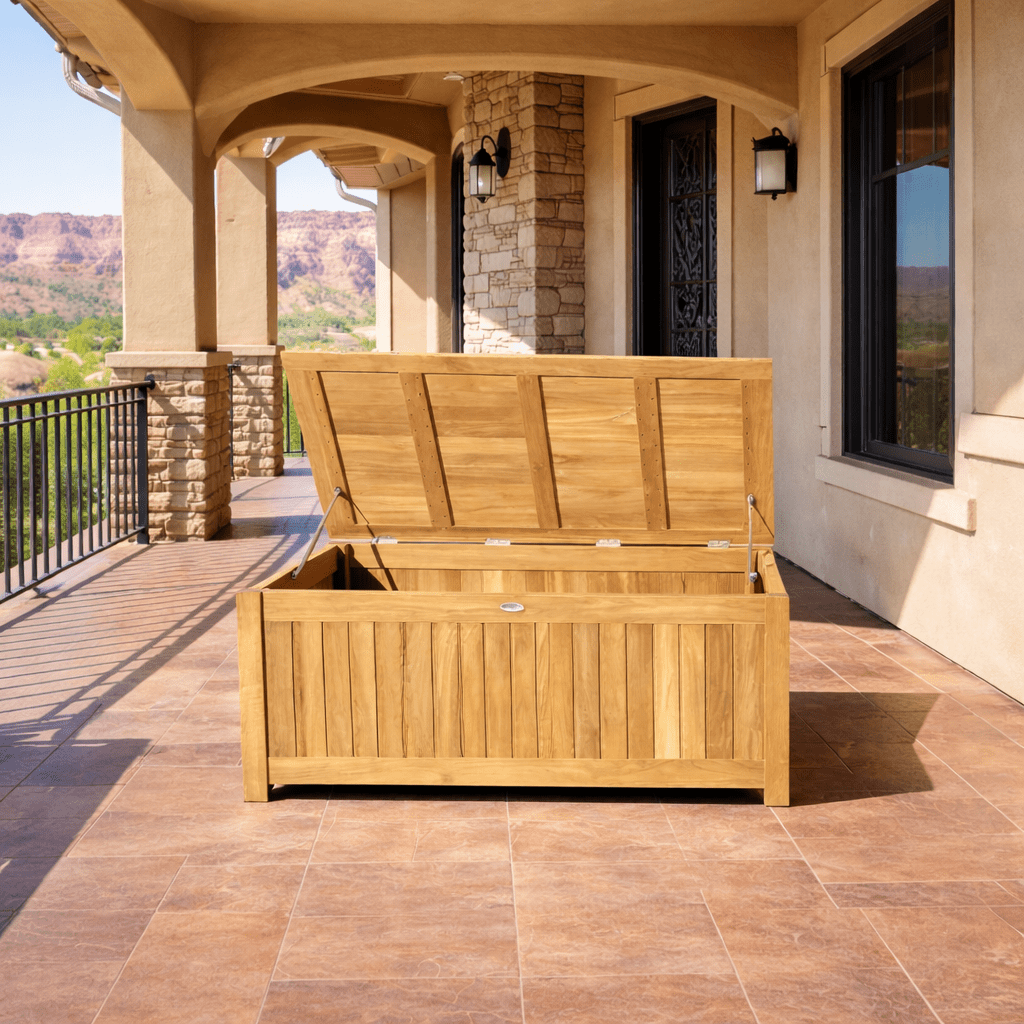
A nearby teak deck box can simplify shorter-term storage during outdoor season. For long winter periods, use whatever dry storage arrangement best fits the property and the specific cushion manufacturer's instructions.
Premium teak does not require a cover to remain outdoors. Covers may still be worthwhile when the goal is reducing spring cleanup or keeping furniture ready for intermittent winter use.
If you choose covers, make sure they are properly fitted and managed so trapped moisture and accumulated snow do not create a new maintenance problem. Homeowners who are away for extended periods should favor a simple setup that does not require frequent adjustment.
A well-furnished mountain patio should feel like part of the property rather than something unpacked for a few months each year. Start with the way you use the home—quiet mornings, summer dinners, visiting family, fireside evenings, or large weekend gatherings—then choose furniture scale and configurations around those habits. TeakHQ's Grade A teak dining, lounge, and accent collections provide a durable natural foundation that can work across traditional cabins, contemporary mountain homes, ranch properties, and vacation residences.
Look for materials that can tolerate snow, moisture, strong seasonal sun, and temperature changes without requiring constant refinishing. Premium Grade A teak is a strong choice because it is naturally resistant to moisture, rot, insects, and warping and is designed for year-round outdoor use.
That depends on the material. Grade A teak furniture can remain outdoors year-round. Cushions and accessories may still benefit from dry seasonal storage, and covers can reduce cleanup even though they are not required for teak's basic durability.
Covering teak is optional. Teak does not require a cover for outdoor durability, but a properly fitted cover can reduce accumulated dirt and simplify spring cleanup. Cushion storage should be considered separately from the teak frame.
Premium Grade A teak has a dense grain structure and natural oils that make it resistant to warping and suitable for temperature fluctuations. As with any natural wood, small surface changes can occur over time, but teak is specifically valued for outdoor stability.
No. Teak does not need to be sealed for durability. Leave it untreated if you like the natural silver-gray patina, or use appropriate teak care products if maintaining more of the original warm color is important to you.
Begin with the property's best sightline. Large homes often work well with separate dining and conversation zones, while smaller decks benefit from one focused use. Avoid placing furniture simply against exterior walls if doing so turns primary seats away from mountain or meadow views.
A sectional works especially well for large family gathering areas and terraces with a defined orientation. Individual club or lounge chairs provide more flexibility when guest counts change or when chairs need to rotate between a fire feature, conversation group, and mountain view.
Size the everyday table for the number of people who normally use the property, then add flexibility for peak weekends. An extendable teak table is often more practical than permanently dedicating patio space to the largest gathering you host all year.
Yes. Natural unfinished teak gradually weathers to a silver-gray patina outdoors. This does not mean the wood has failed. Many mountain homeowners like the weathered look; those who prefer warmer teak tones can use suitable care or sealing products.
Each material has legitimate advantages. Aluminum is lighter and often suits a very modern aesthetic, while poly lumber offers a synthetic, low-maintenance approach. Teak provides real natural wood, a warmer appearance, substantial weight, and long-term outdoor durability, making it especially appealing when the furniture is meant to complement stone, timber, and other natural mountain-home materials.


