
FREE SHIPPING
within mainland USA
within mainland USA
Home ▸ Teak Outdoor Furniture ▸ By Location ▸ Jersey Shore, New Jersey
Furnishing a Jersey Shore outdoor space means planning for more than summer sunshine. Ocean and bay exposure can bring salt air, moisture, wind, rain, and seasonal temperature swings, while beach houses often depend on decks, porches, pool areas, and outdoor dining spaces for much of their warm-weather living. Premium Grade A teak is a particularly strong option because it combines a substantial natural-wood feel with moisture and weather resistance and can remain outdoors year-round.

The Jersey Shore is not one uniform furniture environment. An exposed oceanfront deck in Mantoloking or Avalon faces different conditions from a protected porch several blocks inland, while a bayfront patio on Long Beach Island can have its own combination of moisture, wind, and sun exposure. The practical question is therefore not simply whether furniture is labeled "outdoor." It is whether its materials and construction make sense for the exact exposure of your property.
Distance and shelter matter. Furniture on an open ocean-facing deck receives substantially more environmental exposure than furniture beneath a covered porch or in a sheltered courtyard. Salt carried by coastal air can settle on furniture surfaces and hardware, while wind-driven moisture reaches areas that might remain relatively protected on an inland patio.
For the most exposed properties, we would prioritize outdoor furniture with relatively simple maintenance requirements and materials intended to tolerate repeated weather exposure. This is one reason dense, naturally oil-rich teak makes sense along the coast. Hardware matters as well: Royal Teak and Anderson Teak pieces use stainless-steel hardware, while Verandis Teak uses brass.
Warm-season humidity, rain, wet bathing suits, pool use, and damp coastal air can all increase the amount of moisture around outdoor furniture. The issue is not just getting wet once; it is repeated exposure over many seasons.
This is where material selection separates furniture designed for serious outdoor use from furniture that merely looks appropriate outdoors. Premium Grade A teak is naturally resistant to moisture, rotting, and warping, making it especially relevant for Shore properties where furniture may remain outside through changing conditions.
Many Shore homes place their best outdoor spaces where the views are best: upper decks, open terraces, pool patios, and waterfront yards. Those spaces can also be the least sheltered. Direct sun affects appearance and textiles, while wind should influence both furniture selection and placement.
Teak has a useful practical characteristic here: it has a heavier, sturdier feel than lightweight outdoor furniture. That does not make any furniture immune to severe winds or storms—furniture should still be secured or moved when conditions warrant—but substantial furniture can feel more appropriate for everyday use on an exposed coastal property.
Unlike warm-weather coastal markets where patios may operate almost the same way throughout the year, New Jersey requires homeowners to think about both summer use and winter ownership. Outdoor furniture may experience summer sun and humidity followed months later by freezing temperatures, snow, and winter storms.
That makes year-round material durability especially valuable. Grade A teak is designed for outdoor use through rain, sun exposure, and temperature fluctuations, so owners do not have to treat the furniture itself as a seasonal item simply because their outdoor entertaining season changes.
Several premium materials can work well at the Shore. Quality aluminum can be attractive when a lighter, contemporary appearance is preferred, while synthetic materials can appeal to homeowners who prioritize a particular look or maintenance routine. Teak becomes especially compelling when the goal is a substantial natural material that can handle coastal weather while fitting both classic beach architecture and contemporary waterfront homes.
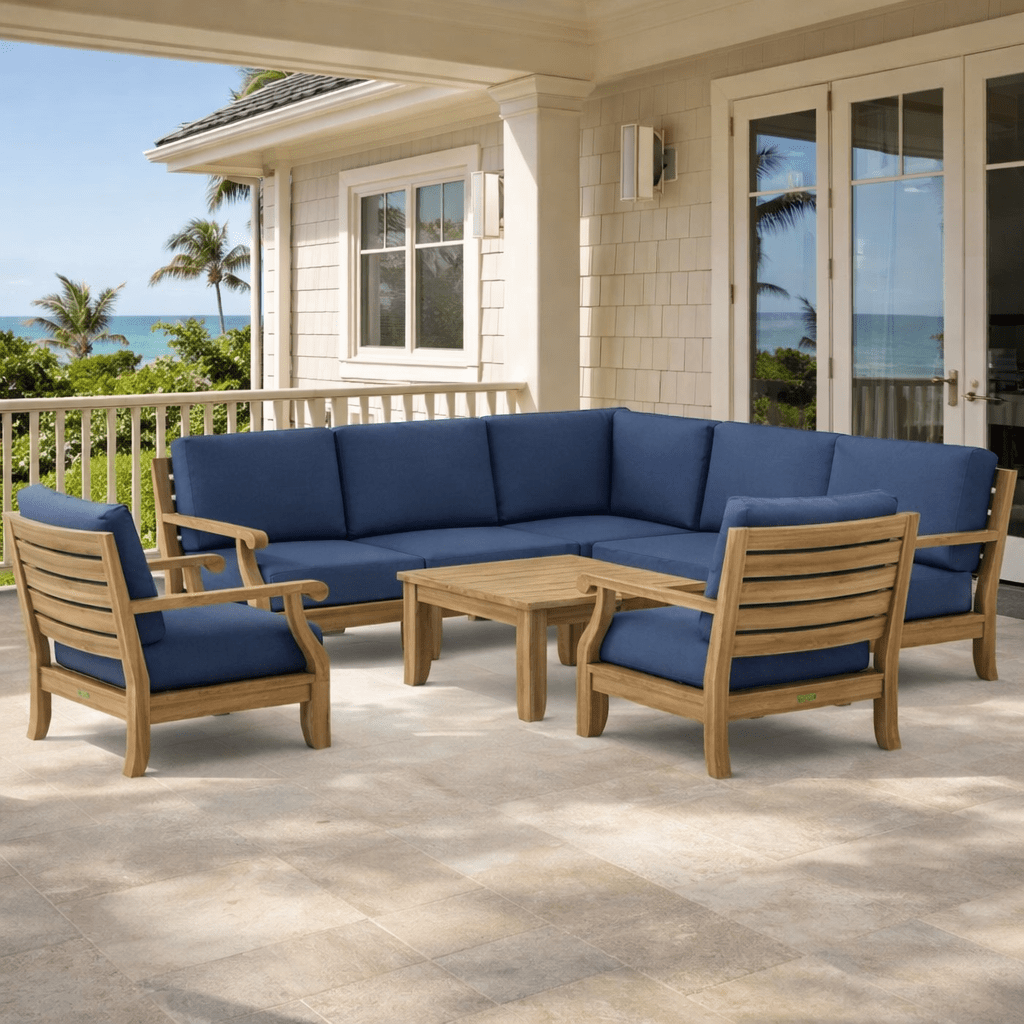 Grade A teak's naturally high oil content and dense grain structure contribute to its resistance to moisture, rot, insects, and warping. On a Shore property, those characteristics matter because furniture can repeatedly encounter humid air, rain, and wet outdoor conditions.
The important distinction is that teak does not depend on an artificial stain for its durability. Most TeakHQ pieces are unfinished natural teak and can be allowed to weather naturally outdoors.
Outdoor exposure gradually changes natural teak from its original warm golden-brown appearance to a silver-gray patina. That color change is normal weathering rather than an indication that the furniture has reached the end of its useful life.
For Shore homes, the decision is largely aesthetic. A weathered silver-gray finish can complement cedar shingles, coastal grays, white trim, dunes, and other muted beach-house materials. Homeowners who prefer teak's original color can instead choose to maintain it with appropriate teak care products.
The Jersey Shore asks outdoor furniture to live through a wider range of conditions than many warm coastal markets. Teak's resistance to warping and ability to withstand temperature fluctuations are therefore important advantages. The same dining table used throughout July does not have to become unsuitable simply because January brings a completely different environment.
Teak furniture is designed for year-round outdoor use, although homeowners may still use covers or protected storage for convenience, cleanliness, or reduced off-season exposure.
Premium teak carries a higher upfront cost than many mass-market outdoor materials. For a primary residence, that cost can make sense when the goal is to furnish an outdoor space once with furniture expected to last for decades rather than seasons.
It can be equally relevant for a Shore house that stays in the family for years. Instead of thinking only about the purchase price, consider how often you realistically want to replace, re-coordinate, assemble, and dispose of outdoor furniture. Longevity becomes part of the ownership experience, not merely a durability specification.
| Jersey Shore Challenge | Why Premium Grade A Teak Performs Well |
|---|---|
| Coastal moisture | Natural oils and dense grain help teak resist moisture and rot. |
| Humid summers | Grade A teak is naturally suited to repeated outdoor moisture exposure. |
| Strong sun | Teak withstands sun exposure and can weather naturally to a silver-gray patina. |
| Rain | Teak is designed for year-round outdoor weather exposure. |
| Temperature swings | Teak resists warping and tolerates changing outdoor temperatures. |
| Exposed decks | Teak has a substantial, heavier feel compared with lightweight furniture. |
| Winter weather | The wood itself does not require seasonal indoor storage for durability. |
We would begin with three questions: Where does your family actually spend time outside? How many people are usually there during a busy summer weekend? And which spaces are exposed versus protected? At the Shore, answering those questions before buying furniture is particularly important because decks can be constrained while summer guest counts can be surprisingly large.
For many Shore houses, we would prioritize the dining area before the lounge area. Beach days tend to pull people in different directions; dinner is often when everyone comes back together. A well-sized teak outdoor dining set gives that routine a permanent home.
For a year-round residence or a smaller family beach house, six seats may be sufficient. For a property that fills with children, grandchildren, friends, or rotating weekend guests, an extendable teak dining table can be more useful than permanently dedicating the deck to an oversized table.
If the property has enough room, the next priority would be a distinct lounge zone rather than surrounding the entire patio with miscellaneous chairs. A coordinated teak lounge set creates a comfortable place for morning coffee, post-beach conversation, or an evening drink without turning the dining table into the only gathering point.
On larger waterfront patios, a sectional can define the lounge zone. On narrower decks, a sofa or loveseat with two chairs may preserve circulation better. Always map the walking route from the house to the stairs, pool, grill, or beach access before deciding how large the seating group should be.
One of the most useful Shore-specific planning principles is simple: don't furnish the best view as though it were an ordinary wall. On oceanfront and bayfront properties, sightlines should influence chair orientation, furniture height, and even where the dining table sits.
A row of comfortable chairs facing the water may deliver more daily value than filling every available foot with a large conversation set. On a narrow upper deck, two or three chairs with small teak side tables can preserve the view and circulation better than a conventional sofa arrangement.
A common mistake with vacation properties is furnishing for the number of people who own the house rather than the number who use it on a July weekend. If four people live there most of the time but ten regularly gather for dinner, the outdoor plan should acknowledge both realities.
Expandable dining, movable individual chairs, and separate seating zones solve that problem better than simply buying the largest furniture set that fits. The objective is capacity without making the deck feel crowded during quieter weeks.
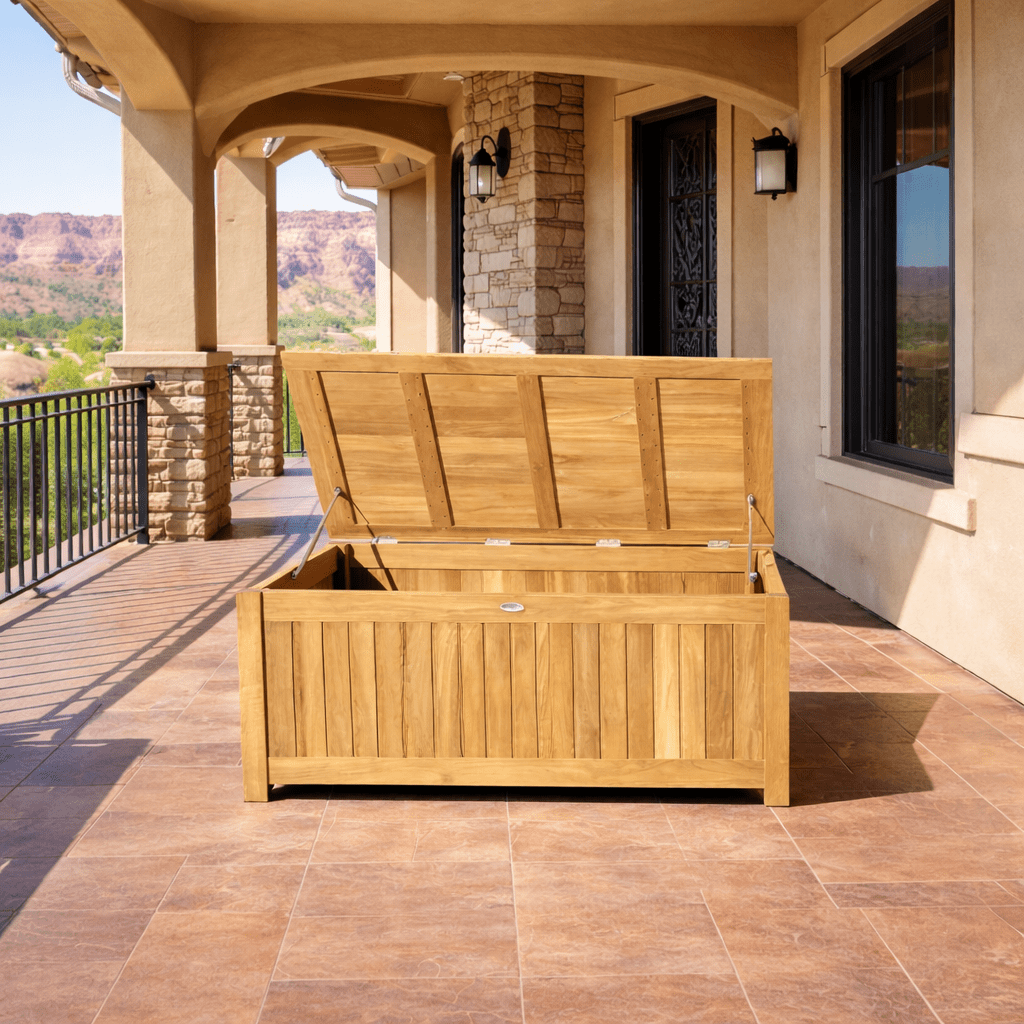
Start with the space that carries the most important part of your Shore routine. Frequent family meals point toward dining sets or extendable tables; large decks and covered patios may justify a complete lounge group or sectional; pools and sun decks naturally favor chaise loungers. Smaller secondary spaces often benefit more from Adirondack chairs and side tables than another full furniture set, while deck storage can be especially useful in a vacation home where outdoor accessories accumulate quickly.
Outdoor furniture at the Shore often supports a different rhythm than it does at a suburban primary residence. Summer days may move from coffee on the deck to the beach, an afternoon around the pool or bay, dinner outside, and a long evening with family and friends. The most successful spaces accommodate those transitions without requiring furniture to be constantly rearranged.
A Shore home's occupancy can change dramatically from one weekend to another. A dining arrangement that feels generous for the immediate family may suddenly become undersized when relatives arrive. Conversely, permanently furnishing every space for maximum occupancy can make the house feel crowded most of the summer.
Flexible capacity is often the better answer. Extendable tables, dining chairs that can be repositioned, and multiple smaller gathering areas let the property expand socially without requiring every piece to be oversized.
At many beach properties, dinner is one of the few times everyone naturally converges. That makes outdoor dining more than an accessory to the patio. It can become the functional center of the house during summer weekends.
If that describes your family, allocate the best combination of space, shade, and kitchen access to dining rather than automatically giving the largest area to lounge furniture. For households that routinely entertain eight or more, TeakHQ's larger teak dining sets are worth considering.
Oceanfront and bayfront homeowners should think in terms of viewing positions rather than conventional indoor-style furniture arrangements. Chairs do not always need to face one another. Sometimes the right layout points several seats in the same direction—toward the ocean, bay, sunset, or passing boats.
This is especially useful on narrow decks where forcing a full conversation grouping can consume valuable circulation space. A few intentionally positioned seats can make the property feel more luxurious precisely because the layout does less.
For a vacation rental, the priorities shift somewhat toward straightforward use and durable, understandable layouts. Guests should immediately know where to eat, lounge, and place drinks without moving furniture around. Fewer well-chosen pieces can be preferable to a deck crowded with small items.
Cushion management also deserves thought. Most TeakHQ lounge seating includes Sunbrella cushions, but owners should confirm the specific product and decide who will handle cushions and other accessories between guests or during severe weather.
The right category depends less on the town name than on the property's outdoor architecture. A Spring Lake porch, an LBI bayfront deck, and an Avalon pool patio may all benefit from teak, but they should not necessarily be furnished the same way.
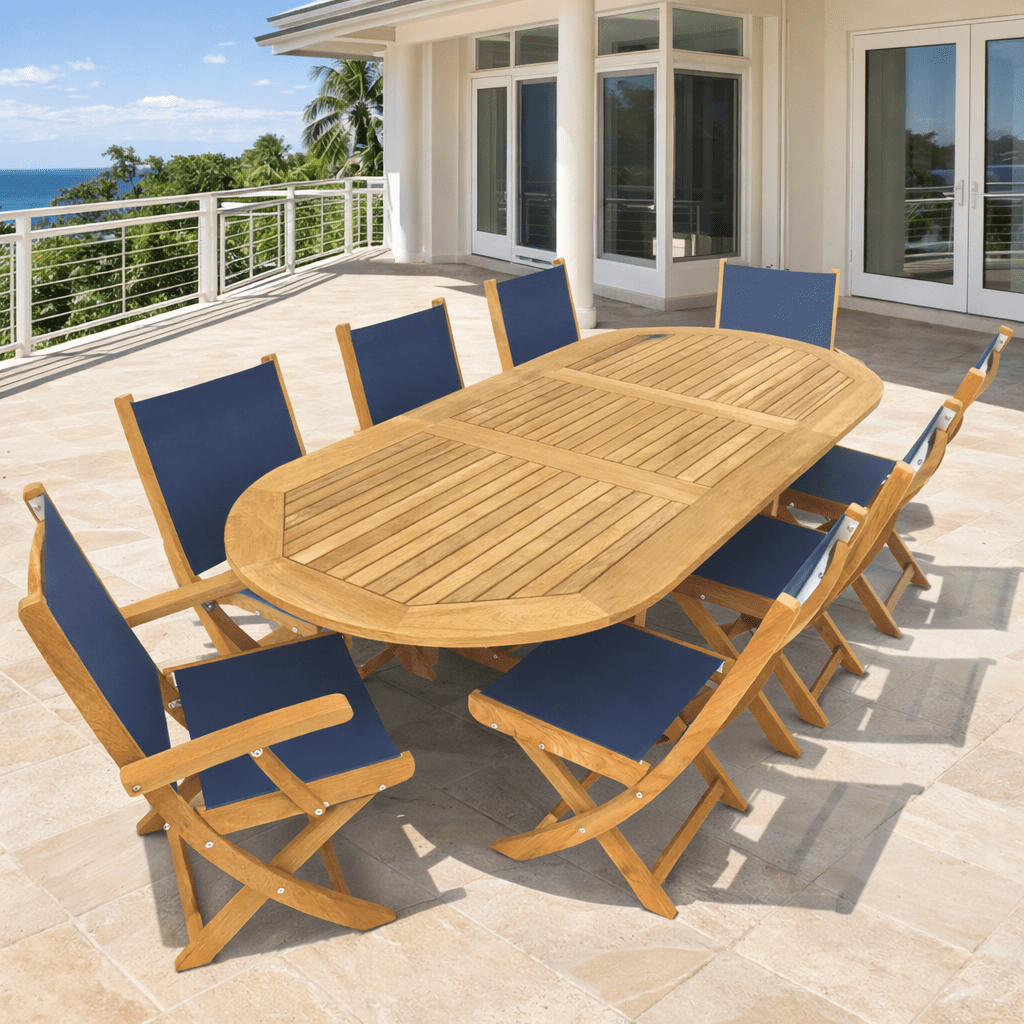 For a large waterfront deck, we would typically begin with dining and then use the remaining footprint for view-oriented seating. A rectangular or oval table can work well where the deck runs parallel to the house, while a round table may improve circulation in a more compact square area.
Measure the furniture in its in-use position, not merely its footprint. Dining chairs require room to pull back, and a table that technically fits can still block the route to stairs or beach access. That circulation issue is especially important on elevated decks with limited ways in and out.
Pool areas benefit from furniture with clearly defined jobs. Use dining furniture near the house or outdoor cooking area, then reserve the sunnier perimeter for teak chaise loungers. Side tables between loungers provide useful landing places without creating another bulky furniture zone.
For pools used by larger groups, avoid filling every open edge with loungers. Leaving generous walking room around wet areas can make the entire patio function better than maximizing the seat count.
Covered porches are ideal for deep seating because they create a naturally protected conversation space. Depending on dimensions, that might mean a loveseat and club chairs, a sofa arrangement, or a compact sectional.
The Shore's classic porch architecture also suits teak aesthetically. Natural golden teak provides warmth against white trim and coastal palettes, while weathered silver-gray teak can create a quieter, more established appearance.
Do not assume a small deck requires small furniture everywhere. One appropriately scaled primary piece with open space around it often works better than several undersized pieces. A compact dining set may be the right choice if meals are the priority; two Adirondack chairs and a side table may be better if the deck exists mainly for enjoying the view.
Choose the activity first and the furniture second. Trying to force dining, lounging, storage, and sunbathing onto one narrow deck usually leaves none of those functions particularly comfortable.
Jersey Shore architecture ranges from traditional coastal homes and Victorian-era character to cedar-shingled beach houses and contemporary waterfront construction. Teak works across that range because the material itself provides visual warmth without requiring the entire space to follow one narrowly defined style.
Traditional homes with broad porches, shingles, white trim, and established landscaping generally do not need outdoor furniture that competes with the architecture. Straightforward teak dining furniture, Adirondack chairs, rockers, benches, and restrained lounge seating can reinforce the home's coastal character without making the patio feel themed.
Allowing teak to develop its silver-gray patina can be especially natural in these settings. Maintaining the original golden color creates more contrast and makes the furniture itself a stronger visual element.
Newer homes with large expanses of glass, cleaner lines, and expansive decks can support more architectural furniture arrangements. Sectionals, streamlined dining tables, and substantial lounge chairs give open spaces enough visual weight without relying on ornate detailing.
Teak also introduces natural material into homes dominated by glass, stone, metal, and composite decking. Homeowners who prefer an even more contemporary appearance may legitimately favor aluminum; teak is the stronger choice when natural wood and a warmer visual character are priorities.
Near naturalistic coastal plantings, simple teak seating can feel more integrated than highly decorative furniture. Garden benches and Adirondack chairs are particularly useful for secondary areas where the objective is to sit, look toward the water or garden, and relax rather than create another formal entertaining zone.
This is one place where restraint improves the design. Not every outdoor area needs a furniture "set." A single bench positioned at a useful viewpoint can make a larger property feel more intentionally furnished.
 A four-person household can easily become an eight- or ten-person household on a Shore weekend. Buying dining furniture strictly around the permanent household can create a predictable summer capacity problem.
Instead, estimate the number of people who regularly eat together during your busiest realistic weekends. An extendable teak table can bridge the gap between everyday occupancy and guest-heavy summer gatherings without permanently consuming the maximum amount of deck space.
Deck measurements alone do not tell you whether furniture fits. A large dining set may fit within the dimensions while blocking the grill, outdoor shower, stairs, sliding door, or route to the beach.
Mark those travel lanes first. Then place the largest furniture pieces inside the remaining usable zones. This small planning change often produces a better Shore deck than beginning with the maximum table or sectional the square footage can accommodate.
A covered porch several blocks from the ocean and an exposed beachfront deck are not the same environment. Buying the same furniture and following the same care routine for both ignores differences in salt exposure, wind, sun, and moisture.
Grade A teak is suitable for outdoor weather exposure in either setting, but the more exposed furniture may need more frequent cleaning. Severe-weather planning should also be more deliberate on open waterfront properties.
Homeowners sometimes choose teak for its golden appearance without realizing that untreated teak naturally develops a silver-gray patina outdoors. If maintaining the original color is important to you, decide that before buying so the care routine does not come as a surprise.
If you like the weathered appearance, the opposite mistake is unnecessary maintenance. Teak does not need artificial stain to remain durable, so allowing the color to change can substantially simplify ownership.
The wood frame and the cushion are separate maintenance questions. Most TeakHQ patio seating pieces include weather-resistant Sunbrella cushions, but not every product includes cushions, and even outdoor fabrics benefit from sensible management during prolonged wet weather and severe storms.
Confirm exactly what comes with each furniture piece, then plan convenient dry storage if you want to bring cushions in during periods when the house is unoccupied.
Teak gives Shore homeowners considerable flexibility: it can remain untreated and weather naturally, or owners can maintain more of its original appearance. Coastal care should therefore focus less on "protecting" teak from ordinary outdoor existence and more on keeping surfaces clean and choosing the appearance you prefer.
 There is no single cleaning calendar that makes sense for every Shore home. An exposed oceanfront table that collects salt residue and windblown sand may need attention more often than furniture on a covered inland porch.
Use visible buildup as the practical signal. Periodically remove sand, pollen, leaves, dirt, and coastal residue rather than allowing debris to remain trapped on damp surfaces for long periods.
Humidity becomes more relevant where air circulation is poor or furniture stays damp in deep shade. Keep surfaces reasonably clean and avoid creating unnecessary moisture traps around furniture.
For cushions, follow the care guidance for the specific fabric and avoid treating the performance of the teak frame as proof that every textile should be managed identically.
Untreated teak naturally transitions toward silver gray. Many coastal homeowners deliberately choose that appearance because it fits the understated palette of a beach house. Others prefer the warmer color of newer teak.
Either approach is legitimate. Teak can be left untreated for the natural patina or maintained with appropriate products if preserving the original color is important. Browse teak care products based on the appearance you want rather than assuming treatment is required for the wood to survive outdoors.
Teak furniture itself is designed for year-round outdoor use and does not require a cover for ordinary durability. Covers or protected storage can still be useful for owners who want to reduce off-season dirt and simplify spring cleanup.
Severe coastal weather is a different issue from routine exposure. Before significant storms or high-wind events, follow appropriate local weather guidance and secure or relocate outdoor items as circumstances require. No premium furniture material should be treated as a substitute for storm preparation.
The best Jersey Shore outdoor space is not necessarily the one with the most furniture. Start with how your family uses the property—summer dinners, beach weekends, pool afternoons, waterfront views, or large gatherings—then choose furniture that supports those priorities without crowding the space. TeakHQ's premium Grade A teak collections offer options for dining, conversation seating, lounging, and smaller secondary areas, with the durability and maintenance flexibility that make natural teak particularly practical for long-term coastal ownership.
For homeowners prioritizing a natural material, long service life, and resistance to moisture and changing weather, premium Grade A teak is an excellent option. Quality aluminum and some synthetic materials can also work well, but teak offers a warmer, heavier, natural-wood alternative that is particularly well suited to premium coastal spaces.
Yes. Grade A teak is naturally high in oils, has a dense grain structure, and is resistant to moisture, rot, insects, and warping. Those characteristics make teak patio furniture particularly relevant for coastal homes exposed to humid air and changing weather.
It depends on the material. TeakHQ's Grade A teak furniture is designed for year-round outdoor use and can withstand rain, sun exposure, and temperature fluctuations. Covers are optional rather than required for teak's durability, although they may help keep furniture cleaner during the off-season.
Choose one primary function first. If the deck is mainly for meals, consider a compact or folding dining arrangement; if it is mainly for views and relaxation, two or three chairs with small side tables may use the space better than a full lounge set. Preserve clear routes to doors, stairs, grills, and beach access.
Plan around your typical busy weekend rather than only the property's permanent household. Homes that frequently host extended family or friends may benefit from an extendable dining table, which provides extra capacity without requiring maximum table size every day.
Yes. Natural teak exposed outdoors gradually develops a silver-gray patina whether it is at the Shore or elsewhere. This is normal weathering. You can allow the color to change naturally or use appropriate teak care products if you prefer to maintain more of the original golden appearance.
Base cleaning on exposure rather than an arbitrary schedule. Oceanfront furniture that collects salt residue, sand, pollen, or windblown debris may need cleaning more frequently than furniture on a sheltered porch. Removing visible buildup periodically is a practical approach.
Chaise lounges work well for the sunny perimeter, while dining or conversation furniture can occupy areas nearer the house or shade. Leave comfortable circulation around the pool rather than maximizing the number of seats. Teak chaise loungers are a natural fit when you want substantial wood furniture designed for outdoor exposure.
Teak does not require covers for ordinary outdoor durability, but severe storms and high winds require separate planning. Follow local weather guidance and secure or relocate outdoor items when conditions warrant rather than assuming any furniture material can simply be left in place during extreme weather.
It can be when longevity and lower replacement frequency matter more than the lowest initial price. Premium Grade A teak costs more upfront than many mass-market options but can last for decades, making it particularly attractive for a Shore property you expect to own and use for many years.


