
FREE SHIPPING
within mainland USA
within mainland USA
Home ▸ Teak Outdoor Furniture ▸ By Location ▸ Jupiter, Florida
In Jupiter, outdoor furniture often lives only a few steps from a pool, canal, river, Intracoastal waterway, or Atlantic shoreline. That means buyers need to think beyond appearance: humidity, frequent summer rain, intense sun, salt exposure near the coast, and tropical weather all affect how an outdoor space should be furnished. At the same time, covered lanais, waterfront patios, outdoor kitchens, and resort-style pool decks are used heavily for relaxing and entertaining. Premium Grade A teak is particularly well suited to that combination of demanding weather and high-use outdoor living.

Jupiter presents a distinctive outdoor-furniture environment because several conditions overlap: a warm South Florida climate, a pronounced wet season, strong sunshine, and extensive exposure to coastal and inland waterways. A patio near the Atlantic or Jupiter Inlet can face different day-to-day conditions than a screened or covered outdoor room farther west, yet both require furniture selected for prolonged outdoor use rather than occasional fair-weather exposure.
In a dry climate, shoppers can concentrate heavily on sun exposure. Jupiter requires more attention to moisture. Outdoor furniture can move repeatedly between hot sunshine, humid air, rain, and damp overnight conditions. Materials that depend on delicate finishes or that perform poorly when repeatedly exposed to moisture can demand more attention than homeowners expect.
The practical question is not simply, “Can this furniture get wet?” Almost any product marketed for outdoor use can tolerate some rain. A better question is whether the material is inherently appropriate for repeated outdoor moisture over many years. That distinction matters more in Jupiter than it does in many inland or arid markets.
Not every Jupiter home experiences the same salt exposure. Homes near the beach, Jupiter Inlet, Jupiter Island, or exposed sections of the Intracoastal generally deserve more attention to marine conditions than properties farther inland. Waterfront buyers should think about the entire furniture system—wood, hardware, cushions, and accessories—not merely the frame material.
TeakHQ's Royal Teak and Anderson Teak pieces use stainless-steel hardware, while Verandis Teak uses brass hardware. For a coastal buyer, knowing what the less-visible components are made from is worthwhile because outdoor furniture is more than its visible surface.
South Florida's wet season brings periods of frequent showers and thunderstorms, so patio planning should account for how quickly the entire seating area can recover after rain. Furniture material matters, but placement matters too. Avoid low spots where water collects, leave space for air movement, and consider how cushions will be handled when repeated storms are expected.
This is especially important around covered lanais. A roof keeps direct rain off furniture, but shaded areas can remain damp longer than an open pool deck receiving sun and airflow. Covered does not always mean drier in practical day-to-day use.
Hurricane-season planning should influence what you buy even though no outdoor furniture should be treated as storm-proof. A large outdoor space filled with numerous lightweight decorative pieces can create more storm-preparation work than a simpler arrangement built around substantial primary furniture. Before tropical weather, owners should still follow appropriate storm preparations and secure or relocate outdoor items as conditions require.
That leads to an often-overlooked Jupiter buying principle: evaluate a patio not only for how it works on a beautiful January afternoon, but also for how easily you can prepare the entire space when severe weather is approaching.
Premium Grade A teak makes sense in Jupiter because its advantages correspond closely to the conditions outdoor furniture experiences here. Its value is not that it somehow eliminates weather, salt, rain, or maintenance. Its value is that the wood itself is naturally suited to outdoor exposure without depending on paint or an artificial stain for durability.
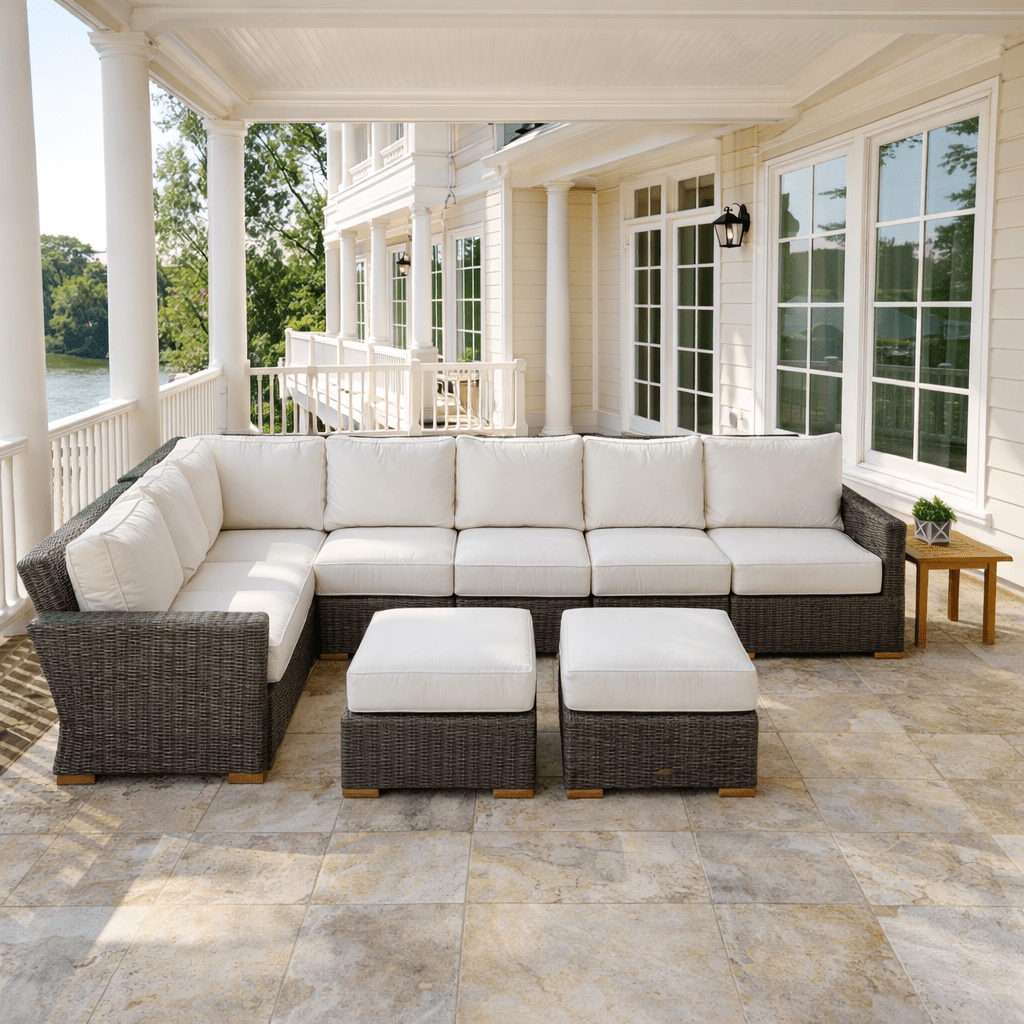 Grade A teak contains naturally high levels of oils and has a dense grain structure. Those characteristics contribute to its resistance to moisture, rotting, insects, and warping. In Jupiter, where furniture may encounter humidity, rain, poolside moisture, and extended outdoor exposure within the same season, that is a more meaningful advantage than it would be for furniture routinely brought indoors.
Teak can also remain outdoors year-round. Owners do not need to apply paint or an artificial stain to make the wood suitable for exterior use, although cosmetic treatments remain an option.
Jupiter's abundant sunshine is another reason material selection matters. Teak is designed to withstand outdoor sun exposure and naturally changes appearance rather than relying on a painted surface to preserve the look of wood. Untreated teak gradually develops a silver-gray patina.
Some buyers deliberately prefer that weathered appearance, particularly on coastal or transitional properties. Others want to retain more of teak's original warm tone and can use appropriate teak-care products. Neither approach is necessary to make the underlying Grade A teak structurally suitable for outdoor use.
Teak's moisture resistance is particularly useful around pools, uncovered terraces, and outdoor dining spaces exposed to summer showers. This does not mean owners should encourage standing water or ignore normal cleaning. It means the furniture material itself is well matched to a setting where staying completely dry is unrealistic.
This is one reason teak differs from less durable wood choices. The decision is not simply “wood versus non-wood.” Species and grade matter. Premium Grade A teak is chosen specifically because the natural material can perform outdoors for decades when properly owned and cared for.
For homeowners furnishing a substantial outdoor space, longevity can materially change the economics of the purchase. Premium teak costs more initially than many mass-market patio options, but quality teak furniture can last for decades rather than seasons. That makes it particularly relevant for homeowners furnishing permanent pool decks, waterfront patios, outdoor kitchens, and covered lanais they expect to use for years.
The maintenance choice is also unusually flexible: maintain the warmer teak color if that appearance is important to you, or allow the wood to age naturally. That makes ownership easier to tailor to the home's aesthetic rather than imposing one mandatory finishing routine.
| Jupiter Challenge | Why Premium Grade A Teak Performs Well |
|---|---|
| High humidity | Natural oils and dense grain help resist moisture, rot, and warping. |
| Frequent summer rain | Grade A teak is designed for year-round outdoor weather exposure. |
| Strong sunshine | Teak withstands sun exposure and can weather naturally to a silver-gray patina. |
| Coastal environment | Teak's natural outdoor durability makes it well suited to exposed coastal settings. |
| Poolside moisture | Natural moisture resistance suits patios where occasional splashing and wet conditions are normal. |
| Temperature fluctuations | Dense Grade A teak is resistant to warping and designed for changing outdoor conditions. |
| Long outdoor season | Furniture can remain outdoors year-round rather than functioning as seasonal furniture. |
We would start with the property rather than the furniture catalog. A canal-front home with a pool and dock, an Abacoa courtyard, and a golf-community estate with a large covered lanai may all be in the Jupiter market, but they should not receive the same furniture plan. The first priorities are how the family actually uses the space, which zones receive weather exposure, and how many people need to be comfortable at the same time.
Jupiter properties often contain several compelling destinations: the house, outdoor kitchen, pool, lawn, dock, or water view. Furniture should support that movement rather than interrupt it. Preserve obvious walking paths from sliding doors to the pool and from the pool toward a dock or yard before filling the remaining space.
A useful rule is to treat the best view as an orientation point, not necessarily the place to put the most furniture. On a waterfront property, positioning every chair directly against the seawall may crowd the water's edge and make circulation awkward. A conversation grouping set slightly back can preserve the view while creating a more functional room.
For a larger Jupiter home, we would usually prioritize one dining zone and one lounge zone before adding smaller pieces. A teak outdoor dining set near the kitchen creates an obvious destination for meals, while a separate deep-seating area allows guests to stay outside after dinner without turning the dining table into the only gathering place.
Where space permits, an outdoor teak sectional can define the lounge area efficiently. On narrower patios, a sofa or loveseat with club chairs may provide better circulation because the pieces can be positioned independently.
Pool furniture should not simply occupy whatever strip of deck remains after the dining set is installed. Chaise placement works best when you first account for walking space, access into the pool, shade patterns, and sightlines from the house.
A row of loungers is appropriate for larger resort-style decks, while two paired loungers can be enough for a smaller household. The important thing is to give each seat a nearby surface for a drink, book, sunglasses, or phone. Small tables often contribute more everyday functionality than adding one extra large furniture piece.
Many upscale outdoor spaces are over-furnished because they are designed entirely around the largest party the homeowner might host. We would instead design for the household's normal daily use, then add controlled flexibility for guests. An extendable teak dining table, movable chairs, ottomans, or supplemental seating can expand capacity without making the patio feel crowded every day.
That distinction is especially useful in Jupiter, where outdoor areas often function as genuine extensions of the home. The goal is not to fit the maximum number of seats. It is to make the patio pleasant enough that the household chooses to use it routinely.
Start with the activity that anchors your outdoor space. Pool-focused homes will often get the most value from loungers and small tables; households that host dinners should begin with dining furniture; and large covered lanais may justify a complete lounge arrangement or sectional. Waterfront and golf-community properties with several outdoor zones can combine those categories, but furnishing one clearly defined area at a time usually produces a more cohesive result than purchasing isolated pieces without a plan.
Outdoor living in Jupiter is closely connected to water, warm weather, pools, golf-community living, and a social lifestyle that moves easily between indoors and outdoors. The local environment encourages spaces that function as real living areas rather than occasional patios, which changes what homeowners should prioritize when furnishing them.
Jupiter's relationship with the Atlantic, Intracoastal Waterway, Jupiter Inlet, and Loxahatchee River makes waterfront living a defining part of the local outdoor experience. Properties near these waterways frequently orient outdoor rooms toward the view, with pools, docks, covered patios, or terraces acting as transitions between the house and water.
That creates a practical furniture challenge: the arrangement should support conversation without creating a wall of furniture between people and the scenery. Lower-profile lounge groupings, swivel seating, and carefully placed dining areas can keep views open while still making the patio useful.
For many Jupiter homes, pool furniture is not secondary furniture. Chaise loungers may receive as much regular use as the primary conversation set. That makes comfort, durability, and useful spacing important enough to plan at the beginning rather than after the rest of the patio is furnished.
Teak chaise loungers work naturally in this setting because Grade A teak can remain outdoors and withstand rain, sun, and changing conditions. Models with sling seating can also appeal to owners who prefer a different seating surface than a loose cushion.
A substantial outdoor table in Jupiter often serves more roles than formal dinner. It can handle morning coffee, weekend brunch, casual lunches after the pool, evening meals, and larger gatherings when family visits. Because the outdoor season is long, sizing the dining area for realistic recurring use can make more sense than treating it as special-occasion furniture.
For a household of four that frequently hosts six or eight, flexibility may matter more than buying the largest possible permanent table. Extendable configurations preserve daily patio space while adding capacity when guests arrive.
Deep seating is particularly useful under covered patios and lanais, where shade and overhead protection encourage longer periods outdoors. This is where sofas, sectionals, swivel chairs, coffee tables, and side tables can create a genuine outdoor living room rather than a collection of individual seats.
One local planning advantage is worth recognizing: the covered zone and the pool deck do not need identical furniture. The lanai can prioritize cushioned comfort and conversation, while the uncovered pool zone can emphasize loungers and simpler surfaces. Designing each microclimate separately often produces a better Jupiter patio.
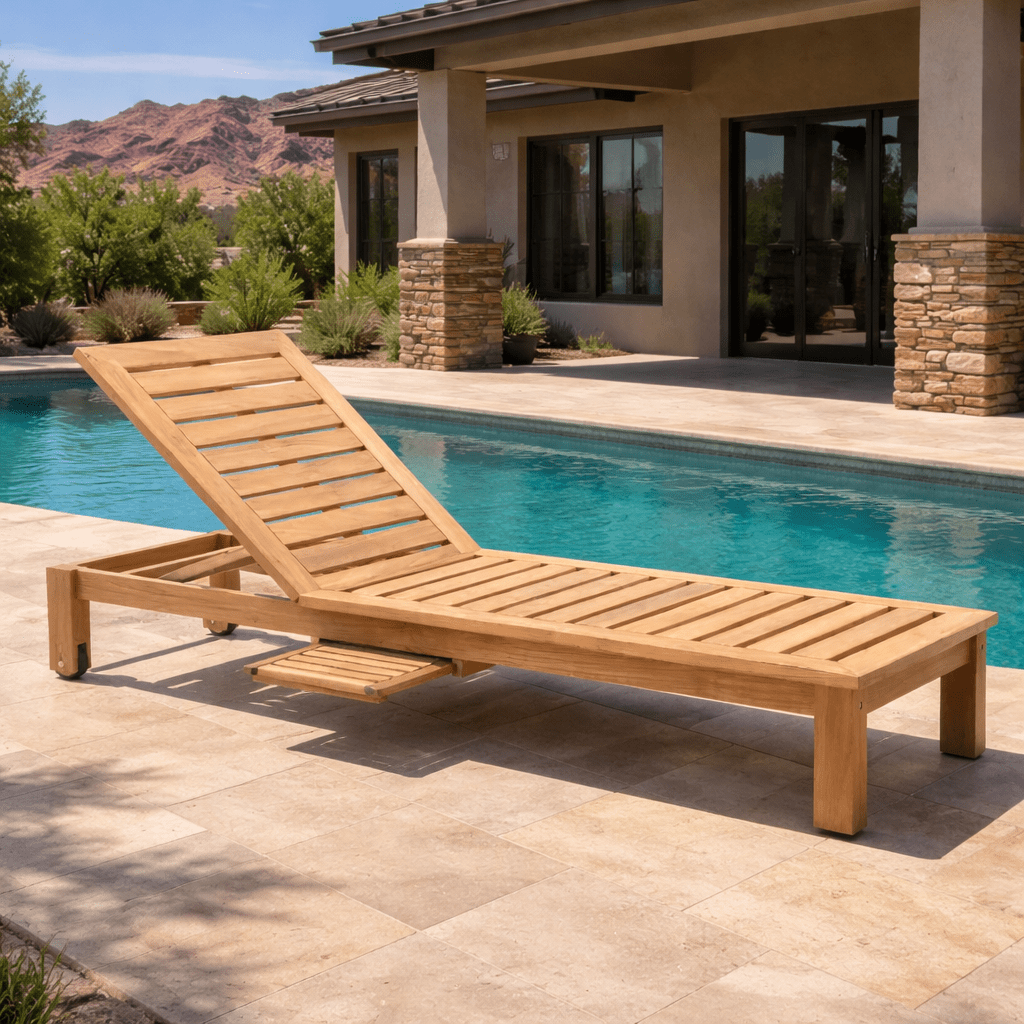 For an open pool deck, begin with chaise loungers and enough side-table space to make them practical. Position loungers according to actual sun and shade patterns rather than forcing symmetry. If one end of the deck becomes intensely sunny in the afternoon, a beautiful four-chair arrangement there may go unused while a less symmetrical shaded layout would perform better.
Larger decks can support separate sunbathing and conversation zones. This prevents loungers from being pulled into awkward positions whenever several people want to talk together.
A covered lanai is usually where we would place the most comfortable lounge furniture. Start with a sectional when the patio dimensions naturally create an L-shaped seating area; otherwise consider a sofa paired with club or swivel chairs. Add a coffee table plus side tables rather than expecting one central table to serve every seat.
Teak swivel chairs are especially useful when one seating area faces several attractions—a television or fireplace in one direction and the pool or water in another. The ability to reorient the chair can make a static patio substantially more useful.
The best dining-table location is usually close enough to the cooking area to reduce repeated trips through the house, yet far enough away that circulation around the grill or outdoor kitchen stays clear. On larger patios, leave enough separation between dining chairs and lounge furniture that occupied chairs do not collide with the adjacent zone.
For regular family dinners, six- or eight-person dining sets make sense on many larger properties. Homeowners who routinely host visiting family may prefer an extendable table rather than permanently dedicating the patio to ten or twelve seats.
For riverfront, canal-front, and Intracoastal properties, we would often use a sofa or loveseat facing a pair of movable chairs rather than a solid wall of sectional seating across the view. Swivel chairs are particularly effective here because guests can turn from conversation toward the water without moving furniture.
Where the patio extends toward a dock, preserve a generous circulation lane. Furniture should make the water more enjoyable, not turn the trip from house to dock into an obstacle course.
Large Jupiter properties sometimes have attractive areas that do not justify another complete furniture set—a shaded garden edge, side courtyard, front approach, or quiet spot overlooking tropical landscaping. A teak garden bench or pair of chairs can activate these spaces without competing with the main patio.
These secondary placements are also good candidates for furniture that is allowed to develop a silver-gray patina, especially when the homeowner prefers a softer weathered look among mature landscaping.
Jupiter does not have one single residential style. The market includes contemporary waterfront homes, coastal-inspired residences, Mediterranean and transitional properties, golf-community estates, townhomes, condos, and planned neighborhoods. Teak's advantage aesthetically is not that it dictates one style, but that natural wood can sit comfortably within several of them.
Modern waterfront architecture often relies on large glass openings, pale stone, clean rooflines, and uncluttered terraces. In these settings, teak introduces warmth without requiring ornate furniture. Straight-lined sectionals, simple dining tables, sling loungers, and restrained accessories allow the water and architecture to remain dominant.
Natural teak is equally comfortable with lighter coastal palettes and transitional homes. Warm teak tones pair naturally with white, cream, blue, gray, and other understated outdoor fabrics. If the wood is allowed to weather to silver-gray, the appearance can become even more relaxed over time.
The important design decision is consistency. A coordinated dining and lounge plan usually looks more intentional than accumulating unrelated “coastal” pieces merely because each item looks appropriate on its own.
Jupiter landscapes often use palms, dense greenery, flowering plants, hedges, and water features to create privacy and frame outdoor spaces. Teak's natural wood appearance works particularly well against that vegetation because it adds structure without introducing another visually artificial material.
Garden benches, dining furniture, and loungers can therefore function as architectural elements within the landscape rather than looking like temporary patio equipment.
Properties in communities such as Admirals Cove, Jonathan's Landing, The Bears Club, and Loxahatchee Club may have generous outdoor rooms designed for entertaining as well as everyday use. Here, furniture scale matters. Tiny individual pieces can look undersized on a broad lanai, while an appropriately scaled sectional, eight-person dining area, or coordinated lounge set can give the architecture the visual weight it needs.
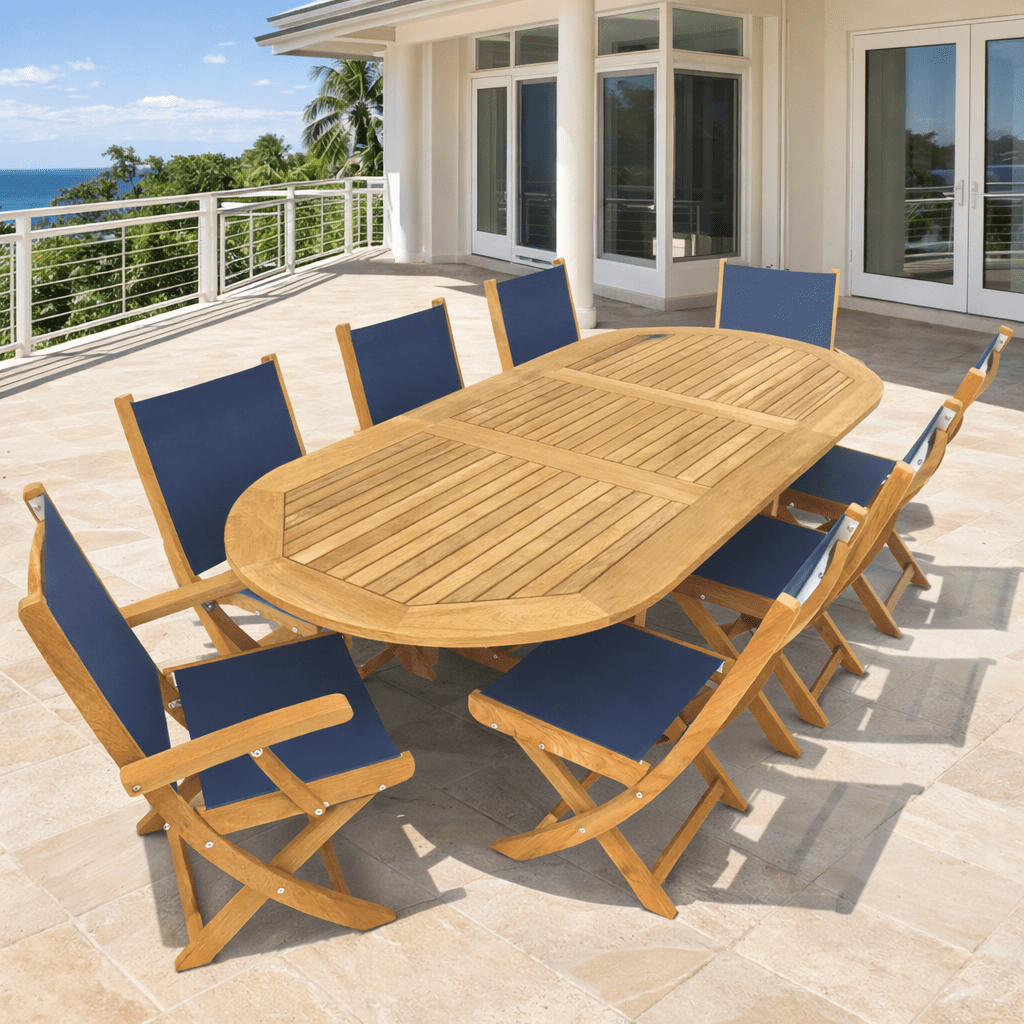 A product that looks excellent in a showroom may not be the right material for a humid, rainy, sun-exposed Jupiter patio. Before comparing colors and silhouettes, identify whether the furniture will be fully exposed, covered, screened, poolside, or close to salt air.
Grade A teak helps simplify that decision because it is intended for year-round exterior use and naturally resists moisture, rot, insects, and warping. The design can then be chosen within a material already suited to the environment.
A covered lanai, exposed pool deck, and waterfront seating area can exist within thirty feet of one another yet experience different amounts of sun, rain, moisture, and wind. Furnishing all three with an identical configuration ignores how the household will actually use them.
Use cushioned deep seating where longer conversations occur, loungers where people actually sun or relax by the pool, and dining furniture where food can move easily between cooking and seating areas.
A twelve-person table sounds appealing until it occupies a large section of patio every day for a household of two or four. In Jupiter's long outdoor season, daily usability deserves more weight than maximum theoretical capacity.
A more flexible arrangement might use an extendable table plus chairs that can be added as needed. That provides guest capacity while preserving open space around the pool or lanai during normal use.
Outdoor cushions should be chosen and managed with Jupiter's rain and humidity in mind. Most TeakHQ patio seating includes Sunbrella cushions, which are weather resistant, fade resistant, UV resistant, and water resistant, but that does not make cushion management irrelevant.
If the property experiences frequent wet-season storms, decide where cushions or accessories can go before purchasing a large quantity of them. A teak deck box or another convenient storage strategy is more useful when it is incorporated into the furniture plan from the beginning.
No premium patio material should be treated as permission to leave an outdoor space unprepared for a tropical storm or hurricane. Furniture selection and storm planning are separate decisions. Follow official weather guidance and secure or relocate outdoor objects as conditions warrant.
The useful purchasing lesson is to understand how many separate items your patio contains and how they will be handled. A beautifully styled space with dozens of lightweight accessories creates a substantially different preparation job than a simpler, more deliberate layout.
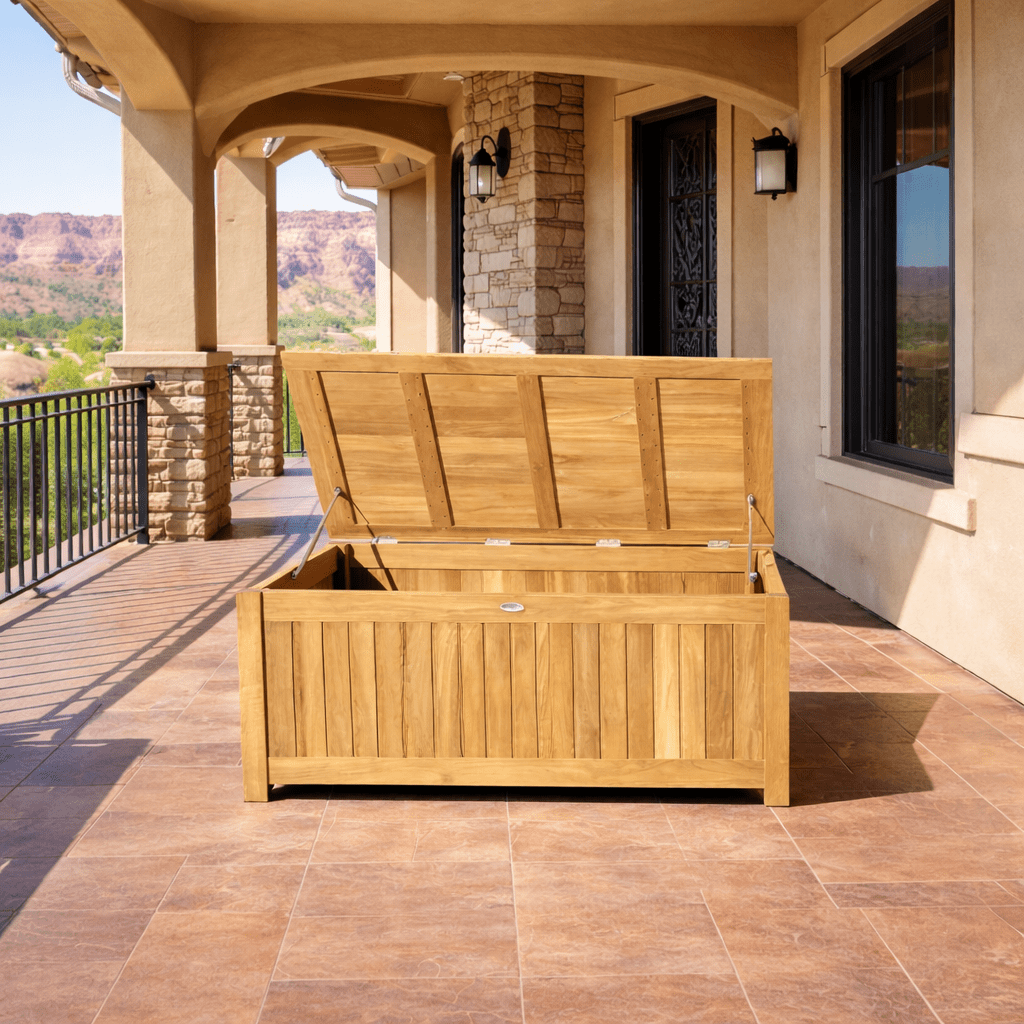 For routine care, remove dirt, leaves, pollen, food residue, and other organic debris rather than allowing it to accumulate. Jupiter's combination of moisture and warmth makes basic cleanliness particularly worthwhile, especially in shaded areas where surfaces may dry slowly.
Cleaning frequency should follow exposure rather than an arbitrary calendar. An uncovered table beneath landscaping may need attention more often than seating protected by a lanai.
Homes close to the Atlantic, inlet, or exposed Intracoastal locations should pay additional attention to salt residue. Periodic fresh-water rinsing and normal cleaning can help remove accumulated surface deposits from furniture and hardware.
This is also a good reason to inspect the entire piece rather than only the tabletop. Hardware, joints, lower surfaces, and areas that collect debris deserve periodic attention in a marine setting.
Premium teak is naturally resistant to moisture and rot, but humid outdoor environments can still allow surface dirt or organic material to develop mildew. Keeping furniture clean, allowing air movement, and avoiding long-term accumulation of damp debris are sensible practices.
Pay particular attention beneath cushions and in deeply shaded covered areas. A screened or roofed patio may receive less rain while also receiving less direct sun, so wet materials can sometimes take longer to dry.
Untreated teak gradually develops a silver-gray patina. This color change is normal and does not mean the furniture has failed. Homeowners who like the weathered appearance can allow the process to happen naturally.
If retaining more of the original teak color matters aesthetically, appropriate teak-care products may be used. Teak does not need artificial stain for durability, so this is primarily an appearance decision rather than a requirement for making the furniture suitable for Jupiter's climate.
Protective covers are optional for Grade A teak rather than necessary for basic outdoor durability. Some homeowners still choose them to reduce surface dirt or simplify cleaning, particularly during periods when a property is vacant.
Likewise, Jupiter homeowners generally do not need a traditional winter furniture-storage routine for the teak frames. Cushion storage and tropical-weather preparation are more relevant local concerns than moving heavy teak furniture indoors for cold weather.
The most successful Jupiter patio is not necessarily the one with the most furniture. It is the one that fits the property: durable materials for a humid coastal environment, clear movement between the house and outdoor destinations, comfortable seating where people naturally gather, and enough flexibility for both everyday living and guests. Premium Grade A teak gives homeowners a long-term foundation that can work across pool decks, covered lanais, dining areas, gardens, and waterfront spaces while allowing the wood to be maintained or simply age naturally.
Look for materials designed for prolonged exposure to humidity, rain, sunshine, and—in coastal locations—salt-laden air. Premium Grade A teak is a particularly strong option because its natural oils and dense grain help resist moisture, rot, insects, and warping while allowing it to remain outdoors year-round.
For ocean-adjacent homes, prioritize furniture designed for genuine outdoor exposure rather than products that depend on delicate finishes. Grade A teak is well suited to coastal patios, and it is also worth considering hardware and cushion materials rather than evaluating the frame alone.
Start with comfortable loungers and nearby side tables, then add a separate conversation group if the deck has enough room. Browse teak chaise loungers for dedicated poolside seating rather than trying to make dining chairs serve multiple purposes.
Yes. Premium Grade A teak is naturally high in oils, has a dense grain structure, and is resistant to moisture, rotting, insects, and warping. Those characteristics make it particularly appropriate for Jupiter's humid outdoor environment.
Yes. TeakHQ's Grade A teak furniture is designed for year-round outdoor use and can withstand rain, sun exposure, and temperature fluctuations. Normal cleaning and appropriate storm preparation are still sensible.
No. Protective covers are optional rather than required for the durability of premium Grade A teak. Some owners use covers to reduce cleaning or surface debris, but the teak itself is designed for outdoor exposure.
Yes. Natural unfinished teak gradually develops a silver-gray patina when exposed outdoors. That is a normal appearance change. You may let it weather naturally or use appropriate teak-care products if you prefer to retain more of the original warm color.
For most larger lanais, begin with a defined lounge area using a sofa, sectional, or club chairs plus coffee and side tables. If the lanai connects to an outdoor kitchen, create a separate dining zone while preserving clear circulation to the house and pool. Explore teak patio seating for lounge configurations.
Each can be a legitimate outdoor option. Aluminum is lighter and often more modern, while poly lumber is synthetic and generally requires relatively little maintenance. Teak offers natural wood, a heavier and more architectural feel, long outdoor life, and the flexibility to maintain its warm color or let it weather naturally.
Size for everyday use first and occasional entertaining second. A household that normally seats four but sometimes hosts eight may be better served by an extendable teak dining table than by permanently filling the patio with a very large fixed table.


