
FREE SHIPPING
within mainland USA
within mainland USA
Home ▸ Teak Outdoor Furniture ▸ By Location ▸ La Jolla, California
Outdoor furniture in La Jolla has to fit a distinctive combination of coastal exposure, abundant sunshine, ocean breezes, and outdoor spaces designed around views. From bluff-top terraces and pool patios to smaller decks near the water, the right material should look refined without creating an impractical maintenance routine. Aluminum and other premium materials can work well, but Grade A teak is especially worth considering for homeowners who want natural warmth, substantial construction, and reliable performance through sun, moisture, and changing coastal conditions.

La Jolla is not simply another mild Southern California furniture environment. Its coastal position changes what outdoor pieces are exposed to and how homeowners tend to use them. Furniture may spend long periods in sun and open air while also encountering marine moisture, salt carried inland on coastal breezes, morning dampness, and occasional rain. At the same time, many outdoor spaces are visually prominent parts of the home rather than secondary back patios, so appearance and aging matter almost as much as weather resistance.
Homes closer to the shoreline deserve a different furniture strategy than properties several miles inland. Salt does not mean every outdoor material will quickly fail, but it does make exposed hardware, finishes, fasteners, and joints more important considerations. Furniture that depends heavily on coatings or decorative surface treatments may demand more attention when continually exposed to a marine environment.
This is one reason material quality matters more than simply buying something labeled “outdoor.” For a La Jolla Shores property or a bluff-top terrace facing the Pacific, we would look closely at the underlying material, construction, and hardware rather than judging durability by appearance alone.
Many La Jolla patios are intentionally positioned to capture daylight and views. That creates a pleasant outdoor room, but it also means furniture can spend much of the day exposed rather than protected beneath deep roof overhangs. UV exposure affects finishes, fabrics, and the appearance of nearly every outdoor material over time.
With teak, sun exposure is part of the normal aging process rather than something that must be prevented for the wood to remain suitable outdoors. Natural teak gradually develops a silver-gray patina when left untreated. Owners who prefer the original golden color can choose to maintain that appearance instead.
La Jolla does not need frequent heavy rainfall for moisture to matter. Marine air, morning dampness, irrigation, swimming pools, wet towels, and ordinary outdoor use all create repeated wet-and-dry cycles. Furniture located beside a pool or in a shaded courtyard can experience a very different moisture pattern from furniture on a sunny upper terrace.
That distinction is important because a good layout provides drainage and airflow instead of treating every patio location the same. Even highly weather-resistant furniture benefits from being positioned where water can drain and surfaces can dry naturally.
One of the most overlooked La Jolla furniture decisions has nothing to do with durability: furniture height can either preserve or interrupt the view that made the patio valuable in the first place. A tall dining arrangement, umbrella, or high-backed seating group placed directly along a primary sightline can create more visual obstruction than homeowners expect.
We often favor a layered plan instead: lower-profile lounge seating nearest the principal ocean view, dining farther back where height matters less, and taller bar or counter seating only where elevation actually improves the view. In La Jolla, the most expensive furniture mistake can be buying beautiful pieces that make the outdoor room less enjoyable to look through.
Several premium materials can make sense here. Quality aluminum is light, contemporary, and resistant to many outdoor conditions, while synthetic materials can reduce certain maintenance concerns. Premium Grade A teak becomes particularly compelling when the goal is to combine coastal durability with the visual warmth of real wood and a substantial, architectural feel.
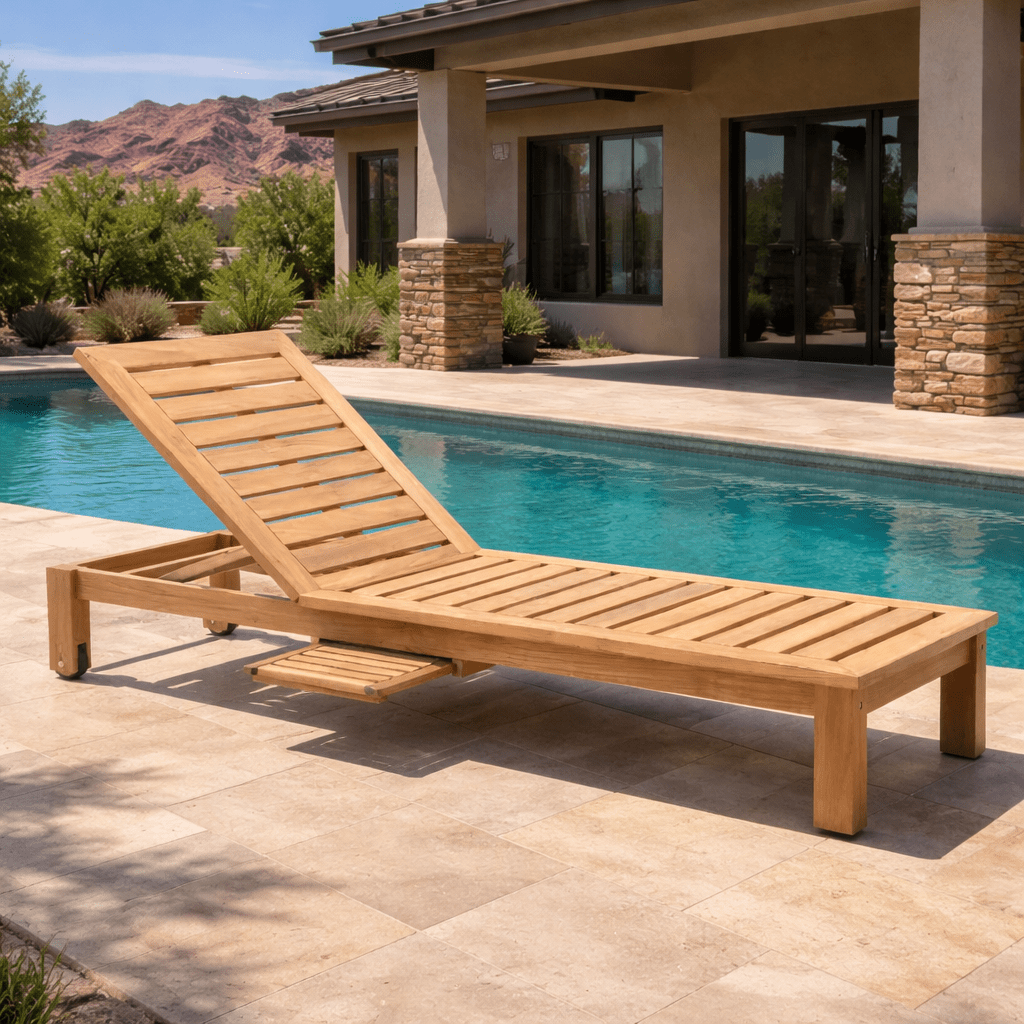 Grade A teak has a dense grain structure and is naturally high in oils. Those characteristics contribute to its resistance to moisture, rot, insects, and warping. In a coastal environment where furniture repeatedly encounters dampness and then dries in the sun, that natural resistance is useful because the wood does not depend on an artificial surface stain for outdoor durability.
This does not make teak immune to dirt, salt residue, mildew on surface contaminants, or normal weathering. It simply means the material itself is unusually well suited to repeated outdoor exposure.
For many coastal homeowners, teak's aging pattern is one of its biggest practical advantages. Untreated natural teak gradually turns silver-gray. On contemporary coastal homes, weathered cedar details, stone terraces, and neutral landscapes, that patina can look intentional rather than neglected.
Homeowners who prefer warm golden teak can maintain that appearance with optional care products. The key distinction is that maintaining the original color is an appearance decision, not a requirement for the furniture's basic outdoor durability. That flexibility is especially useful for second homes or households that do not want a rigid refinishing schedule.
Teak's natural resistance to moisture and rotting makes it practical around pool decks, outdoor showers, coastal terraces, and patios that experience marine dampness. It is designed for year-round outdoor use and can withstand rain, sun exposure, and temperature fluctuations.
For upholstered lounge furniture, the equation includes more than the frame. Many TeakHQ patio seating pieces include weather-resistant Sunbrella cushions, while others use synthetic rope or sling seating. Cushion specifications vary by product, so buyers should confirm what is included rather than assuming every chair or lounger uses the same configuration.
Premium teak furniture tends to feel heavier and more substantial than lightweight alternatives. That is valuable on large terraces where furniture is part of the architecture of the space, although weight is also a tradeoff: homeowners who constantly rearrange or store their furniture may prefer something lighter.
For an established outdoor room that stays furnished most of the year, we generally consider that substantial feel an advantage. Teak is resistant to warping and is intended for long-term exterior use, making the higher initial cost easier to evaluate over decades rather than seasons.
| La Jolla Challenge | Why Premium Grade A Teak Performs Well |
|---|---|
| Marine moisture | Natural oils and dense grain help resist moisture and rot. |
| Salt-air exposure | Real Grade A teak does not depend on a painted finish for durability. |
| Strong sun exposure | Teak is designed for sun exposure and can weather naturally to silver-gray. |
| Wet pool areas | Moisture resistance makes teak well suited to frequently wet outdoor spaces. |
| Repeated wet-dry cycles | Teak resists warping and handles normal outdoor weather fluctuations. |
| Long outdoor seasons | Grade A teak is designed for year-round exterior use. |
| Long-term appearance | Owners can accept a natural patina or maintain the original teak color. |
We would begin with the property rather than the furniture catalog. First identify the primary view, then the path between the house and outdoor space, and only then decide how much room should be devoted to dining, conversation, or poolside lounging. La Jolla homes can have expansive estate patios, but many equally desirable properties use narrower terraces, elevated decks, courtyards, or irregular spaces shaped by hillsides and ocean views.
On an ocean-facing terrace, we would normally place the lowest furniture closest to the view. A pair of loungers or a low conversation arrangement can create comfortable seating without turning the Pacific into something you see through chair backs. Swivel chairs are particularly useful where guests alternate between facing one another and turning toward the coast.
For a larger space, a dedicated teak patio seating zone gives the patio a true outdoor-room function instead of leaving chairs scattered around the perimeter. Keep circulation behind or beside that zone rather than sending foot traffic through the center of conversations.
Outdoor dining works best when it is treated as a functional room. We would keep it reasonably close to the kitchen or outdoor cooking area, leave generous chair-clearance space, and avoid placing the table where guests must cross the main lounge area carrying food.
For homeowners who entertain regularly, teak outdoor dining sets simplify the process of matching table size and seating. Six-person arrangements suit many everyday households, while larger or extendable tables are more useful for homes that frequently host relatives, neighbors, or weekend guests.
Poolside furniture has a different job from conversation seating. Chaise lounges should be positioned for sun, access, and movement around the pool rather than squeezed into whatever area remains after the dining set is installed. A nearby side table for drinks, books, sunscreen, or towels makes the space more functional.
For a pool-oriented property, we would normally prioritize dedicated teak chaise loungers before adding decorative accent seating. Furniture that serves the way people actually use the patio should come before pieces that merely fill an empty corner.
This is especially important on terraces. Empty space is not wasted space. It preserves sightlines, improves circulation, and allows architectural materials such as stone, stucco, glass, and landscaping to remain visually important.
A useful rule for La Jolla properties is to furnish for activities, not acreage. A compact ocean-view terrace might need only four excellent lounge seats and a table. A larger estate may genuinely need separate dining, conversation, pool, and garden zones. Buying the same amount of furniture for both simply because both are luxury homes produces very different results.
Begin with the activity your outdoor space supports most often. Pool-focused properties should usually start with chaise loungers; broad terraces and family gathering spaces often benefit from sectional or multi-piece seating; and homeowners who host meals frequently should prioritize a properly sized dining set or extendable table. Accent categories such as swivel chairs, side tables, and daybeds are most useful after those primary zones have been established.
The value of outdoor furniture here is not limited to occasional summer entertaining. The coastal setting makes patios, balconies, gardens, and pool areas extensions of the living space for much of the year, which changes how we would prioritize comfort and function. A beautiful chair that is rarely comfortable enough for a long conversation is less useful here than it might be in a climate where patios are used only intermittently.
In many markets, designers begin automatically with the dining table. In La Jolla, we would first ask where people naturally sit near the end of the day. If the answer is an ocean-facing terrace, that conversation area may deserve the best position on the property.
Deep seating, swivel chairs, or a sectional can turn that spot into a true daily-use outdoor room. Dining can then occupy an adjacent area closer to the house, where serving food is easier and taller furniture is less likely to interrupt the main view.
Outdoor meals here may range from breakfast on a compact terrace to longer dinners beside an outdoor kitchen. That makes flexibility more useful than simply buying the largest table that fits. A household of four that occasionally entertains eight may get more value from an extendable table than from permanently dedicating the patio to an eight-person footprint.
Smaller round or square configurations can also work particularly well in courtyards and balconies because they preserve circulation. The right table is determined by the patio's normal use, not its maximum theoretical capacity.
For homes with pools, the pool deck often functions as both recreation area and entertaining space. We would create at least two distinct types of seating when room permits: reclined chaise seating for sun and swimming, and upright conversation seating for guests who are not using the pool.
This separation matters because forcing every activity into one furniture group creates compromises. A chaise is excellent for reading after a swim but awkward for a six-person conversation. A deep sofa is comfortable for conversation but does not replace a dedicated sun lounger.
Vacation and second-home owners should be especially cautious about furniture that requires frequent cosmetic intervention. Natural teak is attractive in this context because owners can allow it to weather to a silver-gray patina rather than maintaining the original golden color on a strict schedule.
That does not eliminate normal cleaning or cushion care. It simply allows the wood's appearance to evolve without turning routine color maintenance into a requirement for basic outdoor use.
The best collection depends less on ZIP code than on where the furniture will live within the property. An exposed pool deck, protected courtyard, ocean-facing balcony, and large entertaining terrace can all exist within La Jolla, yet each calls for a different configuration.
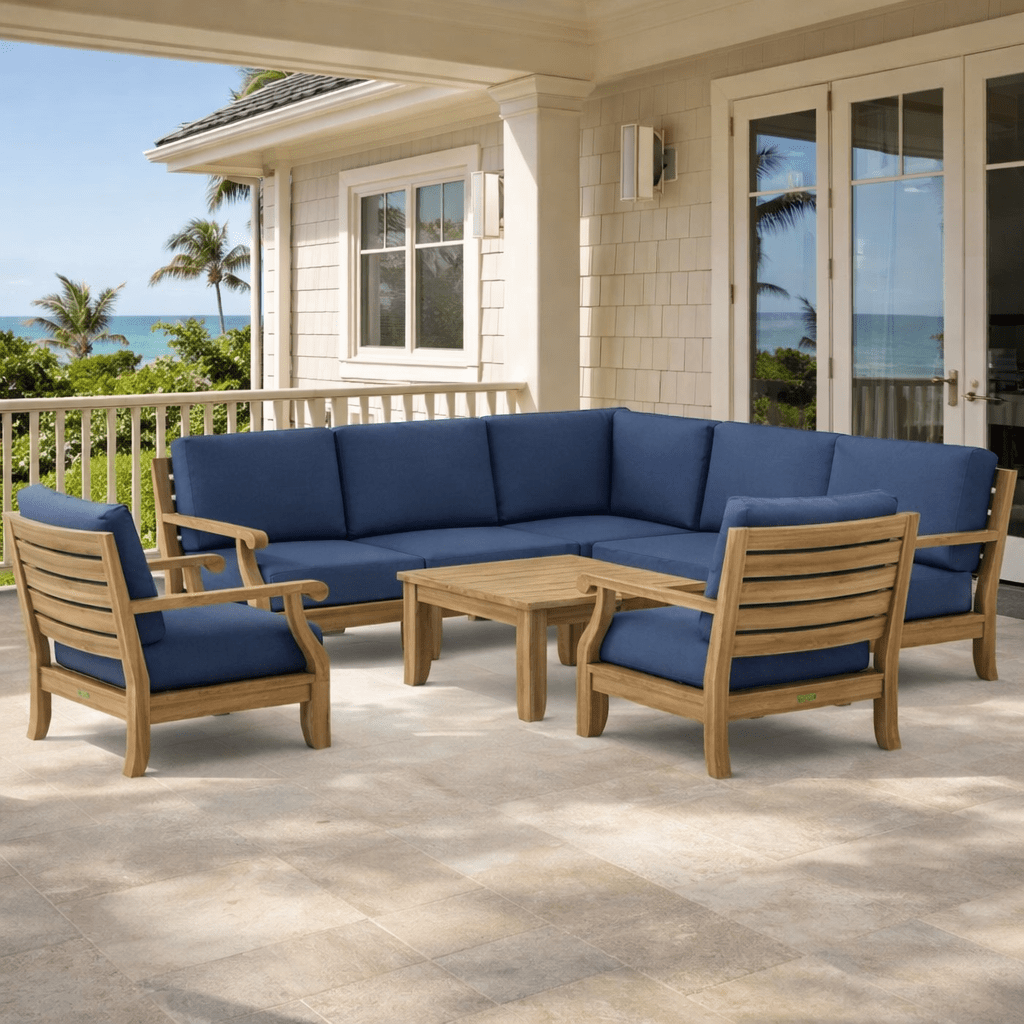 For a broad terrace, start with the sightline and build a conversation zone around it. Teak sectional sets are useful when one edge of the patio naturally defines the seating area and the goal is to seat several people without creating a collection of disconnected chairs.
On narrower terraces, however, a full sectional may be too dominant. Two club or swivel chairs paired with a loveseat or compact sofa can preserve more open space. This is a case where buying fewer pieces can actually make a premium patio feel larger and more intentional.
If dinner parties and family meals are the priority, table sizing should account for both seated dimensions and the space required to pull chairs back. Measure that full operating footprint rather than the tabletop alone.
For households whose guest count changes considerably, extendable teak dining tables are particularly practical. They preserve a more manageable everyday scale while creating extra capacity when needed. That is often preferable to letting an oversized table consume a view terrace every day simply to accommodate occasional gatherings.
Chaise lounges are the natural foundation near the pool. We generally like pairs or groups arranged parallel to the pool or view, with enough room between them for a side table. A separate upright seating area should be added if the pool deck also serves as a major entertaining space.
Daybeds can make sense on a large resort-style patio, but they require significantly more visual and physical space. Treat a daybed as a destination rather than an accent piece; it should occupy a deliberate lounging zone rather than block circulation around a pool.
Teak swivel chairs are unusually useful in coastal properties because one chair can support two orientations. Guests can face inward during conversation and then turn toward the ocean, pool, or sunset without moving the entire chair.
Finish the seating arrangement with appropriately placed teak side and end tables. Large patios frequently have enough seating but too few surfaces. A guest should not need to stand up or reach across a coffee table every time they put down a drink.
La Jolla architecture ranges from traditional Mediterranean and Spanish-influenced homes to contemporary coastal residences with expansive glass, restrained materials, and strong indoor-outdoor connections. Teak works particularly well across that range because natural wood can soften highly modern spaces while still feeling appropriate beside stucco, stone, tile, landscaped courtyards, and more traditional architecture.
On modern homes with broad windows, glass railings, stone paving, and restrained landscaping, outdoor furniture usually looks strongest when it supports the architecture rather than competing with it. Teak introduces natural warmth without requiring ornate shapes or decorative finishes.
Weathered silver-gray teak can produce an especially quiet palette alongside concrete, limestone, neutral upholstery, and ocean views. Natural golden teak creates more contrast and can become a warmer focal point against white or gray architecture.
Courtyards, warm stucco, tile, stone, and mature landscaping call for a somewhat different approach. Here, natural teak can feel less stark than highly industrial furniture and can connect visually with the organic materials already present in the landscape.
Round dining tables, benches, and smaller conversation groups can work particularly well in courtyards because they respond to spaces that may be shaped by planting beds, walls, fountains, or irregular paving rather than a simple rectangular pool deck.
Coastal landscaping often gives a patio multiple visual focal points: ocean, pool, garden, fire feature, or architectural courtyard. Furniture does not need to face the same direction everywhere. Create small zones that correspond to those focal points.
The goal should be a sequence of useful outdoor rooms rather than a perimeter lined with chairs. A bench facing the garden, loungers oriented toward the pool, and conversation seating aimed toward the sunset can coexist without making the property feel overfurnished.
 A patio a short distance from the ocean should not be furnished as though it were an inland, fully protected courtyard. Salt-bearing air and repeated moisture exposure make materials, hardware, finishes, and construction worth examining closely.
Grade A teak is a strong option because its outdoor suitability comes from the wood's dense grain and natural oils rather than a painted surface coating. It can still collect salt and dirt, so occasional cleaning remains appropriate.
This mistake is surprisingly easy to make because shoppers evaluate furniture from standing height. Once everyone sits down, the relationship between chair backs, tables, railings, and the horizon changes.
Before purchasing, sit in the intended location and establish the important eye-level view. Keep lower seating along that axis when possible. Furniture should frame the reason the terrace exists, not become an obstacle between the homeowner and the coast.
A ten-person dining table can be appropriate for a household that regularly seats ten. It is less sensible for a couple that entertains a large group three times a year. Oversizing furniture reduces circulation and can turn a terrace into a storage area for empty chairs.
For variable entertaining, use extendable dining furniture or combine permanent seating with pieces that can serve multiple roles. The everyday patio should work exceptionally well for everyday life.
Another common planning error is placing dining and lounge furniture first, then squeezing loungers wherever there is room near the pool. Poolside seating needs adequate access, comfortable orientation, and clearance from walking paths.
Plan the pool zone before purchasing furniture. Grade A teak is well suited to this application because it resists moisture and is designed for outdoor exposure, but even the right material performs better in a thoughtful layout.
Some owners create unnecessary maintenance for themselves because they believe a silver-gray teak surface indicates deterioration. Natural weathering is expected. Untreated teak can be allowed to develop its gray patina while remaining outdoor furniture.
If the original warm color is important aesthetically, maintaining it is a legitimate choice. If not, letting the wood weather can significantly simplify ownership—particularly for second homes.
La Jolla care is less about protecting Grade A teak from ordinary outdoor weather and more about keeping surfaces clean in a marine environment. The wood is designed for year-round outdoor use, so homeowners can choose a relatively simple maintenance routine unless preserving the original golden appearance is important.
 Homes closest to the coast may notice salt residue and ordinary airborne grime collecting on exposed furniture. Clean the furniture as needed rather than following an arbitrary calendar. A sheltered courtyard may require less frequent attention than an ocean-facing deck.
Pay particular attention to horizontal surfaces, joints, and areas where debris accumulates. Regular basic cleaning is preferable to allowing layers of salt, dust, sunscreen residue, pollen, or organic material to build up.
Teak is naturally resistant to moisture and rot, but good patio design still matters. Avoid leaving wet towels, leaves, or debris sitting against surfaces for long periods. Keep drainage paths open around pool furniture and give shaded areas reasonable airflow.
Mildew can grow on surface contamination in outdoor environments even when the underlying material itself is rot resistant. Keeping furniture clean and allowing it to dry naturally is the practical first line of care.
There are two legitimate approaches to teak ownership. Leave natural teak untreated and allow it to develop a silver-gray patina, or use appropriate treatments when the goal is to retain more of the original golden appearance.
Decide which appearance you want before beginning a maintenance routine. Homeowners sometimes create unnecessary work by repeatedly trying to reverse natural weathering even though they ultimately prefer the softer gray color beside their coastal architecture.
Wood and cushions do not have identical care needs. Many TeakHQ lounge pieces use Sunbrella fabric, which is weather resistant, fade resistant, UV resistant, and water resistant, but water resistance does not mean every cushion should remain continually wet or dirty.
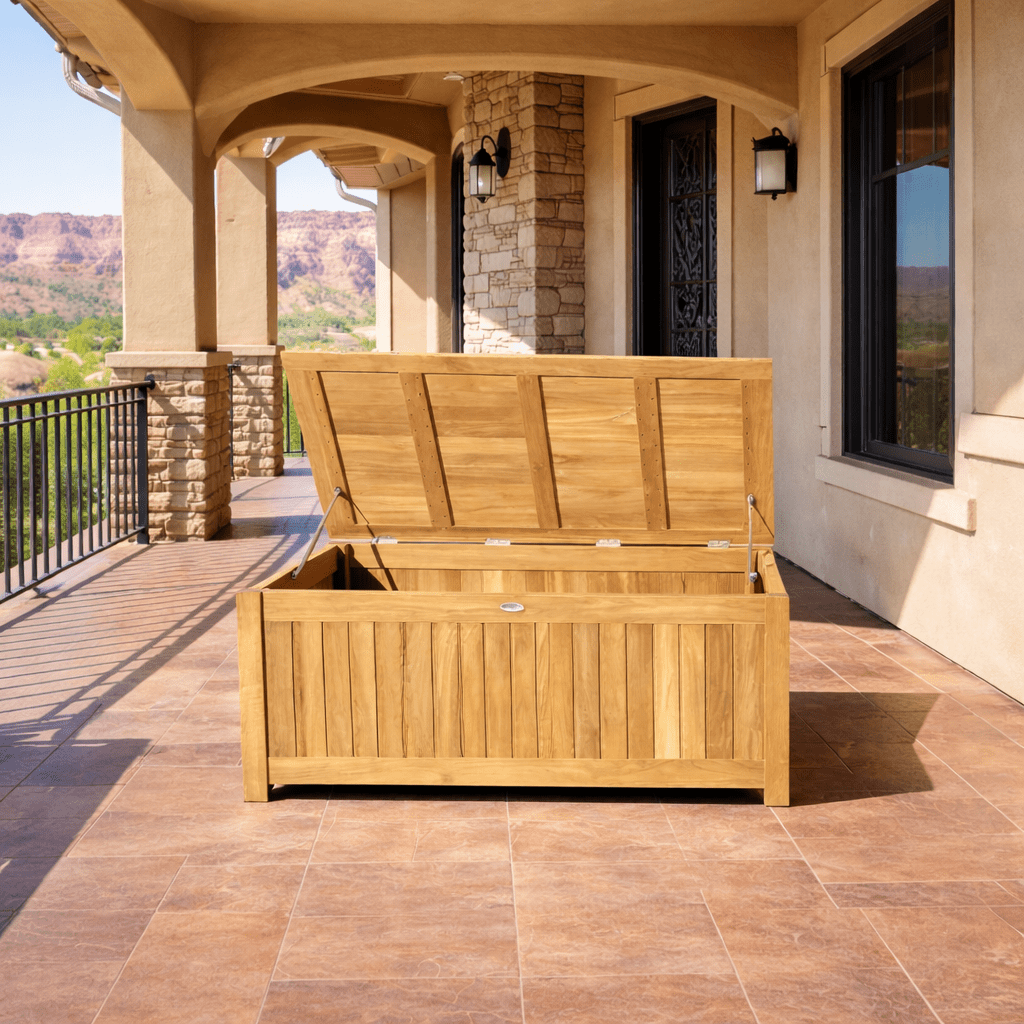
Let cushions dry, clean them according to the applicable product guidance, and consider protected storage when the patio will not be used for an extended period. A deck box can make that easier without requiring homeowners to carry cushions deep into the house.
Grade A teak is designed for year-round outdoor use and can withstand rain, sun, and temperature fluctuations. La Jolla homeowners therefore do not generally need to treat outdoor furniture as something that must automatically be moved indoors for an off-season.
Protective covers are also optional rather than required for teak's durability. Some homeowners still choose covers to reduce cleaning or protect cushions and surfaces when a home will be vacant. If covers are used, follow the cover manufacturer's instructions and avoid creating a continually damp environment beneath them.
The right La Jolla outdoor space starts with three decisions: protect the view, furnish the activities you actually use, and choose materials appropriate for a coastal environment. Premium Grade A teak makes a strong long-term choice when you value real wood, substantial construction, flexible maintenance, and furniture designed to remain outdoors through changing conditions. From pool loungers and ocean-facing conversation areas to dining terraces and courtyards, build the primary zones first and add complementary pieces only where they make the space more useful.
Several premium materials can work well, including quality aluminum and Grade A teak. Teak is especially compelling for coastal homes because its dense grain and natural oils make it resistant to moisture, rot, insects, and warping without requiring a painted finish for durability.
Yes. Grade A teak is designed for outdoor use and is naturally resistant to moisture and weather exposure. Homes exposed to salt-bearing ocean air should still clean accumulated salt and surface debris periodically.
Start with lower-profile lounge furniture near the primary sightline so chair backs and tables do not unnecessarily block the view. Swivel chairs, sofas, compact conversation groups, and sectionals can all work depending on terrace dimensions.
Dedicated chaise lounges are usually the most useful starting point, followed by side tables and a separate upright conversation area when space permits. Teak works particularly well around pools because it is naturally resistant to moisture and designed for exterior use.
Yes. TeakHQ's Grade A teak furniture is designed for year-round outdoor use and can withstand rain, sun exposure, and temperature fluctuations. Covers are optional rather than required for basic teak durability.
No. Teak does not require sealant for its basic outdoor durability. It can be left untreated to weather naturally, or owners may use appropriate teak care products when they want to maintain a particular appearance.
Yes, untreated natural teak gradually develops a silver-gray patina with outdoor exposure. This is normal weathering. Owners who prefer the original golden color can choose to maintain it rather than allowing the patina to develop.
Base the decision on normal household use rather than maximum guest count. If everyday dining is relatively small but you regularly host larger groups, an extendable teak table can preserve valuable terrace space between gatherings.
Remove accumulated salt, dirt, and organic debris as needed, keep drainage areas clear, and allow wet furniture to dry naturally. Cushions should be cared for separately and stored or protected when that makes sense for how frequently the property is used.
Not in every situation. Aluminum is lighter and can suit highly modern spaces, while poly furniture offers a synthetic, low-maintenance alternative. Teak is preferable when you want real wood, a warmer and more natural appearance, greater weight, and an architectural feel combined with long-term outdoor durability.


