
FREE SHIPPING
within mainland USA
within mainland USA
Home ▸ Teak Outdoor Furniture ▸ By Location ▸ Lake Norman, North Carolina
Lake Norman outdoor spaces have to work as hard as the homes around them—from waterfront decks and covered patios to pools, docks, and large entertaining areas. Hot, humid summers, regular rainfall, strong sun exposure, and cooler winter weather all matter when choosing furniture intended to stay outdoors for years. For homeowners who want a natural material rather than lightweight metal or synthetic lumber, premium Grade A teak is especially well suited to the lake's combination of moisture, seasonal weather, and relaxed indoor-outdoor living.

Choosing outdoor furniture around Lake Norman is less about preparing for one extreme condition than managing several conditions over the course of a year. Furniture may spend summer afternoons in heat and humidity, get wet during thunderstorms, sit beneath trees that drop pollen and organic debris, and then experience freezing temperatures during winter. Waterfront properties add another consideration: furniture is often positioned in open, exposed spaces where sun, moisture, and changing weather reach it more directly.
Summer humidity matters because outdoor furniture rarely dries as quickly as it would in a desert or Mediterranean climate. That makes material choice, drainage, and cushion management more important. Furniture positioned on shaded decks, beneath covered porches, or near densely wooded shorelines may remain damp after rain longer than furniture sitting in full sun.
This is one reason we would be cautious about lower-quality wood furniture in this market. Moisture is not merely an occasional event around the lake; it is part of the normal outdoor environment. Premium materials that tolerate repeated wetting and drying are easier to live with long term.
A lakefront property can create very different drying conditions within the same backyard. A sunny pool deck may dry quickly after a shower, while a shaded patio under mature hardwoods can stay damp much longer. That distinction is easy to overlook when homeowners shop based only on average weather.
When comparing furniture, think about the exact micro-location rather than simply asking whether a product is suitable for North Carolina. A covered porch, exposed dock, shaded woodland patio, and west-facing pool terrace are four different furniture environments.
Humidity gets much of the attention, but Lake Norman patios can also receive substantial direct sunlight. Furniture on open shoreline lots, docks, pools, and elevated decks may spend long periods without shade. That makes UV exposure relevant for both frames and fabrics.
Grade A teak is designed for outdoor sun exposure and naturally weathers rather than requiring an artificial stain for durability. For cushioned seating, fabric quality matters separately; most TeakHQ lounge seating includes Sunbrella cushions, which are designed to resist weather, fading, UV exposure, and water.
Lake Norman is not a year-round tropical market. Summer can be hot and muggy, while winter brings colder temperatures and occasional freezing conditions. Good outdoor furniture therefore needs to handle seasonal temperature changes instead of being optimized for only heat or only cold.
For homeowners who do not want to move an entire outdoor room into storage every winter, this is where furniture designed for year-round outdoor use becomes especially valuable.
Premium teak makes sense around Lake Norman because its strengths line up unusually well with the conditions homeowners actually manage: moisture, humidity, sun, seasonal temperature changes, and frequent outdoor use. It is not the only premium option—quality aluminum and synthetic materials can also work well—but Grade A teak offers a particularly useful combination of natural appearance, weight, durability, and low-maintenance flexibility.
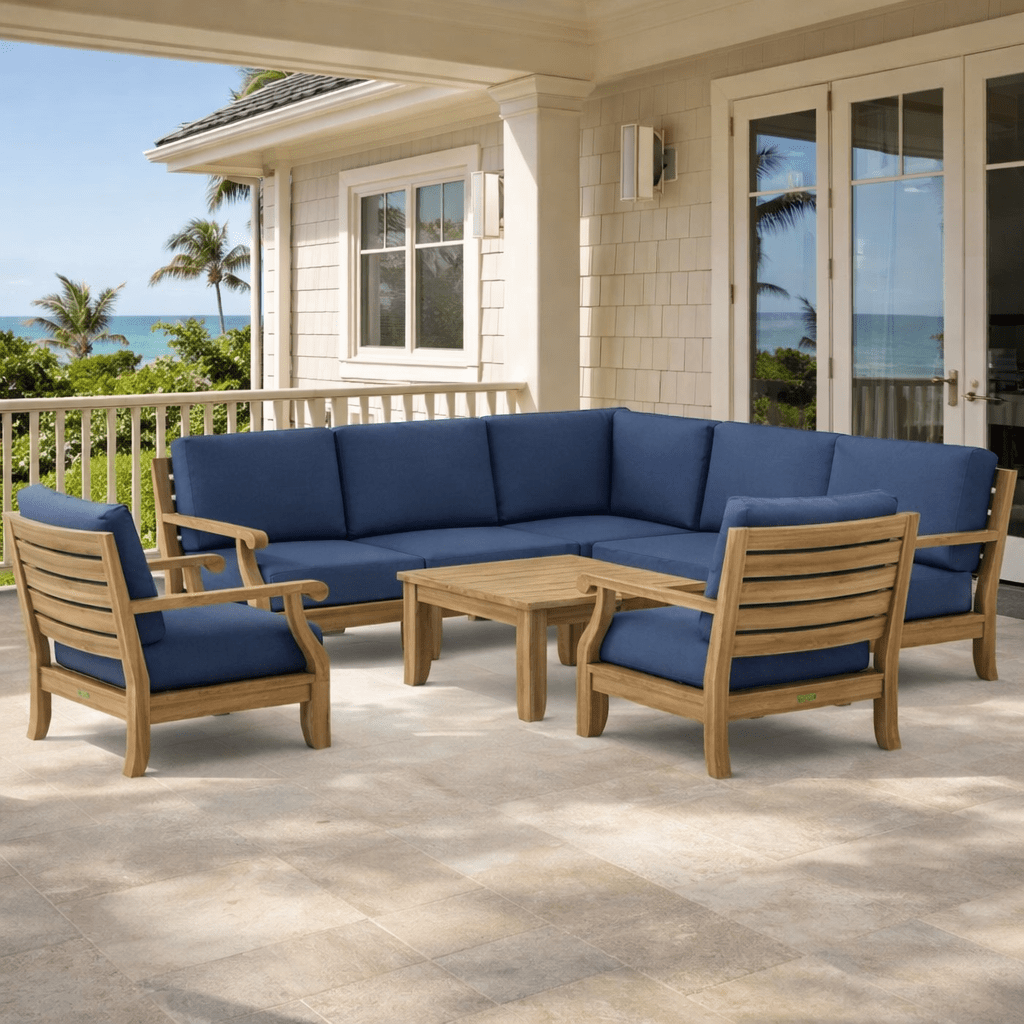 Grade A teak is naturally high in oils and has a dense grain structure. Those characteristics help make it resistant to moisture, rotting, insects, and warping. Around Lake Norman, that is especially valuable on patios and decks that experience repeated cycles of rain, humidity, sun, and drying.
The practical benefit is not that teak never gets wet—it does—but that premium teak is naturally well suited to being outdoor furniture without depending on paint or an artificial protective finish for durability.
TeakHQ's Grade A teak furniture is designed for year-round outdoor use and can withstand rain, sun exposure, and temperature fluctuations. That matters in a region where homeowners may use the same patio during a hot July weekend, a crisp October dinner, and a mild winter afternoon.
The dense structure of quality teak also gives the furniture a substantial, architectural feel. That can be an advantage on larger waterfront patios where very lightweight pieces can feel visually undersized or insubstantial.
One of the most useful ownership distinctions to understand before buying teak is that natural color change is expected. Untreated teak gradually develops a silver-gray patina as it weathers outdoors. Homeowners who like that appearance can simply allow the process to occur.
If you prefer the warmer golden-brown appearance of newer teak, you can use appropriate teak care products or sealers. The key point is that this color decision is largely aesthetic; teak does not require an artificial stain simply to remain suitable for outdoor use.
Premium Grade A teak costs more upfront than many mass-market outdoor furniture materials. The relevant comparison for a Lake Norman homeowner, however, is not necessarily teak versus one inexpensive patio set. It is teak versus the possibility of replacing lower-quality furniture repeatedly over the life of the outdoor space.
Well-made teak furniture can last for decades. For homeowners investing substantially in docks, pools, covered patios, outdoor kitchens, landscaping, and lake views, choosing furniture on the same long-term horizon often makes more sense than treating it as a short-lived accessory.
| Lake Norman Challenge | Why Premium Grade A Teak Performs Well |
|---|---|
| Summer humidity | Natural oils and dense grain help teak resist moisture, rot, and warping. |
| Frequent rain | Grade A teak is designed for outdoor exposure and repeated wet-dry cycles. |
| Strong sun | Teak withstands sun exposure and can weather naturally without artificial stain. |
| Seasonal temperature changes | Teak is designed for year-round outdoor use and temperature fluctuations. |
| Shaded damp areas | Natural moisture and rot resistance make teak practical where drying may be slower. |
| Poolside moisture | Teak's moisture resistance suits furniture positioned around pools and wet-use areas. |
| Long-term exposure | Quality teak can last for decades rather than just a few seasons. |
We would begin with one question: where does your household actually spend time outside? On many Lake Norman properties, the answer is not a single patio. There may be a covered area near the house, an open pool terrace, a deck overlooking the water, and a secondary seating area closer to the shoreline. Trying to make one furniture arrangement serve every purpose usually produces compromises.
If your home regularly hosts children, grandchildren, neighbors, or weekend guests, we would prioritize capacity before decorative accent pieces. A generously sized teak outdoor dining set often earns more use around the lake than several small disconnected tables.
For households whose guest count changes dramatically from ordinary weeknights to holiday weekends, an extendable teak dining table is particularly practical. You retain a comfortable everyday footprint but have additional seating capacity when the lake house fills up.
Dining chairs are useful for meals, but they do not replace a genuine lounge area. If space allows, we would usually create a second zone with a sofa, sectional, club chairs, or swivel chairs and a coffee table.
On waterfront properties, orient that space toward the view rather than automatically toward the back wall of the house. A teak sectional can define a large open terrace especially well, while sofa-and-chair combinations give you more flexibility when traffic paths or doors break up the space.
One of the most common planning mistakes on a lake property is arranging furniture as though the patio itself were the attraction. The view is the attraction. Sightlines toward the water should influence chair orientation, sectional placement, and even the choice between fixed and swivel seating.
This is where teak swivel chairs can be more useful than they first appear. Guests can turn toward conversation, the pool, an outdoor television, or the lake without physically dragging chairs around the patio.
If you have a pool, do not force your primary lounge furniture to perform double duty as sun furniture. Teak chaise loungers are better suited to reading, sunning, and drying off after swimming, while deeper seating is better for longer conversations.
Similarly, furniture near a dock or shoreline seating area should usually be simpler and more compact than the main patio arrangement. Adirondack chairs, loungers, or a bench can create a destination without competing with the primary outdoor room.
Start with the part of your outdoor space that gets the most use. Large households and frequent hosts will usually benefit most from dining sets or extendable tables; homeowners whose patios function more like outdoor living rooms should begin with sectionals, sofas, and swivel chairs. Pool owners can then layer in chaise loungers, while Adirondack chairs and storage pieces work especially well in secondary lakefront spaces.
Lake Norman homes often function differently from ordinary suburban backyards because the water creates an activity pattern of its own. A Saturday can move from coffee on the deck to boating or swimming, then back to the patio for dinner and an evening gathering. Furniture therefore benefits from being arranged around distinct activities rather than one formal outdoor setting.
Lake living tends to create repeated transitions between wet and dry activities. Guests arrive from the boat, children move between the pool and patio, food gets carried outdoors, and people settle into different seating areas throughout the day. That favors furniture arrangements with clear circulation paths and multiple small surfaces rather than one tightly packed seating cluster.
A practical lounge arrangement often includes a substantial central coffee table plus side tables beside individual chairs. People returning from the water have somewhere to set a drink, sunglasses, or phone without walking through the whole seating group.
A lake house that feels quiet for two people on Thursday can have ten people on the patio Saturday afternoon. That makes flexible capacity unusually valuable here. Extendable dining tables, dining benches, stackable chairs, and multi-piece lounge sets can handle changing guest counts without forcing the everyday layout to feel oversized.
For second homes and frequently visited family properties, we would generally plan for the largest gathering that happens regularly—not the maximum number of people who might appear once every few years.
Lake Norman has four seasons, but outdoor furniture is not limited to a short summer window. Spring and fall can be some of the most comfortable times for patio dining, while many mild winter afternoons still invite time outside. Covered patios and fire features can extend the useful season further.
That longer usage cycle strengthens the case for furniture chosen for daily comfort and longevity rather than furniture that is treated as temporary summer equipment.
Lake properties often have natural secondary destinations: a dock, shoreline lawn, shaded tree line, garden edge, or overlook. Those spaces do not need full outdoor rooms. A pair of Adirondack chairs or a garden bench may be enough to turn a previously unused portion of the property into the place people naturally migrate at sunset.
Rather than furnishing every Lake Norman property the same way, we would match each furniture category to the way a particular outdoor zone is used. The goal is to create several purposeful spaces that work together.
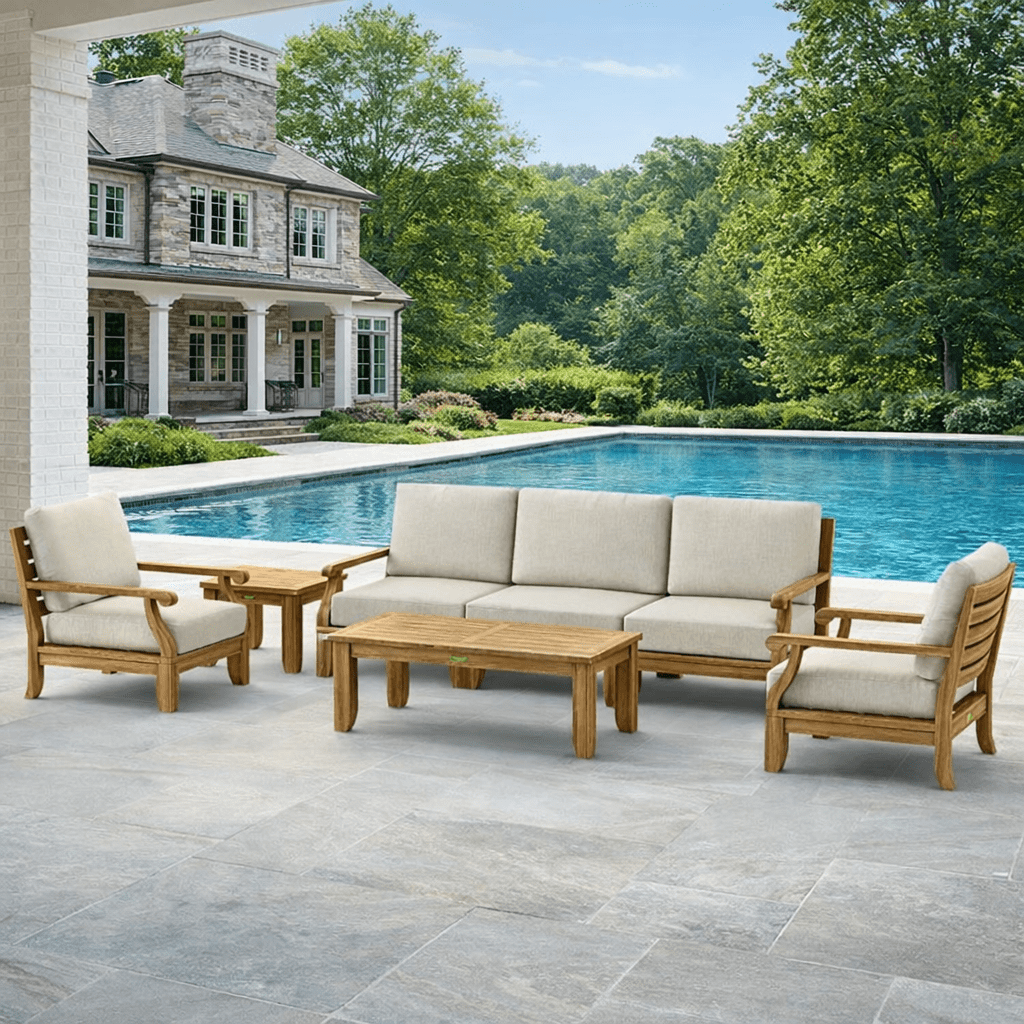 Large lake-facing patios are natural candidates for deep teak patio seating. Sectionals work especially well where you want to define a broad conversation zone, while separate sofas and club chairs are useful when doors, stairs, or view corridors divide the patio.
Before buying the largest sectional that fits, map the sightlines from the house. A low, open arrangement that preserves the view from interior rooms may be better than maximizing the number of seats.
 For outdoor kitchens and grilling areas, dining should usually sit close enough to make serving easy without blocking the cooking zone. Six-person sets suit many households, while eight- and ten-plus-person tables make sense for families that regularly host groups.
Allow enough clearance behind chairs for guests to move while someone else is seated. On large patios, circulation space is often more valuable than squeezing in an extra chair or two.
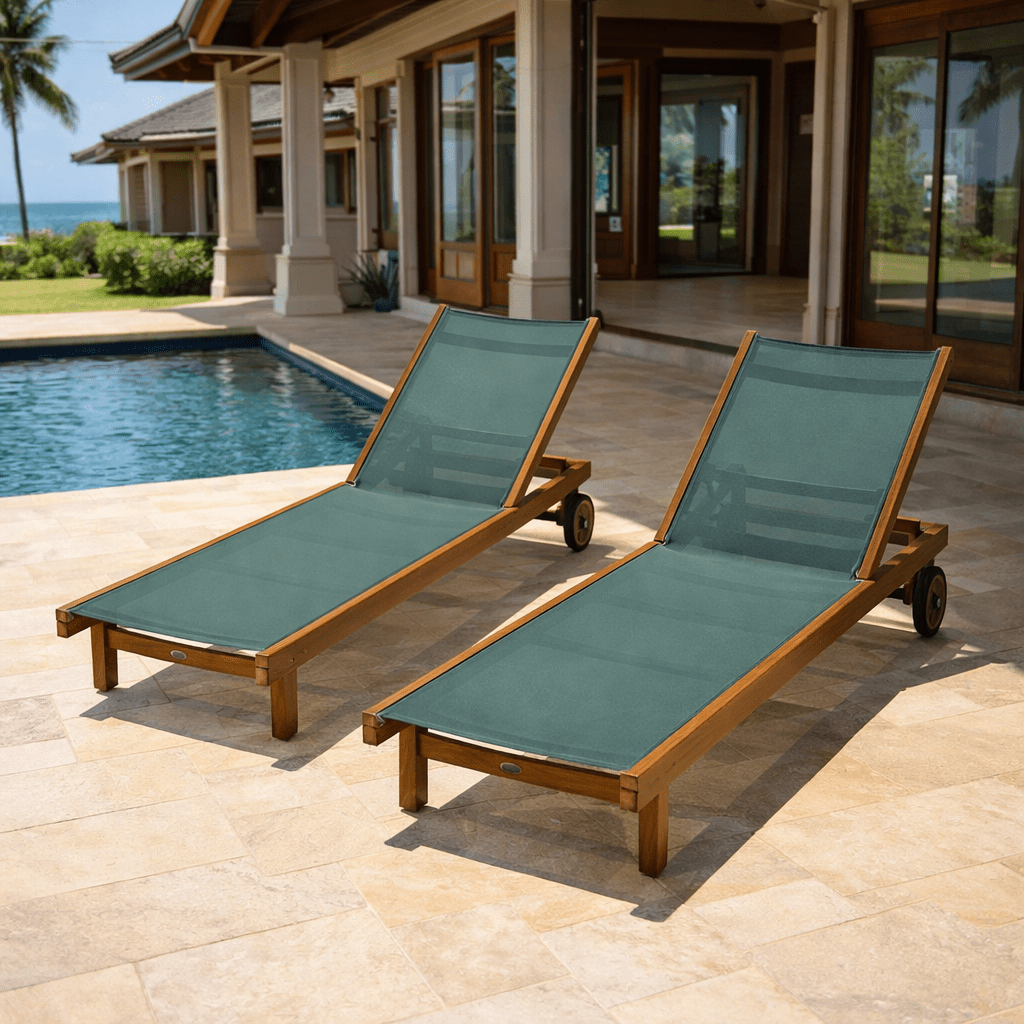 Pool areas call for a different posture than conversation seating. Chaise lounges give swimmers a place to dry off, read, or rest without occupying the main sofa. Pairing loungers with small side tables also keeps drinks and personal items off the pool deck.
If your patio alternates between full sun and afternoon shade, consider where people naturally want to sit at different times rather than lining every chaise up solely for symmetry.
Covered spaces can support deeper cushioned furniture because they receive less direct rain, although humidity and wind-driven weather still matter. Sofas, loveseats, swivel chairs, and rocking chairs can make these areas feel more like extensions of the interior.
Most TeakHQ patio seating includes Sunbrella cushions, though individual product specifications vary. If a piece does not include cushions, compatible cushions are often available separately.
Docks and shoreline areas usually benefit from fewer, simpler pieces. Adirondack chairs, steamers, or small lounger sets allow people to sit close to the water without turning the dock into a second full patio.
We would keep the main entertaining furniture closer to the house and use dockside seating for what the location does best: watching boats, reading, fishing, or sitting near the water.
Lake Norman architecture spans traditional Southern homes, newer transitional construction, contemporary lake houses, golf-community properties, cottages, and large custom waterfront estates. Teak works comfortably across that range because the material itself is visually strong without requiring an ornate design language.
On a waterfront property, furniture should support the architecture and landscape rather than compete with them. Natural teak is particularly useful because its warm wood tone works with stone, brick, neutral siding, painted trim, pool decking, and heavily landscaped settings.
As teak develops a silver-gray patina, it can become visually quieter still—an appealing effect for owners who prefer furniture to blend into a mature lakefront landscape.
Classic dining tables, slatted chairs, rockers, benches, and deep-seating furniture pair naturally with covered porches, brick terraces, and traditional homes. For these properties, we would generally avoid mixing too many unrelated furniture styles in the same sightline.
Repeating one material—such as teak—across dining, lounge, and secondary seating areas can make a large outdoor property feel cohesive without requiring every piece to come from an identical collection.
More modern properties often benefit from simpler teak profiles, broad sectionals, sling seating, and cleaner table shapes. Teak adds warmth to glass, metal, concrete, and modern pool finishes without making the space feel rustic.
This is one situation where the choice between teak and aluminum becomes primarily aesthetic rather than a question of whether either material can be premium. Aluminum offers a lighter, more overtly modern appearance; teak offers a heavier, warmer, more organic presence.
Many lake properties already have strong visual texture from tree trunks, leaves, shoreline vegetation, stone, and water. Overly complicated furniture can make the space feel busy. Natural wood, neutral cushions, and a limited number of furniture forms generally allow the setting to do more of the visual work.
A sectional may technically fit a patio while still being the wrong sectional for the property. Tall backs, oversized arrangements, or furniture placed across key sightlines can interfere with views from both the patio and interior rooms.
Lay out the furniture footprint before ordering and look through the major windows and doors from inside the house. Teak's substantial presence works well on large properties, but the configuration should respect the view.
Homeowners sometimes evaluate outdoor furniture according to how quickly an open, sunny deck dries. A shaded porch or tree-covered shoreline seating area may behave very differently. Organic debris and lingering moisture deserve more attention in those locations.
Teak's natural moisture and rot resistance make it well suited to these environments, but good housekeeping still matters. Remove leaves and debris rather than allowing them to sit wet against furniture for long periods.
Lake homes often host more people than their everyday household size suggests. Buying a four-person arrangement for a household that routinely hosts eight creates constant improvisation with indoor chairs and temporary seating.
Instead, think about the typical summer weekend. Larger dining sets, extendable tables, sectionals, and supplemental chairs can make entertaining easier without requiring every space to be permanently arranged for a crowd.
A lake property may have excellent dining furniture and excellent loungers yet still feel awkward because there is nowhere comfortable to sit between swimming and dinner. Deep seating fills that gap.
Think in activity zones: dining, conversation, sun lounging, and quiet secondary seating. Different categories exist because those activities genuinely require different seating positions.
Weather-resistant performance fabrics are designed for outdoor conditions, but that does not mean cushions should remain wet or covered in leaves indefinitely. After prolonged rain, allow cushions to dry and keep them clean. During periods of severe weather or long non-use, storing cushions can reduce unnecessary exposure.
A teak deck box or other suitable storage area can make that routine much easier on large patios.
One of teak's advantages is that care can be matched to the appearance you want. You do not need to maintain a golden finish for the wood to remain suitable for outdoor use. The practical Lake Norman maintenance routine is more about cleanliness, drying conditions, and seasonal inspection than constant refinishing.
There is no useful one-size-fits-all cleaning calendar for every Lake Norman patio. Furniture on an exposed pool terrace may need only periodic washing, while furniture beneath trees can accumulate pollen, leaves, bird debris, and organic material much faster.
A good rule is to clean when visible buildup appears rather than waiting for an arbitrary date. Spring pollen season and fall leaf drop are particularly logical times to inspect furniture.
Humidity alone does not determine how damp furniture stays. Shade, airflow, nearby landscaping, and whether the patio drains well can matter just as much. Keep leaves and debris from accumulating underneath furniture and around feet where moisture can linger.
If mildew develops on surface dirt or debris, clean it promptly rather than allowing buildup to remain through the season.
Untreated teak naturally turns silver-gray over time. Many lake homeowners prefer this softer weathered appearance because it works well with stone, water, mature landscaping, and dock environments.
If you prefer the original golden teak color, use appropriate products intended for teak and follow the product instructions. Browse teak cleaners and sealers if maintaining color is part of your ownership plan.
Premium Grade A teak is designed for year-round outdoor use, so the wood itself does not need to be carried indoors every winter. That is useful for large dining sets and sectionals that are impractical to move.
Cushions and accessories are a different decision. During prolonged non-use or harsh weather, storing removable cushions can keep the patio cleaner and reduce exposure. If using furniture covers, make sure the furniture is clean and dry before covering and use the cover as directed.
The strongest Lake Norman outdoor spaces are not necessarily the ones with the most furniture. They are the ones where dining, conversation, pool time, and the water itself each have a clear place. TeakHQ offers premium Grade A teak dining, lounge, poolside, and accent furniture that can be combined around those real-life uses—allowing you to build an outdoor space for the way your household actually spends time at the lake.
Premium teak, high-quality aluminum, and durable synthetic materials can all work in the Lake Norman climate. Grade A teak is particularly attractive for homeowners who want natural wood because its oils and dense grain make it resistant to moisture, rot, insects, and warping while allowing year-round outdoor use.
Yes. TeakHQ's Grade A teak furniture is designed for year-round outdoor use and can withstand rain, sun exposure, and temperature fluctuations. Large teak dining sets and lounge furniture therefore do not have to be moved indoors each winter.
Premium Grade A teak is naturally resistant to moisture and rot, making it well suited to humid conditions. You should still remove leaves, pollen, and organic debris and keep the area around the furniture reasonably clean so damp material does not remain against the wood unnecessarily.
For a large waterfront deck, start with the activity the deck serves most often. Sectionals and deep seating work well for conversation, while dining sets suit frequent meals and entertaining. Keep major sightlines toward the lake open when choosing the size and orientation.
Dock areas usually work best with fewer pieces than the main patio. Adirondack chairs, deck chairs, small loungers, or a bench can create comfortable waterfront seating without obstructing circulation or consuming the entire dock.
Yes. Natural unfinished teak gradually weathers to a silver-gray patina when left outdoors. This is an expected cosmetic change rather than an indication that the wood has failed. Homeowners who prefer the original warmer color can use appropriate teak care products.
No. Grade A teak does not require sealing for outdoor durability. Sealing or other teak-care treatments are optional choices primarily for homeowners who want to preserve a particular appearance rather than allow the wood to weather naturally.
Weather-resistant cushions can handle normal outdoor exposure, but allowing them to dry after prolonged rain helps keep the seating area ready for use. During extended periods of non-use or severe weather, removable cushions can be stored in a protected area or suitable deck box.
They can be particularly useful for waterfront and vacation properties that regularly host family and weekend guests. If everyday household size is much smaller than the typical gathering size, an extendable teak dining table provides flexible capacity without requiring the patio to feel oversized every day.
There is no single best material for every homeowner. Aluminum is lighter and often more modern in appearance, while poly lumber offers a synthetic, low-maintenance approach. Teak is heavier, natural, warm in appearance, and valued for longevity and weather resistance. For homeowners investing in a premium lake property who prefer authentic wood, Grade A teak is an especially strong fit.


