
FREE SHIPPING
within mainland USA
within mainland USA
Home ▸ Teak Outdoor Furniture ▸ By Location ▸ Lake Oconee, Georgia
Lake Oconee outdoor spaces often serve as extensions of the home: places for lakeside meals, pool afternoons, long weekends, and gatherings that move easily between the house, patio, and water. Furniture here needs to handle Georgia humidity, frequent rain, strong sun, and changing seasonal conditions while still looking appropriate beside upscale lake and golf properties. Several premium materials can work well, but Grade A teak is particularly attractive for homeowners who want substantial natural furniture that can remain outdoors year-round with flexible maintenance.

Choosing premium outdoor furniture at Lake Oconee is less about finding something labeled “outdoor” and more about understanding the environment in which it will actually live. A lakefront terrace, shaded porch, uncovered pool deck, and dock-adjacent sitting area can expose furniture to very different combinations of sun, moisture, pollen, rain, and organic debris. That variation matters when comparing materials.
Central Georgia humidity makes moisture management more important than it would be in a dry western climate. The issue is not simply whether furniture gets rained on. Covered porches and shaded lakefront patios can remain damp longer after storms, and humid air can slow drying even when furniture never receives direct rainfall.
That makes material quality especially important. Furniture constructed from woods poorly suited to outdoor moisture can demand more protection and maintenance. Synthetic materials and powder-coated metal are also legitimate options, particularly when very low maintenance or a contemporary appearance is the priority. For buyers who prefer natural wood, however, teak belongs high on the list because its natural oils, density, and moisture resistance make it suitable for year-round outdoor use.
A useful Lake Oconee planning exercise is to stop treating the entire patio as one environment. An uncovered pool terrace may receive hours of direct sun while a seating group under a deep porch roof stays shaded and comparatively damp. The furniture may sit only 30 feet apart, yet its exposure is substantially different.
Sun exposure affects finishes, cushions, and the appearance of many materials. Teak can withstand sun exposure and naturally weathers toward a silver-gray patina when left untreated. On lounge furniture that includes Sunbrella cushions, the fabric adds weather, fade, UV, and water resistance, although normal cushion care is still sensible.
Uncovered furniture should be selected with repeated wet-dry cycles in mind. Pool splash, morning moisture, storms, and runoff from nearby landscaping can all contribute. Drainage and placement matter too: even a capable outdoor material benefits from a patio that allows water to move away instead of remaining underneath legs or surrounding the furniture.
Lakefront homeowners should pay particular attention to low areas, shaded stone terraces, and spaces beneath dense tree cover. Choosing weather-resistant furniture is important, but good site planning can reduce maintenance regardless of the material.
Many Lake Oconee properties integrate mature trees and wooded surroundings into the landscape. That creates beautiful outdoor rooms, but it can also mean pollen, leaves, seeds, sap, and other organic debris accumulating on horizontal furniture surfaces.
The practical implication is simple: prioritize furniture that tolerates routine cleaning and avoid assuming a covered space will remain clean merely because rain cannot reach it. Sometimes the most maintenance-intensive furniture on a property is not beside the pool; it is the furniture tucked beneath trees where debris and moisture linger.
Teak is not the only premium material that can work at Lake Oconee. High-quality aluminum can be appealing when homeowners want a lighter, more contemporary product, while poly furniture may appeal to those prioritizing synthetic, lower-maintenance construction. Premium Grade A teak offers a different combination: real wood, substantial construction, natural weather resistance, and the option to either maintain its original appearance or let it age naturally.
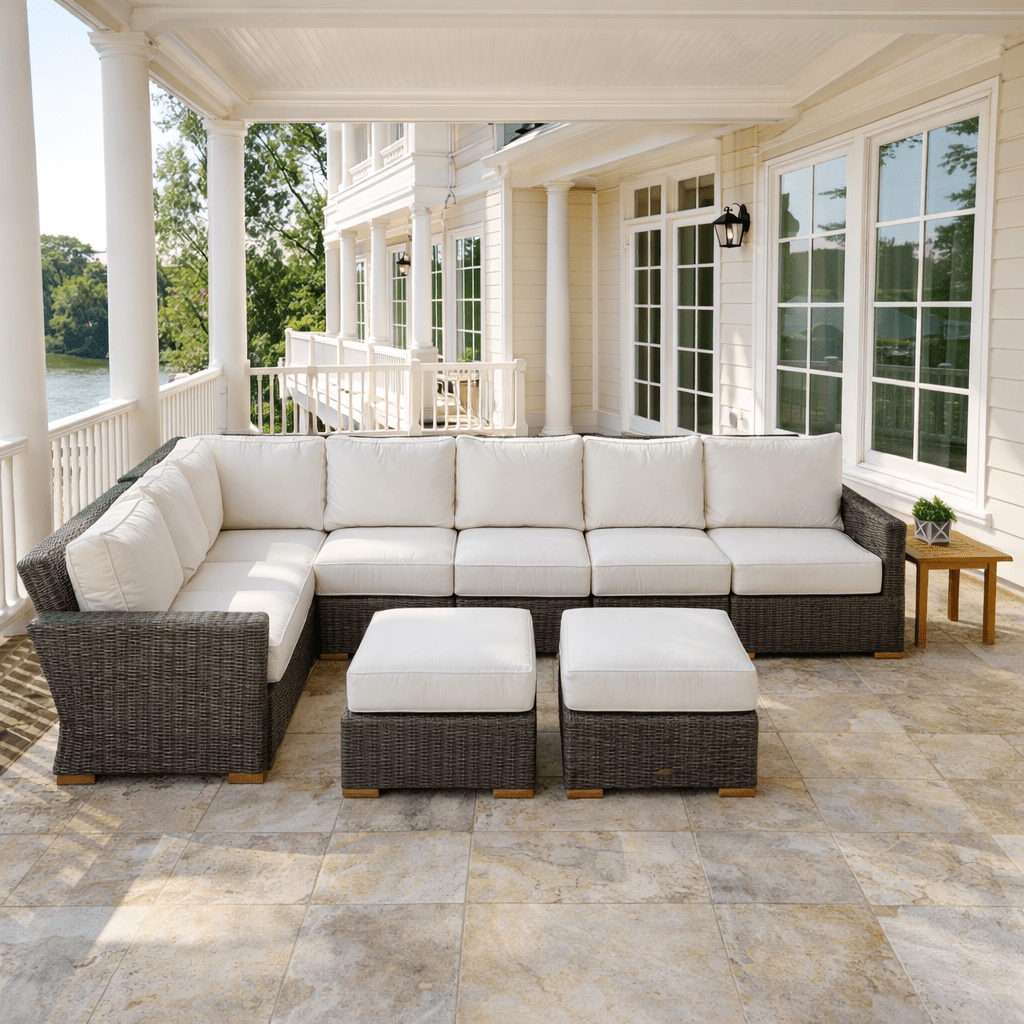 Grade A teak contains naturally high levels of oils and has a dense grain structure. Those qualities contribute to its resistance to moisture, rotting, insects, and warping. At Lake Oconee, that matters because furniture may move repeatedly through rain, humid air, sunshine, and periods of slower drying.
Unlike outdoor woods that depend heavily on a coating for basic durability, teak does not require an artificial stain for outdoor performance. Homeowners can therefore separate two decisions that are often confused: protecting the furniture and choosing how they want it to look.
Natural teak changes appearance outdoors. If left untreated, the warm golden-brown surface gradually develops a silver-gray patina. That color change is normal weathering rather than an indication that the furniture has stopped functioning as outdoor furniture.
This distinction can simplify ownership considerably. A homeowner who likes the weathered look can allow it to develop naturally. Someone who prefers the original teak color can choose appropriate teak care products and a more active maintenance routine. The underlying buying decision becomes aesthetic rather than a requirement to continually refinish the furniture simply to keep it outdoors.
Outdoor furniture at a lake house is often used differently from furniture on a small urban patio. Large dining tables, deep seating, sectional groups, and loungers may remain in place through most of the year rather than being routinely moved indoors.
Teak's density and natural resistance to warping are useful in that setting. TeakHQ furniture also has the heavier, sturdier, more architectural feel many homeowners prefer for substantial outdoor rooms. That weight is a tradeoff rather than an automatic advantage: homeowners who frequently rearrange furniture may prefer something lighter.
Premium teak carries a higher initial price than many mass-market alternatives, but Grade A teak furniture can last for decades. For homeowners furnishing a long-term lake residence or second home, it often makes more sense to compare lifetime ownership rather than simply the purchase price of the first set.
This is particularly relevant when furnishing several outdoor zones. Replacing a dining area, lounge area, and pool area repeatedly can become expensive and inconvenient. Investing in a durable core material can allow those spaces to evolve through cushions and accessories instead of complete furniture replacement.
| Lake Oconee Challenge | Why Premium Grade A Teak Performs Well |
|---|---|
| High summer humidity | Natural oils and dense grain provide strong moisture resistance. |
| Frequent rain | Grade A teak is designed for year-round outdoor exposure. |
| Direct sun | Teak withstands sun exposure and can weather naturally outdoors. |
| Wet-dry cycles | Teak resists warping and normal temperature fluctuations. |
| Poolside moisture | Natural moisture and rot resistance suit exposed outdoor areas. |
| Wooded properties | Unfinished teak can be cleaned without depending on painted finishes. |
| Seasonal weather changes | Teak is designed to remain outdoors year-round. |
We would begin with how your household actually moves through the property. Lake homes often have several attractive outdoor areas, but trying to furnish all of them equally can dilute the budget and leave the most-used space undersized. We would first identify the outdoor zone where people naturally gather, then build secondary spaces around it.
For many upscale Lake Oconee properties, our first priority would be a substantial conversation area rather than isolated pairs of chairs. A teak sectional or coordinated deep-seating group creates a place where several people can settle in after boating, golf, dinner, or a day at the pool.
Position that group where people naturally transition out of the house. A large covered porch overlooking the water is usually more valuable as the primary lounge than a picturesque but inconvenient corner of the property. The best-looking furniture arrangement is rarely the one guests have to make a special trip to use.
 Lake-house dining capacity should reflect weekends and gatherings, not just the number of people who live there on Tuesday. If a couple regularly hosts children, grandchildren, neighbors, or overnight guests, buying a four-person table because only two people occupy the home most days usually creates the wrong constraint.
For flexible entertaining, we would strongly consider an extendable teak dining table. It allows the patio to remain proportionate for everyday use while creating more seating when the house fills up.
One of the most useful upgrades on a large patio is not a larger furniture set but a second function. Dining chairs are excellent for meals; they are rarely where guests want to spend the rest of the evening. When space permits, give dining and conversation their own zones rather than asking one group of furniture to perform both jobs.
A practical layout is dining closest to the kitchen or outdoor cooking area and deep seating farther toward the view. Coffee and side tables then make the lounge usable for drinks, appetizers, books, and phones without turning it into another formal eating area.
Not every lake-facing location needs a complete furniture suite. A smaller pair of chairs, bench, or lounger grouping can be more useful near a quiet overlook, garden edge, or route toward the water.
The memorable planning principle is this: furnish Lake Oconee properties by activity, not by available square footage. A large empty terrace does not automatically need a large table, and every water view does not need a sectional. Give each outdoor zone one clear reason to exist.
Start with the collection that supports your most frequent outdoor activity. Large families and frequent hosts will often get the most value from teak dining sets or sectional seating, while pool-focused properties may prioritize loungers first. If your household size changes dramatically when weekend guests arrive, expandable dining and modular lounge configurations are especially useful because they keep everyday spaces comfortable without sacrificing entertaining capacity.
Outdoor furniture here often supports a rhythm that is different from a conventional suburban backyard. The patio may be breakfast space in the morning, the return point after boating or golf in the afternoon, a dinner room in the evening, and a conversation area after sunset. Furniture that works well at Lake Oconee therefore needs to accommodate both everyday relaxation and sudden increases in guests.
Second homes and destination properties can have an unusual occupancy pattern: quiet during part of the week and full when family or friends arrive. That argues for furniture that handles fluctuating group sizes gracefully.
Rather than permanently filling every patio with maximum-capacity furniture, consider one generous lounge group and dining that can expand when needed. Stackable, foldable, or supplementary chairs can add capacity without making the property feel like an event venue during quieter periods.
A Lake Oconee patio often connects several activities rather than serving a single purpose. Guests may come from the kitchen, pool, lawn, golf course, or lake before arriving at the same seating area.
This is why circulation space deserves almost as much attention as seating capacity. Leave comfortable pathways between doors, dining areas, lounge groups, and routes toward the water. More chairs are not automatically more useful if everyone must weave around them.
When dinner is part of a weekend rather than a quick weekday routine, people may remain outside long after the meal ends. A well-planned dining area should therefore connect naturally to more relaxed seating instead of functioning as an isolated table.
For homeowners who host larger groups, generous 8- to 10-person teak dining sets can make sense, especially when the patio has sufficient circulation space. Smaller households may be better served by an expandable table rather than committing permanently to the largest possible footprint.
Summer afternoons may favor shade and water, while spring and fall evenings can make a conversation space the property's most inviting outdoor room. A lounge grouping around a teak fire pit table can create a clearly defined evening destination separate from the dining area.
Think about this before filling every prime location with dining furniture. The view you appreciate at lunch may be even better with comfortable seating after sunset.
There is no single “Lake Oconee set.” The right configuration depends on whether your property revolves around lake views, swimming, entertaining, outdoor cooking, or quiet weekends. The strongest spaces usually combine a few purpose-built furniture groups rather than repeating the same type of seating everywhere.
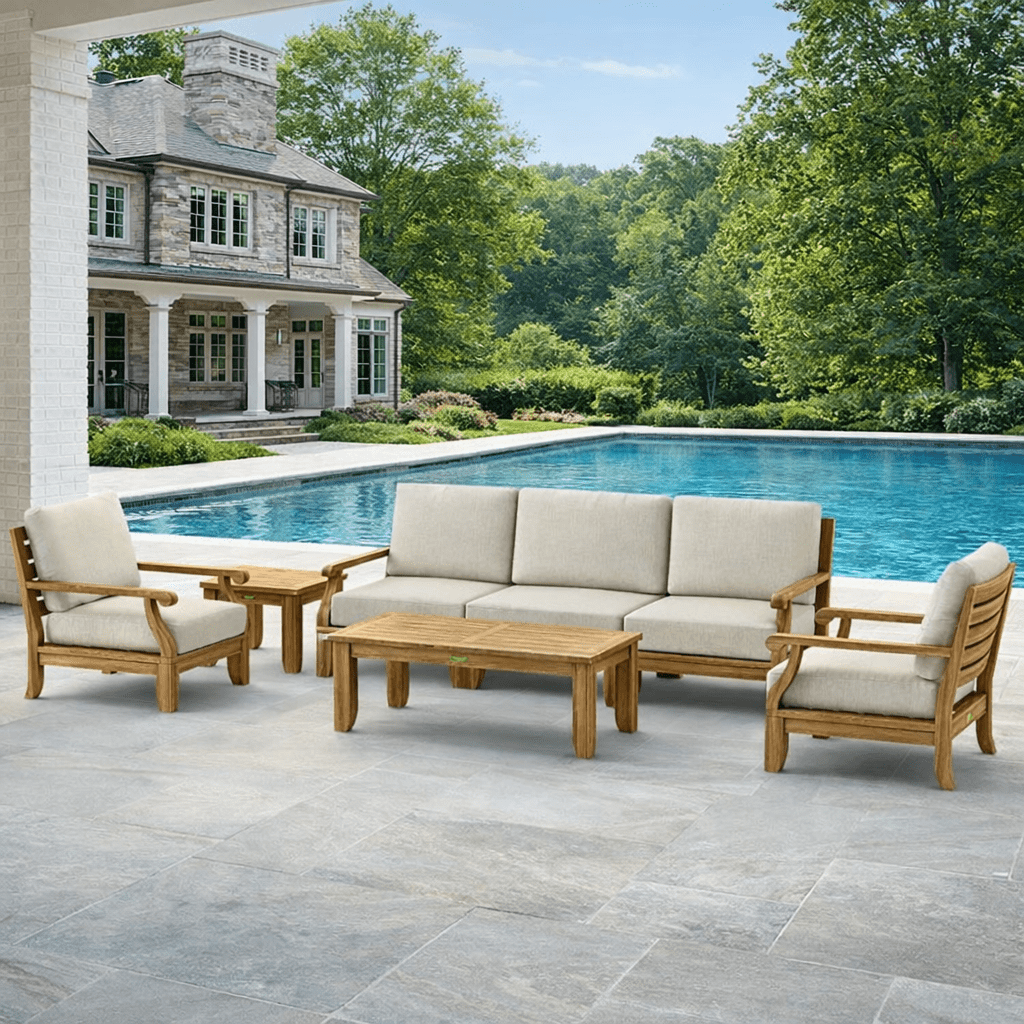 For a large covered porch, start with teak patio seating. A sofa, sectional, or multi-piece lounge arrangement provides the comfort expected from an outdoor living room while teak gives the space the warmth of real wood rather than a purely synthetic appearance.
Swivel chairs are especially useful when a seating area has two competing focal points—for example, conversation behind the chair and a lake view in front of it. They let the space respond to both without constantly moving furniture.
Pool areas benefit from more disciplined planning than simply placing loungers along an edge. Preserve a clear walking route, allow room beside each lounger for a small table, and consider how umbrellas or architectural shade affect furniture placement throughout the day.
A row of teak chaise loungers works naturally for dedicated sun and poolside relaxation. If the pool deck is also the property's social hub, pair the loungers with a separate conversation group rather than expecting chaise seating to handle parties comfortably.
The dining table should be close enough to the cooking area to make serving convenient but far enough away that chairs do not block the working zone. Serving and buffet tables can help separate food staging from the dining surface, particularly for larger gatherings.
For high-use patios, prioritize the table footprint before selecting chair count. Measure the space with chairs pulled out, not tucked under the table. That simple step prevents one of the most common planning errors in large outdoor dining areas.
A secondary lake-view location often benefits from less furniture, not more. Adirondack chairs, a pair of loungers, or a garden bench can create a destination for coffee, reading, or conversation without competing with the main entertaining patio.
Where seating is close to Georgia Power-managed shoreline areas, homeowners should verify applicable property and shoreline rules before creating permanent improvements or fixed outdoor installations. Portable furniture can provide a flexible way to enjoy the view without treating every scenic spot as a construction project. :contentReference[oaicite:0]{index=0}
Lake Oconee outdoor spaces commonly blend natural scenery with polished residential and resort-style design. Teak works particularly well in that mix because its real wood surface feels appropriate beside stone, masonry, natural landscaping, pools, and wooded views without forcing the entire patio toward either rustic or ultra-modern styling.
A sophisticated lake property does not need anchors, nautical colors, or overt “lake house” decoration to feel connected to its setting. Often the more timeless approach is to let the water and landscape provide the identity while furniture supplies natural material and comfortable proportions.
Natural teak supports that strategy well. Its warm appearance pairs easily with stone terraces, neutral upholstery, greenery, and views of the lake without requiring a decorative theme.
For homes with traditional architecture, teak dining sets, substantial lounge seating, benches, and rocking chairs can reinforce the warmth of porches and landscaped terraces. Simple cushion colors keep the result from becoming overly formal.
Transitional properties can use cleaner-lined teak furniture and restrained accessories to bridge classic architecture with more contemporary outdoor kitchens and pools.
Contemporary homes do not automatically require metal furniture. Straight-lined teak sectionals, sling seating, and simplified dining pieces can add natural warmth to spaces dominated by glass, masonry, and hardscape.
That contrast can be useful around large pools, where an entirely hard-surfaced environment can otherwise feel visually cold.
On a waterfront property, homeowners understandably want nearly every chair aimed directly toward the lake. That works for solitary use but can make conversation awkward. A better compromise is often to angle seating so occupants see both one another and the water.
Swivel seating can solve the same problem where space permits. The lake remains the visual backdrop without turning every gathering into a row of people facing in one direction.
 A lake home occupied primarily by two or four people may regularly host a much larger group. Furnishing only for everyday occupancy can leave the patio dependent on mismatched temporary chairs every weekend.
Plan the primary lounge and dining zones around realistic peak use, but use extendable tables and movable accent seating so the patio does not feel oversized when guests leave.
Homeowners sometimes worry about uncovered furniture while assuming anything beneath a roof or tree canopy needs little attention. At Lake Oconee, shaded areas may remain damp after storms or humid mornings even without receiving much direct rain.
Choose materials suitable for moisture exposure, maintain airflow around furniture, and clean organic buildup rather than letting damp leaves or debris sit against surfaces.
A large property can tempt homeowners to create seating everywhere. That often produces multiple underused groups instead of one exceptional outdoor room.
Prioritize the spaces closest to natural traffic patterns. Then add small secondary destinations—a bench, two chairs, or two loungers—where the view genuinely justifies them.
A large dining table may technically fit on a patio while still making the space uncomfortable. Chairs need room to pull back, guests need room to walk behind them, and paths between the kitchen, pool, and lake should remain clear.
Measure the operational footprint of the dining group, not merely the tabletop. If space varies between weekday and weekend needs, expandable dining is often more practical than permanently occupying the patio with the largest table available.
The pool terrace, covered porch, shaded garden, and lake-facing patio may experience different sun and moisture conditions. Buying identical pieces for all of them can ignore both climate and function.
Choose each group according to what happens there: loungers for sunning, deep seating for conversation, dining furniture for meals, and small-scale seating for quiet overlooks. Teak can provide a consistent material across those zones without requiring identical furniture.
Some buyers are surprised when untreated teak begins weathering toward silver-gray and interpret the change as deterioration. That can lead to unnecessary maintenance or dissatisfaction with a completely normal characteristic of the wood.
Decide before purchasing which appearance you prefer. If you like natural weathering, allow the patina to develop. If you prefer the original warm color, plan for optional teak care rather than discovering that preference later.
Teak ownership can be relatively simple, but Lake Oconee's mix of humidity, rain, pollen, trees, and seasonal outdoor use makes a sensible cleaning routine worthwhile. The goal is not to keep outdoor furniture looking untouched; it is to prevent dirt and organic material from accumulating unnecessarily.
There is no universal calendar that makes sense for every property. Furniture beneath trees may need attention more frequently during heavy pollen or leaf periods, while an open terrace can stay visually cleaner between routine washes.
Inspect furniture periodically and clean it when dirt, pollen, or organic debris begins to collect. The exposure of the specific patio should determine the schedule.
Leaves and other debris can trap moisture against furniture surfaces. Removing them promptly is especially useful in shaded, humid locations where drying takes longer.
This principle also applies underneath furniture. Occasional cleaning around legs and beneath large lounge groups can keep patios from becoming damp debris traps that are difficult to reach later.
Many TeakHQ patio seating pieces include Sunbrella cushions, while others offer cushions as an option. Sunbrella is weather-, fade-, UV-, and water-resistant, but that does not mean cushions must be deliberately left wet whenever storage is convenient.
If a lake house is going unused for a period, storing clean, dry cushions or using appropriate protection can reduce unnecessary exposure. A teak deck box may be useful where convenient outdoor storage is a priority.
Untreated teak can be left outdoors and allowed to develop its characteristic silver-gray patina. Homeowners who prefer the original teak color can use suitable sealers or oils as part of an optional maintenance routine.
Neither approach should be chosen because someone said outdoor teak must constantly be refinished. Choose the appearance you want first, then accept the maintenance level associated with that choice.
Grade A teak is designed for year-round outdoor use and can withstand rain, sun, and temperature fluctuations. Moving large teak sets indoors every winter is therefore not required for the wood's basic outdoor suitability.
That flexibility is especially useful for substantial Lake Oconee dining and lounge groups. Homeowners may still choose covers or protected placement to reduce cleaning, but protection should be treated as an ownership preference rather than a requirement for the furniture to survive outdoors.
The strongest outdoor spaces are not the ones with the most furniture; they are the ones where every area has a clear purpose. Begin with the gathering, dining, pool, or lake-view space your household will use most, size it for realistic entertaining, and then add secondary zones deliberately. Premium Grade A teak is particularly well suited to that long-term approach because it combines real wood, outdoor durability, substantial construction, and the freedom to either maintain its warm teak color or let it weather naturally.
Several premium materials can work well. Aluminum is lighter and often more contemporary, while poly furniture emphasizes synthetic, low-maintenance construction. Grade A teak is especially attractive for Lake Oconee because it is natural wood with strong moisture, rot, insect, warping, sun, and weather resistance.
Start with the property's main activities. Deep seating works well on covered lake-view porches, outdoor dining furniture suits patios near kitchens and grills, and chaise loungers are appropriate around pools. Smaller benches or chair groupings can create secondary lake-view destinations without overfurnishing the property.
Yes. Premium Grade A teak is designed for year-round outdoor use and withstands rain, sun exposure, and temperature fluctuations. Covers are optional rather than required, although they may reduce cleaning and exposure to pollen, leaves, and other debris.
Humidity can slow drying and make moisture exposure more persistent, particularly on shaded or covered patios. Choose furniture materials that tolerate outdoor moisture well, maintain airflow around furniture, and avoid allowing wet organic debris to accumulate on or beneath it.
Base the decision on your realistic weekend guest count, not just the number of full-time occupants. If occupancy changes significantly, an extendable teak dining table can provide extra entertaining capacity without permanently consuming the patio.
No. Teak does not require sealing for basic outdoor durability. It can remain untreated and naturally develop a silver-gray patina. Sealing or oiling is optional for homeowners who prefer to maintain more of the original teak color.
Yes. Untreated teak naturally weathers toward a silver-gray patina with outdoor exposure. This is a normal appearance change. Homeowners who prefer the original warm color can choose an appropriate teak-care routine.
For a large porch, begin with comfortable conversation seating and preserve clear pathways between the house, yard, pool, and lake. Sofas, sectionals, club chairs, or swivel chairs can create an outdoor living room, with coffee and side tables making the space practical for everyday use.
Not if you choose Grade A teak for the primary furniture. It is designed for year-round outdoor exposure. Cushions and accessories can still be stored during extended periods of non-use to keep them cleaner and reduce unnecessary weather exposure.
It depends on what you value. Aluminum is lighter and can create a more modern appearance, while poly is synthetic and typically appeals to buyers prioritizing low maintenance. Teak offers natural wood, greater visual warmth, a heavier architectural feel, and decades-long potential service life, making it particularly compelling for high-end lakefront spaces.


