
FREE SHIPPING
within mainland USA
within mainland USA
Home ▸ Teak Outdoor Furniture ▸ By Location ▸ Las Vegas, Nevada
Furnishing an outdoor space in Las Vegas means planning for powerful sun, prolonged summer heat, dry conditions, dust and occasional bursts of monsoon weather. It also means designing around how desert homes are actually enjoyed: shaded patios, pools, outdoor kitchens and evenings that often become the most comfortable time to gather outside. Premium Grade A teak is a particularly strong option because it combines natural weather resistance with the substantial, architectural look that fits many Las Vegas outdoor spaces.

Las Vegas asks more of outdoor furniture than the dry climate alone might suggest. The defining issue is the combination of intense sunshine, extended summer heat, very low humidity for much of the year and exposed hardscape that can absorb and radiate heat. Furniture may spend months on an uncovered pool deck or west-facing patio even when the family primarily uses that area after the sun drops.
In many climates, homeowners begin by asking whether furniture can handle rain. In Las Vegas, we would start with a different question: where will the afternoon sun hit? A west-facing patio, uncovered pool deck or exposed courtyard can put furniture through much more sustained solar exposure than a shaded patio on the opposite side of the same house.
This matters when comparing materials. Aluminum can be an excellent premium option for homeowners who prefer a lighter, contemporary look, while synthetic materials can simplify some maintenance concerns. Natural teak makes particular sense when you want real wood, substantial construction and a material intended for year-round outdoor exposure without requiring paint or artificial stain for durability.
The Las Vegas summer does not eliminate outdoor living; it shifts its schedule. Covered patios, shade structures and pool areas can be active during the day, while uncovered conversation and dining spaces become especially valuable later in the afternoon and evening.
That has an important furnishing implication: do not design the whole patio around how it photographs at noon. Design around when people will actually sit there. A large lounge arrangement positioned for evening shade may deliver far more value than an equally attractive grouping placed in the most visually obvious—but hottest—part of the yard.
Desert dust is less dramatic than a major storm, but it may affect the ownership experience more often. Fine dust settles on tabletops, chair arms, cushions and horizontal surfaces. Furniture with straightforward surfaces and a care routine you are realistically willing to follow usually works better than an elaborate setup that feels burdensome to clean.
For cushioned seating, think about the cushions separately from the teak frame. Many TeakHQ lounge pieces include weather-resistant Sunbrella cushions, but keeping cushions clean and managing them according to actual use can still make the patio easier to live with.
Las Vegas is dry overall, yet warm-season thunderstorms can bring sudden rain and gusty winds. Outdoor furniture therefore needs to make sense in both prolonged dry weather and occasional wet conditions. Lightweight accessories deserve particular attention during windy periods.
Premium Grade A teak is naturally resistant to moisture and designed for outdoor exposure, making an abrupt summer storm less of a material-selection conflict than it can be with woods that depend more heavily on protective finishes.
Premium teak is not the only material capable of serving a high-end Las Vegas patio. The reason it earns a serious look here is that several of its inherent properties align unusually well with desert ownership: it tolerates sun and changing weather, does not require an artificial stain for durability, and can be allowed to weather naturally rather than forcing the homeowner into an intensive finish-maintenance schedule.
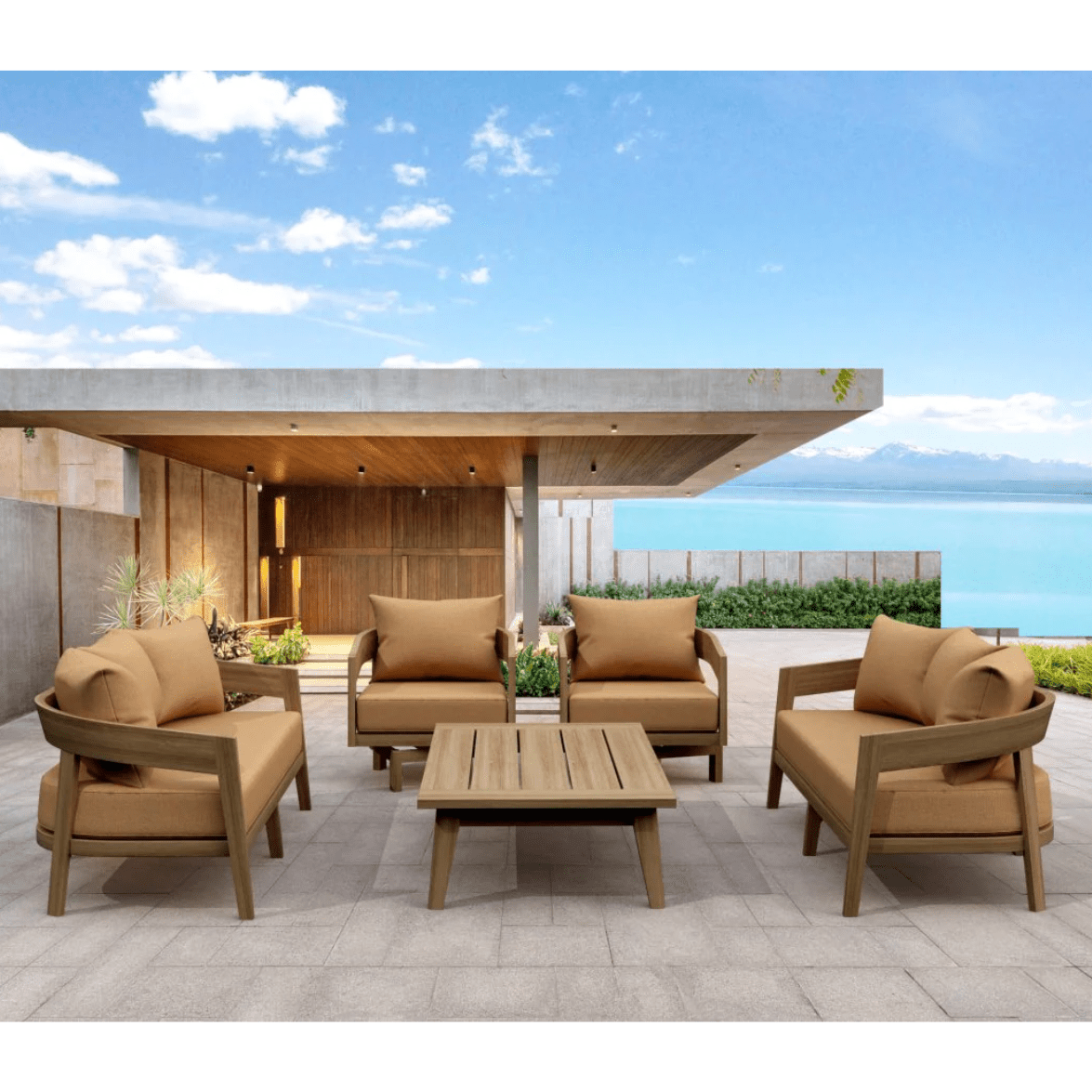 Grade A teak is naturally high in oils and has a dense grain structure. Those characteristics contribute to its resistance to moisture, rot, insects and warping. In Las Vegas, that creates a useful combination: natural wood with the durability needed for furniture that may remain outdoors through intense sunshine, dry spells, temperature fluctuations and occasional rain.
The key distinction is that teak's outdoor suitability does not depend on maintaining a painted surface. That can simplify long-term ownership for homeowners who would rather spend time using the backyard than repeatedly refinishing outdoor furniture.
Teak left untreated naturally develops a silver-gray patina over time. That weathering should be treated as a design choice rather than automatically viewed as damage. Some Las Vegas homeowners enjoy the lighter gray tone against limestone, stucco, concrete and desert landscaping; others prefer the original warmer teak appearance.
If retaining the original color matters to you, maintenance becomes part of the ownership plan. If you like the natural patina, teak can be left untreated. This flexibility is particularly useful in a region where prolonged sun exposure makes finish expectations worth discussing before purchase.
Las Vegas may be known for heat, but outdoor furniture also sees cooler winter weather and substantial temperature changes. Premium Grade A teak is resistant to warping and designed for year-round outdoor use, helping it handle those transitions without requiring the furniture to be treated as a seasonal indoor item.
That does not mean every accessory should remain untouched all year. Cushions, covers and lightweight objects have their own care requirements. The important distinction is that the teak furniture itself does not have to be managed like a delicate indoor wood product.
Premium teak costs more upfront than many mass-market materials. The rational argument for it is not that the initial price is low; it is that quality teak can last for decades rather than seasons. For a homeowner building a permanent pool terrace, courtyard or outdoor kitchen area, that can make the purchase more comparable to choosing a long-term exterior fixture than buying disposable patio furniture.
| Las Vegas Challenge | Why Premium Grade A Teak Performs Well |
|---|---|
| Intense sun | Designed for sun exposure and can weather naturally to a silver-gray patina. |
| Extended heat | Dense natural teak is designed for year-round outdoor use and temperature fluctuations. |
| Very dry conditions | Natural oils and dense grain support long-term outdoor durability without paint or artificial stain. |
| Occasional rain | Natural moisture and rot resistance suit changing outdoor conditions. |
| Temperature swings | Grade A teak is naturally resistant to warping and structurally stable. |
| Desert dust | Natural teak can be routinely cleaned without maintaining a painted exterior finish. |
| Year-round exposure | TeakHQ's Grade A teak furniture is designed for year-round outdoor use. |
We would begin with the architecture of the outdoor space, not a furniture catalog. In Las Vegas, the three questions we would ask first are: Where is the shade in late afternoon? Where do people naturally move between the house, kitchen and pool? And how many people are you realistically trying to accommodate on an ordinary evening versus when guests arrive?
Our most Las Vegas-specific advice is simple: plan the backyard from sunset backward. Homeowners often place the largest seating group where it looks best from inside the house. We would instead study late-day shade, glare and circulation and place the main conversation zone where people will actually want to linger.
For a generous patio, a teak sectional can anchor that area without requiring a collection of lightweight pieces. Add a coffee table or side tables so drinks, phones and serving pieces have obvious landing spots.
When space allows, we prefer two purposeful zones instead of one compromise zone. Place a teak outdoor dining set near the kitchen or grill, then create a separate lounge arrangement oriented toward the pool, television, fire feature or best evening view.
This improves circulation during larger gatherings and keeps the dining table from becoming the default location for every activity. In a city where patios frequently function as an extension of the entertaining space, that distinction matters.
A poolside layout works better when loungers are treated as a dedicated zone rather than squeezed into leftover deck space. Allow enough room for circulation around the pool and position teak chaise loungers where they make sense relative to shade and sun exposure.
A small side table between loungers is often one of the highest-value additions to the setup. It creates a practical place for drinks, towels or sunglasses without turning the entire pool deck into another full seating area.
A Las Vegas household may need seating for four or six most nights but considerably more during holidays, visiting-family weekends or neighborhood gatherings. Instead of permanently filling the patio with chairs that rarely get used, an extendable teak dining table can let the dining area scale when needed.
That is often a better use of space than buying the largest fixed configuration you can physically fit.
Start with the activity that defines your backyard. Pool-centered homes will usually get the most immediate value from loungers and lounge seating; frequent hosts should begin with dining capacity and a separate conversation zone; smaller courtyards may benefit more from a compact dining arrangement and a few comfortable lounge pieces. The goal is not to own every furniture category—it is to build a few well-defined outdoor zones that match how your household actually uses the property.
Las Vegas outdoor living has a distinct rhythm. Summer pushes many gatherings toward shaded areas, pools and evening hours, while spring and fall can make the backyard one of the most useful entertaining spaces in the home. The result is an outdoor setup that often needs to function as dining room, lounge, pool deck and party space depending on the day.
In many Las Vegas homes, the pool is the visual center of the backyard even when swimming is not the only activity. That makes furniture placement especially important. Chaise loungers belong close enough to participate in pool activity, while conversation seating works better slightly removed from splash traffic and circulation paths.
The distinction also makes the backyard feel larger: one zone says “swim and sun,” while another says “sit and stay.”
Built-in grills, counters and covered outdoor kitchens naturally create a dining zone. We would keep the primary table close enough to serving areas that carrying food is easy, while avoiding a layout that blocks the path between the house, grill and pool.
Bar- or counter-height furniture can also work particularly well beside an outdoor kitchen or raised counter, where guests can sit without occupying the cook's working area.
Evening use is one of the strongest arguments for creating a true outdoor conversation room rather than scattering individual chairs around the yard. A sectional or sofa-and-chair grouping encourages longer gatherings and makes the space feel intentional once the daytime focus shifts away from the pool.
During cooler periods, a teak fire pit table can become the center of a separate conversation area. The best location is usually one that preserves comfortable circulation and complements rather than competes with the dining zone.
The same backyard can feel completely different in July than it does in October. Instead of trying to make every seat perfect during every hour of every season, create zones with different exposure. Covered dining, partially shaded lounge seating and sunny pool loungers give people choices as conditions change.
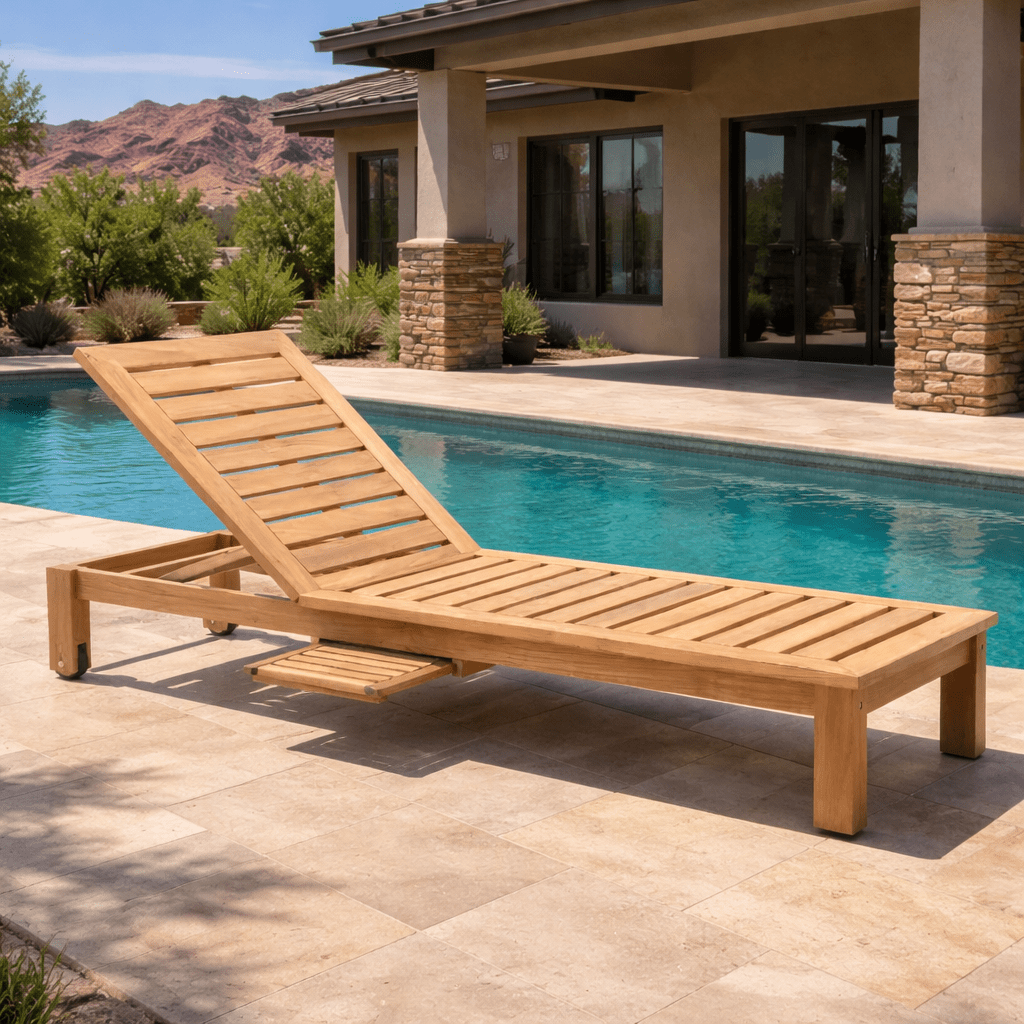 For pool-focused properties, we would start with teak lounger sets or individual chaise loungers, then add compact side tables. This is one place where repetition looks better than variety: two or four matching loungers create a calmer, resort-like composition than unrelated chairs filling every open section of deck.
Keep the chaise zone visually aligned with the pool, but leave adequate walking space behind and around the furniture. If the deck receives intense afternoon sun, consider where umbrellas or architectural shade can complement the arrangement.
A covered patio attached to the main living area is an ideal location for deep seating because it often functions as the outdoor equivalent of a family room. Multi-piece teak lounge sets let you build around the shape of the patio, while sectionals make sense when you want a strong single anchor.
Most TeakHQ patio seating pieces include Sunbrella cushions, although specifications vary by item. Choose the furniture configuration first; then confirm the cushion setup and color choices on the individual product page.
For patios centered on a grill or outdoor kitchen, dining should usually be the priority. A six-person table suits many everyday households, while an eight- or ten-person configuration makes more sense for frequent hosts. Extendable tables are especially useful when guest counts vary.
We also like teak bar and counter-height dining furniture where an existing counter, raised patio edge or outdoor kitchen creates the right architecture for it. It should feel integrated into the kitchen layout, not like a tall table added merely because space was available.
Not every Las Vegas outdoor space is expansive. Courtyards, side patios, townhomes and smaller lots benefit from discipline. One properly scaled dining table or intimate lounge grouping generally feels more luxurious than several undersized furniture groups competing for limited floor area.
Round tables can improve circulation in tighter settings, while a loveseat plus two chairs can create flexible conversation seating without requiring the footprint of a large sectional.
Las Vegas architecture ranges from established ranch and mid-century homes to Mediterranean-influenced residences and contemporary master-planned communities. The common design challenge is often the same: integrating a warm natural material into an environment dominated by stucco, stone, concrete, tile, metal and desert landscaping.
Modern desert architecture often uses broad planes of stucco, stone, glass and concrete. Teak can soften those harder materials without making the space feel rustic. Clean-lined teak seating is particularly effective when the rest of the patio already contains strong architectural geometry.
In this setting, restraint usually looks better than over-coordinating. Let teak provide warmth, then repeat a few materials or colors through cushions, planters and accessories.
Warm masonry, tile, stucco walls and courtyards pair naturally with teak's wood tone. Traditional dining sets and substantial lounge furniture can feel at home without forcing the patio into a strictly traditional style.
If untreated teak eventually turns silver-gray, the appearance can also work with lighter stone and neutral desert palettes. Decide which look you prefer before assuming the original golden-brown color must be preserved indefinitely.
Gravel, decomposed granite, palms, agaves, desert trees and drought-conscious planting create a very different visual background from a lush lawn. Furniture therefore carries more of the responsibility for making the patio feel comfortable and inhabited.
This is one reason substantial teak pieces can work so well here: the natural wood introduces visual warmth into a landscape dominated by mineral surfaces and drought-tolerant planting.
In Las Vegas, shade should be considered part of the furniture plan rather than an accessory chosen afterward. Before finalizing a sectional or dining table location, observe the patio in late afternoon. A few feet of relocation may determine whether a seating area is inviting during the exact hours you want to use it.
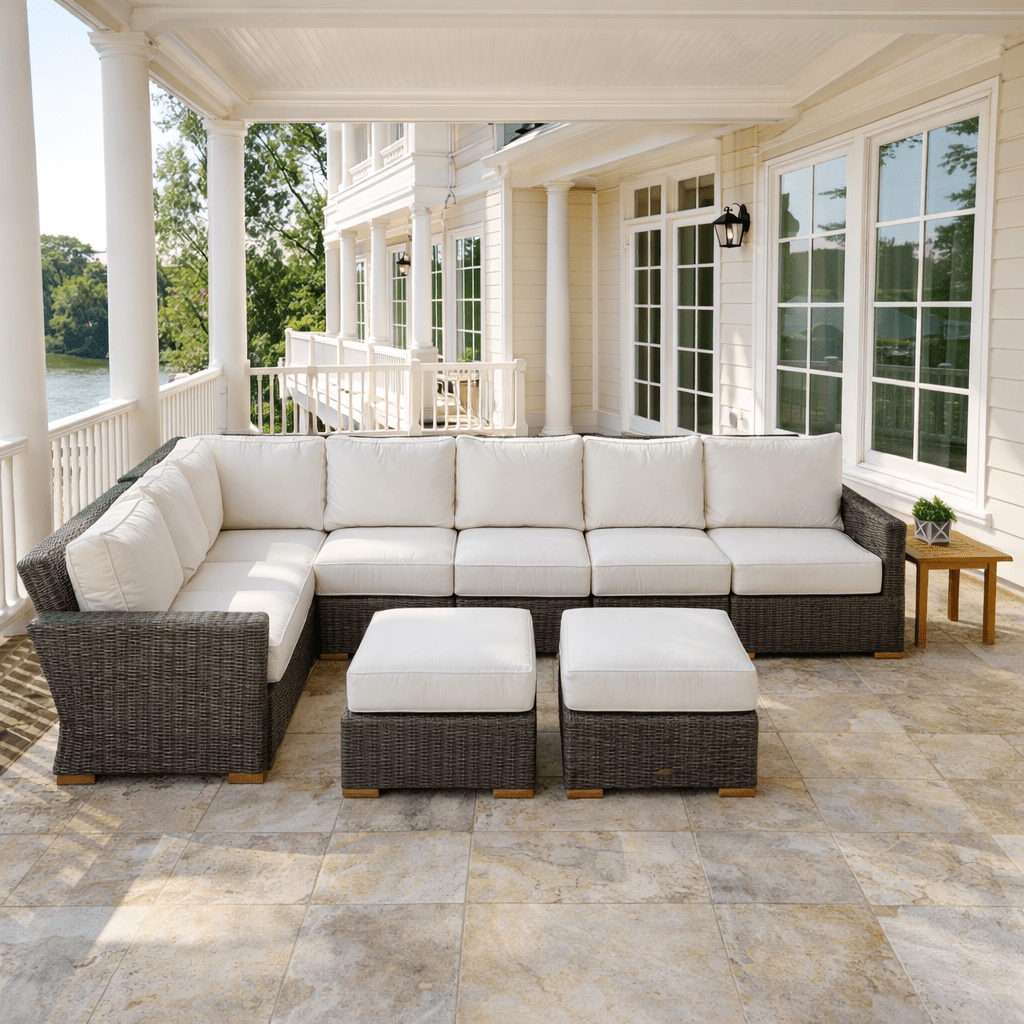 A furniture arrangement can look perfect from the kitchen window and still occupy the least comfortable part of the patio at 5 p.m. Before buying large pieces, study afternoon and evening shade. Teak handles outdoor exposure well, but furniture performs best for you when people actually want to sit in it.
All outdoor materials should be evaluated for prolonged exterior exposure rather than purchased solely by appearance. With natural teak, homeowners should also understand that untreated wood develops a silver-gray patina. That is normal weathering, not a reason to assume the furniture has failed.
A pool deck, covered patio and outdoor kitchen have different jobs. Buying identical seating for all three often creates awkward compromises. We prefer dedicated loungers for the pool, dining furniture near food preparation and deeper seating in the conversation area.
Large desert backyards can tempt homeowners to keep adding furniture. Empty space, however, is useful. It gives guests room to circulate, keeps paths open around the pool and allows individual furniture groups to feel intentional.
A strong sectional, dining area and four loungers may look more complete than twice as many unrelated pieces.
Premium furniture does not eliminate the need to manage outdoor accessories. Sudden winds can affect umbrellas, covers and lightweight decorative pieces differently than heavier furniture. Think through what needs to be secured or brought in when conditions change.
Buying a twelve-seat dining setup because twelve people visit several times a year can consume valuable patio space every other day. An extendable table or strategically placed supplemental seating can provide a better balance between everyday comfort and occasional entertaining capacity.
Las Vegas teak care is less about protecting the wood from constant moisture and more about deciding what appearance you want, periodically removing dust and keeping the entire outdoor setup—especially cushions and accessories—clean enough that it remains inviting.
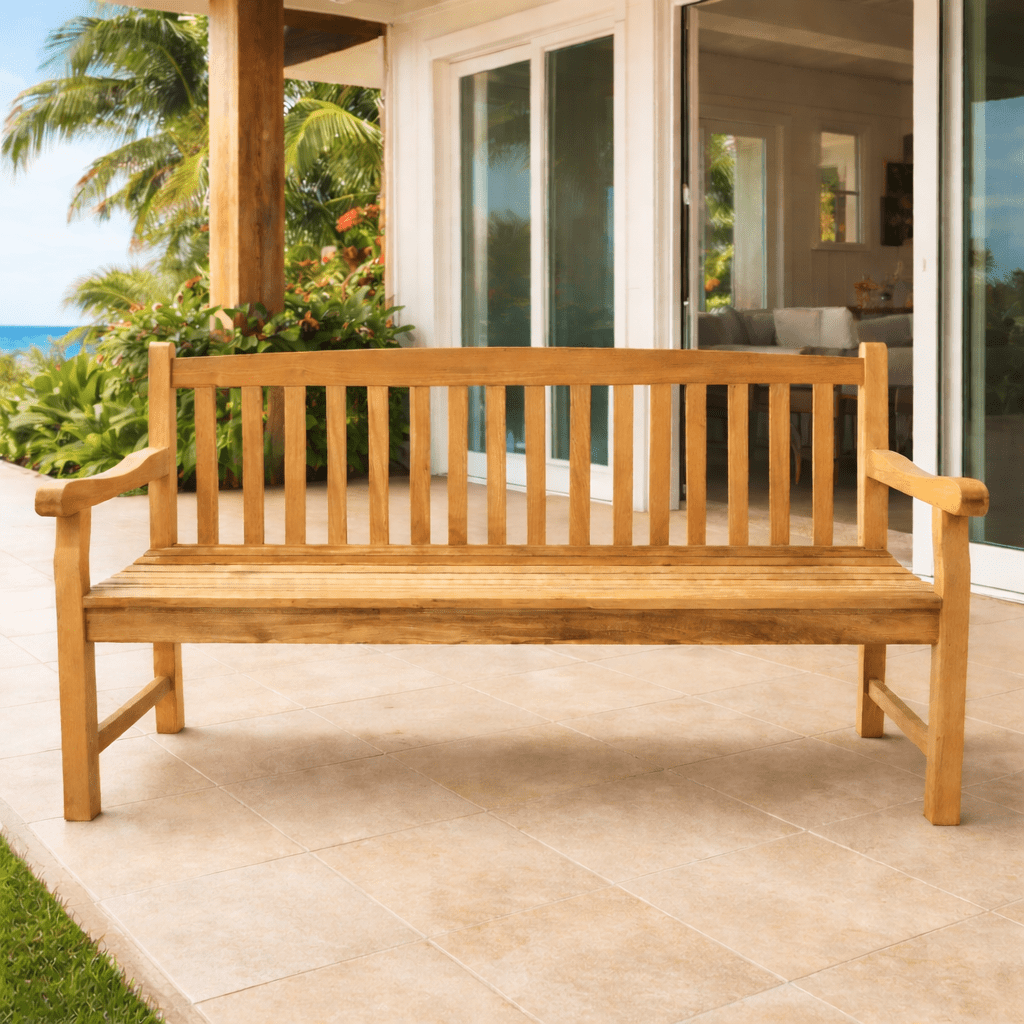 There is no useful rule that says every Las Vegas patio needs cleaning on exactly the same schedule. An uncovered home near open desert may accumulate dust faster than a sheltered courtyard. Inspect horizontal surfaces periodically and clean when buildup becomes noticeable.
This needs-based approach is usually more practical than over-maintaining furniture that does not require constant treatment for durability.
The most important teak-care decision is aesthetic. Leave natural teak untreated and it will weather toward a silver-gray patina. If maintaining the warmer original color matters, use an appropriate teak-care regimen.
Neither approach changes teak into a different material; it changes the appearance and amount of maintenance you choose to take on. TeakHQ's teak care products can be useful for owners who want to actively manage appearance.
Do not assume the wood frame and fabric components require identical care. Many TeakHQ lounge products use Sunbrella cushions, which are weather-, fade-, UV- and water-resistant, but cushions still benefit from routine cleaning and sensible management when they are not being used for extended periods.
A deck box or protected storage location can also help reduce the amount of dust that settles on loose cushions and accessories between gatherings.
If wind leaves a noticeable layer of desert grit on furniture, remove it rather than allowing repeated buildup. After uncommon wet periods, make sure cushions and surrounding patio surfaces can dry normally instead of trapping moisture underneath soft goods or covers.
The teak itself is designed for year-round outdoor use, so Las Vegas homeowners do not generally need to treat it as seasonal furniture that must be moved indoors each winter. Protective covers are optional rather than required for teak durability.
If you do use covers, use them because they simplify your preferred ownership routine—such as reducing dust or keeping an infrequently used seating group ready—not because Grade A teak requires a cover to survive outdoors.
The best outdoor furniture plan for Las Vegas starts with your property: sun exposure, shade, pool placement, entertaining patterns and the hours you actually spend outside. Once those decisions are clear, premium Grade A teak becomes a compelling long-term material for homeowners who value natural wood, substantial construction and the freedom to either maintain its original appearance or let it weather naturally.
Explore TeakHQ's dining, lounge and poolside collections with those priorities in mind, and build the space one useful zone at a time.
There is no single correct material for every homeowner. Quality aluminum, premium synthetic materials and Grade A teak can all be legitimate choices. Teak is particularly appealing when you want real wood with natural oils, dense grain, resistance to warping and durability through sun and temperature fluctuations.
Yes. TeakHQ's Grade A teak furniture is designed for year-round outdoor use and can withstand sun, rain and temperature fluctuations. Moving the teak furniture indoors every winter is not required.
Teak is designed for outdoor sun exposure, but its appearance changes as it weathers. Untreated teak gradually develops a silver-gray patina. Homeowners who prefer the original warmer teak color can choose to maintain it rather than allowing the natural patina to develop.
No. Sealers are optional rather than necessary for teak's durability. You can allow the furniture to weather naturally or use appropriate teak care products if maintaining the original color is important to you.
A practical pool area usually combines adjustable loungers with small side tables while keeping larger conversation furniture outside the main circulation zone. Browse teak chaise loungers if poolside relaxation is the primary use.
Premium Grade A teak does not require a cover for outdoor durability. A cover can still be useful if your goal is reducing dust or keeping furniture cleaner between uses. Cushions and lightweight accessories should be considered separately from the teak frame.
Both can be appropriate premium choices. Aluminum is lighter and can create a distinctly modern look. Teak is heavier, warmer and made from natural wood. The better choice depends on your design preference, desired material feel and long-term ownership priorities.
If space allows, create separate dining and conversation zones rather than asking one furniture group to serve every purpose. Put dining near the kitchen or grill, lounge seating where afternoon or evening conditions are most comfortable, and pool loungers beside the pool.
Clean according to actual buildup rather than an arbitrary schedule. Exposed properties may need dust removed more often than sheltered courtyards. Routine cleaning is primarily about appearance and everyday usability; teak does not require paint or artificial stain for durability.
Buy primarily for your normal household and regular guests, then plan separately for larger gatherings. If you entertain large groups only occasionally, an extendable teak dining table may preserve more everyday patio space than a permanently oversized table.


