
FREE SHIPPING
within mainland USA
within mainland USA
Home ▸ Teak Outdoor Furniture ▸ By Location ▸ Los Angeles, California

Los Angeles is not one outdoor-furniture climate. A patio near the coast can spend mornings under marine-influenced cloud cover and moisture while a backyard in the San Fernando Valley experiences stronger heat and drier afternoon conditions. Hillside properties add wind exposure, and many homes combine intense sunlight with relatively little shade. The practical buying lesson is simple: choose furniture for the exact part of Los Angeles where it will live, not merely for a generic idea of “California weather.”
A Malibu terrace and an Encino backyard should not be evaluated the same way. Near the coast, furniture may encounter more marine moisture and damp mornings. Farther inland, direct sun and heat usually become more prominent concerns. Premium outdoor materials can work in both settings, but the maintenance priorities change: coastal owners should pay closer attention to surface residue and hardware, while inland homeowners often care more about sun exposure, cushion protection, and placing furniture where afternoon heat is manageable.
In many Los Angeles properties, sun exposure matters more than dramatic winter weather. Uncovered pool decks, west-facing terraces, exposed rooftops, and south-facing patios can receive sustained sunlight. That makes material quality important, but it also makes layout important. Shade from an umbrella, pergola, roof overhang, or mature landscaping can improve comfort and reduce how aggressively every component of an outdoor setting is exposed.
Natural teak is particularly practical here because its durability does not depend on an artificial stain. Grade A teak can remain outdoors and weather naturally, while owners who prefer its original golden-brown appearance can choose to maintain that look rather than being forced into a particular finishing routine.
Los Angeles homeowners can go long stretches without thinking about rain, which makes it easy to furnish a patio as though it were permanently dry. That is a mistake. Outdoor furniture still needs to tolerate seasonal wet weather, and drainage around cushions, tables, and seating should be considered before the first storm arrives. Furniture that depends on staying dry to remain serviceable is poorly matched to a space intended for year-round outdoor use.
Santa Ana wind events are another reason to favor substantial outdoor furnishings over extremely lightweight pieces in exposed locations. Furniture weight does not eliminate the need to prepare an exposed terrace or hillside patio before strong winds, but heavier, sturdier pieces generally feel more appropriate for these spaces than furnishings designed primarily for easy portability.
This matters especially on ridgelines, upper-level decks, and open yards where wind can funnel around structures. Loose cushions, umbrellas, trays, covers, and lightweight accessories deserve their own storage plan even when the primary furniture remains outside.
Dust, pollen, leaves, pool residue, and—during wildfire events—ash can accumulate on exposed furniture. In Los Angeles, a realistic maintenance plan therefore includes occasional surface cleaning even during periods when rain is scarce. This is another reason to evaluate outdoor furniture not merely by how it looks in a showroom, but by how complicated it will be to clean after months of real backyard use.
Several premium materials can work well in Los Angeles. Quality aluminum offers a crisp modern appearance and low weight, while synthetic materials can appeal to homeowners who prioritize a manufactured, highly uniform surface. Premium Grade A teak occupies a different niche: it offers the natural appearance and substantial feel of real wood while possessing the characteristics needed for long-term outdoor use.
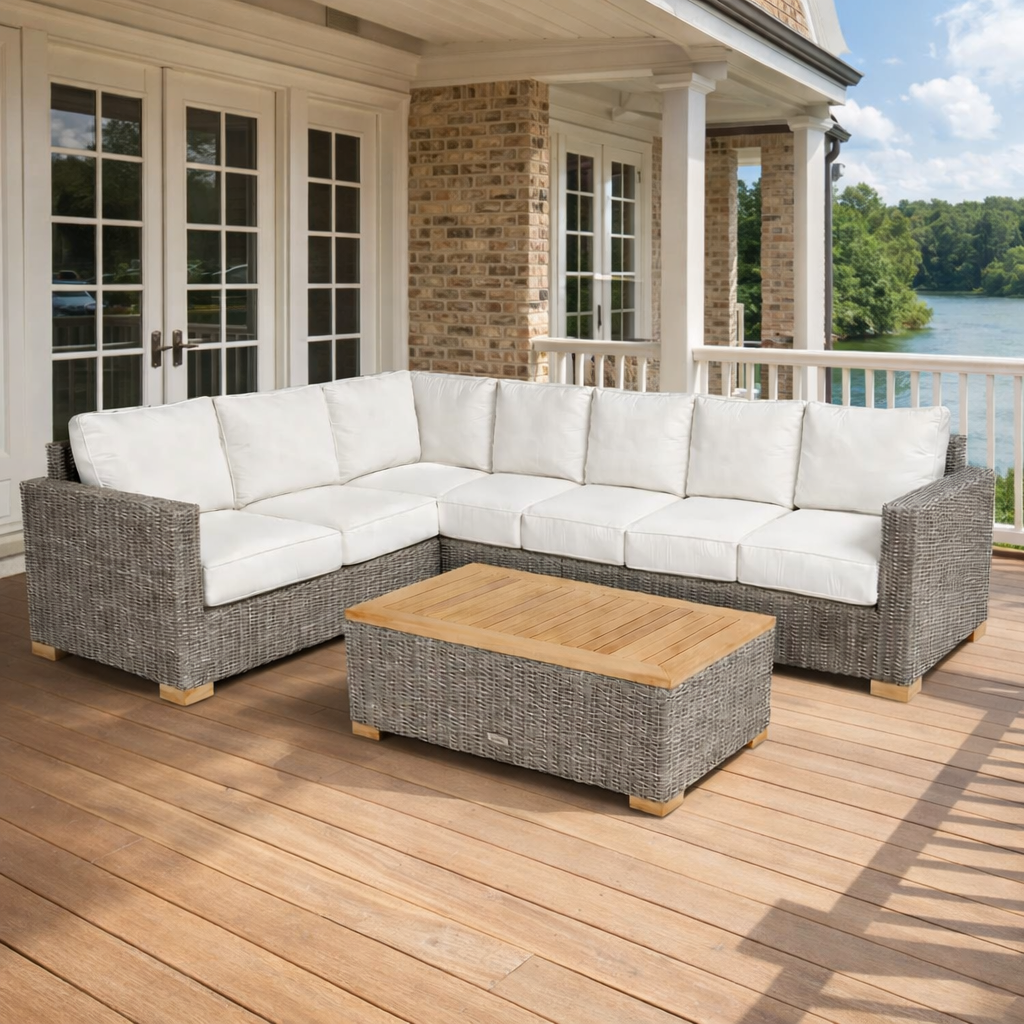 Grade A teak has a dense grain structure and is naturally high in oils. Those characteristics contribute to its resistance to moisture, rot, insects, and warping and are central to why genuine teak has such a long history as an outdoor material. For Los Angeles homeowners, this means the wood itself is suited to the repeated cycle of sun, dry air, coastal moisture, seasonal rain, and temperature changes rather than depending on an applied coating for basic outdoor durability.
Water exposure in Los Angeles does not come only from storms. Coastal moisture, irrigation, wet swimsuits, pool splash, and ordinary patio cleaning can all introduce moisture. Premium Grade A teak is naturally moisture resistant and designed for year-round outdoor use, making it well suited to spaces that move regularly between dry and wet conditions.
Near the ocean, we would also look carefully at hardware. Royal Teak and Anderson Teak products use stainless-steel hardware, while Verandis Teak uses brass hardware. Teak itself should not be treated as a substitute for sensible cleaning in a marine environment; periodic removal of residue is still worthwhile.
Prolonged sun changes teak's appearance rather than making refinishing mandatory for durability. Unfinished teak gradually weathers from its original warm golden-brown tone toward a silver-gray patina. Some homeowners prefer that lighter, weathered appearance—especially on coastal, modern, and Mediterranean-inspired properties—while others prefer maintaining more of the original color with optional teak care products.
That flexibility is particularly useful in Los Angeles because design preferences vary dramatically. A silvered teak dining set can look natural on an ocean-facing terrace, while maintained golden teak can provide deliberate warmth against white stucco, stone, glass, or concrete.
Outdoor wood furniture must cope with changing moisture and temperature conditions. Grade A teak's density and natural characteristics make it resistant to warping and appropriate for outdoor exposure. When homeowners are furnishing a permanent patio rather than a temporary seasonal setup, that stability becomes part of the value proposition.
Teak's higher initial cost makes the most sense when the buyer is thinking in decades rather than seasons. The goal is not to find the least expensive chair for this summer; it is to avoid repeatedly replacing entire outdoor rooms.
One of teak's strongest practical advantages is that cosmetic maintenance is largely a choice. Teak can be left untreated and allowed to develop its natural silver-gray patina, or owners can clean and treat it to preserve more of its original color. Covers may be useful for convenience, cushions, or keeping surfaces cleaner, but teak does not require a cover simply to remain outdoors.
| Los Angeles Challenge | Why Premium Grade A Teak Performs Well |
|---|---|
| Strong sun exposure | Designed for outdoor sun and can weather naturally without relying on paint for durability. |
| Long dry periods | Dense natural wood remains suitable for exposed outdoor settings and needs no artificial stain for durability. |
| Seasonal rain | Natural oils and dense grain provide moisture and rot resistance. |
| Coastal moisture | Moisture-resistant teak is well suited to changing dry and damp conditions. |
| Temperature fluctuations | Grade A teak is resistant to warping and designed for year-round outdoor use. |
| Poolside exposure | Natural moisture resistance makes teak practical around pools when routinely cleaned. |
| Dust and surface debris | Unfinished teak does not depend on a painted surface and can be periodically cleaned as needed. |
We would begin with the way the outdoor space is actually used, then work backward to the furniture. Los Angeles patios often serve as genuine extensions of the home, but a Beverly Hills pool terrace, a Santa Monica rooftop, and a Pasadena courtyard require different layouts. The most successful spaces usually have a clear primary purpose instead of trying to fit dining, lounging, sunbathing, and entertaining into every available square foot.
If friends and family regularly stay for dinner, we would prioritize the dining area before the lounge area. An outdoor table near the kitchen or grill reduces unnecessary traffic across the patio and becomes a natural center of activity. For homeowners whose guest count changes frequently, an extendable teak dining table is especially useful: it lets the patio feel appropriately scaled for everyday use without sacrificing larger gatherings.
If entertaining is more conversational—drinks, sunsets, pool afternoons, or evenings around a fire feature—we would reverse the priorities. Start with comfortable teak patio seating, then add dining only if it has a clear role.
On larger properties, the most useful arrangement is often two distinct rooms without walls: one for meals and one for conversation. The dining area belongs closer to the kitchen, outdoor kitchen, or grill. The lounge area can move toward the pool, view, garden, or evening shade.
This separation prevents a common design problem: buying one oversized furniture group and expecting it to serve every activity. Dining chairs encourage upright conversation around a table; deep seating encourages people to stay longer. They solve different problems.
For hillside and ocean-view homes, we would resist the instinct to point every chair directly outward. That creates a beautiful photograph but can create a poor conversation area. A better approach is often to angle sofas and chairs toward each other while preserving open sightlines between them. Guests can talk naturally without sacrificing the view.
This is an especially good application for a sectional or a sofa-and-club-chair arrangement. A teak sectional can define the edge of a large terrace while keeping the center visually open.
LA properties range from compact condo terraces to broad estate patios. For smaller balconies and courtyards, fewer well-proportioned pieces usually outperform a miniature version of a large backyard. A two-person dining set, a pair of lounge chairs, or a compact conversation grouping can make the space feel intentional rather than crowded.
Large properties create the opposite risk: furniture that looks substantial online can appear undersized against a long pool, wide lawn, or expansive architecture. In those settings, think in zones. One dining group plus one substantial lounge group usually feels more coherent than scattering isolated chairs and tables across the yard.
Choose the collection that matches the activity your outdoor space needs to support most often. Large entertaining patios usually benefit from sectionals, lounge sets, or generous dining furniture; pool properties naturally add chaise loungers; and smaller terraces often work better with compact dining or a few carefully chosen lounge pieces. Once the primary zone is solved, complementary collections can fill secondary needs without making the patio feel overfurnished.
Los Angeles homes often blur the distinction between indoor and outdoor rooms. The useful outdoor season is long, kitchens and living areas frequently open toward patios, and the best spaces accommodate both everyday use and informal entertaining. Yet the way that happens varies considerably across the metro—from rooftop drinks in denser neighborhoods to pool afternoons in the Valley and long dinners on hillside terraces.
Homes with large sliding or folding doors can make an outdoor dining table feel like part of the main living floor rather than a separate backyard destination. In this situation, placement matters as much as table size. Keep the route from kitchen to table direct, leave generous circulation around occupied chairs, and avoid positioning the dining area where guests must repeatedly cross through the main lounge zone.
For frequent hosts, teak outdoor dining furniture can anchor this transition particularly well because natural wood visually connects landscaping and architecture without feeling overtly rustic.
A Los Angeles pool deck often needs three different behaviors: swimming, sunning, and socializing. Trying to solve all three with chaise lounges alone creates an attractive pool photograph but not necessarily a useful outdoor room. We prefer dedicated loungers in the best sun location plus upright or deep seating somewhere guests can comfortably talk, eat, or spend an evening.
Side tables deserve more attention than they usually receive. A lounger without a convenient place for a drink, phone, sunglasses, or book is only half furnished.
The furniture that looks best at noon is not always what works best after sunset. Hillside views, warm evenings, and fire features often shift activity toward conversation areas later in the day. If the space will routinely be used after dinner, prioritize deep seating and reachable tables rather than filling every sunny edge with loungers.
Fire tables can be especially useful when the goal is to create a distinct evening destination. The key is to treat the fire feature as the center of a conversation zone rather than as an accessory squeezed into leftover patio space.
Balconies, rooftops, and compact courtyards reward restraint. A smaller table that people can comfortably walk around is more useful than the largest table the dimensions technically permit. Likewise, two excellent lounge chairs with a side table can create a more luxurious experience than a crowded sofa arrangement.
In these spaces, furniture that folds, stacks, or serves a precise purpose can be valuable. The objective is not to fit the maximum number of seats; it is to maximize the number of seats people will actually enjoy using.
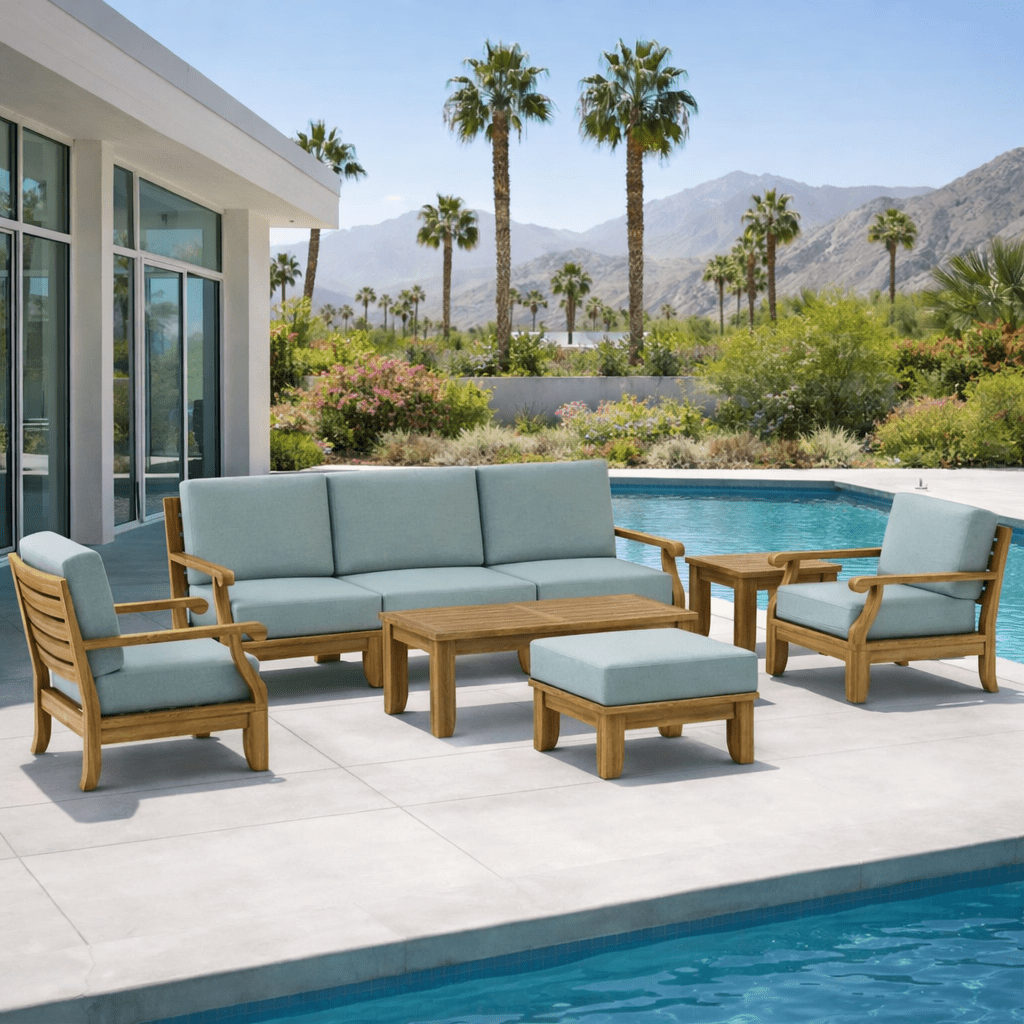 The right furniture mix depends less on your ZIP code than on the relationship between the house, outdoor space, sun, views, and entertaining habits. In Los Angeles, we would usually furnish the primary outdoor room first and then add specialized zones for dining, swimming, views, or smaller gatherings.
For a larger hillside terrace, begin with the conversation area. A sectional or multi-piece lounge set can create enough visual weight to hold its own against an expansive view while keeping the furniture arrangement cohesive. Coffee and side tables make the area functional for drinks and casual food.
If the terrace also accommodates meals, put dining behind or beside the lounge area rather than directly in the primary sightline. This lets the low-profile conversation seating preserve the view while the dining table remains convenient to the house.
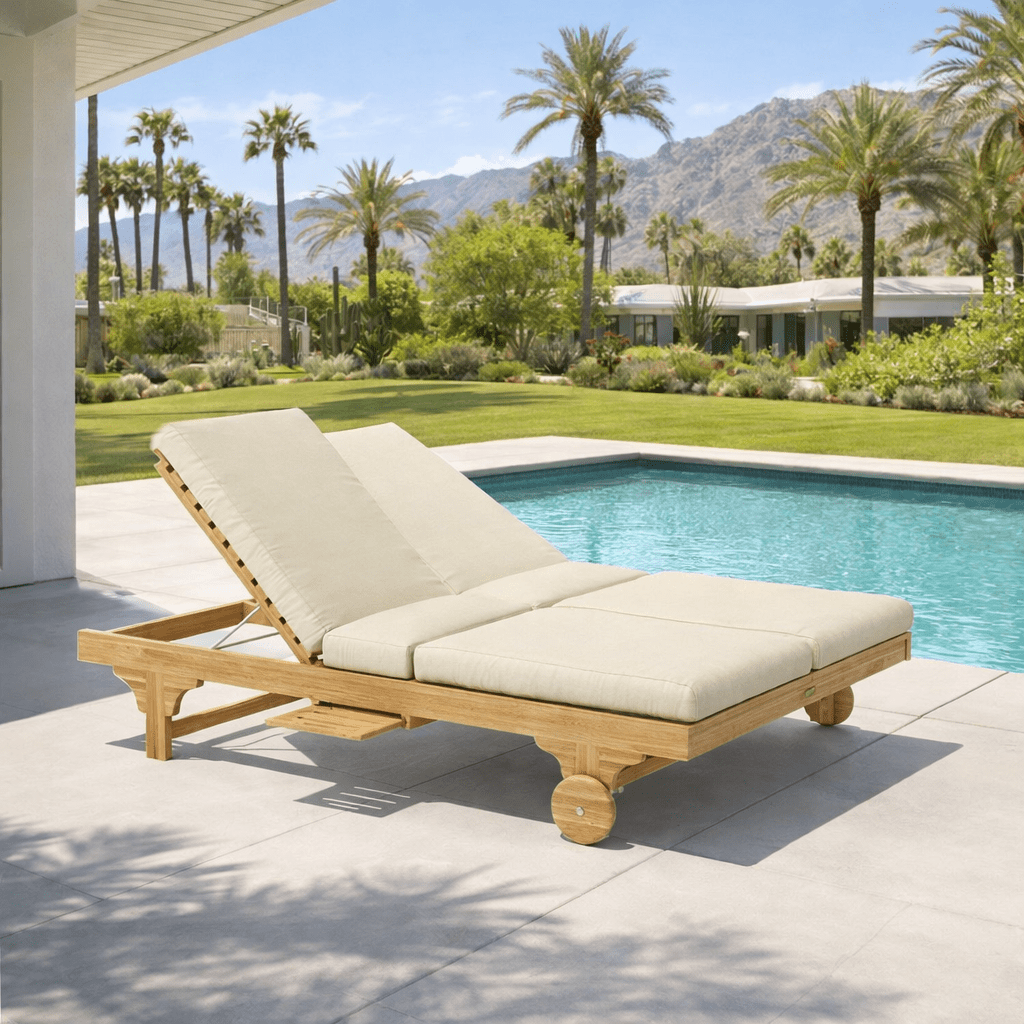
Poolside furniture should be selected by activity rather than symmetry. If two people typically sunbathe, four or six loungers may occupy valuable deck space without improving daily use. If the pool is a frequent entertaining destination, however, multiple teak chaise loungers plus a separate conversation group can create a true resort-style layout.
Choose enough side tables that users do not need to drag one between loungers. A small table between every pair of chaise lounges is often more useful than a decorative table placed where nobody can reach it.
For an outdoor kitchen, dining furniture should support both normal family meals and the largest guest count that occurs with reasonable frequency. Do not design around the once-a-year party at the expense of the other 364 days. If guest counts fluctuate, an expandable table is usually more practical than permanently dedicating the patio to a very large table.
Counter-height seating can also extend the kitchen into the patio. Teak bar and counter-height dining furniture is particularly useful beside outdoor counters, grills, or serving areas where guests naturally gather while food is being prepared.
Courtyards benefit from furniture that respects their enclosure. Round or compact dining tables soften tight geometry and make circulation easier, while a pair of club chairs or a loveseat can create a secondary sitting area without overwhelming the space.
A memorable rule for compact LA spaces is this: buy for the empty space you need, not just the furniture you want. The open pathway around a table, the gap that lets a door swing freely, and the breathing room between seating groups are part of the design. Luxury comes partly from what you choose not to fill.
Not every seating area needs to become another outdoor living room. A shaded garden, front courtyard, or quiet viewpoint may need only a teak garden bench. These secondary destinations give larger properties a sense of discovery and can make landscaping more usable without creating another area full of cushions, tables, and accessories to manage.
Los Angeles has unusually broad architectural variety, so there is no single “LA patio look” worth imitating. Spanish and Mediterranean influences, Mid-Century Modern homes, contemporary glass-and-stucco architecture, traditional estates, coastal houses, and California ranch designs can all call for different furniture shapes. Teak's advantage from a design standpoint is versatility: the same natural material can read warm and traditional in one context and clean and architectural in another.
Against stucco walls, clay tile, masonry, courtyards, and mature landscaping, natural teak introduces warmth without requiring ornate furniture. Dining tables, benches, and lounge furniture with straightforward proportions tend to complement the architecture rather than competing with it. Golden teak feels richer and more formal; naturally weathered teak can create a softer, established appearance.
Modern LA homes generally benefit from simpler silhouettes and deliberate furniture placement. Teak works well here because the material supplies visual warmth against concrete, steel, glass, and pale stucco. A restrained sectional, linear dining table, or low lounge arrangement can preserve the architecture's geometry without making the patio feel cold.
For coastal homes, we would lean toward relaxed layouts and allow the natural environment to provide much of the visual interest. Teak that is permitted to weather toward silver-gray can fit particularly naturally into this setting. Owners who prefer the original golden color can maintain it, but neither approach should be treated as the universally correct aesthetic.
Furniture looks different once surrounded by mature hedges, palms, citrus, specimen trees, hillside planting, or broad lawn. Large landscapes can visually absorb substantial furniture groups, while compact courtyards usually benefit from simpler arrangements. Before ordering, evaluate the patio from inside the house as well as outside; in Los Angeles, outdoor furniture is often visible through large expanses of glass and effectively becomes part of the interior composition.
 The most expensive outdoor-furniture mistake is rarely choosing the wrong color. It is choosing furniture for an imagined lifestyle instead of the actual property. Los Angeles homeowners should pay particular attention to sun orientation, microclimate, wind exposure, usable patio dimensions, and the difference between everyday occupancy and occasional entertaining.
Shopping for “Los Angeles weather” is too broad. A coastal deck, shaded canyon property, Valley backyard, and exposed hillside terrace can experience meaningfully different conditions. Materials and layouts should be chosen for the exact location where the furniture will remain.
Grade A teak helps because it is designed for year-round outdoor use across sun, rain, moisture, and temperature fluctuations, but homeowners should still plan cleaning, cushion care, shade, and accessory storage around their individual exposure.
Buying twelve permanent dining seats because twelve people visit twice a year can make a patio less enjoyable every other day. Large households and frequent entertainers may genuinely need generous dining capacity, but variable guest counts are often better served by expandable tables, movable chairs, or a second seating zone.
The useful question is not “How many people could I possibly host?” It is “How many people use this space often enough that the patio should be designed around them?”
Perfect symmetry around a pool or a row of chairs facing a view may photograph beautifully but can perform poorly socially. People need tables within reach, comfortable conversational distances, usable walking paths, and furniture oriented toward one another. Function should decide the layout first; symmetry can refine it afterward.
On rooftops and exposed hillside properties, loose accessories can become the weak point of an otherwise well-designed patio. Cushions, covers, umbrellas, lightweight décor, and serving pieces need a plan when strong winds are expected. Substantial teak furniture has a naturally heavier feel than lightweight alternatives, but no outdoor setup should be treated as immune to severe wind conditions.
Premium outdoor furniture reduces certain maintenance problems; it does not eliminate dust, pollen, spilled drinks, leaves, pool residue, marine residue, or occasional ash. One of teak's advantages is that owners can allow the wood to weather naturally rather than maintaining a perfect finish. Cleaning is still part of ownership.
Outdoor seating should be evaluated as a system. Wood, hardware, cushions, sling material, and accessories experience weather differently. Many TeakHQ patio-seating pieces include Sunbrella cushions, which are weather-, fade-, UV-, and water-resistant, while other products use synthetic rope or sling seating. Some pieces offer cushions separately. Check the individual product configuration rather than assuming every teak chair has the same upholstery requirements.
Los Angeles is a comparatively forgiving place to own premium teak, but “low maintenance” should not be confused with “never clean it.” The most useful care schedule is driven by exposure. An uncovered coastal deck, a poolside patio beneath trees, and a protected courtyard will collect different residue and should be maintained accordingly.
There is no reason to create an unnecessarily rigid weekly schedule for the teak itself. Clean surfaces when dirt, pollen, food residue, leaves, coastal residue, or other buildup becomes visible. Exposed furniture generally needs attention more often than furniture under a covered patio.
If wildfire ash reaches the property, treat it as a reason for prompt and careful cleanup rather than letting it remain on furniture and cushions. Follow local health and safety guidance for ash conditions first; outdoor-furniture cleaning should be secondary to personal safety.
Before buying teak-care products, decide how you actually want the furniture to age. Untreated teak naturally develops a silver-gray patina. That change is cosmetic and does not mean the wood has failed. Homeowners who like the weathered appearance can allow it to happen rather than repeatedly fighting the natural aging process.
If you prefer more of the original golden teak color, periodic cleaning and appropriate teak care products can be incorporated into your routine. The important distinction is that this is an appearance choice, not a prerequisite for making genuine Grade A teak suitable for outdoor use.
Cushions should not automatically follow the same care routine as the teak frame beneath them. Even outdoor performance fabric stays cleaner when unnecessary exposure is reduced. During extended periods of non-use, strong wind, smoky or ashy conditions, or significant rain, moving loose cushions to protected storage can reduce cleaning and keep the patio easier to reset afterward.
Furniture that dries slowly in deep shade or sits in a damper coastal environment deserves more frequent inspection than the same furniture on a sunny inland patio. Keep organic debris from accumulating in joints and beneath furniture, and avoid creating places where wet leaves or other material remain trapped against the wood.
Premium Grade A teak does not require a cover simply to survive outdoors. A cover can nevertheless be useful when the goal is to reduce cleaning, protect cushions or accessories, or keep a rarely used setting ready for guests. If you do use covers, follow the cover manufacturer's instructions and avoid treating them as a substitute for periodically checking what is underneath.
The strongest reason to choose teak is not that it eliminates every ownership task. It is that a high-quality natural material can remain part of the outdoor space for decades while allowing the owner to choose how much cosmetic maintenance to perform. That is a different proposition from buying furniture primarily because it looks good for its first season.
Start with the part of your outdoor space you expect to use most—long dinners, pool afternoons, sunset conversations, a compact rooftop, or a large family gathering area—and furnish that zone well before filling the rest of the patio. TeakHQ offers Grade A teak dining, lounge, poolside, bench, table, and accessory collections that can be combined around the way your home actually works, with free curbside shipping and a range of configurations for both compact and expansive outdoor spaces.
There is no single best material for every LA property. Quality aluminum, premium synthetic furniture, and Grade A teak can all be appropriate. Teak is especially compelling when you want real wood, substantial weight, natural moisture and weather resistance, and the ability to leave furniture outdoors without depending on paint or artificial stain for durability.
Look for materials specifically intended for sustained outdoor exposure and consider the entire furniture system, including fabric. Grade A teak is designed for sun exposure and can naturally weather over time. Many TeakHQ lounge pieces also use Sunbrella cushions, which are designed to resist fading, UV exposure, weather, and water. Strategic shade remains valuable for comfort and for reducing exposure of every patio component.
Yes. Grade A teak's natural oils, dense grain, moisture resistance, and rot resistance make it well suited to outdoor use in coastal environments. We would still periodically remove marine residue and inspect hardware and cushions rather than assuming any outdoor furniture requires zero care.
Yes. The Grade A teak sold by TeakHQ is designed for year-round outdoor use and can withstand rain, sun exposure, and temperature fluctuations. Covers are optional rather than required for the teak itself, although they can reduce cleaning and protect other components.
No. Genuine Grade A teak does not need a sealer for basic outdoor durability. You can leave it untreated and allow it to develop a silver-gray patina, or use suitable teak cleaners and sealers if you prefer to maintain more of the original color.
Yes. Unfinished teak naturally weathers toward a silver-gray patina with outdoor exposure. This is an expected cosmetic change rather than an indication that the wood has rotted or failed.
Prioritize circulation before seating capacity. A compact two-person dining set, small table with foldable chairs, or pair of lounge chairs can be more useful than squeezing a sofa set into the space. TeakHQ's two-person teak dining sets are a useful starting point for compact balconies and courtyards.
Divide the pool deck by activity. Use chaise loungers for sunbathing, side tables for drinks and personal items, and a separate lounge or dining zone for conversation and meals. Teak is particularly practical around pools because it is naturally resistant to moisture, though routine cleaning is still appropriate.
Do not assume the weight of the main furniture makes an exposed patio wind-proof. Secure or move loose cushions, umbrellas, covers, trays, décor, and lightweight accessories when strong winds are expected, especially on rooftops, hillside terraces, and other exposed properties.
Premium teak furniture can last for decades with appropriate use and care. Its higher upfront price therefore makes the most sense for homeowners who want to furnish an outdoor space for the long term rather than replace lower-cost furniture repeatedly.


