
FREE SHIPPING
within mainland USA
within mainland USA
Home ▸ Teak Outdoor Furniture ▸ By Location ▸ Malibu, California
Malibu outdoor spaces often combine ocean exposure, strong sun, marine air, and an unusually close relationship between the home and the landscape. Oceanfront decks, bluff-top terraces, canyon properties, and pool patios can each place different demands on furniture, from salt and moisture exposure to wind and limited deck depth. Premium Grade A teak is especially well suited to this environment because it offers the durability of a true outdoor material without sacrificing the warm, natural character that works so well with Malibu architecture.

Malibu may share Southern California's generally mild outdoor-living climate, but a furniture plan here should account for much more than temperature. A home directly above the beach can experience persistent marine air, salt residue, fog, and damp mornings, while a property farther into the hills may be sunnier, drier, windier, and more exposed to dust or wildfire ash. The practical lesson is simple: two Malibu patios only a few miles apart may need different furniture layouts and different care routines.
For homes along Carbon Beach, Malibu Colony, Broad Beach, Point Dume, and other ocean-facing areas, salt is one of the most important differences between Malibu and an inland Southern California market. Salt-laden moisture settles on furniture, hardware, cushions, and table surfaces. That does not mean every premium material is unsuitable—well-made aluminum and other quality outdoor systems can perform well—but it does make material quality and hardware selection more important than they might be in a protected inland courtyard.
Real Grade A teak has an advantage because the wood itself does not depend on a painted or artificial surface coating for outdoor durability. Its naturally high oil content and dense grain help it resist moisture, rot, insects, and warping. TeakHQ's Royal Teak and Anderson Teak products also use stainless-steel hardware, while Verandis Teak uses brass hardware.
Malibu's outdoor furniture can become damp even when there has been no meaningful rainfall. Fog and marine moisture can leave surfaces cool or wet in the morning, especially on patios near the water or in shaded locations. The concern is less about one dramatic storm than repeated cycles of moisture followed by drying.
This is where homeowners should distinguish between furniture frames and soft goods. A Grade A teak frame is designed for year-round outdoor use and can handle rain, sun, and temperature changes. Cushions deserve more active management. Many TeakHQ lounge products include Sunbrella cushions that are water resistant, fade resistant, and UV resistant, but allowing any cushion to remain continually damp or buried under wet debris is still poor outdoor-furniture practice.
Some Malibu homes have broad, uncovered decks designed specifically to preserve the ocean view. Those spaces can receive long periods of direct sun. Instead of asking only whether furniture is labeled “outdoor,” consider how the material changes visually over years of exposure. Teak naturally weathers from its original golden-brown color toward a silver-gray patina unless the owner chooses to maintain the original appearance with appropriate care products.
That aging process is a normal characteristic of teak rather than evidence that the wood has failed. For many Malibu homes, the eventual gray tone actually works naturally with stone, concrete, weathered materials, coastal landscaping, and subdued architectural palettes.
Ocean-facing decks and exposed hillside properties can be breezier than protected patios farther inland. Furniture weight therefore matters. Premium teak has a heavier, sturdier feel than lightweight aluminum furniture, which can be useful in exposed outdoor rooms. That does not make any furniture “windproof,” and loose cushions, umbrellas, accessories, and small objects should still be secured or moved when strong winds are expected.
Wind also affects layout. On an exposed deck, we would usually favor fewer substantial furniture groups over a collection of small lightweight pieces. Deep seating anchored around a coffee table, a well-proportioned dining set, or paired loungers with a substantial side table generally creates a calmer, more intentional space.
The case for teak in Malibu is strongest when its properties are matched to the actual conditions of the property. Grade A teak is not the only premium outdoor furniture material that can work here, but it offers an unusually useful combination of natural appearance, moisture resistance, structural stability, outdoor durability, and maintenance flexibility.
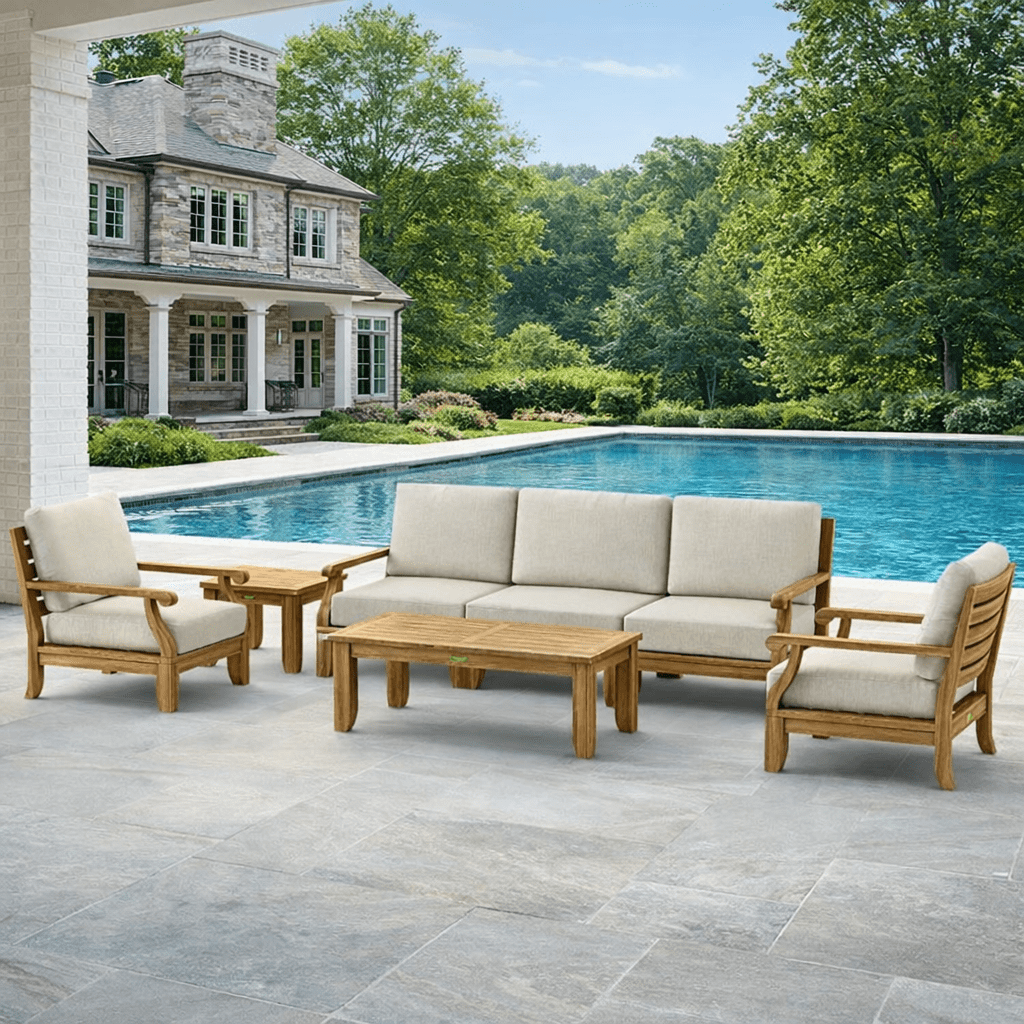 Grade A teak contains naturally high levels of oils and has a dense grain structure. Those characteristics help the wood resist moisture, rotting, insects, and warping without requiring an artificial stain for durability. That matters in Malibu because ocean-facing furniture is repeatedly exposed to marine moisture, fog, sun, and drying cycles.
This does not eliminate cleaning. Salt film, dust, bird residue, sunscreen, food, and environmental debris can still accumulate on any outdoor table or chair. The advantage is that teak's outdoor suitability comes from the wood itself rather than from a delicate decorative coating that must remain perfect to protect the underlying material.
One of the most useful things to understand before buying teak is what happens to its appearance. Untreated teak gradually develops a silver-gray patina. Homeowners who like that relaxed, weathered coastal appearance can allow the change to occur naturally. Those who prefer the original golden color can use suitable teak care products to maintain it.
This choice is particularly useful for Malibu because both directions can look appropriate. Fresh golden teak brings warmth to contemporary concrete-and-glass architecture, while naturally weathered teak can integrate beautifully with stone, coastal planting, beach-oriented homes, and quieter neutral palettes.
Outdoor wood repeatedly absorbs and releases moisture as weather changes. Teak's dense grain and natural properties make it resistant to warping, which is important for tables, chair frames, sectionals, benches, and other pieces expected to live outdoors rather than shuttle between the patio and garage.
For a homeowner investing in a finished outdoor room rather than temporary seasonal furniture, this is one of teak's strongest arguments. High-quality teak furniture carries a higher upfront cost than many mass-market alternatives, but it is designed around a decades-long ownership horizon rather than a few seasons of use.
Malibu includes primary residences, second homes, vacation properties, and homes that may sit unused for stretches of time. Teak accommodates those different ownership patterns well. It does not need to be painted, stained, or sealed for outdoor durability, and a homeowner can choose between maintaining the original color and accepting the natural silver-gray patina.
The maintenance priority should therefore be cleanliness rather than cosmetic perfection: remove salt and debris as needed, keep surfaces from remaining buried beneath wet organic matter, care for cushions appropriately, and address spills before they become stubborn stains.
| Malibu Challenge | Why Premium Grade A Teak Performs Well |
|---|---|
| Salt-laden marine air | Dense, naturally oily teak resists moisture and does not rely on paint for outdoor durability. |
| Fog and damp mornings | Teak is naturally resistant to moisture, rot, and warping. |
| Strong sun exposure | Teak is designed for outdoor sun exposure and naturally develops a silver-gray patina if left untreated. |
| Repeated wet-dry cycles | Grade A teak's dense grain provides good structural stability for year-round outdoor use. |
| Open, breezy decks | Teak has a heavier, sturdier feel than lightweight outdoor furniture materials. |
| Dust and wildfire ash | Unfinished teak can be cleaned without preserving a painted decorative coating. |
| Poolside moisture | Teak's moisture resistance makes it well suited to outdoor lounge areas. |
| Long ownership horizon | Quality teak furniture can last for decades with appropriate ownership and care. |
We would begin with the property rather than the furniture catalog. The first questions would be: Where do you actually spend time outside? Which area gets the best view? How much of the patio is sheltered? How many people do you routinely host? And is the space primarily for dining, conversation, pool use, or all three? Those answers usually make the right furniture categories surprisingly clear.
In many markets, designers begin with the house and work outward. In Malibu, we would often reverse that logic: identify the view people will naturally face, then arrange furniture around it. A rigidly symmetrical patio can look beautiful in photographs while placing half the guests with their backs to the Pacific. A sectional, sofa-and-club-chair arrangement, or pair of swivel chairs can often preserve better sightlines.
This is one reason teak swivel chairs can be especially useful on view-oriented terraces. Guests can turn toward conversation, the ocean, a fire feature, or the house without rearranging the entire seating group.
If the property has enough room, we would rarely ask one furniture group to perform every function. Outdoor dining is more comfortable when the table sits relatively close to the kitchen or grill, while lounge seating is usually better placed where the view, sunset, fireplace, or conversational atmosphere is strongest.
For households that entertain, a teak outdoor dining set paired with a separate deep-seating area creates a much more useful outdoor room than one oversized table surrounded by unused open space. The dining area handles meals; the lounge becomes the place guests naturally migrate afterward.
Malibu entertaining can swing from dinner for four to a weekend gathering with friends or visiting family. Rather than buying the largest table that will physically fit, an extendable teak dining table often makes better use of a deck or terrace. It provides more breathing room on ordinary days while creating additional seating when needed.
This is particularly helpful on long, narrow decks where circulation space matters. Always evaluate the table with chairs pulled out—not merely by the tabletop dimensions. A table that technically fits can still make a deck frustrating if guests have to squeeze between occupied chairs and a railing.
On properties with pools, chaise lounges should be treated as a separate zone rather than squeezed into the conversation area. Place them where people can recline comfortably without obstructing the primary traffic path between the house and pool. A small table between loungers is usually more useful than forcing every guest to reach backward to a large communal table.
For a dedicated swimming and sun area, browse teak chaise loungers separately from lounge furniture so each zone can be sized for its actual purpose.
For a large ocean-view home, we would usually begin with lounge seating or a sectional, then add dining and pool furniture according to how the property is used. For a narrower deck, start with the dining footprint or a compact conversation group before adding accent pieces. Households that entertain frequently should prioritize expandable dining capacity and modular seating, while quieter second homes may get more value from loungers, daybeds, and smaller conversation arrangements.
Malibu outdoor spaces tend to function less like occasional patios and more like extensions of the interior. The climate allows them to be used through much of the year, but the way they are used varies dramatically between an oceanfront deck, a Point Dume yard, a canyon property, and a hillside terrace. The best furniture plan should reflect those differences.
One of the most useful Malibu-specific planning questions is not “Where does the patio go?” but “Where will everyone want to sit at 6:30 in the evening?” A view-oriented lounge group often receives more daily use than a formal outdoor dining table because it works for coffee, reading, drinks, conversation, and sunset watching.
If those moments are central to the property, put the most comfortable furniture in the best viewing position rather than automatically reserving that location for a dining table. Dining can often move closer to the kitchen without sacrificing the home's strongest outdoor experience.
Even substantial Malibu homes often support a relaxed entertaining pattern: food moves between the kitchen and patio, guests shift between the pool and seating area, and dinner may transition into conversation rather than remaining centered around the table all evening. Furniture that supports movement between zones tends to work better than a single formal arrangement.
A deep-seating group paired with dining furniture and convenient side tables provides several different ways to use the same outdoor area throughout the day.
For a vacation or second home, maintenance burden deserves extra weight in the buying decision. Furniture that requires frequent refinishing or must routinely be moved indoors can turn into another property-management task. Grade A teak can remain outdoors year-round and may be allowed to weather naturally, which simplifies ownership for homes that are not occupied every week.
Soft goods still require common-sense care. If cushions will sit unused for long periods, storing or protecting them can reduce cleaning and help prevent damp debris from accumulating.
Homes in Malibu's canyons can feel remarkably different from beachfront properties. Shade, trees, organic debris, dust, and terrain may matter more than direct salt spray. These spaces often favor garden-oriented seating, intimate dining areas, and lounge furniture integrated into a more natural landscape rather than furniture arranged exclusively around an ocean view.
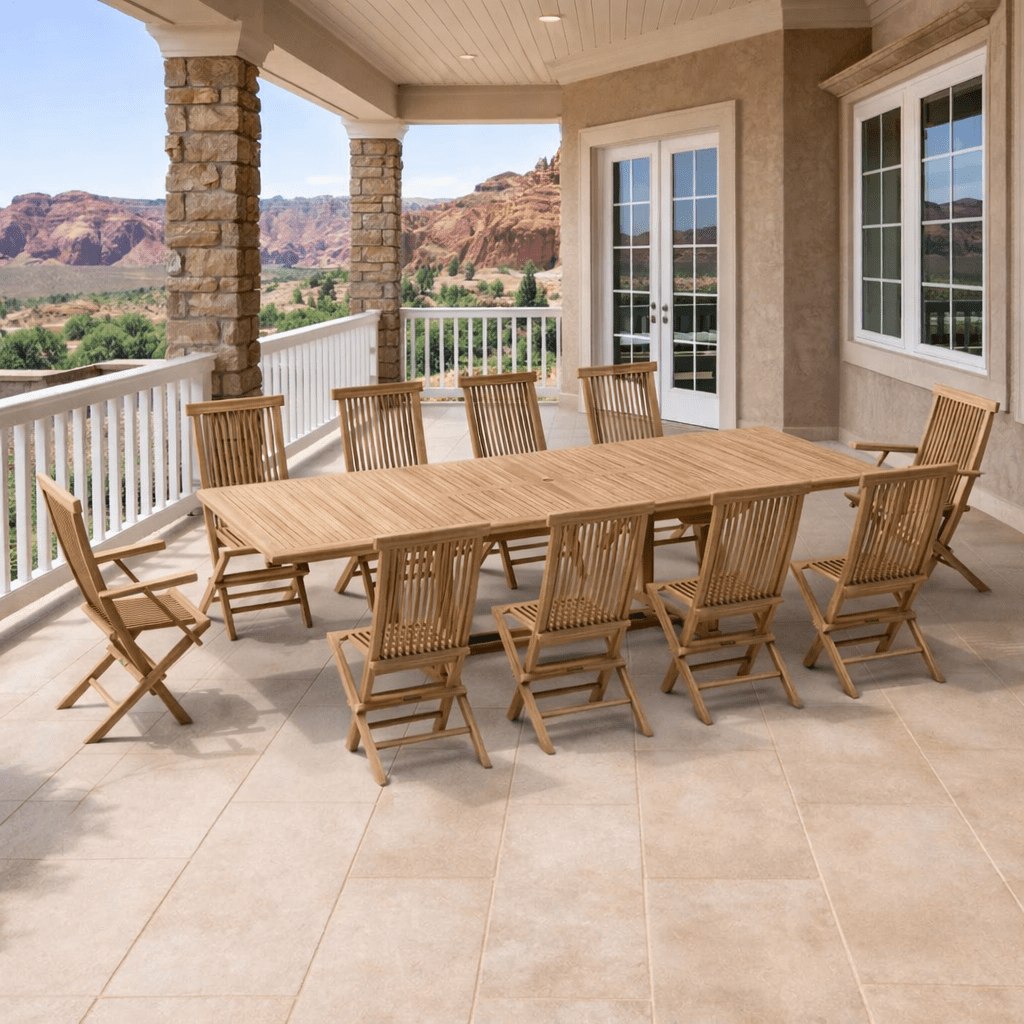 The strongest furniture plan usually combines a few purposeful zones instead of filling every available square foot. Start with the outdoor activity that matters most, size that area generously enough to work comfortably, and then add secondary pieces only where they earn their space.
For larger decks, begin with a multi-piece teak lounge set or sectional that keeps the primary view open. Sofas or sectionals can define the outer edge of the conversation area, while club or swivel chairs preserve flexibility. Add a coffee table and side tables so people do not have to stand or reach across the group for drinks.
On a narrower deck, resist the urge to scale every piece down. A few properly proportioned pieces often look better and function better than many small chairs. The goal is comfortable circulation, not maximum furniture count.
Homes that regularly host dinners should size the dining area around their normal guest count rather than the largest party of the year. Six- to eight-person tables are often more comfortable for everyday use, while extension capability can handle larger gatherings.
If entertaining is a major part of the property, explore the broader teak outdoor dining furniture collection rather than choosing a table in isolation. Chair width, armrests, table-leg placement, and expansion method all affect how many people can actually dine comfortably.
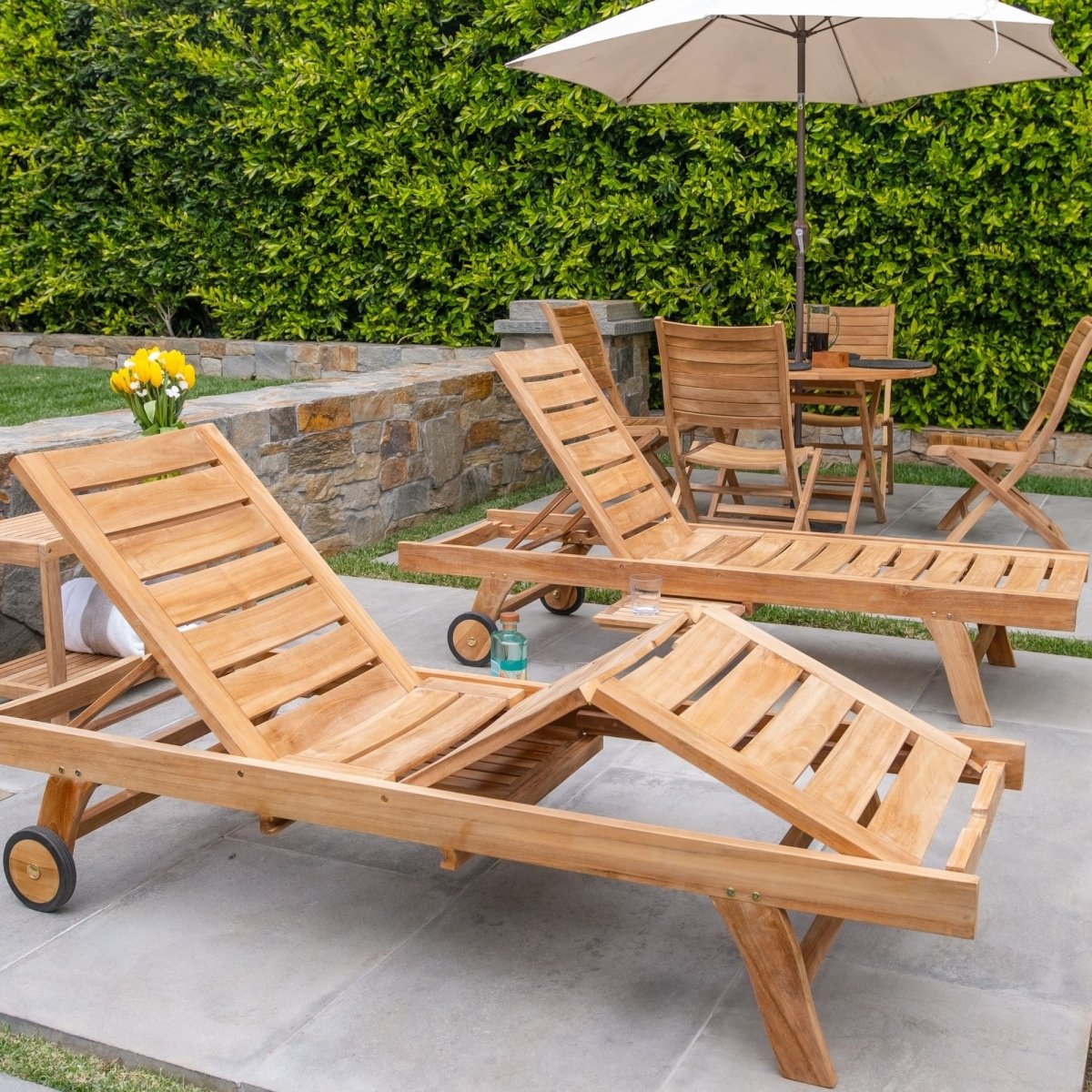 Pool furniture should support wet use without dominating the entire patio. Chaise lounges work best in a row or paired arrangement with enough clearance for circulation and small tables for towels, drinks, books, and phones. A separate shaded conversation area gives guests somewhere to sit upright without taking over the loungers.
Where the pool is primarily part of an entertaining space rather than a lap-swimming area, daybeds or deep seating can add a resort-style component without requiring every seat to face the water.
A dining table should sit conveniently near the outdoor kitchen without becoming part of the cooking traffic lane. If space permits, a teak serving or buffet table can be surprisingly useful for platters, beverages, serving pieces, and temporary staging.
This is a better use of furniture than continually occupying the dining table with serving dishes. It keeps the table available for guests and gives the cooking area a more organized transition into the dining zone.
Not every Malibu patio needs a sectional. A pair of club chairs, loungers, or a daybed can make more sense on a private bedroom terrace or smaller ocean-view platform. These spaces are often used by one or two people, so comfort and orientation matter more than seating capacity.
Malibu architecture ranges from glass-heavy contemporary houses to understated beach homes, Mediterranean-influenced properties, midcentury residences, rustic canyon houses, and large modern estates. Teak works across that spectrum because the material brings natural warmth without imposing a highly specific decorative style.
Modern Malibu architecture often uses large areas of glass, concrete, stone, steel, and restrained finishes. Natural teak can keep an outdoor room from feeling visually cold. Straight-lined dining tables, sectional seating, simple chaise loungers, and uncluttered side tables generally complement this architecture without competing with the view.
Traditional beach-oriented homes can support a softer furniture mix: dining sets, sofas and loveseats, loungers, and occasional benches. Fresh teak provides warmth, while naturally weathered silver-gray teak can produce a more relaxed coastal appearance over time.
There is no functional requirement to force teak to stay golden simply because it was purchased that way. Decide which appearance suits the architecture, then choose the maintenance approach accordingly.
In greener or more secluded Malibu settings, teak pairs naturally with stone terraces, mature landscaping, timber details, and less formal planting. Garden benches and compact dining arrangements can be as useful here as large lounge sets, particularly when the property includes several small destinations rather than one dominant patio.
One of the easiest design mistakes in a dramatic setting is making the furniture too visually complicated. Malibu already supplies the scenery. Furniture usually works best when it frames the view rather than trying to become the focal point itself. Repeating a limited palette of teak, fabric, stone, and landscaping materials can make a large outdoor space feel more coherent.
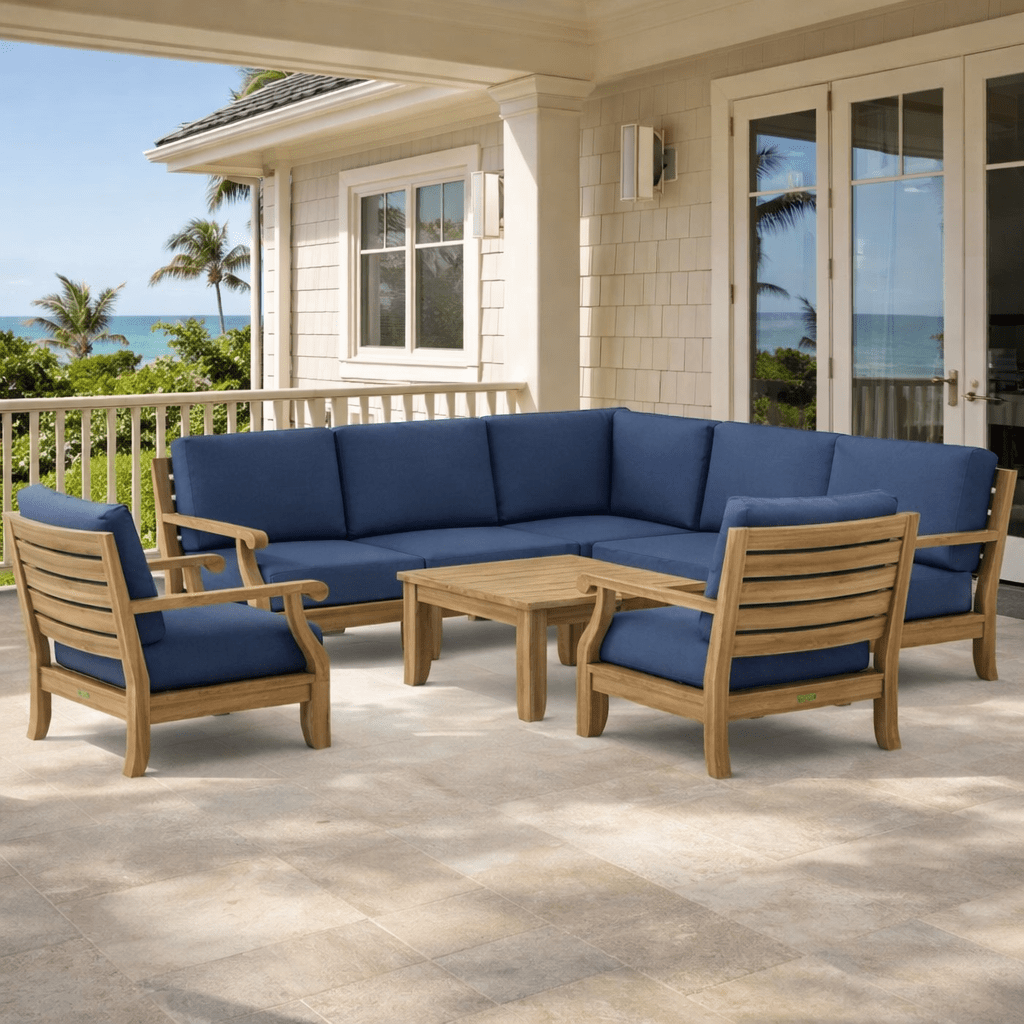 A furniture choice that works well in a protected canyon courtyard may not be equally convenient on a deck directly above the ocean. Before comparing styles, determine whether the furniture will face salt residue, persistent marine moisture, direct afternoon sun, strong wind, shade, tree debris, or some combination of those factors.
Grade A teak handles a broad range of outdoor conditions well, but identifying the exposure still determines how often you clean the furniture and how you manage cushions and accessories.
A common mistake on expensive outdoor spaces is trying to seat the largest conceivable party every day. Oversized furniture can consume circulation paths, block views, and make an otherwise generous deck feel cramped. Furnish primarily for normal use, then use extendable tables, movable chairs, or secondary seating to handle occasional larger groups.
Table dimensions can be deceptive. A 7-foot table may fit beautifully on paper but become inconvenient when dining chairs are pulled away from it. On decks bordered by railings or sliding doors, circulation clearance should be measured with the furniture in use—not with every chair tucked neatly beneath the table.
Weather-resistant cushion fabric is not an invitation to ignore soft goods indefinitely. Marine fog, wet leaves, bird residue, sunscreen, and pool use can all soil outdoor cushions. Sunbrella fabric provides strong outdoor performance, but basic cleaning and moisture management still improve the ownership experience.
Some owners become concerned when golden teak begins changing color and assume something is wrong. Silver-gray weathering is normal. Decide before purchasing whether you prefer the natural patina or want to maintain the original tone. Both approaches are legitimate; the mistake is buying teak without understanding that visual choice.
A heavy teak sofa does not make loose patio items secure. Umbrellas, cushions, covers, trays, and lightweight accessories can still move in strong winds. On exposed ocean or hillside properties, create a simple plan for securing or storing loose items rather than assuming the furniture itself solves the wind problem.
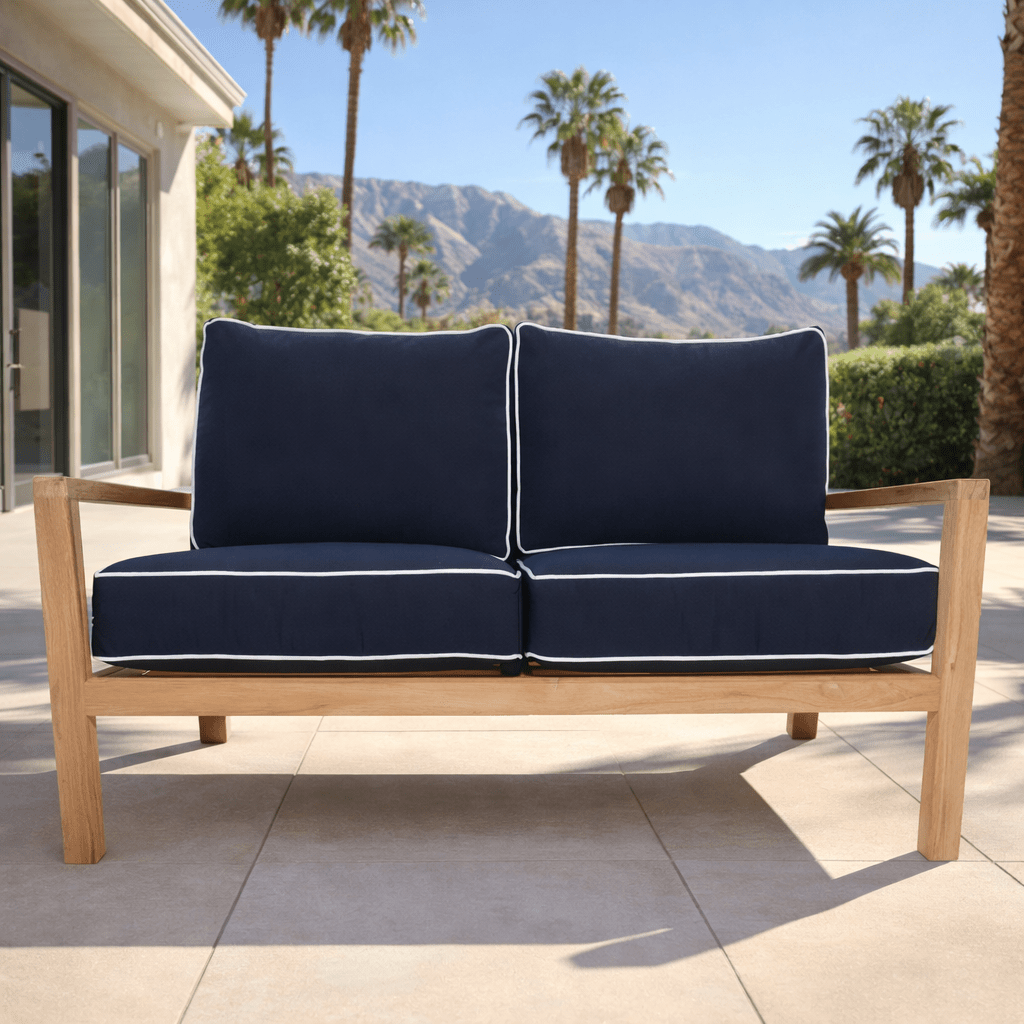 Malibu teak care is generally straightforward, but the ideal routine depends on proximity to the ocean and how exposed the patio is. Furniture near the shoreline may need more frequent surface cleaning than the same furniture in a protected canyon setting because salt, fog residue, sand, and airborne debris accumulate more readily.
There is no useful universal schedule such as “clean teak every 30 days.” Inspect the furniture instead. Oceanfront pieces may benefit from periodic rinsing or cleaning whenever a visible salt film or grime develops. More sheltered furniture may need attention primarily after dusty periods, heavy use, or debris accumulation.
Use appropriate teak cleaning products when deeper cleaning is required, and follow the instructions for the specific care product rather than improvising with harsh household chemicals.
Leaves, flowers, dirt, and other organic material can hold moisture against furniture surfaces. Remove accumulated debris instead of allowing it to sit for extended periods, particularly in shaded canyon patios or beneath trees. This is more important than trying to keep every teak surface cosmetically perfect.
If you want the natural silver-gray appearance, teak can be left untreated. If you want to preserve more of the original golden tone, use appropriate teak care products and follow the product directions. Sealing or oiling is an appearance choice, not a requirement for the wood's basic outdoor durability.
Many TeakHQ patio seating pieces include Sunbrella cushions, while others offer cushions as an option. Allow wet cushions to dry properly, remove debris, clean spills when practical, and consider protected storage during long periods when the property is unused. Covers can also be convenient, but they are optional rather than required for teak furniture itself.
Grade A teak is designed for year-round outdoor use, so Malibu homeowners generally do not need a seasonal ritual of moving furniture indoors. If a second home will be vacant for an extended period, protecting or storing cushions and securing loose accessories may be more useful than moving the teak frames themselves.
If ash, dust, or wind-driven debris settles on the furniture, remove loose material and clean the surface rather than allowing residue to accumulate. Do not treat teak as fire-resistant furniture; its advantage here is simply that routine outdoor cleaning does not depend on preserving a painted protective finish.
The right Malibu outdoor furniture plan begins with how your particular property meets the coast: the view direction, wind exposure, salt proximity, deck dimensions, pool layout, and the number of people who actually use the space. Premium Grade A teak is a strong long-term choice for homeowners who want a natural material that can live outdoors, age gracefully, and work across contemporary, coastal, traditional, and transitional settings.
Start with the area you will use most—conversation, dining, or poolside living—then build the rest of the outdoor room around it.
Look for premium outdoor materials that tolerate moisture, sun exposure, and coastal conditions without requiring delicate surface finishes. Grade A teak is especially well suited because its natural oils and dense grain make it resistant to moisture, rot, insects, and warping. High-quality aluminum can also be appropriate, particularly for homeowners who prefer a lighter, more contemporary material.
Grade A teak is well suited to coastal environments because it is naturally moisture resistant and does not rely on paint or artificial stain for outdoor durability. Salt residue can still collect on the surface, so furniture very close to the ocean should be cleaned as needed rather than ignored indefinitely.
Yes. TeakHQ's Grade A teak furniture is designed for year-round outdoor use and can withstand rain, sun exposure, and temperature fluctuations. Moving the teak frame indoors seasonally is not required, although cushions and loose accessories may benefit from storage or protection during long periods of non-use.
Prioritize circulation and the view rather than maximizing seat count. A compact deep-seating group, loveseat with two chairs, paired loungers, or appropriately sized dining set often works better than an oversized sectional. Measure the space with chairs pulled out and leave clear paths to doors and railings.
Neither material is automatically right for every homeowner. Teak is heavier, warmer, more natural in appearance, and offers the character of real wood. Aluminum is lighter and often creates a more distinctly modern look. For exposed coastal patios where a substantial natural material is preferred, Grade A teak is an especially strong option.
Yes. Untreated teak naturally develops a silver-gray patina as it weathers outdoors. This is normal and does not mean the furniture is deteriorating. Homeowners who prefer the original golden color can use appropriate teak care products to help maintain that appearance.
Use exposure rather than a fixed calendar. Oceanfront furniture may need more frequent cleaning because of salt film, fog residue, sand, and airborne debris, while sheltered canyon furniture may need attention mainly after dusty periods or organic debris accumulation.
Start with dedicated loungers positioned outside the main walking path, then add side tables and a separate shaded conversation area if space permits. Teak chaise loungers are a natural fit because teak is moisture resistant and designed for outdoor use.
No. Covers are optional rather than required for Grade A teak's outdoor durability. A cover may reduce cleaning and debris accumulation, but cushions and loose accessories generally benefit more from protection than the teak frame itself.
Size the table for your normal household and guest count rather than your largest occasional party. If your gatherings vary substantially, an extendable teak dining table can provide everyday breathing room while adding capacity when friends or family visit.


