
FREE SHIPPING
within mainland USA
within mainland USA
Home ▸ Teak Outdoor Furniture ▸ By Location ▸ Miami, Florida
Choosing outdoor furniture in Miami means planning for more than warm weather. Strong sun, persistent humidity, frequent summer rain, coastal exposure and long periods of outdoor use all influence which materials and configurations make sense. Pool patios, waterfront terraces, tropical gardens and high-rise balconies also create very different furnishing needs. Premium Grade A teak is especially worth considering here because it combines natural weather resistance with the substantial, architectural appearance many Miami outdoor spaces call for.

Miami creates a demanding outdoor-furniture environment because several stresses occur at the same time. Heat and humidity matter, but so do repeated wetting and drying, intense sun exposure, coastal air, pool water, wind-driven rain, and the fact that many outdoor spaces are used through much of the year. A material that works well on a protected inland porch may require much more attention on an exposed terrace overlooking Biscayne Bay.
In a dry climate, furniture may spend long periods becoming thoroughly dry between rain events. Miami is different. High atmospheric moisture can keep outdoor surfaces, cushions, joints, and shaded areas damp for longer periods, particularly where air circulation is limited. That makes moisture tolerance an important material-selection issue rather than simply a maintenance consideration.
When comparing premium woods, metals, synthetics, and woven products, ask how much the furniture depends on protective finishes or coatings to tolerate repeated exposure. A material that performs well only while a surface finish remains intact may create a different ownership experience from one whose weather resistance comes largely from the material itself.
Miami's rainy periods bring frequent showers and thunderstorms, but the practical furniture issue is the cycle that follows: rain, humidity, partial drying, more moisture, and organic debris settling on damp surfaces. Covered patios are not automatically exempt. Wind-driven rain can reach surprisingly deep into terraces and lanais, while shaded furniture may dry more slowly than pieces in open sun.
For homeowners, drainage and airflow therefore deserve almost as much attention as the furniture material. Avoid placing seating where water routinely collects around the feet, and give cushions and upholstered components room to dry rather than trapping them against walls or inside poorly ventilated storage.
A house in Pinecrest and an oceanfront residence in Miami Beach may share the same regional climate, but they do not necessarily present the same furniture environment. Waterfront properties can add salt-laden air and occasional salt spray to the normal combination of moisture and sun. That makes material quality and hardware selection more important, especially on exposed decks, balconies, docks, and terraces.
Premium teak is worth considering in these spaces because its natural oils, dense grain, moisture resistance, and outdoor durability do not depend on paint or an artificial stain for protection. Other premium materials can also be appropriate, particularly well-engineered aluminum or high-quality synthetics, but coastal exposure makes construction quality more consequential.
Miami homeowners often think of shade primarily as a comfort issue. It is also a furniture-planning issue. Strong sun affects surface appearance, cushions, and the comfort of exposed seating, while pool patios add repeated splash exposure. Teak can withstand sun and weather exposure and will naturally develop a silver-gray patina when left untreated.
Storm planning is a separate question. No outdoor furniture material should be treated as a substitute for appropriate preparation when severe weather threatens. Teak's substantial feel can be desirable for everyday use, but homeowners should still have a practical plan for movable furniture, cushions, umbrellas, accessories, and other loose outdoor items when tropical weather approaches.
Teak is not the only premium outdoor-furniture material suitable for South Florida, but its combination of natural moisture resistance, stability, longevity, and maintenance flexibility aligns unusually well with Miami conditions. The important distinction is that Grade A teak's outdoor performance comes from the wood itself rather than from a painted surface that must remain intact.
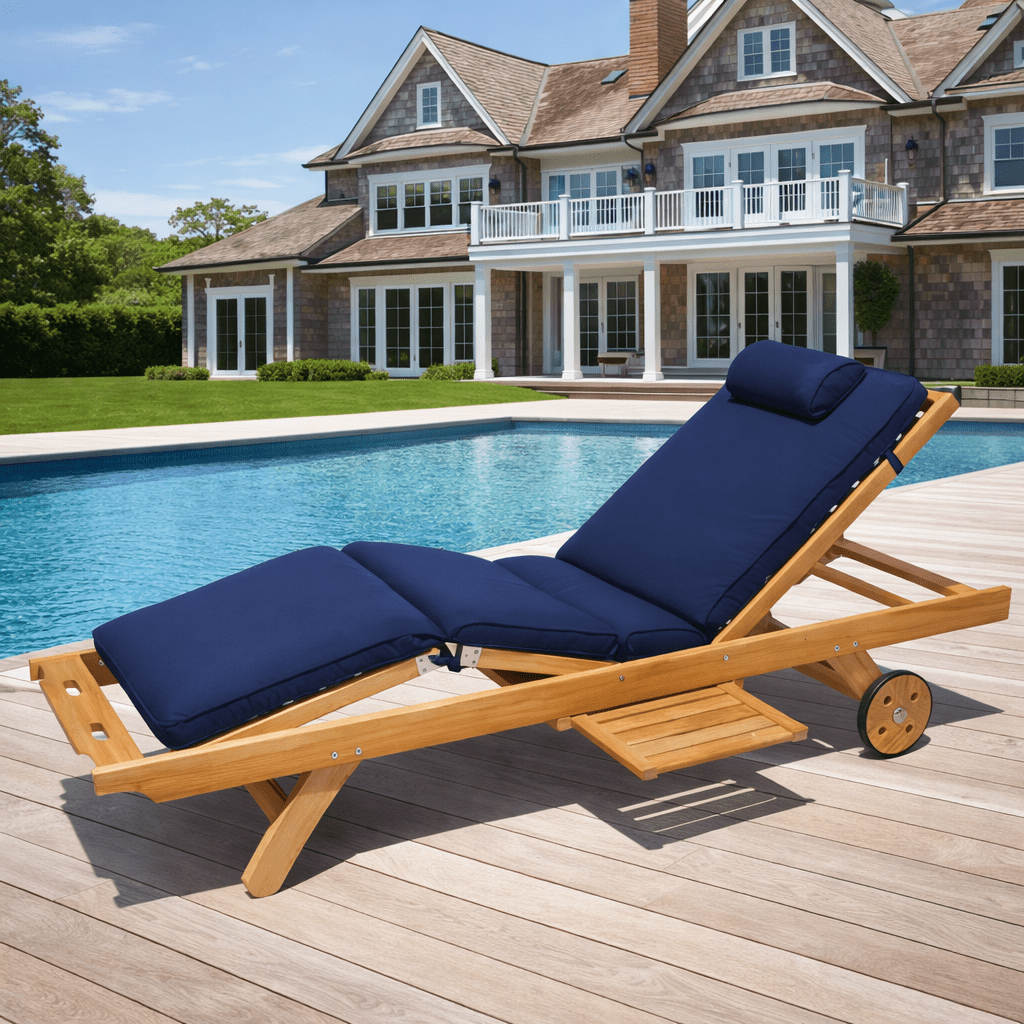 Premium Grade A teak contains naturally high levels of oils and has a dense grain structure. Those characteristics help it resist moisture, rot, insects, and warping—useful qualities in a climate where furniture routinely encounters humidity, rain, and wet pool environments.
This does not mean furniture should be allowed to sit in standing water or that routine cleaning becomes unnecessary. It means the wood itself is naturally suited to outdoor exposure and does not require paint or artificial stain simply to remain durable.
One of teak's practical advantages in Miami is structural stability through changing outdoor conditions. Grade A teak is designed for year-round outdoor use and can withstand rain, sun exposure, and temperature fluctuations. For a terrace that receives afternoon storms followed by strong sun—or a chaise that repeatedly gets wet beside the pool—that is more relevant than a material's performance during a single rain event.
Furniture construction still matters. Premium material does not excuse poor drainage, loose joinery, or neglected cushions. Think of teak as reducing one major variable—the vulnerability of the primary furniture material—rather than eliminating every outdoor-care decision.
Teak does not need an artificial stain for durability. If natural teak is left untreated outdoors, its warm golden-brown color gradually weathers toward a silver-gray patina. That color change is normal weathering rather than an indication that the wood has stopped performing.
This creates a useful design choice for Miami homeowners. A weathered silver tone can look particularly natural against white stucco, limestone, tropical landscaping, contemporary architecture, and coastal palettes. Owners who prefer teak's original warmer color can choose appropriate teak care products and a more involved appearance-maintenance routine.
Premium Grade A teak carries a higher initial cost than many mass-market patio materials, so it makes the most sense when the buyer values long-term ownership. Properly chosen teak furniture can last for decades rather than seasons. For a homeowner investing substantially in a finished pool deck, waterfront terrace, outdoor kitchen, or landscaped courtyard, replacing inexpensive furniture repeatedly can be less attractive than choosing furniture intended to remain part of the space.
That is especially relevant in Miami because outdoor areas are not merely seasonal overflow spaces. For many homes they function as additional living and entertaining rooms for a large portion of the year.
| Miami Challenge | Why Premium Grade A Teak Performs Well |
|---|---|
| High humidity | Natural oils and dense grain help resist moisture and rot. |
| Frequent rain | Designed for year-round outdoor exposure and repeated weather changes. |
| Strong sun | Withstands sun exposure and can weather naturally without artificial stain. |
| Coastal exposure | Moisture-resistant natural wood suits demanding waterfront environments. |
| Poolside use | Moisture resistance is useful around routinely wet outdoor spaces. |
| Temperature changes | Dense Grade A teak resists warping and handles outdoor fluctuations. |
| Long outdoor seasons | Designed for year-round outdoor use and long-term ownership. |
We would start with how you actually use the property—not with a furniture catalog. In Miami, the three questions we would ask first are where people naturally gather, which spaces receive the most sun or weather exposure, and whether the home is primarily built around the pool, the view, outdoor dining, or a combination of all three.
For a pool-centered Miami backyard, we would establish the chaise-lounge zone before filling the rest of the patio. The most common planning mistake is treating loungers as leftover furniture and squeezing them into whatever space remains. Instead, preserve comfortable walking paths between the house, pool, outdoor kitchen, and seating areas, then determine how many teak chaise loungers comfortably fit without making the deck feel like a resort with too many chairs.
Side tables matter more than many buyers expect. A lounge chair without a practical place for a drink, phone, sunglasses, or book often gets supplemented later with mismatched tables. Plan those surfaces from the beginning.
We would generally separate lounging in the sun from longer conversations in the shade. A covered terrace, deep roof overhang, pergola, or protected portion of the patio is often better for deep teak patio seating than the brightest part of the pool deck.
For a larger property, a sectional or sofa-and-chair grouping creates a genuine outdoor living room. For a narrower terrace, individual club or swivel chairs can preserve circulation and adapt more easily when guests arrive. The goal is not to maximize the number of seats. It is to create enough seating while keeping air, views, and movement through the space.
Outdoor dining works best when it feels easy. If carrying food from the kitchen requires navigating the pool, steps, and a conversation area, the dining table may become decorative rather than functional. We would normally locate outdoor teak dining furniture near the indoor kitchen, grill, or outdoor kitchen and use the more distant parts of the property for lounging.
For homeowners who entertain in very different group sizes, an extendable teak table is often more useful than permanently dedicating the patio to the largest gathering of the year. A table that remains appropriately scaled for everyday meals but expands for guests makes better use of valuable terrace space.
Waterfront homes, high-rise terraces, and properties with lush tropical landscaping require one additional discipline: do not let the furniture become the visual wall between people and the reason they came outside. Keep taller dining groups, umbrellas, and large sectional backs away from critical sightlines when possible.
A memorable Miami planning rule is this: the best seat is not necessarily the one closest to the water—it is the one that can see the water comfortably while remaining pleasant enough to use for an hour. Shade, orientation, airflow, circulation, and view should be planned together rather than competing after the furniture arrives.
Start with the activity that defines your outdoor space. Pool-oriented homes will usually get the most immediate value from loungers and conversation seating; frequent hosts may want to begin with dining or a sectional; smaller terraces may benefit more from flexible seating and compact tables. Once the primary zone is established, add complementary pieces rather than furnishing every corner at once.
Miami outdoor spaces tend to work harder than patios in climates where furniture disappears under covers for much of the year. Pools, outdoor kitchens, waterfront views, winter visitors, casual lunches, evening drinks, family meals, and weekend entertaining can all happen in the same space. Good furniture planning therefore depends as much on transitions between activities as on individual pieces.
In many Miami properties, the pool deck is not simply a recreational amenity. It is the visual and functional center of the backyard. That changes how furniture should be selected. Loungers need practical side surfaces, conversation seating should be close enough to connect with the pool without blocking circulation, and dining furniture should remain convenient to food preparation.
A useful layout often creates three distinct zones—sun lounging, shaded conversation, and dining—rather than forcing one oversized furniture group to serve all three purposes.
Miami's warmer climate supports outdoor meals during periods when much of the country has moved indoors. The most comfortable times of day and year vary with heat, rain, and sun exposure, so covered dining or adaptable shade can make the table far more useful than simply choosing a larger table.
For families who host relatives, winter visitors, or holiday gatherings, expandable dining can be particularly practical. The everyday configuration stays proportionate to the patio while additional seating capacity is available when the guest list grows.
Miami's outdoor lifestyle is not limited to large backyards. Condominium terraces and waterfront balconies can be valuable outdoor rooms, but they impose tighter limits on circulation and scale. Measure door swings, walking paths, railing clearances, and access before selecting furniture. A beautiful sofa that dominates the usable floor area is rarely a successful luxury purchase.
Smaller lounge chairs, compact dining sets, and side tables can create a more comfortable arrangement than a large sectional in constrained spaces. Building rules and severe-weather procedures should also be considered before furnishing elevated terraces.
For a vacation property or short-term rental, simplicity becomes especially valuable. Furniture that can remain outdoors and does not depend on frequent refinishing reduces the number of ownership tasks that must occur between visits. Teak can be left untreated to develop its natural silver-gray patina, allowing owners to prioritize routine cleaning rather than preserving a showroom-new wood color.
For cushioned furniture, the fabric and storage strategy deserve separate consideration. TeakHQ offers many lounge pieces with Sunbrella cushions, which are weather-, fade-, UV-, and water-resistant, but cushions still benefit from reasonable care, airflow, and protection during severe weather or extended periods of non-use.
 The right category depends less on the zip code than on the part of the property you are furnishing. Miami's mix of pool decks, covered terraces, tropical gardens, waterfront patios, outdoor kitchens, and high-rise balconies calls for different furniture scales and configurations even within the same home.
For a dedicated pool zone, teak loungers and deck chairs are usually the first category we would evaluate. Two loungers can work for a couple-oriented retreat; four or more make more sense when the pool regularly serves family and guests. Leave enough deck area around them that moving chairs does not obstruct the main route around the pool.
If the space allows, pair every one or two loungers with a side table rather than relying on a distant coffee table. Small functional surfaces improve the usability of a pool deck disproportionately to the amount of space they occupy.
Covered terraces are natural locations for sofas, loveseats, club chairs, and modular seating because shade makes longer sitting periods more comfortable. Larger homes can support teak sectional sets that define the terrace as an outdoor living room. Smaller spaces often work better with a sofa and movable chairs because the layout can change with the number of guests.
Include a coffee table only where there is enough clearance to walk comfortably around it. In tighter layouts, multiple side tables may provide better function without closing the middle of the conversation area.
Where the grill or outdoor kitchen is a major gathering point, standard dining is not always the only answer. Bar- or counter-height seating can create a natural transition between cooking and socializing, particularly around counters or elevated terraces where a higher sightline is desirable.
For a separate dining zone, choose the table according to typical use first and maximum capacity second. Permanent seating for twelve makes little sense when four people use the patio most days. Expandability is often the better luxury: space when you want it and openness when you do not.
On waterfront properties, swivel chairs can be particularly useful because people can turn between the conversation group and the view without physically relocating furniture. A sofa or loveseat can anchor the arrangement while individual chairs maintain flexibility.
Keep major sightlines open and consider how the furniture looks from inside the house as well. In homes with large sliding or folding glass doors, the outdoor furniture becomes part of the interior view even when nobody is sitting outside.
Not every outdoor area needs to become another full patio. A teak garden bench beneath palms or along a landscaped path can make a secondary portion of the property usable without competing with the main entertaining area. This is especially effective on larger Coral Gables, Coconut Grove, Pinecrest, and similar residential properties where landscaping is an important part of the experience.
Miami architecture ranges from historic Mediterranean-influenced homes and Miami Beach Art Deco to clean-lined contemporary residences and glass-heavy waterfront towers. Teak works across these settings because the material can read as traditional or modern depending on the furniture design. Its natural warmth is especially useful where stone, stucco, glass, concrete, and tropical planting already provide strong visual textures.
Contemporary Miami homes often rely on large panes of glass, pale stone, expansive terraces, and strong indoor-outdoor connections. In these settings, simple teak forms can soften the architecture without making the space feel rustic. A streamlined sectional, substantial dining table, or pair of chaise lounges introduces natural material while preserving a clean composition.
Homes with stucco walls, courtyards, tiled roofs, arches, lush planting, or more traditional detailing can support furniture with stronger visual weight. Teak's natural grain works comfortably with stone, terra-cotta tones, greenery, and shaded courtyards without requiring the furniture to imitate the architecture.
Miami Beach's Art Deco, Miami Modern, and Mediterranean Revival influences give the region an unusually broad design vocabulary. Teak can act as a neutral natural material among stronger architectural colors and geometry. Rather than matching every historic detail, we would usually keep the furniture relatively simple and let the architecture remain the focal point.
With dense greenery, palms, hedges, and layered planting, outdoor furniture can disappear visually if every piece is delicate. Teak's substantial, architectural presence can create enough contrast to remain intentional within lush landscaping. Weathered silver-gray teak can create a quieter coastal look, while maintained golden teak produces a warmer contrast against green foliage.
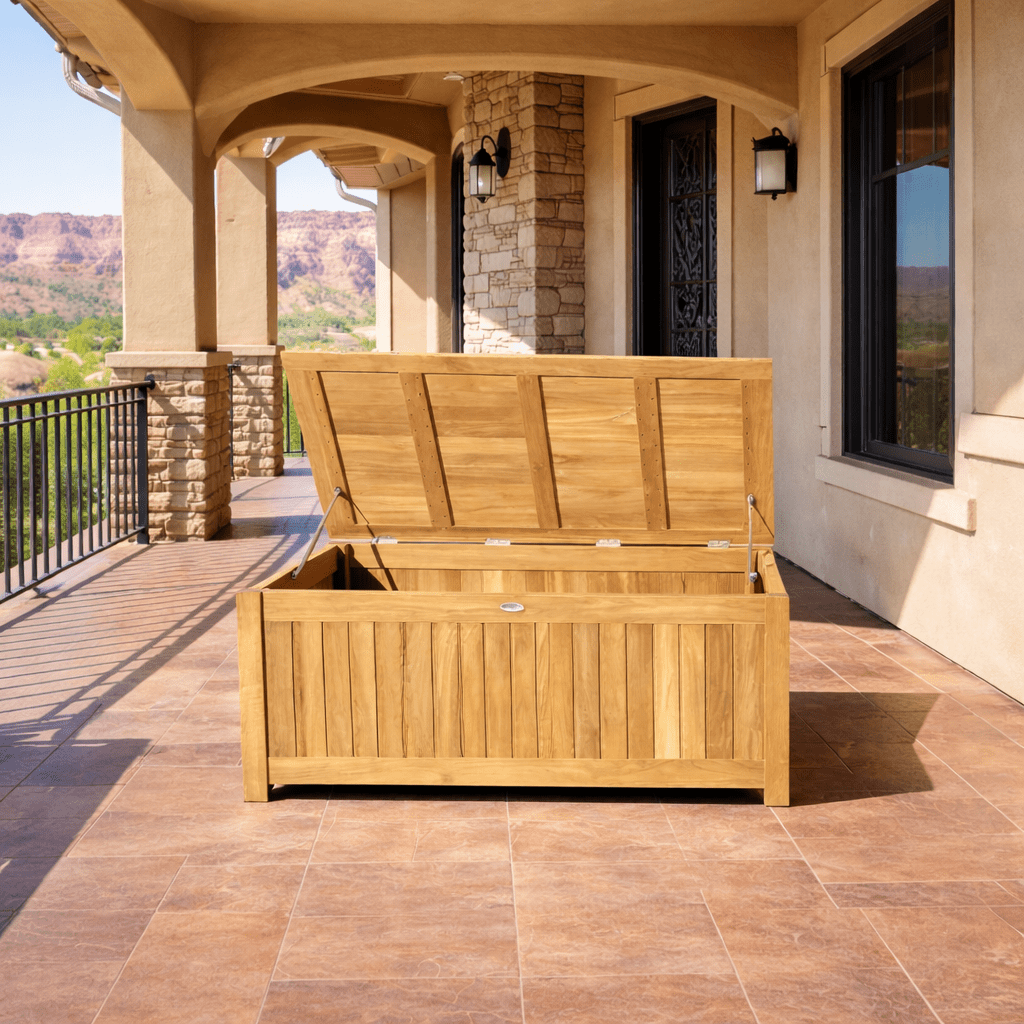 A furniture material may survive rain yet still create maintenance problems when humidity keeps surfaces and cushions damp. In Miami, evaluate drainage and drying conditions as part of the layout. Avoid crowding furniture tightly against walls or landscaping where airflow is poor.
Grade A teak's natural resistance to moisture and rot makes it well suited to this environment, but cushions and accessories remain separate materials with their own care needs.
A frequent design mistake is furnishing the patio for the largest gathering imaginable. The result is an oversized table or sectional that occupies valuable space every day for an event that happens occasionally. Miami's outdoor rooms are used too often for that compromise to make sense.
Design for normal life first. Add extendable tables, movable chairs, ottomans, benches, or flexible seating to accommodate larger gatherings without sacrificing everyday circulation.
The right chair in the wrong location can still be uncomfortable. Before purchasing furniture, observe the patio through the day. Where does direct sun fall at breakfast, mid-afternoon, and early evening? Which portions of the terrace are protected by the building?
Once the comfort zones are understood, place long-duration activities—conversation seating and dining—where shade is available or can be added. Reserve more exposed zones for activities where sun is expected, such as pool lounging.
Furniture purchased for an inland covered patio should not automatically be assumed to face the same environment on an oceanfront balcony. Salt exposure adds another consideration for materials, hardware, and cleaning. Royal Teak and Anderson Teak products use stainless-steel hardware, while Verandis Teak products use brass hardware.
Regardless of material, periodic cleaning is sensible near the coast so salt and environmental residue do not simply accumulate on surfaces.
A beautifully furnished patio still needs a severe-weather plan. Decide in advance where cushions, umbrellas, lightweight accessories, serving items, and movable pieces will go. Do not discover during storm preparation that the deck box is undersized or the storage room cannot accommodate the items you intended to move.
Teak furniture is heavier and more substantial than many lightweight alternatives, but that should never be interpreted as permission to disregard local storm guidance.
Miami teak care is less about protecting the wood from ordinary outdoor existence and more about keeping the furniture clean, allowing it to dry, managing coastal residue, and deciding what appearance you want. Grade A teak does not require sealing, painting, or covering for durability.
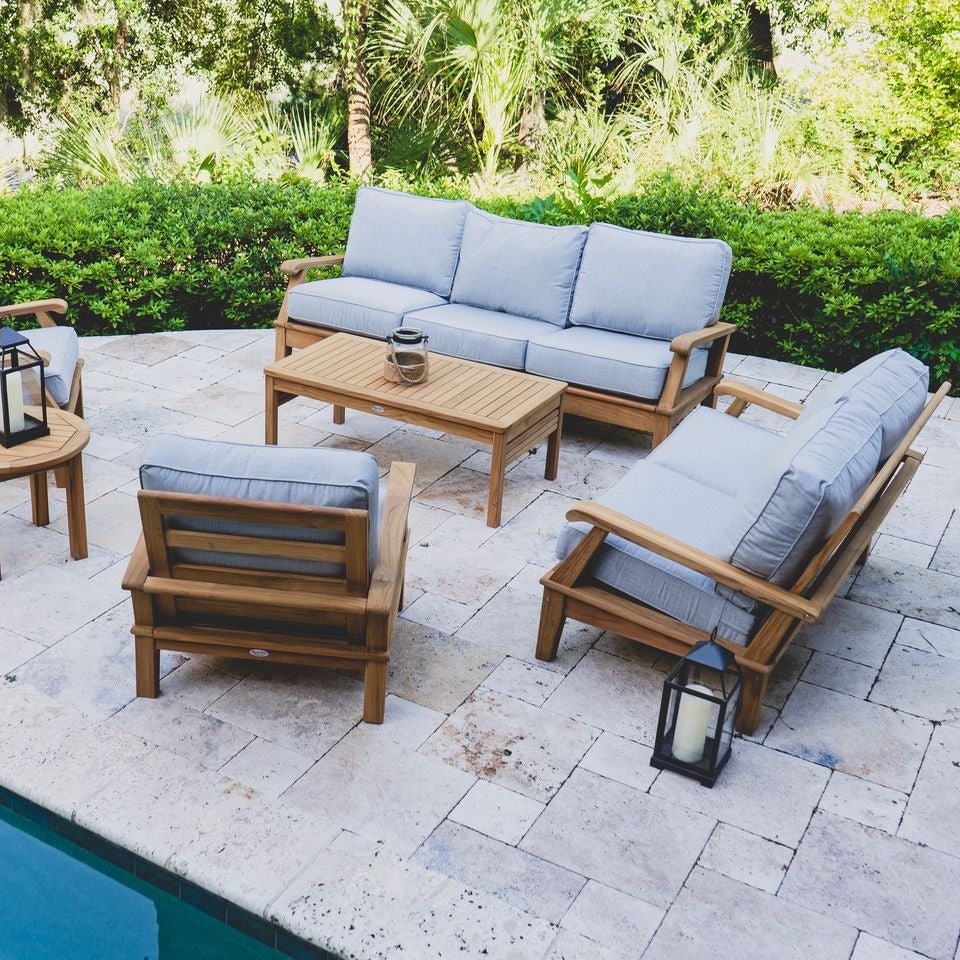 There is no meaningful one-size-fits-all cleaning calendar. A covered Coral Gables terrace may stay relatively clean while furniture near an oceanfront pool can accumulate salt, sunscreen residue, leaves, pollen, drinks, and other debris more quickly. Inspect the furniture rather than blindly following a date on the calendar.
Routine cleaning is particularly useful where organic debris remains on damp horizontal surfaces. Address spills and buildup before they become harder to remove.
If furniture is exposed to salt air or spray, periodically removing accumulated residue is a sensible part of routine care. Pay attention not only to the wood but also to hardware, cushions, and adjacent surfaces. Furniture farther inland generally will not require the same level of salt-related attention as an exposed oceanfront terrace.
After heavy rain, avoid creating conditions that trap moisture unnecessarily. Allow air to circulate around cushions and furniture. Do not place wet cushions into sealed storage simply to clear the patio quickly; weather-resistant fabric still benefits from drying before extended storage.
If a covered patio remains shaded for much of the day, regular visual inspection is worthwhile because damp debris can linger longer there than on furniture receiving sun and airflow.
Owners sometimes assume that teak must be regularly oiled to survive outdoors. It does not. Natural teak can be left untreated and will gradually develop a silver-gray patina while retaining its outdoor performance.
If you prefer the original golden color, use appropriate teak care products and accept that maintaining that appearance involves more attention. The key is to separate the appearance decision from the durability decision: gray teak is not failed teak.
Miami does not require the cold-weather storage routine common in northern climates. Grade A teak is designed for year-round outdoor use, so the furniture itself can remain outside. Owners may still choose to protect cushions or accessories during extended absences, periods of severe weather, or when they want to reduce cleaning.
Protective covers are optional rather than required for the teak itself. If covers are used in a humid environment, select and use them in a way that does not unnecessarily trap moisture against furniture or cushions.
The strongest Miami outdoor spaces are not the ones with the most furniture. They are the ones that comfortably connect the pool, shade, dining, views, and conversation while using materials suited to frequent outdoor exposure. Premium Grade A teak is a compelling fit when you want natural wood, long-term durability, substantial construction, and the flexibility to maintain a golden finish or simply let the furniture weather naturally.
Begin with the zone you use most—pool, dining, conversation, or waterfront terrace—and build the rest of the outdoor room around it.
The best choices are materials designed for repeated outdoor moisture exposure and that do not depend on delicate indoor-style finishes. Premium Grade A teak is particularly well suited because its natural oils and dense grain help resist moisture, rot, insects, and warping. High-quality outdoor aluminum and synthetic materials can also be legitimate options depending on the desired look and ownership priorities.
Yes. Grade A teak's natural moisture resistance and outdoor durability make it a strong choice for coastal environments. Waterfront owners should still clean accumulated salt and environmental residue periodically and pay attention to hardware, cushions, and other non-teak components.
Yes. TeakHQ's Grade A teak is designed for year-round outdoor use and can withstand rain, sun exposure, and temperature fluctuations. Covers are optional for the teak rather than required for durability, although cushions and accessories may benefit from protection during severe weather or extended periods of non-use.
Start with chaise loungers and convenient side tables, then add shaded conversation seating if space permits. A separate dining area near the kitchen or grill usually works better than trying to make one furniture grouping serve lounging, dining, and entertaining simultaneously. Browse teak chaise loungers for dedicated poolside seating.
No. Grade A teak does not require sealing for durability. You can leave it untreated and allow it to weather naturally or use suitable teak care products if you prefer to maintain more of the original golden-brown appearance.
Yes, if natural teak is left untreated outdoors, it will gradually weather to a silver-gray patina. That color change is normal and does not mean the furniture has lost its outdoor durability. Homeowners who prefer the original warmer color can maintain it with appropriate care.
Cleaning should be based on exposure rather than a rigid schedule. Oceanfront furniture, poolside pieces, and furniture beneath trees may accumulate salt, sunscreen residue, leaves, and organic debris more quickly than furniture on a protected inland terrace. Inspect surfaces regularly and clean when buildup becomes visible.
Neither material is automatically better for every homeowner. Teak offers natural wood, greater visual warmth, a heavier architectural feel, and decades-long ownership potential. Aluminum is lighter and can suit homeowners seeking a more distinctly modern material. If natural appearance and substantial construction are priorities, teak often has the advantage.
Prioritize scale and circulation before furniture capacity. Compact dining sets, individual lounge chairs, and side tables often work better than oversized sectionals on narrow terraces. Confirm building rules, access dimensions, railing clearances, and severe-weather procedures before purchasing furniture for an elevated balcony.
Covering Grade A teak is optional rather than necessary for durability. If you use covers to reduce cleaning, make sure they do not unnecessarily trap moisture in Miami's humid conditions. Cushions and loose accessories deserve separate care and should be secured or stored appropriately when severe weather threatens.


