
FREE SHIPPING
within mainland USA
within mainland USA
Home ▸ Teak Outdoor Furniture ▸ By Location ▸ Montecito, California
Outdoor furniture in Montecito has to fit more than a mild coastal climate. Homes often combine sunny terraces, shaded courtyards, pools, mature gardens, and multiple outdoor rooms, while properties closer to the ocean may also experience salt-laden air and morning marine influence. The best furniture therefore needs to suit both the environment and the refined, indoor-outdoor character of the home. Premium Grade A teak is especially well matched to that combination because it offers genuine outdoor durability while complementing the natural materials common in Montecito landscapes and architecture.

Montecito is an unusually forgiving place for outdoor living, but that does not mean every furniture material performs equally well here. The important distinction is that furniture may remain outdoors through long periods of sunshine, occasional damp coastal mornings, winter rain, and frequent use without the hard seasonal shutdown common in colder regions.
A home near Butterfly Beach or the lower elevations can present a different furniture environment from an estate farther inland or higher in the foothills. Properties closer to the Pacific are more likely to experience coastal moisture and salt carried through the air, while hillside patios may receive stronger direct sun and greater exposure to breezes.
That distinction matters when comparing outdoor materials. Lightweight metal furniture may appeal to homeowners who prefer a very contemporary appearance, while premium synthetic materials can minimize some maintenance concerns. Natural teak offers a different balance: substantial weight, an organic appearance, and a wood species naturally suited to outdoor exposure.
Many Montecito properties contain several micro-environments rather than one uniform patio. A south-facing pool terrace may receive substantial sun while a dining courtyard remains shaded by the house, pergola, mature oak, olive, citrus, or other landscaping.
This is worth considering before buying matching furniture for the entire property. A material or cushion combination that works beautifully under a covered loggia may have different maintenance needs beside an uncovered pool. Experienced outdoor planning treats each outdoor room according to its actual exposure rather than assuming the whole property behaves the same way.
Furniture may see relatively light environmental stress through much of the year and then experience periods of rain during the cooler season. That makes drainage, drying and moisture-resistant materials more important than the area's comfortable climate might initially suggest.
Grade A teak is naturally high in oils and has a dense grain structure, helping it resist moisture, rot and warping. That makes it a practical option for furniture intended to remain outdoors rather than being moved into storage whenever rain is expected.
One overlooked issue on heavily landscaped properties is not weather at all: it is organic debris. Leaves, pollen, blossoms and dust can accumulate where furniture sits beneath trees or beside dense planting beds.
For that reason, we would usually prioritize furniture that can be cleaned without requiring a complicated finishing routine. The easier the underlying material is to live with, the more realistic it becomes to furnish multiple terraces, garden rooms and secondary seating areas.
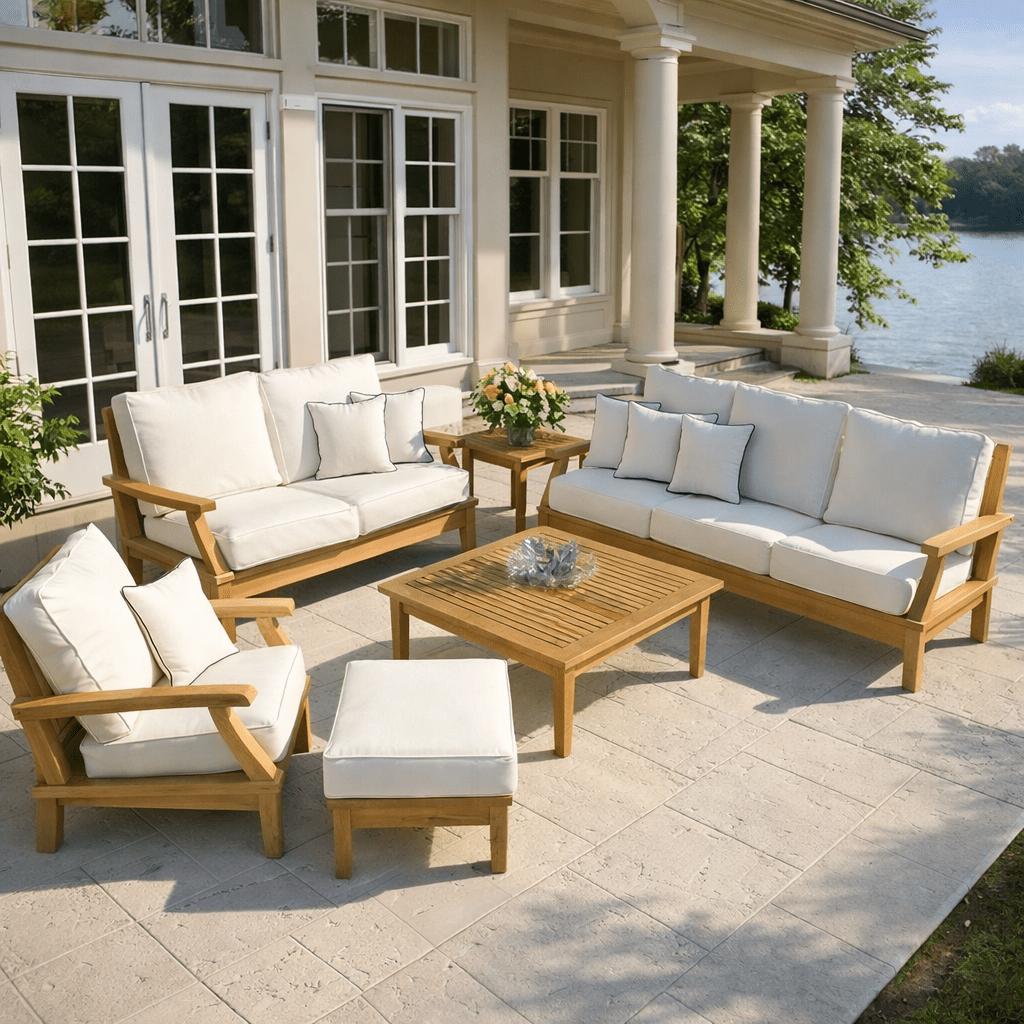 Premium Grade A teak is particularly well suited to Montecito because its natural characteristics address several conditions that occur simultaneously here. The wood's naturally high oil content and dense grain structure help it resist moisture, rotting, insects and warping without requiring an artificial stain for durability.
For homeowners furnishing expensive outdoor spaces, that combination is useful because the furniture does not have to be treated as a delicate decorative material. It is designed for year-round outdoor use and can withstand rain, sun exposure and normal temperature fluctuations.
One of teak's most useful ownership characteristics is that its appearance can be approached in two different ways. Left untreated, natural teak gradually develops a silver-gray patina. Homeowners who prefer the original warm teak color can instead choose appropriate teak-care products or finishing treatments.
That choice works particularly well on large properties. You might preserve a warmer teak appearance on a formal dining terrace while allowing benches or secondary garden furniture to age naturally. The furniture does not have to look identical everywhere to remain appropriate for outdoor use.
Coastal mornings, irrigation, pool activity and winter rainfall all make moisture management relevant. Teak's natural moisture and rot resistance give it an advantage over many less durable woods that rely more heavily on coatings or diligent protection.
This does not make teak immune to dirt, mildew on surface contaminants or neglected cushions. It simply means the underlying Grade A teak is a strong material choice when the goal is furniture that can remain part of the landscape year after year.
Premium teak costs more upfront than many mass-market patio sets, so the useful comparison is not simply purchase price. Teak furniture can last for decades, making lifetime value more relevant for a homeowner who expects an outdoor space to remain furnished for many years.
That logic is especially compelling when furniture is being integrated into a professionally designed terrace, pool environment or mature garden. Replacing an entire layout every few seasons is disruptive as well as expensive. A long-lived material allows the landscape and furniture to age together rather than constantly resetting the space.
| Montecito Challenge | Why Premium Grade A Teak Performs Well |
|---|---|
| Direct sunshine | Designed for outdoor sun exposure and may weather naturally to a silver-gray patina. |
| Coastal moisture | Natural oils and dense grain help resist moisture and rot. |
| Salt-laden coastal air | Natural teak avoids painted wood finishes that must remain intact to protect the underlying material. |
| Winter rainfall | Grade A teak is designed for year-round outdoor use and naturally resists moisture. |
| Poolside use | Moisture resistance makes teak well suited to outdoor furniture around pools and spas. |
| Temperature changes | Teak is designed to withstand normal outdoor temperature fluctuations. |
| Long-term exposure | Quality teak can last for decades with appropriate ownership and care. |
We would begin with the architecture and the way you actually move through the property—not with a furniture catalog. On many Montecito homes, the important question is how the kitchen, main terrace, pool, garden and secondary patios relate to one another. The best plan usually creates distinct outdoor rooms rather than concentrating every seat in one oversized arrangement.
For a property designed around entertaining, we would normally establish dining first. The main table should feel appropriately scaled to the architecture rather than merely accommodating the household on an average evening.
A generous teak outdoor dining set makes sense when dinners routinely expand to include family and guests. If entertaining size varies dramatically, an extendable teak dining table can preserve everyday circulation while providing more seating when needed.
Dining chairs should not be expected to do every job. If the patio allows it, we would create a second area intended for coffee, drinks and longer conversations. A pair of club chairs with a sofa works well in a defined terrace; a teak sectional can be more effective when a larger patio needs a strong visual anchor.
The important planning detail is separation. Leave enough visual and physical space between dining and lounge furniture that each feels intentional. On large estates, furniture scattered loosely across an oversized terrace can actually make the space feel less resolved.
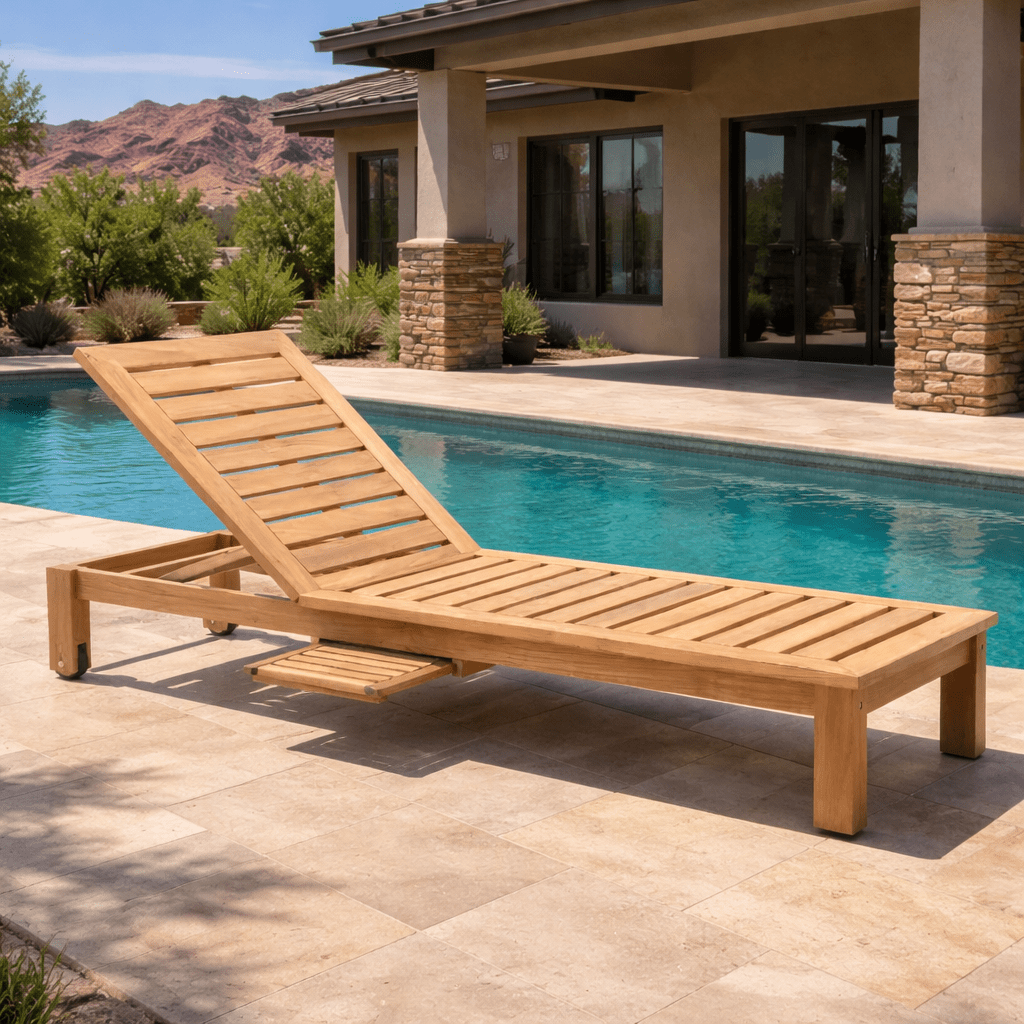
If the property has a pool, give it dedicated furniture rather than borrowing chairs from the main patio. Position loungers where people can use them without blocking the most natural walking route between the house and water.
For formal landscapes, pairs or groups of loungers generally look more intentional than isolated pieces. Side tables also matter more than homeowners expect: a lounger becomes substantially more useful when there is a convenient place for a drink, book or phone.
A garden bench beneath a mature tree, two chairs facing a mountain or ocean view, or a small seating area outside a guest suite can make an estate feel more complete without duplicating the main furniture arrangement.
This is one of the most useful Montecito-specific planning principles: do not furnish every outdoor area as another patio. The main terrace can entertain ten people; the garden may need only a bench. Matching the scale of the furniture to the purpose of each outdoor room usually produces a more natural result.
Start with the space that defines how your household uses the property. Frequent hosts will usually get the most value from dining furniture first; pool-focused homes should prioritize loungers; and properties built around relaxed conversation may be better served by lounge seating. Once that primary zone is established, use complementary collections to furnish secondary terraces, gardens and evening gathering spaces without making every area feel identical.
Outdoor living here is often less about a single backyard patio and more about moving among several distinct spaces throughout the day. Breakfast may happen in a protected courtyard, the afternoon around the pool, dinner on a terrace near the kitchen, and evening conversation around a fire feature or sheltered seating group.
On a larger property, a successful gathering rarely stays at one table all evening. Guests may arrive near a lounge area, move to dinner and then spread back into conversation seating afterward. Furniture works better when it supports that progression.
This is where a coordinated rather than identical approach helps. The dining area can be formal, the pool zone simple and repetitive, and the conversation terrace softer and more relaxed. Teak ties those spaces together through material without requiring every piece to come from the same furniture family.
If homeowners entertain regularly, we generally recommend planning for the gathering they actually want to host rather than buying for the household's daily head count. Montecito properties often have enough outdoor space that undersized dining furniture looks tentative and becomes inconvenient as soon as guests arrive.
That does not mean choosing the largest table available. The better test is whether diners can sit comfortably while leaving clear circulation between the table, house doors, serving areas and surrounding furniture.
Pool furniture should emphasize individual comfort, access to side tables and orderly spacing. A row of four loungers is often more useful than forcing a complete conversation set immediately beside the water.
When the pool is part of a formal landscape, repetition also creates visual calm. Matching loungers aligned with the pool or terrace geometry can look more architectural than an assortment of chairs angled toward different views.
The most memorable seat on a Montecito property may not be on the main terrace. Mature planting, mountain backdrops and filtered garden views often create smaller destinations where a bench or pair of chairs makes more sense than another full lounge group.
Think of these areas as pauses in the landscape. They need enough furniture to invite someone to stop—not enough furniture to compete with the garden.
 For a primary terrace, dining furniture is one of the strongest places to invest. Larger tables feel appropriate on substantial patios and can support both family dinners and larger gatherings without turning every event into a furniture-rearranging exercise.
Measure the terrace based on occupied chairs rather than the tabletop alone. The space must still function when every chair is pulled out and someone is walking behind the seated guests.
A covered terrace, loggia or broad patio often benefits from a dedicated lounge arrangement. A sofa-and-chair grouping works well when you want an open sightline; multi-piece teak lounge sets make it easier to create a coordinated conversation zone without overfilling the space.
For Montecito's indoor-outdoor architecture, we would generally orient the arrangement around the best reason to be outside: a garden, fireplace, pool, ocean view or mountain backdrop. Avoid automatically pointing every piece toward the house.
Pool areas are an obvious fit for teak chaise loungers. Teak's moisture resistance suits the setting, while its substantial natural appearance integrates comfortably with stone paving, stucco, greenery and other materials commonly used around high-end residential pools.
Allow breathing room around each lounger. Four well-spaced chaises with convenient side surfaces usually feel more luxurious than six squeezed tightly together simply to maximize capacity.
Teak garden benches work especially well where the landscape itself is the attraction: beside a path, beneath established trees, at the edge of a lawn or facing a view.
A bench is also one of the easiest ways to extend outdoor living beyond the main entertaining area. Because Grade A teak can remain outdoors year-round, these secondary seating points do not have to be treated as temporary furniture installations.
Large outdoor dinners become easier when serving space is designed into the layout. A teak serving or buffet table can hold drinks, serving dishes and table accessories so the dining table remains comfortable for guests.
We would especially consider one where the dining area is several steps away from the kitchen. A well-positioned serving piece reduces unnecessary traffic through seated guests and makes the outdoor space function more like a true dining room.
Even in Southern California, outdoor evenings can feel substantially cooler than the afternoon. A teak fire pit table can help define a separate evening conversation area while giving seating a clear focal point.
Keep that zone distinct from the main dining table whenever space permits. The goal is to encourage guests to move from dinner into a more relaxed setting rather than asking one furniture group to perform every function.
Montecito's architectural character rewards furniture that feels permanent enough to belong with the property but quiet enough not to compete with the house or landscape. Natural teak is particularly adaptable because it can sit comfortably beside traditional Spanish and Mediterranean architecture, contemporary renovations and understated coastal homes.
Warm natural teak works easily with stucco walls, clay tile roofs, stone, wrought iron and courtyard planting without forcing the outdoor area toward an overly literal Mediterranean theme. The wood introduces another natural material while remaining visually restrained.
For traditional homes, dining tables with substantial proportions and classic chair silhouettes usually feel more convincing than lightweight pieces that appear temporary against large-scale architecture.
Teak does not need to look traditional. Cleaner-lined sectionals, sling seating and simple tables can provide warmth against modern glass, steel, smooth stucco and large-format stone.
This contrast is often preferable to matching every architectural surface with another cool or metallic material. The outdoor furniture can soften the space without compromising a contemporary design language.
Courtyards should usually be furnished more intimately than open terraces. A smaller table, club chairs or a bench may be more appropriate than a large sectional, particularly when fountains, specimen trees or architectural details already provide a focal point.
In garden areas, allow the planting to remain dominant. Natural teak and weathered silver-gray teak both work well because the material reads as part of the landscape rather than as a brightly finished object placed on top of it.
On ocean- or mountain-view properties, low-profile furniture can help preserve sightlines. Rather than placing the tallest furniture directly at the edge of a terrace, consider keeping dining closer to the house and using loungers or lower conversation seating toward the view.
That simple decision can improve both the view from inside the house and the experience of people sitting outdoors.
 Large properties can tempt homeowners to repeat the same furniture arrangement on every terrace. The result often feels less intentional, not more.
Give each area a specific job. Dining belongs where serving is convenient. Loungers belong where sun and pool access matter. Benches belong where the landscape rewards a pause. Teak's broad range of furniture types allows one material to connect those spaces without duplicating the same configuration.
A table that technically fits a patio may still be too large once chairs are occupied. This is particularly noticeable near French doors, outdoor kitchens or narrow transitions between the house and garden.
Measure the furniture in use. Include room for chairs to pull back and for guests or servers to pass behind them comfortably. On a luxury property, generous circulation usually feels better than squeezing in two additional seats.
An ocean-facing terrace, shaded courtyard and covered loggia may all exist on the same property, but they do not experience the same sun, moisture or debris. Buying based only on the home's ZIP code misses those differences.
Grade A teak works across a wide range of outdoor exposures, but cushion strategy, placement and cleaning frequency should still reflect the specific location of each furniture group.
Some homeowners love new teak's warm golden-brown appearance but are surprised when untreated teak begins developing a silver-gray patina. That weathering is natural, not a sign that the wood has failed.
Decide before purchasing which look you prefer. If you want the natural patina, ownership can remain relatively simple. If maintaining a warmer teak color is important, plan on periodic cosmetic care rather than assuming the original color remains unchanged outdoors.
A beautiful sectional without nearby tables can be frustrating to use. Pool loungers without a place for drinks and towels have the same problem. Large dining groups become easier to entertain around when serving pieces are nearby.
We would rather slightly reduce the size of the main seating group and preserve room for useful side, coffee or serving tables than maximize the number of seats and leave the space functionally incomplete.
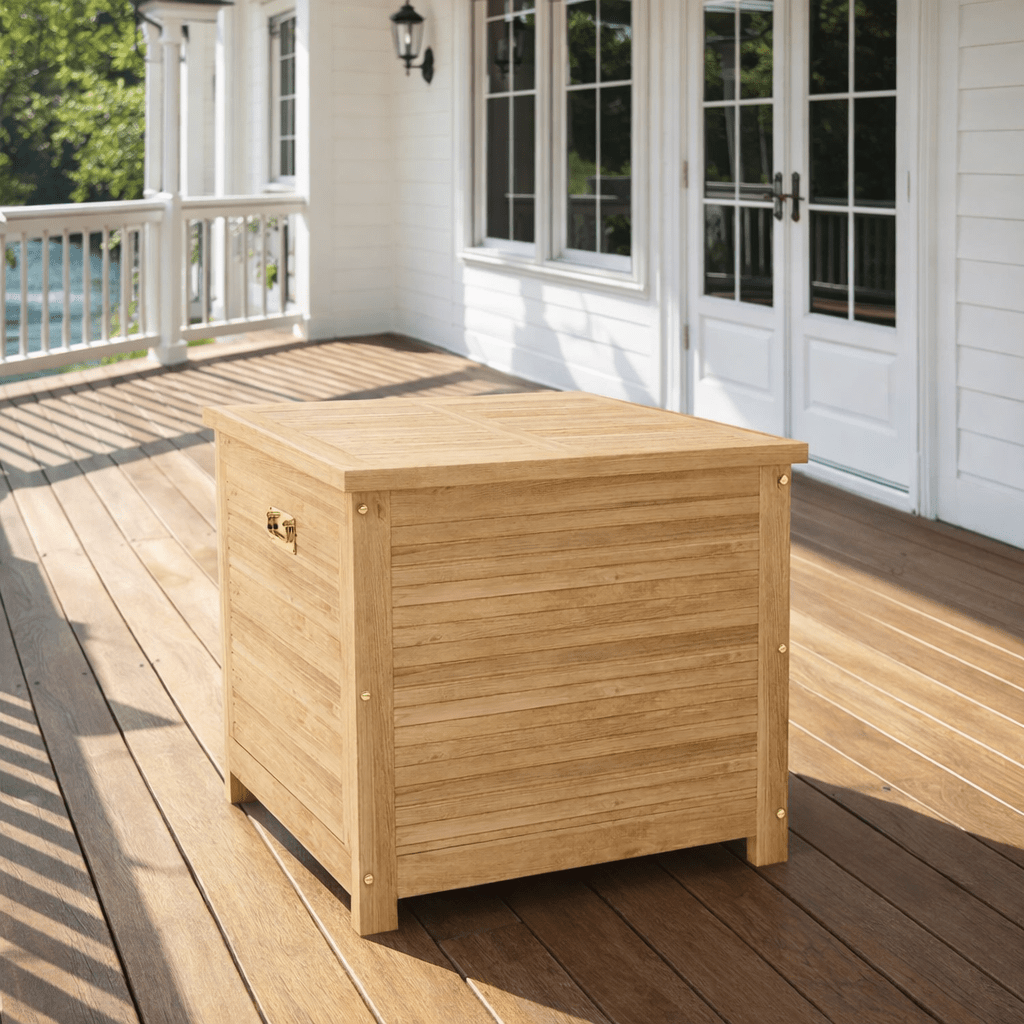 For natural teak, routine care is primarily about keeping the surface clean rather than constantly refinishing it. Remove leaves, pollen and other organic debris before they remain damp against the furniture for long periods, and clean accumulated dirt as needed.
Properties beneath mature trees may need attention more frequently than exposed terraces simply because more debris lands on the furniture. Let the actual environment determine the schedule rather than following an arbitrary monthly routine.
Homes nearer the ocean may accumulate more airborne residue than protected inland properties. Periodic cleaning helps keep exposed furniture surfaces looking their best.
Also inspect hardware during routine cleaning. Royal Teak and Anderson Teak pieces use stainless steel hardware, while Verandis Teak uses brass hardware, so follow the appropriate care approach for the specific furniture you own.
Teak is naturally moisture resistant, but good outdoor housekeeping still matters. Avoid allowing piles of leaves, towels or other materials to remain wet against furniture surfaces. After extended rain, clear debris and allow normal airflow around the furniture.
Cushions deserve separate attention. Many TeakHQ lounge pieces use Sunbrella cushions, which are weather-, fade-, UV- and water-resistant, but keeping cushions clean and allowing them to dry properly still improves the ownership experience.
Untreated teak naturally transitions toward silver gray over time. If that is the appearance you want, you do not need to preserve the original color for the furniture to remain durable.
If you prefer the warmer appearance of newer teak, use suitable teak-care products according to the product directions. Cosmetic maintenance and structural protection are two different decisions with teak; maintaining the original color is optional rather than a prerequisite for outdoor durability.
Protective covers are optional rather than required for Grade A teak. They can nevertheless reduce cleaning when furniture sits beneath trees or when a second home will be vacant for an extended period.
If covers are used, they should be appropriate for outdoor furniture and should not create unnecessary trapped moisture. The practical goal is cleaner furniture and easier ownership—not sealing the wood away from airflow.
The strongest outdoor furniture plan starts with the property: where you dine, where guests naturally gather, which areas receive the most exposure, and which views deserve their own seating. Premium Grade A teak is especially compelling when you want one natural material capable of moving from formal dining terraces to pools, gardens and relaxed conversation spaces while offering the longevity expected from a serious outdoor investment.
Explore TeakHQ's recommended collections with those individual outdoor rooms in mind, then build the property around the way you actually intend to live outside.
There is no single material that is right for every property. Premium aluminum can suit contemporary spaces, while high-quality synthetics may appeal to homeowners prioritizing minimal cosmetic upkeep. Grade A teak is particularly well suited to Montecito because it combines natural moisture and weather resistance, substantial construction, long service life and an appearance that works with coastal, Mediterranean, traditional and contemporary outdoor spaces.
Yes. Grade A teak's naturally high oil content and dense grain help it resist moisture and outdoor weathering, making it a strong choice for coastal environments. Homes with greater ocean exposure should still clean airborne residue from furniture and hardware periodically.
Furniture designed for year-round outdoor exposure can generally remain outside. TeakHQ's Grade A teak furniture is designed for year-round outdoor use and can withstand rain, sun exposure and temperature fluctuations. Cushions and accessories may benefit from additional protection during extended wet periods or when a property is vacant.
Chaise lounges with convenient side tables are usually the first pieces we would prioritize. If space permits, add a separate conversation area rather than crowding sofas directly against the pool edge. Browse teak loungers and deck chairs for pool-focused configurations.
Base the decision on entertaining habits and available circulation rather than house size alone. A six-person table may be ideal for everyday family use, while homeowners who regularly host larger dinners may prefer seating for eight, ten or more. Always measure the patio with occupied chairs pulled away from the table.
No. Grade A teak does not require sealing for outdoor durability. You may leave it untreated and allow a silver-gray patina to develop, or use appropriate care products if maintaining a warmer teak appearance is important to you.
Untreated teak naturally develops a silver-gray patina as it weathers outdoors. This color change is expected and does not mean the furniture has lost its outdoor durability. Homeowners who prefer the original teak color can choose an appropriate maintenance routine to help preserve that appearance.
It depends on your priorities. Aluminum is lighter and can create a very clean contemporary appearance. Teak is heavier, warmer and made from natural wood, giving it a more organic and substantial character. For estates where furniture is meant to integrate with stone, stucco, mature landscaping and garden architecture, many homeowners prefer teak's natural presence.
Keep the furniture reasonably clean, remove wet leaves and debris, and allow airflow after periods of rain. Covers are optional for Grade A teak rather than required. Cushions should be allowed to dry properly and can be stored or protected when extended wet weather or long periods of non-use make that more convenient.
Start with the activity that matters most. Frequent hosts should usually establish the outdoor dining area first. Pool-centered properties may get more immediate use from loungers, while homes built around evening conversation may benefit most from teak patio seating. Furnish secondary spaces only after the primary outdoor room works well.


