
FREE SHIPPING
within mainland USA
within mainland USA
Home ▸ Teak Outdoor Furniture ▸ By Location ▸ Myrtle Beach, South Carolina
Myrtle Beach outdoor spaces live close to the Atlantic, where humid summers, frequent moisture, strong sun, salt exposure near the ocean and tropical weather all deserve consideration when choosing furniture. Beach houses, pool patios, covered porches, condos and vacation properties also tend to see plenty of outdoor use. Premium Grade A teak is a particularly practical option because it combines the warmth of natural wood with the moisture resistance, stability and maintenance flexibility needed for coastal living.

Choosing outdoor furniture in Myrtle Beach is less about finding something labeled “outdoor” and more about understanding what it will live through. The Grand Strand combines a marine environment with hot summers, regular rainfall, prolonged humidity, strong sun and periodic tropical storms. Those conditions create a different ownership equation than you would encounter farther inland.
Humidity is one of the most important differences between furnishing the Grand Strand and furnishing a drier inland market. Furniture can spend long stretches in warm, moisture-rich air even when it has not actually rained. That makes moisture tolerance, drying conditions and resistance to rot more important than they might appear during a showroom comparison.
Covered porches deserve particular attention. A roof keeps direct rain off furniture, but it can also create shaded areas that dry more slowly. Good airflow and sensible furniture placement matter, especially around cushions and anywhere organic debris tends to collect.
A home a few blocks from the Atlantic faces a different furniture environment than a home in Carolina Forest or Conway. Oceanfront and near-ocean properties receive more salt-laden air and wind-driven sand, while inland properties lose some of that marine exposure but still contend with heat, humidity and summer rainfall.
This is a useful distinction when deciding how much maintenance you are willing to accept. The closer the furniture sits to the ocean, the more valuable simple construction, corrosion-resistant hardware and surfaces that can be cleaned without elaborate refinishing become.
Outdoor furniture here moves repeatedly between wet and dry conditions. Afternoon rain, overnight humidity, irrigation and pool splash can all leave moisture behind. Furniture that depends on a delicate exterior coating for protection may demand more vigilance than a material whose weather resistance comes from the material itself.
Drainage around the furniture matters too. Even premium materials benefit from being placed where water does not continually pool around feet, beneath cushions or under a covered patio.
Hurricanes and tropical storms are not everyday events, but they should influence how you furnish a coastal property. During severe weather, the immediate concern is not whether a chair can tolerate rain; it is whether loose outdoor items can be secured or moved out of exposed areas.
That makes furniture planning a combination of durability and logistics. Heavier furniture can feel reassuring in normal coastal breezes, but homeowners should still follow storm preparations and secure, relocate or store furnishings when dangerous weather approaches.
Several premium outdoor furniture materials can make sense along the South Carolina coast. Quality aluminum is useful when a lightweight contemporary look is preferred, while synthetic materials can minimize certain kinds of upkeep. Grade A teak earns particular consideration in Myrtle Beach because its material properties line up unusually well with the combination of moisture, sun, coastal exposure and frequent outdoor use.
 Grade A teak has a dense grain structure and naturally high oil content. Those qualities help it resist moisture, rot, insects and warping without requiring an artificial stain for durability. In a humid coastal environment, that is more meaningful than simply being able to survive an occasional rain shower.
It also changes the maintenance decision. Teak can be left unfinished outdoors and allowed to weather naturally rather than requiring a protective surface coating simply to remain suitable for outdoor use.
Natural teak exposed outdoors gradually develops a silver-gray patina unless its original golden-brown appearance is maintained. For homeowners near the beach, that weathered appearance often works naturally with coastal architecture, pale exterior finishes and relaxed landscapes.
Homeowners who prefer the original color can choose to maintain it instead. The important point is that appearance and durability are separate decisions: sealing or oiling is optional rather than a prerequisite for outdoor use.
Myrtle Beach furniture experiences sunshine, rain, humidity and seasonal temperature changes instead of a consistently controlled environment. Premium Grade A teak is valued for structural stability under outdoor conditions and is designed for year-round exterior use.
That makes it especially appropriate for substantial dining tables, deep seating and other larger pieces that homeowners do not want to treat as temporary seasonal furniture.
The wood is only one part of an outdoor furniture piece. Hardware matters near the coast as well. Royal Teak and Anderson Teak pieces use stainless-steel hardware, while Verandis Teak uses brass hardware. That is useful context for coastal buyers who correctly look beyond the surface material when comparing furniture.
Premium teak costs more initially than many mass-market patio materials, but teak furniture can last for decades. For a primary residence, second home or vacation property that will be furnished for years, lifetime value can therefore matter more than the lowest purchase price.
The practical question is not simply, “Which set costs less today?” It is, “How many times do I want to buy and replace this space?” That is an especially useful way to evaluate furniture for a coastal property where weather exposure can quickly expose weaknesses in lower-grade materials.
| Myrtle Beach Challenge | Why Premium Grade A Teak Performs Well |
|---|---|
| High humidity | Natural oils and dense grain help resist moisture, rot and warping. |
| Frequent rain | Designed for year-round outdoor use and repeated weather exposure. |
| Coastal salt air | Durable teak construction plus stainless-steel or brass hardware, depending on brand. |
| Strong sun | Can remain outdoors and naturally weather to a silver-gray patina. |
| Poolside moisture | Natural moisture resistance suits patios exposed to splashing and damp conditions. |
| Temperature changes | Teak's structural stability helps it handle normal outdoor fluctuations. |
| Long outdoor season | Durable construction supports frequent use rather than seasonal-only furnishing. |
We would start with the way your property is actually used, not with a furniture catalog. A beachfront rental, a Grande Dunes pool patio and a Carolina Forest backyard may share the same ZIP-code market, but they should not necessarily be furnished the same way.
On a coastal property, the best layout often begins with traffic rather than furniture. Identify the paths between the house, grill, pool, outdoor shower, beach access and yard before choosing the size of a table or sectional. Furniture should organize those activities rather than force everyone to walk around them.
That sounds simple, but it prevents one of the most common expensive mistakes: buying a beautiful oversized set that interrupts the routes people use all day.
For a home that regularly hosts children, grandchildren, friends or vacation guests, we would usually establish a real dining zone rather than relying on scattered lounge seating for meals. A six- or eight-person teak dining set suits many properties, while an extendable table is useful when occupancy changes throughout the year.
If your household typically seats four but hosts ten several times a season, we would generally rather give you expandable capacity than permanently devote the patio to an oversized table.
Dining chairs and lounge chairs solve different problems. After dinner, guests usually want a more relaxed place to talk, watch a game or spend an evening outside. On larger patios, we would create a distinct deep-seating conversation area with a sofa, chairs or sectional arranged around a coffee table.
This separation makes a patio feel more like an outdoor room and allows dining and lounging to happen simultaneously when a house is full.
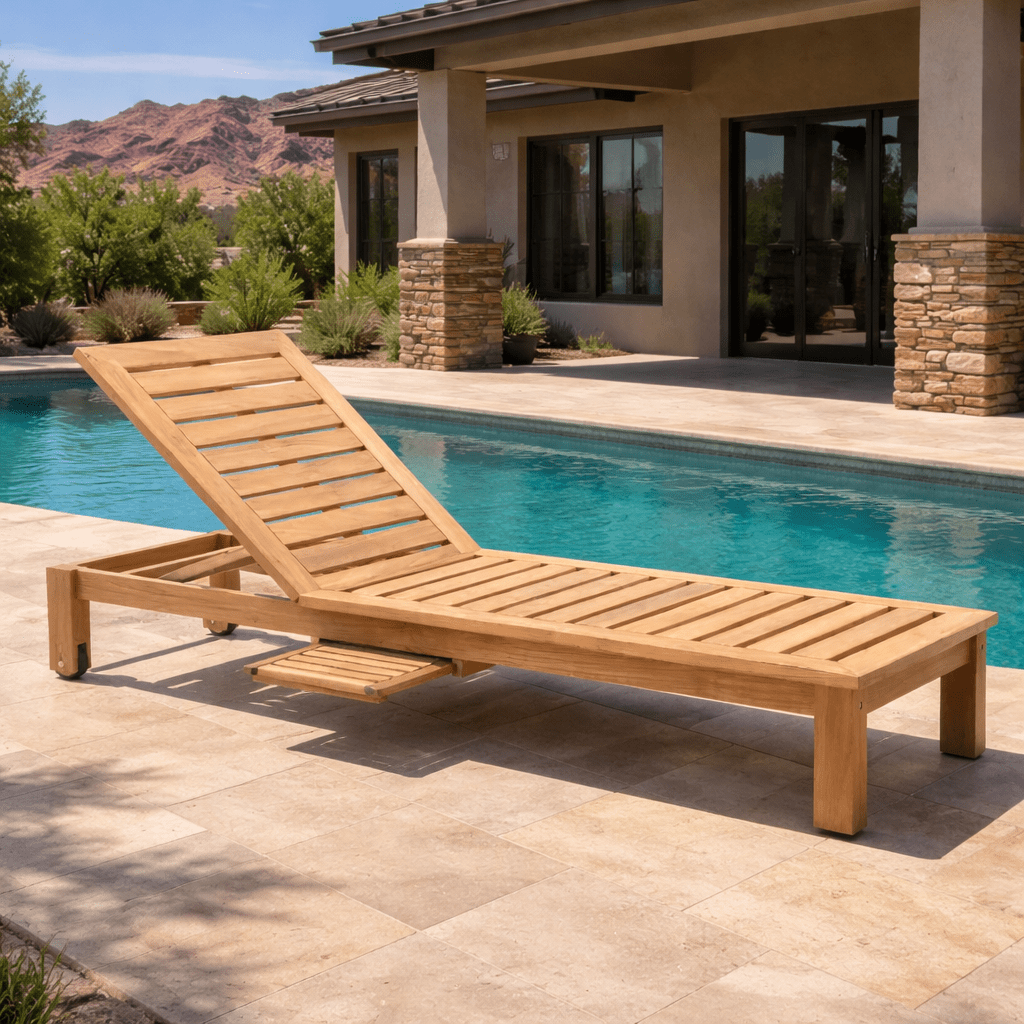
If the property has a pool, resist the temptation to let the dining table serve every activity. Pool users need a place to recline, dry off, read and set down a drink without crossing the entire patio. A row or pair of teak chaise loungers creates that dedicated zone.
The overlooked planning issue is orientation. Before ordering four loungers, observe where people actually want to face during the hours the pool is used. Sun angle, views and supervision of children can matter more than creating a perfectly symmetrical furniture arrangement.
Begin with the activity that defines your outdoor space. Families who gather for meals should prioritize dining capacity; pool-oriented properties should solve lounging first; and beach houses or vacation rentals with larger groups usually benefit from flexible seating and clearly defined conversation zones. Once that primary function is established, secondary pieces can complete the patio without overcrowding it.
Myrtle Beach outdoor spaces tend to work harder than a decorative patio that gets used a few weekends each year. The Grand Strand combines full-time residential neighborhoods, beach houses, golf communities, waterfront properties, condos and a large vacation-home market, so the right furniture depends heavily on who uses the property and how often the guest count changes.
One week a second home may host a couple; the next it may accommodate children, grandchildren or two families sharing a vacation. That argues for flexibility. Extendable tables, movable chairs and multiple smaller seating zones often work better than designing every square foot around maximum occupancy.
A useful rule is to furnish for the normal group first, then create an intentional plan for peak weekends. Otherwise, the property can feel overfurnished most of the year.
At many coastal homes, outdoor living is not neatly divided into “pool time” and “dinner time.” People move from swimming to lounging to grilling and eating without going inside for long. Furniture works best when those activities have adjacent but distinct zones.
That means dry seating should not block wet traffic, dining chairs should not be the only place to sit, and there should be small surfaces near loungers for drinks, towels and books.
Covered porches are especially valuable in a warm, humid climate because they extend outdoor use beyond ideal sunny weather. They can support rockers or lounge seating in smaller spaces and full conversation groups on deeper porches.
Because shaded areas may dry more slowly after damp weather, we would still prioritize airflow around furniture and avoid keeping wet cushions compressed against wood or walls.
For a vacation rental or frequently shared second home, the ideal furniture plan should be easy for guests to understand. Clearly separated dining, lounging and pool areas usually perform better than an elaborate arrangement that requires furniture to be moved whenever the group changes.
Fewer, better-chosen pieces can also simplify cleaning and turnover while giving guests enough seating where they actually need it.
 The most useful furniture categories here correspond to the way coastal properties are divided into activity zones. Rather than buying one matching collection for every square foot, think in terms of dining, conversation, poolside relaxation and secondary seating.
For homes that host extended family or vacation guests, teak outdoor dining furniture is one of the most logical places to invest first. Six- and eight-person tables fit many households, while larger or extendable configurations can accommodate reunion weekends without requiring a permanently oversized footprint.
Leave enough clearance around the table for chairs to pull back comfortably. On decks with railings, stairs or grill stations, usable circulation space is often more important than squeezing in two additional seats.
Chaise loungers belong where people actually spend extended periods beside the pool, while side tables solve the less glamorous but important need for somewhere to place sunscreen, drinks and phones. When space permits, position loungers outside the primary walking route between the house and pool.
A compact lounger grouping can be more useful than lining every open edge of the pool with furniture. Preserve clear deck space for movement, towels and children moving in and out of the water.
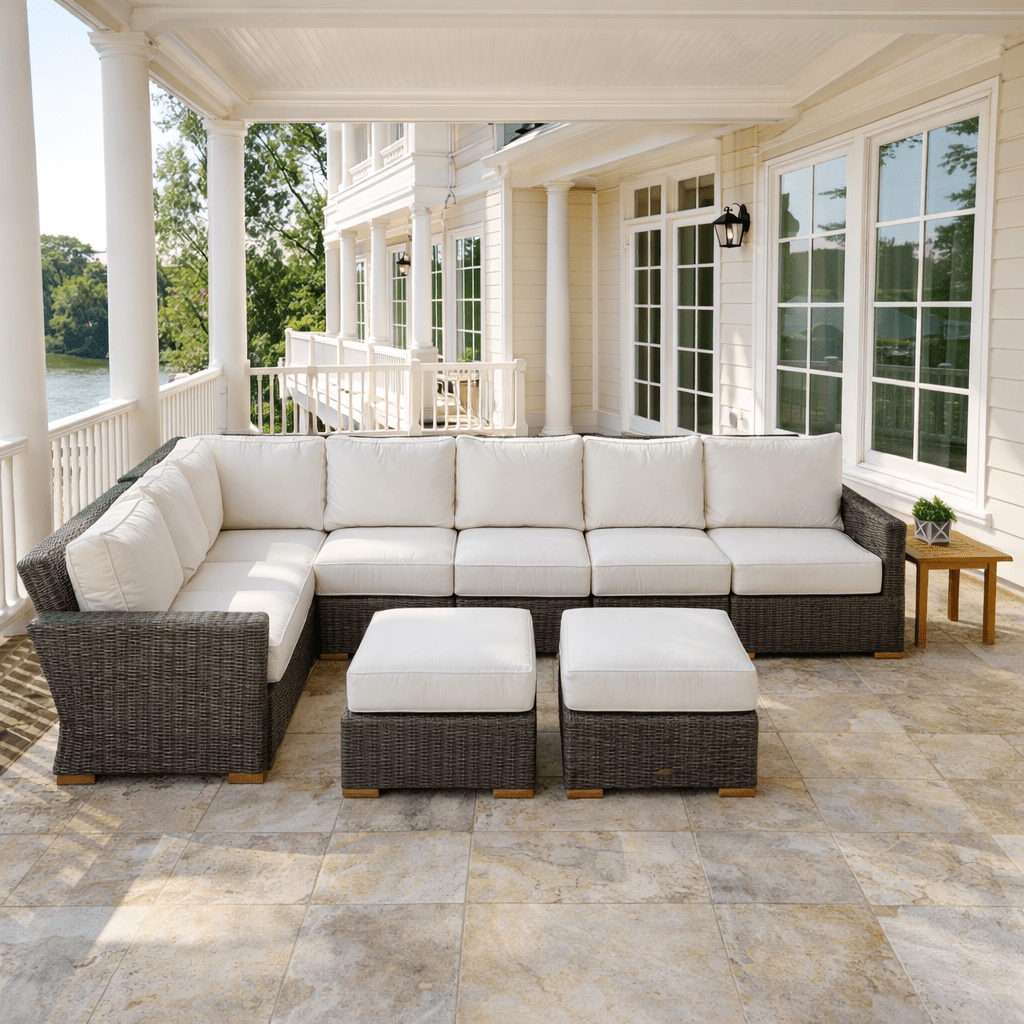
Deeper covered patios are natural locations for teak sectional seating, sofas, loveseats or club chairs. A sectional can efficiently seat a group, while a sofa plus separate chairs offers more flexibility when people like to reorient toward a television, pool or view.
For a property that entertains many unrelated guests, separate chairs can sometimes be more socially comfortable than maximizing every seat in one large sectional. For a family-oriented vacation house, the opposite may be true.
Not every seating area needs to handle a crowd. A teak porch swing, pair of rockers or garden bench can turn an underused front porch, shaded side yard or marsh-facing corner into one of the most appealing spots on the property.
These secondary areas are especially useful when the main patio is active. They give readers, grandparents or couples somewhere quieter to sit without leaving the outdoor space entirely.
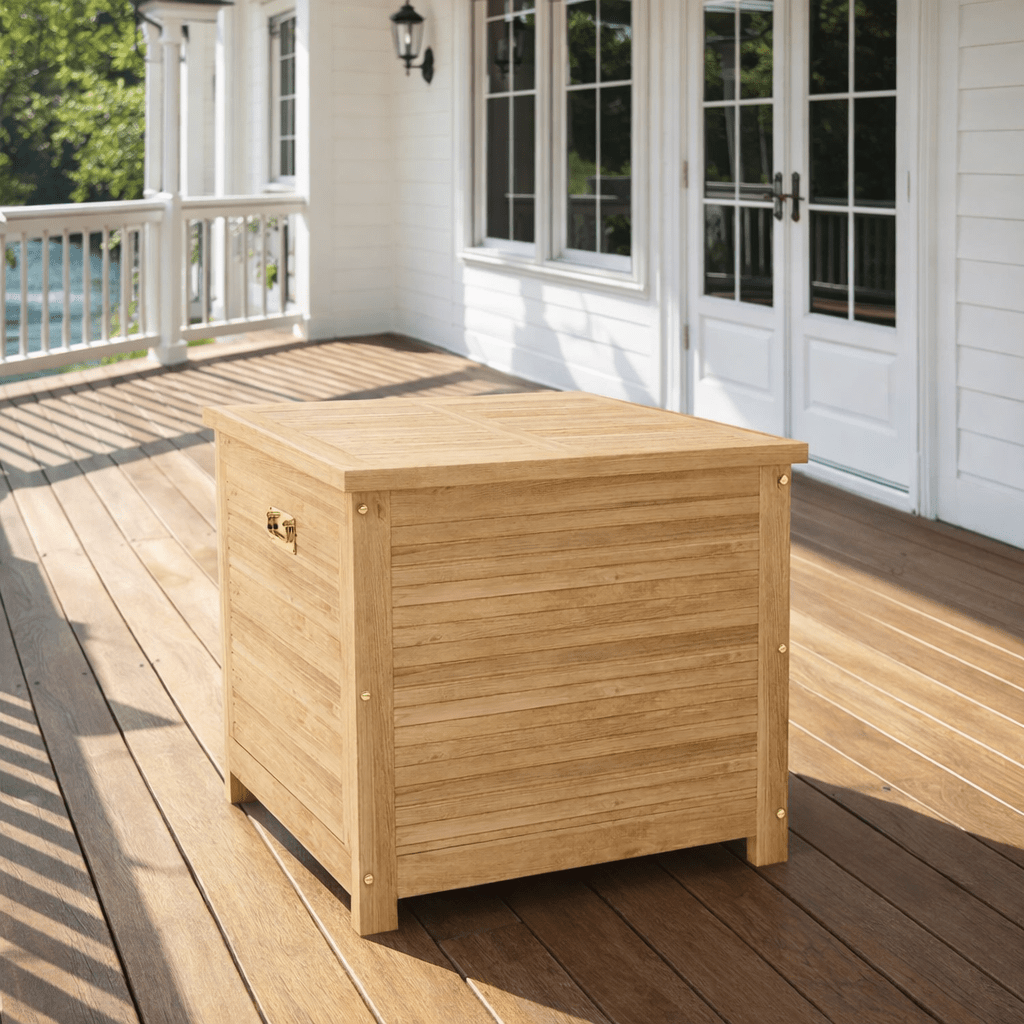
Outdoor storage is most useful when it sits close to the items it supports. Rather than placing one large storage piece wherever there is room, think about where cushions, pool accessories or small patio items need to go during cleaning or bad weather.
A well-located deck box can make a vacation property easier to manage, but homeowners should always follow the specific storage instructions for cushions and other items rather than assuming every outdoor box is suitable for every weather condition.
Myrtle Beach is not one architectural style. The wider Grand Strand includes oceanfront cottages, contemporary beach houses, resort-style residences, traditional Southern homes, suburban communities, high-rise condos and properties overlooking golf courses, marshes and the Intracoastal Waterway. Natural teak is adaptable because it does not require the entire outdoor space to follow a single theme.
Natural teak works particularly well with light exterior colors, broad porches, coastal landscaping and relaxed beach-house architecture. Allowing teak to develop a silver-gray patina creates a softer weathered appearance, while maintaining the original wood color gives the same space a more polished look.
That choice can be aesthetic rather than structural. Homeowners do not need to preserve the golden color simply to keep Grade A teak suitable for outdoor use.
On cleaner-lined homes and pool areas, simple teak frames can introduce warmth without making the space feel traditional. Pairing substantial wood furniture with restrained cushions and an uncluttered layout often works better than filling every edge of the patio.
The contrast is useful: hardscape, glass and modern architecture gain an organic material, while the furniture still looks intentional and architectural.
Properties farther from the immediate beachfront may receive less direct marine exposure but still experience the region's humidity, rain and summer sun. Here, design decisions can focus more heavily on screened views, lawns, golf-course outlooks and covered entertaining spaces.
Deep seating oriented toward the landscape and a separate dining area near the house often makes more sense than recreating a beach-resort pool deck.
For homes near Murrells Inlet, Pawleys Island or the Intracoastal Waterway, furniture should support the view instead of competing with it. Low-profile seating and carefully positioned dining areas can preserve sightlines, while swivel chairs are useful when occupants may alternate between conversation and looking toward the water.
 A furniture plan appropriate in Conway is not automatically identical to one directly on the ocean. Salt exposure, wind and blowing sand become more important as a property gets closer to the beach.
Grade A teak's natural outdoor durability makes it a strong coastal choice, but buyers should still evaluate the whole piece, including hardware, cushions and how easily everything can be cleaned.
A vacation home that sleeps twelve does not necessarily need twelve permanent dining chairs, twelve lounge seats and twelve pool loungers. Furnishing every zone for the largest possible group can make decks and patios difficult to navigate.
A better approach is to identify which activity truly needs full-group capacity and use flexible furniture elsewhere. Extendable dining tables are particularly useful for this reason.
Premium material does not compensate for poor patio drainage. Avoid placing furniture where roof runoff, irrigation or standing water repeatedly collects. Cushions should also be allowed to dry properly instead of remaining wet in a shaded corner.
Teak's moisture and rot resistance reduce concern about ordinary outdoor exposure, but thoughtful placement still improves the ownership experience.
Weather-resistant furniture is not the same thing as furniture that should remain unsecured during a hurricane. Severe coastal storms introduce dangerous winds, debris and possible flooding.
Choose furniture with normal outdoor durability, then maintain a separate hurricane plan for securing or relocating outdoor furnishings when authorities and weather conditions call for it.
A beautiful sectional that blocks access to the pool or a ten-person table squeezed onto a narrow deck will become frustrating no matter how good the material is. Measure circulation paths, door swings and chair-clearance space before selecting the collection.
For expensive outdoor furniture, the layout is part of the product decision—not something to solve after delivery.
 Grade A teak does not need an elaborate maintenance program to remain suitable for outdoor use. Myrtle Beach homeowners should focus primarily on routine cleaning, moisture management around cushions and extra attention after periods of strong coastal exposure.
There is no single cleaning calendar that fits every property. A sheltered patio in Carolina Forest and an oceanfront deck should not be expected to collect the same residue. Inspect furniture periodically and clean it when pollen, dirt, salt residue, spills or organic debris accumulate.
Near the beach, more frequent light cleaning is generally preferable to allowing residue to build for long periods.
After heavy rain or extended humid weather, avoid leaving wet cushions compressed against furniture. Allow cushions and shaded areas to dry with adequate airflow. Most TeakHQ patio seating includes Sunbrella cushions, which are weather-, fade-, UV- and water-resistant, although cushion inclusion varies by product.
Remember that water resistance does not mean moisture should be deliberately trapped indefinitely.
Untreated teak naturally weathers toward a silver-gray patina. That is normal and does not mean the furniture has failed. Homeowners who like that coastal look can allow it to occur naturally.
If you want to retain more of teak's original color, maintenance products can be used for that appearance. The key is to decide which look you prefer instead of assuming every color change needs to be “fixed.”
Routine furniture care and hurricane preparation should be treated as separate tasks. During normal weather, Grade A teak is designed for outdoor use and does not require a cover for durability. When a significant storm threatens, follow official guidance and secure or relocate outdoor furnishings as conditions require.
If protective covers are used during ordinary periods, make sure they are appropriate for the furniture and do not unnecessarily trap persistent moisture around wet pieces.
Myrtle Beach winters do not require Grade A teak furniture to be brought indoors simply to protect the wood. TeakHQ's Grade A teak is designed for year-round outdoor use and can withstand normal rain, sun and temperature fluctuations.
Homeowners may still store cushions, accessories or less-used pieces for convenience, cleanliness or storm management. That is an ownership preference rather than a requirement for the teak itself.
The right coastal furniture should fit the property before it fits a style category. Start with your normal household size, guest patterns, pool or waterfront use, available shade and the actual paths people take through the patio. Then choose furniture that can live comfortably with Myrtle Beach's humidity, moisture and coastal exposure.
For homeowners who value natural materials, long service life and the option to either maintain a warm teak color or let the wood age gracefully, premium Grade A teak provides a particularly strong foundation for that plan.
There is no single material that fits every homeowner, but moisture resistance and outdoor durability should be priorities in Myrtle Beach's humid coastal environment. Premium Grade A teak is a strong option because its natural oils and dense grain help resist moisture, rot, insects and warping. Quality aluminum and some synthetic materials can also be appropriate depending on your preferred look and maintenance priorities.
Yes. Grade A teak is well suited to outdoor environments because it naturally resists moisture, rot and weather exposure. Coastal buyers should also pay attention to hardware; Royal Teak and Anderson Teak use stainless-steel hardware, while Verandis Teak uses brass.
Start with dedicated poolside seating rather than asking your dining furniture to perform every job. Chaise loungers with nearby side tables work well for swimming and sunbathing, while a separate conversation or dining area gives dry guests another place to gather.
Yes. TeakHQ's Grade A teak furniture is designed for year-round outdoor use and can withstand rain, sun exposure and temperature fluctuations. Severe tropical weather is different: during hurricanes or dangerous storms, secure or relocate outdoor furnishings according to conditions and official guidance.
No. Sealing is optional rather than required for durability. Grade A teak can remain unfinished outdoors. A homeowner may use teak care products if they prefer to maintain a particular appearance.
Yes. Natural teak exposed outdoors gradually develops a silver-gray patina unless its original color is maintained. This is a normal weathering process rather than evidence that the teak is deteriorating.
Inspect it regularly and clean away salt residue, dirt, pollen and organic debris as needed. Oceanfront furniture may need attention more frequently than furniture several miles inland. Avoid letting debris and persistent dampness accumulate in joints or beneath cushions.
Choose around normal occupancy rather than automatically buying for the property's maximum sleeping capacity. Six- and eight-person sets work for many family properties, while extendable dining tables provide extra capacity for reunion weeks without consuming maximum patio space every day.
Grade A teak does not require a cover simply to remain outdoors through winter. Covers can still be useful for cleanliness or personal preference, but they should be used in a way that does not trap persistent moisture around wet furniture.
It depends on your priorities. Teak offers natural wood, a warmer appearance, greater weight and a premium architectural feel. Aluminum is lighter and often suits a more contemporary aesthetic, while poly is synthetic and can appeal to buyers prioritizing low upkeep. For homeowners who specifically want a durable natural material with decades-long service potential, Grade A teak is particularly compelling.


