
FREE SHIPPING
within mainland USA
within mainland USA
Home ▸ Teak Outdoor Furniture ▸ By Location ▸ Naples, Florida
Choosing outdoor furniture in Naples means planning for more than sunshine. High humidity, frequent wet-season rain, strong UV exposure, coastal air, pools, and seasonal storms all influence how furniture ages and how much upkeep ownership requires. At the same time, lanais, waterfront terraces, outdoor kitchens, and resort-style pool areas often function as genuine extensions of the home. Premium Grade A teak is especially well suited to this combination because it offers the natural weather resistance, substantial feel, and design flexibility appropriate for long-term Southwest Florida outdoor living.

Naples gives homeowners an unusually long outdoor-living season, but that does not mean outdoor furniture has an easy life. Furniture may spend months exposed to heat, moisture, intense sun, frequent summer rain, pool water and the persistent humidity of Southwest Florida. On properties closer to the Gulf, bays or canals, coastal exposure adds another consideration.
In a dry climate, homeowners can often focus primarily on sun exposure. Naples requires more attention to moisture. Furniture placed under a covered lanai may avoid direct rainfall yet still spend long stretches in humid air, while pieces beside a pool can repeatedly become wet from splashing, rain and cleaning.
That makes material selection especially important. Outdoor furniture should not merely tolerate an occasional rain shower; it should be appropriate for a climate where moisture is a routine part of ownership. Materials and construction that depend heavily on protective surface finishes deserve closer scrutiny because outdoor furniture here rarely receives long dry periods throughout the summer.
Southwest Florida's wet season brings frequent rain and periods of intense rainfall. For furniture, the important issue is not a single storm. It is the repeated cycle of getting wet, drying, becoming humid again and getting wet again.
Drainage and placement therefore matter almost as much as the furniture material itself. Avoid positioning furniture where irrigation, roof runoff or poor patio drainage repeatedly leaves the feet standing in water. Even premium outdoor furniture benefits from air circulation and a patio layout that allows water to escape instead of collecting beneath tables, sofas and loungers.
Naples homeowners often design patios around shade because people need relief from the afternoon sun. Furniture, however, may extend beyond the roofline of a lanai or sit fully exposed around a swimming pool. Those pieces receive considerably more UV exposure than furniture under a covered outdoor kitchen or veranda.
This distinction should affect both material and cushion decisions. A poolside chaise may live in a harsher environment than a dining chair only twenty feet away beneath a roof. Treating an entire patio as one exposure zone is one of the easiest ways to choose the wrong furniture or maintenance routine.
Naples homeowners also need a realistic plan for tropical weather. Substantial furniture can be advantageous for everyday stability, but no outdoor furniture should be treated as hurricane-proof. Before severe weather, follow local emergency guidance and secure, relocate or otherwise prepare outdoor furnishings and loose accessories as appropriate.
Pay particular attention to umbrellas, cushions, trays and lightweight accessories. A sensible Naples furniture plan includes deciding where those items will go before a storm is approaching rather than improvising at the last minute.
Several premium outdoor materials can work in Southwest Florida. Quality aluminum, for example, is practical when low weight and a contemporary aesthetic are priorities. Synthetic materials may appeal to homeowners who prefer a more manufactured, uniform appearance. Grade A teak becomes particularly compelling when the goal is natural material, substantial construction and long-term outdoor use with flexible maintenance.
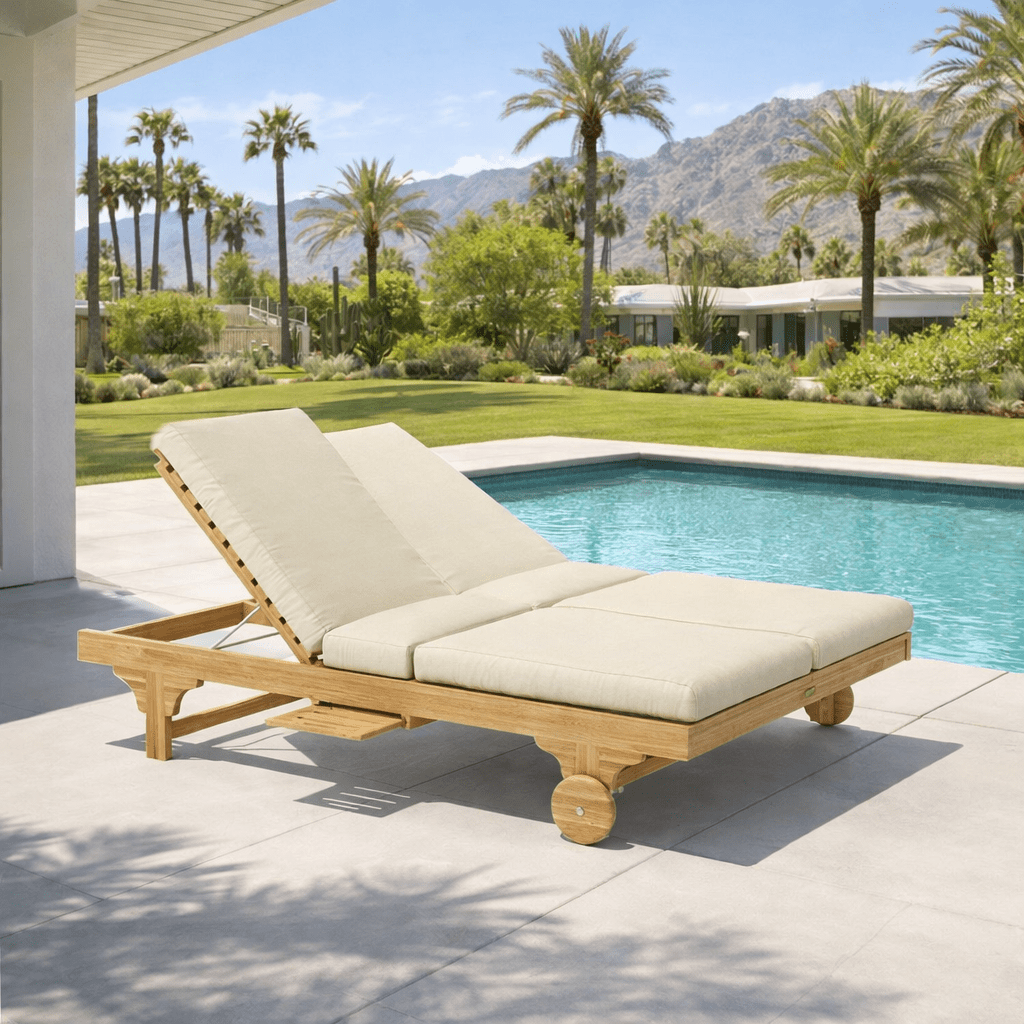 Grade A teak is naturally high in oils and has a dense grain structure. Those characteristics give it natural resistance to moisture, rotting, insects and warping without requiring an artificial stain for durability. That is especially useful in Naples, where furniture routinely encounters humidity, rain and poolside moisture rather than isolated weather events.
The distinction is important: teak's outdoor suitability is inherent to the wood rather than dependent on maintaining a painted exterior coating. Owners may still clean, seal or oil teak for appearance, but those choices are optional rather than prerequisites for outdoor durability.
Premium Grade A teak is designed for year-round outdoor use and can withstand rain, sun exposure and temperature fluctuations. In Naples, that makes it appropriate for exposed pool decks as well as covered lanais and outdoor dining areas.
Teak does change appearance outdoors. Untreated natural teak gradually develops a silver-gray patina. Some homeowners consider that weathered tone ideal for a Gulf Coast property; others prefer the warmer original wood color and choose to maintain it. Neither approach should be confused with the wood failing.
Outdoor furniture in Naples experiences repeated shifts between wet and dry conditions. Teak's dense grain and natural resistance to warping help make it a strong candidate for dining tables, lounge seating and other pieces expected to remain outdoors rather than being routinely moved into storage.
Its heavier, more architectural feel is another practical difference from lightweight outdoor furniture. That does not eliminate the need for storm preparation, but many homeowners prefer substantial furniture for patios that function as permanent outdoor rooms rather than temporary seasonal setups.
One of teak's more useful advantages is that owners have choices. Leave it unfinished and allow the wood to weather naturally, or maintain the warmer teak appearance with appropriate care products. It does not require paint or artificial stain for durability.
For Naples homeowners, this flexibility can be more valuable than chasing the material with the absolute least possible maintenance. A second home, waterfront residence and full-time home may each have different maintenance priorities. Teak allows the owner to decide how much attention to devote to appearance without making constant refinishing essential to the furniture's outdoor use.
| Naples Challenge | Why Premium Grade A Teak Performs Well |
|---|---|
| High humidity | Natural oils and dense grain provide inherent moisture resistance. |
| Frequent summer rain | Designed for year-round outdoor use and repeated weather exposure. |
| Strong sunlight | Handles sun exposure; untreated teak naturally develops a silver-gray patina. |
| Poolside moisture | Natural resistance to moisture and rot suits frequently damp environments. |
| Coastal conditions | Natural outdoor durability makes teak well suited to Gulf Coast settings. |
| Wet/dry cycles | Dense grain and resistance to warping support structural stability. |
| Long outdoor season | Furniture is designed to remain outdoors year-round. |
If we were planning a Naples property from scratch, we would not begin by choosing individual chairs. We would first identify how the outdoor area actually functions: where meals happen, where people gather after dinner, which portion receives direct sun, how guests move between the house and pool, and what furniture must remain exposed beyond the lanai roof.
For many Naples homes, the covered lanai is the anchor of the outdoor floor plan. We would usually give its protected square footage to the furniture used for the longest periods—often a dining table, deep-seating conversation group or both.
A useful rule is to furnish the lanai as a room rather than line its perimeter with unrelated pieces. If dining is important, establish a full teak outdoor dining set near the kitchen or outdoor cooking area. Then create a separate conversation zone rather than asking dining chairs to serve as all-purpose seating.
Naples pools frequently sit at the center of the outdoor experience, not off to the side. We would therefore plan pool furniture independently from the covered patio. Two or four teak chaise loungers with convenient side tables create a functional sun zone without overwhelming the deck.
Keep circulation in mind. A luxurious pool patio can feel surprisingly cramped when oversized lounge furniture blocks the route between the lanai, pool steps, outdoor shower and yard. Measure the actual walking paths before deciding how many loungers the space can comfortably support.
Seasonal visitors influence furniture decisions here more than many buyers initially expect. A couple may use a table for two or four most days yet host children, grandchildren or visiting friends during winter and holidays.
An extendable teak dining table can make more sense than permanently dedicating the lanai to a ten-person table. The best layout is often the one that feels comfortable on an ordinary Tuesday but can expand when the house fills with guests.
On Gulf-, bay-, lake- or canal-facing properties, furniture height deserves unusual attention. A large high-back sectional may be comfortable but interrupt a carefully framed water view from inside the home. Lower-profile seating or chaise lounges can preserve sightlines while still making the terrace useful.
This is one of the most important Naples-specific design decisions: do not evaluate outdoor furniture only while standing on the patio. Sit inside the family room and dining room and look outward. Premium waterfront property should not lose its best view because furniture was selected without considering the interior sightline.
Start with the part of your Naples property that drives daily outdoor life. Pool-focused homes will usually get more value from loungers and conversation seating, while frequent entertainers may want dining furniture first. Waterfront estates and larger lanais often benefit from combining multiple zones, while condos and compact terraces are better served by fewer carefully scaled pieces rather than trying to reproduce a full backyard layout.
Naples outdoor spaces tend to function less like seasonal patios and more like additional rooms. The strongest furniture plans reflect how people actually spend time here: morning coffee outside, afternoon pool use, sunset drinks, dinner with guests and long winter evenings when much of the country is indoors.
In northern climates, furniture planning often revolves around surviving winter storage. Naples reverses the pattern. The cooler, drier part of the year is when outdoor living can become most appealing, especially for seasonal residents and visiting family.
That means comfort and entertaining capacity deserve as much attention as weather resistance. If guests regularly arrive between late fall and spring, furnishing only for the two permanent occupants can create unnecessary compromises during the months the patio is used most heavily.
A common Naples evening moves naturally between several zones: the pool in late afternoon, drinks under the lanai, dinner outdoors and a conversation area afterward. Furniture works better when the patio supports that sequence instead of concentrating every activity around one oversized table.
For a larger property, we would rather see three clearly defined areas than a random collection of chairs: loungers for sun, dining furniture for meals and comfortable lounge seating for longer conversations.
Vacation-home owners should pay special attention to ownership complexity. Furniture that needs constant refinishing or must be moved indoors after ordinary rain can become frustrating when the property sits vacant for weeks at a time.
Teak's ability to remain outdoors and weather naturally can be especially useful in this setting. Cushions and loose accessories still need sensible management, but the wood itself does not have to be treated like an indoor material every time the homeowners leave town.
Along canals, bays and Gulf-facing properties, outdoor furniture should visually complement the water rather than compete with it. Natural teak works comfortably with the coastal contemporary, transitional and more traditional homes found throughout the Naples market.
Scale is equally important. Large waterfront terraces can support substantial seating groups, while high-rise balconies and narrower Gulf-view spaces demand more restraint. The expensive mistake is not necessarily buying too little furniture; it is filling every available square foot and losing the sense of openness that made the property appealing in the first place.
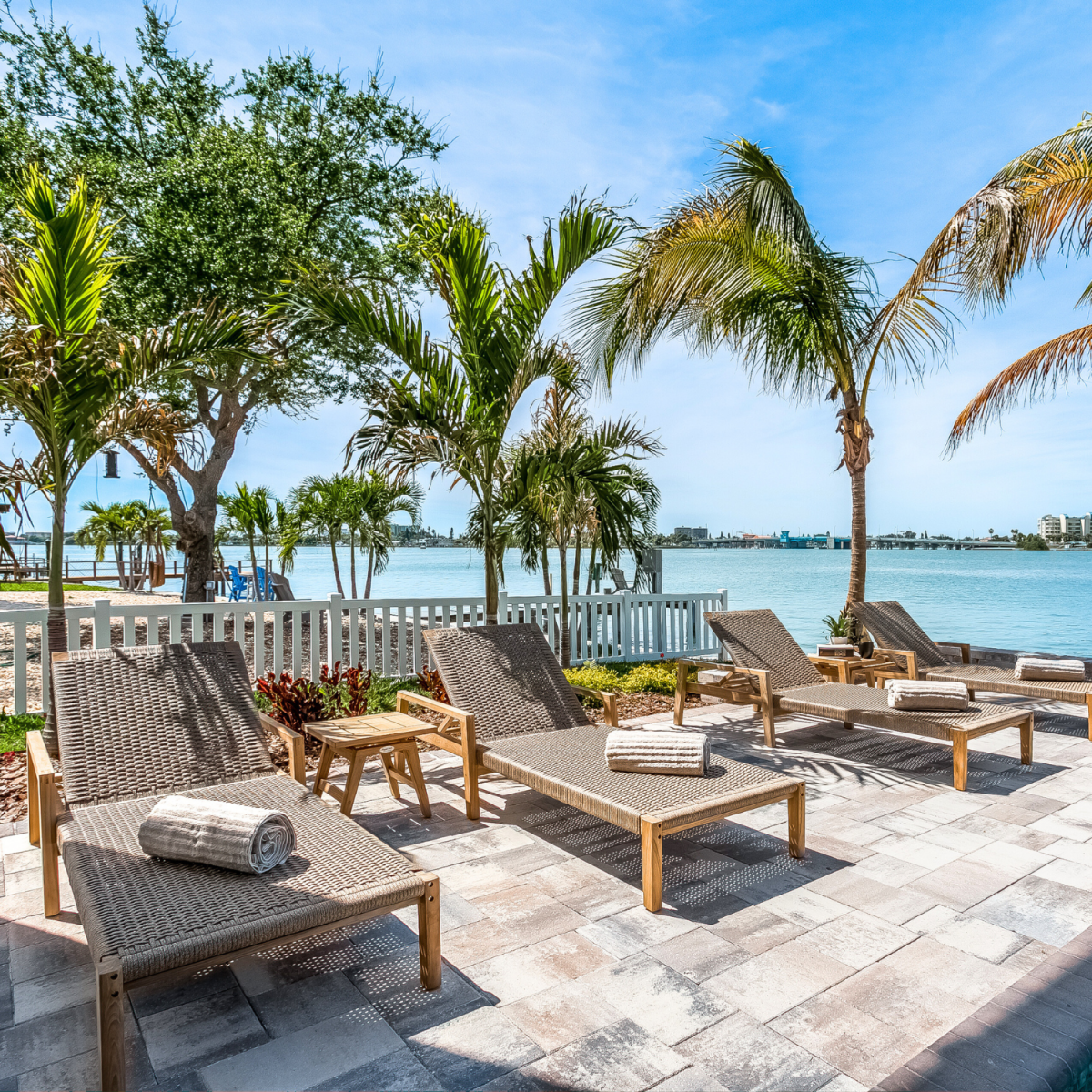 For pool-centered Naples homes, chaise lounges are one of the most useful places to start. They create a dedicated destination for swimming, reading and afternoon sun without requiring a full conversation set on the exposed pool deck.
Pair loungers with small teak side and end tables. That seemingly minor addition makes the space significantly more useful because drinks, phones, books and towels no longer end up on the pool coping or ground.
A covered lanai is often the best location for cushioned seating because the roof reduces direct rain and intense overhead sun while preserving the open-air experience. For larger rooms, teak sectional sets can define the conversation area without requiring a collection of unrelated chairs.
For narrower lanais, a sofa or loveseat with a pair of club or swivel chairs frequently gives better circulation than a large sectional. Swivel seating can be especially useful when people alternate between conversation, the television, pool activity and a waterfront view.
Outdoor dining is a natural fit for Naples, but table size should reflect everyday use as well as entertaining. Six seats work well for many households; larger estates may comfortably support eight, ten or more. Households with variable guest counts should consider extension capability rather than leaving an enormous table permanently expanded.
Allow generous circulation around the table. A table that technically fits under the lanai may still feel oversized once every chair is occupied and guests need to move between the kitchen, grill, pool and seating areas.
Homes with substantial outdoor kitchens may benefit from bar- or counter-height teak seating, especially along islands where guests naturally gather while food is prepared. This should supplement rather than automatically replace conventional dining furniture.
Counter-height seating excels at casual drinks and conversation. Standard dining height is usually more comfortable when dinner itself is the main event. Homes with enough space can use both.
On Naples Bay, Venetian Bay and canal-front properties, furniture placement should protect view corridors. Keep taller pieces toward the sides of the terrace and lower furniture closer to important sightlines.
For a large waterfront deck, a conversation group can sit nearer the house while loungers occupy the water-facing edge. That creates two useful destinations without building a visual wall between the interior and the view.
Not every seating area needs to become another complete patio. A teak bench placed in a garden, near a water feature or along a shaded side courtyard can create a useful destination with very little visual clutter.
This is especially effective on larger Naples properties where landscaping deserves to be experienced rather than simply viewed from the lanai.
Naples does not have a single architectural identity. Coastal contemporary homes, Mediterranean-influenced estates, West Indies-inspired architecture, traditional residences and modern renovations all appear within the market. Teak works particularly well here because its natural wood character can bridge those styles rather than demanding that the entire patio follow one narrow design language.
Newer Naples architecture often emphasizes large openings, indoor-outdoor transitions, simple forms and strong views toward pools or water. In these spaces, teak can add warmth without undermining the cleaner architecture.
We would usually keep furniture lines relatively simple and avoid over-accessorizing. Let the architecture, pool and landscaping provide much of the visual interest.
Natural teak is equally comfortable with the darker roofs, covered verandas, substantial columns and tropical landscaping associated with West Indies-inspired homes. Larger dining tables, deep seating and substantial lounge chairs tend to feel proportionate on these properties.
The goal is not to make every outdoor element match. Natural wood can serve as the common material that connects stone paving, greenery, neutral upholstery and architectural details.
Old Naples properties may offer excellent outdoor living without the expansive deck dimensions of a sprawling estate. Here, thoughtful scale matters more than having every furniture category.
A four- or six-person dining set paired with two lounge chairs may outperform an oversized sectional. Folding or extendable pieces can also preserve flexibility when the space needs to accommodate different uses.
Condo balconies and terraces deserve an especially disciplined approach. First protect the view; second preserve circulation; third add furniture. Reversing that order often produces a terrace that looks impressive in a product photograph but is inconvenient to live with.
Before furnishing a condominium terrace, also confirm the building's rules regarding furniture, exterior items and severe-weather preparation.
 A dining set tucked beneath a deep lanai roof and a chaise beside the pool do not experience the same environment. The exposed piece receives more direct sunlight, rainfall and poolside moisture.
Choose materials that can handle the most exposed location where they will actually sit, and adopt different cushion-management habits for covered and uncovered zones. Grade A teak is suitable for both, making it easier to maintain a consistent design across the patio.
Large lanais invite large furniture, but usable square footage is not the same as empty floor area. Door swings, pool access, outdoor kitchens, grill zones and traffic between the house and yard all consume space.
Before buying, mark the furniture footprint and then account for people sitting in chairs. A slightly smaller arrangement that allows effortless movement usually feels more luxurious than a larger set everyone has to squeeze around.
This mistake is particularly costly on waterfront Naples properties. Homeowners sometimes choose furniture while standing outside and never check what the arrangement looks like through the home's primary windows and sliding doors.
Place the tallest furniture away from critical Gulf, bay, canal or pool views. A furniture plan should improve the outdoor room without becoming the dominant object seen from inside.
Teak has a substantial, sturdy feel, but that should never be interpreted as a reason to ignore tropical-weather preparation. Severe storms require an actual plan for outdoor furniture and especially for loose accessories.
Know where cushions, umbrellas, trays and other movable objects will go. For larger pieces, follow applicable local storm guidance and property-management requirements rather than making assumptions based on furniture weight.
Cushioned lounge furniture can be extremely comfortable in Naples, but cushions should not become an afterthought. Many TeakHQ patio seating pieces include weather-resistant Sunbrella cushions, while cushion inclusion varies by product category and model.
Even weather-resistant fabric benefits from sensible care. During extended wet periods or severe weather, having a practical dry-storage strategy can make ownership significantly easier.
 Naples does not require an elaborate teak-maintenance routine, but outdoor furniture should be cleaned when dirt, pollen, organic debris or surface buildup becomes noticeable. Shaded and damp locations deserve particular attention because debris that stays wet is more likely to create unsightly surface growth.
Do not confuse ordinary cleaning with refinishing. Teak's durability does not depend on constantly restoring its original golden color.
Natural teak gradually weathers to a silver-gray patina when left untreated. This is an appearance change rather than an indication that the furniture is no longer suited for outdoor use.
If you like that relaxed coastal look, allowing teak to age naturally is the simplest ownership path. If preserving more of the original warm teak color matters to you, use appropriate teak cleaners and care products according to the product directions.
Furniture near the Gulf, bays, canals or swimming pools may accumulate salt, splash residue or other surface deposits. Periodic rinsing and cleaning helps keep the furniture looking cared for.
More importantly, avoid creating constantly wet contact points. Position furniture where patio drainage works properly and where irrigation systems do not repeatedly soak the same legs or undersides.
The teak frame and the cushion should not be treated as though they have identical care needs. Sunbrella fabric is weather-, fade-, UV- and water-resistant, but storing cushions during prolonged bad weather can reduce needless exposure and simplify cleanup afterward.
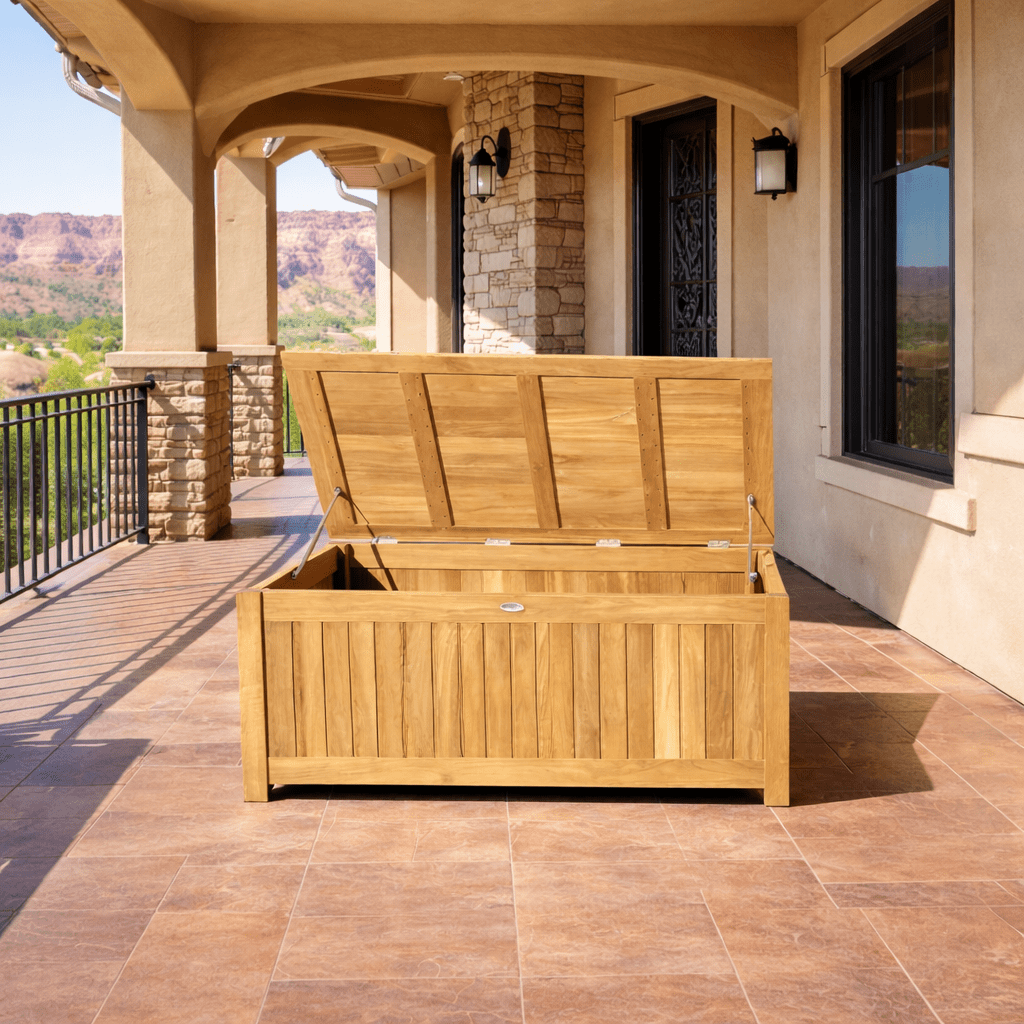
A dedicated storage location is particularly useful for second homes. Teak deck boxes can help organize patio accessories, although owners should always confirm the specific storage product's intended use and dimensions before relying on it for cushions.
Unlike homeowners in colder climates, Naples residents generally do not need a traditional winter furniture-storage season. Grade A teak is designed for year-round outdoor use.
The more important seasonal routine is storm preparation. Keep the patio orderly, know what must be moved or secured, and avoid waiting until tropical weather is imminent to decide where loose outdoor items belong.
The right Naples outdoor space should work just as well for two people on an ordinary morning as it does when family arrives for a winter visit. Start with your property's real priorities—pool use, dining, entertaining, waterfront views, lanai space and maintenance preferences—then choose furniture around those needs.
Premium Grade A teak is a particularly strong fit when you want natural wood, substantial construction, long outdoor service and the option to maintain its original appearance or simply let it weather naturally. Explore TeakHQ's teak patio seating, dining furniture, loungers and complementary pieces to build the combination that fits your Naples property rather than forcing the property around the furniture.
Look for materials specifically suited to long-term sun, rain and moisture exposure. Premium Grade A teak is a strong option because its natural oils and dense grain make it resistant to moisture, rot, insects and warping while allowing it to remain outdoors year-round. Quality aluminum can also make sense when lighter weight and a more contemporary appearance are priorities.
Yes. Grade A teak's natural oils, dense grain and moisture resistance make it particularly appropriate for Naples' humid environment. It does not require paint or artificial stain to remain suitable for outdoor use.
Yes. TeakHQ's Grade A teak furniture is designed for year-round outdoor use and can withstand rain, sun and temperature fluctuations. Severe-weather preparation is still important during tropical storms and hurricanes.
Chaise loungers paired with side tables are an especially practical starting point. Larger pool decks can add a separate conversation area, but preserve clear walking routes between the lanai, pool steps and house. Browse teak chaise loungers for poolside configurations.
No. Protective covers are optional rather than required for the durability of Grade A teak. Covers can still be useful when you want to reduce dirt and debris, but they should be used properly so trapped moisture does not become an unnecessary maintenance issue.
Yes. Unfinished teak naturally weathers to a silver-gray patina over time. That change is normal and does not mean the wood has failed. Owners who prefer the warmer original teak appearance can choose appropriate cleaning and maintenance products.
Begin with how you actually use the space. Frequent entertainers may prioritize a dining set near the kitchen, while homeowners who spend long evenings outside may get more value from deep seating. Larger lanais often work best when dining and conversation areas are treated as separate zones.
Neither material is automatically right for every homeowner. Teak is warmer, heavier and made from natural wood; aluminum is lighter and often has a more modern visual character. Teak is particularly appealing when natural material, substantial construction, weather resistance and long-term ownership are priorities.
Choose for normal household use first, then account for seasonal guests. Six-person tables work well for many homes, while larger entertaining properties may need eight, ten or more seats. An extendable teak table is useful when guest counts vary significantly.
Do not assume outdoor furniture is storm-proof simply because it is heavy. Follow local emergency and property-management guidance and have a plan to secure, relocate or otherwise prepare furniture before severe weather. Cushions, umbrellas and other loose accessories deserve particular attention.


