
FREE SHIPPING
within mainland USA
within mainland USA
Home ▸ Teak Outdoor Furniture ▸ By Location ▸ Orange County, California
Orange County combines several distinct outdoor-furniture environments within a relatively compact area. Ocean-facing patios contend with salt-laden air and marine moisture, while inland communities see stronger afternoon sun and warmer patio conditions; throughout the county, pools, outdoor kitchens, covered patios, and year-round entertaining shape how spaces are furnished. Premium Grade A teak is a particularly strong option because it offers the natural appearance, outdoor durability, and maintenance flexibility that work across both coastal and inland settings.

The most useful way to think about outdoor furniture in Orange County is not simply “coastal Southern California.” The county contains noticeably different exposure conditions within short driving distances. A terrace overlooking the ocean in Newport Coast, Laguna Beach, or Dana Point presents different priorities from a sunny backyard in Irvine, Mission Viejo, Yorba Linda, or Anaheim Hills.
For homes near Newport Beach, Corona del Mar, Laguna Beach, Dana Point, Huntington Beach, and San Clemente, proximity to the Pacific matters more than a broad regional climate label. Salt carried in ocean air can settle on furniture and hardware, while shaded coastal patios may remain damp longer than sun-exposed inland spaces.
That does not mean every coastal homeowner needs specialized marine furniture. It does mean material quality becomes more important. Premium outdoor furniture should tolerate repeated moisture exposure without requiring the owner to constantly protect the underlying material.
Move inland and the decision changes. Patios in Irvine, Mission Viejo, Anaheim Hills, or Yorba Linda may receive more intense afternoon sun and feel substantially warmer than ocean-adjacent spaces. Shade becomes part of the furniture plan rather than an afterthought, especially around west-facing patios and pool decks.
This is also where material feel becomes important. Aluminum is a legitimate premium choice for homeowners who want a very contemporary appearance and light weight. Teak offers a warmer, more organic character and is heavier and more substantial, which many homeowners prefer in permanent outdoor rooms.
Orange County's pool-centered backyards create a third consideration: furniture often moves repeatedly between dry sun exposure, wet swimsuits, splash zones, and shaded areas. Materials that look good only when protected beneath a roof can become inconvenient around an actively used pool.
Grade A teak is designed for year-round outdoor use and withstands sun, rain, moisture, and temperature fluctuations. That flexibility makes it practical when one property includes several exposure zones rather than one perfectly protected patio.
One of the most useful Orange County furniture-planning rules is to evaluate each outdoor zone independently. Two homes in the same city can need different furniture strategies because one patio faces west with little shade while another sits beneath a covered structure near the coast.
Before buying, note where afternoon sun falls, which areas receive ocean air or pool splash, where water drains after rain, and which seating areas are protected by the house. That simple exposure map is often more useful than selecting furniture based on the city's climate alone.
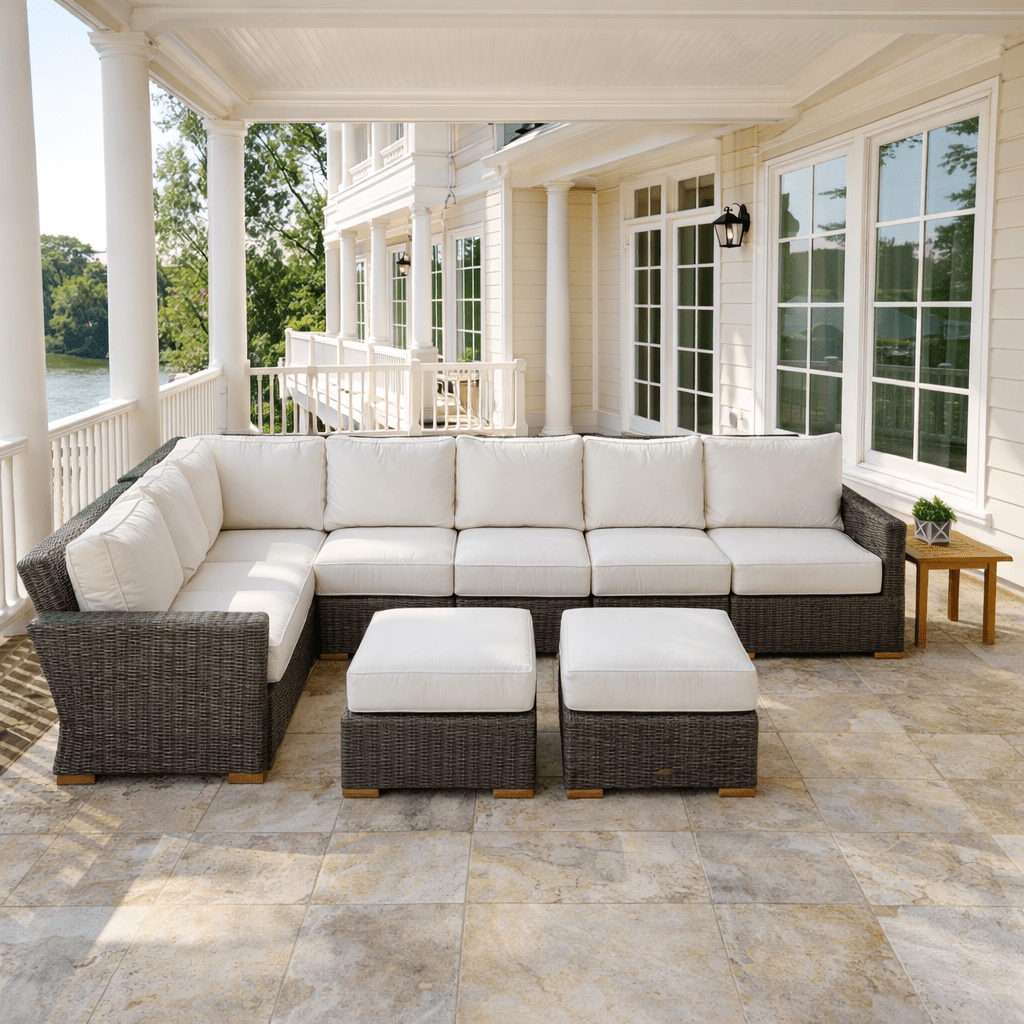 Premium Grade A teak has a dense grain structure and naturally high oil content. Those properties contribute to its resistance to moisture, rot, insects, and warping—useful characteristics for furniture that may encounter coastal dampness, seasonal rain, poolside moisture, and prolonged outdoor exposure.
Unlike finishes that provide the primary protection for some materials, teak does not require artificial stain for durability. That distinction is valuable for homeowners who would rather own furniture that is naturally suited to the outdoors than maintain a decorative coating simply to keep the underlying material protected.
Teak is designed to withstand outdoor sun exposure. Over time, unfinished natural teak gradually develops a silver-gray patina. That weathering is an appearance change rather than a requirement to replace the furniture.
Homeowners therefore have two legitimate approaches. Let the teak age naturally when a weathered coastal look fits the architecture, or use appropriate teak care products when preserving more of the original warm wood color is important. Neither approach changes the basic suitability of Grade A teak for outdoor use.
Outdoor furniture in Orange County can experience dry sunny afternoons, cooler evenings, marine moisture near the coast, and seasonal rain. Grade A teak's dense grain structure and natural resistance to warping make it well suited to those changing conditions.
This does not make teak indestructible, and good furniture placement still matters. Avoid standing water around furniture feet, provide drainage, and maintain cushions according to their care requirements. The advantage is that the wood itself is intended to live outdoors rather than requiring constant shelter.
Some premium outdoor materials are attractive partly because they minimize routine attention. Teak takes a different approach: it gives owners a choice. Natural teak can be left untreated and allowed to develop its gray patina, or it can be maintained when the original golden-brown appearance is preferred.
For vacation properties and low-intervention households, natural weathering can be especially appealing. For highly designed Newport Coast, Laguna Beach, or contemporary Irvine patios where color consistency is part of the aesthetic, owners may choose more active cosmetic care.
Premium Grade A teak furniture carries a higher initial price than many mass-market outdoor materials, but teak furniture is intended to last decades rather than seasons. For homeowners building a permanent outdoor room, that makes lifetime ownership a more useful comparison than purchase price alone.
The better question is often not “What costs less today?” but “Do I want to replace this outdoor room repeatedly?” For a patio designed as part of the architecture of the property, furniture longevity can justify investing in fewer, better pieces.
| Orange County Challenge | Why Premium Grade A Teak Performs Well |
|---|---|
| Coastal moisture | Natural oils and dense grain provide strong moisture resistance. |
| Salt-air environments | Teak is naturally suited to outdoor moisture exposure; appropriate hardware and periodic cleaning remain important. |
| Strong sunshine | Designed for outdoor sun exposure and can weather naturally without artificial stain. |
| Poolside splash | Moisture resistance makes teak practical around frequently used pool areas. |
| Seasonal rain | Grade A teak is designed for year-round outdoor use and withstands rain. |
| Changing outdoor conditions | Dense grain and natural stability help resist warping. |
| Long outdoor season | Teak's durability and longevity suit furniture that receives frequent use. |
We would begin with how your outdoor space is actually used, not with a matching furniture collection. Orange County homes frequently work best when the patio is divided into functional zones: dining near the kitchen, comfortable conversation seating farther out, and dedicated loungers around the pool. Once those zones are clear, furniture selection becomes much easier.
For many larger homes, the most useful first investment is either a substantial outdoor dining set or a comfortable teak sectional. Which comes first depends on whether meals or conversation dominate your outdoor routine.
If Sunday dinners, barbecues, birthday meals, or visiting family regularly move outdoors, prioritize the dining table. If the patio is primarily a place for drinks, conversation, reading, and informal evenings, start with deep seating and build outward from there.
A common planning mistake is expecting the main patio seating group to serve the pool too. That usually forces wet guests into cushioned conversation furniture and leaves no comfortable place to recline in the sun.
Where space permits, give the pool deck a dedicated row or pair of teak chaise loungers. Keep circulation between the pool, house, and outdoor kitchen open rather than filling every available edge with furniture.
Orange County homeowners often need a table to feel appropriately scaled for everyday use without permanently dedicating an enormous section of the patio to occasional parties. An extendable table is particularly useful in that situation.
Keep the everyday configuration comfortable for the household, then expand the table when children, extended family, neighbors, or weekend guests arrive. This approach usually produces a better-looking patio than sizing every piece around the largest gathering of the year.
After seating and dining are established, add the pieces that make the outdoor room function naturally: side tables beside lounge chairs, a coffee table within the conversation group, a serving surface near the grill, and possibly a fire table where evenings tend to linger.
These smaller pieces are easy to underestimate. In practice, they are what prevent guests from carrying drinks across the patio, piling serving dishes onto the dining table, or moving chairs around every time the use of the space changes.
Start with the collection that serves your home's primary outdoor activity. Larger entertaining patios will usually benefit most from deep patio seating or outdoor dining furniture, while pool-centered properties may begin with loungers. Once the main zone is established, use complementary pieces to create separate dining, conversation, pool, and serving areas rather than trying to make one furniture group perform every job.
Orange County's outdoor spaces often function as genuine extensions of the home. The most useful furniture plans recognize that a Saturday afternoon by the pool, a family dinner, and an evening conversation around a fire feature are different activities—even when all three happen on the same patio.
Outdoor meals make sense through much of the year, so dining furniture can justify a larger share of the patio than it might in a region with a short outdoor season. For families who regularly host, seating six to ten people often provides a better long-term fit than choosing a small table simply because it looks less imposing in a showroom.
Placement matters just as much as capacity. Dining close to the kitchen or outdoor cooking area reduces traffic through the lounge zone and makes serving considerably easier.
From coastal communities to planned inland neighborhoods, swimming pools are a major part of Orange County outdoor living. The best pool decks usually separate reclining furniture from conversation furniture. Chaise loungers belong where people actually want sun or easy pool access; cushioned lounge seating works better slightly removed from the splash zone.
This also improves circulation. A beautiful pool deck can feel cramped when chairs, loungers, umbrellas, and tables are arranged as individual objects instead of as coordinated zones.
Where a built-in grill, island, pizza oven, or complete outdoor kitchen is present, furniture should support the cooking workflow rather than fight it. Leave a generous route between indoor kitchen doors, cooking surfaces, dining chairs, and the pool.
A serving or buffet table can also be more valuable than adding another seat. It gives platters, drinks, and grilling supplies somewhere to live without consuming dining-table space.
Coastal breezes and cooler evenings can shift the preferred gathering area after sunset. Deep seating around a coffee table or fire feature creates a more natural second act after dinner than leaving everyone around the dining table.
This is why two smaller purposeful zones can outperform one oversized furniture group. The patio becomes usable in different ways throughout the day instead of being optimized around one activity.
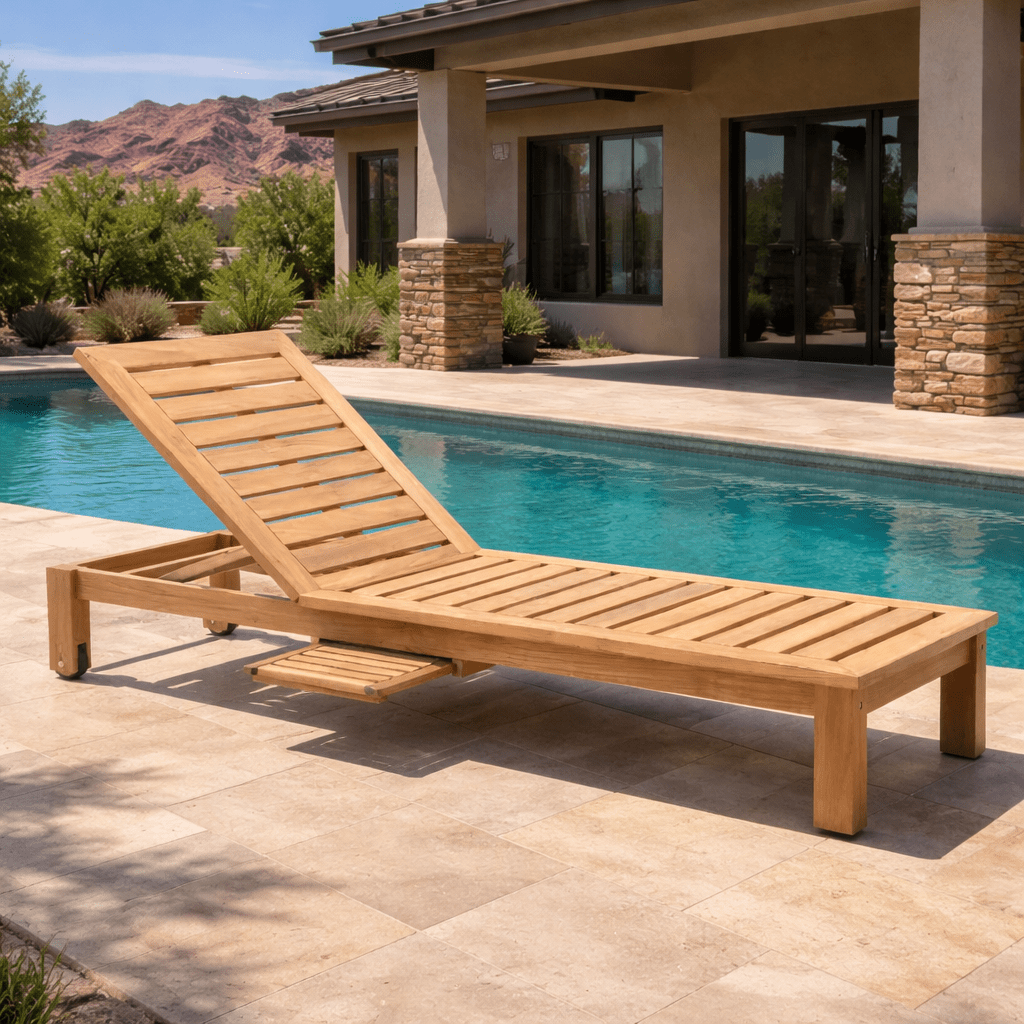 For pool-focused homes, start with chaise loungers and give each lounger practical access to a small table. Four loungers often create a convincing resort-style zone on a larger pool deck, while two can be sufficient when swimming rather than sunbathing is the primary activity.
Then position deep seating outside the immediate splash area. A sectional works well against the edge of a broad patio, while club chairs and a sofa can be easier to adapt around doors, steps, planters, and irregular pool shapes.
On a view property, furniture should support the view rather than form a barrier across it. Lower lounge seating can often preserve sightlines better than tall dining furniture positioned directly along the outer edge.
If meals are important, consider moving dining slightly closer to the house and reserving the prime ocean-facing edge for chairs, loungers, or a compact conversation arrangement. Teak's natural appearance works comfortably with coastal architecture without requiring a nautical theme.
For a larger Irvine, Newport Coast, Laguna Niguel, or Anaheim Hills backyard, we would generally build around two anchors: a dining table and a lounge group. An extendable teak dining table gives the dining zone flexibility, while the lounge area accommodates guests before and after a meal.
Think about peak entertaining in terms of multiple seating types rather than one enormous table. A household might comfortably seat eight for dinner, while another four or six people can gather nearby on lounge furniture when the event becomes less formal.
A teak fire pit table can define a dedicated evening zone when the patio has sufficient space and the installation is appropriate for the property. Pair it with deep seating rather than dining chairs so the area feels intentionally designed for conversation.
On smaller patios, however, a conventional coffee table may be the better choice. Do not force a fire feature into the design simply because the yard has an unused corner; circulation and comfortable seating distances matter more.
Orange County architecture ranges from beach cottages and coastal contemporary homes to Spanish- and Mediterranean-influenced residences, modern planned-community homes, hillside estates, and resort-style properties. Teak works particularly well here because natural wood can bridge styles instead of forcing the patio toward one narrow aesthetic.
Modern coastal patios usually benefit from restraint. Clean-lined teak furniture, neutral cushions, stone or porcelain paving, and simple planting allow the ocean, pool, or architecture to remain visually dominant.
Natural teak introduces warmth where a design otherwise contains large expanses of stucco, glass, concrete, or pale stone. If the teak is allowed to develop its silver-gray patina, the material can become even quieter visually over time.
Courtyards, stucco walls, tile roofs, terracotta tones, stone paving, and mature landscaping provide a different setting. Here, the warm natural color and substantial appearance of teak can feel more at home than extremely lightweight furniture.
Dining tables, club chairs, benches, and serving pieces work especially well when the goal is to make the patio feel furnished as a room rather than decorated with temporary outdoor pieces.
In newer Irvine-area and inland homes, outdoor layouts are often cleaner and more geometric. A sectional aligned with the architecture, rectangular dining table, and a limited number of large supporting pieces can look more intentional than many small chairs and tables scattered around the yard.
Teak also creates useful material contrast against contemporary hardscape and minimalist landscaping. Homeowners seeking an even more industrial or ultra-modern appearance may legitimately prefer aluminum; homeowners wanting warmth and natural texture will generally find teak more compatible.
A large pool, substantial home, or broad terrace can visually overwhelm undersized furniture. Conversely, a compact courtyard can lose its character beneath a sectional designed for a resort-sized patio.
Scale each zone independently. A generous dining table can coexist with a smaller lounge group, or a large sectional can be paired with a modest four-person dining area. Matching furniture size to the architecture matters more than making every collection identical.
 A bluff-top patio near Laguna Beach and an exposed inland backyard do not have the same priorities. Buying based on a generic “Southern California” checklist can cause homeowners to overlook the exposure that actually matters at their house.
Evaluate salt air, sun direction, shade, pool splash, drainage, and wind at the furniture's exact location. Grade A teak works across these environments, but layout and care should still reflect the individual exposure.
It is tempting to furnish a patio around the annual birthday, holiday gathering, or extended-family barbecue. The result is often a table or seating arrangement that dominates the space during the other 360-plus days of the year.
A better strategy is to furnish comfortably for normal life and build flexibility into the plan. Extendable tables, movable chairs, and separate lounge seating let the patio expand for guests without permanently sacrificing circulation.
A furniture layout can look perfect in the morning and become uncomfortable later when direct afternoon sun reaches the seating. This is especially important for exposed inland patios.
Before finalizing placement, observe the space at the time of day you expect to use it most. Furniture can tolerate outdoor exposure and still be poorly positioned for people. Shade structures and umbrellas should therefore be considered part of the furniture plan rather than last-minute accessories.
Pool furniture needs more breathing room than showroom layouts suggest. Guests need space to walk around loungers, move between water and house, handle towels, and access side tables without squeezing between pieces.
Choose fewer substantial pieces when necessary. Teak's heavier, architectural feel means a well-spaced arrangement of quality loungers can look more intentional than filling every linear foot of deck.
Premium aluminum, quality synthetic materials, and Grade A teak can all be legitimate choices, but they offer different ownership experiences. Aluminum is lighter and often more overtly modern. Synthetic materials can appeal to buyers seeking a different maintenance profile. Teak provides real natural wood, substantial weight, weather resistance, and the option to age naturally.
Choose based on the character of the home and the ownership experience you want rather than comparing outdoor furniture only by appearance on the day it is delivered.
 The first maintenance decision is aesthetic. Natural teak can be left untreated and will gradually weather to a silver-gray patina. If you prefer that appearance, routine cleaning can remain relatively simple.
If retaining more of the original teak color is important, use appropriate teak care products and follow the product-specific instructions. Treatment is optional for appearance; teak does not require artificial stain for outdoor durability.
There is no useful countywide cleaning calendar because exposure varies too much. Furniture on a sheltered Irvine patio may need less frequent attention than pieces receiving salt deposits near the ocean, debris beneath trees, or repeated pool splash.
Inspect surfaces periodically and clean when visible buildup appears. Ocean-adjacent furniture may benefit from more frequent removal of salt residue, while shaded areas deserve attention to accumulated moisture and organic debris.
Although teak is naturally resistant to moisture and rot, keeping outdoor furniture clean is still good ownership practice. Leaves, pollen, dirt, and other debris can trap moisture and make surfaces look neglected.
Pay particular attention beneath cushions, around table joints, and wherever furniture sits near landscaping. Good airflow and normal drainage help the entire outdoor area—not just the furniture—dry more predictably.
Most TeakHQ patio seating pieces include Sunbrella cushions, though this varies by product. Sunbrella fabric is weather-resistant, fade resistant, UV resistant, and water resistant, but cushions still benefit from sensible care.
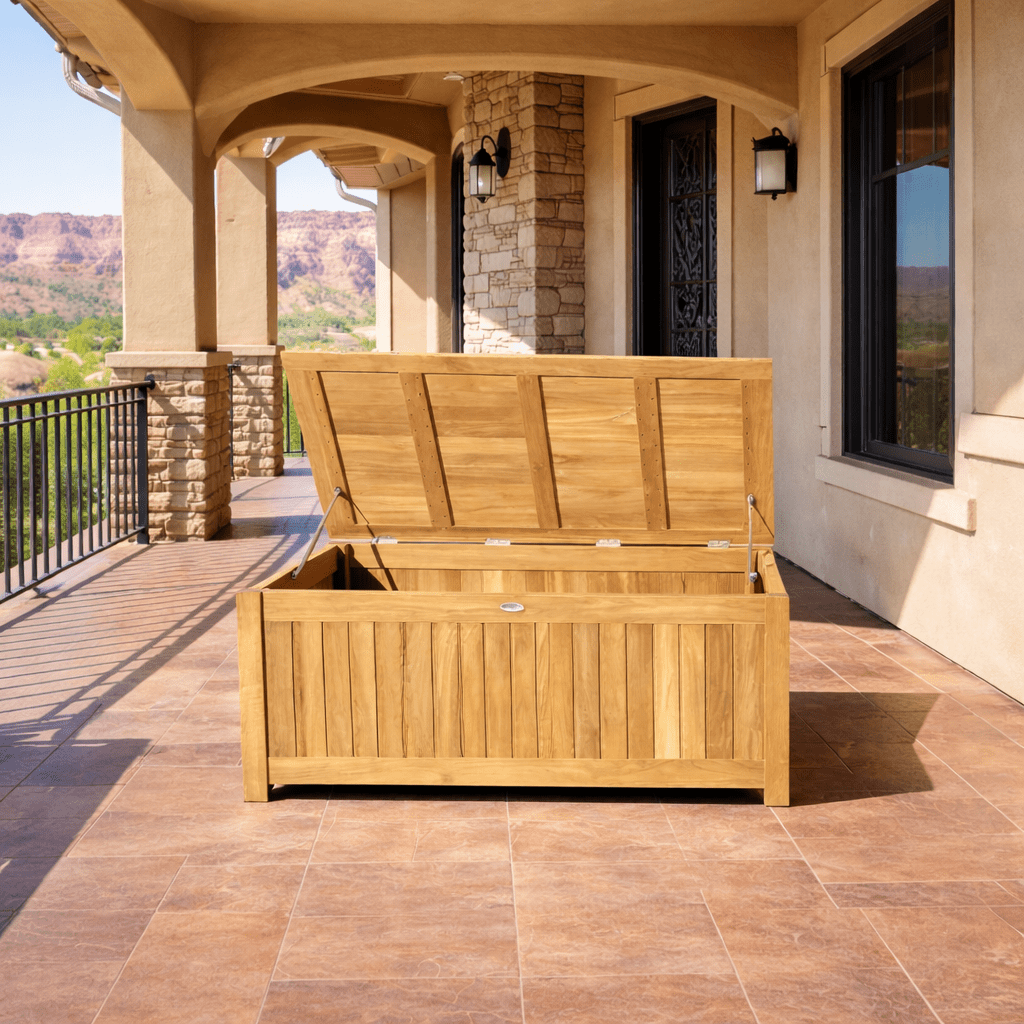
During periods of nonuse or wet weather, storing cushions in a protected location can keep them cleaner and reduce unnecessary exposure. A deck box or other dedicated storage location near the patio makes that habit considerably easier.
Grade A teak is designed for year-round outdoor use, so a protective cover is not required simply to make the wood suitable for outdoor exposure. Some owners nevertheless use covers to reduce cleaning, pollen, leaf debris, or prolonged surface contamination.
If you do use a cover, choose one intended for outdoor furniture and avoid creating conditions that unnecessarily trap moisture against cushions or surfaces. For many Orange County homeowners, convenience rather than wood preservation is the primary reason to cover teak.
The right outdoor furniture plan should fit the way your particular property experiences Orange County—not an abstract regional average. Start with your exposure, architecture, pool or entertaining needs, and preferred level of maintenance; then choose furniture that can remain part of the space for the long term. TeakHQ's Grade A teak collections make it possible to build complete dining, lounge, poolside, and conversation areas around that approach.
There is no single appropriate material for every home. Premium aluminum, quality synthetic furniture, and Grade A teak can all work well. Teak is especially appealing when you want real natural wood, substantial weight, outdoor durability, moisture resistance, and the option to let the furniture weather naturally.
Yes. Grade A teak's natural oils, dense grain, moisture resistance, and rot resistance make it well suited to outdoor coastal environments. Homes with significant salt-air exposure should still clean surface deposits periodically and pay appropriate attention to hardware and cushions.
Dedicated chaise loungers are usually the most useful starting point, followed by side tables and a separate conversation area outside the main splash zone. Browse teak chaise loungers if reclining and sunbathing are major priorities.
Grade A teak does not require a cover for outdoor durability and is designed for year-round outdoor use. Covers can still be useful for reducing dirt, leaf debris, pollen, and cleaning, particularly when furniture will sit unused for extended periods.
Yes. Unfinished natural teak gradually develops a silver-gray patina when exposed outdoors. This is a normal appearance change. Owners who prefer the original warmer teak color can use appropriate care products rather than allowing the wood to weather naturally.
Use exposure rather than a rigid calendar. Furniture receiving noticeable salt deposits, marine moisture, tree debris, or pool splash may need cleaning more often than furniture on a protected inland patio. Inspect the furniture periodically and clean visible buildup before it accumulates.
Choose according to the activity that happens most often. If outdoor meals and family gatherings dominate, begin with a dining set. If drinks, conversation, reading, and informal entertaining are more common, a sectional may provide more daily value.
Size the table primarily for normal household use plus regular guests, not the largest party of the year. If entertaining needs vary substantially, an extendable dining table can provide a better balance between everyday patio space and occasional seating capacity.
Yes. TeakHQ's Grade A teak furniture is designed for year-round outdoor use and withstands rain, sun exposure, moisture, and temperature fluctuations. Cushions and accessories may have different care requirements, so follow the instructions for the specific product.
It depends on what you value. Teak provides real natural wood, a warmer appearance, substantial weight, and long-term outdoor durability. Aluminum is lighter and can suit a more overtly modern aesthetic, while poly furniture offers a synthetic alternative with different maintenance characteristics. The better choice depends on your home's design, exposure, and preferred ownership experience.


