
FREE SHIPPING
within mainland USA
within mainland USA
Home ▸ Teak Outdoor Furniture ▸ By Location ▸ Orlando, Florida
Orlando outdoor spaces have to work through intense summer sun, persistent humidity, frequent rain, and long stretches of warm weather when patios and pools stay in regular use. Screened lanais, covered patios, lakefront yards, and resort-style pool decks also create different furniture needs than Florida's exposed coastal properties. Premium Grade A teak is especially worth considering here because its natural oils, dense grain, moisture resistance, and year-round outdoor durability suit Central Florida's demanding combination of heat and moisture.

Orlando creates a demanding outdoor-furniture environment because moisture, heat, rainfall, and strong sunshine often overlap rather than arriving in separate seasons. A patio set may be heated by direct sun, soaked by an afternoon storm, and then spend the evening in warm, humid air. That repeated wet-dry cycle matters more to furniture performance than any single hot or rainy day.
In a dry climate, homeowners often focus first on UV exposure and fading. In Orlando, drying is just as important. Moisture can linger on furniture, beneath cushions, around feet, and in shaded corners of a screened enclosure. Materials that tolerate repeated moisture exposure therefore deserve priority over furniture that merely looks good in a showroom.
This is also why airflow around a furniture arrangement matters. Crowding a sectional tightly against a wall or packing multiple pieces into a shaded lanai can create areas that stay damp longer after rain or cleaning. A little breathing room between furniture, walls, planters, and other surfaces makes everyday ownership easier.
Central Florida's wet season commonly brings frequent showers and thunderstorms, with Orlando's wet-season onset historically occurring around late May and the drier season beginning around mid-October. :contentReference[oaicite:1]{index=1} For furniture buyers, the practical issue is not simply whether a material can get wet. It is whether repeated wetting creates a burdensome maintenance routine.
Dining tables, chaise frames, club chairs, and side tables that live outdoors should therefore be chosen as outdoor furniture first and decorative furniture second. Premium Grade A teak fits that approach because its natural oils and dense grain give it resistance to moisture, rotting, insects, and warping.
Screen enclosures and covered lanais are extremely useful in Orlando. They provide shade and make outdoor rooms more comfortable, but there is an easily overlooked tradeoff: furniture protected from direct sun may also dry more slowly after wind-driven rain, cleaning, or wet swimmers.
That makes Orlando somewhat different from a hot, arid market where deep shade almost always helps furniture ownership. Here, we would look at both shade and
Furniture selection should also account for severe thunderstorms and tropical weather. Teak is naturally heavier and more substantial than lightweight aluminum furniture, but weight should never be treated as a substitute for storm preparation. Loose cushions, umbrellas, accessories, and other movable objects should be brought into a protected location when threatening weather warrants it.
Compared with Florida's Atlantic and Gulf coastal communities, Orlando is not routinely exposed to direct ocean salt spray. That shifts the buying emphasis away from salt-air corrosion and toward humidity, rainfall, drainage, sun, and storm readiness—an important distinction when comparing Central Florida furniture advice with recommendations written for beachfront homes.
Once Orlando's actual conditions are considered, premium Grade A teak becomes a particularly logical material rather than simply a luxury choice. Its strongest advantages here relate to repeated moisture exposure, structural stability, outdoor longevity, and the ability to remain outside without requiring a protective finish for durability.
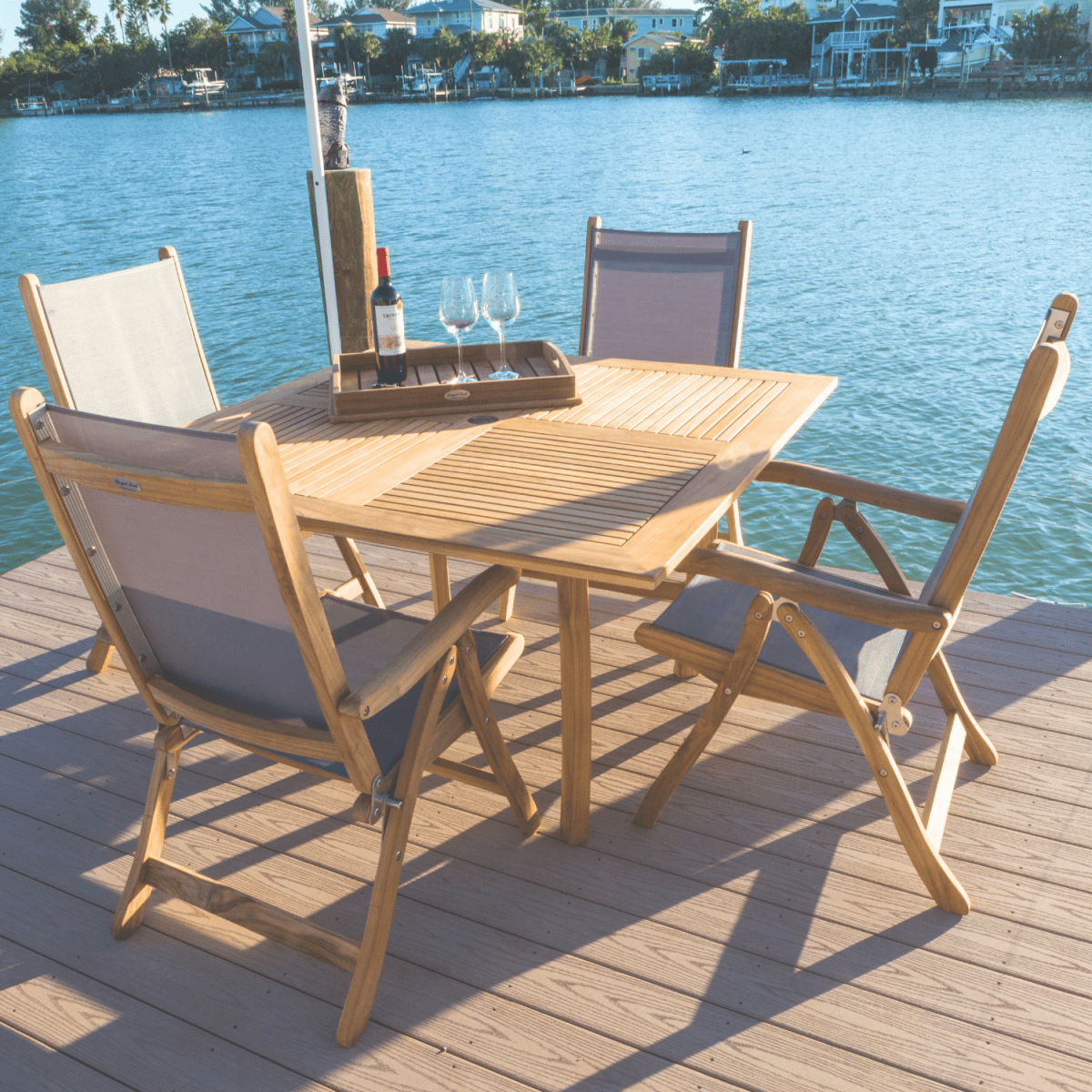 Grade A teak has a dense grain structure and is naturally high in oils. Those characteristics contribute to its resistance to moisture, rot, insects, and warping—qualities that become especially useful when furniture spends months moving between sunshine, rain, and humid air.
The practical advantage is flexibility. Teak does not need paint, artificial stain, or a protective coating simply to survive outdoors. That reduces one of the major frustrations of owning natural-material furniture in a humid climate: constantly maintaining a decorative finish that is also expected to serve as the material's primary defense.
Orlando patios can receive substantial sun even when part of the outdoor space sits beneath a lanai. Grade A teak is designed to withstand sun exposure and temperature fluctuations. If left untreated, its appearance gradually changes from its original warm tone to a silver-gray patina.
That color change is normal weathering, not an indication that the teak has lost its outdoor durability. Homeowners who want the original appearance can use appropriate teak-care products, while homeowners who prefer a more relaxed natural patina can allow the furniture to age.
Rapidly changing outdoor conditions put repeated stress on wood. Dense Grade A teak is resistant to warping and is specifically suited to year-round outdoor use, which is particularly relevant for dining tables and larger furniture pieces where structural stability matters over time.
For Orlando buyers, longevity is also part of the value equation. Premium teak costs more upfront than many mass-market patio materials, but it is furniture intended to last decades rather than seasons. That distinction becomes more meaningful when the outdoor room is used most of the year rather than furnished only for a short summer season.
Some homeowners enjoy preserving teak's original golden-brown appearance. Others would rather clean their furniture periodically and allow it to weather naturally. Both approaches are legitimate.
That flexibility makes teak particularly practical for second homes and vacation properties where owners may not want a rigid finishing schedule. Covers can be used if desired, but they are optional rather than necessary for teak's durability. The more important Orlando-specific concern is making sure covered furniture is dry and that any cover arrangement does not unnecessarily trap moisture.
| Orlando Challenge | Why Premium Grade A Teak Performs Well |
|---|---|
| High humidity | Natural oils and dense grain provide strong moisture resistance. |
| Frequent summer rain | Designed for year-round outdoor exposure and repeated wet weather. |
| Strong sunshine | Withstands sun exposure; untreated teak naturally develops a silver-gray patina. |
| Wet-dry cycles | Dense Grade A teak resists warping and outdoor temperature fluctuations. |
| Rot concerns | Teak is naturally resistant to moisture and rotting. |
| Outdoor insects | Teak's natural characteristics provide resistance to insects. |
| Year-round exposure | Grade A teak is designed for year-round outdoor use. |
We would start with how the property is actually used rather than choosing a matching furniture collection first. In Orlando, the most successful outdoor rooms often need to handle swimming, dining, lounging, entertaining, and wet-weather interruptions within the same relatively compact backyard.
For many Orlando homes, we would make the covered or screened lanai the primary conversation zone. A teak sectional or multi-piece deep-seating arrangement can create the equivalent of an outdoor family room while preserving the open pool deck for swimming and sunbathing.
One planning mistake is filling every available edge of the enclosure with furniture. Keep circulation routes open between the house, outdoor kitchen, screen door, and pool. Wet swimmers should not have to squeeze behind a sofa to get indoors, and servers should have a clear path between the kitchen and dining table.
For a pool home, we would usually resist placing the entire furniture budget beneath the roof. Teak chaise loungers positioned in the open pool area create a separate use zone and let homeowners choose between sun and shade throughout the day.
Leave enough room around each chaise to walk comfortably and add a small side table for drinks, towels, and phones. A row of four tightly packed loungers may look resort-like in a photograph, but a slightly looser arrangement is usually easier to live with at home.
Outdoor dining in Orlando frequently supports more than formal dinners. It may be breakfast by the pool, food from the grill, visiting relatives, holiday gatherings, or friends spending an afternoon outside. We would therefore choose table capacity based on the household's recurring guest pattern rather than the number of people who live in the home.
If six seats cover everyday use but eight or ten are occasionally needed, extendable teak dining tables can be more useful than permanently dedicating a large portion of the patio to a ten-person table.
Large Orlando backyards are often more functional when divided into several small outdoor rooms: dining near the kitchen, deep seating beneath cover, chaise lounges at the pool, and perhaps a bench or pair of chairs overlooking landscaping or a lake.
The point is not to own more furniture. It is to prevent one oversized furniture arrangement from having to serve every activity. Separate zones also make it easier for adults to talk while children swim, or for one part of a gathering to remain around the dining table while another moves to lounge seating.
For a pool-centered Orlando property, start with chaise lounges and comfortable patio seating; those pieces usually support the most frequent everyday use. Homes built around outdoor cooking and entertaining should then consider dining sets or an extendable table, while lakefront estates and larger patios can benefit from creating separate dining and conversation zones. Smaller lanais should prioritize fewer, appropriately scaled pieces rather than trying to reproduce a large resort layout.
Orlando's outdoor season is unusually long, but outdoor living changes character throughout the year. Warm months emphasize pools, shade, airflow, and flexible weather plans, while the comparatively comfortable cooler season often makes patios particularly attractive for longer meals and gatherings.
In many Central Florida backyards, the pool is not simply an amenity beside the patio; it organizes the entire outdoor space. Seating needs to work for people who are swimming, supervising children, eating, talking, or simply spending time outside.
That favors a mixed plan rather than one matching furniture set. Chaise lounges handle the water's edge, deep seating creates a dry conversation area under cover, and dining furniture supports meals and gatherings. Small tables become especially important because every activity creates a need for somewhere to put drinks, towels, sunscreen, or serving pieces.
Screen enclosures can make patios feel more like extensions of the home. As a result, comfortable sofas, swivel chairs, sectionals, and coffee tables often make more sense there than an arrangement consisting entirely of traditional upright patio chairs.
For larger lanais, we would create conversational spacing similar to an indoor great room but leave more clearance around the perimeter for airflow and cleaning. In a smaller enclosure, two club or swivel chairs plus a loveseat can sometimes provide more useful seating than a sectional that consumes an entire corner.
Orlando households often host visiting relatives, friends, and vacationing guests, and the metro also has a substantial second-home and short-term-rental presence. That makes flexible capacity valuable. Furniture does not need to seat the largest conceivable gathering every day, but it should be easy to expand a gathering without disrupting the entire patio.
Stackable or movable dining chairs, an extendable table, ottomans that can provide occasional seating, and multiple conversation zones all help a patio absorb extra guests more gracefully than one enormous permanent arrangement.
It is easy to design an Orlando patio entirely around surviving August. That can overlook some of the most enjoyable outdoor conditions of the year. The drier part of the Central Florida calendar generally arrives in fall and extends through spring, making outdoor dining and longer conversations particularly appealing. :contentReference[oaicite:2]{index=2}
Furniture that remains outside year-round lets the space transition naturally between seasons without requiring a winter storage routine. That is an important distinction from northern markets, where furniture may spend months unused or stored indoors.
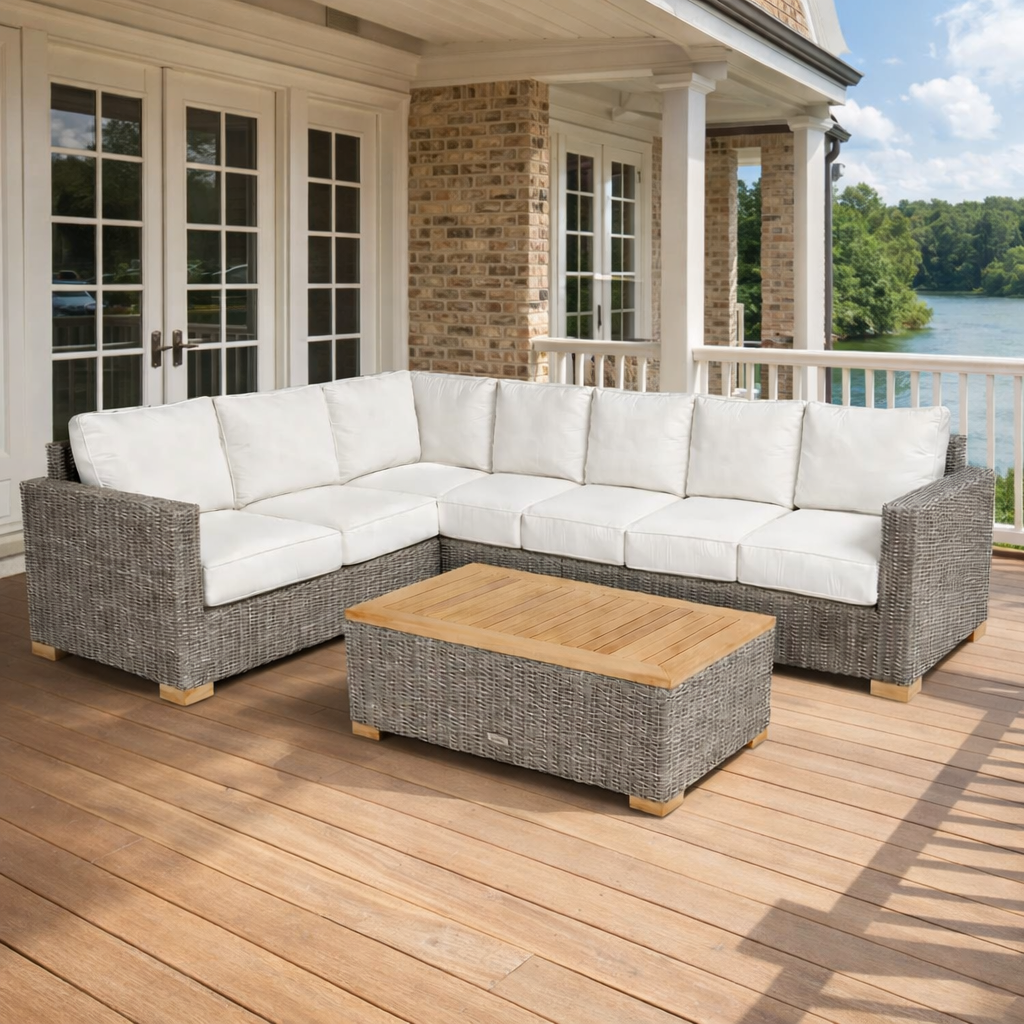 The right category depends less on ZIP code than on the relationship between the house, lanai, pool, and yard. We would normally furnish the highest-use area first, then add complementary pieces only after seeing how people move through the space.
A screened lanai is an excellent location for a multi-piece teak lounge set, sectional, sofa, or swivel chairs. These arrangements turn the protected portion of the patio into a comfortable conversation space and allow the uncovered deck to remain visually open.
Swivel chairs can be especially practical where people alternate between facing a conversation group, television, outdoor kitchen, or pool. Coffee and side tables complete the area without requiring every person to reach toward a central table.
For a resort-style backyard, chaise lounges are one of the first categories we would consider. Teak's natural appearance also works well beside stone, pavers, water, tropical landscaping, and the neutral architectural finishes common around Central Florida pools.
For larger decks, pairs or groups of loungers work well when separated by side tables. Avoid automatically lining every chaise directly against the pool edge; preserving generous walking space makes the area safer and easier to use during gatherings.
Where a grill or full outdoor kitchen is a major investment, give guests a comfortable place to eat nearby. A teak outdoor dining set for six or eight often strikes a useful balance for family use, while extendable configurations provide additional capacity without permanently dominating the patio.
Serving or buffet furniture can also be useful in larger outdoor kitchens because it separates food service from the dining table. That keeps the table available for people rather than turning half of it into a staging area.
Windermere and other lake-oriented communities call for a slightly different approach. When the landscape is the attraction, lower lounge profiles and carefully positioned dining groups can preserve sightlines better than filling the waterfront edge with tall furniture.
A bench or pair of chairs can also create a secondary destination away from the main patio. This is one of the situations where furnishing less—but furnishing deliberately—can produce a more luxurious result.
Townhomes, smaller courtyards, and compact covered patios benefit from furniture that can change roles. A four-person table, a loveseat with two chairs, or a small lounge grouping can offer more usable space than a large sectional.
The goal should be enough open floor area to move furniture for guests, cleaning, and storm preparation. In a small space, circulation is part of the furniture plan rather than leftover space around it.
Greater Orlando includes everything from established Winter Park homes and Windermere lakefront estates to newer Lake Nona construction, New Urbanist communities, Mediterranean-influenced properties, and contemporary pool homes. Teak works especially well in this varied market because the material can look traditional or modern depending on the furniture's lines, cushions, and surrounding finishes.
Traditional teak dining furniture, garden benches, and more architectural seating styles fit comfortably around brick, mature landscaping, established gardens, and older homes. Winter Park in particular includes a broad mix of established estates, ranch homes, Mediterranean influences, and newer designs, making overly rigid style rules less useful than choosing furniture that complements the individual property. :contentReference[oaicite:3]{index=3}
Newer homes often benefit from cleaner teak profiles, modular seating, sling elements, and restrained cushion colors. Natural wood can also soften spaces dominated by glass, light stucco, concrete, pavers, and screened structures without forcing the patio into a rustic aesthetic.
Windermere is particularly associated with upscale and lake-oriented residential living, while communities such as Lake Nona bring a newer, more contemporary character to the metro. :contentReference[oaicite:4]{index=4} In both situations, teak can provide warmth without competing visually with water, landscaping, or architecture.
For a resort-inspired result, repeat materials rather than repeating identical furniture. A teak dining table, teak-framed lounge seating, and teak chaise lounges can feel related while each zone remains suited to a different activity.
 A covered patio is not automatically a dry patio. Wind-driven rain, wet swimmers, cleaning water, and humid air can introduce moisture even beneath a roof. Deep shade then reduces the sun's ability to dry everything quickly.
Choose furniture that tolerates moisture, then arrange it so air can circulate around it. Premium teak helps with the material side of that equation because it is naturally moisture- and rot-resistant, but good placement still matters.
A teak frame can remain outdoors year-round, but cushions deserve different treatment. Many TeakHQ patio seating pieces include Sunbrella cushions, which are weather-resistant, fade-resistant, UV-resistant, and water-resistant. That does not mean constantly leaving cushions saturated is ideal.
After heavy rain, allow cushions to dry thoroughly. During severe weather, moving them to a protected location also prevents them from becoming loose objects and reduces unnecessary exposure.
A four-person household does not automatically need a four-person outdoor dining area. If relatives regularly visit, neighbors gather around the pool, or the home frequently hosts guests, everyday household size can underestimate the patio's real capacity requirement.
An extendable dining table solves this differently from simply buying the largest table that fits. You preserve open patio space most of the time while retaining additional seating when it is actually needed.
Furniture should not be selected by asking, "What can fit?" The better question is, "What can fit while people still move naturally?" This matters around pools, screen doors, outdoor kitchens, sliding doors, and paths connecting the backyard to the house.
Overfurnishing can also reduce airflow and complicate cleaning. In Orlando's humid environment, a little unused space is functional space.
Premium teak has a heavier, sturdier feel than lightweight outdoor furniture, but no ordinary patio layout should be considered hurricane preparation merely because the furniture feels substantial. Storm planning should be treated separately from daily furniture selection.
Bring in cushions and loose accessories, close or remove umbrellas, and follow appropriate severe-weather preparation for the property rather than relying on furniture weight alone.
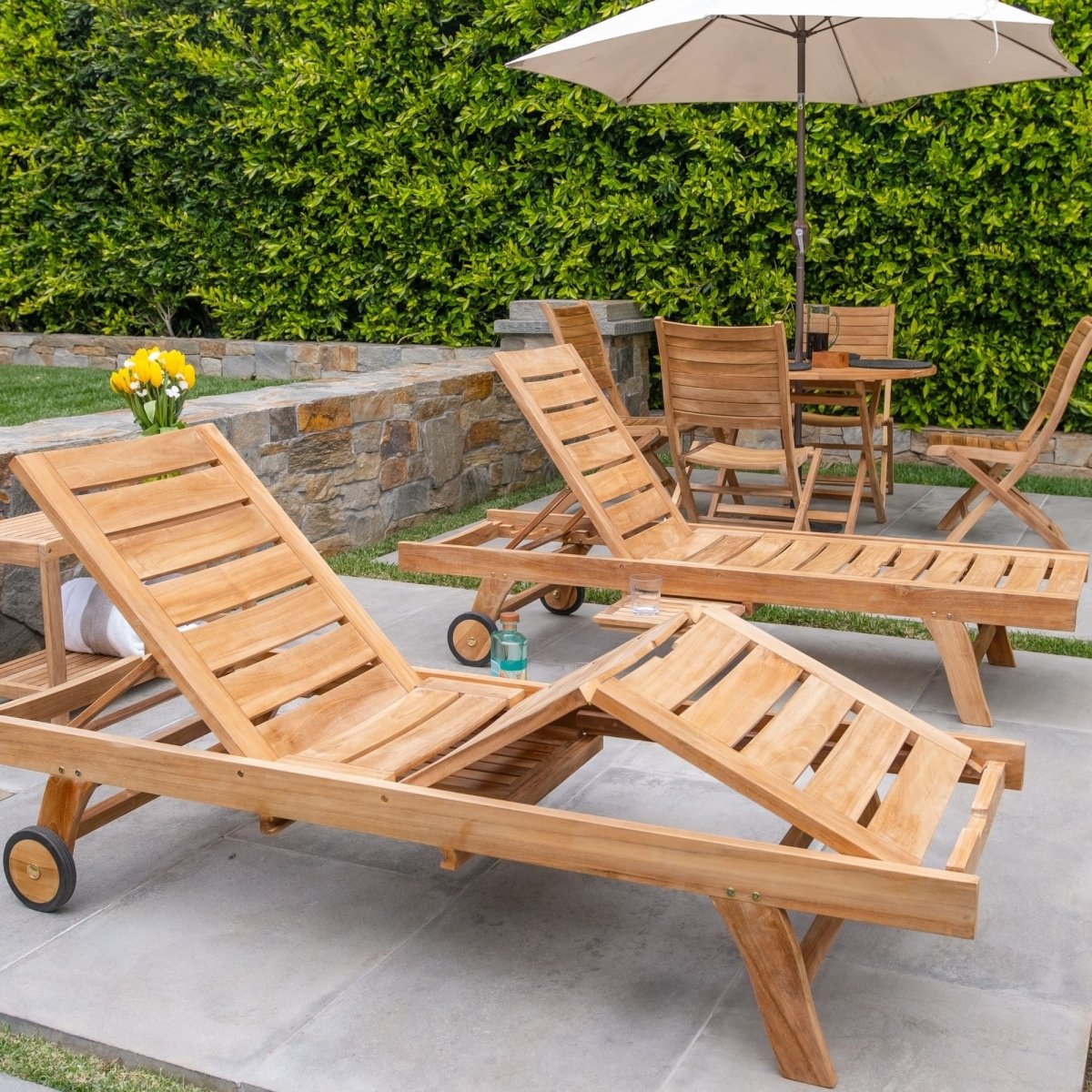 Grade A teak does not require an elaborate maintenance schedule to remain durable outdoors. Orlando ownership is mostly about keeping furniture clean, promoting drying, managing cushions intelligently, and deciding whether you prefer teak's original warm color or its natural silver-gray patina.
Rather than following an arbitrary monthly schedule, inspect the furniture and clean it when pollen, dirt, organic debris, food residue, or other buildup becomes noticeable. Poolside pieces and furniture beneath trees may need attention more often than furniture protected inside a screened enclosure.
Pay particular attention to horizontal surfaces, joints, undersides, and areas close to landscaping where moisture and debris can linger.
Teak itself is naturally resistant to moisture and rot, but humidity still influences the cleanliness of the entire patio environment. Avoid leaving damp towels or wet cushions sitting against furniture for extended periods, and allow air to move beneath and behind larger pieces.
This is particularly useful in shaded screen rooms. The memorable Orlando maintenance rule is simple: shade solves heat, but airflow solves drying. A well-designed lanai should account for both.
Untreated teak will naturally weather to a silver-gray patina. Homeowners who like that appearance can let the process happen naturally without applying an artificial stain for durability.
If you prefer the original teak color, appropriate teak care products can be used as part of an appearance-maintenance routine. This is primarily an aesthetic choice rather than a requirement for the wood to function outdoors.
Protective covers are optional for teak rather than required. If you use them, especially during Orlando's humid and rainy periods, make sure the furniture is reasonably dry before covering it and follow the cover manufacturer's ventilation guidance.
A cover that repeatedly traps damp conditions can defeat the purpose of covering the furniture in the first place. For some screened or deeply covered patios, leaving teak uncovered and allowing unrestricted airflow may be the simpler ownership approach.
Routine weather exposure and tropical-storm preparation are different issues. Teak is designed for year-round outdoor use, but loose cushions, umbrellas, serving accessories, and similar items should be moved to a protected location when major storms threaten.
Homeowners with seasonal or second homes should decide where those items will go before storm season rather than improvising when a system approaches.
The right outdoor furniture for Orlando should make the patio easier to use through heat, humidity, rain, pool days, family dinners, and the quieter dry-season months—not create another maintenance project. Explore TeakHQ's premium Grade A teak collections by starting with the area you use most, then build complementary dining, lounge, and poolside zones around how your household actually lives outdoors.
Materials should tolerate repeated moisture exposure, heat, and year-round outdoor conditions. Premium Grade A teak is a strong option because its natural oils and dense grain make it resistant to moisture, rot, insects, and warping. High-quality aluminum and some synthetic outdoor materials can also be practical depending on the homeowner's priorities.
Yes. TeakHQ's Grade A teak furniture is designed for year-round outdoor use and can withstand rain, sun exposure, and temperature fluctuations. Covers are optional rather than required for durability.
Yes. Teak's moisture resistance and year-round outdoor durability make it well suited to poolside environments. Teak chaise lounges, side tables, and lounge seating are particularly useful around Orlando pools.
Deep seating, sectionals, sofas, loveseats, swivel chairs, coffee tables, and dining furniture all work well depending on the enclosure's size. Preserve clear walking routes and some space around larger pieces so the lanai does not feel crowded and moisture can dry more readily.
No. Premium Grade A teak does not require sealing for durability. It can be left untreated and allowed to develop a silver-gray patina, or homeowners can use appropriate teak-care products if they prefer to maintain more of the original color.
Keep the patio clean, remove organic debris, allow wet cushions to dry, and maintain airflow around furniture—especially in shaded lanais. Teak is naturally resistant to moisture and rot, but the surrounding cushions, debris, and patio surfaces still benefit from good drying conditions.
Teak furniture does not require covers for durability. If you choose to cover it, avoid covering furniture while it is very wet and use the cover according to its ventilation instructions so moisture is not unnecessarily trapped underneath.
Base capacity on the number of people you regularly entertain, not only household size. For families that normally need six seats but periodically host larger gatherings, an extendable teak table can preserve patio space while providing extra capacity when needed.
Moving cushions and other loose accessories to a protected location is sensible when severe thunderstorms or tropical weather threaten. Many TeakHQ lounge pieces use Sunbrella cushions that are weather-, fade-, UV-, and water-resistant, but those properties do not eliminate the value of sensible storm preparation.
Premium Grade A teak furniture is a long-term purchase designed to last for decades rather than seasons. Its higher upfront cost should therefore be evaluated against longevity, outdoor durability, and maintenance flexibility rather than compared only with the purchase price of short-lived patio furniture.


