
FREE SHIPPING
within mainland USA
within mainland USA
Home ▸ Teak Outdoor Furniture ▸ By Location ▸ Palm Beach, California
Outdoor furniture in Palm Beach lives in a demanding but highly usable environment: strong sun, humid air, seasonal downpours, coastal exposure, and outdoor spaces designed to function much of the year. From oceanfront terraces and Intracoastal estates to shaded loggias and private pool courtyards, furniture needs to look appropriate beside refined architecture while tolerating frequent exposure to moisture and weather. Premium Grade A teak is especially well suited to that combination, making it worth considering alongside other high-end outdoor materials.
Palm Beach is not simply a warm-weather furniture market. Its combination of Atlantic exposure, humid air, frequent warm-season rain, strong sunshine, pools, irrigated landscaping, and long periods of outdoor use creates a different ownership environment than a dry inland climate. The most important question is not whether furniture can survive an occasional rainstorm. It is how the material behaves when moisture, sun, salt, organic debris, and repeated wet-dry cycles become part of normal outdoor life.
In a drier climate, homeowners may focus primarily on fading, heat, and UV exposure. In Palm Beach, moisture deserves equal attention. Furniture may be rained on, exposed to humid overnight air, surrounded by irrigated landscaping, or positioned on shaded patios where surfaces dry more slowly. Materials and construction that dislike repeated moisture exposure can turn a beautiful outdoor room into a maintenance project.
This is one reason material quality matters more here than simply buying something labeled “outdoor.” Premium materials designed for repeated exterior exposure make more sense for spaces that are furnished as true extensions of the home rather than used only a few months each year.
An oceanfront terrace and an inland courtyard are not the same furniture environment, even when they are only a short drive apart. Homes closest to the Atlantic can experience more salt-laden air and occasional salt spray. Intracoastal properties also live in a distinctly marine setting, while properties farther west may deal much less with direct salt exposure.
The practical lesson is to evaluate the actual placement of the furniture rather than buying according to the words “South Florida.” For waterfront spaces, we would place greater emphasis on naturally weather-resistant materials and straightforward cleaning. For more protected inland patios, salt becomes less important while humidity, rainfall, sun, and poolside moisture remain major considerations.
A sudden downpour is obvious. What homeowners sometimes overlook is everything that happens afterward. Water can remain beneath cushions, around furniture feet, in shaded corners, or among leaves and landscaping debris. Covered loggias reduce direct rainfall but can also receive less sun and airflow, so damp areas may take longer to dry.
Good outdoor-space planning therefore includes drainage and airflow. Avoid placing furniture where irrigation repeatedly hits it, allow wet cushions to dry properly, and keep leaves or organic debris from collecting against furniture. Those habits matter regardless of which premium material you choose.
Palm Beach sun favors materials made for prolonged exterior use, but tropical storms introduce a separate issue: securing the entire outdoor room. No premium furniture material should be treated as hurricane protection. When significant winds threaten, cushions, umbrellas, serving pieces, and movable furniture should be secured or moved according to the homeowner's storm plan.
Heavier furniture can feel reassuring during normal breezy conditions, but weight should never become an excuse to leave a patio unprepared for severe weather. Think of weather resistance and storm preparation as two different decisions.
Once Palm Beach's actual conditions are considered, premium Grade A teak becomes a particularly logical material. Its advantage is not that it avoids weather altogether. The advantage is that real Grade A teak is naturally suited to prolonged outdoor exposure without depending on paint or an artificial stain for durability.
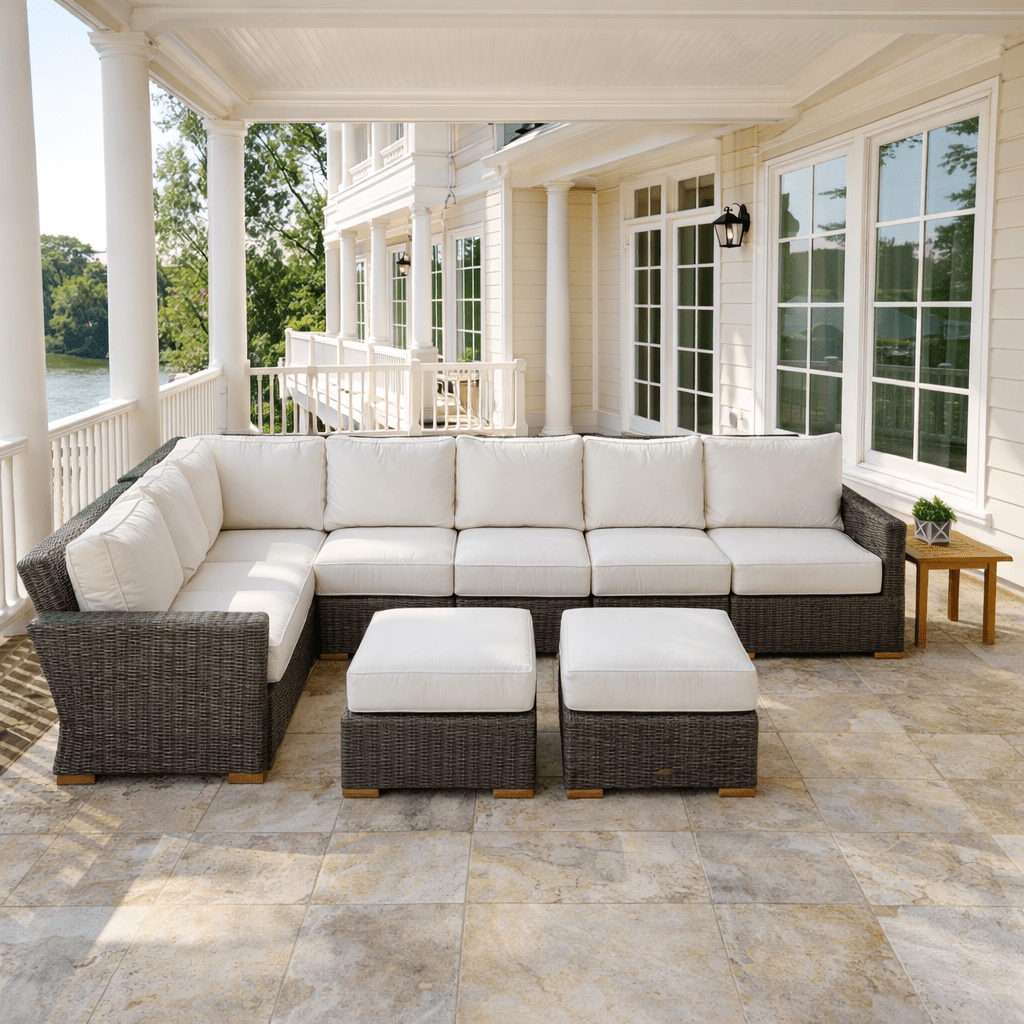 Grade A teak has a dense grain structure and naturally high oil content. Those properties help the wood resist moisture, rotting, insects, and warping—useful characteristics when furniture repeatedly encounters humid air, rain, poolside splashes, and changing weather.
That does not mean teak should be ignored simply because it tolerates outdoor conditions well. Keeping the furniture clean and allowing wet areas to dry is still sensible. The important distinction is that weather resistance is inherent to the material rather than dependent on keeping a painted coating intact.
Teak is designed for year-round outdoor use and can withstand sun exposure and temperature fluctuations. Untreated teak will gradually weather from its original warm golden-brown appearance to a silver-gray patina. That change is cosmetic rather than a sign that the furniture must be replaced.
This creates an unusually useful choice for Palm Beach homeowners. On a crisp contemporary terrace, silvered teak can provide a subdued natural contrast to stone, stucco, glass, and water. On a more traditional Mediterranean or Regency-inspired property, owners may prefer to maintain more of the original warm teak color with optional care products. The decision can be based on the desired appearance rather than a requirement to preserve the wood's basic outdoor durability.
Humidity and repeated wet-dry cycles can be difficult on lesser outdoor woods. Premium Grade A teak is valued partly because its dense structure and natural properties make it resistant to warping and suitable for changing exterior conditions. That is especially relevant for substantial pieces such as dining tables, sofas, sectionals, benches, and loungers intended to remain part of the landscape for years.
Teak also has a heavier, more architectural feel than lightweight furniture. On large Palm Beach terraces, that visual weight can be an advantage: the furniture reads as part of the property's design rather than temporary equipment placed around a pool.
One of teak's strongest practical advantages in this market is flexibility. It can be left untreated and allowed to turn silver-gray, or homeowners can use teak care products when they prefer to retain more of the original color. Paint and artificial stain are not required for durability.
For vacation homes and second residences, that flexibility can be particularly valuable. Owners do not have to adopt a complicated refinishing schedule merely to keep genuine Grade A teak suitable for exterior use. Regular cleaning and sensible management of cushions, debris, and salt exposure are usually more important than trying to make natural teak look permanently new.
Premium teak costs more upfront than many mass-market outdoor materials, so it should not be presented as the answer for every buyer. If the goal is simply to furnish a temporary patio for the lowest initial cost, other materials may make more sense.
For a homeowner investing in a permanent outdoor room, however, the calculation changes. Quality teak furniture is capable of lasting for decades rather than merely a few seasons. When the patio itself includes quality stonework, mature landscaping, a pool, outdoor kitchen, or carefully designed architecture, selecting furniture on the same long-term horizon can be more rational than repeatedly replacing lower-cost sets.
| Palm Beach Challenge | Why Premium Grade A Teak Performs Well |
|---|---|
| High humidity | Natural oils and dense grain help resist moisture, rot, and warping. |
| Seasonal downpours | Designed for year-round exterior use and repeated rain exposure. |
| Strong sunshine | Suitable for sun exposure and naturally weathers to a silver-gray patina. |
| Coastal conditions | Naturally weather-resistant wood does not depend on painted finishes for durability. |
| Poolside moisture | Moisture-resistant properties suit frequently wet outdoor environments. |
| Wet-dry cycles | Dense Grade A teak resists warping and handles temperature fluctuations. |
| Insects and decay | Teak's natural properties help resist insects and rotting. |
| Long outdoor season | Built for year-round outdoor use and long-term ownership. |
We would begin with the property, not the furniture catalog. A Palm Beach outdoor space may have a covered loggia, sunny pool deck, garden courtyard, ocean-facing terrace, Intracoastal view, or several of those spaces at once. The most successful projects give each area a clear purpose instead of spreading unrelated chairs and tables around every available surface.
For many larger Palm Beach homes, we would prioritize the covered loggia or principal terrace first. It often becomes the bridge between the air-conditioned interior and the sunnier pool deck. A comfortable lounge arrangement belongs here: sofas, club chairs, swivel chairs, or a cohesive teak lounge set arranged around a coffee table.
The goal is not simply to maximize seating. Leave clear routes from the house to the pool, outdoor kitchen, garden, and waterfront. A beautiful sectional that forces guests to squeeze around its corners is the wrong sectional, regardless of how much space the patio appears to have on paper.
Palm Beach lends itself to outdoor meals for much of the year, so we would usually treat dining as a permanent function rather than an occasional add-on. Browse teak outdoor dining furniture according to the number of people you actually host, not merely the number living in the house.
A couple who regularly entertains children, grandchildren, or winter guests may get more value from a six-, eight-, or ten-person table than a visually smaller set. If everyday meals are intimate but guest counts fluctuate, an extendable table can preserve circulation most of the time while providing additional capacity when needed.
A common design mistake is asking the covered-patio furniture to serve the pool as well. Pool users want somewhere to recline in the sun, set down a drink, dry off, and move easily between water and seating. A dedicated row or paired arrangement of teak chaise loungers with small side tables works better than moving dining chairs around whenever someone swims.
Position loungers according to the actual sun path and walking routes rather than simply lining them up against the pool edge. The most attractive location in a photograph is not always the most comfortable location at three o'clock on a July afternoon.
Waterfront properties create an interesting planning problem: people naturally want every chair facing the view. That can produce a row of seats rather than a usable conversation area. We would normally compromise—angle seating so several positions enjoy the ocean or Intracoastal view while the furniture still encourages people to face one another.
Swivel seating can be particularly useful for this reason. Guests can turn toward the water, the pool, or the conversation without dragging a chair across stone or tile. On a secluded garden courtyard, by contrast, a fixed sofa-and-chair arrangement may feel more intimate and architectural.
Start with the space that defines how you use the property. Pool-focused homes will often benefit most from chaise loungers and lounge seating; homeowners who entertain frequently may want to establish the dining area first; and large covered terraces can justify a sectional or multi-piece conversation set. Once the primary zone is right, add smaller pieces such as side tables, serving furniture, and storage based on how people actually move through the property.
Palm Beach outdoor spaces often function more like rooms than seasonal patios. The climate allows homeowners to move dining, conversation, reading, entertaining, and poolside relaxation outside through much of the year, while covered architecture and shade make outdoor areas more comfortable during hotter periods. That makes furniture planning less about purchasing a single “patio set” and more about creating several related zones.
In many parts of the country, winter means storing patio furniture. Palm Beach reverses that expectation. Cooler, less humid periods can be among the most enjoyable times to use terraces, courtyards, pools, and outdoor dining areas. This is also when seasonal residents and visitors can increase the number of people using the home.
That has an important furniture implication: do not size the principal entertaining area only for the quietest summer week. Think about who is actually present when the outdoor space is most enjoyable. Extra dining capacity and a conversation area that accommodates guests may be worth more than filling the property with several undersized arrangements.
In a Palm Beach home with a pool, loungers are not decorative accessories. They are functional furniture. People need an appropriate place to sun, read, dry after swimming, supervise children, or simply sit near the water without occupying the main dining or conversation seating.
Pairs of loungers work well for smaller pools and private retreats. Larger pool decks often benefit from four or more arranged with enough space for side tables and circulation. If the property has a pool house or cabana, think of the entire area as a second outdoor room rather than a perimeter to decorate.
A covered loggia often becomes one of the most-used spaces because it offers shade while maintaining a direct connection to the landscape. We would generally put the deepest, most comfortable lounge seating here rather than in the most exposed portion of the patio.
This is also a good place to be intentional with cushions. Most TeakHQ lounge seating includes Sunbrella cushions, although individual products vary. Sunbrella is weather-, fade-, UV-, and water-resistant, but that still does not make a wet cushion immune to sensible care. Give damp cushions an opportunity to dry and protect or store them when severe weather is expected.
A successful Palm Beach gathering may begin around the pool, move to the dining table, and end in a shaded conversation area. Furniture works best when those zones support one another. Side tables allow guests to set down drinks without returning to the dining table; serving furniture keeps food and glassware out of traffic paths; swivel chairs connect conversations to views; and a nearby storage area simplifies cushion management.
That layered approach is one of the most useful ways to think about a high-end outdoor space: furnish for the sequence of an evening, not just for how the patio looks when empty.
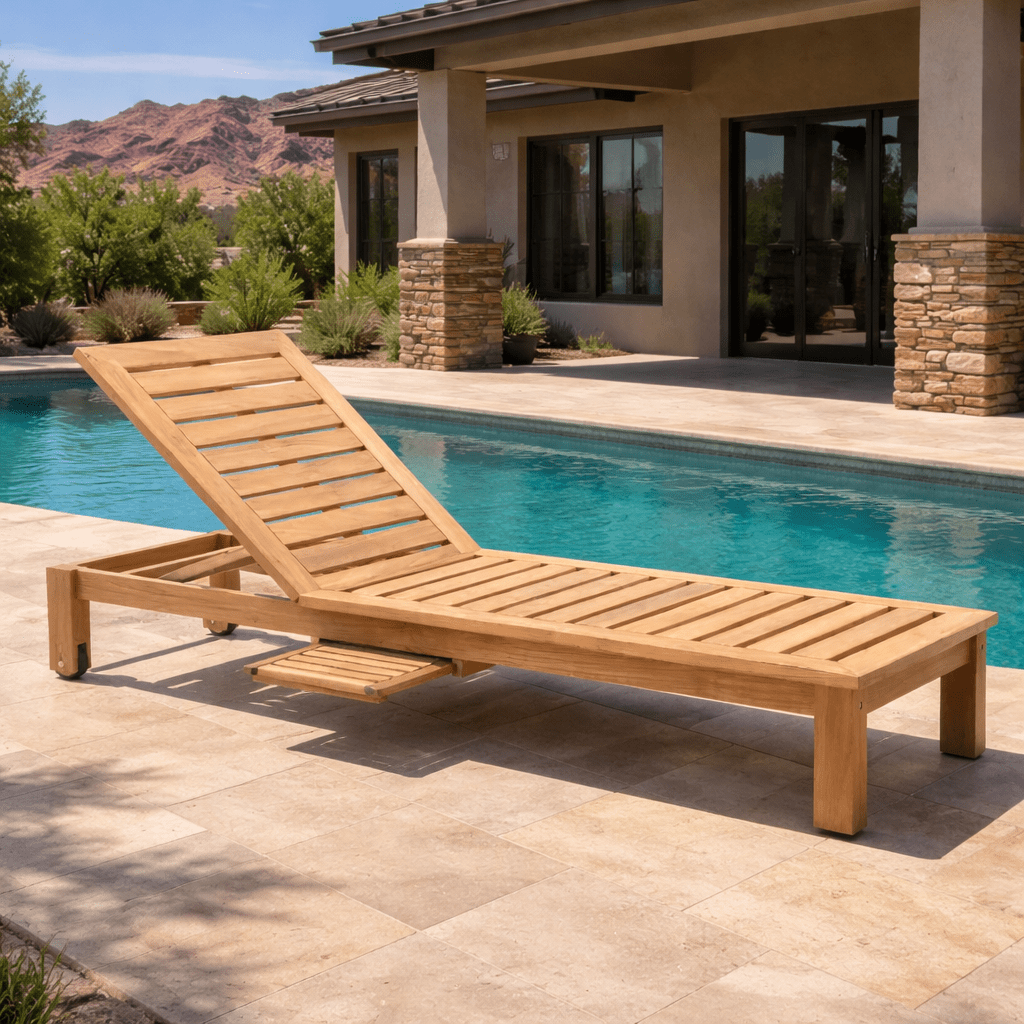 The right furniture depends less on a Palm Beach ZIP code than on where the piece will sit and what happens around it. A shaded courtyard, sunny pool deck, covered loggia, and waterfront terrace may all belong to the same house but require different configurations. Teak's versatility makes it possible to keep a consistent material palette while changing the furniture type from zone to zone.
For a pool-centered home, we would usually make chaise loungers the first dedicated purchase after establishing any primary dining or covered seating area. Pair each one or two loungers with a small side table so drinks, books, sunglasses, and phones have somewhere to go without cluttering the ground.
Do not automatically fill every linear foot along the water. A well-spaced group of four substantial loungers often looks more considered than a tightly packed row of smaller pieces. The remaining open space improves circulation and gives the pool terrace the resort-like simplicity many Palm Beach properties are designed around.
A covered terrace is ideal for sofas, club chairs, and teak sectionals. Large sectionals make sense when the area regularly hosts a group and the footprint supports them. A sofa plus movable lounge chairs is often a better choice when the room needs greater flexibility.
For expansive spaces, resist the impulse to place all seating against the perimeter. Bringing furniture inward around a coffee table makes the outdoor room feel intentional and improves conversation. Leave enough space behind it to move naturally between doors, dining areas, and the pool.
Ocean and Intracoastal views change how people use a seating area. Teak swivel chairs allow the same seat to participate in conversation and then turn toward the water. They can be especially useful opposite a sofa or at the ends of a larger lounge arrangement.
This is one of the rare cases where the view should affect the furniture mechanism, not simply its placement. If guests constantly drag fixed chairs around to see the sunset, the layout is telling you what it needed from the beginning.
For households that entertain frequently, six- and eight-person sets are natural starting points, while larger estates may comfortably support ten or more. An extendable table can be a particularly practical compromise when the guest count changes considerably between ordinary days and holiday visits.
Keep dining near the kitchen, outdoor kitchen, or service route whenever possible. The best view on the property can be tempting, but carrying plates across a lounge area or around the pool every evening quickly makes a beautiful layout inconvenient.
One of the easiest upgrades to an outdoor room is simply adding enough teak side and end tables. Large properties sometimes have impressive sofas and loungers but surprisingly few convenient surfaces. Guests then place drinks on the ground, move coffee tables around, or leave personal items on dining tables.
Think in terms of reach. A side surface should be available from the seats people use most, especially around a pool where phones, drinks, towels, and sunglasses accumulate quickly.
Palm Beach has an unusually strong architectural identity, but it is not a single style. Mediterranean Revival residences, Regency-influenced homes, traditional estates, tropical gardens, contemporary renovations, and newer waterfront properties all coexist. That variety is one reason teak works well aesthetically: natural wood can bridge formal architecture and relaxed outdoor living without requiring the entire property to adopt a “tropical furniture” theme.
Arches, stucco, tile roofs, courtyards, loggias, stone paving, and lush planting create a substantial architectural backdrop. Furniture that is too visually lightweight can feel disconnected from such spaces. Teak's natural warmth and heavier presence can complement the architecture without trying to imitate it.
For a traditional home, classic dining chairs, substantial loungers, and straightforward lounge silhouettes can sit comfortably beside stone and stucco. There is no requirement to choose ornate furniture simply because the architecture is historic or Mediterranean-inspired.
More formal properties benefit from restraint. Symmetry, repeated furniture forms, paired loungers, matched club chairs, and carefully positioned benches generally work better than filling the garden with many unrelated pieces.
A useful design principle here is to let the landscape provide much of the visual detail. Teak furniture can remain relatively simple while hedges, palms, flowering plants, stone, water, and architecture create the Palm Beach character around it.
Modern architecture does not automatically require aluminum furniture. Aluminum can be an excellent choice when a lighter, explicitly modern appearance is the goal. Teak offers a different result: natural warmth against expanses of glass, pale stone, white walls, and water.
Clean-lined teak sectionals, low coffee tables, sling or rope seating, and simple loungers can give contemporary spaces an organic counterpoint without making them feel rustic. The decision comes down to whether the homeowner wants the furniture to reinforce the architecture's crispness or soften it slightly with natural material.
Homeowners should decide early whether they prefer teak's original golden-brown appearance or its eventual silver-gray patina. Both can work beautifully in Palm Beach. Silvered teak tends to blend naturally with pale stone and coastal palettes, while warmer teak can stand out against white stucco, blue-and-white fabrics, and green landscaping.
That choice can become part of the design rather than being treated as a maintenance problem. The best answer is the appearance you want to live with, not whichever version looks newest.
 A label such as “water resistant” may answer only part of the question. Palm Beach furniture also encounters humidity, damp mornings, poolside moisture, irrigation, and shaded spaces that may dry more slowly.
Choose materials genuinely intended for prolonged outdoor exposure and give the layout enough airflow to dry after wet weather. Grade A teak's natural moisture and rot resistance makes it particularly suitable for this environment, but good placement still matters.
An Atlantic-facing home has different exposure than a sheltered courtyard farther inland. Furniture near salt-laden coastal air deserves more frequent rinsing and cleaning than a protected piece that rarely encounters salt.
Buy for the micro-location within your property. A dining table beneath a deep loggia and a lounger near an exposed waterfront pool should not automatically have identical care routines just because they share the same address.
Large outdoor areas tempt homeowners to buy large amounts of furniture. Yet a pool deck needs generous circulation for wet feet, towels, serving, maintenance, and movement between the house and water.
Choose fewer appropriately scaled pieces before adding more. Substantial teak loungers, lounge groups, and tables can provide the visual weight a luxury property needs without turning every open section of paving into another seating arrangement.
A two-person household can still need an eight-person dining table. In Palm Beach, winter visitors, family stays, holiday gatherings, and entertaining can change the practical capacity a home needs.
Rather than asking “How many people live here?” ask “How many people use this outdoor room when the house is full?” Extendable dining furniture can be a useful solution when those two numbers are very different.
Teak is designed for year-round outdoor use and can withstand ordinary rain, sun, and changing temperatures. That does not mean outdoor furniture should simply be ignored when a tropical storm or hurricane threatens.
Create a severe-weather plan before the forecast becomes urgent. Know where cushions, umbrellas, accessories, and movable pieces will go and how larger furniture will be secured according to the property's storm preparations.
The ideal sunny pool location in winter may feel very different during the hotter part of the year. Furniture placement and shade should be planned together. Covered architecture, umbrellas, and natural shade can affect which seats people actually use.
Teak handles sun exposure well, but furniture durability and human comfort are separate questions. A chair can tolerate a location that your guests do not enjoy sitting in at midday.
 Palm Beach does not require an elaborate teak-maintenance ritual. The most useful routine is based on the property's exposure: keep teak reasonably clean, prevent organic debris from sitting against it for long periods, address salt when relevant, allow wet areas to dry, and decide whether you want the wood to weather naturally or retain more of its original color.
There is no universal cleaning calendar that fits every Palm Beach property. An uncovered oceanfront lounger may collect salt and airborne residue more quickly than a dining table beneath a sheltered inland loggia. Inspect the furniture periodically and clean when dirt, pollen, salt residue, or organic material begins to accumulate.
A gentle routine is generally preferable to treating teak like a surface that must constantly be refinished. Teak's outdoor durability does not depend on maintaining a decorative coating.
For homes exposed to salt air or spray, occasional freshwater rinsing and normal cleaning help prevent residue from accumulating on teak, hardware, cushions, and adjoining surfaces. This is especially relevant to oceanfront properties where direct exposure is greater.
Royal Teak and Anderson Teak products use stainless-steel hardware, while Verandis Teak uses brass hardware. Whatever the furniture style, coastal homeowners should include hardware in routine visual inspections rather than focusing only on the wood.
Teak is naturally moisture and rot resistant, but good housekeeping still improves the outdoor environment. Remove leaves and debris that can trap moisture. Avoid repeated irrigation spray when the furniture can simply be repositioned. Let cushions dry rather than leaving them wet against the frame for extended periods.
In deeply shaded loggias, garden corners, or areas surrounded by dense landscaping, airflow may matter more than additional protection from rain. A covered location is not automatically a dry location.
Untreated teak naturally develops a silver-gray patina. If you like that look, you can allow the weathering process to occur. If you prefer more of teak's original golden-brown appearance, optional teak care products can help you maintain the desired appearance.
Do not assume gray teak has “gone bad.” Patina is a normal aesthetic change. A homeowner who understands that before purchasing is much less likely to perform unnecessary maintenance later.
Most TeakHQ patio lounge seating includes Sunbrella cushions, though not every product does. Sunbrella fabric is weather-, fade-, UV-, and water-resistant. Even so, cushions should be allowed to dry after becoming wet and should be protected or stored when severe storms approach.
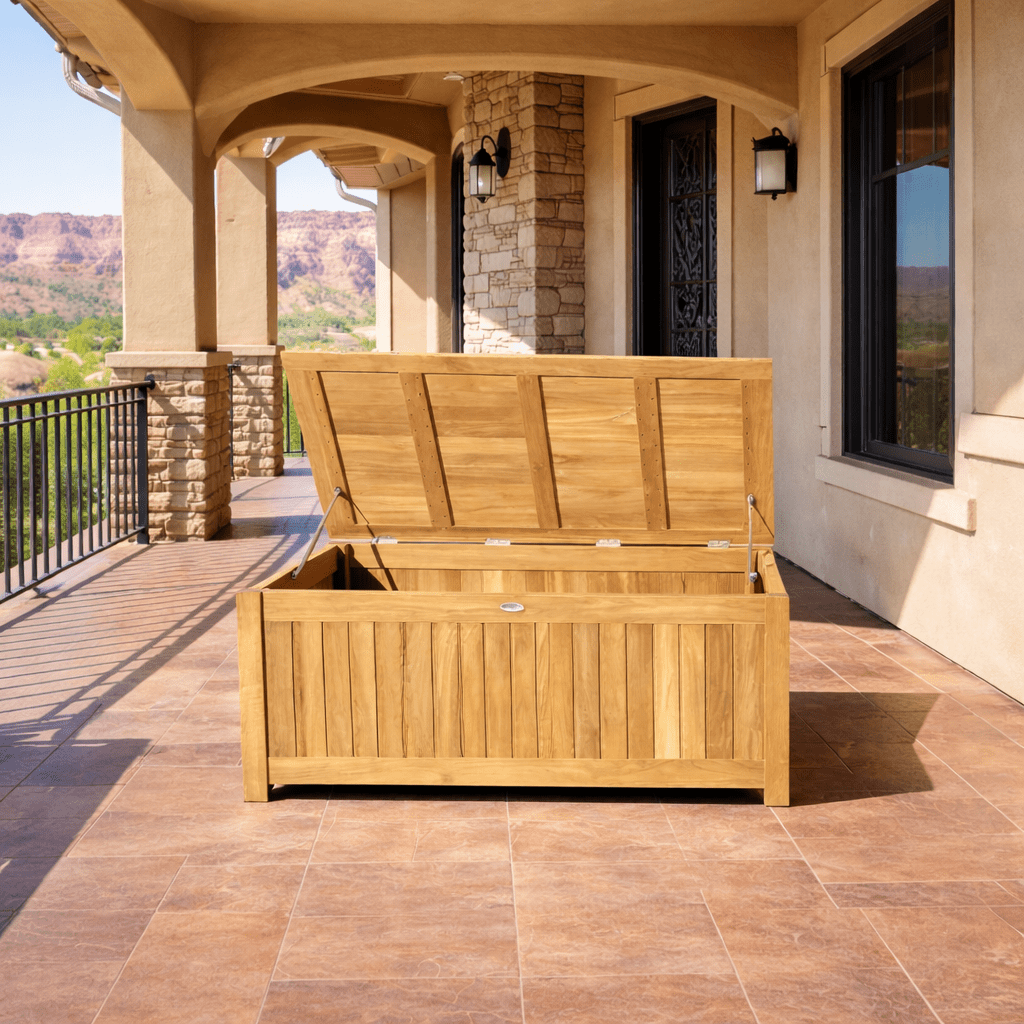
A deck box or sheltered storage area can simplify this routine. For seasonal residents, establish the storage plan before leaving the property for an extended period rather than expecting a property manager to improvise after a storm warning.
Unlike homeowners in cold climates, Palm Beach residents generally do not need a winter storage strategy simply because temperatures fall. The more important seasonal question is severe-weather preparation.
Before tropical weather, follow local guidance and the property's storm plan. Secure or relocate furniture, cushions, umbrellas, and accessories as appropriate. Teak's ability to remain outdoors year-round during normal weather should never be interpreted as a reason to ignore hurricane preparation.
The best Palm Beach outdoor furniture plan begins with how the property is actually used: where people eat, where they gather in the shade, how the pool functions, where the views are, and how many guests arrive during the busiest season. Premium Grade A teak fits this market especially well because it combines natural weather resistance, long-term durability, substantial construction, and flexible maintenance with a material that complements traditional, coastal, and contemporary homes. Start with the outdoor zone that matters most, furnish it properly, and build the rest of the space around it.
For premium homes, Grade A teak, quality aluminum, and other purpose-built exterior materials can all be appropriate. Teak is especially compelling in Palm Beach because its natural oils and dense grain help it resist moisture, rot, insects, and warping while handling year-round rain and sun exposure.
Yes. Grade A teak's natural oils and dense grain structure make it resistant to moisture and rotting, which makes it well suited to Palm Beach's humid environment. Good airflow and routine cleaning are still recommended, particularly in shaded or frequently wet locations.
Prioritize materials designed for prolonged exterior exposure and plan for more frequent cleaning where salt air or spray is present. Teak loungers, dining furniture, and lounge seating work particularly well because teak does not require paint or artificial stain for outdoor durability.
A sectional works well on a large covered terrace where you regularly seat a group. Sofas paired with movable club or swivel chairs are usually more flexible when the space needs to adapt between everyday use and entertaining.
Yes. Grade A teak is designed for year-round outdoor use and can withstand rain, sun, and normal temperature fluctuations. Severe tropical weather is different: furniture and accessories should still be secured or relocated as appropriate when storms or hurricanes threaten.
No. Teak does not require sealant, oil, paint, or artificial stain for durability. You may leave it untreated and allow it to weather naturally, or use optional teak care products if you prefer to maintain more of its original color.
Yes. Unfinished teak naturally weathers toward a silver-gray patina when exposed outdoors. This is a normal appearance change rather than an indication that the wood has lost its outdoor durability.
There is no single schedule that fits every property. Oceanfront furniture may need attention more often because of salt residue, while sheltered pieces may remain clean longer. Rinse or clean when salt, dirt, pollen, or organic debris becomes noticeable rather than following an arbitrary calendar.
Base the number on usable deck space and actual household or guest needs. Four well-spaced chaise loungers with side tables can be more functional and attractive than squeezing additional loungers around the pool and compromising circulation.
Not in every respect. Aluminum is lighter and often provides a more explicitly modern appearance, while poly lumber is synthetic and requires relatively little maintenance. Teak offers real natural wood, a warmer and more substantial feel, natural weather resistance, and decades-long longevity, making it particularly attractive for homeowners prioritizing authenticity and long-term value.


