
FREE SHIPPING
within mainland USA
within mainland USA
Home ▸ Teak Outdoor Furniture ▸ By Location ▸ Paradise Valley, Arizona
Paradise Valley outdoor spaces combine intense desert sun, prolonged summer heat, dramatic mountain settings, pools, and generously scaled patios that are often used as true extensions of the home. Furniture here needs to look appropriate beside refined architecture while also handling sun exposure, dry conditions, seasonal monsoon weather, and frequent poolside use. Aluminum, high-quality synthetics, and premium hardwoods can all work in the desert, but Grade A teak is particularly compelling for homeowners who want a substantial natural material with flexible maintenance and long-term outdoor durability.

Paradise Valley asks more of outdoor furniture than the mild, shaded conditions many patio collections seem designed around. The most important issues are not winter cold or persistent humidity; they are prolonged heat, strong sun exposure, very dry air, dust, poolside conditions, and abrupt weather changes during the summer monsoon season. Those factors affect surface temperature, color, maintenance, cushions, hardware, placement, and how comfortable a space remains at different times of day.
In Paradise Valley, the first question we would ask is not simply, “Can this furniture stay outside?” It is, “Where will it sit at four o'clock on a July afternoon?” A chair under a deep ramada has a very different job from one positioned beside an exposed pool. Strong sun can accelerate fading in fabrics and finishes, while metal components can become uncomfortable to touch when left fully exposed.
This is one reason material choice and furniture placement need to be considered together. Aluminum remains a legitimate premium option, particularly for contemporary spaces, but its exposed surfaces can feel hotter in direct sun. Synthetic materials can simplify upkeep, although some homeowners prefer the more organic appearance and substantial feel of natural wood. Grade A teak provides another path: a dense natural hardwood designed for year-round outdoor use that does not rely on paint or an artificial stain for durability.
Arizona's low humidity can make the desert seem like an easy furniture environment, but dryness does not eliminate weather exposure. Furniture still cycles through intense daytime heating and cooler nights, occasional rain, irrigation overspray, wet swimsuits, pool water, and periodic storms. Materials that perform well here need to tolerate repeated changes rather than simply resist moisture.
Premium Grade A teak is naturally high in oils and has a dense grain structure. Those characteristics help it resist moisture, rotting, insects, and warping while accommodating normal outdoor temperature fluctuations. For a Paradise Valley homeowner, that means the same material can work across a covered dining patio, exposed pool deck, or secondary garden seating area without requiring a different finishing system for each zone.
Most of the year may feel predictably dry, but summer thunderstorms can bring a very different set of conditions in a short period: wind, blowing dust, rain, and organic debris. This matters especially for cushions, umbrellas, lightweight accessories, and furniture positioned where roof runoff or landscape drainage concentrates water.
Teak furniture itself is designed to withstand rain and year-round outdoor exposure, but cushions and accessories deserve more active management. Sunbrella cushions used on many TeakHQ patio-seating pieces are weather-, fade-, UV-, and water-resistant, yet keeping cushions dry and clean when practical still improves the ownership experience. Before storm season, it is also worth checking that umbrellas and loose accessories can be secured or moved quickly.
A Paradise Valley pool patio is not simply another dry-desert location. Furniture near the water experiences wet towels, splashes, damp cushions, sunscreen residue, and more frequent cleaning than furniture on a sheltered courtyard. The surrounding hardscape may also remain intensely hot even when the furniture itself performs well.
For poolside areas, prioritize furniture that can live outdoors without a complicated finish schedule, then plan shade and circulation separately. Teak chaise loungers are especially practical around pools because teak's durability does not depend on a painted surface, while movable side tables can keep drinks and personal items off hot paving.
Teak earns its place in Paradise Valley less because of one dramatic desert-specific advantage and more because several of its natural properties line up well with the way premium outdoor spaces are actually used here. It tolerates outdoor exposure, provides the visual warmth many stone-and-stucco landscapes need, and gives homeowners a choice between maintaining a golden-brown appearance or allowing the wood to weather naturally.
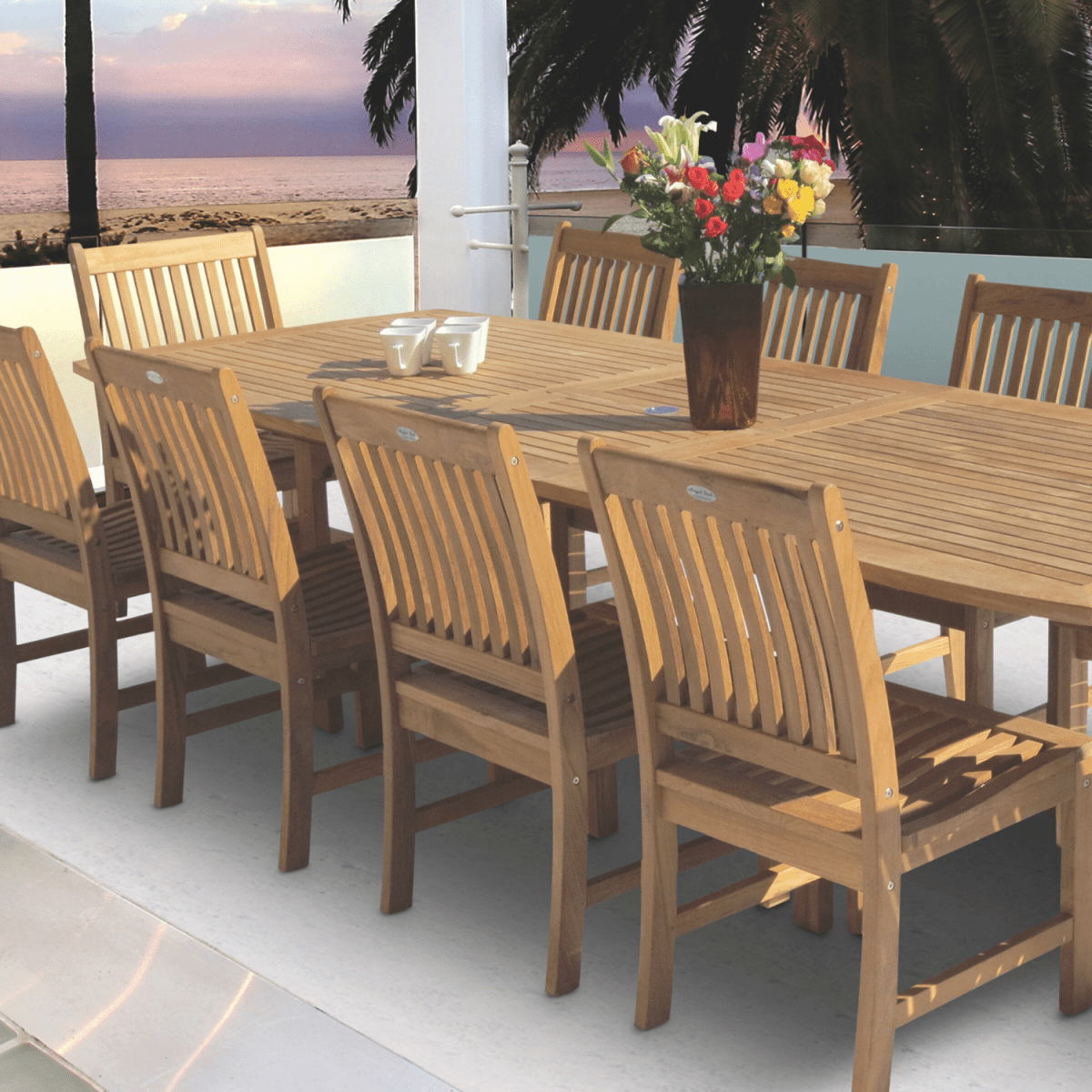 Grade A teak contains naturally high levels of oils and has a dense grain structure. Those are foundational reasons it has long been valued for outdoor furniture: the wood naturally resists moisture, rot, insects, and warping without depending on an applied artificial stain for durability.
That matters in Paradise Valley because furniture may move between extremes within the same property. A dining table may be protected beneath a covered patio while a nearby lounge chair receives direct sun and occasional rain. Using one proven outdoor wood across those spaces creates a more consistent visual language without requiring every piece to be sheltered.
Homeowners sometimes interpret any outdoor color change as deterioration. With unfinished teak, those are two different things. Natural teak begins with a warm golden-brown tone and gradually weathers toward a silver-gray patina when left exposed. That change is expected and does not mean the furniture must be replaced or that it failed in the Arizona sun.
If maintaining the original color is important, owners can use appropriate teak care products or sealing treatments. If not, the furniture can be allowed to age naturally. That flexibility is useful in Paradise Valley, where both crisp contemporary estates and softer desert-resort landscapes can accommodate weathered teak successfully.
Paradise Valley homes often have enough patio space for substantial dining tables, deep seating, and multi-piece arrangements. On that scale, furniture can feel more architectural than decorative. Teak's dense construction and resistance to warping make it well suited to larger outdoor pieces that homeowners expect to keep for many years rather than replace seasonally.
This is also where teak's weight can be an advantage. It has a more substantial feel than lightweight furniture, which many homeowners appreciate on broad open patios. Weight is not a substitute for storm preparation—umbrellas and loose accessories still require attention—but a solid furniture group generally feels more settled in a large landscape.
Premium teak is not the lowest-upfront-cost choice. Its case is strongest when the homeowner is furnishing a long-term residence and expects the outdoor space to remain important for years. Grade A teak furniture can last for decades, so the decision is better evaluated as a long-term furnishing investment than as a short replacement cycle.
For a high-value outdoor space, that can matter more than squeezing down the initial purchase price. The objective becomes choosing proportions, layouts, and styles you will still want after the landscaping, cushions, or decorative accessories have changed.
| Paradise Valley Challenge | Why Premium Grade A Teak Performs Well |
|---|---|
| Strong sun exposure | Designed for outdoor sun; unfinished teak can weather naturally to a silver-gray patina. |
| Prolonged summer heat | Dense natural hardwood is designed for year-round outdoor use and temperature fluctuations. |
| Dry conditions | Natural oils and dense grain support long-term outdoor durability without paint or artificial stain. |
| Monsoon rain | Teak naturally resists moisture and rot and is designed to withstand rain. |
| Temperature changes | Grade A teak naturally resists warping and is suitable for changing outdoor temperatures. |
| Poolside exposure | Moisture resistance makes teak practical for furniture regularly used around pools. |
| Windblown dust | Unfinished teak has no fragile painted coating; routine cleaning is generally straightforward. |
For a typical Paradise Valley property, we would start by dividing the patio into activities rather than buying one large matching collection for the entire yard. Estates here often have enough space to support a real outdoor dining room, a separate conversation area, and a dedicated pool zone. Giving each area a clear purpose usually makes a large patio feel more intentional and, paradoxically, less oversized.
If the home has an outdoor kitchen or a direct connection from the indoor kitchen, we would usually make dining the first permanent zone. Paradise Valley properties often have the physical room to seat more people than the household uses every day, so an extendable teak dining table can be more sensible than either a small everyday table or an enormous fixed table.
Think about the table in both its closed and extended positions. Leave enough circulation for guests to move behind occupied chairs without stepping into a pool path, barbecue work zone, or landscape bed. On a generous property, unused clearance is usually preferable to squeezing in one extra chair.
Next, we would establish a lounge zone with its own visual center—a coffee table, fire feature, mountain view, or television wall under a ramada. A teak sectional works well when you want to define a large open terrace, while sofas and club chairs give you more flexibility when views or traffic patterns matter.
One practical Paradise Valley consideration is the sun angle. A beautiful western view can make a seating arrangement look perfect in the morning and unpleasant in late afternoon. Before finalizing a sectional orientation, stand where each seat will be during the hours you actually plan to use it. Shade planning should come before furniture symmetry.
Pool loungers work best when they are treated as a dedicated zone rather than scattered into leftover corners. We would normally place them where people can face the pool or a mountain view while preserving a generous walking path behind and between the chairs. Small teak side tables are particularly useful because they keep phones, drinks, and towels accessible without adding another large furniture footprint.
If the deck receives full afternoon sun, the most important upgrade may be shade rather than more furniture. An excellent chaise cannot compensate for an unusable exposure. Furniture should solve seating; umbrellas, covered structures, and landscape design should solve comfort.
Paradise Valley's outdoor season is not defined only by summer. Cooler evenings across much of the year are one of the strongest arguments for creating a separate conversation zone around a fire feature or low table. A group of club chairs can sometimes outperform a sectional here because guests can adjust their orientation toward the fire, the view, or one another.
A teak fire pit table can combine the focal point and table surface in one piece, particularly where a second large lounge arrangement would make the patio feel crowded.
Start with the activity that defines your outdoor space most often. Large families and frequent hosts will usually get the most value from dining furniture first; pool-focused households may begin with chaise loungers; and homes with expansive covered patios often benefit most from a sectional or multi-piece seating group. From there, add smaller tables and accent seating only where they improve circulation, comfort, or how the space is actually used.
Paradise Valley outdoor living is closely tied to the area's estate-sized properties, desert-resort identity, mountain views, and pool culture. A successful patio therefore needs to perform as more than a place for an occasional meal. For many homes, it is simultaneously a dining room, pool lounge, sunset viewing area, outdoor kitchen, and evening gathering space.
On many Paradise Valley properties, the pool is the visual center of the backyard. That makes the furniture around it unusually important: it needs to look intentional from inside the house as well as function when the pool is in use. Four well-spaced loungers and a few useful tables often create a more refined result than filling every linear foot of deck with seating.
The practical detail people overlook is circulation. Guests carrying towels or drinks need an obvious dry path between the house, pool, and seating. Leave that path clear before determining how many loungers will fit.
Outdoor kitchens and covered dining areas change the furniture equation because guests remain outside for more of the evening. Rather than treating dining and lounge seating as competing choices, larger properties can support both. A dining set handles the meal; deep seating gives the group somewhere comfortable to continue the evening without everyone remaining around a formal table.
This is where complete teak dining sets can provide a useful starting point because table and seating proportions are already coordinated, while a separate lounge zone can have a different visual character.
Camelback Mountain, Mummy Mountain, and the surrounding desert landscape often influence patio orientation. That creates a design tradeoff: the most obvious view may not align with the best afternoon shade or with the cleanest conversation layout.
When those priorities conflict, we usually favor comfort first. A slightly angled chair that protects a guest from direct western sun will be used more than a perfectly symmetrical chair that faces the view but becomes uncomfortable at the exact hour people gather outdoors.
It is easy to over-design a Paradise Valley patio around peak summer conditions because the heat is so memorable. But homeowners often get their richest outdoor use during the milder parts of the year. That makes comfortable dining, fire-side conversation, and flexible lounge seating at least as important as pool furniture.
A balanced property should work for a January dinner, an April pool afternoon, and a November sunset gathering—not only for July.
Furniture selection should follow the architecture and use of each outdoor zone. Paradise Valley homes range from Southwestern and hacienda-inspired estates to mid-century, transitional, and highly contemporary residences, so there is no single correct furniture silhouette. The consistent priorities are generous scale, comfortable circulation, shade awareness, and pieces substantial enough to belong in a large landscape.
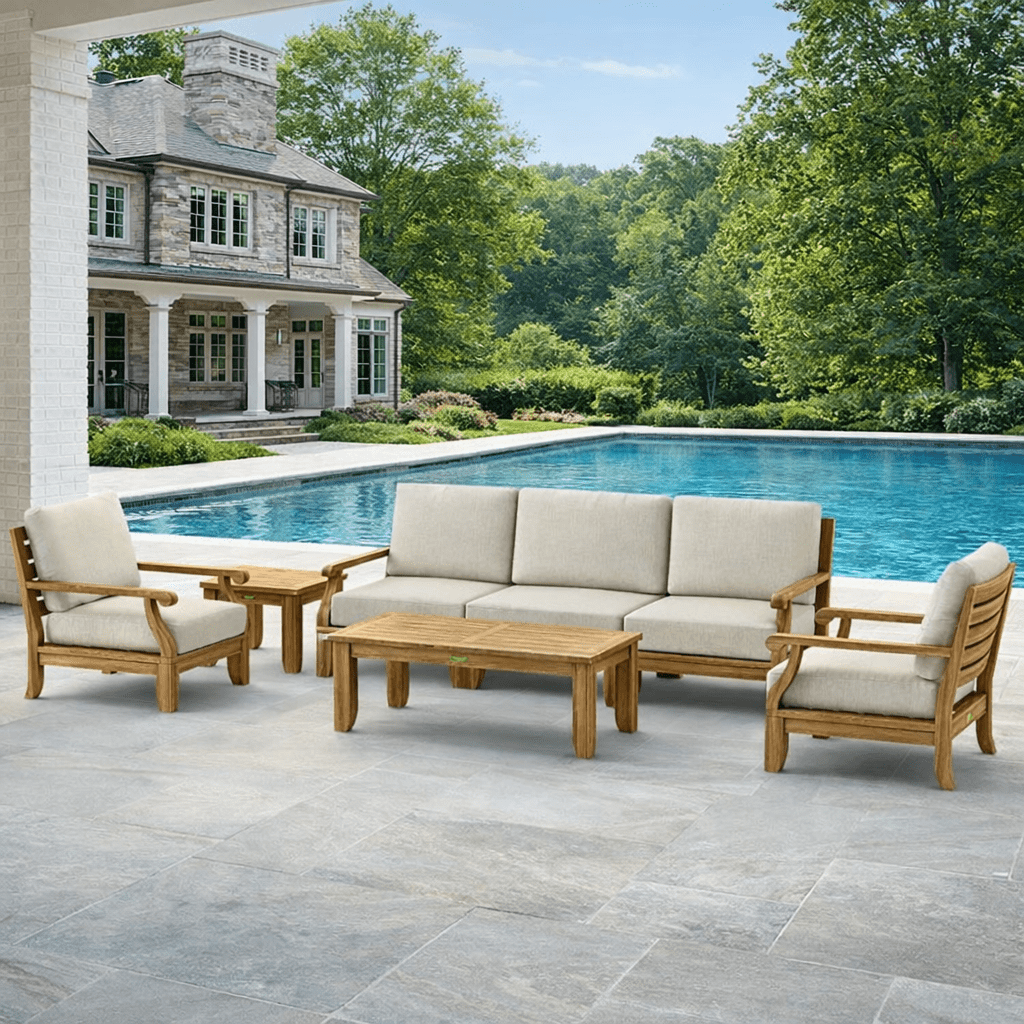 For a large pool patio, start with chaise loungers rather than a full lounge suite at the water's edge. Loungers establish the functional pool zone without creating a visual barrier between the house and water. Add a side table for every one or two loungers and keep the arrangement deliberately spacious.
If the pool deck also has a covered ramada, that is the better location for multi-piece teak lounge seating. It separates dry conversation seating from wet pool traffic and gives cushions more protection from the strongest sun.
Large covered patios can comfortably support deeper, more substantial furniture than narrow decks. A sectional works well when the architecture already defines a clear corner, while sofas paired with club or swivel chairs are better when you want to preserve multiple views or reconfigure seating for guests.
Do not automatically push every piece against the perimeter. On a large patio, pulling the furniture inward often creates a more intimate room and prevents the seating from looking undersized relative to the architecture.
For everyday family use with occasional larger gatherings, extendable tables are unusually practical. A table can remain appropriately scaled most of the week, then expand when friends or extended family visit. If entertaining is consistently large, an eight- or ten-person fixed dining set may make more sense.
Allow more room behind chairs than you think you need, particularly where servers move between an outdoor kitchen and table. Generous circulation is one of the easiest ways to make an expensive patio feel genuinely luxurious.
For a secondary gathering space, consider four club or swivel chairs around a low table or fire feature. This arrangement is especially effective where guests may want to alternate between facing one another and looking toward the mountains.
A smaller conversation grouping can also create separation from the primary entertainment area. On a large estate, not every piece of furniture needs to accommodate the entire party at once.
Paradise Valley's strongest outdoor spaces usually borrow from the landscape rather than compete with it. Natural stone, pale stucco, desert planting, warm masonry, expansive glazing, and mountain backdrops already provide substantial texture. Teak can fit comfortably into that mix because it adds natural warmth without requiring the entire patio to adopt a rustic style.
Modern Paradise Valley homes often use long horizontal rooflines, large glass walls, limestone or stucco, and restrained landscaping. In those settings, teak works best when furniture forms are simple and the layout remains spacious. The wood supplies warmth against stone, concrete, and glass without needing decorative detail.
For a very contemporary home, teak paired with high-quality synthetic rope or modern cushions can bridge the gap between natural material and clean architecture.
Adobe-inspired forms, courtyards, tile roofs, warm stucco, masonry walls, and mature desert landscaping invite a different furniture approach. Here, traditional teak dining chairs, benches, and substantial tables can feel completely natural, especially when the wood is allowed to age rather than kept perpetually golden.
Weathered silver-gray teak can be particularly effective beside warm masonry because it reduces visual contrast and lets planting, tile, and mountain views remain dominant.
Paradise Valley's resort tradition offers a useful design lesson for private homes: repeat furniture families, but do not make every outdoor zone identical. A pool area might use streamlined loungers, a shaded terrace could use deep seating, and a dining pavilion could use a large teak table. Consistent material ties the property together while different configurations make each area feel purposeful.
The most common design error on a scenic property is assuming that bigger furniture always looks more luxurious. Scale matters, but so does negative space. A carefully edited furniture arrangement preserves sightlines to desert planting and mountains and can make both the furniture and landscape feel more valuable.
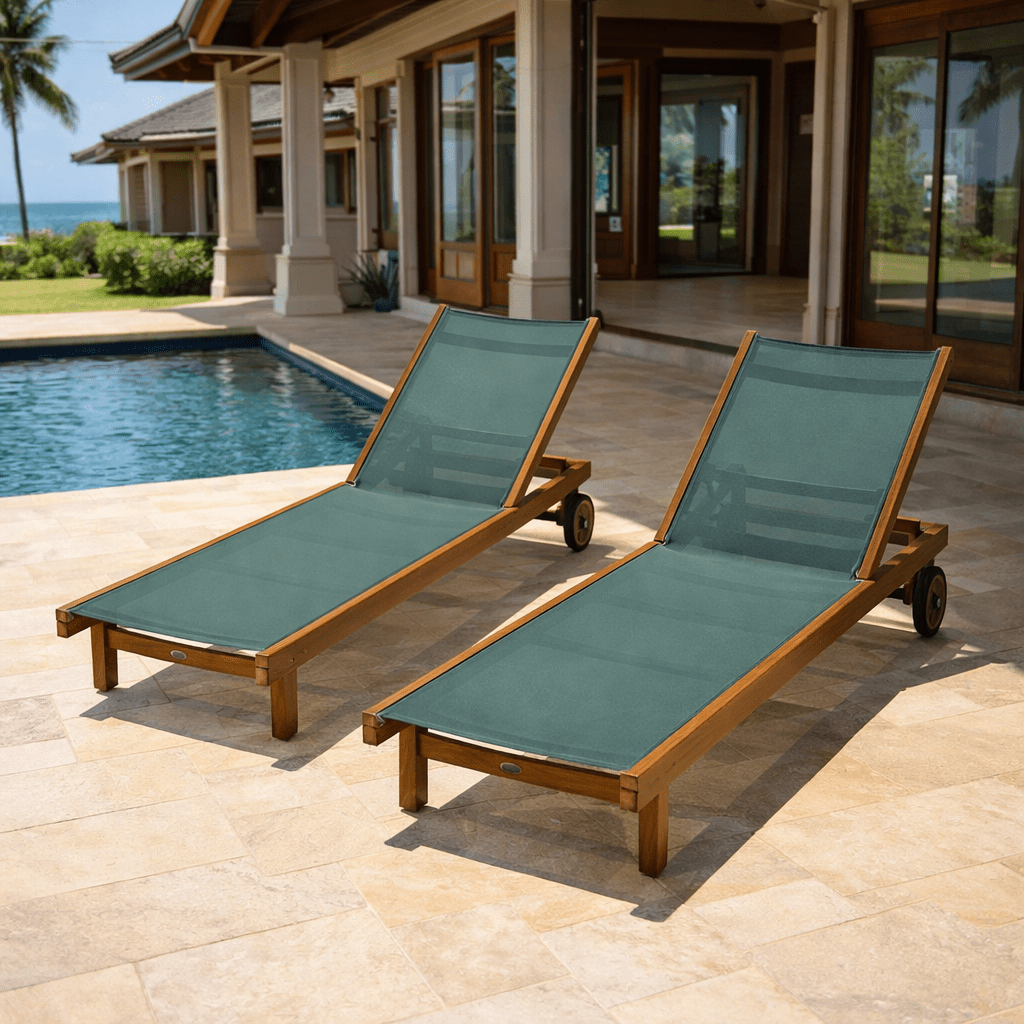 A layout can fit perfectly on paper and still fail because the seats face direct afternoon sun. Before ordering a sectional, dining set, or row of loungers, evaluate the actual exposure during the hours you expect to use the space. Teak handles outdoor sun exposure well, but no material eliminates the need for sensible shade planning.
Large Paradise Valley properties tempt homeowners to fill every patio zone. The result can be surprisingly less luxurious because circulation tightens and mountain or pool views become visually cluttered. Start with the primary activity in each area and add only the pieces needed to support it.
Teak's substantial appearance makes this especially relevant. A few properly scaled teak pieces can carry a large space without requiring dense placement.
Poolside furniture has different demands from furniture under a covered patio. Wet users, sunscreen, splashes, and frequent movement make easy access and simple cleaning important. Keep cushioned deep seating in the drier zone when practical and use loungers or less textile-heavy pieces closer to the water.
If every decision is based on surviving the hottest part of summer, you may under-furnish the seasons when the patio is most enjoyable. Dining tables, conversation seating, fire features, and flexible chairs are often just as important as pool loungers. Teak's year-round outdoor suitability makes it practical to leave these zones established rather than treating them as temporary seasonal setups.
Premium outdoor furniture is designed for exposure, not neglect. Dust, pollen, sunscreen, spills, and storm debris still accumulate. Teak does not require paint or artificial stain for durability, but routine cleaning keeps the furniture looking intentional and prevents surface grime from becoming part of the finish.
Paradise Valley teak care is generally straightforward because homeowners can choose between preserving the original warm color and allowing the wood to weather naturally. The key local concerns are dust, strong sun, pool residue, and seasonal storm debris rather than continual dampness.
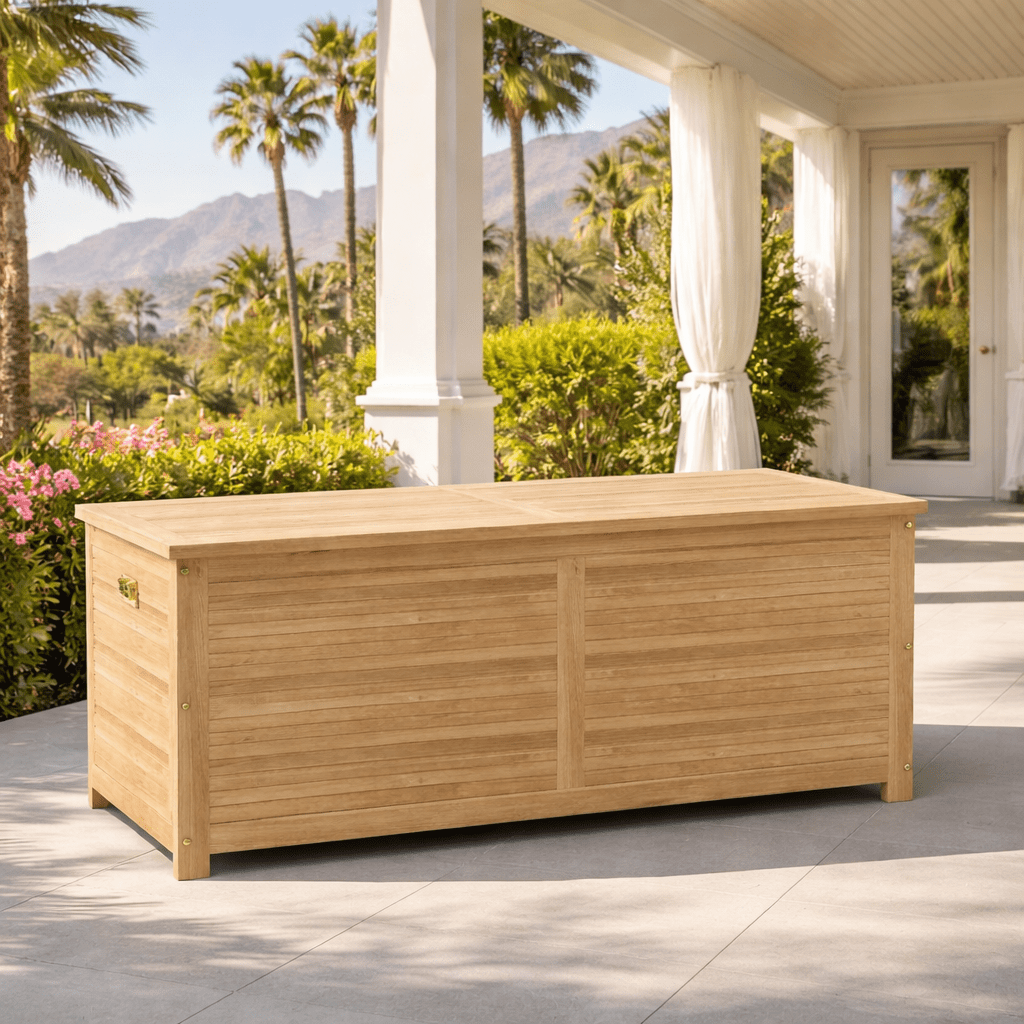 In a dry climate, furniture can look clean from a distance while accumulating a fine layer of dust on horizontal surfaces and between slats. Wipe or gently clean pieces as needed rather than waiting for a rainy season to do the work. Around pools, address sunscreen, food, drink, or mineral residue promptly instead of allowing it to build up.
Untreated teak naturally develops a silver-gray patina. That is an aesthetic choice, not a maintenance failure. Homeowners who like that look can allow the process to occur naturally; those who prefer the original golden-brown appearance can use appropriate sealing or care products.
The important point is consistency. On a large grouped arrangement, maintaining some pieces while allowing adjacent pieces to weather can produce uneven color unless that contrast is intentional.
Many TeakHQ lounge pieces include Sunbrella cushions, while others use sling or synthetic-rope seating, and many dining chairs or loungers offer cushions separately. Sunbrella is designed to resist weather, fading, UV exposure, and water, but cushions still benefit from sensible care.
If the patio will be unused for a long period or a severe storm is approaching, moving loose cushions into dry storage can reduce cleaning and keep the space ready for use. A teak deck box can make that routine easier when appropriate for the layout.
Teak furniture itself can remain outdoors year-round, so monsoon preparation is more about the items around it. Secure or close umbrellas, remove loose lightweight accessories, make sure drainage paths are open, and keep cushions out of locations where roof runoff can saturate them.
After a dusty storm, allow wet surfaces to dry and clean accumulated dirt as needed. Protective covers are optional rather than required for teak durability, although some homeowners use them to reduce routine cleaning during periods of infrequent use.
The best Paradise Valley patio is not the one with the most furniture. It is the one that gives dining, poolside lounging, shade, conversation, and views enough space to work together. TeakHQ's Grade A teak collections make it possible to furnish those zones with a consistent natural material that can remain outdoors year-round, age gracefully, and serve the property for decades.
Start with the part of your outdoor space you use most, choose proportions carefully, and build outward from there.
Premium teak, quality aluminum, and high-end synthetic materials can all work well. Teak is especially appealing when you want natural wood, substantial weight, long-term durability, and furniture that can remain outdoors through sun, rain, and temperature changes.
Yes. Grade A teak is designed for year-round outdoor use and can withstand rain, sun exposure, and temperature fluctuations. Covers are optional rather than required for durability.
Teak is designed for outdoor sun exposure. Unfinished teak will gradually change from its original warm tone to a silver-gray patina, which is a normal weathering process rather than an indication that the furniture has failed.
Chaise loungers, side tables, and a separate shaded conversation area create a practical pool layout. Teak is a strong option near pools because it naturally resists moisture and does not require paint or artificial stain for durability. Browse teak chaise loungers for poolside configurations.
Exposed metal can become uncomfortable in strong direct sun, although high-quality aluminum remains a legitimate outdoor furniture choice. Shade, cushions, orientation, and the amount of exposed metal all matter. Natural teak offers a warmer, more organic alternative.
A cover is not required for teak durability. Grade A teak is designed to withstand rain. Many homeowners still cover furniture to reduce cleaning, while cushions, umbrellas, and lightweight accessories may benefit from being moved or secured before severe storms.
There is no fixed schedule that fits every property. Clean as needed based on dust, pool use, landscaping debris, food, and storm exposure. Highly exposed pool furniture will generally need attention more often than furniture beneath a covered patio.
No. Teak does not need sealing for durability. Leave it untreated if you like the natural silver-gray patina, or use an appropriate teak sealer or care product if you want to preserve more of the original color.
Choose for your normal household first, then account for how often you entertain. An extendable table is often useful when everyday meals involve four to six people but gatherings regularly grow larger. See extendable teak dining tables for flexible configurations.
It can be when longevity and natural material are priorities. Grade A teak furniture can last for decades, so its value is best considered over a long ownership period rather than compared only by initial purchase price.


