
FREE SHIPPING
within mainland USA
within mainland USA
Home ▸ Teak Outdoor Furniture ▸ By Location ▸ Park City, Utah
Park City outdoor spaces have to work across unusually different seasons: bright high-country sun and comfortable summer evenings can give way to snow, freezing temperatures and long periods when a patio is used very differently. Add ski homes, second homes, mountain-view terraces and large gathering spaces, and furniture selection becomes more than a style decision. Premium Grade A teak is a particularly strong option for homeowners who want natural furniture that can handle outdoor exposure while fitting the warm, architectural character of mountain properties.

Park City is a different furniture environment from a warm-weather resort market where the main challenge is simply sun or rain. Here, outdoor furniture may experience strong seasonal sun, summer rain, large temperature swings, snow and prolonged winter exposure. Just as important, many patios belong to mountain homes and second residences where furniture may sit unattended for extended periods. That combination makes material stability, realistic maintenance requirements and year-round exposure important buying considerations.
In Park City, the most important question is not simply, “Can this furniture get wet?” A better question is, “What happens when this material goes through repeated outdoor exposure across very different seasons?” Snow can accumulate around furniture, meltwater can introduce moisture, and temperatures can move above and below freezing. Materials and finishes that demand constant protection become less convenient—especially at a second home.
Premium outdoor options can include teak, quality metal furniture and certain synthetic materials, but each creates a different ownership experience. For homeowners who prefer natural wood, Grade A teak is unusually practical because its dense grain and naturally high oil content make it resistant to moisture, rot and warping. It is designed for year-round outdoor use and does not depend on an artificial stain for durability.
Cold winters sometimes cause homeowners to underestimate summer exposure. An uncovered deck overlooking the Wasatch can spend long periods in direct sun, so furniture should be selected with UV exposure as well as winter weather in mind. Teak can withstand sun exposure, although its appearance changes naturally: unfinished teak gradually develops a silver-gray patina rather than retaining its original golden color indefinitely.
For cushioned seating, the fabric matters separately from the frame. Many TeakHQ lounge pieces include Sunbrella cushions, which are weather-, fade-, UV- and water-resistant. Cushions should still be treated as a separate maintenance decision from the teak frame, particularly through Park City winters.
One of the most overlooked Park City considerations is not weather itself—it is how often someone is there to respond to the weather. A primary residence can support a furniture material that needs frequent attention. A ski home that sits empty between visits is different. If a storm arrives after the owners leave, or spring weather changes quickly, a low-intervention frame material becomes much more valuable.
This is where teak's maintenance flexibility is especially relevant. The wood does not need to be painted or sealed for outdoor durability. Owners can maintain its warmer original appearance or allow it to weather naturally. That makes the maintenance schedule easier to adapt to how often the property is occupied.
A covered terrace in Deer Valley and an exposed deck in Promontory should not automatically receive the same furniture plan. Wind exposure, roof coverage, snow accumulation, afternoon sun and proximity to trees can vary substantially even within the Park City market. Before buying, identify which spaces are truly exposed and which are protected by architecture.
That assessment can also determine where cushions make sense. A protected lounge terrace can support a cushion-heavy conversation arrangement more conveniently than a fully exposed deck, where sling seating, easily managed cushions or simpler teak pieces may reduce seasonal work.
Premium Grade A teak is not the only material capable of furnishing a high-end mountain home. Quality aluminum can be practical for homeowners who prefer a lighter, more contemporary material, while synthetic options can minimize some maintenance concerns. Teak becomes especially compelling when the priorities are natural material, substantial construction, long service life and the ability to tolerate changing outdoor conditions without relying on paint or artificial stain.
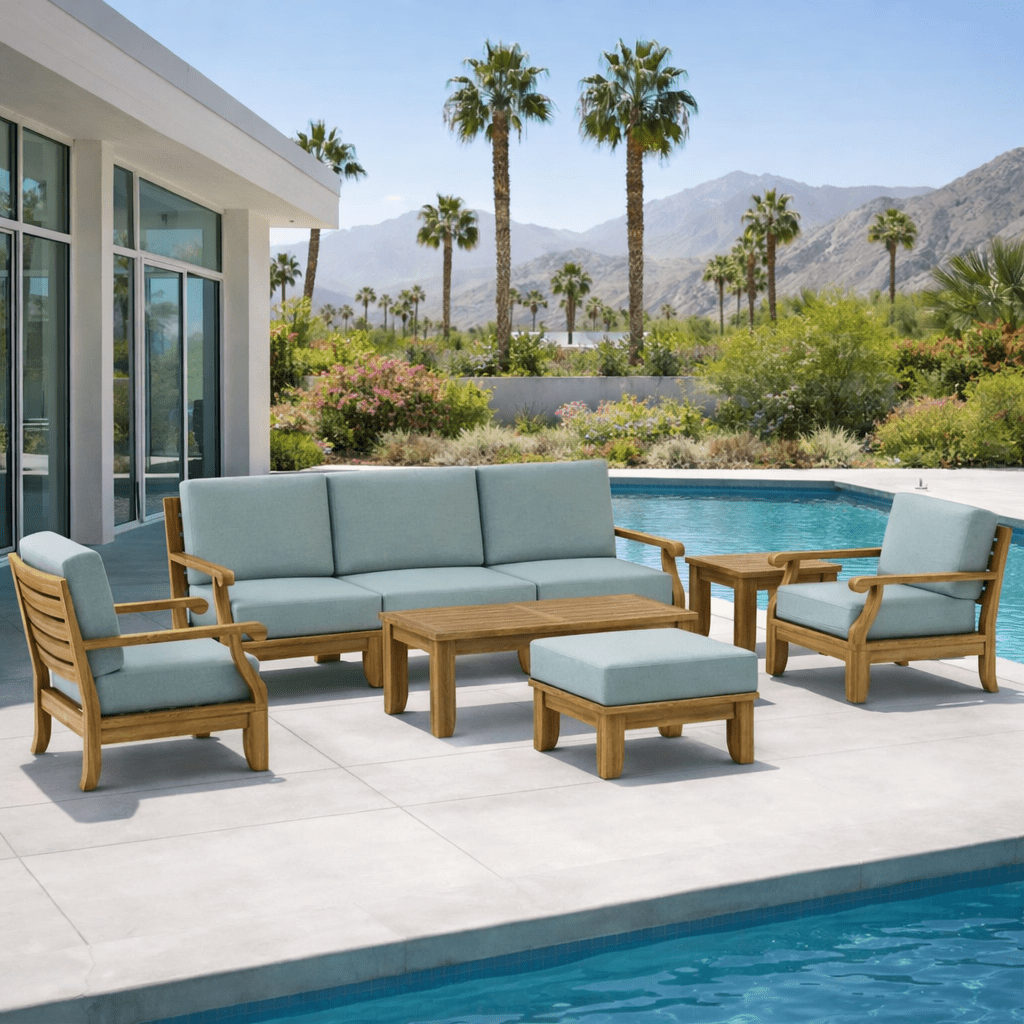 Grade A teak's natural oils and dense grain structure are fundamental to its outdoor performance. They contribute to resistance against moisture, rotting, insects and warping. In Park City, those characteristics matter because the same furniture can experience dry sunny periods, precipitation, snow and major seasonal temperature changes.
That does not mean teak is unaffected by the outdoors. Its surface will weather and its color will change if left unfinished. The important distinction is that this natural aging does not require homeowners to continually repaint the furniture simply to make it suitable for outdoor use.
Many mountain homes use stone, timber, glass and other materials that are meant to look natural rather than overly finished. Teak fits that approach well. Owners who like the original golden-brown appearance can maintain it with appropriate care products; those who prefer a softer, weathered appearance can allow the wood to develop its natural silver-gray patina.
This choice is particularly useful for vacation properties. The decision becomes aesthetic rather than a requirement to constantly preserve a coating for the furniture to remain outdoors.
Outdoor wood furniture needs more than surface water resistance in a mountain climate. Dimensional stability also matters as conditions change. Grade A teak's dense grain and resistance to warping make it a strong candidate for furniture expected to remain outside through temperature fluctuations.
For homeowners considering a substantial teak sectional or large dining arrangement, that stability is especially relevant because these are investment pieces intended to serve the property for years rather than temporary seasonal furniture.
Teak carries a higher upfront cost than many outdoor woods and mass-market patio materials. The more useful comparison is lifetime ownership rather than purchase price alone. Premium teak furniture can last for decades, making it particularly logical for a Park City home where the outdoor space itself may represent a significant investment.
For a second home, there is another kind of value: fewer material-dependent maintenance obligations. Teak can be maintained or allowed to age naturally, giving owners more freedom to decide how much attention they want to give the furniture's appearance.
| Park City Challenge | Why Premium Grade A Teak Performs Well |
|---|---|
| Snow and moisture | Natural oils and dense grain provide strong moisture and rot resistance. |
| Freezing winters | Teak is designed for year-round outdoor use and temperature fluctuations. |
| Strong sun | Teak withstands sun exposure and can weather naturally without artificial stain. |
| Seasonal weather changes | Dense Grade A teak resists warping and provides structural stability. |
| Long unattended periods | Painting, sealing and covering are optional rather than required for durability. |
| Natural mountain aesthetics | Real teak complements stone, timber and contemporary mountain materials. |
We would begin with the way you actually use the property, not with a furniture catalog. A full-time family home in Park Meadows, a ski-in/ski-out retreat in Deer Valley and a large second home in Promontory may all have beautiful patios, but their furnishing priorities can be very different. The first decisions should be how many people regularly gather outside, which views should drive the layout, and how exposed each zone is to weather.
For many larger Park City properties, we would prioritize the conversation area before dining. Mountain patios often have a natural focal point—a ski-run view, wooded hillside, golf course, reservoir view or fire feature. A deep-seating teak lounge arrangement lets the furniture face that focal point rather than forcing every outdoor activity around a dining table.
Large patios can support a sectional or sofa-and-chair arrangement, while smaller decks often work better with two club chairs or swivel chairs and a compact table. Swivel seating is particularly useful where homeowners want to alternate between conversation, a fire feature and the landscape without rearranging heavy furniture.
Second homes create an interesting sizing problem: the house may have only two or four occupants most of the time, then suddenly host children, grandchildren or friends for a ski weekend or summer visit. Designing the dining area only for everyday occupancy can leave the patio undersized precisely when the home is being enjoyed most.
For properties that entertain regularly, consider an extendable teak dining table or a larger dining set. The goal is not to buy the biggest table the terrace can hold. Preserve comfortable circulation and size the table around realistic peak gatherings.
In a mountain setting, an outdoor area that works only during the warmest part of the afternoon leaves considerable lifestyle value unused. We would often create a dedicated evening conversation zone around a fire feature, using club chairs, Adirondack-style seating or deep seating with tables close enough for drinks and snacks.
A teak fire pit table can help organize that space where appropriate. Think of this zone as an outdoor living room rather than leftover seating around the edge of the patio.
Before finalizing the layout, decide what happens to every piece when snow season arrives. Some owners may leave teak frames outdoors; others may move pieces under cover or into storage. Cushions may need a different plan than frames. Knowing that strategy before buying helps prevent a beautiful summer arrangement from becoming an annual logistical problem.
That planning is especially valuable with large sectionals. Modular pieces can create generous gathering spaces, but homeowners should know whether they intend to leave the configuration intact, consolidate pieces under a covered area or relocate cushions seasonally.
Begin with the activity that defines your outdoor space. Large mountain homes and second residences often benefit from lounge seating or sectionals first, then dining sized for peak guest counts rather than everyday occupancy. Fire pit seating and Adirondack chairs make sense for cool-evening gathering areas, while swivel chairs and benches can add flexible seating at view-oriented secondary spaces.
Park City outdoor living is intensely seasonal, but that does not mean it is limited to one season. Summer dinners, post-hike afternoons, golf weekends and cool evenings around a fire give patios a very different role from winter, when outdoor spaces may become part of the view rather than the primary gathering area. Good furniture planning recognizes those changing modes instead of treating the patio like a warm-climate outdoor room used the same way all year.
A Park City residence may function as a quiet retreat one weekend and a full house the next. Ski trips, summer visits and family vacations create bursts of occupancy that can make flexible outdoor seating more useful than a rigid furniture plan.
This is one reason separate dining and conversation zones work well on larger properties. One group can remain around the table while another moves toward the fire pit or view. The patio feels less like one oversized furniture set and more like several usable rooms.
Park City's winter identity can overshadow how valuable the outdoor space becomes during warmer months. Mountain views, long evenings, hiking, biking and golf make decks and terraces meaningful living areas during the warm season. For homeowners furnishing a second residence, it is worth designing the patio as intentionally as an indoor great room rather than treating it as an accessory to ski season.
Mountain evenings make conversation-oriented layouts especially appealing. Rather than placing every chair in a straight line toward the scenery, create a grouping that lets guests appreciate the view while still facing one another. A fire feature can become a secondary focal point once daylight fades.
This is also where side tables matter more than they appear to in a showroom. Each seat should have a convenient place for a drink, phone or plate without requiring guests to lean across a large central table.
The most useful furniture category depends on the space. Park City's mix of resort condos, ski residences, mountain estates and golf-community homes makes a one-size-fits-all recommendation especially unhelpful. Start with the footprint and function of each outdoor zone, then choose the furniture.
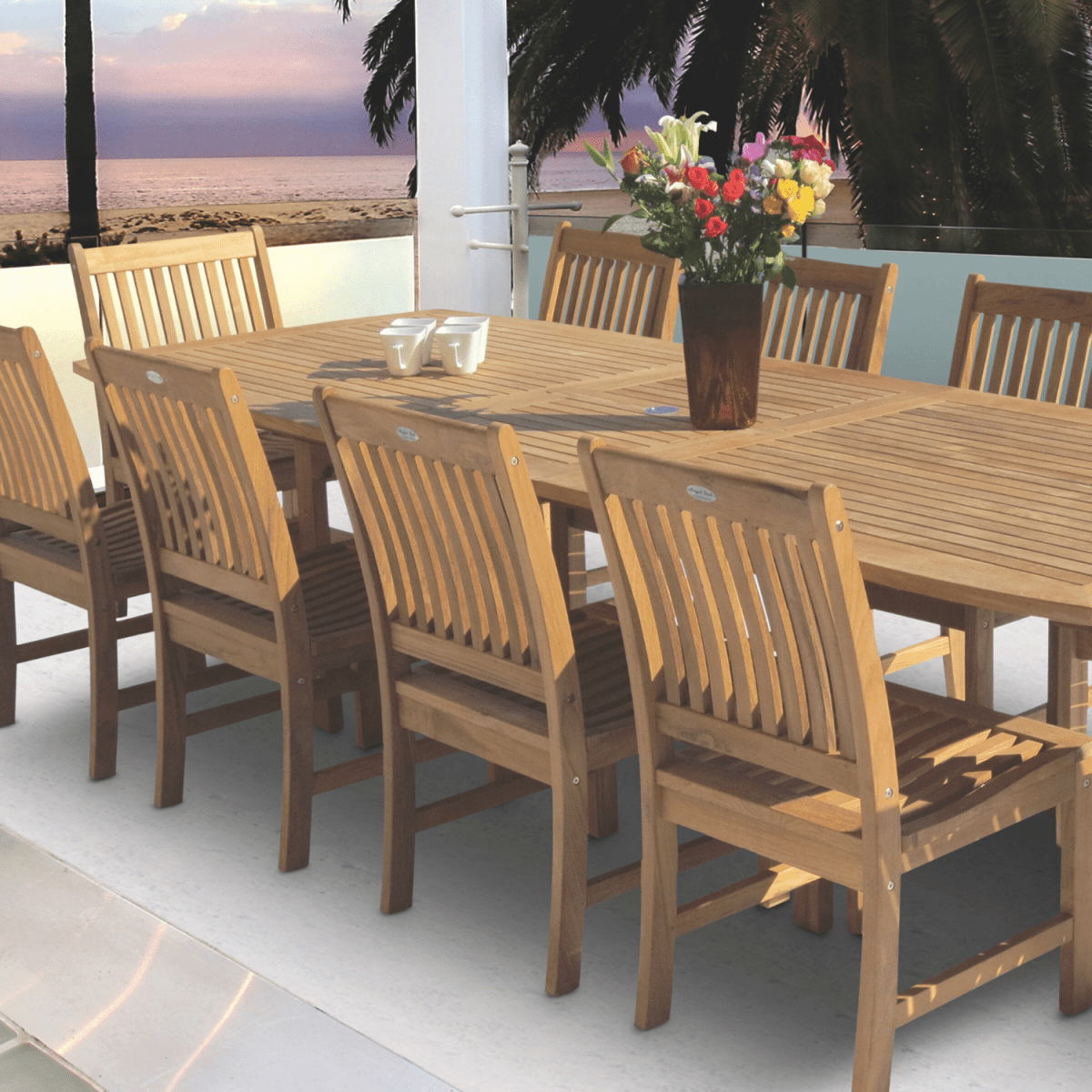 For a large terrace connected to an indoor great room, we would usually build two zones: dining near the kitchen and lounge seating closer to the primary view or fire feature. This keeps food service practical without sacrificing the best part of the patio to a dining table that may sit empty much of the day.
Homes designed for family visits can justify 8-person teak dining sets or even larger configurations. Measure circulation space carefully before moving up in size; mountain views can make a terrace feel visually expansive even when its usable furniture footprint is comparatively tight.
For a fire-oriented patio, comfort and conversation matter more than maximum seating density. Club chairs, swivel chairs and Adirondack chairs can form a loose circle while preserving access to the fire feature. Swivel chairs are particularly adaptable where the mountain view and the people around the fire compete for attention.
On larger patios, pair this area with a separate sofa or sectional rather than trying to make one enormous arrangement serve every purpose.
Condos, townhomes and smaller ski residences require more restraint. A two- or four-person dining set, two lounge chairs with a side table, or a compact loveseat arrangement can preserve valuable circulation. Foldable dining pieces can also be useful when the deck needs to change functions.
The key is resisting the temptation to furnish according to the size of the interior home. A large residence can still have a narrow deck, and furniture that crowds the railing or circulation path can make an exceptional view less enjoyable.
Promontory, Glenwild and other larger-property settings can support multiple outdoor destinations rather than a single patio. In addition to the primary dining and lounge areas, consider a garden bench, Adirondack grouping or pair of chairs at a quieter viewpoint. These smaller destinations encourage people to use more of the property.
A secondary seating area does not need to duplicate the main patio. In fact, its value often comes from doing the opposite: two chairs overlooking open space can create a quiet morning-coffee spot away from the larger entertaining zone.
Park City's residential architecture ranges from historic Old Town character to contemporary ski residences and expansive mountain estates. Across many newer luxury homes, however, there is a common emphasis on views, natural materials and indoor-outdoor connection. Outdoor furniture works best when it supports that architecture rather than competing with it.
Contemporary Park City homes often combine substantial stone, dark metal, timber and large areas of glass. Natural teak can soften those harder architectural materials without making the patio feel rustic. Its warmer appearance provides contrast against stone and metal while remaining visually restrained enough for modern architecture.
If the home's exterior already has several strong materials, simpler furniture silhouettes generally work better than adding another visually complicated element.
Traditional mountain architecture can accommodate teak just as naturally. The wood provides warmth without requiring furniture to imitate heavy lodge styling. Deep seating, substantial dining tables and classic chairs can bridge traditional architecture with a cleaner outdoor-living aesthetic.
One of the easiest mistakes in a scenic property is placing furniture where it photographs beautifully but functions poorly. Before deciding where the sofa belongs, sit in the proposed chair locations. Check sightlines from seated height, not standing height, and notice whether railings, landscaping or neighboring structures interrupt the view.
Then consider the reverse view from inside the house. Because many Park City homes emphasize large windows and indoor-outdoor continuity, outdoor furniture is part of the interior sightline even when nobody is sitting outside. A coherent material palette matters throughout the year.
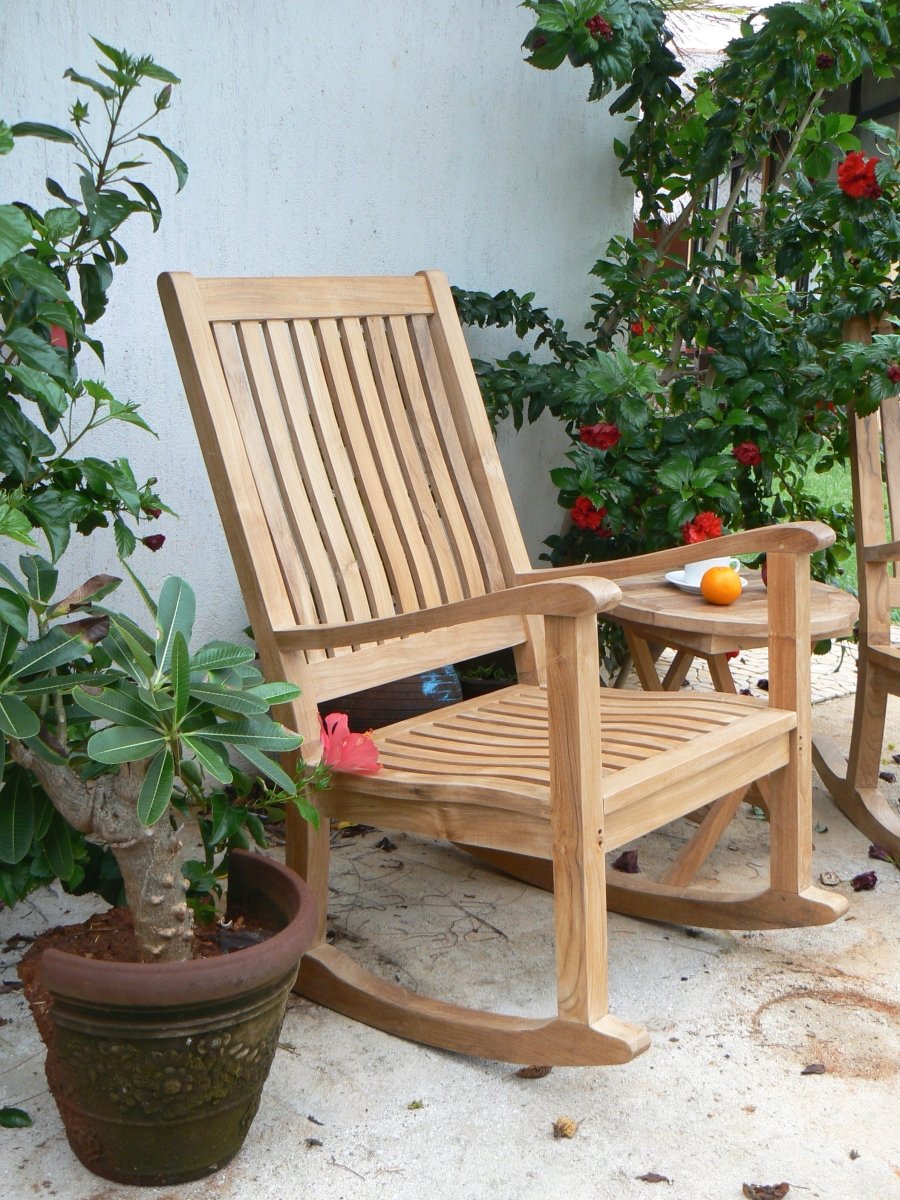 A patio can look perfect in July and become a management problem in winter. Before purchasing, determine whether frames will remain outside, move under cover or go into storage. Premium teak gives homeowners flexibility because it is designed for year-round outdoor use, but cushions and accessories still deserve their own seasonal plan.
Furnishing a second home for its normal two- or four-person occupancy can leave it poorly equipped for the weekends when family and friends arrive. Dining capacity and conversation seating should reflect realistic peak use. An extendable table or flexible chairs can solve this without permanently filling the patio with unused seats.
Mountain properties invite large furniture arrangements, but more seating is not always better. Oversized sectionals can obstruct sightlines, crowd railings and reduce circulation. Preserve negative space around the furniture and treat the view itself as part of the design.
Buyers sometimes evaluate cushioned furniture as a single product when the frame and cushion have different ownership needs. Many TeakHQ lounge pieces use Sunbrella cushions, but even weather-resistant fabric benefits from sensible seasonal management. Decide where cushions will go during extended winter periods before committing to a cushion-heavy arrangement.
A homeowner may love freshly finished golden teak but dislike regular appearance maintenance—or love the silver-gray look without realizing that it develops gradually. Decide which appearance you actually want before establishing a care routine. Teak does not need artificial stain for durability, so maintaining its original color is primarily an aesthetic choice.
Park City care should follow exposure rather than an arbitrary calendar. A covered terrace may need far less attention than furniture beneath trees or on an exposed deck. The practical goal is to remove accumulated dirt and organic debris, decide whether you want natural weathering or preserved color, and have a separate winter plan for cushions.
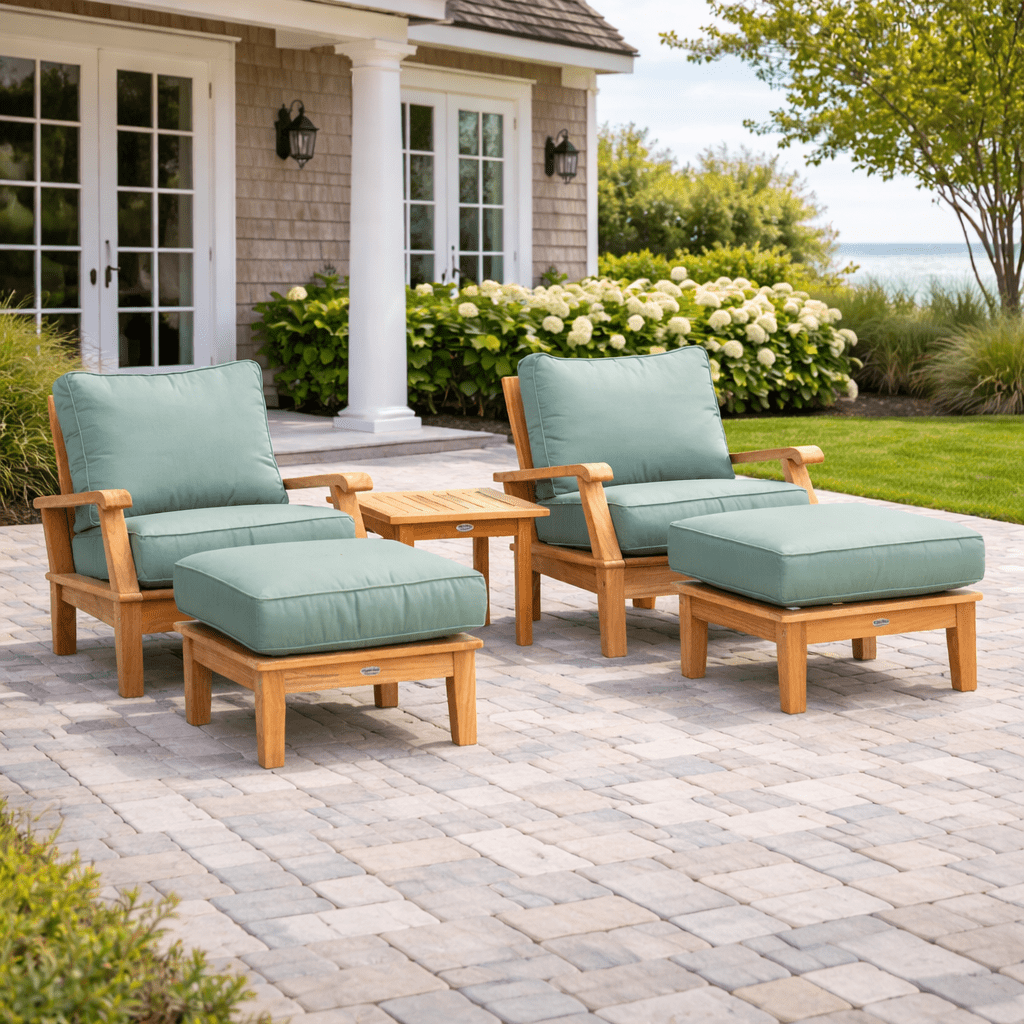 Inspect furniture when outdoor living resumes in spring and clean it as needed during the active season. Pollen, dust, leaves and debris can accumulate on exposed surfaces and in joints. Furniture near trees may need more frequent attention than furniture on a covered terrace.
TeakHQ offers teak cleaners and sealers for owners who want products specifically intended for teak care.
Untreated teak naturally develops a silver-gray patina. That weathered appearance can be especially attractive with mountain-modern stone and darker exterior finishes. If you prefer the warmer original teak color, appropriate sealing or oiling can help maintain that appearance.
Neither choice should be confused with structural necessity. Teak's durability does not depend on maintaining an artificial stain.
Teak frames are designed for year-round outdoor use, so indoor winter storage is not required for the wood itself. Some homeowners will nevertheless move furniture to a covered area to simplify snow management or keep the patio clear. Either approach can be reasonable depending on the property.
Cushions deserve more deliberate off-season handling. For a second home in particular, establish a dry, convenient storage location before winter rather than improvising after the first major snowfall.
Protective covers are not required for teak durability. Owners may still choose them to reduce surface debris or simplify seasonal cleanup. If you use covers, follow the cover manufacturer's instructions and avoid treating a cover as a substitute for periodic inspection and cleaning.
The larger principle is useful for Park City ownership: choose a care strategy that fits how often you occupy the home. A maintenance routine that looks ideal on paper but requires someone to visit the property constantly is not a good routine for a seasonal residence.
The right outdoor furniture plan should make a Park City home easier to enjoy in every season, even though the patio itself changes roles throughout the year. Start with exposure, views, guest counts and winter logistics; then choose furniture that fits those realities. For homeowners who value natural materials, long service life and flexible maintenance, premium Grade A teak offers a particularly strong foundation for mountain dining, conversation and gathering spaces.
There is no single material for every homeowner. Quality teak, premium metal furniture and certain synthetic materials can all be appropriate. Grade A teak is particularly well suited to buyers who want natural wood with resistance to moisture, rot, insects and warping, plus the ability to remain outdoors year-round.
It depends on the material. Grade A teak is designed for year-round outdoor use and can withstand rain, sun and temperature fluctuations. Cushions and accessories should be evaluated separately, and many homeowners will prefer to store cushions during extended winter periods.
Yes. Premium Grade A teak is designed for year-round outdoor use and is naturally resistant to moisture and rot. You can still move it under cover if doing so makes snow management or seasonal cleanup easier.
A cover is optional rather than required for teak's durability. Some Park City homeowners use covers to reduce debris and seasonal cleanup, while others leave teak uncovered and allow it to weather naturally.
Prioritize materials that do not demand constant attention, then plan separately for cushions and accessories. Flexible seating is useful because occupancy can change dramatically when family or friends visit. Multi-piece teak lounge sets can work especially well for larger gathering spaces.
Size it for realistic peak gatherings rather than average occupancy. If two people normally use the house but eight visit regularly, an extendable table or larger dining configuration may be more useful than a permanent four-person set. Always preserve adequate circulation around the table.
Yes. Unfinished teak naturally develops a silver-gray patina with outdoor exposure. Homeowners who prefer the original warmer teak color can maintain it with appropriate care products; the color treatment is optional rather than required for durability.
Both can be legitimate premium choices. Teak is natural, warmer in appearance and heavier, while aluminum is lighter and can create a more overtly modern look. Teak is often preferable when natural material, substantial feel and long-term outdoor performance are priorities.
Use a conversation-oriented arrangement rather than maximizing seat count. Club chairs, swivel chairs or Adirondack chairs can form a comfortable grouping while maintaining access to the fire feature and views. Leave enough open space for safe circulation around the fire feature.
Premium teak furniture can last for decades with appropriate ownership and care. Its higher initial cost should therefore be evaluated against long-term use rather than compared only with the purchase price of shorter-lived outdoor furniture.


