
FREE SHIPPING
within mainland USA
within mainland USA
Home ▸ Teak Outdoor Furniture ▸ By Location ▸ Pebble Beach, California
Outdoor furniture in Pebble Beach lives in an unusually demanding but beautiful setting: cool Pacific air, recurring marine fog, winter rain, ocean-facing wind, and salt exposure can all affect how an outdoor space ages. At the same time, many homes are designed around terraces, courtyards, golf-course views, gardens, and sheltered conversation areas that invite frequent outdoor use. Choosing furniture here is less about handling extreme heat and more about moisture, exposure, material quality, and long-term appearance. Premium Grade A teak is especially well suited to that combination.

Pebble Beach is not simply another mild California market. Its position on the Monterey Peninsula creates a coastal furniture environment where moisture, wind, salt-laden air, shade, and periods of bright sun can matter more than extreme temperature. A patio close to the ocean may face a very different maintenance burden than a protected courtyard only a short distance inland, while a terrace beneath Monterey pines or cypress trees introduces its own combination of shade and organic debris.
In many warm-weather markets, the first question is whether furniture can tolerate intense heat. Pebble Beach is different. The more useful question is how a material behaves through repeated exposure to damp air, fog, rain, and drying cycles. Furniture may spend long stretches feeling cool or slightly damp even when there has been no significant rainfall.
That makes material quality especially important. Outdoor furniture that depends heavily on vulnerable finishes, surface coatings, or moisture-sensitive components can demand more attention than homeowners expected. Materials designed to tolerate outdoor moisture without relying on a decorative coating for basic durability generally make more sense here.
Ocean proximity should influence more than the style of furniture you choose. Salt carried inland by marine air can settle on frames, hardware, fabric, and tabletops. The effect is most important on exposed properties near the shoreline and along open ocean-facing terraces, where furniture receives less protection from buildings and vegetation.
This does not mean every material other than teak is unsuitable. High-quality aluminum and other premium outdoor materials can also be practical choices. But coastal homeowners should pay closer attention to construction quality, hardware, finish requirements, and how much routine cleaning they are willing to do. Solid Grade A teak has an advantage because its outdoor durability comes from the wood itself rather than an applied paint or artificial stain.
One of the most useful Pebble Beach buying principles is this: shop for your exposure, not simply your ZIP code. A windswept terrace overlooking Carmel Bay and a protected patio tucked into the Del Monte Forest may experience very different conditions even though both are in Pebble Beach.
On an exposed terrace, we would prioritize substantial furniture, straightforward layouts, and materials intended for year-round outdoor use. In a sheltered courtyard, comfort, conversational layouts, and cushion management may matter more. Under trees, the dominant issue may be regular removal of needles, pollen, and damp organic debris rather than salt spray.
Pebble Beach's marine layer can make UV exposure easy to underestimate. When skies clear, outdoor furniture and fabrics still receive direct sun. Wood and fabric should therefore be chosen with their long-term appearance in mind rather than assuming fog provides continuous protection.
Natural teak can be left unfinished and allowed to weather toward a silver-gray patina, or homeowners can use appropriate teak-care products when they prefer to preserve more of the original golden tone. Where cushioned lounge furniture is used, many TeakHQ patio seating pieces include weather-resistant, fade-resistant, UV-resistant Sunbrella cushions.
Premium Grade A teak is particularly well matched to Pebble Beach because its most useful characteristics address the area's actual ownership challenges: repeated moisture exposure, sun, changing weather, organic debris, and the desire to leave substantial furniture outdoors without constantly refinishing it.
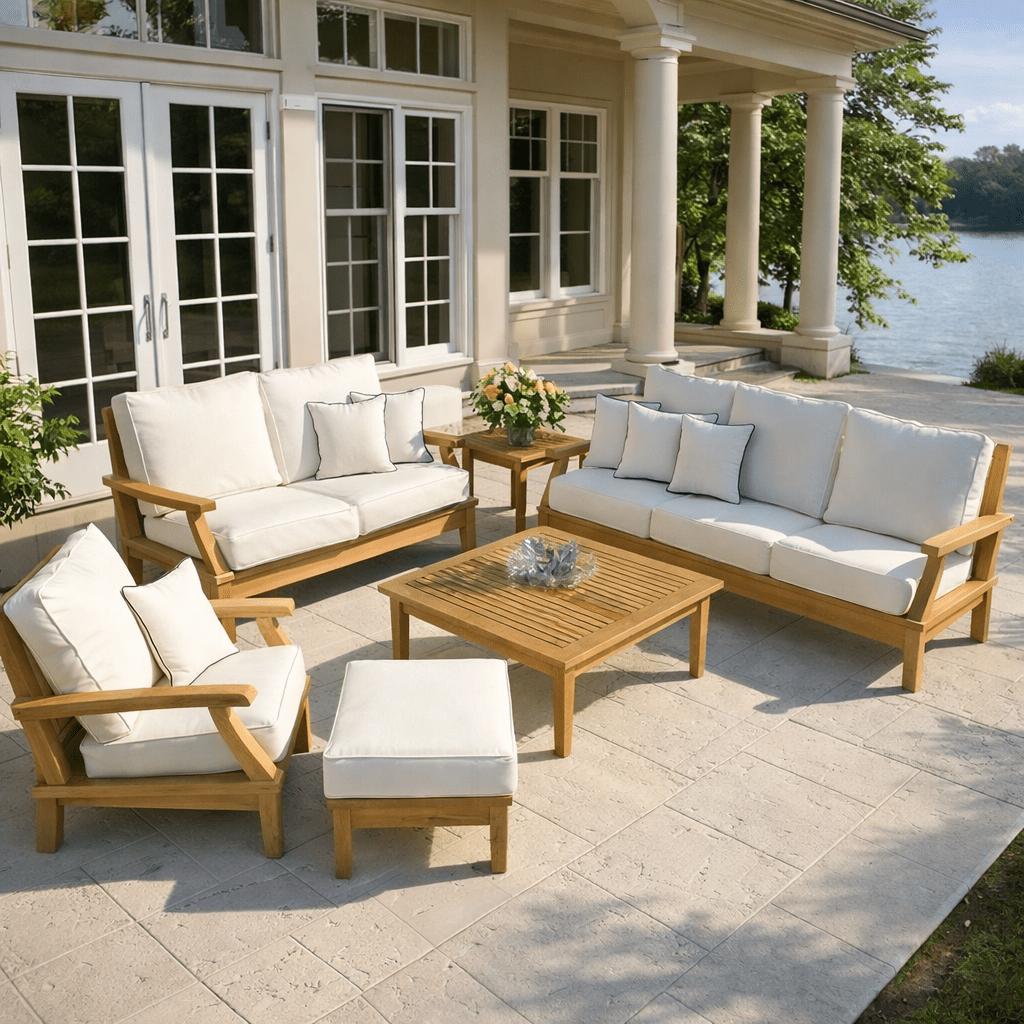 Grade A teak is naturally high in oils and has a dense grain structure. Those properties help the wood resist moisture, rotting, insects, and warping—important advantages in a coastal setting where furniture regularly encounters damp air and seasonal rain.
The distinction between premium teak and lower-grade outdoor woods is important here. A homeowner furnishing a protected patio in a dry inland climate can sometimes get acceptable service from a wider range of materials. In Pebble Beach, where furniture can remain damp longer and experience frequent wet-dry cycles, starting with a wood naturally suited to outdoor exposure becomes more valuable.
Teak does not require paint, artificial stain, or a protective coating to provide its basic outdoor durability. That simplifies ownership in a place where maintaining a vulnerable finish can otherwise become another recurring coastal-house task.
If natural teak is left untreated, its appearance gradually shifts from the original warm color toward a silver-gray patina. Many Pebble Beach homeowners may actually find that look particularly compatible with weathered stone, coastal landscaping, gray-shingled architecture, and the muted palette of the Monterey Peninsula. Those who prefer the original teak color can instead choose an appropriate care routine to maintain it.
Outdoor furniture here can move repeatedly between damp mornings, clearing afternoons, rain, sun, and cooler evenings. Grade A teak's natural resistance to warping and its suitability for temperature fluctuations make it a practical material for that pattern.
The advantage is not that teak remains visually unchanged outdoors—it does not. Its surface color evolves naturally if untreated. The important distinction is that the wood does not need to retain its original golden color in order to remain suitable for outdoor use.
Premium teak furniture has a higher upfront cost than many mass-market patio sets, but teak furniture can last for decades. That changes the economics for a homeowner furnishing an estate, second home, or outdoor space designed to remain relevant through future renovations.
In Pebble Beach especially, we would generally favor furniture with a timeless form over something driven by a short-lived trend. Teak works comfortably with traditional, transitional, coastal, and modern architecture, so a well-chosen grouping can often survive changes in cushions, landscaping, hardscape, or exterior finishes without feeling out of place.
| Pebble Beach Challenge | Why Premium Grade A Teak Performs Well |
|---|---|
| Marine moisture | Natural oils and dense grain help resist moisture and rot. |
| Salt-laden coastal air | Solid teak does not depend on a painted exterior finish for durability. |
| Seasonal rain | Grade A teak is designed for year-round outdoor use and withstands rain. |
| Sun exposure | Teak withstands outdoor sun and can weather naturally to a silver-gray patina. |
| Wet-dry cycles | Teak resists warping and handles temperature fluctuations well. |
| Insects and decay | Premium teak is naturally resistant to insects and rotting. |
If we were helping furnish a Pebble Beach property, we would start with the way the home is actually used rather than with a furniture catalog. First identify the spaces where people naturally stop: the terrace with the best ocean view, the protected courtyard, the outdoor dining area nearest the kitchen, or the fire feature that draws everyone outside in the evening. Then build furniture zones around those behaviors.
A common temptation is to place the main seating group at the absolute edge of an ocean-view terrace. Sometimes that is perfect. But in Pebble Beach, moving the furniture several feet toward a wall, courtyard edge, or landscape screen can preserve nearly the same view while noticeably reducing wind exposure.
That is the kind of tradeoff we would evaluate before choosing furniture dimensions. For a primary entertaining zone, a substantial teak lounge set can create a defined conversation room outdoors without requiring every seat to face the same direction. Position the group so guests can enjoy both the view and one another.
On larger terraces and estate patios, we usually prefer two complete zones rather than one oversized arrangement trying to perform every function. A dedicated teak outdoor dining area works best near the kitchen or grilling area, while deep seating belongs where the best view, shelter, or evening atmosphere is found.
This arrangement is especially useful for entertaining because dinner does not have to end when plates are cleared. Guests naturally migrate from the table to the conversation area, and each space can be sized correctly for its purpose.
A Pebble Beach home may feel quiet most days but suddenly need considerably more seating when children, grandchildren, friends, or weekend guests arrive. Rather than sizing every table for the largest possible gathering, consider an extendable teak dining table that can remain appropriately proportioned for ordinary use and expand when needed.
That is particularly useful on terraces where maintaining circulation and an open view matters. A permanently oversized table can consume the center of the patio even when only two or four people are using it.
Outdoor planning in Pebble Beach should not assume the patio behaves the same way at 2 p.m. and 8 p.m. A beautiful afternoon dining terrace can become cool and breezy later, which is why sheltered deep seating and a well-positioned fire feature often add more usable hours than simply adding additional dining chairs.
If the property allows it, a teak fire pit table can become the transition point between dinner and evening conversation. The larger lesson is to furnish for the part of the day when you most want to be outside, not merely for the patio's appearance at noon.
For most Pebble Beach properties, begin with the activity that defines your outdoor space. Frequent hosts should usually establish dining and a separate conversation area first; view-oriented homes may place lounge seating first, while smaller courtyards benefit from fewer substantial pieces rather than many small ones. Once those primary zones are established, accent tables, fireside furniture, and garden seating can complete the property without making it feel overfurnished.
Outdoor living on the Monterey Peninsula is different from the hot-weather, pool-centered model common farther south in California. Pebble Beach lends itself especially well to view-oriented terraces, lingering meals, sheltered conversation areas, garden seating, and evenings organized around a fire. The best furniture plans reflect that slower, layered style of outdoor use.
On many Pebble Beach properties, the landscape is part of the room. Ocean, forest, golf-course, and garden views change the way furniture should be arranged. Instead of automatically facing every chair toward a coffee table, consider an open U-shaped or angled arrangement that keeps conversation comfortable without turning backs to the scenery.
This is one reason swivel chairs can be useful in certain layouts: they allow a guest to alternate naturally between the group and the view. In more traditional settings, a pair of substantial club chairs can accomplish the same goal when placed at an angle to a sofa.
Pebble Beach's appeal as a destination means many homes function differently on weekdays than they do when family and friends arrive. A dining area for four or six may suddenly need to accommodate eight or ten. Flexible furniture is often more useful than permanently furnishing every outdoor area for peak occupancy.
We would generally prioritize a comfortable everyday table first, then use expandable capacity or movable chairs for larger gatherings. This keeps the terrace visually open and prevents a spectacular outdoor space from feeling like a banquet setup when guests are not there.
The coastal climate also changes what "outdoor season" means. Rather than one sharply defined summer entertaining period, homeowners can have opportunities to use patios across much of the year, but comfort can vary considerably by exposure and time of day. Protected seating and thoughtful evening planning matter.
A conversation area near a wall, courtyard, fireplace, or landscape buffer can therefore be more useful than a larger grouping placed in a windy location simply because that location has the widest view.
For vacation and second homes, furniture should not require a complicated ritual every time the property is left unoccupied. Grade A teak can remain outdoors and does not require sealing or covering for durability, which simplifies ownership. Cushions, however, deserve a separate plan based on how frequently the property is occupied and how exposed the seating area is.
For homes used intermittently, reducing exposed fabric between visits can make the next arrival more pleasant even when the furniture itself is suitable for year-round outdoor use.
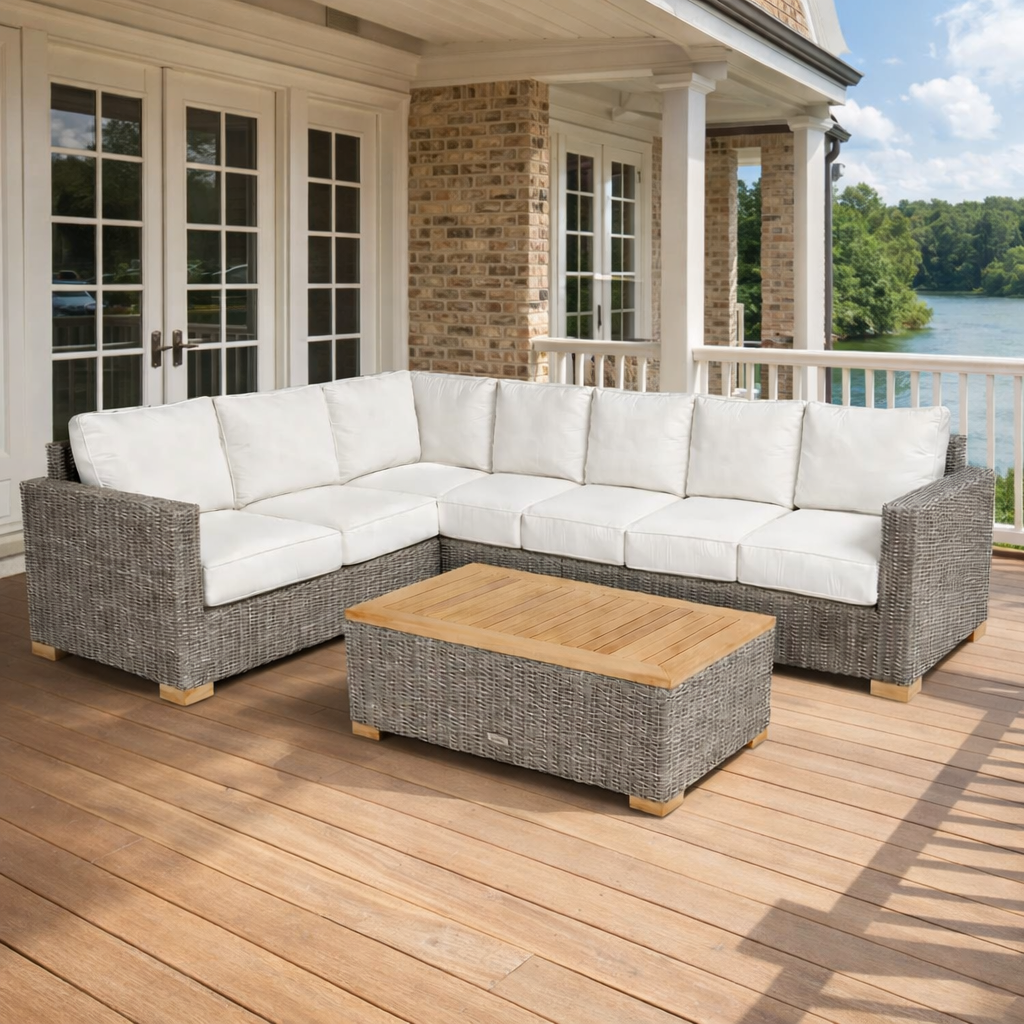 The most useful furniture category depends less on the size of the house than on where people actually gather. In Pebble Beach, we would typically organize the property into a few strong outdoor rooms rather than distributing small pieces evenly across every available patio.
For a broad terrace facing the Pacific, start with seating that feels substantial enough to define the space. A teak sectional works particularly well when the terrace has a clear perimeter because it can establish an outdoor room while leaving the center open for a coffee table and circulation.
Do not automatically choose the largest configuration that fits. The furniture should frame the view rather than compete with it. Leave visual breathing room along railings, glass walls, and major sightlines.
Courtyards call for a different approach. Because the architecture already defines the room, individual sofas, loveseats, and teak club chairs often provide more layout flexibility than a large sectional. Two chairs that can angle toward both a fireplace and a conversation group are especially useful.
A courtyard may also stay damper than a fully open terrace because walls and landscaping slow drying. That makes solid outdoor-suitable materials and good airflow around cushions more important than simply choosing furniture based on appearance.
Place the primary dining area near the kitchen whenever the architecture allows it. A beautiful table located too far from food preparation becomes surprisingly inconvenient during frequent entertaining. For larger properties, serving convenience is often more important than placing the dining table at the single best view point.
Save that prime view for lounge seating, where people may remain for hours. Dining guests can still enjoy the scenery without requiring the table to occupy the property's most exposed edge.
Cool evenings make a dedicated fireside zone especially appealing. Arrange seating closely enough that the group feels cohesive rather than scattering chairs around a large patio. A sofa or loveseat opposite two chairs usually creates a more comfortable conversation geometry than four or six individual chairs facing directly toward a fire feature.
Side tables matter more in these areas than homeowners sometimes expect. If every guest has somewhere to place a drink without reaching across the fire or coffee table, the space functions much more naturally.
A secondary seating area does not need to duplicate the main patio. A simple teak garden bench can be enough at a quiet view, along a garden path, or near the edge of the Del Monte Forest landscape.
These smaller destinations make large properties feel intentional. They also let homeowners experience parts of the garden at different times of day instead of concentrating all outdoor activity on one terrace.
Pebble Beach architecture does not follow one single style. Homes range from Mediterranean-inspired estates to traditional coastal residences, contemporary view homes, and properties that deliberately disappear into forested surroundings. Teak works well across that range because the material itself is visually warm and natural while the furniture design can be traditional, transitional, or modern.
Natural teak pairs easily with stone, stucco, shingle, painted wood, brick, and other materials common in high-end coastal architecture. More traditional homes often benefit from furniture with visible joinery, curved arms, or classic proportions rather than aggressively modern forms.
If the teak is allowed to develop its silver-gray patina, it can become even more visually integrated with weathered coastal materials and muted landscaping.
For stucco homes with courtyards, tiled terraces, masonry walls, and outdoor fireplaces, teak adds warmth without requiring the furniture to mimic the architecture. We would generally use separate sofas and chairs here rather than filling the courtyard with one large modular piece.
Round or oval dining tables can also soften spaces dominated by rectangular walls and paving patterns.
Modern Pebble Beach homes often benefit from simpler furniture silhouettes and fewer total pieces. The strongest layout may be one substantial lounge grouping plus a clean dining arrangement rather than multiple small seating clusters.
The goal should be to preserve the architecture's openness. Furniture should create usable zones while still allowing large windows, terrace edges, and views to remain visually dominant.
Where mature pines, cypress, stone walls, or extensive gardens define the property, let the landscape establish the palette. Teak's natural appearance generally works better here when it is treated as part of the material composition—wood, stone, foliage, fabric—rather than as a decorative accent that must remain perfectly golden.
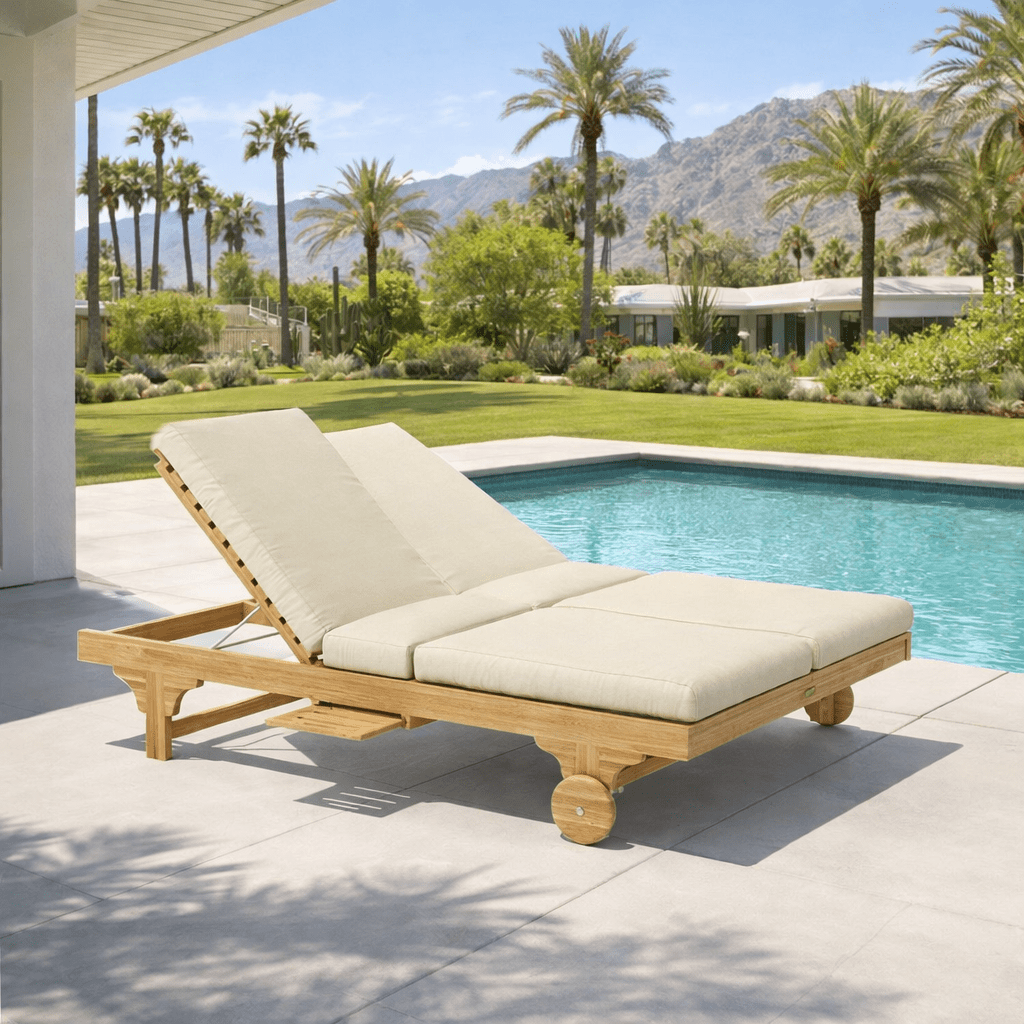 Pebble Beach's relatively moderate temperatures can create the impression that almost any outdoor furniture will perform well. That overlooks the more important combination of moisture, marine air, rain, shade, and wind.
Evaluate the material for its actual exposure. Grade A teak is designed for year-round outdoor use and naturally resists moisture and rot, making it better suited to recurring coastal exposure than woods that depend heavily on a protective surface finish.
The best view is not always the best furniture location. On an exposed terrace, a small change in placement can make the difference between an area people use regularly and one they abandon whenever the wind rises.
Before purchasing a large set, spend time outside at the hours when you expect to use it. Identify wind direction, afternoon sun, shade, and where people already gravitate. Then size the furniture for that zone.
Large homes can encourage large furniture orders, but outdoor square footage should not automatically translate into more pieces. Pebble Beach properties often derive much of their value from views, architecture, landscaping, and open space. Furniture should support those features rather than fill every available surface.
One complete conversation grouping is usually more useful than several unrelated pairs of chairs. Add secondary seating only where it creates a genuine destination.
Outdoor-rated cushions are designed for outdoor conditions, but exposed fabric will still collect marine moisture, debris, and dirt. On lounge pieces with Sunbrella cushions, weather-resistant and water-resistant fabric makes ownership easier, but it does not eliminate the value of good airflow and occasional cleaning.
For a second home or a very exposed terrace, decide in advance where loose cushions will go during extended absences. The furniture itself may be able to remain outdoors year-round even when storing cushions is useful for cleanliness.
Homeowners unfamiliar with teak sometimes interpret the gradual silver-gray color as deterioration. It is a normal part of untreated teak weathering. The decision is aesthetic: allow the natural patina to develop or use appropriate teak-care products to preserve more of the original color.
Knowing which appearance you prefer before furnishing a large property helps keep different seating and dining zones visually consistent.
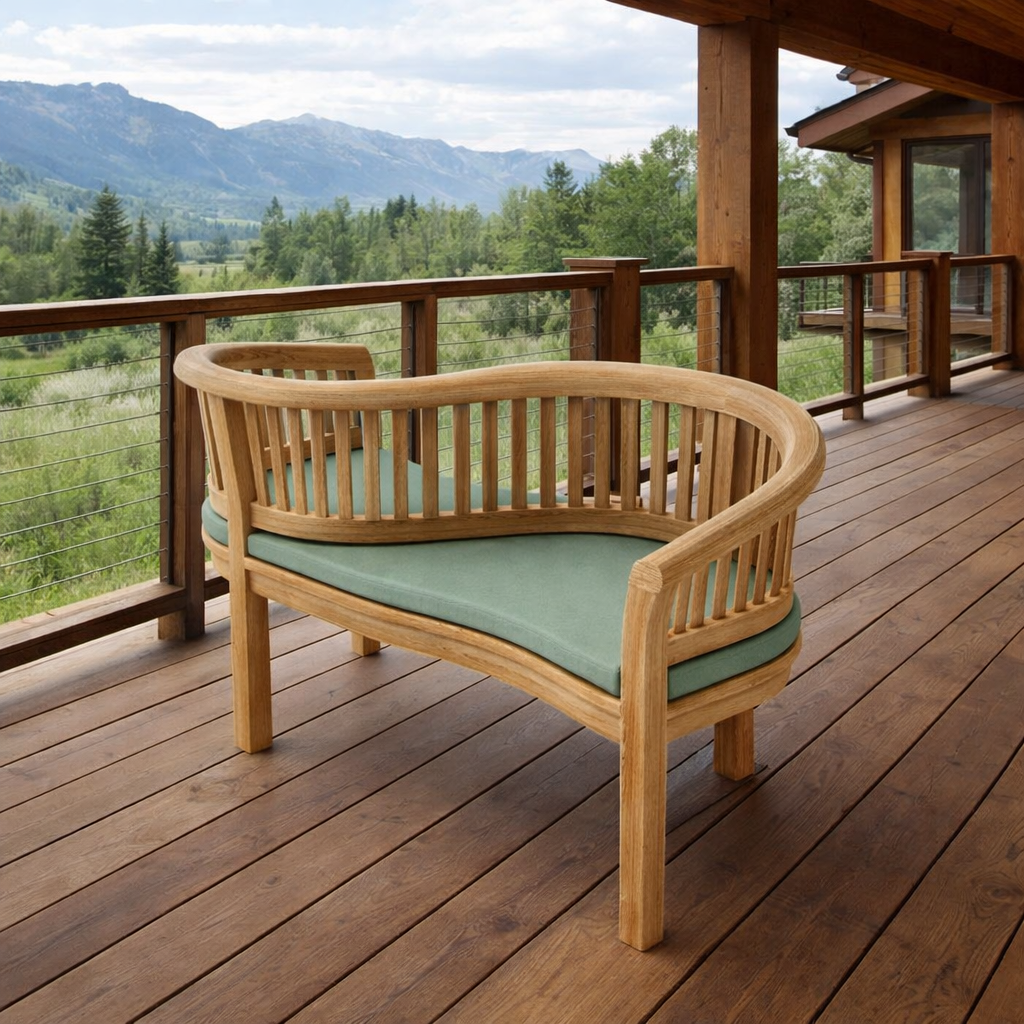 Pebble Beach does not require an unusually complicated teak-care routine. In fact, one of teak's advantages here is that homeowners can choose how much appearance maintenance they want to perform. The most useful local adjustments involve cleaning marine residue and organic debris, allowing damp areas to dry, and deciding whether the goal is a natural patina or a maintained golden teak color.
There is no single cleaning calendar that fits every Pebble Beach property. An exposed ocean-facing terrace may collect salt residue faster than a courtyard protected behind the house, while furniture under trees may need more frequent removal of pollen, needles, leaves, or bird debris.
Use visible buildup rather than an arbitrary schedule as your guide. Periodic gentle cleaning prevents dirt and organic material from remaining on the surface for long periods.
Where furniture receives regular salt-laden air, occasional rinsing or cleaning helps keep surface residue from accumulating. Pay particular attention to horizontal surfaces, crevices, and hardware.
Royal Teak and Anderson Teak products use stainless-steel hardware, while Verandis Teak products use brass hardware. Those material details are useful in a coastal environment, but routine cleaning is still sensible when salt buildup is visible.
In shaded courtyards and forested areas, avoid creating unnecessary moisture traps. Do not allow leaves, pine needles, or other organic debris to remain packed against furniture for extended periods. Keep the area beneath and around the furniture reasonably clear so surfaces can dry naturally after fog or rain.
If cushions become wet, allowing good airflow around them is more useful than leaving them compressed tightly against other surfaces.
Unfinished teak can simply be left outdoors and allowed to weather naturally. Over time it develops the familiar silver-gray patina. No artificial stain is required for durability.
If you prefer the original golden appearance, use appropriate teak care products and follow the selected product's directions. Think of this as appearance maintenance rather than something teak requires in order to survive outdoors.
Premium Grade A teak does not require a protective cover for outdoor durability. A cover can nevertheless be useful when your goal is to reduce cleaning, keep debris off furniture during a long absence, or make a second home easier to reopen.
If you do cover furniture, avoid trapping persistent moisture beneath the cover. Good fit and airflow matter in a foggy coastal environment.
Seasonal rain does not mean solid Grade A teak furniture must be moved indoors. TeakHQ's teak furniture is designed for year-round outdoor use and can withstand rain and temperature fluctuations.
For many Pebble Beach homeowners, the practical winter routine is simply to keep the furniture clean, manage cushions according to exposure and use, clear organic debris, and let the teak remain outside.
The right outdoor furniture plan for Pebble Beach begins with exposure, views, shelter, and how you actually entertain. Choose fewer, better-defined furniture zones; give the prime terrace to the activity you use most; and select materials that fit the realities of coastal ownership. Premium Grade A teak provides a durable, natural foundation for dining, conversation, fireside gatherings, and quiet garden spaces while giving you the freedom to maintain its original color or simply let it weather naturally.
Premium Grade A teak is one of the strongest choices because it naturally resists moisture, rot, insects, and warping and is designed for year-round outdoor use. High-quality aluminum and other premium materials can also work, but coastal shoppers should evaluate finishes, hardware, salt exposure, and maintenance requirements carefully.
Prioritize materials intended for repeated moisture and weather exposure, quality hardware, substantial construction, and an ownership routine you are comfortable maintaining. On very exposed properties, also consider wind, cushion storage, and how easily the furniture can be cleaned of marine residue.
Grade A teak is well suited to coastal environments because its outdoor durability comes from its naturally oily, dense wood rather than a painted surface coating. It is still sensible to periodically clean visible salt and marine residue from the wood and hardware.
Yes. TeakHQ's Grade A teak furniture is designed for year-round outdoor use and withstands rain, sun exposure, and temperature fluctuations. Protective covers are optional rather than required for the teak's durability.
A sectional works well on a broad terrace where it can define a complete conversation zone. Separate sofas and chairs may be better when you need to preserve several sightlines, respond to an irregular patio shape, or reposition seating toward both the view and other guests.
Grade A teak does not need to be covered for outdoor durability. Covers can still reduce cleaning and debris accumulation, particularly at vacation homes, but they should be used in a way that does not unnecessarily trap moisture beneath them.
Clean according to exposure rather than following one rigid schedule. Ocean-facing patios may need more frequent attention to salt residue, while furniture beneath cypress or pine trees may need more frequent removal of leaves, needles, pollen, and other organic debris.
Yes. Untreated teak naturally weathers toward a silver-gray patina over time. That color change is normal and does not mean the teak has failed. Homeowners who prefer a warmer original teak color can use appropriate teak care products.
For frequent entertaining, a combination of teak outdoor dining and a separate conversation area is particularly versatile. An extendable table helps accommodate visiting guests without overwhelming the terrace every day, while lounge seating provides somewhere to move after dinner.
For homeowners who prioritize natural materials, long service life, year-round outdoor suitability, and flexible maintenance, teak can make strong long-term sense. Premium teak costs more initially than many mass-market alternatives, but teak furniture can last for decades rather than being treated as a short-term patio purchase.


