
FREE SHIPPING
within mainland USA
within mainland USA
Home ▸ Teak Outdoor Furniture ▸ By Location ▸ Phoenix, Arizona

Phoenix is an unusually demanding place for outdoor furniture because exposure is not limited to one season or one type of weather. The dominant issue is prolonged heat and strong sun, but homeowners also contend with dust, dry conditions, abrupt monsoon rain and wind, and frequent transitions between intense exposure and shaded or covered spaces. The buying question is therefore not simply whether furniture can sit outdoors; it is how comfortably and practically it fits a desert property over many years.
In many climates, summer is automatically the prime outdoor season. Phoenix is different. During the hottest periods, an uncovered patio can be least inviting in the middle of the day and most useful in the morning or after the sun drops. Shade therefore belongs in the furniture plan from the beginning rather than being treated as an accessory added later.
This also changes where we would invest. A beautifully furnished covered patio may deliver more everyday value than filling every exposed corner of a large backyard. Before choosing a dining table, sectional, or lounge set, identify which areas receive afternoon shade and which are realistically comfortable during the hours you expect to use them.
Outdoor furniture in Phoenix can spend long periods exposed to direct sunlight. Materials, finishes, cushions, and other components should therefore be chosen for genuine outdoor use rather than simply because they look appropriate on a patio.
Premium Grade A teak is designed for year-round outdoor exposure and can withstand sun and temperature fluctuations. TeakHQ's commonly used Sunbrella cushions add another useful layer for upholstered lounge areas because the fabric is UV- and fade-resistant as well as weather- and water-resistant.
Desert homeowners often focus first on heat, but dust can have a greater effect on day-to-day ownership. Blowing dust can settle on tabletops, chair frames, cushions, and horizontal surfaces even when furniture is under a patio roof. Monsoon thunderstorms can also generate significant blowing dust.
This makes complicated maintenance routines less attractive. Smooth, accessible surfaces and furniture that can be periodically cleaned without an elaborate refinishing schedule make practical sense here.
Phoenix's generally arid setting can create the impression that moisture resistance does not matter. Monsoon season is the reason that assumption deserves reconsideration. Periodic thunderstorms can introduce rain, wind, and rapid changes in conditions, so outdoor furniture still needs to tolerate getting wet.
The more useful standard is versatility: choose furniture capable of living through dry heat and sun most of the time without becoming a liability when rain arrives. Grade A teak's natural oils, dense grain structure, and resistance to moisture make that combination particularly relevant in the desert.
Teak earns its place in a Phoenix furniture discussion not because wood is automatically superior, but because high-quality teak combines the warmth of natural wood with properties useful for outdoor exposure. Aluminum and poly furniture can also be legitimate outdoor choices. The distinction is especially meaningful for homeowners who want a substantial, natural material rather than a lighter metal or synthetic aesthetic.
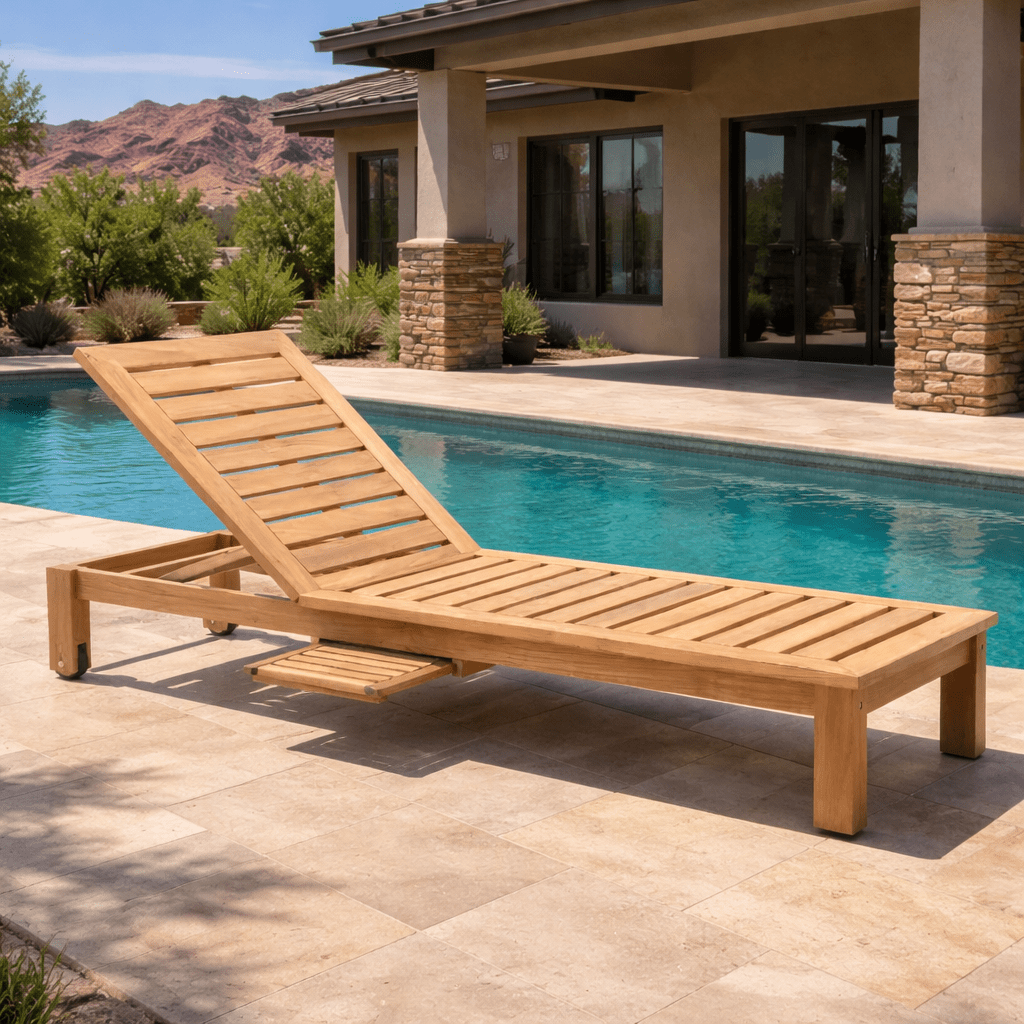
TeakHQ furniture is made from real, plantation-grown Grade A teak rather than veneer or composite wood. Its naturally high oil content and dense grain structure help it resist moisture, rotting, insects, and warping. It is designed for year-round outdoor use and to withstand rain, sun exposure, and temperature fluctuations.
Those characteristics matter in Phoenix because furniture is expected to tolerate a combination of prolonged dry exposure and occasional wet weather rather than a consistently moderate environment.
Many buyers like wood outdoors but hesitate because they associate it with constant staining or refinishing. Teak offers a different ownership model. Most TeakHQ pieces are unfinished natural teak, and artificial stain is not required for durability.
Owners can allow the wood to weather naturally toward a silver-gray patina or use an appropriate teak treatment if maintaining more of the original golden appearance is important. That flexibility is valuable on large Phoenix patios, where maintaining several furniture groupings can otherwise become a recurring project.
Outdoor wood experiences changing environmental conditions even in a dry climate. Grade A teak's dense grain structure and natural oils contribute to its resistance to warping and its suitability for outdoor use. That makes it a more appropriate choice than selecting an unspecified wood simply because both products are labeled "outdoor furniture."
For a significant purchase, we would focus less on whether a piece is technically made of wood and more on what wood it is made from, its grade, and whether it was actually designed to remain outdoors.
Premium teak has a higher upfront cost than many mass-market patio materials, so it makes the most sense for homeowners approaching the patio as a long-term part of the property. Quality teak furniture can last for decades rather than seasons. The value proposition is therefore closer to buying durable outdoor furnishings once than repeatedly replacing lower-cost sets.
This is particularly relevant for established pool patios, outdoor kitchens, covered living rooms, and landscaped courtyards where the furniture is intended to feel integrated with the architecture.
| Phoenix Challenge | Why Premium Grade A Teak Performs Well |
|---|---|
| Intense sun | Designed for outdoor sun exposure and can weather naturally over time. |
| High summer temperatures | Designed for year-round outdoor use and temperature fluctuations. |
| Very dry conditions | Dense grain and natural oils help resist warping. |
| Monsoon rain | Natural oils and dense grain provide resistance to moisture and rotting. |
| Dust and debris | Teak can be cleaned periodically without requiring artificial stain for durability. |
| Year-round exposure | Grade A teak is designed for permanent outdoor use. |
| Long ownership horizon | Quality teak can last for decades with appropriate care. |
We would begin with one question: where do you actually want to be outside at different times of day? In Phoenix, that question matters more than simply measuring the patio. Sun orientation, shade, proximity to the pool, and the relationship between the indoor kitchen and outdoor entertaining areas should determine the furniture plan.
Our first planning move would be to map morning and afternoon sun across the patio. That may sound backward on a furniture-shopping page, but it prevents an expensive mistake: creating your main seating area in a location that is uncomfortable when you actually want to use it.
A covered patio or reliably shaded portion of the yard usually deserves the primary teak patio seating. Deep seating can turn that space into an outdoor living room that remains useful for morning coffee, evening conversation, family gatherings, and entertaining.
For a Phoenix home with a swimming pool, we would usually treat the pool deck as a distinct activity zone rather than spreading miscellaneous chairs around it. A deliberate row or pair of teak chaise loungers, each with convenient access to a small table, creates a much more functional arrangement.
The memorable rule here is simple: design the Phoenix patio around shade movement, not just square footage. A large pool deck does not necessarily need more furniture; it needs furniture positioned where people will genuinely want to sit.
Outdoor dining is especially useful during Phoenix's more comfortable months and during summer evenings when conditions allow. If the home has an outdoor kitchen, grill station, or wide transition from the interior kitchen, we would place the primary teak dining furniture nearby rather than at the far end of the yard.
For households that entertain at varying scales, an extendable teak dining table can be more useful than permanently dedicating patio space to the largest possible table.
Some of Phoenix's most appealing outdoor hours begin when direct sun is no longer the dominant factor. A separate conversation area gives the patio somewhere to transition after dinner. A sofa or sectional, club chairs, coffee table, and strategically placed side tables can form that second destination.
For properties with mountain or desert views, orient the seating toward the view rather than automatically pointing every chair toward the house. The layout should respond to why the property is enjoyable in the first place.
Start with the activity that defines your backyard. Pool-centered properties will often get the most immediate use from loungers and shaded conversation seating, while homes built around cooking and entertaining may benefit more from dining furniture and flexible tables. Larger resort-style yards can support separate dining, lounge, and pool zones; smaller patios are usually better served by giving one or two activities priority rather than trying to accommodate everything.
Phoenix outdoor living has a distinctive rhythm. Rather than using the patio identically throughout the day and year, homeowners can shift activities according to sun, temperature, shade, and season. Pools, covered patios, outdoor kitchens, desert views, and comfortable evening gathering spaces therefore tend to matter more than creating a single all-purpose furniture arrangement.
One of the most useful ways to think about Phoenix is that its prime outdoor calendar differs from much of the country. While northern homeowners may cover patios for winter, Phoenix residents can get exceptional use from outdoor spaces during the cooler portion of the year. Summer does not eliminate outdoor living, but it shifts much of it toward pools, shade, mornings, and evenings.
Furniture should support that rhythm. Comfortable dining and deep seating can become major living spaces when weather is pleasant, while pool loungers and shaded seating take on greater importance during warmer periods.
Pools are deeply integrated into the area's resort-style outdoor aesthetic. Rather than treating chaise lounges as occasional accessories, consider the pool deck as its own outdoor room with seating, side tables, shade, and circulation space.
That approach works especially well on larger properties in areas such as Paradise Valley and Scottsdale, where a backyard may comfortably accommodate several distinct outdoor destinations.
For homeowners who host friends or extended family, one large furniture grouping is not always the most useful solution. Dining and conversation are different activities. A dedicated dining table near food preparation paired with a separate lounge area lets guests naturally move from dinner to a more relaxed setting.
A pool can effectively become a third zone. The result feels more like a well-planned resort patio and less like a collection of unrelated furniture pieces.
Do not design the entire backyard around midday use. Evening seating can take advantage of desert and mountain views, sunsets, landscape lighting, and cooler conditions. This is where swivel chairs, sectionals, sofas, and fire pit arrangements can become especially useful.
The most useful furniture mix depends less on the size of the house than on how the outdoor space is divided. Phoenix properties range from compact courtyards to expansive resort-style backyards, so furniture should be selected by zone rather than from a single standard package.
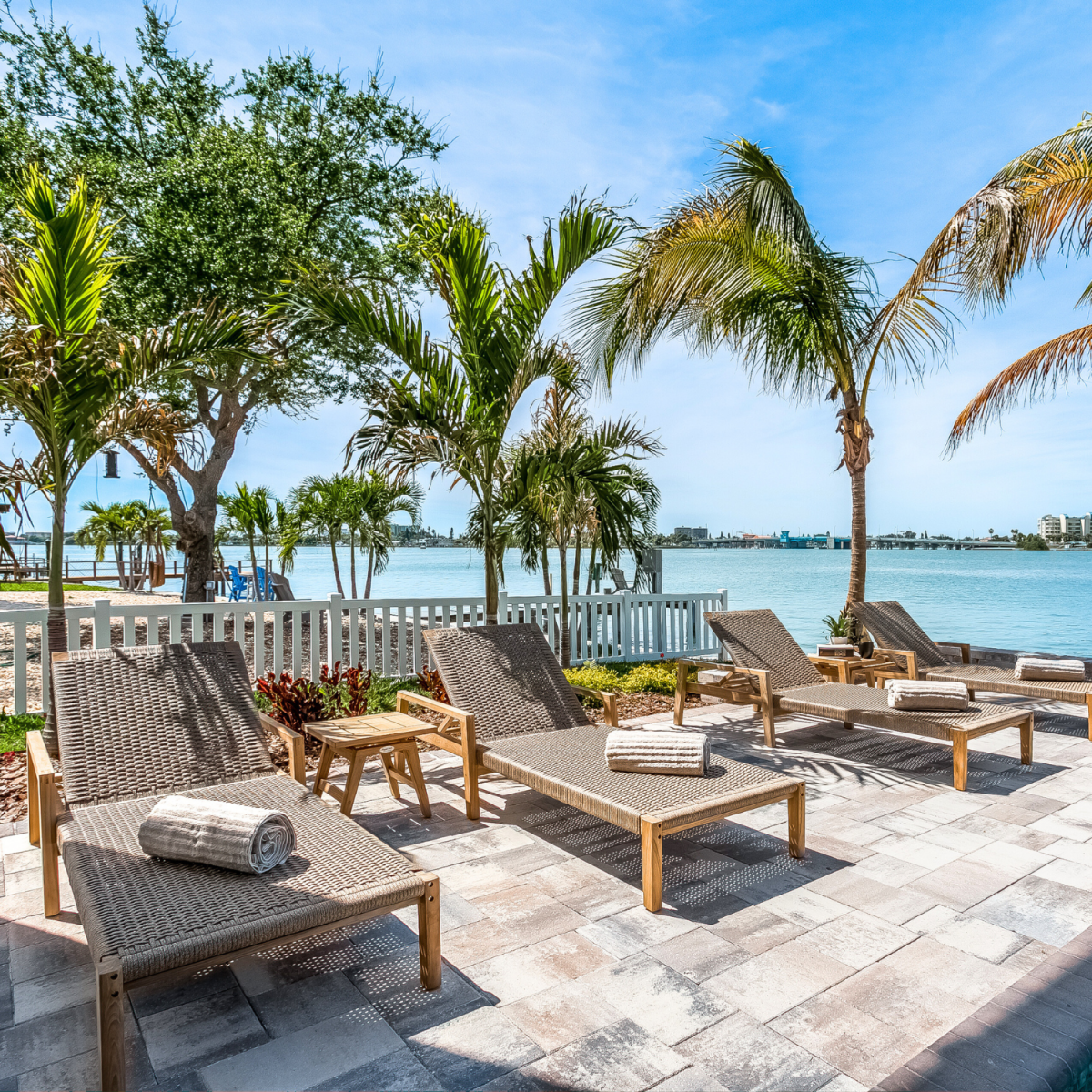
Start with teak loungers and deck chairs if the pool is the center of the backyard. Chaise lounges work naturally along the pool perimeter, while side tables give each seat a practical landing place for drinks, books, and personal items.
Leave enough open deck space that the arrangement does not interfere with circulation. Four well-positioned loungers can create a more convincing resort atmosphere than a larger number crowded around the water.
Covered patios are ideal locations for substantial lounge seating because shade increases the number of hours the space can be comfortably used. A sofa or sectional can anchor the arrangement, with club or swivel chairs providing flexible seating and a coffee table defining the center.
For a larger outdoor room, teak sectional sets can provide the scale needed to keep the furniture proportional to the architecture. Smaller covered patios may feel better with a sofa or loveseat and two chairs rather than a large sectional.
For homes organized around grilling or a built-in outdoor kitchen, dining furniture should be close enough that serving food feels effortless but far enough from cooking equipment to preserve comfortable circulation. Six-person sets work well for everyday family use; larger or extendable tables make sense for homeowners who regularly host.
Bar- and counter-height seating can also complement built-in counters, especially when guests tend to gather around the cooking area before dinner.
A secondary lounge area can be especially valuable on a large Phoenix property. Instead of duplicating the main patio, give it a purpose: sunset viewing, cocktails, conversation, or cool-weather fires.
A teak fire pit table surrounded by lounge seating can create a destination for cooler evenings, while swivel chairs are useful when the space has several focal points—perhaps the fire, pool, mountain view, and nearby conversation group.
Teak works particularly well in Greater Phoenix because its natural appearance can bridge several architectural directions found throughout the region. It can soften highly contemporary hardscape, complement Southwestern materials, or fit into resort-inspired spaces without forcing the entire patio toward one decorative theme.
Contemporary desert architecture often relies on strong horizontal forms, broad patios, glass, masonry, and restrained landscaping. Natural teak can introduce warmth into these settings without requiring ornate furniture. Cleaner-lined teak seating, sectionals, and dining tables can create contrast against stone, concrete, stucco, and metal.
Homes drawing from Southwestern architecture may incorporate stucco, warm earth tones, masonry, tile, wood details, courtyards, and shaded outdoor spaces. Teak's natural wood character sits comfortably in this palette without trying to imitate the architecture itself.
Garden benches, substantial dining furniture, and lounge seating can work particularly well when the patio is framed by desert landscaping rather than conventional lawn.
Phoenix and Scottsdale resort design provides a useful model for residential planning: do not ask one furniture grouping to perform every job. Create recognizable destinations around the pool, dining area, covered patio, and landscape.
Repeating teak across those areas can visually connect them while allowing each zone to use a different furniture configuration.
Teak pairs naturally with desert palettes built around stone, gravel, concrete, native or desert-adapted plants, and mountain views. If the teak is allowed to weather to silver-gray, its appearance becomes quieter over time; maintaining more of the golden color creates a warmer contrast. Neither approach is required for durability, so the decision can be primarily aesthetic.
Phoenix homeowners can avoid many disappointing purchases by planning around how the patio will actually function rather than buying furniture solely from measurements or photographs. The most common mistakes are usually planning mistakes before they become material problems.
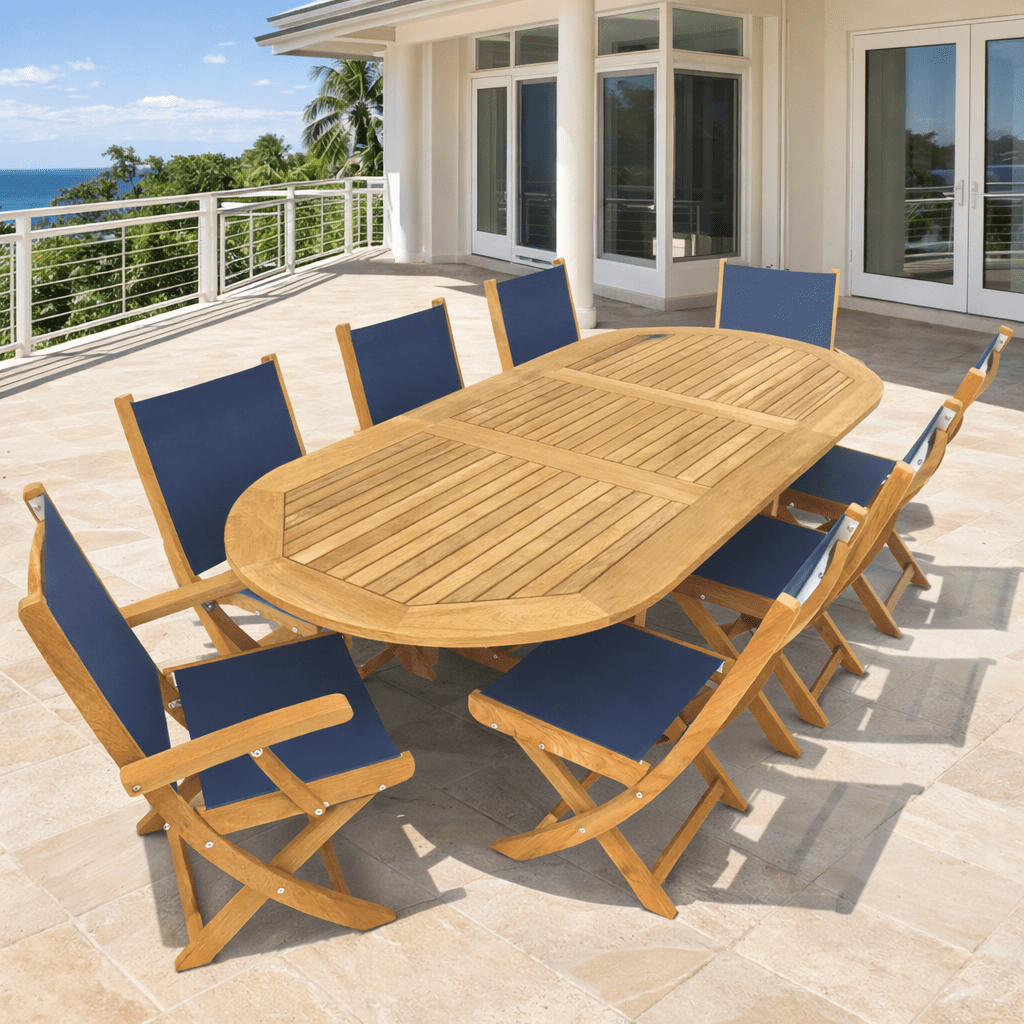
A furniture grouping can fit perfectly on paper and still be poorly located. If the dining table or primary lounge area receives intense sun during the hours you expect to use it, the problem is placement rather than furniture capacity.
Map shade first. Then decide where the investment pieces belong. Teak is designed for sun exposure, but material durability does not make direct Phoenix summer sun comfortable for people.
"Wood outdoor furniture" is too broad a category to make a meaningful buying decision. Different woods have different characteristics. TeakHQ's Grade A teak is naturally high in oils, has a dense grain structure, and is resistant to moisture, rot, insects, and warping.
For a long-term installation, evaluate the actual material and grade rather than assuming any wood set will perform like premium teak.
Large backyards tempt homeowners to fill empty space. Around a pool, that can create poor circulation and make a premium setting feel cluttered. Start with the number of loungers that will routinely be used, add accessible side tables, preserve clear paths, and expand only if the household's habits justify it.
Outdoor furniture does not need to be damaged by weather to become annoying to own. If every surface requires a complicated cleaning or refinishing process after dusty conditions, maintenance friction adds up.
Teak's ability to remain outdoors without mandatory painting, staining, sealing, or covering gives owners flexibility. Periodic cleaning can be treated as normal patio upkeep rather than a restoration project.
Phoenix's outdoor spaces can be particularly valuable outside the hottest part of the year. A backyard designed exclusively around swimming may miss opportunities for cool-season dining, entertaining, conversation, and relaxing outdoors.
Consider a balanced plan: pool furniture for hot-weather use, plus dining and lounge areas that make the patio feel like an extension of the home when conditions are comfortable.
Phoenix does not require an elaborate teak-maintenance routine. The most useful approach is to distinguish between care needed to keep furniture functional and optional care intended to preserve a particular appearance.
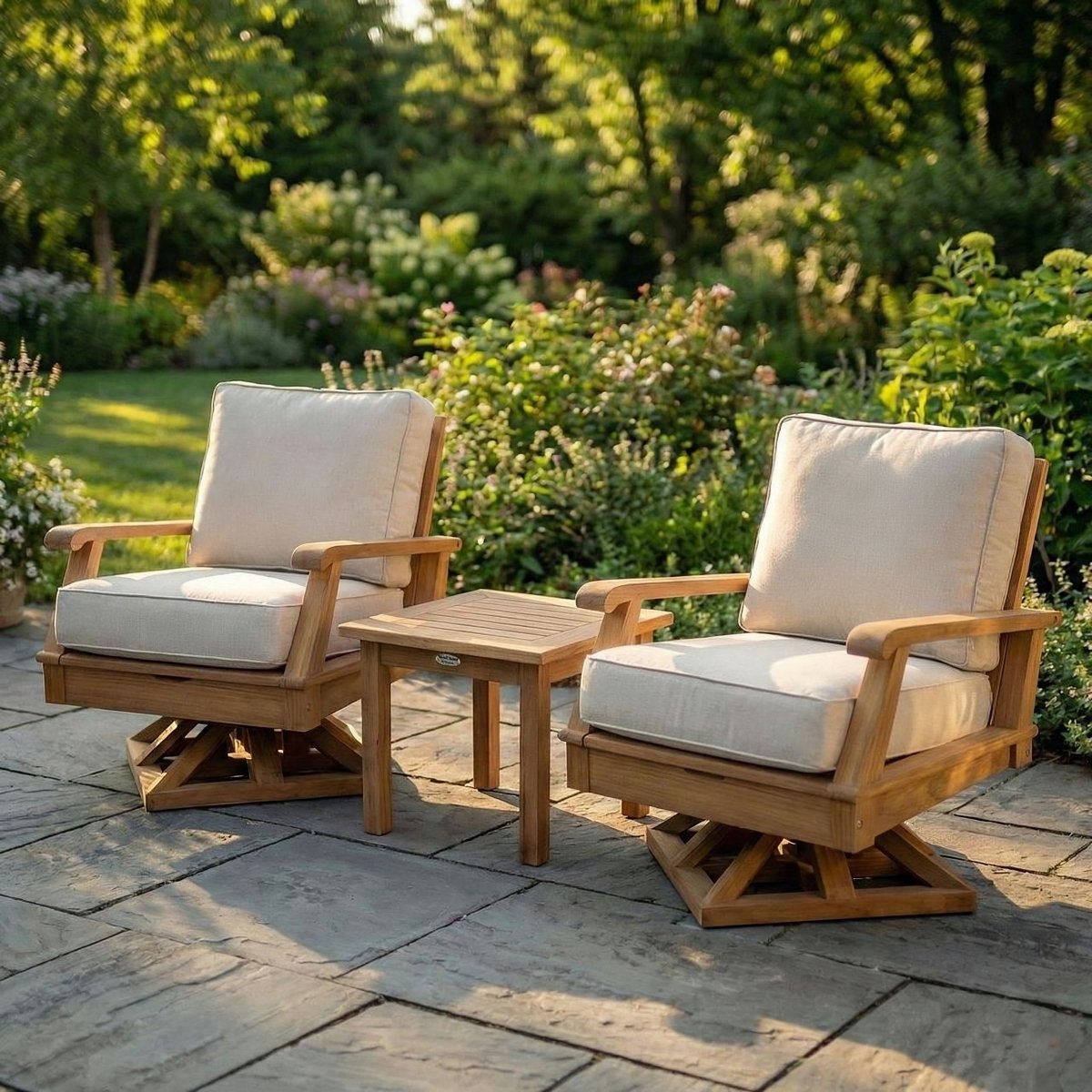
There is no meaningful calendar that can predict how often every Phoenix patio needs cleaning because exposure varies dramatically. Furniture near open desert, landscaping, construction, or an exposed yard may collect dust faster than pieces inside a protected courtyard.
Clean based on visible accumulation rather than following an arbitrary monthly schedule. Pay particular attention to tabletops, seat surfaces, joints, and areas where wind deposits debris.
After significant wind or rain, clear accumulated debris and allow wet surfaces to dry naturally. Cushions deserve separate attention: even weather-resistant outdoor fabric benefits from sensible care after storms rather than remaining unnecessarily wet or dirty.
Teak itself is naturally resistant to moisture and designed for year-round outdoor use, so moving the entire furniture collection indoors every time rain is possible is not necessary.
Untreated teak naturally weathers toward a silver-gray patina. That color change is expected and does not mean the furniture has failed. Phoenix homeowners who like the weathered look can allow the process to occur naturally.
If you prefer more of teak's original golden appearance, appropriate teak care products can be used. Think of that choice as appearance management rather than something required to make genuine Grade A teak suitable for outdoor use.
Protective covers are not required for teak's outdoor durability. Some owners may still choose them to reduce dust, debris, or cushion cleaning, particularly when a furniture grouping will not be used for an extended period.
The practical Phoenix question is therefore not "Must teak be covered?" but "Would covering this particular area make ownership easier?" A frequently used covered patio may need little intervention, while an exposed secondary seating area might benefit more from optional protection.
Most TeakHQ patio seating pieces include Sunbrella cushions, although inclusions vary by product. Sunbrella fabric is weather-, fade-, UV-, and water-resistant. Dining chairs and loungers are less likely to include cushions, though cushions are often available separately.
In Phoenix, treat the teak frame and cushion system as two different maintenance decisions. The wood can remain outdoors year-round; cushions may be stored or protected when convenient to reduce unnecessary exposure to dust and storms.
The right Phoenix patio is not simply the one with the most furniture. Start with shade, identify the activities your household genuinely does outdoors, and create distinct spaces for the pool, dining, and conversation where the property allows. Premium Grade A teak is especially compelling when you want those spaces furnished with natural wood that can remain outdoors, age gracefully, and serve the property for the long term.
There is no single material that fits every homeowner. High-quality aluminum and synthetic materials can be legitimate choices, but Grade A teak is especially attractive for buyers who want natural wood, substantial construction, long service life, and furniture designed to withstand sun, rain, and temperature fluctuations. It is also naturally resistant to moisture, rot, insects, and warping.
Yes. Grade A teak is designed for outdoor use and can withstand sun exposure and temperature fluctuations. The wood will naturally change appearance over time, eventually developing a silver-gray patina if left untreated.
Chaise loungers, small side tables, and a separate shaded conversation area make a particularly practical combination. Rather than filling the entire pool deck, preserve circulation and position seating according to shade and how people actually use the pool. Browse teak chaise loungers for dedicated poolside seating.
Furniture designed for outdoor exposure does not necessarily need shade for durability, but shade can dramatically improve usability and comfort in Phoenix. Place your most frequently used dining and conversation areas according to afternoon sun exposure rather than simply choosing the largest available patio area.
Yes. TeakHQ's Grade A teak is designed for year-round outdoor use and can withstand rain, sun exposure, and temperature fluctuations. Covers are optional rather than required for the teak itself.
No. Teak does not require sealing for outdoor durability. You can leave it untreated and allow it to develop a silver-gray patina or use appropriate teak products if you prefer to maintain more of its original color.
Choose outdoor furniture that is straightforward to clean, and remove dust and debris as needed after significant blowing-dust events. Optional covers may reduce cleanup on infrequently used furniture, but Grade A teak does not require a cover simply to remain outdoors.
For larger properties, separate dining and conversation areas are often more useful than one oversized furniture grouping. Consider a teak dining set near the kitchen, deep seating under shade, and dedicated loungers around the pool. Extendable tables are particularly useful when guest counts vary.
Quality teak furniture can last for decades, which is why its higher upfront price is best evaluated as a long-term investment rather than compared only with the purchase price of mass-market patio sets.
It depends on your priorities. Aluminum is lighter and can provide a distinctly modern appearance, while poly furniture offers a synthetic, low-maintenance alternative. Teak is heavier, warmer, natural, and more architectural in feel. For Phoenix homeowners who value authentic wood, longevity, and flexible maintenance, premium Grade A teak is a particularly strong option.


