
FREE SHIPPING
within mainland USA
within mainland USA
Home ▸ Teak Outdoor Furniture ▸ By Location ▸ Raleigh-Durham, North Carolina
Raleigh-Durham homeowners furnish for a combination that deserves more thought than a generic patio set: hot, humid summers, frequent rain, heavy spring pollen, cool winters, and outdoor spaces shaded by mature trees. Screened porches, decks, patios, pools, outdoor kitchens, and wooded backyards can all place different demands on furniture. Premium Grade A teak is especially well suited to this environment because it handles moisture and temperature changes while offering the natural, substantial look that works comfortably with both traditional and contemporary Triangle homes.

Raleigh-Durham sits in an interesting outdoor-furniture environment. It is far enough inland that salt spray is not the issue it is along the Carolina coast, yet the Triangle still receives plenty of moisture, summer humidity, strong sun, seasonal storms, and meaningful temperature swings. Add a heavily wooded landscape and a pronounced spring pollen season, and furniture here spends much of the year dealing with moisture or organic debris rather than simply sitting in dry sunshine.
In a dry climate, shoppers may focus primarily on UV fading and heat. Around Raleigh, Cary, Durham and Chapel Hill, moisture deserves equal attention. Furniture may be exposed to humid air for long stretches, then soaked by a thunderstorm, then heated again by direct sun. That repeated wet-dry cycle makes the quality and stability of an outdoor material more important than its appearance on the showroom floor.
This does not mean teak is the only sensible premium material. High-quality aluminum can also be a practical outdoor choice, particularly for homeowners who prioritize low weight and a contemporary appearance. Poly lumber appeals to buyers who want a synthetic material with minimal upkeep. Teak becomes especially compelling when the homeowner also wants authentic wood, substantial construction and a material naturally suited to prolonged outdoor exposure.
The Triangle's spring pollen is one of the most practical local considerations that generic patio-furniture guides tend to miss. Yellow-green pollen can coat tables, chair arms, cushions and horizontal surfaces surprisingly quickly. The lesson is not that you need furniture impervious to pollen; no material is. The better strategy is to choose furniture with surfaces you can clean easily and to avoid complicated maintenance routines that become frustrating when regular rinsing or washing is already part of spring ownership.
Furniture beneath pine, oak and other mature trees also collects leaves, seeds, twigs and bird debris. In heavily wooded neighborhoods, easy access around and underneath the furniture matters almost as much as the furniture material itself.
A sunny pool deck and a screened porch under mature trees may be only 30 feet apart, but they are different furniture environments. The pool deck receives more UV and often dries quickly after rain. A deeply shaded porch or patio receives less direct sun yet can remain damp longer after humid weather or wind-driven rain.
That distinction matters when planning cushions, furniture spacing and cleaning. Do not assume that the most protected part of the yard automatically requires the least attention. In Raleigh-Durham, the slow-drying corner beneath heavy tree cover can sometimes deserve more airflow and debris cleanup than an exposed patio.
The Triangle gets much more year-round outdoor use than colder northern markets, but it is not a tropical climate. Furniture experiences summer heat, cool autumn evenings, winter freezes and spring warm-ups. For shoppers buying premium pieces, the useful question is therefore not simply, “Can this stay outside in July?” It is, “Do I want to manage this furniture through years of seasonal changes?”
That is one reason materials designed for outdoor exposure make sense here. Premium Grade A teak can withstand rain, sun exposure and temperature fluctuations and is designed for year-round outdoor use.
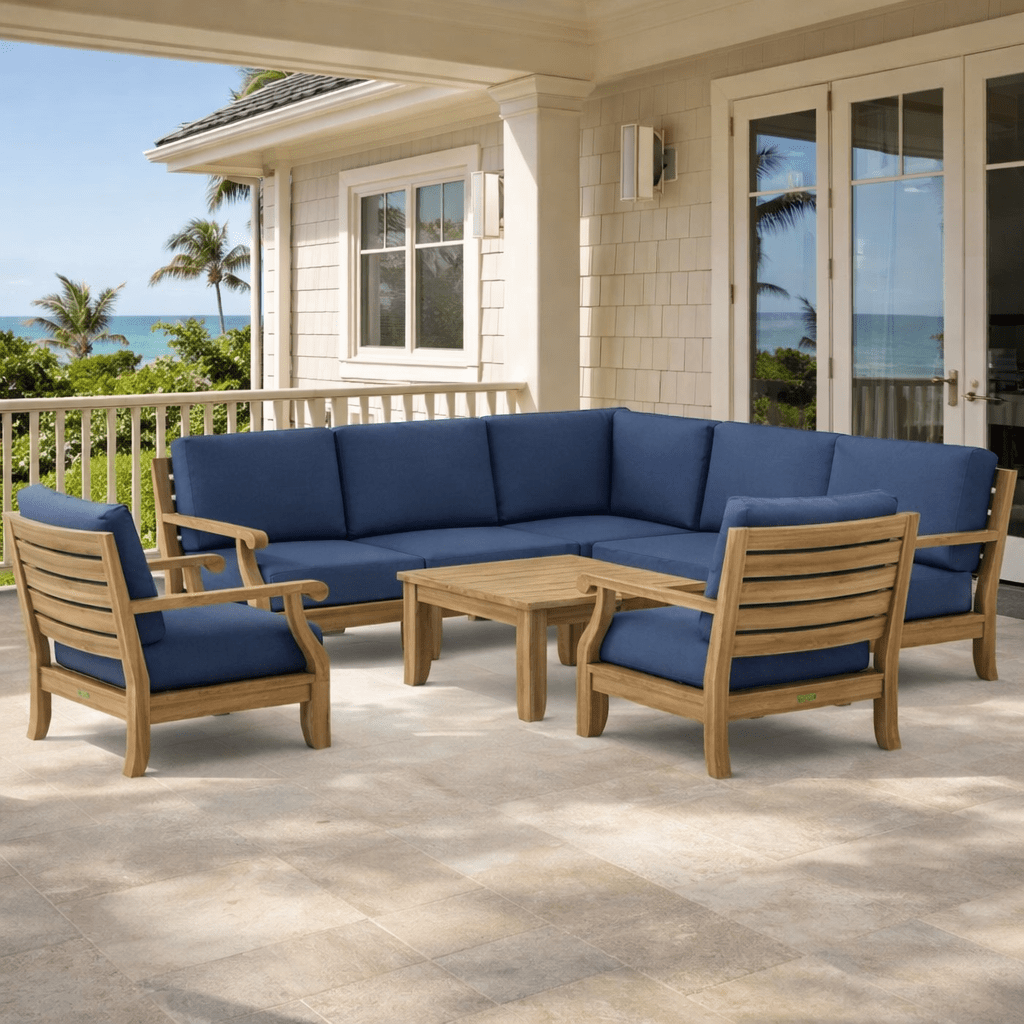 The strongest argument for Grade A teak in the Triangle is not that it eliminates weather—it is that the wood itself is naturally well suited to living with weather. Grade A teak has a dense grain structure and naturally high oil content that help it resist moisture, rotting, insects and warping.
That is particularly useful through humid summer stretches and repeated rain-and-dry cycles. Unlike a finish that provides the entire line of defense, teak's outdoor suitability is inherent to the material. It does not need an artificial stain simply to be durable outside.
Premium teak is built to withstand outdoor sun and rain, but buyers should separate durability from color preservation. Natural unfinished teak gradually changes from its original warm tone toward a silver-gray patina when left exposed. That weathering is normal and does not mean the furniture is failing.
Some homeowners love the softer gray against Raleigh's brick, stone and mature landscaping. Others want to preserve more of the original teak color. Those owners can choose an appropriate teak sealer or care regimen. The important point is that maintaining the original color is primarily an aesthetic choice rather than a requirement for the furniture to remain outdoors.
For a homeowner investing in a finished patio, screened porch or outdoor kitchen, replacement cycles matter. Premium Grade A teak furniture can last decades rather than seasons when appropriately owned and cared for. Its higher purchase price is easier to justify when the goal is to furnish a permanent outdoor room rather than buy temporary furniture for a few summers.
Its heavier, more substantial character can also feel appropriate on large Triangle patios and decks, particularly where the surrounding architecture uses brick, stone, timber or traditional detailing. Lightweight furniture certainly has advantages when it needs to be moved frequently; teak makes more sense when the arrangement itself is intended to feel architectural and established.
Teak offers a useful choice for Raleigh-Durham homeowners: maintain the warm wood color or allow the furniture to age naturally. It can be left untreated to develop its silver-gray patina, or homeowners can use teak care products when preserving the original appearance is important.
That flexibility is valuable in a region where spring cleaning is already likely to involve pollen removal. Owners who prefer a lower-intervention approach do not need to create an elaborate refinishing schedule merely to keep Grade A teak structurally suitable for outdoor use.
| Raleigh-Durham Challenge | Why Premium Grade A Teak Performs Well |
|---|---|
| Summer humidity | Natural oils and dense grain help resist moisture and rot. |
| Frequent rain | Grade A teak is designed for year-round outdoor exposure. |
| Sun exposure | Teak withstands outdoor sun and can weather naturally to gray. |
| Seasonal temperature changes | Teak withstands temperature fluctuations and resists warping. |
| Spring pollen | Solid wood surfaces can be routinely cleaned as pollen accumulates. |
| Shaded damp areas | Natural moisture and rot resistance suit spaces that dry more slowly. |
| Insects | Grade A teak is naturally resistant to insects. |
If we were helping furnish a Raleigh-Durham home from scratch, we would start with how the household actually moves outside—not with a furniture catalog. The Triangle often gives homeowners enough space to create more than one outdoor zone, so the best plan usually separates dining, conversation and quiet seating instead of asking one patio set to perform every job.
For many detached homes in Cary, Apex, Wake Forest, Chapel Hill and suburban Raleigh, we would give the primary outdoor dining area first priority. A teak dining set near the kitchen or outdoor cooking area becomes useful for everyday meals, weekend cookouts and larger gatherings without consuming the lounging area.
A six-person table works well for many households, but an extendable teak dining table is often the smarter long-term choice when the household alternates between normal family use and larger gatherings. Rather than permanently occupying the patio with a 10-person footprint, you gain extra capacity when relatives, neighbors or friends come over.
Next, we would create a distinct area for sitting rather than trying to turn dining chairs into all-purpose seating. A multi-piece teak lounge set or sectional can anchor a screened porch, covered patio or open terrace. Positioning lounge furniture around a coffee table or fire feature creates a space people naturally use after the meal is over.
On larger properties, do not push every piece of furniture against the perimeter just to preserve an empty center. Outdoor rooms often feel more comfortable when seating actually defines the gathering zone.
Screened porches deserve different furniture planning from open patios. They are especially useful during humid evenings, buggy periods and pollen-heavy spring days, and they can extend the practical outdoor season. We would usually emphasize lounge seating here rather than duplicating the same dining setup found outside.
A sofa or loveseat with club or teak swivel chairs works particularly well because a screened porch often faces several focal points: the yard, a fireplace, a television or adjacent conversation areas. Swivel seating makes that multi-directional room easier to use.
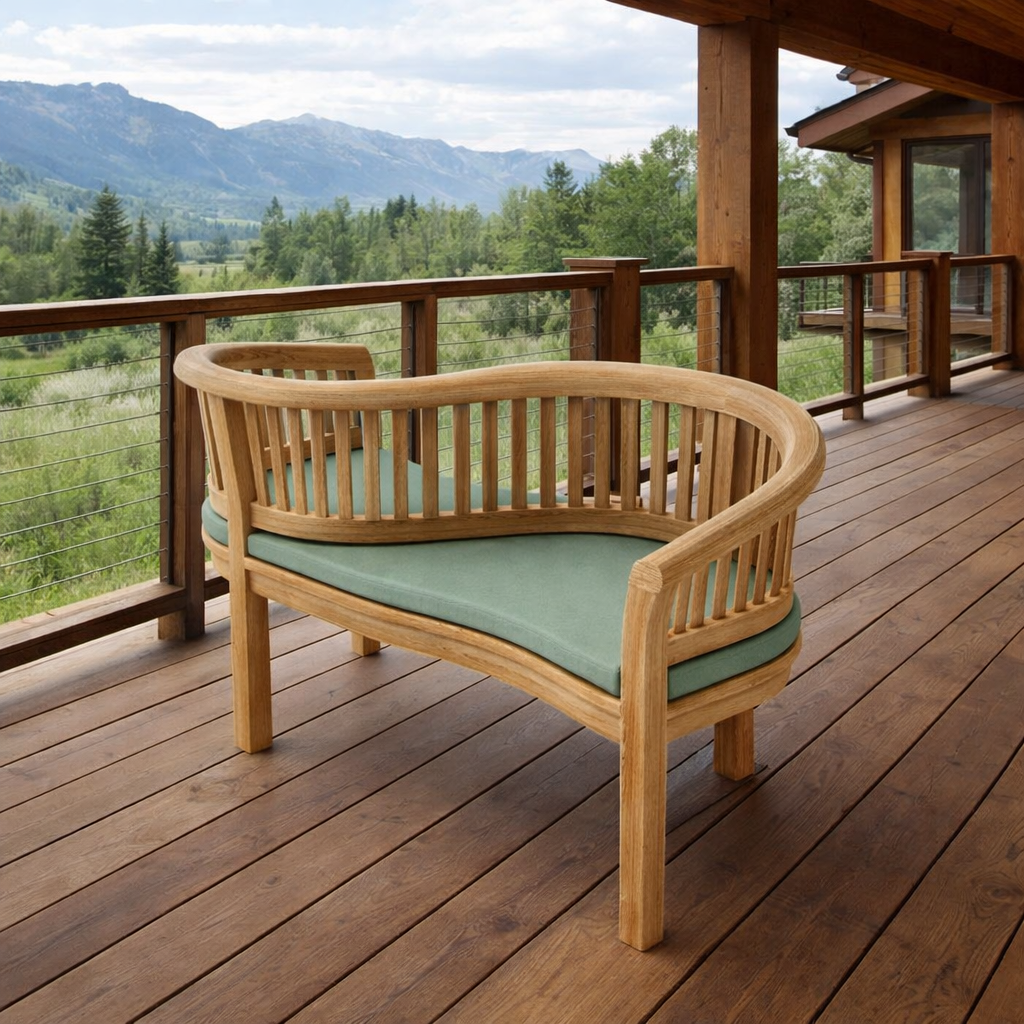
Many Triangle lots have mature landscaping that deserves to be experienced rather than merely viewed from the primary patio. A teak garden bench, pair of rockers or small seating group under trees can create a secondary destination for morning coffee, reading or conversation.
This is an overlooked design principle: the most useful outdoor furniture does not always belong closest to the house. On a wooded property, moving one seating area 30 or 40 feet into the landscape can change how much of the yard actually gets used.
Begin with the space that will get the most use. Frequent hosts should generally start with dining sets or an extendable table; families that spend evenings outside may get more value from deep seating or a sectional; covered porches often benefit from swivel seating; and landscaped properties can support benches, swings and secondary seating destinations. Once that primary function is solved, complementary pieces can build a complete outdoor room without overfurnishing the property.
Outdoor life in the Triangle tends to revolve around the home rather than a single regional setting such as the beach or mountains. The most useful spaces are adaptable: dinner one night, a game on television the next, neighbors on Saturday and a quiet morning with coffee on Sunday. Furniture therefore benefits from serving several kinds of gatherings without requiring constant rearrangement.
A screened porch is especially valuable in a climate where comfortable spring and fall weather overlaps with insects, pollen and occasional rain. It functions less like a simple porch and more like an additional living room. Deep seating, side tables and flexible chairs tend to earn more use here than formal furniture chosen mainly for appearance.
The porch also provides an important lesson for the rest of the yard: “outdoor furniture” does not have to mean one matching collection repeated everywhere. A screened room can feel softer and more lounge-oriented while the open patio remains centered on dining.
Backyard dinners, cookouts and casual gatherings make a substantial dining table useful for many Triangle homes. Households that entertain only occasionally do not necessarily need the largest table every day; expandable furniture can preserve circulation while giving them extra seats when needed.
Place the dining area where food can move easily from the kitchen or grill. A beautiful table at the far end of the property becomes inconvenient if every plate, utensil and drink has to travel a long route.
The Raleigh-Durham-Chapel Hill area has a strong college-sports culture, and outdoor televisions, fireplaces and covered gathering areas fit naturally into that lifestyle. For a patio or porch used for watch parties, the seating orientation matters more than symmetry. Sofas and sectionals can provide capacity, while swivel chairs let guests alternate between the screen and the conversation.
Summer gets much of the attention when people shop for patio furniture, but comfortable fall afternoons and evenings can be some of the most enjoyable times to use a Triangle backyard. A conversation group paired with a fire feature can remain useful after pool season fades and outdoor dining becomes less about escaping indoor air conditioning.
 For a patio connected directly to the kitchen, we would typically prioritize dining. A six- or eight-seat set gives a household enough capacity for regular entertaining without automatically dominating the space. If the patio serves both family dinners and larger events, an extendable table is particularly useful.
Where an outdoor kitchen includes a counter or raised bar, teak bar and counter-height furniture can create a secondary place for guests without requiring another full dining table.
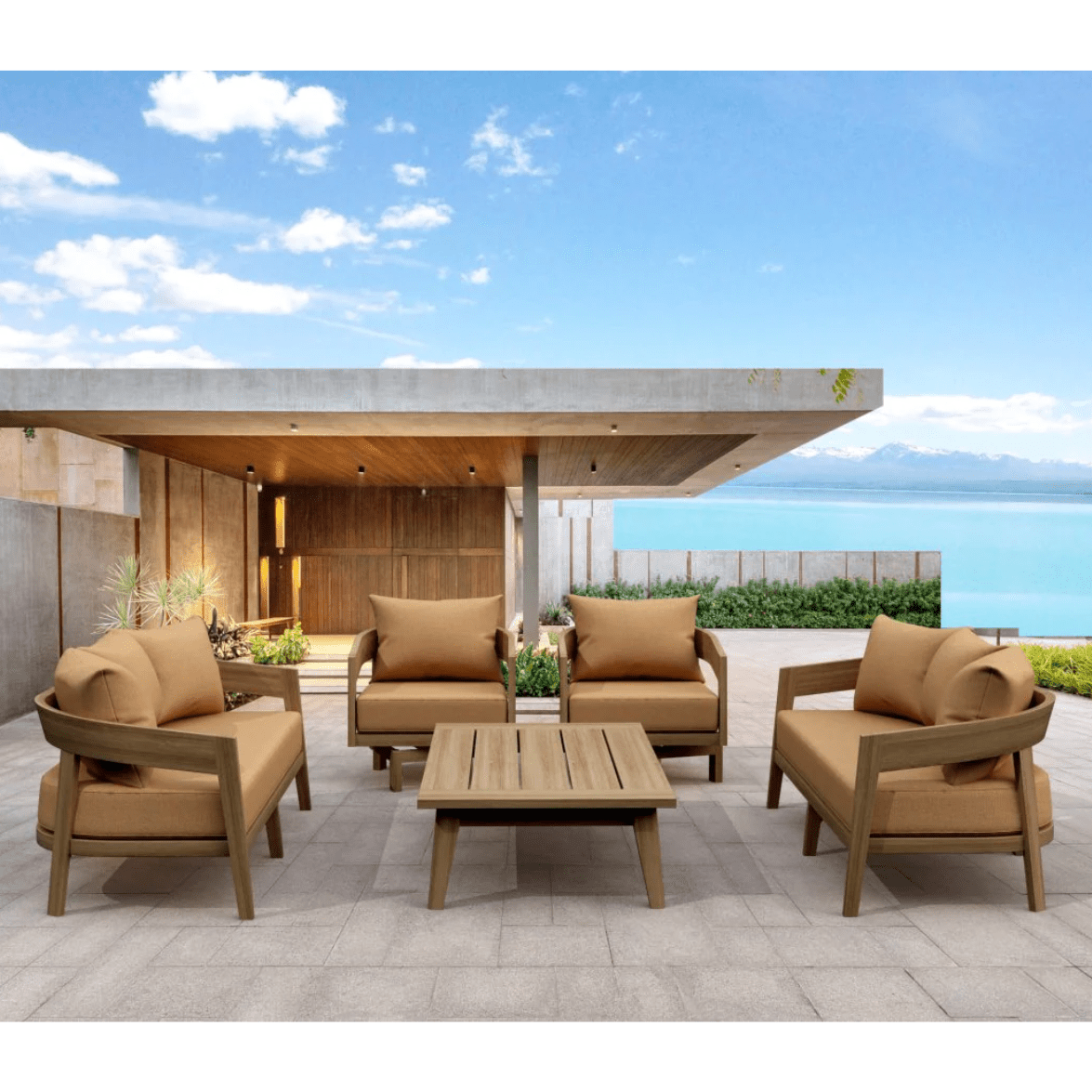
Covered spaces are natural locations for upholstered lounge seating because they provide some protection from direct weather while remaining open to humid outdoor air. A sofa or loveseat with two club or swivel chairs gives the room a more residential feel than lining the perimeter with identical chairs.
Most TeakHQ patio seating pieces include Sunbrella cushions, though specifications vary by item. Sunbrella fabric is weather-resistant, fade resistant, UV resistant and water resistant. Product details should always be checked for the specific cushion configuration.
On spacious lots, a teak sectional can define a substantial conversation zone near a fireplace, fire pit or outdoor television. The goal should be to create a comfortable room, not simply maximize the number of seats. Leave obvious walking routes from the house to the yard, grill and other destinations.
A coffee table works well when the space is used for drinks and casual entertaining. A fire pit table can become the visual center when evening use is the priority.
Where a property includes a pool, keep dining and wet-side lounging distinct. Chaise lounges belong near the pool where people can recline and dry off; upholstered sofas often make more sense slightly farther away where splashing is less constant. Teak's moisture resistance makes it a logical wood choice for this environment.
Pairing teak chaise loungers with compact side tables gives each person somewhere for a drink, book or sunglasses without crowding the pool deck.
Raleigh-Durham's mature trees and landscaped properties create opportunities for furniture beyond the main patio. Garden benches, rockers and swings work well near paths, planting beds or shaded overlooks. These pieces can turn unused parts of the yard into places people actually visit.
Triangle architecture is varied enough that outdoor furniture should not be chosen around one narrow regional “look.” Traditional brick homes, transitional custom houses, Craftsman influences, contemporary architecture and newer planned communities all appear across the market. Teak works across that range because its visual character comes primarily from real wood rather than an aggressively themed design language.
Traditional and transitional homes often already use brick, stone, hardwood tones and mature landscaping. Natural teak fits comfortably into those materials without requiring the patio to look rustic. Clean-lined teak dining tables and lounge pieces can actually provide a useful contemporary counterpoint to a traditional brick exterior.
On contemporary homes with large windows, simple rooflines and broad paved terraces, teak adds natural warmth without forcing a traditional look. Straight-lined sofas, sectionals and dining furniture can preserve the architecture's simplicity while preventing the space from feeling dominated by hard surfaces.
The Triangle's greenery can be a major design asset. Instead of filling every open paved surface with furniture, leave visual breathing room around established trees, lawn and planting beds. Teak's natural color—and later its silver-gray patina if left untreated—can sit comfortably against that landscape.
A useful rule is to furnish the outdoor space for the number of people you host regularly, then build in flexible capacity for occasional larger gatherings. Buying furniture for the biggest party you might hold once a year can make the patio feel crowded the other 364 days.
 One common mistake is planning as if a covered patio or wooded deck will stay clean because it is protected from direct sun. Spring pollen can coat furniture whether it is exposed or covered, and tree debris continues well beyond pollen season.
Choose layouts that you can easily reach with a hose, cloth or brush. Teak helps because it does not require an artificial stain for outdoor durability, but pollen still needs to be physically removed.
A shaded patio can feel protected while remaining damp longer after rainfall. Pushing furniture tightly against walls or dense vegetation can reduce airflow and make cleaning more awkward.
Grade A teak's moisture and rot resistance is an advantage, but good placement still matters. Leave enough breathing room to clean behind furniture and allow wet areas to dry.
Another mistake is designing the entire backyard around July pool use. Raleigh-Durham has distinct seasons, and outdoor spaces can remain useful well into spring and fall. Furniture that only works as pool equipment leaves a lot of potential unused.
Consider at least one comfortable conversation or dining area that still makes sense when temperatures cool. Teak's year-round outdoor suitability makes it appropriate for that longer view.
A massive table can look impressive online and still be the wrong choice for a patio. Chair pull-back space and circulation routes matter just as much as seating capacity. This is especially important when doors, grills, steps and screened-porch entrances converge around the same area.
If you host large groups only periodically, an extendable table often solves the problem better than permanently filling the patio with maximum seating.
The teak frame and the cushion are different materials with different care needs. Teak can remain outdoors year-round, but cushions benefit from more active management during prolonged wet weather, pollen season or periods when the furniture is not being used.
Where included, Sunbrella cushions provide weather, fade, UV and water resistance, but water resistance should not be interpreted as a reason to ignore persistent moisture or debris.
 The biggest local maintenance event is often pollen season. Rather than waiting for a heavy coating to become embedded in dirt and organic residue, remove loose pollen periodically and clean surfaces as needed. Furniture beneath trees may require attention more often than furniture on an open patio.
A practical cleaning schedule should respond to the site rather than the calendar. A shaded Durham lot beneath mature oaks may need more frequent debris removal than an open new-construction patio in another part of the Triangle.
Untreated teak naturally weathers toward a silver-gray color. If you like that appearance, you can allow the process to occur naturally. If you prefer the original warm teak color, use appropriate teak care products according to their directions.
Do not confuse color change with loss of durability. Teak does not require an artificial stain to remain suitable for outdoor use.
After extended wet weather, give cushions and upholstered seating a chance to dry rather than leaving damp fabric compressed in a poorly ventilated area. During high-pollen periods, cleaning or storing cushions when they will not be used can also reduce the amount of material that settles into the fabric.
Protective covers are optional for the teak itself, not a requirement for durability. If you use covers, avoid creating a persistently damp enclosed environment; follow the cover manufacturer's ventilation and fit recommendations.
Premium Grade A teak is designed for year-round outdoor use and withstands temperature fluctuations, so Raleigh-Durham homeowners do not need to move every teak table, chair and bench indoors simply because freezing nights arrive.
Winter is still a good opportunity to remove leaves, acorns and other organic material from furniture and surrounding surfaces. If cushions will go unused for long periods, storing them clean and dry can simplify the next season.
The best Raleigh-Durham outdoor spaces are not designed for a single perfect summer afternoon. They work through spring pollen, humid July evenings, fall dinners, cool-weather fire pit gatherings and the quiet months in between. Start with the way your household uses the property most often, choose furniture that fits the actual dimensions of the space, and build outward from that core.
For homeowners who want real wood, substantial construction and long-term outdoor performance, premium Grade A teak offers a particularly strong fit for the Triangle's combination of moisture, seasonal weather and established outdoor-living culture.
Look for materials that handle humidity, rainfall, sun and seasonal temperature changes well. Premium teak and high-quality aluminum are both legitimate choices. Grade A teak is particularly attractive for homeowners who want natural wood, substantial construction and strong resistance to moisture, rot and warping.
Yes. Premium Grade A teak is designed for year-round outdoor use and withstands rain, sun exposure and temperature fluctuations. Raleigh-Durham homeowners generally do not need to move teak furniture indoors for winter simply to protect the wood.
Deep seating is often more useful than duplicating a full dining set. Consider a sofa or loveseat paired with club or swivel chairs, plus coffee and side tables. Browse teak patio seating for conversation-oriented configurations.
Remove loose pollen regularly and clean furniture as needed rather than allowing pollen, dirt and moisture to accumulate together. Furniture beneath mature trees may need attention more frequently. Cushions can also be stored or protected during periods when they will not be used.
No. Grade A teak does not require sealing for outdoor durability. Untreated teak will gradually develop a silver-gray patina. Homeowners who prefer the original warm teak color can use appropriate sealers or care products for appearance maintenance.
If you regularly host large groups and have ample patio space, a large fixed table can work well. If guest counts change significantly, an extendable teak table usually preserves more everyday circulation while still providing extra seating for gatherings.
Yes. Natural unfinished teak exposed outdoors gradually weathers to a silver-gray patina. That color change is normal and does not mean the wood has failed. Owners who prefer the original teak tone can maintain it with appropriate care products.
It depends on what you value. Aluminum is lighter and often has a more modern character. Poly lumber is synthetic and appeals to buyers focused on low-maintenance ownership. Teak offers real wood, a warmer natural appearance, substantial weight and long-term outdoor durability. For many premium Raleigh-Durham outdoor spaces, those qualities justify the additional investment.
Base the decision on everyday use and available circulation rather than the largest party you might host. Six- and eight-person arrangements suit many family patios, while extendable tables are useful for occasional larger gatherings. Allow enough room behind chairs for people to move comfortably between the house, grill and yard.
No. Covers are optional rather than required for premium Grade A teak's outdoor durability. If you use covers to reduce debris or cleaning, follow the cover manufacturer's recommendations so moisture is not unnecessarily trapped around the furniture.


