
FREE SHIPPING
within mainland USA
within mainland USA
Home ▸ Teak Outdoor Furniture ▸ By Location ▸ Sarasota, Florida
Furnishing an outdoor space in Sarasota means planning for more than warm weather. Gulf Coast humidity, frequent summer rain, strong sun, salt exposure near the water, and a lifestyle built around pools, lanais, terraces, and outdoor dining all influence what works well long term. The best choice can also differ considerably between a sheltered Palmer Ranch lanai and an exposed Siesta Key or Longboat Key terrace. Premium Grade A teak is particularly well suited to this environment because it combines natural weather resistance with the substantial, architectural feel many Sarasota outdoor spaces call for.

Sarasota is not one uniform outdoor-furniture environment. A covered lanai east of Interstate 75, a pool terrace in Palmer Ranch, and an exposed deck on Siesta Key can experience very different levels of moisture, sun, wind, and salt. That distinction matters because furniture should be selected for the conditions at the actual placement point, not simply for a broad label such as “Florida weather.”
Humidity is one of the first factors we would consider when comparing premium outdoor furniture for Sarasota. Materials that routinely absorb moisture, trap water in joints, or depend heavily on surface coatings can require more attention in a warm, humid environment. Shaded areas can be especially deceptive: they feel protected from the sun, yet furniture may remain damp longer after rain or cleaning.
This is one reason material quality matters more here than simply whether a product is labeled “outdoor furniture.” Premium Grade A teak has a dense grain structure and naturally high oil content that make it resistant to moisture, rot, insects, and warping. Those characteristics are useful whether the furniture sits beside an open pool or beneath a roofed lanai.
Sarasota's warm-season weather creates a practical furniture problem: homeowners may use a patio in the morning, receive a heavy shower later in the day, and want the space usable again that evening. Furniture therefore needs to tolerate repeated wetting rather than merely survive an occasional storm.
Drainage and placement are just as important as the frame material. Avoid creating permanent wet zones beneath furniture by allowing water to move away from the patio surface, and pay particular attention to cushions. Most TeakHQ lounge seating includes Sunbrella cushions, which are weather-, fade-, UV-, and water-resistant, but cushions should still be allowed to drain and dry rather than remain continuously saturated.
Salt exposure deserves more attention on Siesta Key, Longboat Key, Lido Key, Bird Key, Casey Key, and directly bayfront properties than it does on many inland Sarasota patios. During windy coastal weather, salt can also travel beyond the immediate shoreline. The closer and more exposed the site is to open water, the more useful it becomes to favor materials that do not rely on a delicate decorative surface for outdoor durability.
That does not mean every Sarasota homeowner needs to furnish as though the patio sits directly on the Gulf. A screened courtyard in Lakewood Ranch may have little meaningful salt exposure. This is an important distinction: buy for your micro-location, not the county average.
Hurricane exposure adds a second question beyond ordinary weather resistance: what will you do with the outdoor space when a tropical system approaches? Teak is heavier and more substantial than many lightweight furniture choices, which is useful in everyday use, but no outdoor furniture should be treated as storm-secure simply because it is heavy.
Homeowners should have a realistic storm plan for movable furniture, umbrellas, accessories, cushions, and smaller tables. On barrier islands and exposed waterfront lots, that plan should be considered before purchasing a large number of individual pieces. Furniture that is beautiful during normal weather but impossible to manage when preparations begin can become a logistical burden.
Several premium materials can work well in Sarasota. Quality aluminum is lighter and can suit very modern architecture, while synthetic materials may appeal to owners prioritizing minimal maintenance. Premium Grade A teak becomes particularly compelling when the goal is to combine outdoor durability with genuine wood, substantial construction, and a look that fits both coastal and architecturally refined homes.
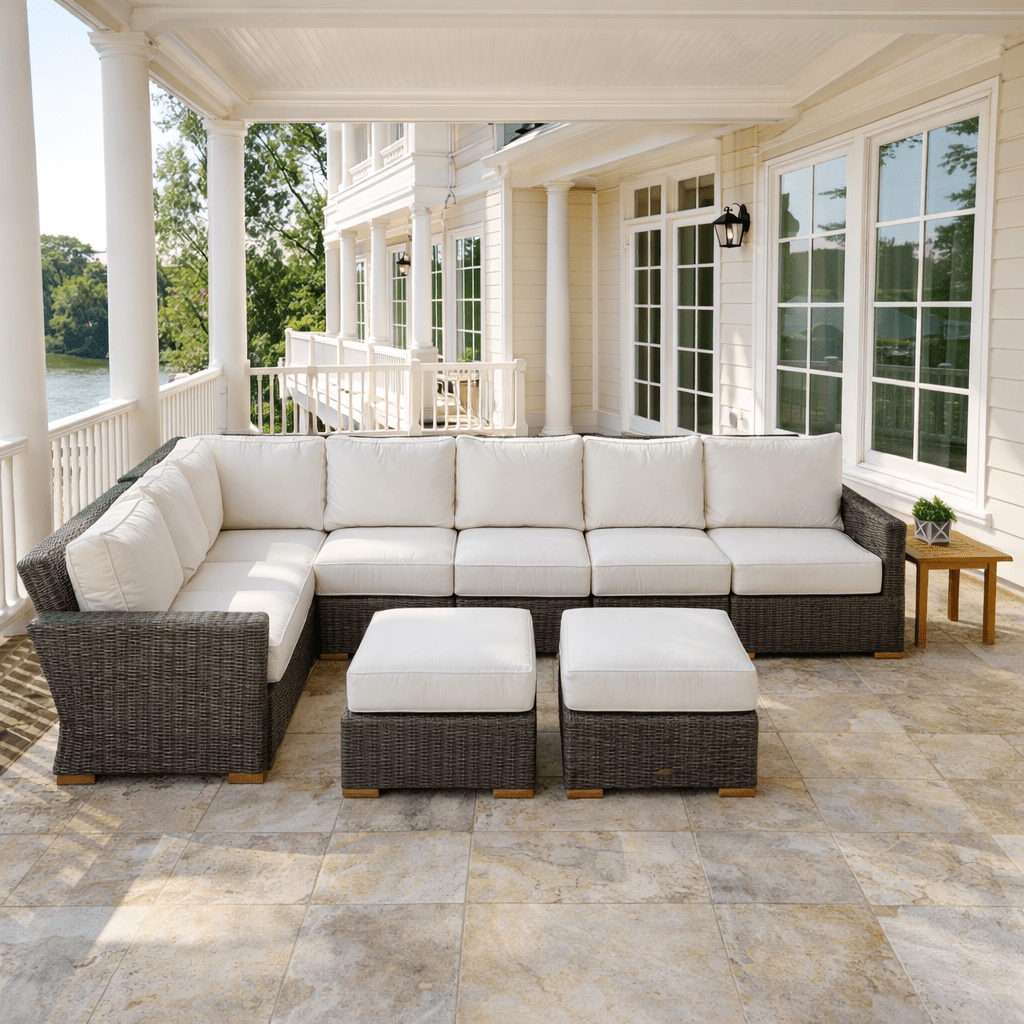 Grade A teak contains naturally high levels of oil and has a dense grain structure. Those properties help make it resistant to moisture and rotting without requiring artificial stain for durability. In Sarasota, that is particularly useful around pools, humid lanais, open terraces, and patios that experience frequent rain.
The distinction between inherent material properties and a protective finish is important. Teak can be left unfinished outdoors; its durability does not depend on maintaining a painted surface. Owners can therefore choose their preferred appearance without turning refinishing into a prerequisite for outdoor use.
Sarasota's strong sunshine makes appearance expectations important. Natural teak exposed outdoors will gradually weather toward a silver-gray patina unless the owner chooses to maintain its warmer original color. That change is normal weathering rather than evidence that the furniture has failed.
For many contemporary, coastal, and Sarasota Modern homes, the gray patina can work naturally with pale stone, stucco, concrete, glass, and water views. Homeowners who prefer honey-toned teak can instead use appropriate teak care products. The useful point is that owners have a choice: maintain the original appearance or allow the wood to age naturally.
Sarasota furniture experiences repeated environmental changes—strong sun, rain, humidity, and seasonal fluctuations between wetter and drier periods. Grade A teak's dense grain and resistance to warping make it a strong material for outdoor tables, seating frames, loungers, and substantial multi-piece furniture.
Hardware also matters in a coastal environment. Royal Teak and Anderson Teak products use stainless-steel hardware, while Verandis Teak products use brass hardware. Construction details vary by product, so homeowners furnishing particularly exposed waterfront locations should review the specifications of the pieces they are considering.
Premium teak carries a higher initial cost than many outdoor furniture options, so the relevant comparison is not simply purchase price. Grade A teak furniture can last for decades rather than seasons. For homeowners furnishing a permanent pool deck, lanai, waterfront terrace, or second home, buying fewer times can be more important than minimizing the first transaction.
That is especially true when the furniture is meant to feel integrated with the architecture. A substantial teak patio seating arrangement can function more like a long-term component of the outdoor room than temporary seasonal furniture.
| Sarasota Challenge | Why Premium Grade A Teak Performs Well |
|---|---|
| High humidity | Naturally oily, dense teak resists moisture and rot. |
| Frequent summer rain | Designed for year-round outdoor exposure and repeated weather changes. |
| Strong sunshine | Handles sun exposure and may naturally weather to a silver-gray patina. |
| Coastal conditions | Natural wood durability does not depend on painted or artificial stained surfaces. |
| Poolside moisture | Moisture resistance makes teak well suited to wet outdoor environments. |
| Temperature changes | Dense Grade A teak is resistant to warping and structural movement. |
| Long outdoor season | Teak is designed for year-round outdoor use. |
We would begin with the way you actually use the property rather than with a furniture catalog. In Sarasota, that usually means identifying the outdoor space that receives the most daily use, how exposed it is to water and weather, and whether the household entertains primarily around a pool, dining table, outdoor kitchen, or conversation area.
For many Sarasota homes, the lanai is not a decorative afterthought. It functions as an extension of the interior living area. We would usually give this space the highest furniture priority because shade, proximity to the house, and protection from direct rainfall can make it one of the most frequently used outdoor rooms.
A deep-seating arrangement works especially well where the lanai faces the pool or landscape. A teak sectional can define a larger covered space, while club or swivel chairs make sense when homeowners want seating that can orient toward both conversation and the view.
If space allows, we would not ask one furniture group to perform every job. Sarasota's long outdoor season rewards having a genuine dining zone and a separate place to relax. The dining table works for brunch, grilled dinners, guests, and holiday visits; deep seating remains comfortable after plates have been cleared.
For households whose normal group is smaller than their occasional guest list, an extendable teak dining table is often a better use of patio space than sizing the table permanently for the largest gathering of the year.
A common planning mistake is placing all of the good furniture beneath the lanai and treating the pool deck as leftover space. If swimming, reading, sunning, or hosting grandchildren is part of daily life, the pool deserves a deliberate furniture zone.
We would typically create a row or pair of teak chaise loungers, add small side tables, and preserve clear circulation around the water. The result is more useful than scattering unrelated chairs around the deck merely to fill empty square footage.
On Bird Key, Siesta Key, Longboat Key, Casey Key, and other waterfront properties, homeowners often have both a protected outdoor room near the house and a more exposed viewing or waterside area. We would furnish them differently.
Use the protected zone for cushion-heavy conversation seating and dining. At the more exposed edge of the property, simpler teak chairs, loungers, or benches can reduce the amount of soft furnishing that must be managed after rain or when storm preparations are necessary. That distinction—protected outdoor room versus exposed outdoor viewpoint—is often more useful than categorizing everything as one “patio.”
Start with the activity that defines your outdoor space. Pool-focused homes will often get the most immediate value from chaise loungers and deep seating; frequent hosts should begin with dining capacity; larger lanais can support sectionals or multi-piece conversation sets. Homeowners with occasional large gatherings may benefit more from flexible dining and movable accent pieces than from maximizing permanent seating everywhere.
Sarasota's outdoor spaces often function as everyday rooms rather than occasional warm-weather amenities. The useful distinction is not simply “indoors versus outdoors,” but which outdoor zone serves breakfast, pool time, guests, sunset drinks, or quiet evenings. Furnishing each zone according to its actual use usually produces a more comfortable property than buying one oversized matching set.
The classic Sarasota arrangement is a pool paired with a covered or screened living area. These spaces work best when the furniture acknowledges that people naturally move between wet and dry zones. Deep seating belongs where guests can settle in comfortably; loungers belong where sun access and pool supervision matter; dining should remain close enough to the kitchen or grill that serving does not become cumbersome.
Mild winters make outdoor meals particularly appealing during the part of the year when much of the country has stored its patio furniture. That changes how we would size a Sarasota dining area. A table that is genuinely comfortable for guests can justify more space here because it may be used repeatedly during the prime winter and spring entertaining season.
For households that host visiting family or seasonal guests, complete teak dining sets provide a straightforward way to create consistent seating, while larger households may prefer to select the table and chairs separately.
Many Gulf and bayfront properties benefit from multiple smaller destinations rather than one formal patio. A pair of chairs facing the water, chaise lounges near the pool, a dining zone near the house, and a conversation group under cover allow guests to spread naturally across the property.
This is where small tables become disproportionately important. A beautiful chair without somewhere to put a drink, phone, book, or plate is less useful than it looks. In waterfront layouts, we would budget for teak side and end tables at the same time as the main seating rather than adding them later.
Vacation and seasonal homes create a different priority: the outdoor space should be easy to open, use, clean, and secure. Owners who are away for extended periods may benefit from fewer furniture types, durable frames, coordinated cushions, and convenient storage rather than a highly accessorized patio requiring constant attention.
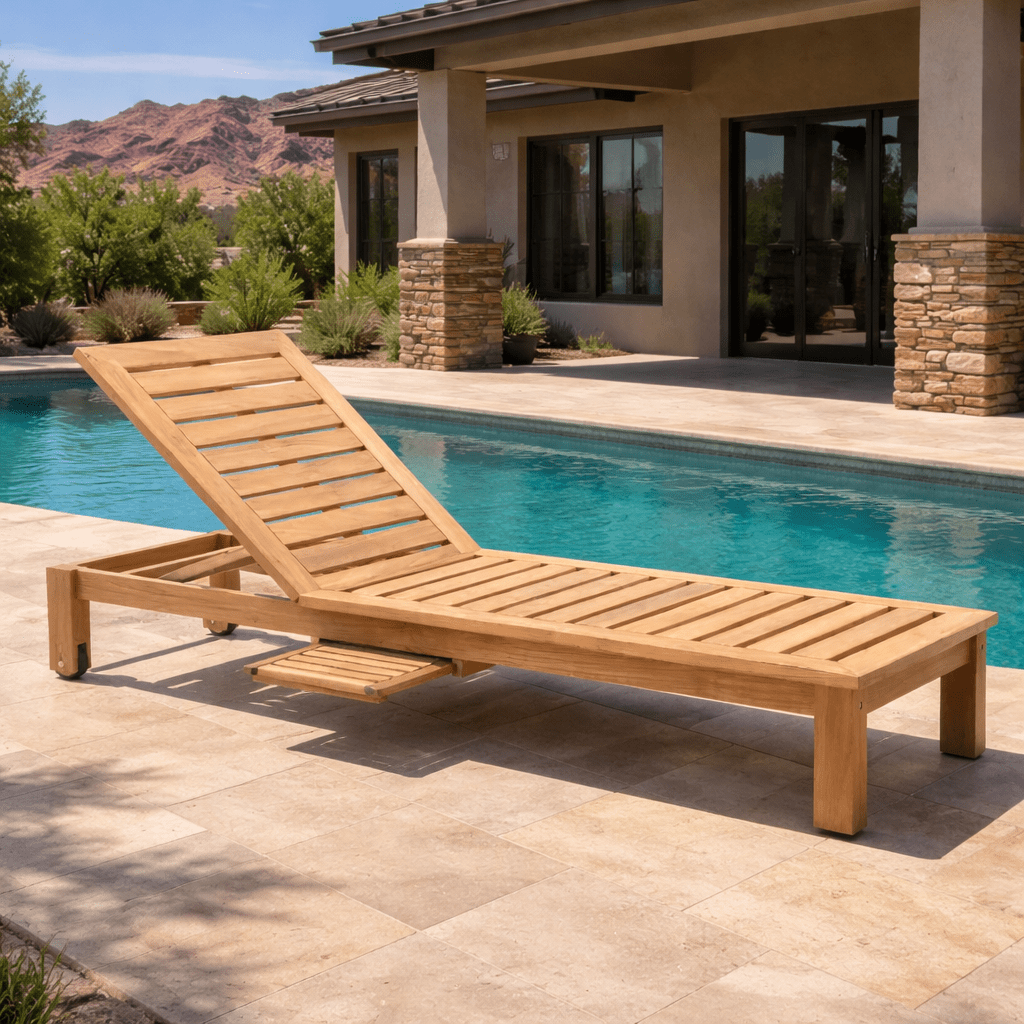 The most useful Sarasota furniture plan usually includes three layers: a primary place to gather, a dedicated dining area, and smaller pieces that support how people move around the property. Which layer receives the largest budget should depend on whether your home revolves around the pool, the view, the outdoor kitchen, or entertaining.
A sectional or coordinated lounge set is often the strongest anchor for a generous lanai. It creates a defined outdoor living room and takes advantage of the covered area's shade and proximity to the house. For smaller lanais, a loveseat paired with two club or swivel chairs can provide similar flexibility without visually crowding the space.
Swivel chairs are particularly useful where one seating position needs to serve two focal points—for example, conversation behind the chair and a pool, television, garden, or water view in another direction.
For pool-oriented properties, we would generally choose chaise lounges before adding extra upright chairs. Chaises support the activity actually taking place—reading, drying off, relaxing, and sunning—and create a more intentional resort-style arrangement.
The most practical layouts pair loungers with small tables rather than packing the deck with the maximum number of seats. Leave comfortable walking space between the water, furniture, doors, and screened enclosure.
When the outdoor kitchen is a major gathering point, dining deserves equal importance to lounge seating. A six- or eight-person table works for many households, while an extendable table can accommodate seasonal guests without consuming maximum space every day.
If the cooking area includes a counter or bar, counter-height seating can supplement the primary table rather than replace it. Guests naturally gravitate toward the cook, but a comfortable dining table is usually better for a long meal.
On Sarasota Bay, the Gulf, canals, or other waterfront settings, the view should determine furniture height and orientation. Avoid creating a wall of tall chair backs directly across the most important sightline. Low lounge furniture, chaises, and carefully positioned swivel chairs can preserve the visual relationship between the house and the water.
This is one reason modular or multi-piece arrangements can outperform a single enormous furniture group. They let the seating follow the architecture and view rather than forcing the entire patio around one rectangle.
Sarasota properties with tropical landscaping, side gardens, docks, or quieter corners often benefit from a secondary seating destination. A teak bench or pair of chairs can turn an overlooked area into a useful place for coffee or reading without competing with the main patio.
Sarasota's architectural character gives homeowners unusually broad design freedom. Mediterranean Revival influences, midcentury Sarasota Modern architecture, contemporary coastal homes, Florida ranch houses, condominiums, and newer master-planned communities can all support teak—provided the furniture proportions and detailing fit the architecture.
Clean-lined teak works especially well with Sarasota's modernist tradition because natural wood can soften glass, white walls, concrete, and strong geometric forms without making the space feel rustic. Keep layouts edited: a sectional, low coffee table, and a few carefully placed loungers often suit modern architecture better than numerous small decorative pieces.
Traditional teak furniture pairs naturally with stucco, tile roofs, courtyards, masonry, and established tropical landscapes. Dining tables, armchairs, benches, and more substantial lounge furniture can provide enough visual weight to feel proportional beside larger homes and covered arcades.
For newer Gulf Coast construction, simpler profiles generally feel most natural. Teak provides warmth without requiring the entire patio to adopt a nautical theme. Neutral cushions, restrained accessories, and the natural transition of teak toward a silver-gray patina can complement stone, pale pavers, glass railings, and coastal landscaping.
The most Sarasota-specific design decision is often not style at all—it is orientation. A patio can look perfect at noon and become uncomfortable when the late-afternoon sun reaches the seating area. Before committing to a large layout, observe where shade falls and where the best view actually appears during the hours you are most likely to use the space.
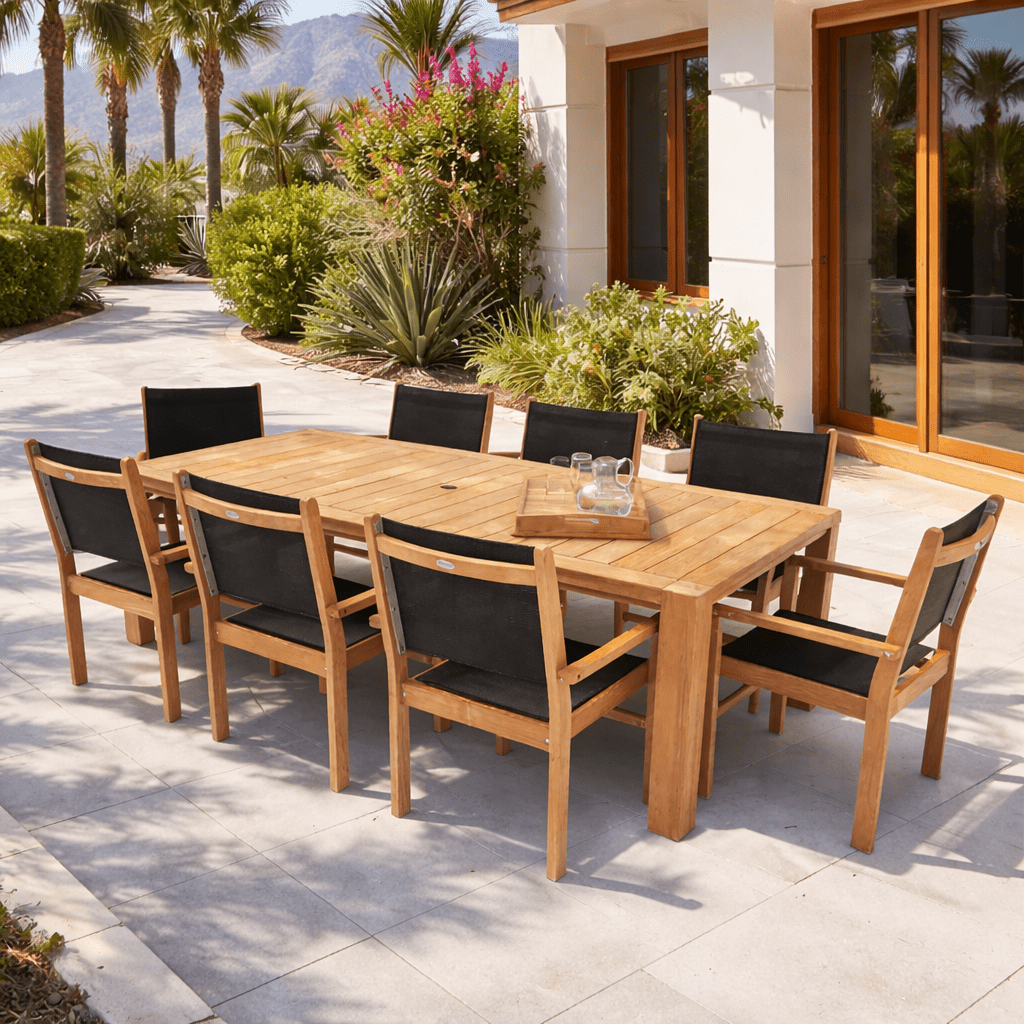 The biggest mistake is shopping for “Florida outdoor furniture” without considering the property's exact exposure. A Gulf-facing terrace, screened lanai, covered courtyard, and inland pool deck have different combinations of sun, salt, moisture, and wind.
Premium teak is versatile across these environments, but placement still matters. Cushion management, cleaning frequency, furniture spacing, and storm preparation should reflect the actual site.
Covered areas receive less direct rainfall but may also receive less sun and airflow after becoming wet. Furniture packed tightly against walls or surrounded by dense landscaping can remain damp longer. That can encourage surface mildew and make cushions slower to dry.
Teak's moisture and rot resistance are valuable here, but good patio planning remains important. Leave airflow around furniture and avoid treating weather resistance as a substitute for drainage.
Large Sarasota patios tempt homeowners to fill every section immediately. The result can be a pool deck that feels like a showroom rather than a place people can move naturally between the house, grill, pool, and view.
We would rather see a complete conversation zone, a properly scaled dining table, and four well-positioned loungers than numerous unrelated seats. Add furniture only where it creates a new function.
Small tables, cushions, umbrellas, serving accessories, and lightweight decor all need somewhere to go when severe weather approaches. Waiting until a storm is near to decide how the patio will be secured creates unnecessary work.
Teak's substantial weight is an everyday advantage compared with very lightweight furniture, but it does not make furniture hurricane-proof. Plan storage and relocation routes when designing the space.
Some homeowners interpret the natural silver-gray patina as deterioration because no one explained the weathering process before purchase. Untreated teak changes color outdoors. That is normal.
If you prefer the original warmer appearance, plan for optional care. If you like weathered teak, allow the material to age naturally. Neither approach needs to be treated as the universally correct one.
 Sarasota does not require an elaborate teak-maintenance routine, but the local environment rewards regular observation. The goal is less about constantly treating the wood and more about removing dirt, organic debris, salt residue, and trapped moisture before they accumulate.
There is no useful one-size-fits-all cleaning calendar. Furniture beneath a clean covered lanai may need attention less often than pieces near trees, an open pool, landscaping, or coastal spray. Inspect the furniture periodically and clean it when dirt, pollen, organic debris, or surface buildup becomes visible.
Owners who allow teak to weather naturally do not need to continually oil or seal it simply to keep the furniture outdoors.
Waterfront homes should pay closer attention to salt residue, particularly after windy coastal weather or storms. Fresh-water rinsing and routine cleaning can remove deposits from exposed surfaces and hardware.
Furniture several miles inland and protected by structures may require far less salt-specific care. Again, micro-location matters more than the Sarasota mailing address.
Mildew can grow on surface dirt and organic material in humid environments, even when the underlying furniture material resists rot. Keeping furniture clean and allowing air to move around and beneath it helps reduce the conditions in which surface growth develops.
Do not push cushion-heavy seating permanently against damp walls or vegetation. After major rain, allow cushions and surrounding surfaces to dry.
Most TeakHQ patio seating pieces include Sunbrella cushions, though this varies by product. Sunbrella fabric is weather-, fade-, UV-, and water-resistant, but water resistance does not mean cushions should remain indefinitely soaked or sit in standing water.
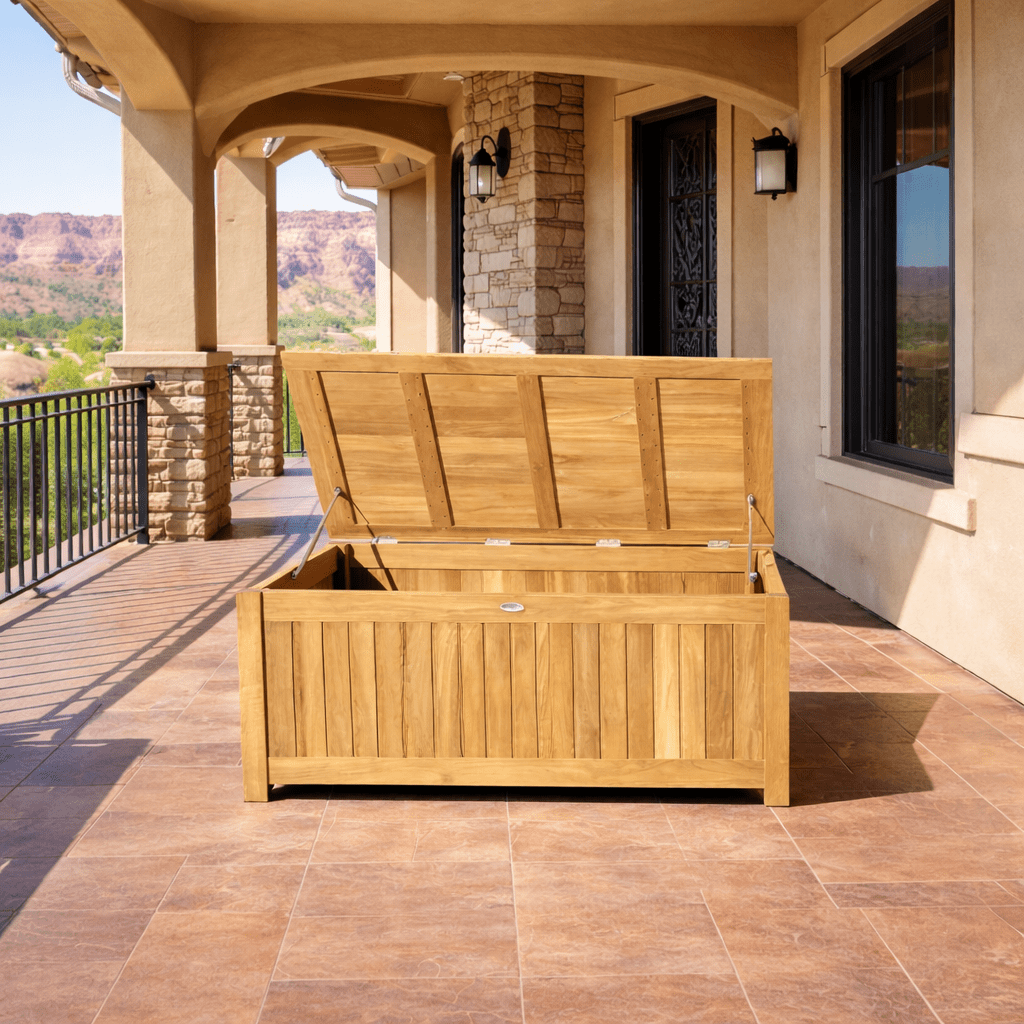
A teak deck box can be useful for appropriate patio accessories and storage, but always review the specific storage product and cushion requirements rather than assuming every box or cover creates a completely sealed environment.
Unlike northern climates, Sarasota homeowners generally do not face a prolonged freeze season that requires routine winter removal of teak furniture. Grade A teak is designed for year-round outdoor use. Seasonal owners may still choose to cover or store selected accessories while away, primarily to reduce cleaning and simplify reopening the property.
Protective covers are optional rather than necessary for teak durability. They can reduce dirt and debris accumulation, especially at second homes or during periods of limited use. If covers are used, follow the cover manufacturer's instructions and avoid trapping persistent dampness around the furniture.
The right Sarasota outdoor space begins with how the property is actually used: poolside afternoons, long lanai dinners, waterfront views, visiting family, or quiet mornings outdoors. Premium Grade A teak is a strong long-term choice when you want natural wood, substantial construction, weather resistance, and the flexibility to either maintain its warm color or let it age naturally. Start with the furniture zone that matters most, furnish it completely, and build the rest of the outdoor space around the way you live.
Premium Grade A teak is one of the strongest choices for Sarasota because its natural oils and dense grain make it resistant to moisture, rot, insects, and warping. Quality aluminum and some synthetic materials can also work well, so the right choice depends on whether you prioritize natural appearance, weight, maintenance, or a particular architectural style.
Choose furniture made from materials suitable for repeated outdoor exposure and pay attention to hardware and construction details. Grade A teak is well suited to coastal settings because its outdoor durability does not depend on paint or artificial stain. Waterfront owners should also periodically remove salt residue from furniture and hardware.
Yes. Teak's natural moisture resistance makes it well suited to pool environments. Teak chaise loungers, side tables, and deep seating are particularly useful around Sarasota pools, provided the layout leaves adequate drainage and circulation space.
Yes. TeakHQ's Grade A teak furniture is designed for year-round outdoor use and can withstand rain, sun exposure, and temperature fluctuations. Covers are optional rather than required for the teak itself.
No. Grade A teak does not require sealing for outdoor durability. You may use teak care products if you want to preserve a particular appearance, but the furniture can also be left untreated.
Yes. Natural teak exposed outdoors gradually develops a silver-gray patina unless its original color is maintained. This is a normal cosmetic change rather than an indication that the teak is deteriorating.
Not necessarily. Furniture material, cushion type, exposure, and how quickly the area dries all matter. Grade A teak does not require a cover for durability, although covers can reduce cleaning. Cushions should be allowed to drain and dry rather than remain continuously wet.
For a larger lanai, start with a deep-seating conversation area and create a separate dining zone if space allows. Pool-facing spaces often benefit from sectional seating or swivel chairs, while dining should remain convenient to the kitchen or grill.
Have a plan for movable furniture, cushions, umbrellas, small tables, and accessories before storm warnings begin. Teak is heavier than many lightweight furniture materials, but no outdoor furniture should be considered hurricane-secure solely because of its weight.
It depends on your priorities. Teak is natural, warmer in appearance, heavier, and offers a substantial premium feel. Aluminum is lighter and can suit highly modern spaces, while poly furniture offers a synthetic low-maintenance alternative. For homeowners who want authentic wood combined with long outdoor life, Grade A teak is particularly compelling.


