
FREE SHIPPING
within mainland USA
within mainland USA
Home ▸ Teak Outdoor Furniture ▸ By Location ▸ Scottsdale, Arizona
Outdoor furniture in Scottsdale has to fit a lifestyle shaped by intense sun, prolonged summer heat, dry desert conditions, and patios designed around shade and swimming pools. Many homes also treat the backyard as a true extension of the interior, with covered dining areas, outdoor kitchens, courtyards, and resort-style lounge spaces. Those conditions make material, placement, shade, and furniture configuration unusually important. Premium Grade A teak is a strong option because it combines natural outdoor durability with the substantial, architectural look that suits many Scottsdale properties.
Scottsdale is not a difficult outdoor-furniture market because of one single weather event. It is demanding because furniture can spend month after month exposed to strong sun, very high temperatures, airborne dust, occasional wind-driven monsoon weather, and the daily realities of poolside use. A material that performs well on a shaded porch in a milder climate may have a very different ownership experience on an exposed west-facing patio in the Sonoran Desert.
The first issue to evaluate is exposure. In Scottsdale, two patios at the same house can be completely different furniture environments. A north-facing covered patio may stay comparatively protected, while an uncovered western pool deck can receive hours of direct afternoon sun during the hottest part of the day.
This matters because heat affects how a space is actually used. The most attractive furniture arrangement on paper may fail if the seating sits in punishing afternoon exposure. Before choosing a set, identify when you expect to use the space and where shade falls during those hours. In Scottsdale, furniture placement and shade planning should happen together rather than as separate decisions.
Repeated sun exposure matters to furniture finishes, fabrics, and appearance. Materials chosen primarily for indoor-style looks or lightly protected outdoor environments may require more attention than homeowners expect. Premium outdoor materials, UV-resistant performance fabrics where cushions are used, and thoughtful placement under pergolas, roof overhangs, umbrellas, or other shade structures are especially valuable here.
This is also why we would generally favor furniture that still looks intentional as it naturally ages. Teak does not depend on an artificial stain for outdoor durability and can be allowed to weather toward a silver-gray patina if that is the owner's preference.
Scottsdale's climate is dry for long stretches, but that should not be confused with a completely rain-free or wind-free environment. Summer monsoon patterns can bring abrupt wind, blowing dust, thunderstorms, and bursts of rain. Lightweight furniture, unsecured umbrellas, loose accessories, and cushions left unattended can become a bigger management issue than the furniture frame itself.
Furniture weight therefore deserves more attention here than it does in many climates. Teak's heavier, sturdier feel can be an advantage for permanent patio layouts, though umbrellas and other movable accessories should still be secured or brought down when strong wind is expected.
A Scottsdale pool deck is different from a dry courtyard several yards away. Splashes, wet swimsuits, irrigation, and routine pool use introduce moisture even in an arid climate. Furniture around the pool should therefore be selected as true outdoor furniture rather than merely furniture that happens to sit outdoors.
That distinction is especially relevant for chaise lounges, side tables, club chairs, and sectional seating positioned near the water. Moisture resistance matters even when regional humidity is low.
Premium Grade A teak works particularly well in Scottsdale because its advantages match the conditions homeowners actually face: repeated sun, temperature fluctuations, occasional moisture, and a preference for outdoor spaces that remain furnished throughout the year. Its value is less about being unaffected by the desert and more about requiring fewer protective compromises than many natural materials.
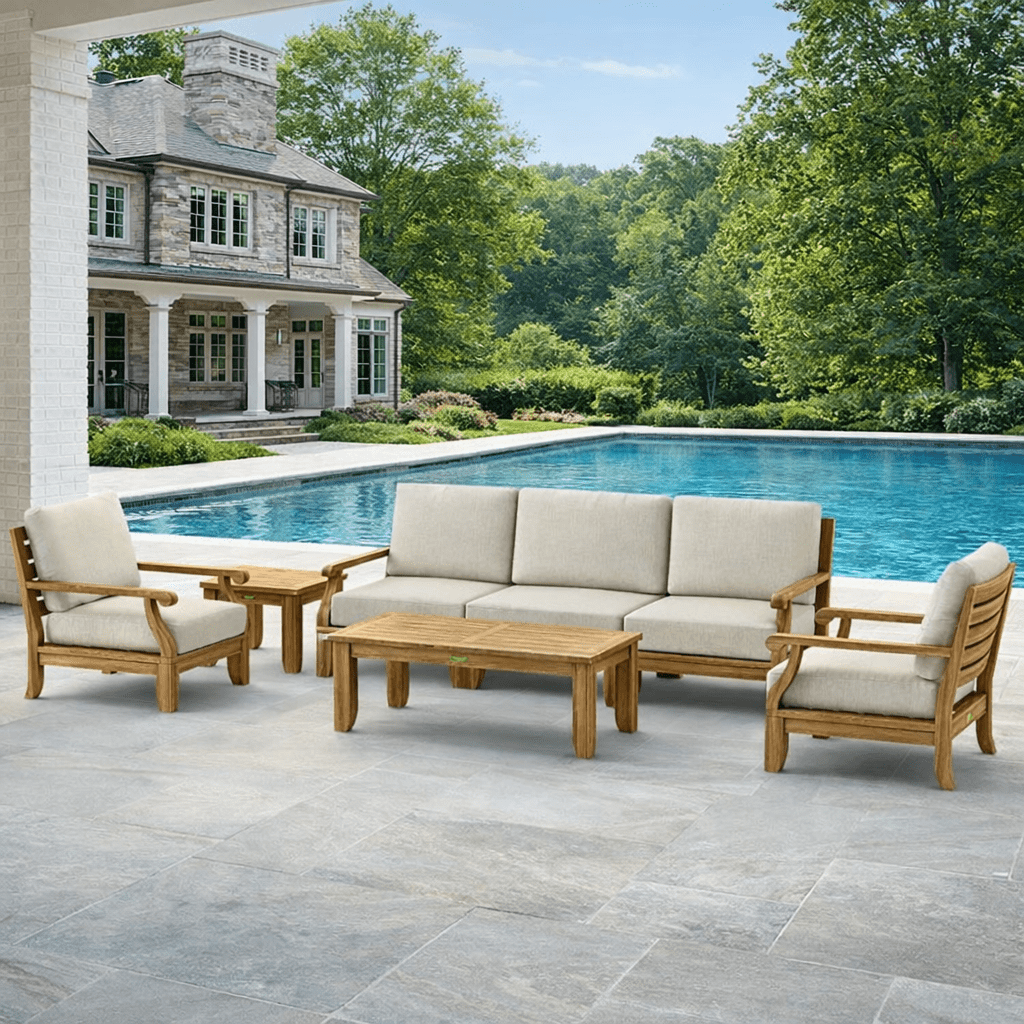
Grade A teak has naturally high oil content and a dense grain structure. Those characteristics help it resist moisture, rot, insects, and warping. In Scottsdale, that means the same furniture can be used through dry sunny periods as well as seasonal rain and routine poolside moisture without depending on paint or an artificial stain for durability.
That is particularly useful for homeowners who want a natural material but do not want an outdoor wood product that requires a highly protective finish merely to remain outside.
Teak is designed for outdoor sun exposure and temperature fluctuations. Over time, unfinished teak naturally changes from its warm original color toward a silver-gray patina. That color change is normal weathering rather than an indication that the wood has stopped functioning as outdoor furniture.
Homeowners who prefer the original golden-brown appearance can choose to maintain it with appropriate teak care products. Owners who prefer lower cosmetic maintenance can allow the wood to age naturally. Scottsdale's abundant sunshine makes understanding that choice before purchase especially useful.
Repeated changes between hot daytime conditions, cooler nights, seasonal temperature shifts, rain events, and very dry periods can be hard on poorly suited wood furniture. Grade A teak's dense structure and resistance to warping make it a practical choice for permanent outdoor installations.
That does not make teak indestructible, and normal wood movement can occur outdoors. The important distinction is that premium teak is specifically suited to long-term exterior use rather than requiring the patio to function like a protected indoor room.
One of teak's biggest advantages in Scottsdale is flexibility. The furniture does not have to be repeatedly painted or stained for outdoor durability. Owners can clean it periodically and allow natural weathering, or perform additional cosmetic care when preserving the original teak color is important.
That choice is especially attractive for second homes and households that would rather spend their best-weather months using the patio than maintaining it.
| Scottsdale Challenge | Why Premium Grade A Teak Performs Well |
|---|---|
| Intense sun | Designed for outdoor sun exposure and does not require artificial stain for durability. |
| Extreme heat | Dense teak is designed for year-round outdoor use and temperature fluctuations. |
| Very dry periods | Dense grain and structural stability help resist warping. |
| Pool splashes | Natural oils contribute to strong moisture resistance. |
| Monsoon rain | Teak naturally resists moisture and rot. |
| Outdoor insects | Grade A teak is naturally resistant to insects. |
| Long outdoor season | Teak is designed for year-round outdoor use and can last for decades with appropriate ownership. |
If we were starting with a typical Scottsdale property, we would not begin by asking which furniture set looks best. We would begin with three questions: where is the shade during the hours you actually entertain, how many people normally use the backyard, and is the pool or the dining area the real center of activity? Those answers usually determine the layout faster than style preferences do.
For many Scottsdale homes, we would make the covered patio, pergola, or deep roof overhang the primary conversation area. A teak sectional or coordinated deep-seating group works well here because this tends to be the part of the backyard used for long conversations, drinks, casual meals, and evening gatherings.
A common mistake is putting the largest seating group in the visually obvious location rather than the location people will actually find comfortable. In the desert, the best furniture zone at 9 a.m. may be nearly unusable at 4 p.m. Study the sun before committing to a large sectional footprint.
If the property has a pool, we would normally give the pool deck its own furniture program rather than expecting patio chairs to do double duty. A row or pair of teak chaise loungers with side tables creates a more useful poolside zone and keeps wet-swimsuit traffic away from the primary cushioned conversation area.
For larger resort-style backyards, four loungers often create a more intentional layout than two isolated chairs. On tighter decks, fewer loungers with enough clearance to walk around them will look better and function better than maximizing seat count.
Outdoor meals are much easier when the dining area has a direct relationship to the kitchen, grill, or outdoor cooking station. We would generally place teak outdoor dining furniture closer to the house than the chaise-lounge zone, ideally under shade or where late-day exposure is manageable.
For households that frequently host visiting family or seasonal guests, an extendable table can be more useful than permanently dedicating the patio to a very large table. You gain entertaining capacity without making everyday circulation feel oversized.
Scottsdale patios often change character after sunset. Areas that receive too much daytime sun may become excellent evening gathering spaces. A pair of lounge chairs, swivel chairs, or smaller conversation grouping can turn a secondary terrace into a useful place for sunset drinks or cooler-weather evenings.
This is where a Scottsdale furniture plan can differ from one built for a humid coastal market: the challenge is often less about sheltering every piece from moisture and more about designing around solar exposure by time of day.
Start with the area that defines how you use the property. Pool-focused households should usually begin with chaise lounges and nearby accent tables; frequent entertainers may get more value from a sectional or multi-piece lounge set; and homeowners who host meals should prioritize dining capacity and shade. Scottsdale's larger patios often support more than one zone, so the strongest layouts usually combine a primary seating collection with a complementary pool or dining area rather than forcing one furniture group to handle every activity.
Scottsdale outdoor living tends to be organized around the parts of the year—and the parts of the day—when being outside is most enjoyable. Cooler mornings, long evenings, shoulder seasons, pools, covered patios, and indoor-outdoor entertaining all shape how furniture is actually used. That creates a different buying priority from climates where a deck may be furnished mainly for a short summer season.
In many Scottsdale backyards, the pool is not decorative—it is the visual and social center of the property. Furniture planning should reflect that. Chaise lounges need enough room for people to recline without blocking circulation, and side tables become more valuable than they initially appear because guests need a place for drinks, phones, sunglasses, and towels.
The memorable planning rule is simple: design the pool deck for people getting in and out of the pool, not just for how the furniture looks when nobody is using it. Leave generous pathways between water, loungers, doors, and shaded areas.
A Scottsdale gathering may begin indoors or beneath a covered patio, move toward the pool, and finish outside after sunset. Furniture that creates several smaller destinations often works better than one enormous cluster. A dining table near the kitchen, conversation seating under cover, and a few loungers closer to the pool allow the backyard to change with the event.
This is particularly useful for weekend guests, holiday visits, spring gatherings, and households that entertain across generations.
Outdoor kitchens are more useful when seating is planned as part of the cooking zone. Counter-height seating works well for casual interaction with whoever is cooking, while a conventional dining table is better for longer meals. On larger patios, having both can prevent the kitchen island from becoming the only gathering surface.
If space is limited, choose the seating experience you will use most frequently rather than trying to recreate every indoor function outdoors.
Scottsdale homeowners sometimes make the mistake of evaluating an outdoor space primarily through the lens of peak summer. Summer heat absolutely matters, but a premium furniture purchase should also support the long stretches when outdoor dining and conversation are especially appealing.
Furniture that remains outside year-round lets the patio transition quickly from summer evenings to the more heavily used fall, winter, and spring periods without a seasonal setup process.
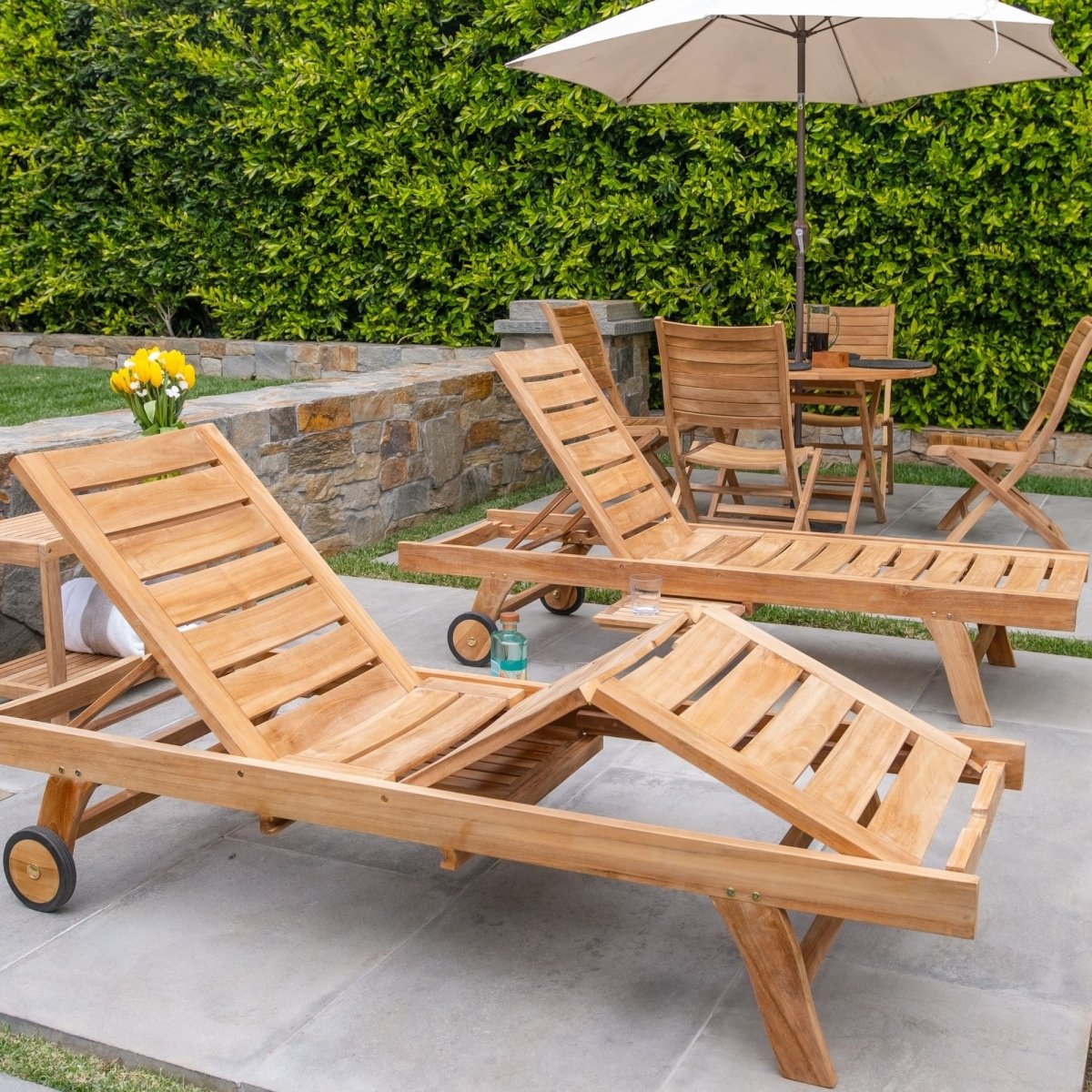
For a pool-centered property, chaise lounges are usually the first category we would address. Adjustable loungers make the pool deck useful for reading, sunning, relaxing after swimming, or talking with guests. Pair them with compact side tables rather than expecting guests to reach back toward the main seating group.
Where the pool deck is large, create deliberate repetition—such as two pairs of loungers—instead of scattering unrelated chairs around the perimeter. Repetition gives large desert landscapes a calmer, more architectural appearance.
Large sliding or folding doors often make the covered patio feel like an extension of the interior living room. This is an ideal setting for multi-piece teak lounge sets, sofas, club chairs, swivel chairs, and coffee tables.
If views are important, swivel chairs are especially practical because they let guests turn between conversation, the pool, mountain or desert views, and activity around an outdoor kitchen without physically moving the furniture.
For homeowners who regularly host meals, choose the table based on typical use first and peak occupancy second. An eight- or ten-person table makes sense when large dinners are genuinely common. Otherwise, an extendable teak dining table can preserve everyday patio space while still accommodating larger gatherings.
Dining chairs should also reflect how long people remain at the table. A casual thirty-minute meal and a three-hour dinner party create different comfort priorities, so consider optional cushions or seating styles appropriate to your entertaining habits.
Not every Scottsdale property needs resort-scale furniture. Walled courtyards, condo terraces, casitas, and smaller patios often benefit from fewer, better-proportioned pieces. A pair of club chairs with a side table or a compact dining arrangement can feel far more luxurious than filling every available square foot.
Teak works especially well visually in these spaces because its natural wood character can soften stucco, masonry, stone, concrete, and other hard desert materials.
Scottsdale architecture ranges from mid-century modern and postwar ranch homes to contemporary desert estates, Southwestern influences, golf-community residences, and custom homes designed to visually connect with the Sonoran Desert. The common thread is often less about one architectural style than about treating outdoor space as part of the home's design.
Contemporary Scottsdale homes frequently use broad horizontal forms, large openings, natural stone, stucco, metal, glass, and restrained desert landscaping. Teak introduces warmth without fighting that architecture. Clean-lined lounge furniture, sectionals, simple dining tables, and substantial chaise lounges tend to work especially well.
The goal should not be to make the teak look rustic. Natural wood can be used as a counterpoint to concrete, stone, steel, and glass while preserving a modern composition.
Homes with stucco, warm masonry, courtyards, tile details, or more traditional architecture can support furniture with slightly more classic proportions. Dining sets, curved or traditional seating, benches, and deep lounge chairs can complement the architecture without turning the patio into a themed space.
Natural unfinished teak also coordinates easily with the muted earth tones common in desert landscapes.
Where the view is the main event, furniture orientation matters as much as furniture style. Avoid placing oversized sofas directly across important sightlines simply because that layout is symmetrical. Club chairs, swivel chairs, loveseats, and low-profile tables can create conversation areas while keeping the landscape visually open.
On exposed terraces, also evaluate western sun before orienting seats toward a view that may be uncomfortable during the exact hour you hope to enjoy it.
Scottsdale's most convincing outdoor spaces usually allow desert planting, rock, mountains, and architecture to remain visually important. Furniture should provide comfort without competing with those elements. A restrained number of larger pieces often looks better than many small pieces scattered around the patio.
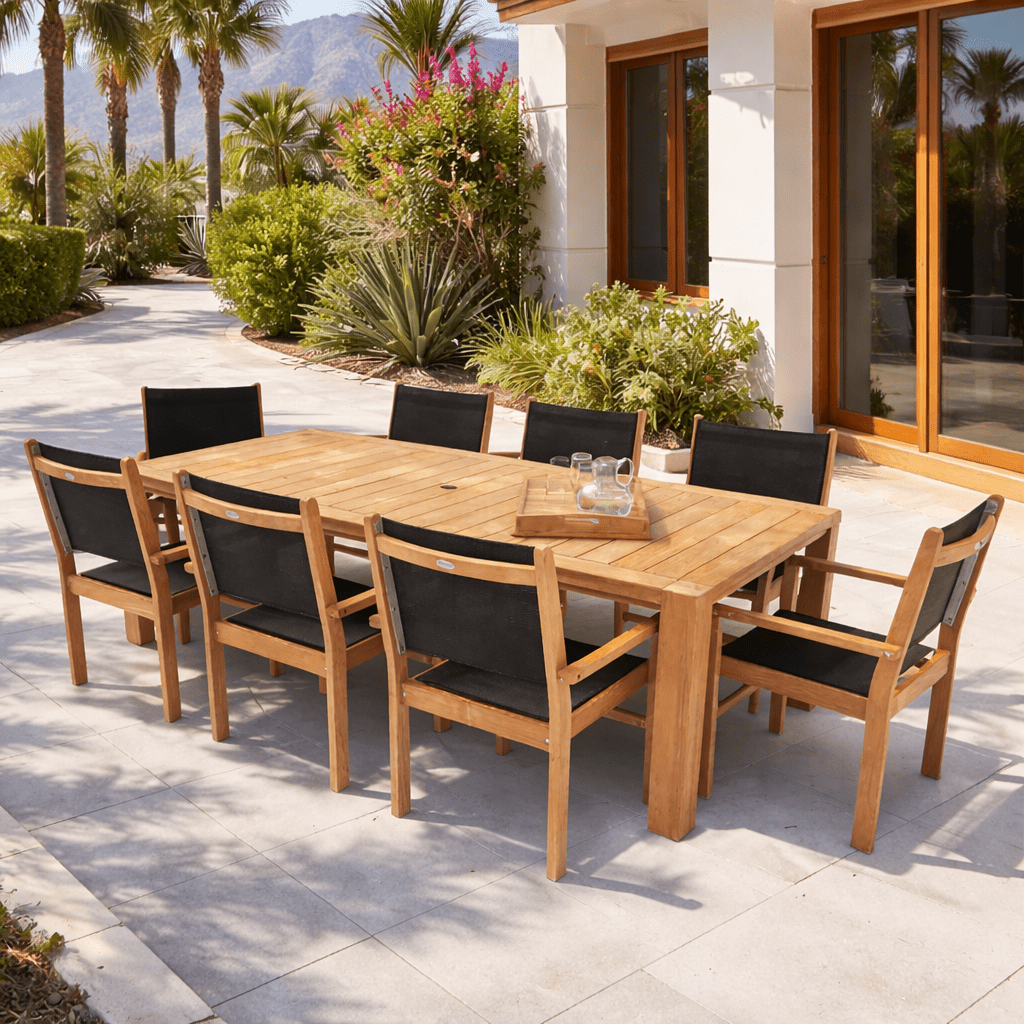
This is probably the most important Scottsdale-specific mistake. Homeowners sometimes purchase an expensive dining or lounge group and then discover that its location receives intense afternoon sun during the hours they intended to use it. Furniture cannot solve a comfort problem created by poor exposure.
Map the sun first. Then decide where the dining table, deep seating, and pool loungers belong. Teak is well suited to sun exposure, but human comfort still determines whether the furniture gets used.
Lightweight construction can be convenient when furniture must move frequently, but it can become a disadvantage during gusty monsoon weather or on large open patios. Scottsdale homeowners should consider whether furniture is intended to remain permanently arranged or be moved regularly.
Teak's heavier, more substantial construction is often a good fit for permanent outdoor layouts, although loose accessories, cushions, and umbrellas still require sensible wind management.
A furniture plan can look spacious until people begin walking between the house, pool, loungers, and outdoor kitchen. Oversized sectionals or too many chaise lounges can create awkward pinch points on an otherwise generous deck.
Measure circulation paths rather than only measuring whether each furniture piece technically fits. For pool areas, usable empty space is part of the design.
Another common mistake is furnishing a patio for the largest gathering that might occur once or twice a year. An enormous fixed dining table or excessive number of chairs can make the space feel crowded during normal daily use.
Extendable dining tables, flexible club chairs, ottomans, and secondary seating areas can accommodate occasional guests without forcing the whole backyard to function like an event venue every day.
Natural teak changes color outdoors. If left untreated, it will gradually develop a silver-gray patina. Strong Scottsdale sun can make cosmetic expectations especially important because homeowners may notice the transition more quickly than they expected.
Decide before purchase whether you want the aged appearance or whether maintaining the warmer original teak color is important enough to justify periodic cosmetic care.

Scottsdale's dry climate means routine care is often more about dust and surface debris than persistent dampness. Brush or rinse away dust as needed and clean the teak periodically with products appropriate for teak furniture. After windy or dusty weather, a light cleaning may be more useful than waiting for a fixed maintenance date.
Avoid turning routine cleaning into unnecessary refinishing. Teak does not need paint or an artificial stain to remain suitable for outdoor use.
There are two legitimate ownership approaches. You can allow unfinished teak to weather naturally toward silver gray, or you can use appropriate teak care products to help maintain more of its original color. Neither choice changes the fact that the underlying furniture is intended for outdoor use.
The easiest maintenance plan is the one chosen intentionally. Homeowners who like weathered teak should not create extra work trying to preserve a color they do not actually prefer.
Many TeakHQ lounge pieces include Sunbrella cushions, while others offer cushions separately or use sling or synthetic-rope seating. Sunbrella is weather-, fade-, UV-, and water-resistant, but that does not mean cushions benefit from being unnecessarily exposed to dust storms, wind, debris, or prolonged periods of non-use.
During severe weather or when a home will be vacant for an extended period, storing or protecting removable cushions can reduce cleaning and keep the patio ready for use.
Premium Grade A teak does not require a protective cover simply to survive outdoors. A cover may still be useful for owners who want to reduce dust accumulation or keep furniture cleaner between visits.
If covers are used, place them on clean furniture and follow sensible ventilation practices rather than trapping dirt or moisture beneath them. The goal is convenience, not turning exterior furniture into a sealed package.
Scottsdale does not have the same furniture-storage cycle as a northern climate with months of snow and frozen patios. Teak can remain outdoors year-round. That makes permanent furniture arrangements practical, particularly for winter residents, second homes, and households that use outdoor areas heavily during the cooler months.
The primary seasonal adjustment is often not moving the teak frame at all—it is shifting cushions, shade, accessories, and furniture usage according to heat, storms, and the time of day.
The right outdoor furniture plan for Scottsdale starts with shade, circulation, and the activities your household actually enjoys. Choose the primary zone first—poolside lounging, outdoor dining, or conversation—then add complementary pieces rather than filling the patio all at once. TeakHQ's Grade A teak dining, lounge, and poolside collections make it possible to build a coordinated outdoor space that fits the desert environment while remaining flexible enough for everyday living and larger gatherings.
Look for materials specifically designed for long-term outdoor exposure and temperature fluctuations. Premium Grade A teak is a strong choice because its dense grain and natural oils help it resist moisture, rot, insects, and warping while allowing it to remain outdoors year-round. High-quality aluminum and synthetic materials can also be appropriate depending on the look and maintenance priorities you prefer.
Yes. TeakHQ's Grade A teak furniture is designed for year-round outdoor use and can withstand sun, rain, and temperature fluctuations. Protective covers are optional rather than required for the wood itself.
Teak is well suited to outdoor sun exposure, but its appearance changes naturally. Untreated teak gradually develops a silver-gray patina. Homeowners who prefer the original warmer teak color can use appropriate teak care products for cosmetic maintenance.
No, but the furniture layout should be planned around human comfort. A piece of outdoor furniture may tolerate direct sun even when that location is too hot for people to enjoy during summer afternoons. Prioritize reliable shade for dining and long-duration seating, then use more exposed areas when the time of day makes them comfortable.
Chaise lounges, side tables, and a nearby shaded seating area create a practical pool layout. Leave generous circulation between the water, loungers, house, and other entertaining zones rather than maximizing the number of chairs that technically fit.
Neither material is automatically right for every homeowner. Teak provides a warmer, natural appearance and a heavier, more substantial feel. Aluminum is lighter and often has a more modern visual character. If natural wood, furniture weight, and long-term aging are priorities, teak may be the better fit.
No. Grade A teak does not require sealing for outdoor durability. It can be left untreated and allowed to develop a silver-gray patina. Sealing or other cosmetic care is optional for owners who prefer to preserve more of the original teak color.
There is no single schedule that fits every patio. Clean when dust, pollen, spills, or other debris accumulate, with additional attention after dusty or windy weather. Exposed pool decks may need cleaning more frequently than protected covered patios.
Choose for normal household use first, then occasional guests. A six- or eight-person set works well for many entertaining spaces, while frequent large gatherings may justify seating for ten or more. If large parties are occasional, an extendable teak table can provide extra capacity without consuming maximum patio space every day.
High-quality teak furniture is a long-term purchase and can last for decades. Grade A teak's dense grain, natural oils, moisture resistance, rot resistance, and structural stability are why it has historically been valued for demanding outdoor applications. Actual lifespan depends on construction, use, environment, and care.


