
FREE SHIPPING
within mainland USA
within mainland USA
Home ▸ Teak Outdoor Furniture ▸ By Location ▸ Sea Island, Georgia
Sea Island outdoor spaces live close to the Atlantic, tidal marshes, pools, and lush coastal landscaping, so furniture must handle more than an attractive terrace. Humidity, frequent moisture, sun exposure, salt carried inland from the coast, and periods of stormy weather all influence what works well long term. At the same time, spacious cottages, covered terraces, pool patios, and frequent family entertaining call for furniture that feels substantial and permanent. Premium Grade A teak is especially compelling here because it combines natural weather resistance with the warm, architectural character these settings deserve.

Choosing premium outdoor furniture on Sea Island starts with understanding the exposure. This is a barrier-island environment rather than a typical inland Georgia backyard. Furniture may sit near the Atlantic, beside a pool, overlooking tidal marshes, beneath a covered loggia, or under a canopy of mature coastal vegetation. Those locations create different combinations of moisture, salt, sun, shade, organic debris, and wind.
Humidity matters because outdoor furniture often has less opportunity to dry completely than it would in a hot, arid market. A shaded terrace beneath mature trees may remain damp long after an exposed pool deck has dried. Furniture materials, joints, finishes, fabrics, and cushions therefore need to tolerate repeated moisture rather than simply survive an occasional rainstorm.
This is one reason we would be cautious about treating all premium wood furniture as interchangeable. Attractive wood is not automatically well suited to a humid coastal environment. Species selection matters, as does the quality and grade of the wood.
An ocean-facing residence can experience a different furniture environment from a protected home farther behind dunes, vegetation, or neighboring structures. Salt carried by coastal air can settle on furniture surfaces and hardware, so homeowners closest to direct ocean exposure should think more deliberately about materials and periodic rinsing.
The practical lesson is to buy for the most exposed furniture zone on your property, not for Sea Island in the abstract. A sheltered courtyard dining set may have an easier life than chaise lounges positioned close to the beach or an open pool terrace.
Open pool decks and ocean-view terraces receive substantial sun, while covered porches and tree-shaded patios may receive far less. The sunny locations increase UV exposure and heat; deeply shaded areas hold moisture and collect pollen, leaves, or mildew-producing organic residue more readily.
A good furnishing plan accounts for both. Durable frame material is important, but cushions, airflow, drainage, ease of cleaning, and furniture placement matter too.
No outdoor chair or table should be treated as a substitute for a sensible severe-weather plan. Even substantial premium furniture should be moved, secured, or otherwise handled according to the conditions and guidance applicable to the property when major storms threaten. Umbrellas and lighter accessories deserve especially prompt attention.
For everyday use, however, many Sea Island homeowners appreciate furniture with a heavier, more architectural feel rather than pieces that seem temporary on a large terrace.
Once the environment is separated from the aesthetics, Grade A teak earns a strong recommendation on practical grounds. Its dense grain and naturally high oil content help it resist moisture, rot, insects, and warping, while genuine outdoor teak is designed to tolerate sun, rain, and temperature fluctuations. Those characteristics align unusually well with a humid coastal property.
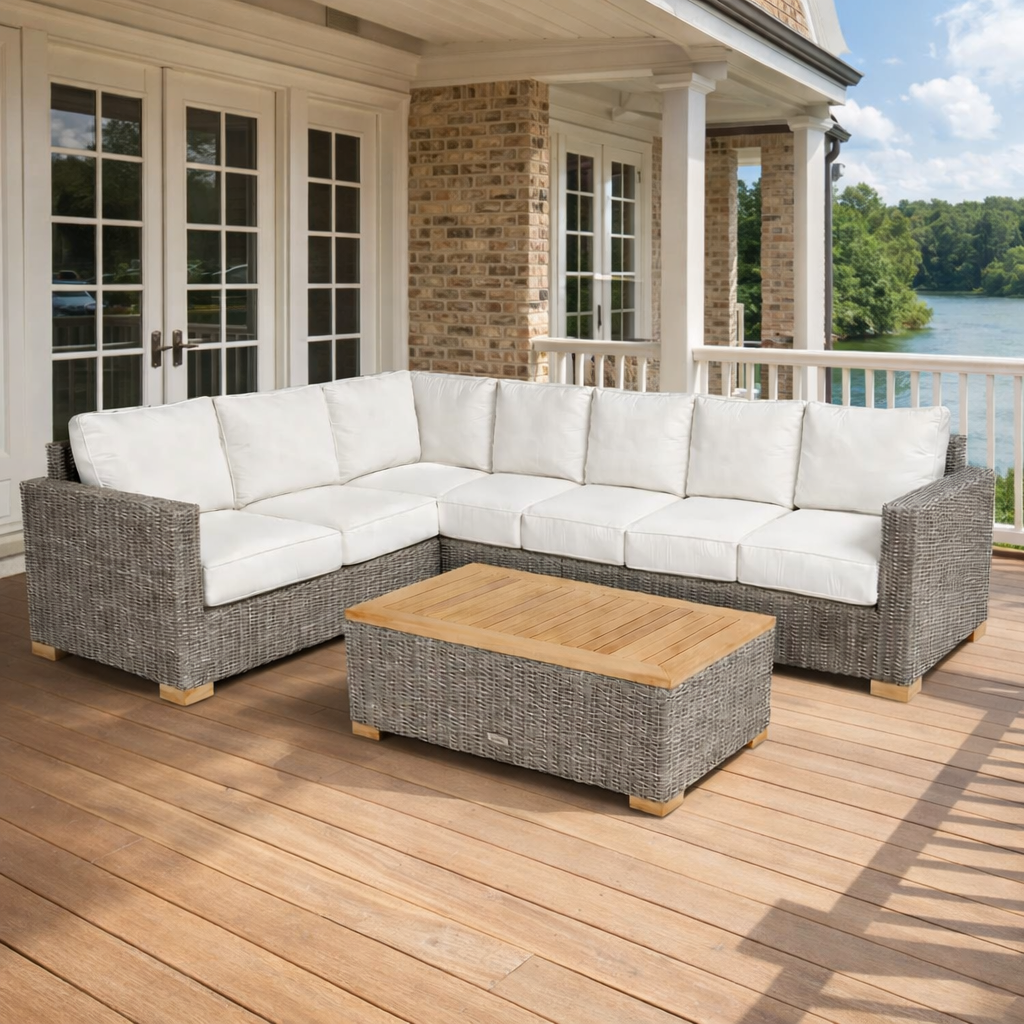 Premium Grade A teak does not rely on an artificial stain for its basic outdoor durability. Its natural oils and dense structure make it resistant to moisture and rotting, which is valuable where furniture routinely encounters humid air, rainfall, pool splashes, and damp mornings.
That does not mean teak should be ignored indefinitely. Dirt and organic material can collect on any outdoor surface. But the underlying wood is naturally appropriate for exposed outdoor use rather than depending on a fragile decorative coating to make it viable outdoors.
Sea Island homeowners should distinguish between structural weather resistance and preserving a particular appearance. Teak can remain outside in sun and weather without requiring paint or artificial stain for durability. Left untreated, it gradually develops the familiar silver-gray patina associated with weathered teak.
If you prefer the warmer original teak color, maintenance becomes an aesthetic choice rather than the condition that makes the furniture usable outside. That flexibility is particularly useful for second homes and properties where owners may prefer fewer mandatory upkeep tasks.
Outdoor wood repeatedly gains and loses moisture as conditions change. Grade A teak's dense grain and natural properties help resist warping, making it a sound choice for substantial dining tables, sofas, sectionals, loungers, and other pieces expected to remain outside.
For Sea Island, that structural stability may be more valuable than choosing a material primarily because it looks coastal in a showroom. Furniture must continue working as furniture after seasons of outdoor exposure.
Premium teak costs more upfront than many outdoor furniture materials, but properly chosen teak is a long-term purchase capable of lasting for decades rather than only a few seasons. That can make particular sense on a high-end property where replacing an entire coordinated outdoor setting every few years would be both expensive and disruptive.
There are legitimate alternatives. Aluminum is lighter and can suit crisp contemporary spaces, while poly furniture offers very low maintenance. Teak's distinctive advantage is the combination of genuine natural wood, substantial weight, outdoor durability, and a warmer architectural appearance.
| Sea Island Challenge | Why Premium Grade A Teak Performs Well |
|---|---|
| High humidity | Natural oils and dense grain help resist moisture and rot. |
| Frequent rain | Designed for outdoor exposure to rain and changing weather. |
| Coastal salt air | Durable natural wood is well suited to coastal settings; periodic cleaning remains wise. |
| Strong sun | Can weather naturally outdoors without paint or artificial stain. |
| Poolside moisture | Moisture resistance suits furniture around pools and spas. |
| Temperature changes | Teak is resistant to warping and designed for temperature fluctuations. |
| Long ownership cycles | Premium teak can last decades rather than seasons. |
If we were planning a Sea Island property from scratch, we would not begin with individual chairs. We would first identify where the household actually spends time: the primary dining terrace, the main conversation area, the pool, and any smaller marsh-, garden-, or ocean-view spaces. Then we would give each zone a specific job.
On a property designed around family visits and entertaining, the dining table often deserves more space than homeowners initially allocate. We would usually position the primary outdoor dining set close enough to the kitchen that carrying food and clearing dishes is easy, while preserving the best sightlines toward the pool, garden, marsh, or ocean.
An extendable teak dining table is particularly useful when the household alternates between quiet meals and larger gatherings. The important point is not simply seating capacity; it is avoiding a massive table that dominates the terrace every day merely because you occasionally host a full house.
Dining chairs rarely provide the place where guests want to remain for several hours after dinner. On a spacious terrace, we would create a distinct deep-seating area with a sofa, club chairs, swivel chairs, or modular pieces oriented toward conversation rather than toward the dining table.
For larger pool terraces and estate-scale patios, teak sectional seating can define an outdoor room without adding walls. Just preserve circulation routes between the house, pool, dining area, and lawn. An impressive furniture plan becomes frustrating quickly if everyone must squeeze behind a sofa to get outside.
A common planning mistake is allowing the conversation furniture to do double duty as pool furniture. The needs are different. Poolside seating should make it easy to recline, dry off, read, watch children, or move between sun and shade.
We would normally create a dedicated line or pair of teak chaise lounges, leaving enough open deck around them for circulation. Small tables should accompany the loungers rather than forcing guests to place drinks, phones, or towels on the ground.
A large Sea Island property may have several outdoor locations that are beautiful but do not need full furniture sets. A pair of chairs under live oaks, a garden bench, or two loungers facing the marsh may get more use than another elaborate patio grouping.
One memorable rule is useful here: the best view does not always need the biggest furniture group. Sometimes the view itself is the activity. Reserve large settings for places where people gather, eat, and linger; use quieter furniture where people go to look outward.
For large terraces and resort-style outdoor spaces, begin with the activity that matters most to your household. Frequent hosts will usually get the greatest value from dining and deep seating first; pool-focused homes may prioritize loungers, while second homes often benefit from flexible seating and practical storage. Once the primary zone is solved, use complementary pieces to connect the spaces rather than purchasing unrelated sets independently.
Sea Island outdoor spaces tend to function as genuine extensions of the home. The area's resort and cottage culture, private beaches, golf, pools, and multi-generational stays all encourage a slower kind of outdoor use: long meals, afternoons by the water, visiting family, and evenings that move naturally from dining to conversation. Sea Island itself emphasizes cottages, gatherings, beach life, golf, and extended-family living as defining parts of the local experience. :contentReference[oaicite:2]{index=2}
A second home may normally serve two to four people but become a much larger household during school breaks, holidays, weddings, golf trips, or family reunions. That makes flexibility more valuable than simply maximizing permanent seating.
For dining, expandable tables or a mix of chairs and benches can accommodate fluctuating groups. In lounge areas, club chairs and ottomans are useful because they can be repositioned more easily than building every seat into one enormous fixed arrangement.
When dining outdoors is followed by drinks and conversation, proximity between the dining and lounge zones matters. They should feel connected without becoming one crowded arrangement. A serving surface between the kitchen and table can also be more useful than squeezing additional seats around the table.
Think of the space as a progression: kitchen to dining, dining to conversation, conversation to view. That pattern often works better than centering everything on one oversized furniture set.
Pool furniture deals with wet swimsuits, towels, drinks, sunscreen, bare feet, and direct sun. Keep it visually coordinated with the rest of the property, but allow it to function independently. Loungers and small tables generally work better here than relocating dining or conversation chairs every time the pool is used.
For properties that spend periods unoccupied, prioritize furniture that does not depend on constant cosmetic intervention. Teak can be allowed to weather naturally, removing the obligation to preserve the original golden-brown tone at all times. Removable cushions and organized accessory storage can further simplify departures and arrivals.
Furniture selection should follow the architecture and function of each outdoor zone. A grand pool terrace, screened porch, ocean-facing balcony, and intimate garden path should not all receive scaled-down versions of the same furniture group.
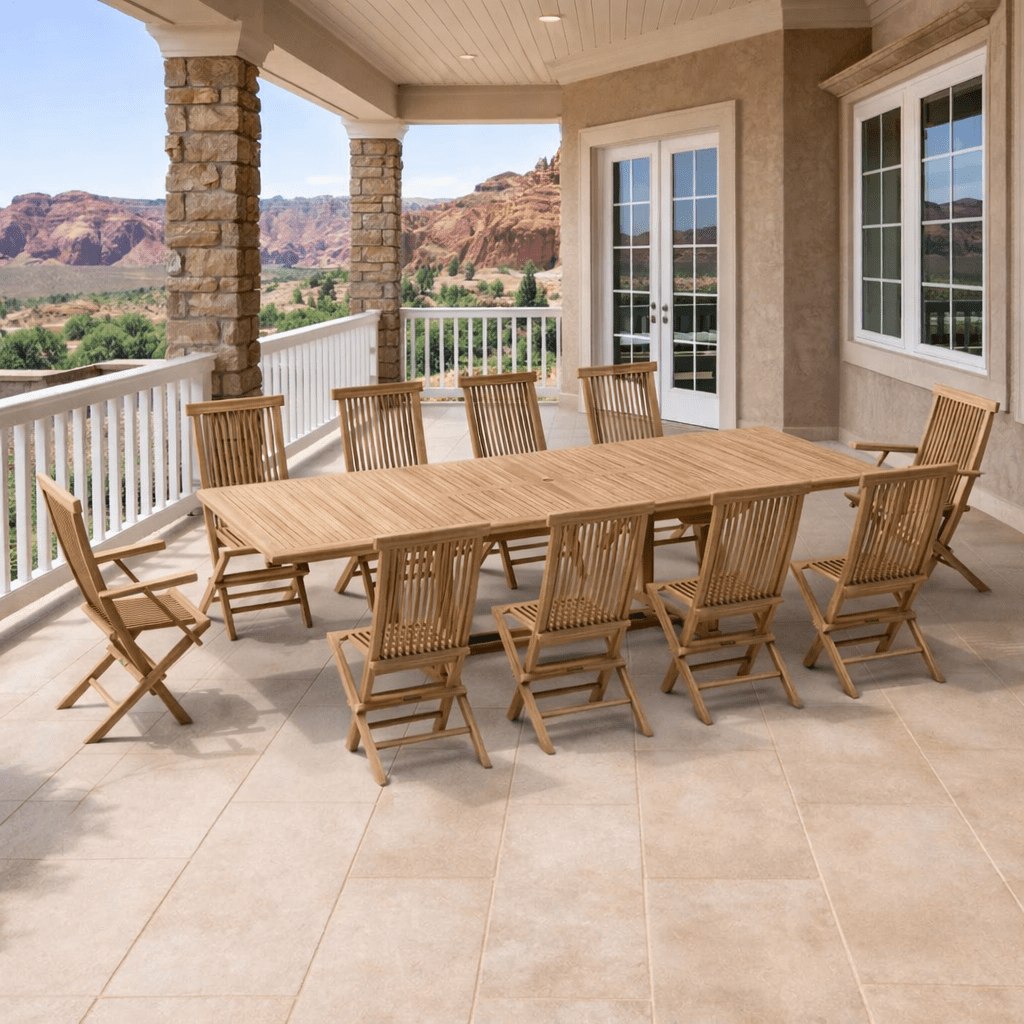 The most generous terraces can comfortably support two primary zones: dining and conversation. Start with the table because its size establishes circulation requirements. Then position lounge seating where guests can remain engaged with the larger gathering without sitting directly in the dining traffic lane.
For conversation areas, a sectional provides strong visual structure, while a sofa with separate club or swivel chairs allows more flexibility. We particularly like swivel seating when a patio faces both an architectural focal point and a pool or view because guests can change orientation without moving the furniture.
Use chaise lounges in pairs or repeated groups rather than scattering single loungers around the deck. Repetition creates a calmer resort-like look and makes each seat equally functional. Add teak side and end tables frequently enough that every one or two loungers has a practical landing surface.
If the pool terrace also includes a conversation grouping, keep wet circulation between the pool and house from cutting directly through the center of upholstered seating.
View-oriented spaces deserve less furniture than many owners initially assume. A pair of lounge chairs, Adirondack chairs, steamers, or a garden bench can preserve the openness of the setting while giving people a reason to stop there.
For balconies and narrower terraces, measure not only furniture dimensions but also the usable walking path after chairs are pulled out. That matters especially with dining furniture, where the footprint during use is considerably larger than the footprint of the table alone.
Protection from direct rain does not eliminate humidity. Covered spaces can actually remain damp longer because they receive less direct sun. Teak is therefore still appropriate, but cushion management and airflow deserve attention.
These areas are excellent locations for deep seating because fabrics receive somewhat less direct weather. They can also support rockers or swivel chairs where the goal is relaxed everyday use rather than formal entertaining.
For homes where grilling and outdoor cooking are frequent, we would prioritize a generous dining table and clear serving path over adding more lounge furniture near the kitchen. A buffet or serving table can keep food, drinks, and serving pieces off the main dining surface.
Bar-height furniture can make sense beside an outdoor kitchen island or where a higher sightline improves a marsh or pool view, but it should complement rather than replace comfortable standard-height dining if long meals are common.
Sea Island's architecture gives homeowners unusually strong cues for outdoor furniture selection. The area's established design language includes Mediterranean influences, white or light stucco, red tile, arches and loggias, while newer residences also emphasize terraces, natural materials, mature live oaks, and strong visual connections between indoors and the surrounding coastal landscape. :contentReference[oaicite:3]{index=3}
Natural teak works especially well with stucco, masonry, tile roofs, arches, and covered loggias because it adds warmth without competing with the architecture. Traditional dining tables, substantial armchairs, and classic lounge seating often feel more appropriate here than extremely lightweight furniture.
Contemporary Sea Island homes may simplify the palette while maintaining the connection to the outdoors. Straight-lined teak sectionals, sofas, sling seating, and cleaner dining forms can complement that approach while retaining the natural material character that suits the landscape.
In heavily landscaped spaces, furniture does not need to mimic nature to belong in it. A restrained teak setting against live oaks, palms, marsh grasses, or dense greenery can provide enough structure without introducing another busy material or finish.
If the landscape is the main visual feature, we would generally reduce the number of furniture styles and repeat a smaller material palette throughout the property.
Fresh teak's warmer color can create contrast against pale stucco and stone. Weathered silver-gray teak produces a quieter coastal effect. Neither is inherently more correct. Decide which appearance belongs with the architecture, then choose the maintenance approach accordingly.
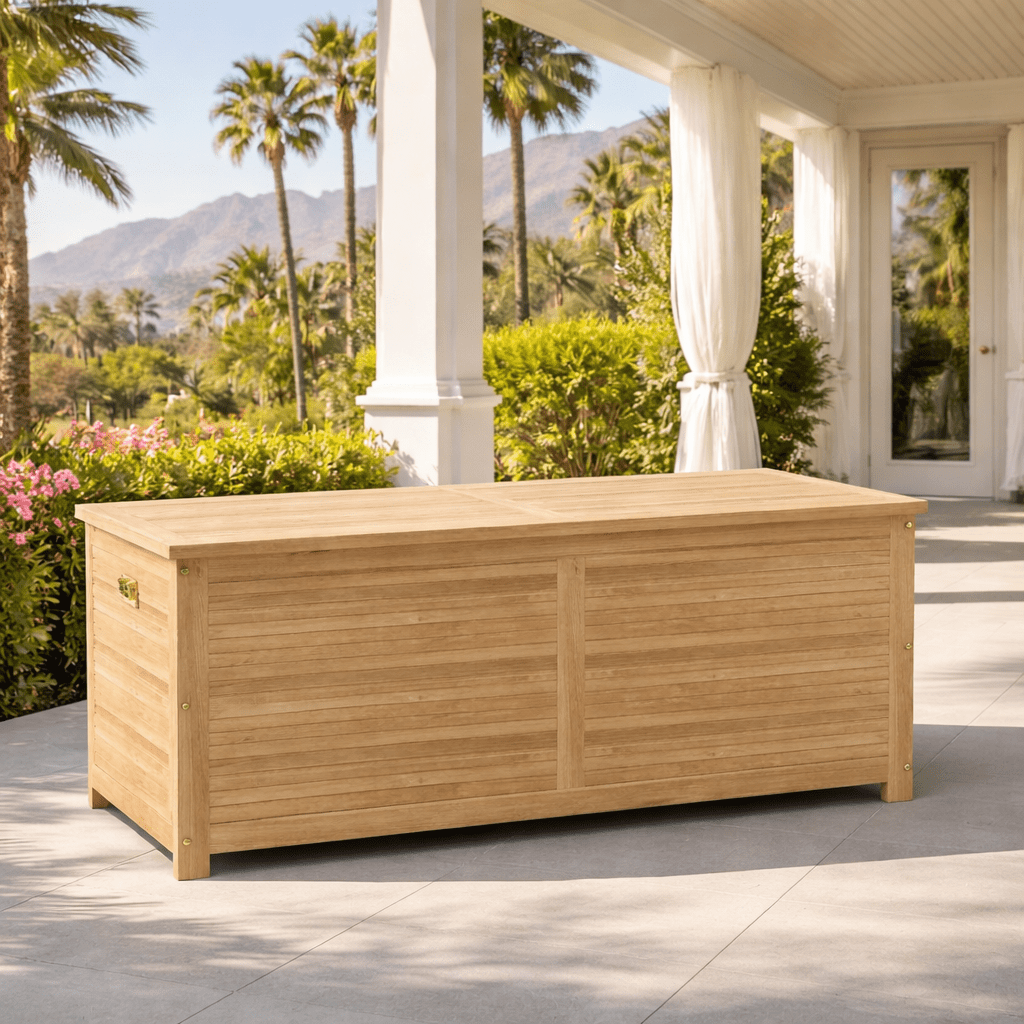 A beautiful piece may still be wrong for an ocean-facing or humid outdoor location. Start by identifying whether the furniture will receive direct rain, strong sun, pool splash, salt exposure, deep shade, or some combination of them.
Grade A teak helps solve much of the frame-material question because it is naturally resistant to moisture, rot, insects, and warping. You still need appropriate fabrics, placement, drainage, and care.
A patio designed perfectly for the household can become useless when an extended family arrives. The opposite mistake—permanently furnishing for the largest gathering of the year—can make an otherwise elegant terrace feel crowded.
Expandable dining tables, movable club chairs, ottomans, and modular seating provide a better compromise. Plan for normal life first and occasional expansion second.
Homeowners often measure the table rather than the dining experience. Once chairs are occupied and pulled away from the table, the required area grows substantially. Add the route servers and guests need to walk behind those chairs and the difference becomes even larger.
Measure the working footprint before ordering. On narrow terraces, a slightly smaller table that functions beautifully will outperform a larger table that technically fits.
A teak frame is designed for outdoor weather, but cushions deserve their own care routine. Most TeakHQ lounge seating includes Sunbrella cushions, which are weather-, fade-, UV-, and water-resistant, but water resistance should not be interpreted as a reason to leave cushions perpetually damp or covered in organic debris.
Allow airflow, keep them reasonably clean, and protect or store them when severe conditions or long unused periods make that practical.
Heavy furniture is not permission to ignore tropical weather. When significant storms threaten, follow local guidance and take reasonable steps to secure outdoor furniture, umbrellas, cushions, and accessories.
One advantage of planning the entire patio deliberately is that you can also plan where removable pieces go rather than making that decision under time pressure.
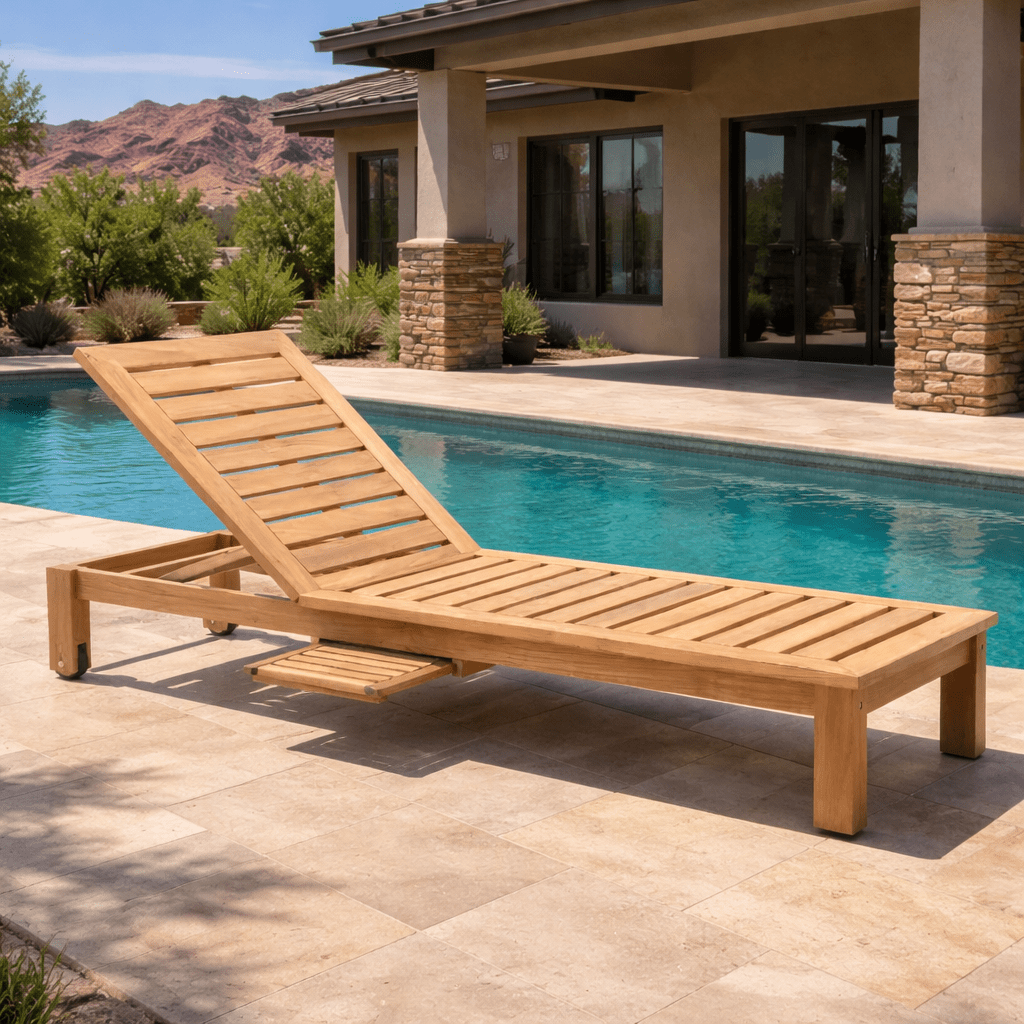 Sea Island teak care should focus less on constantly treating the wood and more on preventing coastal residue, dirt, leaves, and persistent dampness from accumulating. Teak can remain outside year-round and does not require sealing or covering for durability, but sensible cleaning preserves appearance and makes the entire outdoor area more pleasant to use.
An exposed oceanfront chaise may need attention more frequently than furniture deep inside a covered courtyard. Rather than following an arbitrary calendar, inspect the surfaces periodically and clean when salt residue, dirt, pollen, or organic material begins accumulating.
This exposure-based approach is more useful than assuming every piece on the property needs identical maintenance.
Furniture with meaningful salt-air or pool exposure benefits from periodic fresh-water rinsing and ordinary cleaning. Pay attention to joints, hardware, horizontal surfaces, and areas where residue can collect rather than simply wiping the tabletop.
Humid shaded areas deserve particular attention because surfaces and cushions dry more slowly. Keep leaves and debris from building up against furniture and allow damp cushions to dry rather than trapping moisture beneath covers or inside closed storage.
Untreated teak naturally develops a silver-gray patina. Homeowners who like that coastal appearance can allow the process to occur naturally. Those who want to preserve more of teak's original color can use appropriate teak care products or sealing treatments.
The important distinction is that color maintenance is optional. It is not necessary to stain or paint Grade A teak to make the wood durable outdoors.
Protective covers are optional rather than required for teak itself. If you use them, make sure the furniture and cushions are not being sealed beneath a cover while wet. In a humid environment, trapping moisture can work against the purpose of covering the furniture.
For second homes, a teak deck box can simplify storage for suitable outdoor accessories and cushion-related items, while larger cushions may require dedicated dry storage depending on their size and the home's setup.
The right Sea Island furniture plan begins with the property rather than the product: identify your most-used outdoor zones, understand each area's exposure, and furnish around the way your household actually entertains and relaxes. Premium Grade A teak is especially well matched to that approach because it combines natural outdoor durability, long-term value, substantial construction, and a timeless material that works across traditional and contemporary coastal architecture.
For premium coastal properties, Grade A teak is one of the strongest choices because it is naturally resistant to moisture, rot, insects, and warping and can remain outdoors through rain, sun, humidity, and temperature changes. Aluminum and poly furniture can also work, but they provide a different look, weight, and material experience.
Yes. Grade A teak's natural moisture resistance and outdoor durability make it particularly appropriate for coastal settings. Furniture receiving heavier salt exposure should still be periodically rinsed and cleaned so residue does not accumulate on the wood or hardware.
Yes. TeakHQ's Grade A teak furniture is designed for year-round outdoor use and can withstand rain, sun exposure, and temperature fluctuations. Severe storms are different: follow local guidance and secure or relocate furniture and accessories when conditions warrant.
Chaise loungers with nearby side tables are usually the foundation because they support swimming, sunning, reading, and supervising children without taking over the primary conversation space. A separate teak lounger set can help the pool area function as its own outdoor room.
A sectional works well on large, clearly defined terraces where you want substantial seating and an outdoor-room effect. Separate sofas, club chairs, and swivel chairs provide more flexibility when views, guest counts, or furniture arrangements change frequently. Browse multi-piece teak lounge sets if flexibility is a priority.
Size it primarily for your normal household and frequent guest count, then add flexibility for larger visits. An extendable table is often preferable to permanently occupying the terrace with a table sized for the biggest reunion of the year. TeakHQ offers larger teak dining sets as well as expandable table options.
No. Grade A teak does not need to be sealed for outdoor durability. You can leave it untreated and allow it to weather naturally, or use appropriate teak care products if you prefer to maintain more of the original warm teak color.
Yes. Unsealed teak naturally weathers toward a silver-gray patina as it is exposed outdoors. This is a normal appearance change rather than an indication that the wood has failed. Homeowners who prefer the original color can choose an appropriate maintenance routine.
Keep cushions clean, allow them to dry thoroughly after getting wet, and avoid trapping damp cushions beneath covers or in poorly ventilated storage. Most TeakHQ patio seating includes Sunbrella cushions, which are weather-, fade-, UV-, and water-resistant, although inclusion varies by product.
It can be especially sensible when long ownership, natural materials, and reduced replacement frequency matter. Premium teak carries a higher upfront price, but quality teak can last for decades, can remain outdoors year-round, and does not require paint or artificial stain for durability.


