
FREE SHIPPING
within mainland USA
within mainland USA
Home ▸ Teak Outdoor Furniture ▸ By Location ▸ Sonoran Desert
Outdoor spaces in the Sonoran Desert have to work around intense sun, prolonged summer heat, blowing dust, and a monsoon season that can quickly change otherwise dry conditions. At the same time, pools, courtyards, covered patios, outdoor kitchens, and sunset gathering spaces are important parts of desert living. Furniture therefore needs to make sense both during months of strong exposure and during the long stretches of pleasant weather when patios become extensions of the home. Premium Grade A teak is a particularly strong option because it combines natural outdoor durability with the warmth and architectural character that suit desert landscapes.

Choosing outdoor furniture in the Sonoran Desert is less about finding something labeled “weather resistant” and more about understanding what kind of weather it will actually face. The dominant challenge is prolonged exposure: strong sunlight, very hot summers, dry air, dust, and outdoor surfaces that may remain exposed for months at a time. Then summer monsoon weather introduces a very different set of conditions, including short periods of higher humidity, wind-driven dust, and sudden rain.
Desert homeowners often focus first on temperature, but sunlight is the condition furniture experiences most consistently. An uncovered patio in Scottsdale, Phoenix, Tucson, or Paradise Valley may receive strong direct sun for long portions of the day. That makes material choice, finish expectations, cushion fabrics, and shade planning more important than they would be in a cloudy or heavily wooded region.
Premium Grade A teak is designed for outdoor use and withstands sun exposure without requiring an artificial stain for durability. Natural teak will change appearance with exposure, eventually developing a silver-gray patina unless the owner chooses to preserve more of its original warm color.
The Sonoran Desert should not be treated as though furniture will simply remain hot and dry forever. Summer monsoon weather can introduce sudden rain and moisture after extended dry periods. That transition matters for natural materials and for furniture joints, finishes, cushions, and hardware.
This is one reason material stability matters. Teak's dense grain and naturally high oil content help it resist moisture, rotting, and warping. The practical benefit is that homeowners do not need one type of furniture for the dry season and another approach whenever thunderstorms arrive.
Fine dust is a more important ownership issue here than many furniture buying guides acknowledge. A beautiful patio can look neglected quickly after windy weather even when the furniture itself has not been damaged. Deeply textured surfaces, complicated woven areas, and furniture with many difficult-to-reach recesses can require noticeably more cleaning than their showroom appearance suggests.
That does not mean every Sonoran Desert patio should use solid wood exclusively. High-quality synthetic wicker, for example, can still be a legitimate premium choice. But buyers should evaluate how easily each piece can be wiped, rinsed, and returned to usable condition after dust accumulates.
A common desert-design mistake is asking one patio area to work equally well at every hour of the day. Furniture placed in full western exposure may be unpleasant to use on a summer afternoon regardless of how durable the material is. Covered patios, deep roof overhangs, pergolas, umbrellas, courtyards, and orientation therefore belong in the furniture discussion rather than being treated as separate landscaping decisions.
The most successful desert patios often function as two environments: a protected daytime zone and a more open evening zone. That distinction can influence where the dining table, deep seating, loungers, and fire feature belong.
Teak is not the only premium material that can work in the desert. Quality aluminum offers a lighter, more contemporary alternative, while well-made synthetic materials can reduce certain maintenance concerns. Premium Grade A teak stands out when homeowners want a natural material that can handle extended outdoor exposure without depending on paint or an artificial stain for durability.
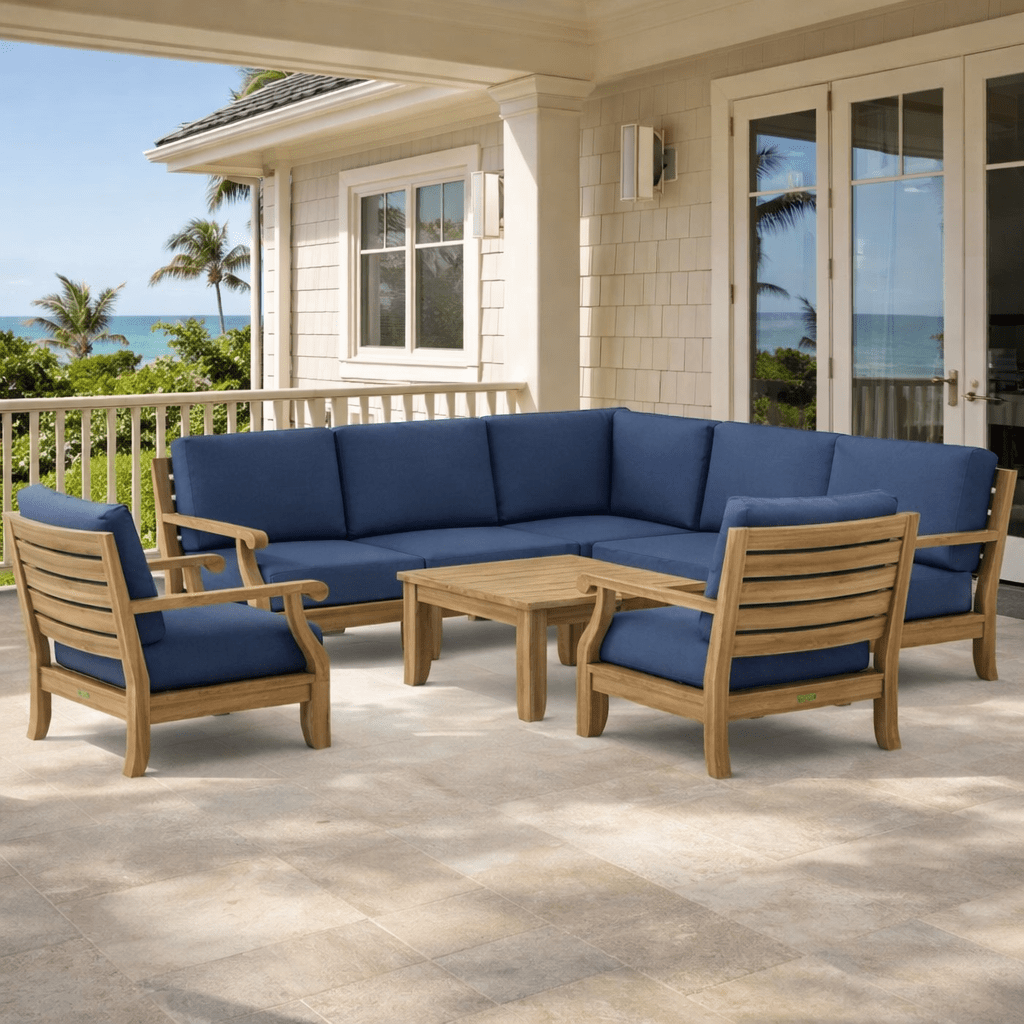 Grade A teak is naturally high in oils and has a dense grain structure. Those characteristics contribute to its resistance to moisture, rotting, insects, and warping. In the Sonoran Desert, that combination is useful because furniture can move repeatedly between long dry stretches and sudden periods of rain during monsoon season.
Unlike outdoor woods that depend heavily on a surface coating for protection, teak does not require paint or an artificial stain for durability. That reduces the importance of maintaining a decorative coating simply to keep the furniture suitable for outdoor use.
Teak can remain outdoors in sun and weather, but owners should expect its appearance to evolve. Untreated natural teak gradually develops a silver-gray patina. That weathered appearance is normal rather than an indication that the wood has stopped functioning as outdoor furniture.
Homeowners who prefer the original golden-brown appearance can choose to maintain it with appropriate teak-care products. Those who prefer lower involvement can allow the patina to develop naturally. That flexibility is particularly useful on large desert properties where maintaining every outdoor piece to a furniture-showroom finish would become a substantial recurring project.
Although year-round humidity is not the defining concern it would be along the Gulf Coast or in South Florida, summer moisture still matters. Teak's natural resistance to moisture and rot gives it an advantage over less durable woods when furniture gets wet during storms or receives repeated splash around a pool.
The distinction is important: desert furniture should not merely tolerate dryness. It should also tolerate the abrupt weather transitions that are characteristic of the region.
Premium teak costs more upfront than many mass-market outdoor materials. Its value proposition is therefore strongest for homeowners who are furnishing a space they expect to use for years rather than replacing furniture every few seasons.
Grade A teak furniture can last for decades with appropriate ownership and care. For a built-out pool terrace, custom courtyard, outdoor kitchen, or luxury home where replacing an entire furniture plan would be disruptive as well as expensive, longevity can matter as much as the initial purchase price.
| Sonoran Desert Challenge | Why Premium Grade A Teak Performs Well |
|---|---|
| Intense sun | Designed for outdoor sun exposure and may be allowed to weather naturally. |
| Prolonged heat | Dense natural teak is intended for year-round outdoor use and temperature fluctuations. |
| Long dry periods | No paint or artificial stain is required for outdoor durability. |
| Monsoon rain | Natural oils and dense grain contribute to moisture and rot resistance. |
| Changing dry/wet conditions | Teak naturally resists warping and is suited to outdoor weather fluctuations. |
| Poolside exposure | Moisture-resistant teak is well suited to furniture used around pools and spas. |
| Dusty conditions | Solid teak surfaces can be cleaned without maintaining a painted exterior finish. |
If we were planning a Sonoran Desert property from scratch, we would not begin by asking how many chairs you need. We would begin with shade, time of day, circulation, and how you actually use the yard. A Scottsdale pool terrace, Tucson courtyard, and Paradise Valley hillside estate may experience the same regional climate but need very different furniture plans.
The first priority would usually be the most protected portion of the property: a deep covered patio, courtyard, loggia, cabana, or shaded terrace. This is where we would place the seating that receives the most daily use.
For larger homes, a teak patio seating arrangement with a sofa or sectional, club chairs, and accessible tables creates an outdoor equivalent of the family room. In a desert climate, that covered living area often earns more actual use than furniture positioned primarily for a dramatic but exposed view.
On properties with a pool, we would resist the urge to push every piece of furniture against the house. The pool deserves a separate zone with loungers positioned for both sun and convenient access to shade.
A good layout leaves generous pathways between the house, water, and seating. Side tables are especially useful here because they allow drinks, books, phones, and towels to stay off the ground without requiring a large central table.
For regular family meals, six seats may be more useful than an oversized table that dominates the patio every day. Homeowners who frequently host visiting family, seasonal guests, or larger dinners should consider extendable teak dining tables rather than sizing the entire patio around the largest gathering of the year.
We would generally position the main outdoor dining area near the kitchen or outdoor cooking area and give it afternoon shade whenever possible. In the desert, convenience and exposure often matter more than placing the table at the absolute center of the view.
One of the most useful Sonoran Desert planning ideas is to treat the yard as two thermal zones rather than one patio. The shaded area handles daytime use; a second, more open conversation area can take advantage of sunsets, mountain views, evening breezes, and cooler-season nights.
A few substantial chairs, a coffee table, or a fire feature can be enough. This second zone does not need to duplicate the covered patio. Its job is to make the property more enjoyable after the sun drops rather than to function comfortably at 3 p.m. in midsummer.
Begin with the part of your outdoor space you use most. Pool-focused properties should usually prioritize loungers and nearby accent tables; homes built around entertaining may get more value from dining furniture or a sectional; and courtyards often benefit from a smaller, more intentional seating arrangement. Larger properties work best when the collections create distinct outdoor rooms rather than one oversized furniture grouping trying to serve every purpose.
Desert outdoor living has a distinctive rhythm. Peak summer afternoons may push activity toward shaded patios, pools, and indoor spaces, while mornings, evenings, and the milder portions of the year can make the outdoor areas some of the most frequently used rooms on the property. Furniture planning should reflect that changing pattern rather than assuming every patio functions the same way all year.
In many upscale desert properties, the swimming pool is not simply an amenity sitting beside the patio; it organizes the entire outdoor plan. Loungers belong nearest the water, shaded conversation seating belongs slightly farther back, and dining usually works best where it connects easily to the kitchen.
The practical lesson is to avoid buying a matching set for the entire yard. A pool terrace works better when each furniture group has a specific job.
Outdoor dinners, sunset drinks, fire-pit conversations, and casual gatherings become especially important when daytime heat discourages prolonged afternoon use. Furniture that faces only toward the house may waste some of the property's best evening qualities.
Where the site allows it, arrange at least part of the seating around a mountain, desert, golf-course, city-light, or sunset view. Swivel chairs can be particularly practical when people alternate between a conversation grouping and the landscape beyond it.
Seasonal residents and winter visitors reverse the outdoor-living calendar familiar to many colder parts of the country. Dining, entertaining, reading, and casual lounging can become major outdoor activities during the cooler months.
This favors furniture that can remain part of the landscape instead of needing to be treated as temporary summer equipment. Grade A teak is designed for year-round outdoor use, which is helpful for second homes where constant furniture moving and seasonal setup may be undesirable.
An impressive grill or outdoor kitchen does not automatically create a useful entertaining space. Guests need somewhere to sit without blocking the cook, and serving surfaces, dining space, and conversation seating should form a logical sequence.
For larger properties, think in terms of three stops: cooking, eating, and lingering. Separating those functions slightly prevents the dining table from becoming both prep station and social center.
The right furniture category depends less on the size of the house than on the shape of the outdoor living space. A large estate can still have an intimate courtyard, while a modest home may have a wide-open pool deck that needs several distinct seating zones.
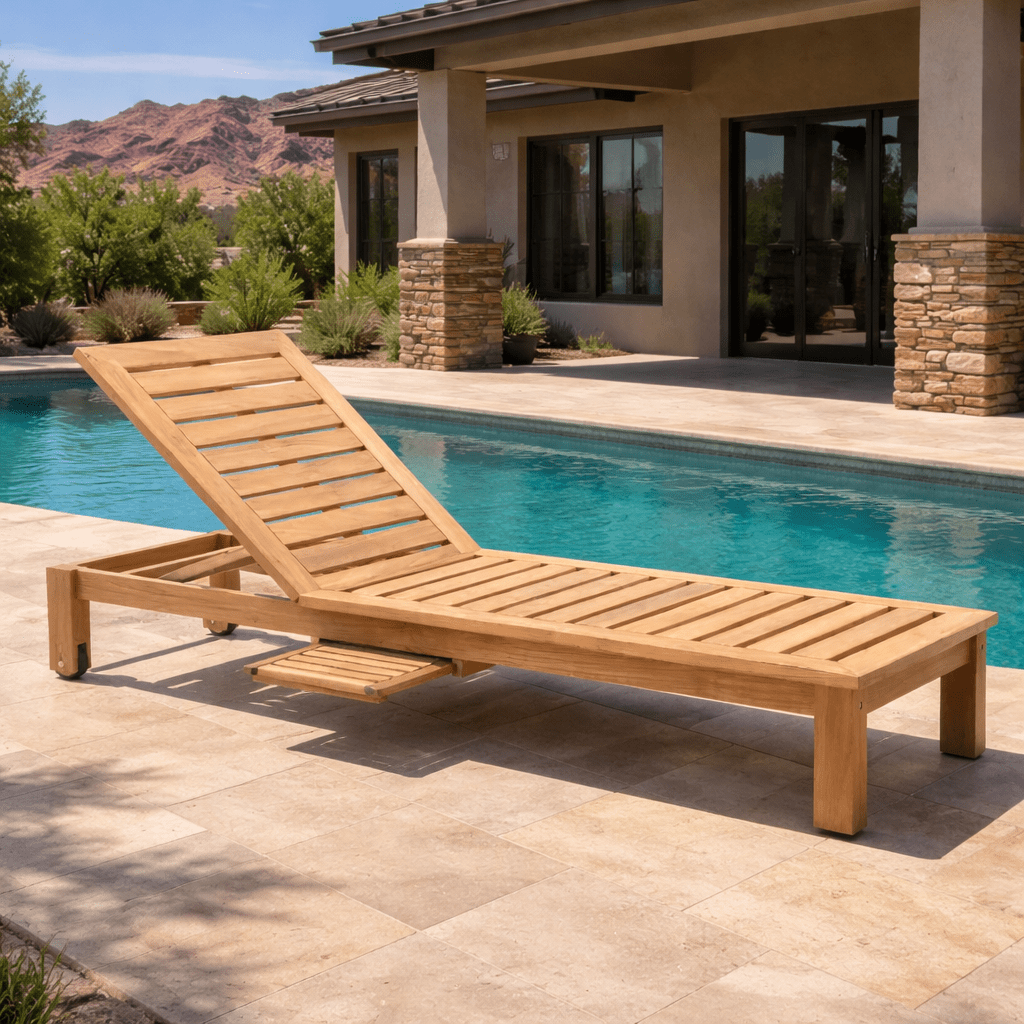 For a pool-centered backyard, we would begin with teak chaise loungers rather than the dining table. Loungers define how the pool deck is actually used during relaxed afternoons and weekends, especially when paired with small side tables for drinks and personal items.
Place at least some loungers where shade can reach them during part of the day. The goal is not simply to create a row of chairs facing the pool; it is to give people a choice between full sun and a more protected position.
Covered patios are ideal locations for sofas, loveseats, club chairs, and larger teak sectionals. The roof or overhang reduces direct exposure for cushions while creating the kind of defined room that makes substantial lounge furniture feel appropriate.
For entertaining, use enough separate seats that guests do not all have to sit shoulder-to-shoulder on one sofa. A sectional paired with a swivel chair or two club chairs often creates a more conversational arrangement than a single oversized seating piece.
Traditional and contemporary desert architecture both make frequent use of enclosed or semi-enclosed courtyards. These spaces can feel larger than they are because walls frame the sky, but circulation may still be tight.
Choose the furniture envelope before choosing the number of seats. A loveseat with two chairs and a modest coffee table may produce a better courtyard than squeezing in a large sectional simply because the nominal seat count is higher.
If four to six people eat outside regularly but ten arrive only on holidays, buy for normal life and create flexibility for the exceptions. Extendable tables, supplementary chairs, or a nearby lounge grouping allow a property to accommodate guests without leaving an enormous table underused the rest of the year.
For desert homes with large sliding doors or indoor-outdoor great rooms, aligning the outdoor table with the interior dining or kitchen area can also make both spaces feel visually connected.
Cooler desert evenings invite a different type of gathering. A teak fire pit table or separate fire feature works best when surrounded by a smaller, conversation-oriented group rather than dining chairs borrowed from another part of the patio.
Prioritize comfortable spacing and easy circulation. Fire areas tend to become places where guests linger, so a thoughtful four- to six-person arrangement can be more useful than maximizing seats.
The Sonoran Desert supports a wide range of architecture, from adobe-influenced and Spanish Colonial homes to mid-century Tucson houses, contemporary Scottsdale estates, and modern residences built from stone, concrete, steel, glass, and stucco. What many successful outdoor spaces share is an intentional connection between the home and the surrounding desert rather than an attempt to visually overpower it.
Teak works particularly well when designers want warmth against harder desert materials such as stucco, concrete, stone, tile, and steel. The wood does not need to imitate the surrounding landscape; its natural grain simply adds visual softness to spaces dominated by masonry and mineral colors.
That makes teak equally workable with a traditional courtyard, an organic desert-modern home, or a contemporary pool terrace.
Deep overhangs, covered terraces, loggias, pergolas, and enclosed courtyards are not merely decorative features in desert architecture. They can determine where outdoor furniture is genuinely comfortable to use.
Furniture layouts should reinforce those shaded zones. Rather than centering every grouping geometrically on the patio, position the most frequently used seating where the architecture already creates protection from the strongest exposure.
One of the easiest ways to overdesign a Sonoran Desert patio is to fill every open area. Native landscaping, rock formations, mountain views, mature saguaros, and large stretches of sky often provide much of the visual interest already.
Leaving breathing room between furniture groups can make a premium outdoor space feel more intentional. It also preserves sightlines and creates clearer circulation between the house, pool, garden, and view.
Furniture orientation deserves the same attention as furniture style. A west-facing seat may offer a spectacular sunset while being a poor place for daytime reading. An east-facing breakfast area may be wonderful early in the day but less useful later.
Instead of expecting one configuration to serve every hour, identify the property's best morning, daytime, and evening locations. Furnish the two that matter most to your household.
 The prettiest location on a property is not always the most usable one. Placing an entire dining or lounge group in exposed western sun because it has the strongest view can produce a patio that photographs beautifully but sits empty for much of the day.
Start with exposure and comfort, then frame the view from that location. Durable teak solves the material side of outdoor exposure, but good planning still determines when the furniture will actually be used.
In the Sonoran Desert, shade should be part of the furniture plan from the beginning. Buying a complete patio set first and asking where an umbrella or shade structure might fit afterward can leave awkward circulation or insufficient coverage.
Map the strongest afternoon exposure before selecting table size, sectional orientation, and lounger positions.
Large desert homes often host extended family, holiday visitors, and winter guests, which can tempt homeowners to size every furniture grouping for maximum attendance.
The result can be oversized tables and crowded seating arrangements that are inconvenient during normal daily use. Flexible dining furniture and multiple smaller conversation areas usually serve both everyday living and larger gatherings better.
Dust does not necessarily damage quality outdoor furniture, but it can create a frustrating ownership experience. Before buying, look at how many cushions, crevices, woven surfaces, and decorative details will need regular attention.
Teak provides a relatively straightforward solid surface, but upholstered areas still deserve their own care routine. Even premium furniture is more enjoyable when cleaning requirements match the owner's tolerance for upkeep.
Furniture that performs well only when conditions are perfectly dry is not a sensible long-term choice here. Monsoon rain, wet pool decks, irrigation, and temporary humidity all introduce moisture.
Grade A teak's natural moisture, rot, and warping resistance helps accommodate those changes without requiring the wood to be protected from every rainfall.
A premium patio does not need to be a matching catalog set. Aluminum may make sense for a lightweight accent piece, teak for substantial dining and lounge furniture, and performance fabrics for cushioned seating.
Choose materials by function rather than forcing uniformity. Teak is especially compelling for the pieces expected to remain permanent visual anchors of the outdoor space.
Teak ownership in a desert climate is generally more about managing appearance and surface debris than maintaining a protective coating. Grade A teak does not require paint, artificial stain, or mandatory sealing for durability, and it may remain outdoors throughout the year.
 Fine desert dust is likely to determine how often furniture looks as though it needs attention. Light surface cleaning as needed is usually more useful than waiting for a large annual restoration project.
Pay particular attention after windy periods and monsoon storms, when dust and rain can combine into residue on horizontal surfaces.
Natural teak gradually weathers toward silver-gray when left untreated. Homeowners who like that look can allow the process to occur without treating the color change as damage.
If retaining more of the original teak color is important, follow an appropriate cleaning and finishing routine. Teak care products are available for owners who prefer that appearance. The key is to make the aesthetic decision intentionally rather than assuming every teak owner has the same maintenance goal.
Many TeakHQ lounge-seating products include Sunbrella cushions, while others offer cushions separately. Sunbrella fabric is weather-, fade-, UV-, and water-resistant, but cushions should still be treated as a different component from the teak frame.
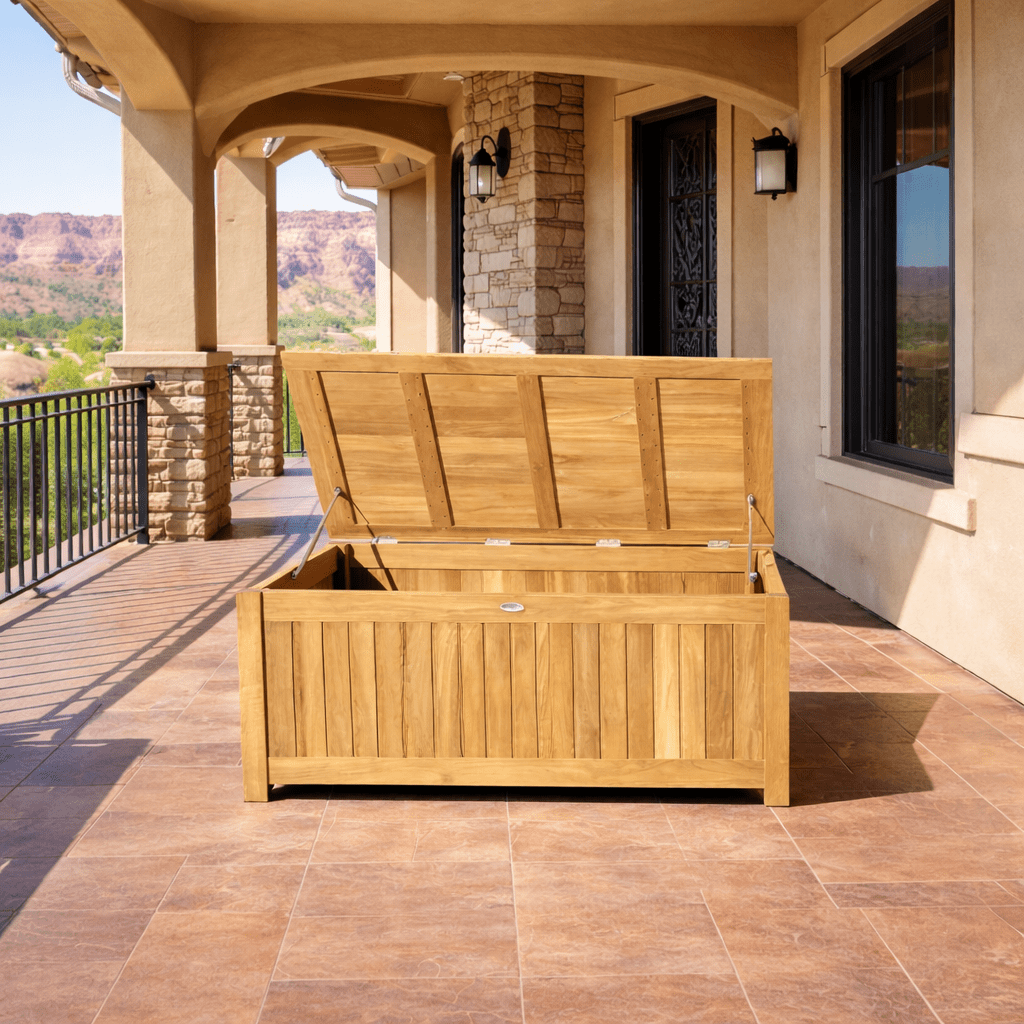
During extended periods when a patio is not being used, keeping cushions clean and protected can reduce unnecessary dust accumulation. Storage can be particularly useful at seasonal or second homes where the furniture may sit unattended for longer stretches.
Mold and mildew are not the same constant concern here that they can be in humid coastal climates, but temporary dampness can still occur during summer storms, particularly in shaded areas with poor airflow.
Allow wet furniture and cushions to dry and avoid leaving damp materials piled against the wood. That simple habit is more useful than treating the Sonoran Desert as either permanently bone-dry or permanently humid.
Salt air is generally not a regional concern for inland Sonoran Desert homes. Pool splash, however, can leave water-treatment residue on furniture near the water. Periodic cleaning of frequently splashed surfaces is sensible, especially on loungers and side tables positioned immediately beside a pool or spa.
Wet towels should also be removed rather than left draped over furniture for long periods.
Premium teak does not require a cover to survive normal outdoor weather. A cover may still be worthwhile for a homeowner whose main goal is reducing dust, keeping furniture ready for infrequent use, or protecting a furnished second home between visits.
Think of covers as an ownership-convenience decision rather than a requirement for making Grade A teak suitable for outdoor use.
The best Sonoran Desert outdoor spaces are designed around how the property changes through the day: protected seating when the sun is strongest, convenient pool and dining areas for regular use, and comfortable places to gather when evenings cool down. Premium Grade A teak is particularly well suited to homeowners who want substantial natural furniture that can remain part of that landscape for years rather than being treated as temporary patio equipment.
There is no single material that is best for every property. Premium teak is especially strong for homeowners who want natural wood, substantial construction, long-term outdoor durability, and resistance to moisture, rot, insects, and warping. High-quality aluminum can also be appropriate when lighter weight or a more metal-forward contemporary look is preferred.
Prioritize materials intended for prolonged outdoor exposure, realistic expectations about color change, UV-resistant performance fabrics where cushions are used, and a furniture layout that incorporates shade. Material durability cannot compensate for a patio that is uncomfortable to occupy during the hours you want to use it.
Yes. Premium Grade A teak is designed for year-round outdoor use and can withstand sun, rain, and temperature fluctuations. Covers are optional rather than required, although some owners use them to reduce dust or keep furniture cleaner between visits.
No. Teak does not need to be sealed for outdoor durability. You may leave it untreated and allow a silver-gray patina to develop, or use appropriate teak care products if you prefer to maintain more of its original color.
Monsoon season can expose furniture to a rapid combination of wind, dust, rain, and temporarily higher humidity. Outdoor furniture should therefore be chosen for both prolonged dry exposure and periodic moisture rather than assuming desert conditions are always dry.
Chaise loungers, small side tables, and a separate shaded conversation area are usually a practical starting point. Teak chaise loungers are well suited to pool environments because teak naturally resists moisture and is designed for outdoor use.
Yes. Natural untreated teak gradually develops a silver-gray patina with outdoor exposure. The color change is normal and does not mean the furniture has failed. Owners who prefer the original warm teak color can choose to maintain that appearance.
It depends on your priorities. Teak offers natural wood, a warmer appearance, and a heavier, more architectural feel. Aluminum is lighter and often suits a more distinctly modern aesthetic. Homeowners who value natural materials and long-term wood furniture frequently prefer teak, while others may reasonably prefer aluminum.
No, but the furniture you use most frequently should be positioned with sun exposure in mind. Pool loungers may intentionally occupy sunnier areas, while dining and deep seating often become more useful under a covered patio, pergola, umbrella, or other shaded zone.
Quality Grade A teak furniture can last for decades rather than only a few seasons. Its higher initial cost therefore makes the most sense for homeowners seeking long-term outdoor furniture rather than a frequently replaced patio set.


