
FREE SHIPPING
within mainland USA
within mainland USA
Home ▸ Teak Outdoor Furniture ▸ By Location ▸ South Carolina Lowcountry
Outdoor furniture in South Carolina's Lowcountry has to work in an environment shaped by humidity, frequent rain, strong summer sun, coastal exposure, and long stretches of outdoor use. From Charleston porches and Mount Pleasant patios to barrier-island decks and Beaufort waterfront homes, furniture is often part of everyday living rather than an occasional backyard accessory. That makes material choice, drainage, furniture weight, and maintenance flexibility especially important. Premium Grade A teak is a strong option for homeowners who want natural wood furniture built for year-round outdoor conditions without committing to constant refinishing.

South Carolina's Lowcountry is a demanding place for outdoor furniture because several conditions occur together: heat, humidity, abundant moisture, strong sun, coastal air, and periodic tropical weather. A material that performs well in a dry inland setting may require more attention here simply because surfaces stay damp longer, outdoor spaces are used heavily, and coastal properties can add salt exposure to the equation.
Humidity is more than a comfort issue. On shaded porches, marsh-facing decks, garden patios, and areas surrounded by mature live oaks, furniture may dry more slowly after rainfall or morning moisture. That makes moisture resistance and sensible furniture placement more important than they would be in a dry climate.
For natural wood furniture, we would prioritize a species intended for outdoor exposure rather than assuming any attractive hardwood belongs outside. Premium Grade A teak has a dense grain structure and naturally high oil content and is resistant to moisture and rotting, making it particularly appropriate for this environment.
A Charleston courtyard several miles from open water and an oceanfront deck on Kiawah Island are both Lowcountry settings, but they are not the same furniture environment. Barrier-island and waterfront properties generally deserve more attention to exposed hardware, cushions, wind, salt residue, and how quickly pieces can be secured before severe weather.
This is an important distinction when shopping for “coastal outdoor furniture.” The closer and more exposed the property is to saltwater and prevailing coastal weather, the more valuable simple materials and straightforward maintenance become.
Outdoor furniture here should be evaluated as a system rather than as individual pieces. Furniture material matters, but so do patio drainage, shade, airflow, cushion management, and the surface beneath the furniture. A durable chair placed where water repeatedly pools will still create unnecessary maintenance issues around the chair.
We would therefore examine where rainwater travels before finalizing a layout. On uncovered patios, keep furniture away from known low spots and avoid arrangements that interfere with drainage. On covered porches, allow enough airflow around larger lounge groups that damp areas can dry after wind-driven rain.
The Lowcountry is exposed to tropical storms and hurricanes, so furniture placement should account for the possibility that pieces will occasionally need to be moved, secured, or sheltered. Teak's substantial feel is useful in everyday conditions, but no patio furniture should be treated as storm-resistant equipment.
Before severe weather, follow local guidance and secure or relocate outdoor furniture as appropriate. If your home is on a barrier island, elevated waterfront lot, or especially exposed deck, think about where each piece will go before purchasing it. Large furniture should have a realistic storm plan, not merely an attractive everyday layout.
Premium teak earns its place in the Lowcountry because its material characteristics line up unusually well with the conditions homeowners actually deal with. That does not mean teak is the only premium option. Quality aluminum and synthetic materials can also work well. The distinction is that Grade A teak combines outdoor durability with the warmth and substantial feel of real wood.
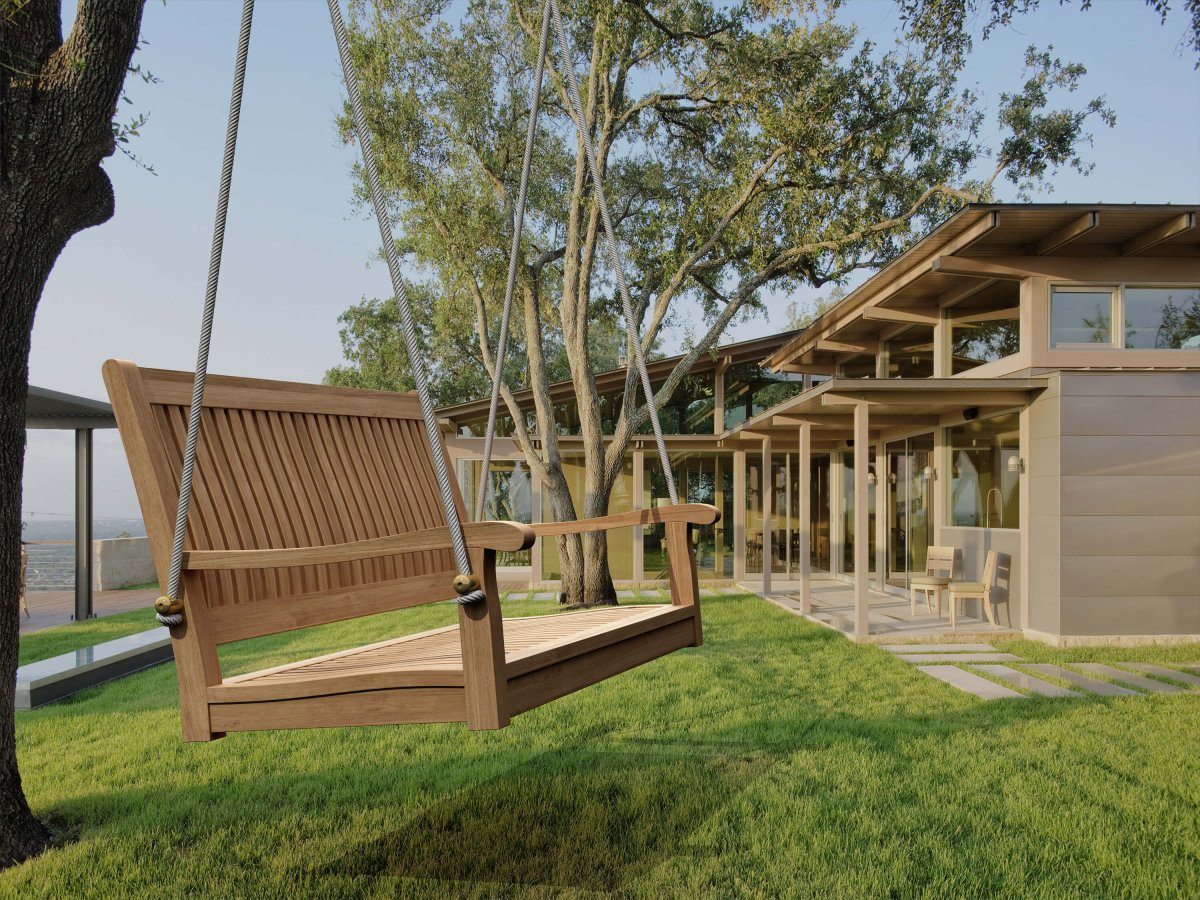 Grade A teak is naturally high in oils and has a dense grain structure. Those characteristics contribute to its resistance to moisture, rot, insects, and warping. In a region where summer humidity and rainfall are routine rather than unusual events, that is a practical advantage.
It also means homeowners do not have to create an elaborate protective-finish regimen simply to make the wood suitable for outdoor use. Teak can be left unfinished outdoors and allowed to weather naturally.
Teak is designed for outdoor sun exposure, but homeowners should understand what natural aging looks like. Untreated teak gradually develops a silver-gray patina. That change is cosmetic and is often desirable in coastal, traditional, and relaxed Lowcountry settings.
If retaining the warmer original teak color is important, owners can choose appropriate teak care products and follow the manufacturer's directions. The useful distinction is that maintaining the original color is optional aesthetic maintenance rather than something required to make the wood suitable for outdoor use.
Outdoor furniture here moves repeatedly between hot sunshine, heavy rain, shade, damp nights, and cooler seasonal weather. Premium Grade A teak is naturally resistant to warping and withstands rain, sun exposure, and temperature fluctuations, making it well matched to that pattern.
That becomes particularly valuable with larger dining tables, sofas, benches, and sectionals that homeowners expect to remain part of the property for many years rather than replace every few seasons.
Teak furniture has a higher upfront cost than many mass-market alternatives, but premium teak can last for decades. For homeowners creating a permanent porch, pool deck, courtyard, or outdoor dining area, lifetime value may matter more than the initial purchase price.
The most useful way to compare options is not simply “Which set costs less today?” but “Which material fits how long I expect this outdoor space to remain furnished?” For a primary residence, family gathering place, or long-term coastal home, those can be very different questions.
| Lowcountry Challenge | Why Premium Grade A Teak Performs Well |
|---|---|
| High humidity | Naturally resistant to moisture, rot and warping |
| Frequent rainfall | Designed for year-round outdoor exposure |
| Strong sunshine | Handles sun exposure and may naturally weather to silver-gray |
| Coastal conditions | Dense, naturally oily wood suits exposed outdoor environments |
| Temperature changes | Designed to withstand normal outdoor temperature fluctuations |
| Long outdoor season | Can remain outdoors without mandatory sealing or painting |
| Long-term ownership | Premium teak furniture can last for decades |
We would start with the way you actually use the property—not with a catalog. A full-time Charleston-area home, Kiawah vacation property, Beaufort waterfront house, and compact historic courtyard may all call for different furniture even though the climate is similar.
For many Lowcountry homes, our first two priorities would be a comfortable dining area and a separate conversation area. Outdoor meals are an important part of the region's lifestyle, while porches and shaded patios naturally invite longer, less formal gatherings.
For a household that routinely hosts visitors, an extendable teak dining table is especially useful. It lets the patio function comfortably for the immediate household without dedicating all of its floor space to the largest gathering you might host a few times a year.
On a hot Lowcountry afternoon, the most valuable part of a patio may not be the largest area; it may be the part with the best shade and airflow. We would reserve that location for the furniture people use longest—typically deep seating rather than a decorative accent piece.
A multi-piece teak lounge set works well on substantial covered patios, while a sofa-and-chair arrangement often fits narrower porches better. The goal is to preserve circulation rather than fill every available square foot.
On marsh-, river-, or ocean-facing properties, avoid automatically arranging every seat toward the center of a conversation circle. A better plan often combines social seating with the view: swivel chairs, angled club chairs, or loungers can let people move naturally between conversation and scenery.
This is one place where furniture orientation matters as much as furniture style. A beautiful view that requires everyone to twist sideways in the chair is a layout problem, not a furniture problem.
Lowcountry properties often have more than one usable outdoor area: a front porch, screened porch, back patio, pool deck, garden edge, dockside area, or upper-level terrace. These secondary spaces do not all need full furniture sets.
A pair of rocking chairs, a porch swing, a garden bench, or two loungers can give a secondary space a clear purpose without making the entire property feel overfurnished. The best outdoor plan usually has a hierarchy: one primary gathering area, then smaller destinations around the property.
Begin with the space that gets the most use. Families who frequently host meals should start with outdoor dining; large covered patios may benefit most from deep seating or a sectional; pool and waterfront properties often justify dedicated loungers; and traditional porches can support swings or rockers without competing with the primary backyard entertaining area. The right collection depends less on what is fashionable than on household size, available shade, circulation, views, and how often guests are actually present.
Outdoor living here is closely tied to the architecture and geography of the region. Porches, waterfront views, shaded patios, pools, gardens, and outdoor dining areas are not interchangeable spaces. Each supports a different style of furniture and a different pace of use.
One of the most useful ways to think about a Lowcountry porch is as an outdoor room rather than a transition between indoors and outside. Comfortable seating, a side table within reach, and enough open floor area for people to move through the space generally matter more than maximizing the number of seats.
Traditional homes may naturally suit rockers, benches, or swings, while larger covered rear porches can accommodate sofas and club chairs. On narrower porches, furniture depth matters: a slightly smaller seating group that leaves a comfortable walkway will usually be used more than a larger set people have to squeeze around.
Lowcountry entertaining frequently involves visitors—extended family, weekend guests, neighbors, or groups staying at a second home. That makes expandable dining capacity particularly practical. Instead of sizing the entire patio for the biggest event of the year, homeowners can choose a table that functions efficiently day to day and expands when needed.
For larger properties, teak outdoor dining sets can anchor the main entertaining area while leaving a separate section of the patio for relaxed seating before or after dinner.
On marsh, creek, river, or ocean-facing properties, people naturally move with the conditions—toward shade in midday, toward the view later in the day, and sometimes under cover when weather approaches. Furniture arrangements that allow this flexibility tend to work better than rigid symmetrical plans.
Side tables, movable club chairs, loungers, and smaller secondary seating areas can be more useful than concentrating every seat in one oversized group.
For a vacation or short-term rental property, the priorities change slightly. Furniture should be straightforward for guests to understand, substantial enough to feel appropriate for the property, and uncomplicated for an owner or property manager to maintain.
Teak's option to age naturally is valuable in that context because the owner can choose a lower-intervention appearance rather than maintaining a freshly finished wood color simply for cosmetic reasons.
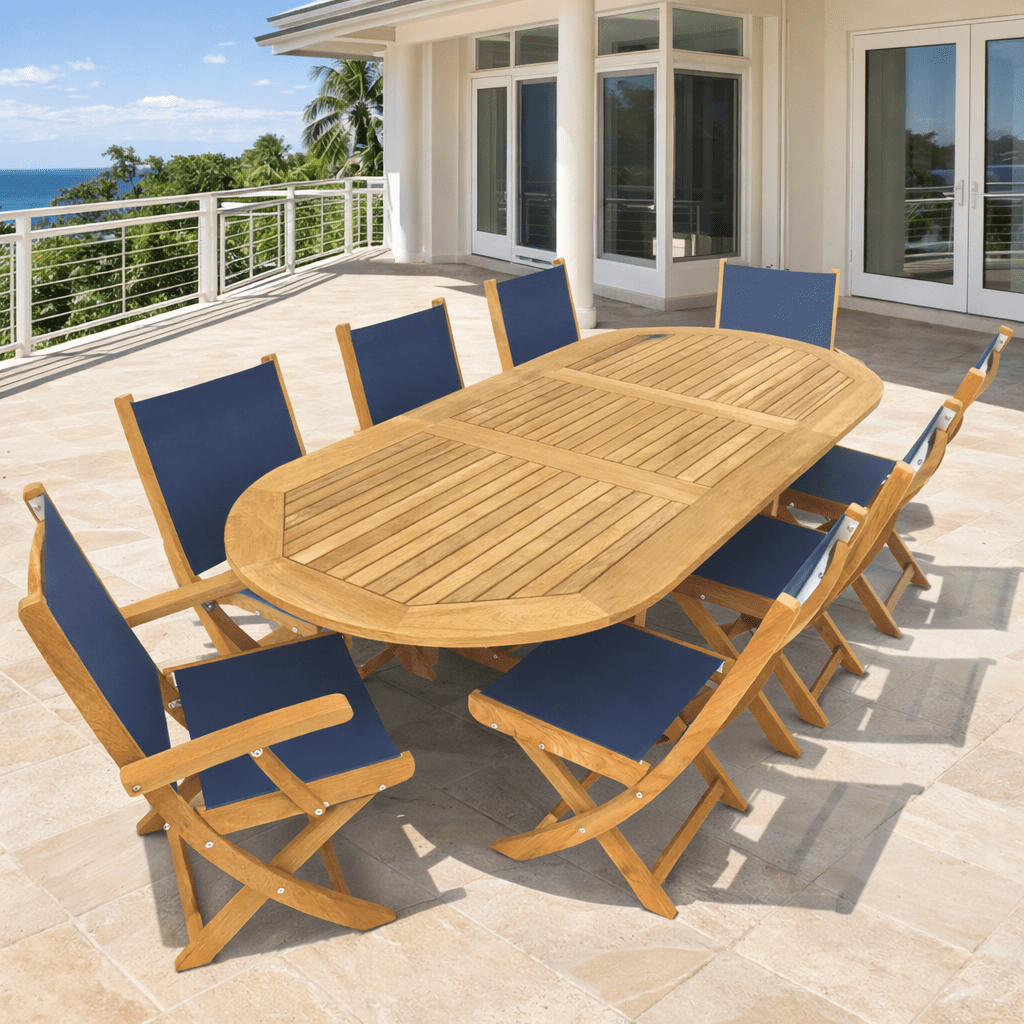 For a primary patio or outdoor kitchen, start by estimating normal dining capacity and occasional guest capacity separately. A household of four that regularly hosts eight does not necessarily need an eight-seat footprint every day.
That is why teak dining furniture and especially extendable tables make sense for many Lowcountry homes. Allow generous clearance behind the chairs so guests can move between the house, grill, serving area, and table without disrupting seated diners.
Covered spaces are natural candidates for sofas, loveseats, club chairs, and swivel chairs because they encourage longer periods of sitting. A complete teak patio seating arrangement can create a true outdoor living room, but resist the temptation to push a large matching set into a narrow porch.
For long rectangular porches, a sofa with two chairs usually preserves circulation better than a very deep sectional. On larger rear porches, a sectional can create a strong gathering zone without scattering furniture throughout the space.
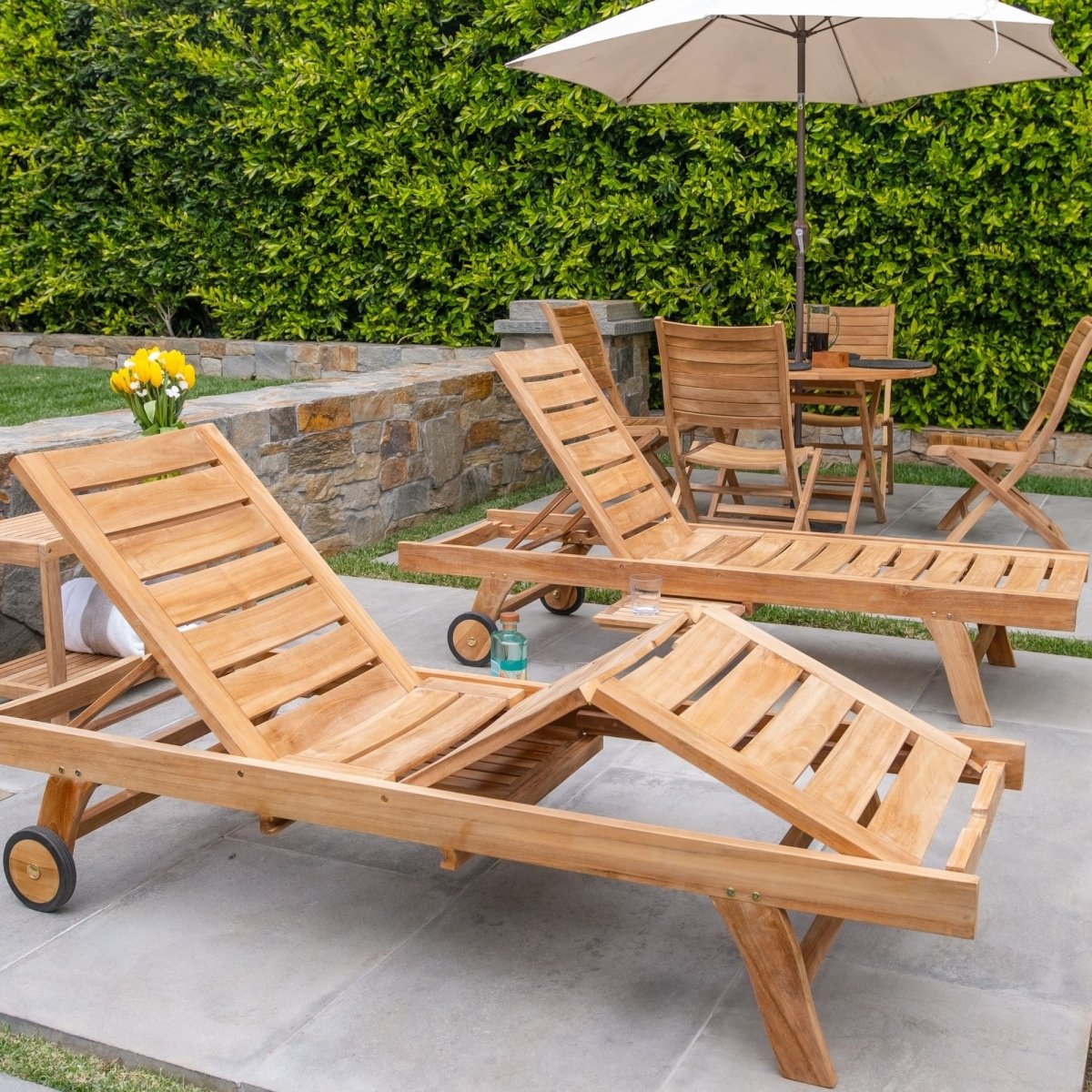
A pool deck generally benefits from fewer furniture types arranged with more breathing room. Teak chaise loungers belong where they receive useful sun without blocking circulation around the pool. Add a small side table between loungers rather than forcing guests to place drinks or phones on the deck.
Where the pool patio also supports meals, keep dining and lounging zones visibly separate. Wet traffic moving between the pool and loungers should not have to cross through the dining table.
The quieter areas of a property call for simpler furniture. A porch swing can turn a covered front or side porch into a destination, while a garden bench works best when it has something to face—a view, planting bed, fountain, lawn, or water.
These pieces are most successful when they feel intentional. Avoid buying a bench simply to fill an empty edge of the property. First decide why someone would walk there and sit.
A common oversight is creating plenty of seating but nowhere to put serving dishes, beverages, or grilling supplies. A teak serving or buffet table can reduce traffic through the dining area and keep the main table available for guests.
This is especially useful for seafood dinners, barbecues, family reunions, and holiday gatherings where food tends to arrive in waves rather than all at once.
Lowcountry homes span historic Charleston architecture, coastal cottages, newer traditional homes, barrier-island retreats, and contemporary waterfront properties. Teak works across these settings because its visual character can shift with the surrounding architecture rather than demanding one specific design style.
With traditional architecture, teak looks most natural when the furniture proportions respect the home. Rockers, porch swings, classic dining chairs, and simple benches can complement deep porches, shutters, brick, painted siding, and established gardens without trying to imitate historic furniture exactly.
Natural teak also softens spaces dominated by hard architectural surfaces such as brick, stone, tile, and masonry.
Beach properties often benefit from a lighter visual plan even when the furniture itself is substantial. Leave more negative space between pieces, preserve major sightlines, and avoid filling every edge of a deck with seating.
As natural teak weathers toward silver-gray, its appearance can fit easily with coastal palettes and weathered architectural materials. Homeowners who prefer the warmer original teak tone can maintain that look instead.
On waterfront properties, design around what people came outside to experience. Keep taller pieces away from primary seated sightlines when possible, and orient at least part of the lounge seating toward the view.
A memorable rule for Lowcountry waterfront design is simple: the best seat should face the reason the house is there. Start with the view, then build the furniture arrangement around it.
Modern and transitional architecture can pair teak with restrained forms, neutral cushions, and simpler layouts. The natural wood introduces warmth without requiring a traditional furniture silhouette, particularly around concrete patios, pools, glass walls, and modern outdoor kitchens.
 A shaded patio beneath dense landscaping may remain damp much longer than an open pool deck only a few yards away. Buying furniture based only on regional weather ignores the microclimate around the home.
Choose materials intended for outdoor moisture exposure and provide airflow around furniture. Grade A teak's moisture and rot resistance make it a good fit, but keeping debris cleared and allowing surfaces to dry still improves the ownership experience.
Lowcountry patios should work after a rain shower and during hot afternoons, not just during ideal spring weather. A beautiful dining set in the most exposed portion of the yard may be less useful than a slightly smaller arrangement with access to shade or cover.
Before ordering furniture, observe where afternoon shade falls, how rain enters the porch, and where water drains. Those observations often change the ideal layout.
Porches look larger when empty than they feel once deep chairs, tables, and sofas are installed. Furniture depth plus walking clearance can consume space quickly.
Measure the usable footprint rather than wall-to-wall dimensions. Prioritize a comfortable circulation path first, then determine how much seating remains practical. A smaller grouping that people can move around comfortably is usually better than maximizing seat count.
A patio layout should have an answer to the question, “Where does this furniture go when severe weather threatens?” Large umbrellas, lightweight accessories, cushions, and movable furnishings require particular attention.
Teak's weight gives it a substantial everyday feel, but it does not eliminate storm preparation. Follow local emergency guidance and secure or relocate outdoor furnishings when severe weather warrants it.
Some homeowners size every piece of furniture around a once-a-year gathering. The result can be a patio that feels crowded for the other 364 days.
Instead, size permanent furniture around normal use and add flexibility for larger gatherings through extendable tables, movable chairs, benches, or furniture from secondary porch areas.
Teak frames can remain outdoors year-round, but cushions have different care requirements. Many TeakHQ patio seating pieces include weather-resistant Sunbrella cushions, but even quality outdoor fabric benefits from sensible handling during extended wet periods and severe storms.
Follow the specific cushion manufacturer's care directions and give wet cushions adequate airflow rather than leaving them compressed or continually damp.
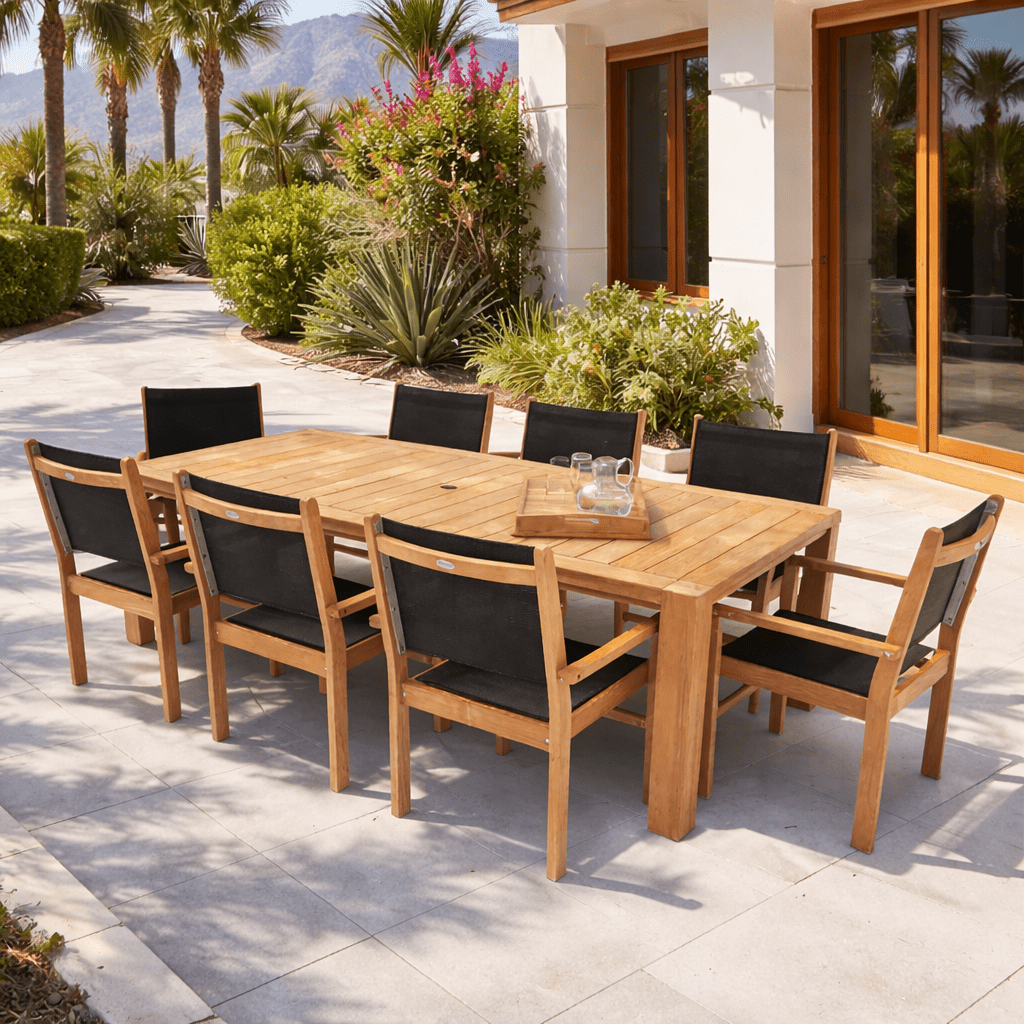 There is no single Lowcountry cleaning schedule that fits every property. An uncovered table beneath trees, a screened-porch sofa, and an ocean-adjacent chaise lounge accumulate very different levels of pollen, leaves, moisture, and residue.
Inspect furniture periodically and clean it when buildup warrants it. Removing leaves and organic debris before they remain wet against the wood for long periods is a more useful habit than following an arbitrary calendar.
Homes close to the ocean or exposed tidal waterways may experience more airborne salt residue than inland properties. When visible buildup develops, routine cleaning or rinsing according to the furniture manufacturer's care instructions is sensible.
Pay attention to hardware as well as wood. TeakHQ's Royal Teak and Anderson Teak pieces use stainless-steel hardware, while Verandis Teak products use brass hardware.
Untreated teak naturally develops a silver-gray patina over time. Some Lowcountry homeowners prefer that softer weathered appearance because it works beautifully with coastal architecture. Others want to preserve the warmer golden-brown teak color.
Either approach is legitimate. The important point is to make the choice intentionally. Teak does not require artificial stain for outdoor durability, so color maintenance is primarily an appearance decision.
Although premium teak is resistant to moisture and rot, humid shaded environments can still collect dirt, pollen, and surface growth on outdoor materials. Keep the furniture and surrounding patio reasonably clean, maintain drainage, and avoid storing wet cushions tightly against furniture.
If protective covers are used, choose and use them in a way that does not trap persistent moisture underneath. Covers are optional for teak rather than a requirement for the wood to remain outdoors.
Grade A teak is designed for year-round outdoor use and can withstand normal temperature fluctuations, so Lowcountry homeowners do not generally need to move teak furniture indoors simply because winter arrives.
Owners may still store cushions, umbrellas, or accessories seasonally for convenience or to keep them cleaner. The furniture itself can remain outside, provided any severe-weather preparations appropriate to the property are handled separately.
The best outdoor furniture plan for a Lowcountry home begins with the property itself: where the shade falls, where guests naturally gather, which views deserve attention, how many people you normally host, and how exposed the space is to rain and coastal weather. Once those questions are answered, premium Grade A teak offers a durable, natural foundation for dining areas, porches, pool decks, garden spaces, and waterfront patios that are intended to be enjoyed for years rather than seasons.
There is no single material that is best for every homeowner, but moisture resistance, outdoor durability, sun exposure, and long-term maintenance should be priorities. Premium Grade A teak is especially well suited because it is naturally resistant to moisture, rot, insects and warping and is designed for year-round outdoor use. Quality aluminum and synthetic materials can also be appropriate depending on the desired look and maintenance priorities.
Choose furniture specifically designed for outdoor exposure rather than ordinary indoor-quality wood furniture. Grade A teak is a strong natural-material option because its dense grain and natural oils contribute to moisture and rot resistance. Layout and airflow matter too, particularly on shaded porches where furniture may dry slowly.
Yes. Premium Grade A teak is designed for year-round outdoor use and can withstand rain, sun exposure and normal temperature fluctuations. Protective covers are optional rather than required for the teak itself.
Yes. Teak's moisture resistance, outdoor durability and ability to remain unfinished make it particularly practical for coastal outdoor spaces. Homes with direct ocean or saltwater exposure should still clean accumulated residue as needed and follow appropriate storm-preparation practices.
For a large screened porch, deep seating such as sofas, loveseats, club chairs or teak sectionals can create an outdoor living room. On narrower porches, a sofa with individual chairs often preserves better walking clearance than a large sectional.
No. Grade A teak does not require sealing for outdoor durability. Untreated teak will gradually develop a silver-gray patina. Owners who want to preserve the original warmer wood color may choose suitable teak care products for cosmetic purposes.
Yes, untreated teak naturally weathers toward a silver-gray patina when exposed outdoors. This is a normal appearance change. Homeowners who prefer the original teak color can maintain it rather than allowing the patina to develop.
Do not assume any outdoor furniture is safe to leave unsecured during severe weather. Follow local emergency guidance and move, secure or shelter furniture and accessories as conditions require. Plan where large pieces, cushions and umbrellas will go before storm season rather than deciding when a storm is already approaching.
Choose for normal household use first and occasional guest capacity second. If you normally seat four to six people but periodically entertain larger groups, an extendable teak dining table can provide extra capacity without consuming maximum patio space every day.
Each material has advantages. Aluminum is lighter and often has a more contemporary appearance, while poly furniture offers a synthetic, low-maintenance alternative. Teak provides the warmth and authenticity of real wood, a heavier architectural feel, natural weather resistance, and the ability to age naturally without requiring paint or artificial stain.


