
FREE SHIPPING
within mainland USA
within mainland USA
Home ▸ Teak Outdoor Furniture ▸ By Location ▸ South Florida
South Florida outdoor spaces ask more of furniture than many warm-weather markets. High humidity, frequent rain, strong sun, coastal exposure, pools, and long periods of outdoor use all influence which materials and configurations make sense. From Miami waterfront terraces to Boca Raton pool patios and Naples lanais, furniture also needs to suit a lifestyle where dining, lounging, and entertaining regularly move outside. Premium Grade A teak is especially worth considering because it combines natural weather resistance with the substantial, architectural feel many high-end South Florida spaces call for.

South Florida creates an unusual outdoor-furniture environment because several stresses occur at the same time. Heat and sun matter, but so do humidity, frequent wetting, coastal exposure, swimming pools, and long stretches when furniture stays in active use rather than being stored for winter. A material that performs well in a dry inland climate may create a very different ownership experience here.
For many South Florida homes, moisture is not an occasional weather event. Humid air, afternoon rain, irrigation, wet pool decks, and damp shaded areas can repeatedly expose outdoor furniture to moisture. That makes material choice especially important. Furniture that depends heavily on a protective finish, or that is difficult to dry and clean around, can require more attention than homeowners expect.
Drainage also deserves as much thought as rainfall. A covered lanai may protect furniture from direct rain while still remaining humid, and shaded furniture can dry more slowly than furniture in an open, breezy location. When comparing outdoor materials, think beyond whether something can “get wet.” Ask how comfortably you want to manage repeated wet-and-dry cycles over many years.
An oceanfront property in Miami Beach or Palm Beach is not the same furniture environment as a protected inland backyard farther west. Salt carried through coastal air can settle on furniture, hardware, cushions, and nearby surfaces. The closer and more exposed the property is to the ocean, the more sensible it becomes to favor outdoor materials with inherently strong weather performance and to plan for occasional rinsing and cleaning.
This does not mean every coastal homeowner needs the same furniture. High-quality aluminum is a legitimate premium choice, particularly for someone who prefers lightweight contemporary furniture. Teak offers a different advantage: it is a dense natural wood with naturally high oil content rather than a painted or powder-coated metal frame. The choice often comes down to the look, weight, feel, and maintenance experience you want.
Strong sun affects appearance, fabrics, and the comfort of exposed seating, while rain determines how quickly an outdoor space can return to normal use. For cushioned furniture, fabric quality therefore matters independently from frame quality. Most TeakHQ lounge seating that includes cushions uses Sunbrella fabric, which is designed to resist weather, fading, UV exposure, and water.
Shade remains useful even when the furniture itself is outdoor-rated. An umbrella, roof, covered patio, or strategically placed seating area can make the space more comfortable and reduce how much direct exposure cushions receive.
A common mistake is treating “weather resistant” and “hurricane ready” as the same concept. They are not. Furniture can be designed for year-round outdoor exposure without being something you should leave unsecured when tropical-storm or hurricane conditions threaten.
In South Florida, storm preparation should be part of the layout from the beginning. Think about where cushions, umbrellas, smaller tables, and movable accessories will go when severe weather approaches. Heavier furniture can feel reassuring during normal breezy conditions, but no outdoor-furniture material eliminates the need for responsible storm preparation.
Premium Grade A teak is especially well matched to South Florida because its important outdoor properties are inherent to the wood itself. Its dense grain and naturally high oil content help it resist moisture, rot, insects, warping, sun exposure, rain, and temperature fluctuations without requiring an artificial stain for durability. That combination matters in a region where furniture may spend most or all of the year outside.
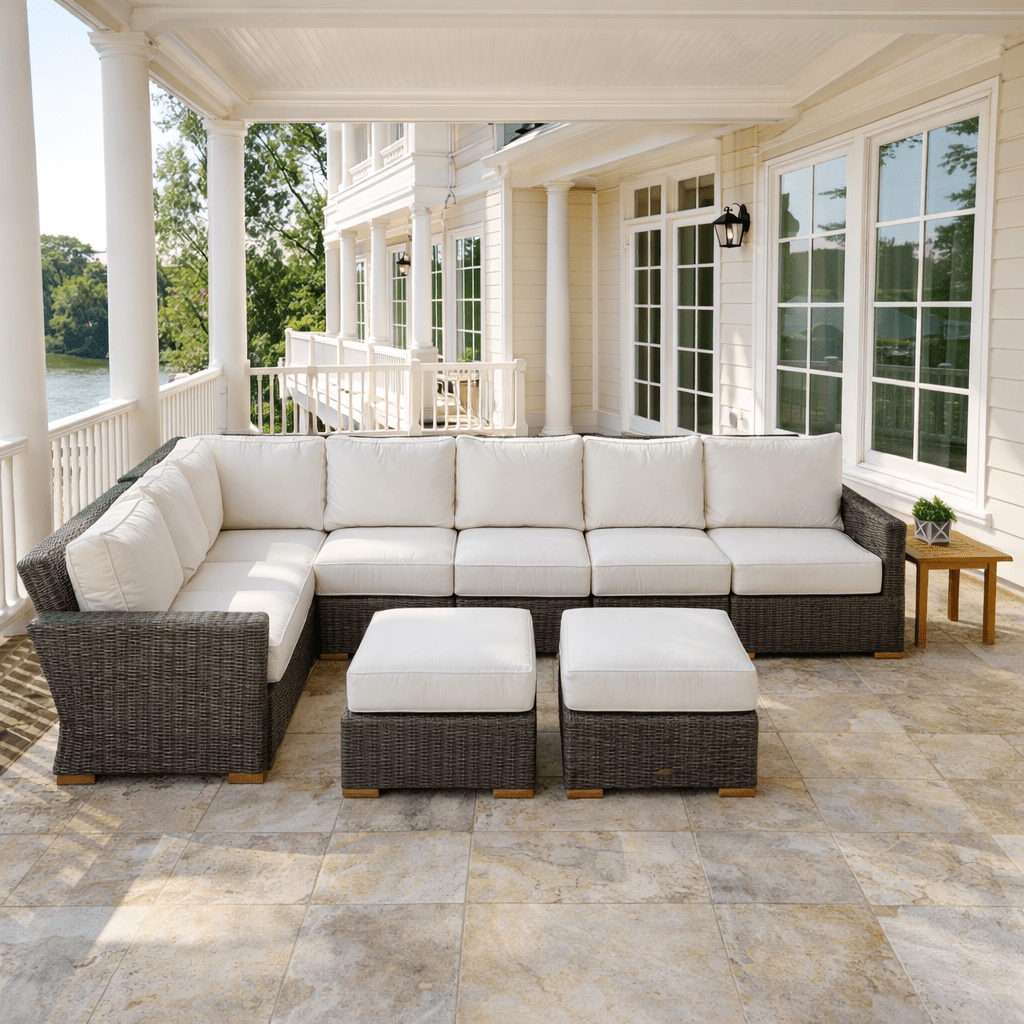 The strongest argument for teak in South Florida is not simply that it tolerates rain. Many quality outdoor materials do. The more important point is that teak's moisture and rot resistance come from the character of the wood itself. That makes it well suited to the repeated humidity, rainfall, and drying cycles common around patios, pools, and covered outdoor rooms.
This also gives homeowners flexibility. Teak does not need paint or an artificial stain to remain durable outdoors. You can leave it unfinished and let it weather naturally rather than creating a maintenance schedule around preserving a protective coating.
Furniture in colder regions may spend months under cover or in storage. South Florida furniture often has a much longer working year. That favors materials selected for long-term outdoor use rather than furniture designed primarily around seasonal convenience.
Grade A teak can remain outdoors year-round. It is naturally weather resistant and designed to withstand rain, sun, and temperature fluctuations. TeakHQ's teak patio seating therefore makes particular sense for lanais, decks, and outdoor living rooms that function as genuine extensions of the house.
South Florida buyers should distinguish between structural aging and cosmetic weathering. Natural teak changes from its original warm golden-brown tone toward a silver-gray patina when left untreated. That color change is expected and does not mean the wood needs to be replaced.
If you prefer the warmer original color, teak can be cared for or sealed accordingly. If you like a relaxed coastal gray, you can allow the wood to age naturally. That flexibility is valuable in South Florida because both polished contemporary properties and weathered coastal aesthetics are common.
Premium teak carries a higher upfront cost than many outdoor-furniture materials. The appropriate comparison is therefore not teak versus the least expensive patio set on purchase day. It is the cost and ownership experience of furniture intended to last decades versus repeatedly replacing shorter-lived pieces.
For an outdoor space that is used heavily and furnished at the same level as the home's interior, longevity becomes more important. This is particularly true when homeowners are building coordinated dining, lounging, and poolside zones rather than purchasing a few temporary chairs.
| South Florida Challenge | Why Premium Grade A Teak Performs Well |
|---|---|
| High humidity | Naturally high oils and dense grain provide strong moisture and rot resistance. |
| Frequent rainfall | Designed for year-round outdoor exposure and repeated wet weather. |
| Strong sun | Withstands sun exposure while naturally developing a silver-gray patina if untreated. |
| Coastal exposure | Weather-resistant natural wood is well suited to demanding outdoor environments. |
| Poolside moisture | Moisture resistance makes teak practical around frequently wet outdoor areas. |
| Temperature changes | Dense Grade A teak resists warping and handles normal outdoor temperature fluctuations. |
| Insects and rot | Teak is naturally resistant to insects and rotting. |
| Long outdoor season | Teak is intended for year-round outdoor use rather than seasonal placement only. |
If we were helping furnish a South Florida property, we would start with how the outdoor space is actually used rather than choosing a matching furniture collection first. Pool circulation, shade, access from the kitchen, water views, covered space, and typical guest count usually tell us more about the right furniture plan than patio square footage alone.
For a pool-centered property, we would first protect the walking and circulation path around the water. Then we would place teak chaise loungers where they receive the desired combination of sun, shade, and view. A small table between every one or two loungers is more useful than placing a large decorative table where nobody can comfortably reach it.
One of the most overlooked South Florida planning decisions is wet traffic. Guests coming out of a pool should not need to cross through the primary conversation group to reach a towel, drink, or seat. Treat the pool deck as a circulation space first and a furniture showroom second.
When both covered and uncovered patio space are available, our first choice for cushioned deep seating would generally be the protected zone. The furniture can be outdoor-rated either way, but the covered area becomes more comfortable during bright afternoons and passing rain.
A sofa or sectional with club chairs and a coffee table creates the home's outdoor living room. Position it so people can converse without blocking the view toward the pool, water, garden, or television. In larger homes, separating this zone from the chaise area makes the whole patio feel more intentional.
South Florida's long outdoor season makes a proper dining area worth planning rather than treating the patio table as occasional overflow seating. We would generally position outdoor teak dining furniture reasonably close to the indoor kitchen or outdoor cooking area, while keeping smoke and grill traffic away from seated guests.
Choose capacity around the number of people you entertain regularly, not the maximum gathering you host once a year. If household size and guest count vary substantially, an extendable table is often more practical than permanently filling the patio with a ten-person table.
Large South Florida properties benefit from secondary seating rather than putting every piece of furniture into one enormous group. A pair of chairs overlooking the water, a bench near tropical landscaping, or a small bar-height setting near an outdoor kitchen makes more of the property usable.
This approach is especially effective for waterfront homes. People naturally spread out during a gathering, and smaller destinations allow different conversations to happen without making the main patio feel crowded.
Start with the activity that defines your outdoor space. Pool-focused homes will usually get the most value from chaise loungers and lounge seating; frequent hosts should prioritize dining capacity and conversation seating; waterfront terraces and smaller patios may benefit from flexible pieces and side tables before adding larger sets. The best South Florida setup is rarely one collection alone—it is a combination of zones sized to the property and the way your household actually lives outside.
Outdoor furniture in South Florida often supports everyday living rather than occasional warm-weather recreation. Pools, covered lanais, waterfront terraces, outdoor kitchens, and patios can function as additional rooms of the house, particularly during comfortable evenings and the region's milder months.
A South Florida pool patio often needs two different forms of seating: furniture designed for reclining near the water and upright conversation seating where people can gather before or after swimming. Trying to make one furniture group perform both jobs usually compromises comfort.
Chaise lounges make sense along the sunny edge of a pool, while deeper seating fits better beneath a covered lanai, pergola, or roof extension. Keeping these functions distinct also creates cleaner movement around the pool deck.
In much of the country, outdoor dining furniture may be used heavily for only part of the year. South Florida households can use dining patios across a much broader season, even though midday summer heat and wet-season showers often make shade important.
That changes how we would budget. If breakfast, weekend dinners, family visits, and holiday gatherings regularly happen outside, a good dining table and comfortable chairs are foundational furniture rather than accessories.
South Florida's outdoor season does not simply peak in summer. The less humid months can be some of the most appealing times for patios, particularly for seasonal residents, visiting family, and homeowners escaping colder parts of the country.
For a second home, think carefully about furniture that can remain outdoors even when the property is unoccupied. Teak's year-round outdoor capability is valuable here, although cushions and loose accessories still deserve a sensible storage plan.
On a canal, Intracoastal, bayfront, or ocean-oriented property, the view competes with conversation for attention. Arrange chairs so guests do not have to choose between facing one another and enjoying the scenery. Swivel seating can be particularly useful in spaces where people alternate between a conversation, a pool, and the water view.
A long linear patio may work better with several smaller groups than a single oversized sectional. That preserves sightlines and lets the outdoor space feel connected to the water instead of crowded against it.
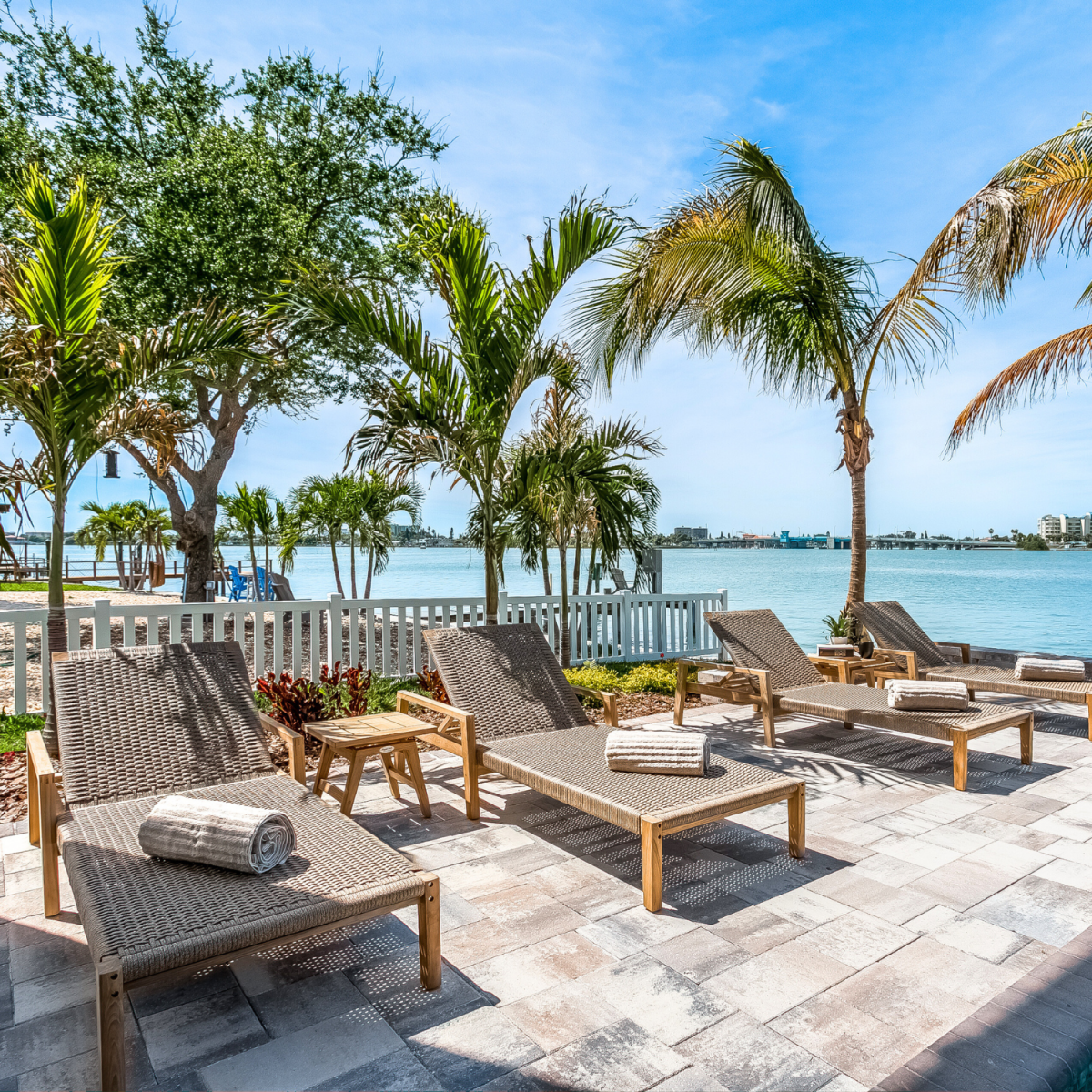 South Florida homes range from compact condominium terraces to expansive waterfront estates, so there is no universally correct furniture set. Match each area to one primary activity first; then add complementary pieces only where they improve comfort, circulation, or hosting capacity.
For a large pool deck, chaise loungers are usually the first dedicated category we would buy. Position them with enough breathing room for guests to walk around them and pair them with small tables for drinks, books, and phones. Four loungers often create a stronger resort-like pool zone than two oversized conversation sets competing for space near the water.
If the pool is visually central to the backyard, align the loungers deliberately with the architecture or pool geometry. This small design decision can make the area look considerably more finished.
Covered lanais and roofed patios are ideal locations for a full conversation group. A sofa and two chairs work well when flexibility matters; teak sectional sets make sense when the patio has a defined corner or when maximizing group seating is more important.
Do not automatically buy the largest sectional that physically fits. South Florida outdoor rooms frequently need generous walking paths to doors, pools, grills, and yards. Negative space is functional space.
A six- or eight-person dining set covers many households, while larger homes used for regular extended-family gatherings may justify seating for ten or more. For owners who entertain large groups only periodically, extendable teak dining tables can preserve everyday patio space while providing additional capacity when needed.
Place serving furniture against a wall or near the cooking area where possible. Keeping platters and beverages off the main dining table makes long outdoor meals noticeably more comfortable.
Outdoor kitchens naturally attract guests while food is being prepared. teak bar-height dining sets or counter-height chairs can create an informal place for people to sit without occupying the cook's working area.
This can be especially effective when the kitchen already has a raised counter or island. Rather than forcing another full dining table into the same zone, use counter seating for casual meals and reserve the main dining area for larger gatherings.
For waterfront properties, lower-profile lounge groups, individual chairs, and side tables can preserve openness better than visually filling every edge of the terrace. Use furniture to frame the view rather than build a barrier in front of it.
A pair of swivel chairs can also make sense where the view is behind the primary conversation direction. Guests can turn toward the water without rearranging the furniture every time boats, sunsets, or activity draw attention.
South Florida outdoor spaces encompass considerably more than a single “tropical” look. Sleek Miami contemporary homes, Mediterranean-influenced estates, Palm Beach traditional properties, coastal residences, and resort-inspired backyards can all use natural teak successfully because the wood adds warmth without requiring a strongly rustic aesthetic.
On a contemporary property with large glass openings, pale stone, smooth stucco, or restrained landscaping, teak can prevent the patio from feeling overly hard or architectural. Clean-lined teak pieces add natural texture while maintaining a sophisticated overall composition.
Here, we would keep the furniture plan disciplined: one substantial lounge group, a clearly defined dining area, and limited accent pieces rather than many small decorative items.
Natural teak works particularly well with coastal settings because owners can choose how refined or relaxed they want the wood to appear. Fresh natural teak provides a warm, finished look, while teak allowed to develop a silver-gray patina can complement a quieter weathered coastal palette.
For these homes, the design is usually strongest when the furniture supports the view. Avoid blocking railings and important sightlines with unnecessarily tall or bulky arrangements.
South Florida's Mediterranean-influenced and transitional homes often combine stucco, stone, tile, arches, mature landscaping, and shaded courtyards. Teak's natural warmth fits comfortably into that material mix without requiring the furniture itself to imitate the architecture.
Round or oval dining tables can soften rectilinear terraces, while traditional benches or lounge chairs can create quieter seating destinations away from the primary pool area.
Resort-style backyards benefit from repetition. Rather than buying a different style for each corner, repeat related materials across the pool, lounge, and dining zones so the entire property reads as one outdoor environment.
Teak can provide that visual thread even when the furniture configurations differ. Chaise loungers beside the pool, a deep-seating group under cover, and a dining set near the kitchen can feel connected without being identical.
Most expensive outdoor-furniture mistakes are not caused by choosing a visibly bad product. They come from overlooking how South Florida changes the way a patio is used, cleaned, exposed, and prepared for storms.
 A furniture set may look excellent in a showroom but still be a poor match for a humid, frequently wet outdoor space. Before choosing a style, ask what the frame is made from, whether the materials are designed for prolonged outdoor exposure, what upkeep they require, and how cushions are intended to handle weather.
Grade A teak is useful because its core outdoor resistance does not depend on hiding the wood beneath paint or an artificial stain. Its appearance can change naturally while the wood remains intended for outdoor use.
Measure circulation, not merely the furniture footprint. A dining chair needs space to pull out. A chaise needs room to approach from the side. A sectional should not constrict the path between the house and pool.
The memorable rule for a South Florida pool deck is simple: design for people who are wet, carrying towels, and walking barefoot—not just for furniture that looks balanced on a floor plan.
A weather-resistant furniture frame and an outdoor cushion do not need identical care. Most TeakHQ patio seating includes Sunbrella cushions, which provide weather, fade, UV, and water resistance, but cushions still benefit from practical management during prolonged rain or severe storms.
If the property has extensive cushioned seating, decide where those cushions will go before buying the furniture. A storage strategy is much easier to create while planning the patio than when a storm is already approaching.
Coastal furniture is exposed not only to rain but also to airborne salt and general outdoor residue. Even durable materials benefit from routine cleaning. Oceanfront and highly exposed properties may need more frequent attention than inland patios.
Choosing teak reduces the need to preserve an artificial painted finish on the wood, but it does not make cleaning unnecessary. Durable and maintenance-free are not the same thing.
Teak's heavier, sturdier feel is attractive to many buyers, especially compared with lightweight outdoor furniture. That does not make outdoor furniture safe to ignore during severe tropical weather.
Know in advance which accessories come inside, where cushions will be stored, whether umbrellas can be removed quickly, and how your furniture will be handled when a major storm threatens. Storm readiness is a household plan, not a material specification.
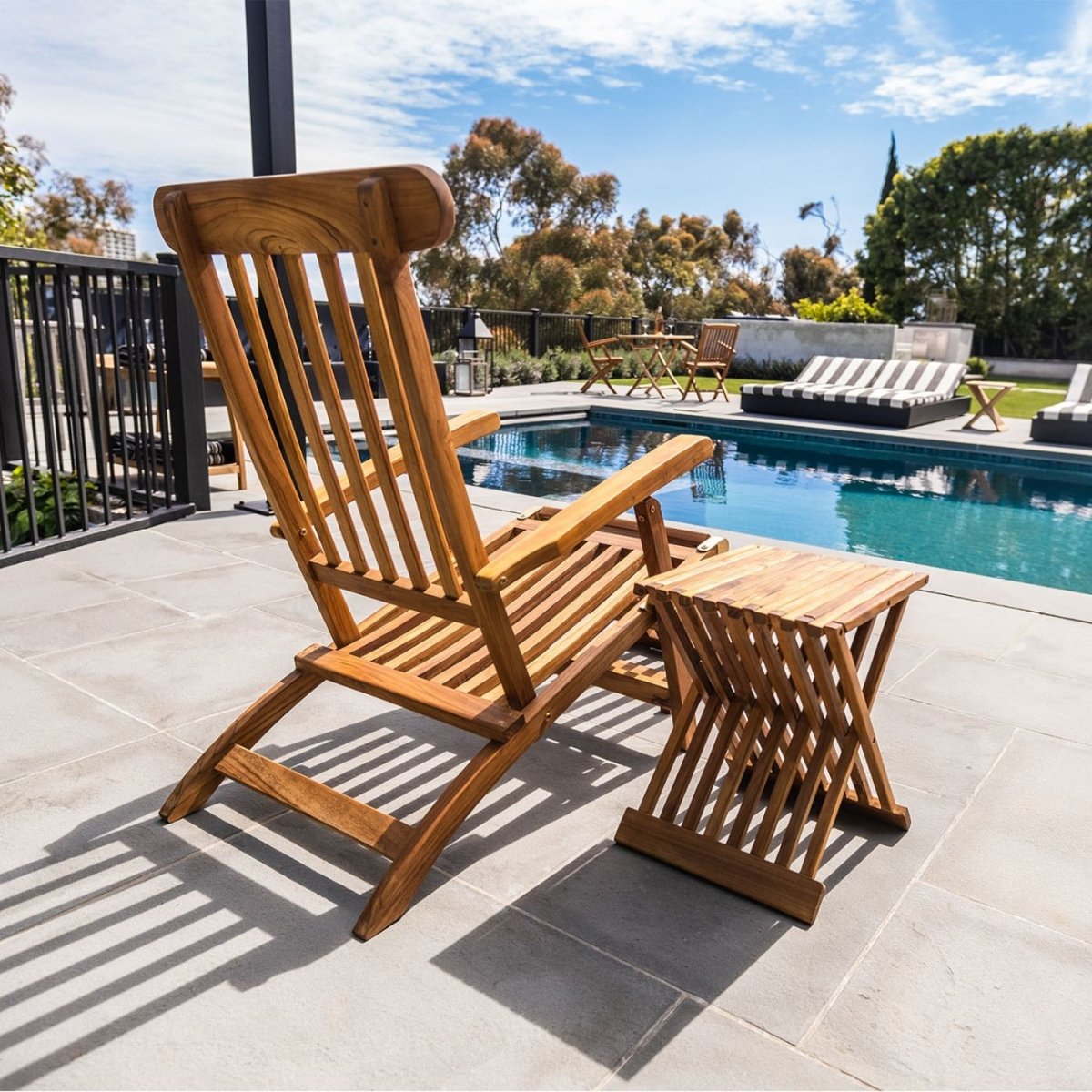 South Florida does not require an elaborate teak-maintenance routine, but its humidity, rain, coastal exposure, and long outdoor season make regular cleaning worthwhile. The biggest decision is aesthetic: whether you want teak to age naturally or prefer to preserve more of its original golden color.
There is no useful one-size-fits-all cleaning calendar. A covered Boca Raton lanai and an exposed oceanfront terrace in Miami Beach can accumulate very different amounts of dirt, moisture, and salt residue.
Inspect the furniture periodically and clean it when outdoor residue becomes visible. Coastal homes should pay particular attention to salt accumulation, while shaded patios may need more attention to organic debris and conditions that keep surfaces damp.
Good airflow matters in a humid climate. Avoid allowing leaves, towels, cushions, or other objects to remain trapped against damp teak for unnecessarily long periods. Keeping the furniture clear enough to dry also makes routine cleaning simpler.
For cushioned lounge seating, follow the care guidance for the fabric separately from the teak frame. The wood and cushion are different materials and should not be treated as though they have identical maintenance needs.
Untreated teak naturally changes toward a silver-gray patina outdoors. South Florida sun and weather make that visible aging part of the ownership experience. If you like the patina, you can allow it to develop naturally.
If you want to maintain more of teak's original warm appearance, appropriate teak care products can be used. Sealing is an appearance choice rather than something required to make Grade A teak suitable for outdoor use.
Premium Grade A teak does not require a protective cover simply to remain outdoors. A cover may still be useful if your goal is reducing dirt, leaves, bird residue, or cleaning frequency.
If you do use covers in a humid environment, use them sensibly and avoid intentionally trapping already-wet furniture beneath a poorly ventilated cover for extended periods.
South Florida's off-season maintenance question is different from that of a northern climate. You generally do not need to move teak indoors for an entire winter. Instead, the important storage issue is having a plan for cushions, umbrellas, and loose patio accessories when severe weather threatens.
This is another reason to think about storage while designing the space. A convenient garage area, interior storage room, or suitable deck box can turn storm preparation from a major project into a routine task.
The right South Florida furniture plan begins with your property: where people naturally gather, which areas stay wet, where afternoon sun lands, how many guests you actually host, and how the space will be handled during storm season. Once those questions are answered, premium Grade A teak becomes a compelling option for homeowners who want natural materials, long-term outdoor durability, flexible maintenance, and furniture substantial enough to feel like a permanent part of the home.
Explore TeakHQ's dining, lounge, poolside, and accent collections with those priorities in mind. The goal is not to fill every open area with furniture—it is to create a few well-planned outdoor destinations that you will genuinely use.
There is no single material that is right for every homeowner. Premium teak, high-quality aluminum, and other purpose-built outdoor materials can all work well. Grade A teak is particularly attractive for South Florida because it is naturally resistant to moisture, rot, insects, warping, rain, and sun while requiring no artificial stain for durability.
Yes. Grade A teak has naturally high oil content and a dense grain structure that provide strong moisture and rot resistance, making it well suited to South Florida's humid outdoor environment.
Chaise lounges are especially useful for dedicated poolside seating, while deep lounge furniture works well in a nearby covered area. Leave generous walking space around the pool and add side tables where guests can reach them easily. Browse teak chaise loungers for pool-oriented configurations.
Yes. Premium Grade A teak is designed for year-round outdoor use and can withstand rain, sun exposure, and normal temperature fluctuations. Severe tropical weather is different, however, and homeowners should still follow appropriate storm-preparation practices.
No. Teak does not need to be sealed for outdoor durability. Sealing or other teak care is optional if you want to maintain more of its original golden-brown appearance.
Yes. Natural unfinished teak gradually develops a silver-gray patina when exposed outdoors. This is normal weathering rather than a sign that the furniture has failed. Homeowners who prefer the original color can choose to maintain or seal the teak.
Prioritize outdoor-rated materials, easy cleaning, sensible cushion management, and layouts that preserve views and airflow. Coastal exposure may also justify more frequent rinsing and cleaning. Teak is a strong option when you prefer substantial natural wood rather than a lightweight metal or synthetic look.
Buy primarily for the number of people you entertain regularly rather than the largest gathering you can imagine. Six- and eight-person sets suit many households, while an extendable teak table can provide occasional extra capacity without permanently consuming patio space.
Grade A teak does not require a cover for year-round outdoor durability. Covers can still reduce dirt and cleaning, but they should be used sensibly in humid conditions rather than trapping already-wet furniture for long periods.
It depends on your priorities. Aluminum is lighter and can suit a distinctly modern aesthetic, while poly lumber offers a synthetic, low-maintenance approach. Teak is natural wood with a warmer, heavier, more architectural feel and strong inherent outdoor resistance. For buyers prioritizing authenticity, longevity, and natural material, teak is often the more compelling fit.


