
FREE SHIPPING
within mainland USA
within mainland USA
Home ▸ Teak Outdoor Furniture ▸ By Location ▸ St. George, Utah
Outdoor furniture in St. George has to work in a climate defined by intense summer sun, prolonged heat, dry air, and large amounts of outdoor living. Pools, covered patios, golf-community homes, and red-rock landscapes make the backyard an important extension of the house for much of the year. That favors substantial furniture, thoughtful shade placement, and materials that can handle repeated sun and weather exposure. Premium Grade A teak is especially well suited to homeowners looking for a natural material with long-term outdoor durability and flexible maintenance.

St. George creates a very different outdoor furniture environment from northern Utah. The central question is not how a piece will handle months of snow or persistent humidity. It is how well the furniture, finish, cushions, and overall patio plan will function through prolonged sun exposure, very hot summer afternoons, dry conditions, occasional storms, and an unusually long outdoor-living season.
In St. George, summer heat affects more than the furniture material. It changes where people actually want to sit. A beautiful seating area in full western exposure may be largely ignored on a July afternoon, while a shaded zone under a patio roof or pergola becomes the most valuable part of the yard.
That means furniture planning should begin with the sun path rather than the furniture catalog. Place the primary lounge area where it receives reliable afternoon shade, then use more exposed spaces for pool loungers, occasional seating, or morning use. The best material cannot compensate for a poorly located sitting area.
St. George homeowners should treat UV exposure as a major purchasing consideration, particularly for cushions, synthetic materials, painted finishes, and other components that remain outdoors. Furniture placed beneath full summer sun receives a very different ownership experience from furniture beneath a deep covered patio.
Grade A teak is designed for outdoor exposure to sun and temperature changes. The wood does not need an artificial stain for durability, and homeowners can either allow its appearance to evolve naturally or maintain more of its original warm color with optional care products.
The desert climate can make it tempting to shop as though rainfall and moisture barely matter. That is too simplistic. Outdoor furniture can still encounter thunderstorms, irrigation overspray, pool splash, washing, and occasional wet periods. Furniture therefore needs to perform through repeated transitions between very dry conditions and short periods of moisture.
Premium outdoor materials such as high-quality aluminum can also make sense here. Aluminum is light and contemporary; teak is heavier, warmer, and more natural. For homeowners who want furniture to visually belong beside sandstone, stucco, stone, desert landscaping, and mature trees, that material character can be just as important as weather performance.
One of the easiest St. George maintenance issues to underestimate is ordinary desert dust. Wind, nearby construction, gravel landscapes, and dry soil can leave horizontal surfaces looking dirty even when the furniture itself is performing perfectly well.
For that reason, easy routine cleaning matters more here than aggressive seasonal refinishing. A furniture layout that leaves enough room to wipe tables, move cushions, and occasionally clean beneath pieces will usually be easier to own than an overfilled patio.
For St. George, the strongest case for premium Grade A teak is not one single climate feature. It is the combination of outdoor durability, natural appearance, structural substance, and the freedom to choose how much cosmetic maintenance you want to perform.
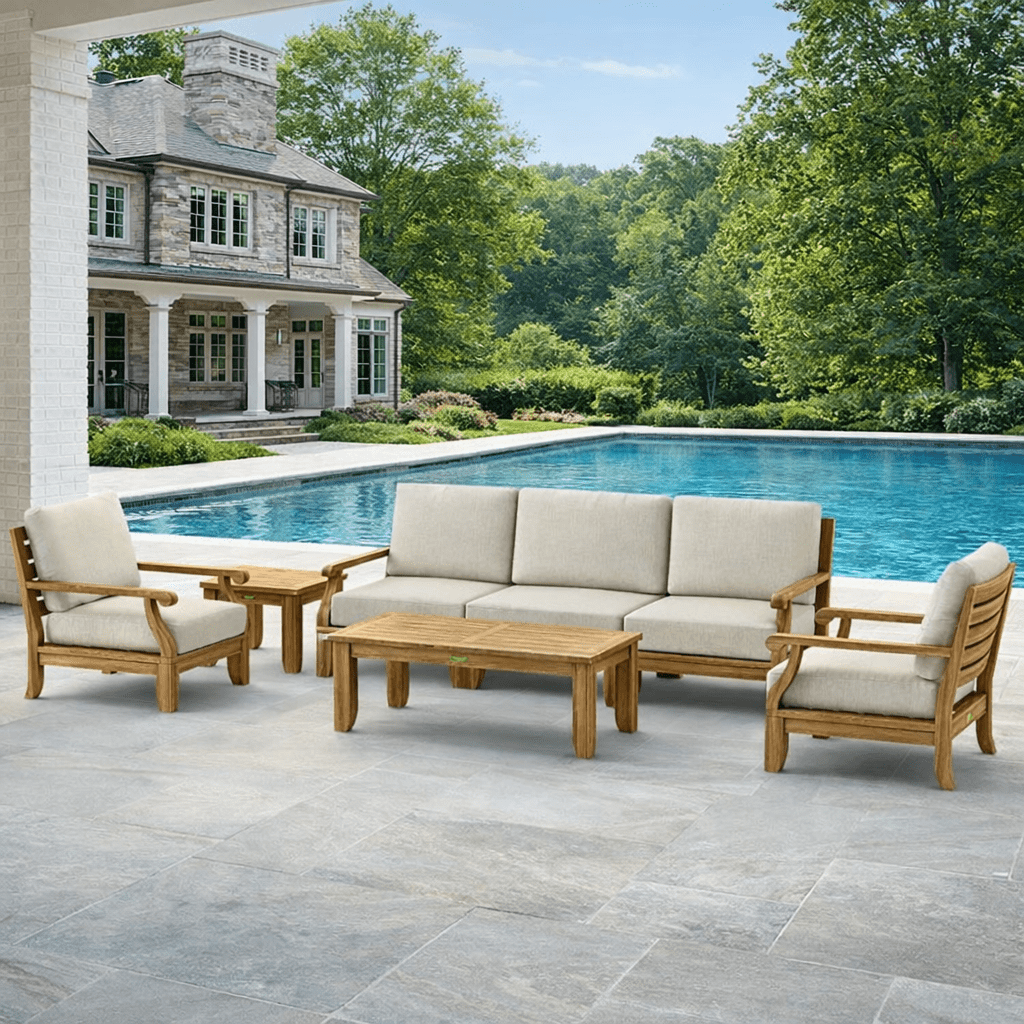 Grade A teak naturally contains oils and has a dense grain structure that contributes to its resistance to moisture, rot, insects, and warping. Those characteristics matter in St. George because furniture can spend much of the year outside while moving repeatedly between intense dry heat, cooler nights, irrigation or pool moisture, and occasional rain.
Unlike a finish-dependent wood that relies on paint or artificial stain for outdoor survival, teak can remain unfinished. That is useful for homeowners who would rather spend their time enjoying the patio than repeatedly restoring a decorative coating.
Natural teak gradually develops a silver-gray patina when left untreated. For some St. George homes, that weathered appearance works particularly well alongside pale stucco, natural stone, black metal accents, and desert landscaping. Other homeowners prefer the original golden-brown appearance and can use optional teak-care products to help maintain it.
The important distinction is that appearance and durability are separate decisions. You do not need to continually stain teak simply to make it suitable for outdoor use.
Teak's heavier, sturdier feel is useful on the larger patios and resort-style outdoor spaces common throughout the St. George area. That does not make any furniture immune to severe wind, and movable items and umbrellas should always be handled appropriately when strong weather approaches. For normal use, however, substantial furniture often feels more appropriate in an expansive outdoor room than extremely lightweight pieces.
Homeowners shopping for premium outdoor furniture should consider lifetime use rather than simply comparing initial price tags. Quality teak furniture can last for decades, which makes the higher purchase price easier to evaluate when the alternative is replacing lower-cost outdoor furniture repeatedly.
This is especially relevant in St. George, where patios are not merely seasonal accessories. When an outdoor dining or lounge space is used through much of the year, buying durable furniture for the space can make more sense than treating it as a temporary furnishing.
| St. George Challenge | Why Premium Grade A Teak Performs Well |
|---|---|
| Intense sunshine | Designed for year-round outdoor use and sun exposure |
| High summer heat | Handles outdoor temperature fluctuations without requiring a protective painted finish |
| Very dry conditions | Dense Grade A teak provides strong structural stability |
| Occasional rain | Natural oils contribute to moisture and rot resistance |
| Poolside moisture | Well suited to repeated outdoor moisture exposure |
| Desert dust | Unfinished teak can be routinely cleaned without maintaining a painted coating |
| Long outdoor seasons | Built for year-round outdoor use and long-term ownership |
If we were helping furnish a St. George backyard, we would start with how the space is used at different times of day. The most valuable patio is rarely the one with the most furniture. It is the one that gives you a comfortable place to eat, relax, entertain, and escape the afternoon sun without creating awkward circulation around the pool, outdoor kitchen, or house.
The covered patio would usually receive our first investment. A deep-seating arrangement or teak sectional creates the outdoor equivalent of a family room and is useful for conversation, reading, watching a game, or relaxing after time in the pool.
Do not automatically push the seating tightly against the house. If space allows, orient chairs or a sectional toward the most compelling part of the property—perhaps the pool, Snow Canyon views, red cliffs, a landscaped courtyard, or an evening fire feature. St. George homes often have scenery worth facing.
For families who regularly grill or entertain, we would create a distinct dining zone rather than asking lounge furniture to perform both jobs. A teak outdoor dining set near the kitchen reduces back-and-forth traffic and encourages the patio to function like a real outdoor room.
If everyday meals involve four to six people but holidays bring a much larger group, an extendable table can be more useful than permanently dedicating the patio to a ten-person footprint. Flexibility is particularly valuable when outdoor space also needs to accommodate a pool or circulation path.
Pool furniture works best when it does not compete with dining or conversation seating. We would generally place chaise lounges along the sunniest usable side of the pool while keeping the primary conversation area under shade. Side tables between loungers are worth planning from the beginning rather than adding later wherever space remains.
This approach also acknowledges an important St. George reality: sunshine is an asset and a constraint at the same time. Some furniture should embrace it; the seating where people spend hours should usually offer a way to escape it.
Once the sun drops, a patio that felt too exposed during the afternoon may become one of the best areas of the property. A conversation grouping around a coffee table or fire feature can extend the usefulness of the yard into cooler evenings and shoulder seasons.
We would therefore avoid evaluating the patio at only one hour of the day. Walk the space in the morning, late afternoon, and after sunset before deciding which zone deserves your largest furniture investment.
Begin with the part of your outdoor space you use most. Pool-focused homes will usually get the most immediate value from chaise lounges and side tables, while large covered patios may justify a sectional or multi-piece seating group first. Households that entertain around food should prioritize dining, and homeowners who frequently host extended family may benefit from an expandable configuration rather than simply buying the largest table available.
St. George outdoor living is shaped by more than warm weather. The area's golf communities, resort-style neighborhoods, pools, red-rock scenery, vacation homes, active retirees, multigenerational families, and easy access to outdoor recreation all influence what homeowners expect from a patio.
Spring and fall are especially valuable patio seasons, while winter can still provide many opportunities for daytime outdoor use. Summer dining often shifts toward breakfast, shaded meals, and evenings rather than the hottest part of the afternoon.
That makes permanent outdoor dining furniture more practical here than in climates where patios sit unused for much of the year. The more frequently a table is used, the more important comfortable chairs, adequate clearance, and convenient access to the kitchen become.
A successful pool backyard usually contains both a sun zone and a shade zone. Chaise lounges belong where sunbathers want them; the main conversation seating usually benefits from overhead protection or afternoon shade.
Treating these as separate environments helps prevent a common planning mistake: arranging every seat around the pool simply because the pool is visually dominant. People also need a comfortable place to sit for an hour, talk, eat, or supervise children without remaining in full sun.
St. George is well suited to family gatherings, vacation stays, and visiting relatives. That does not mean every patio needs permanent seating for the largest gathering of the year. In many homes, a better solution is comfortable everyday seating plus expandable dining capacity and a few flexible chairs that can move between zones.
The distinction matters. Furniture should fit the way you live on an ordinary Tuesday, not just the biggest holiday weekend.
After sunset, patios can transition from heat-management spaces into conversation spaces. That is where a teak fire pit table, lounge seating, or a pair of swivel chairs can make sense, especially outside peak summer.
If evening entertaining is important, think about sight lines, lighting, drink surfaces, and seating orientation while planning the furniture—not after everything has been delivered.
St. George patios vary widely, from compact courtyards to expansive pool decks and golf-course properties. The furniture should respond to the particular space rather than simply matching a predefined set.
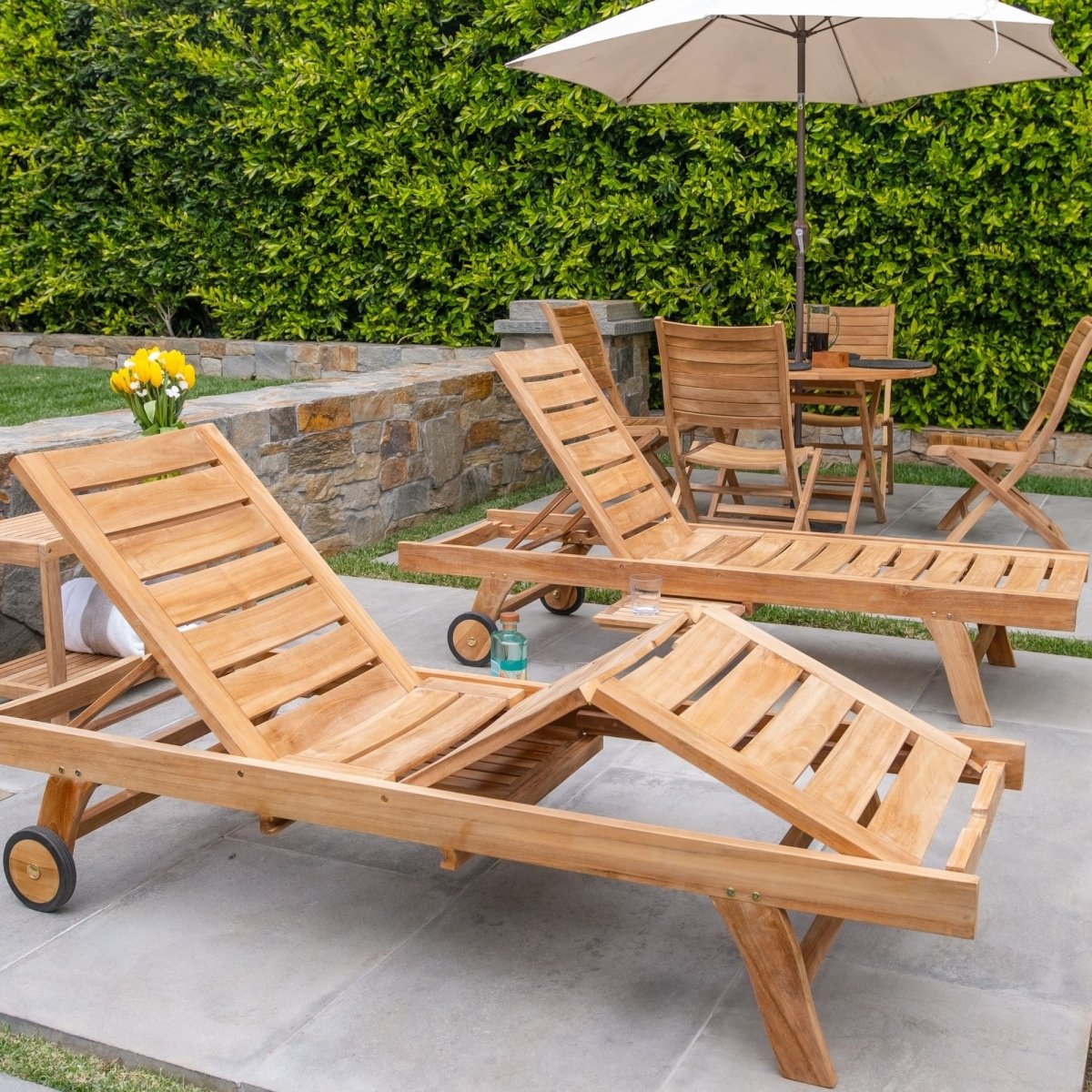 For a pool-centered backyard, begin with teak chaise loungers. Leave enough clearance to walk comfortably behind and between them, and add small tables so guests have a place for drinks, phones, books, and sunscreen.
Four loungers can work particularly well for resort-style pools because they visually define the sunbathing area without requiring the entire pool deck to become a row of chairs. If the pool is primarily used by a couple, two high-quality loungers may be a better investment than filling unused deck space.
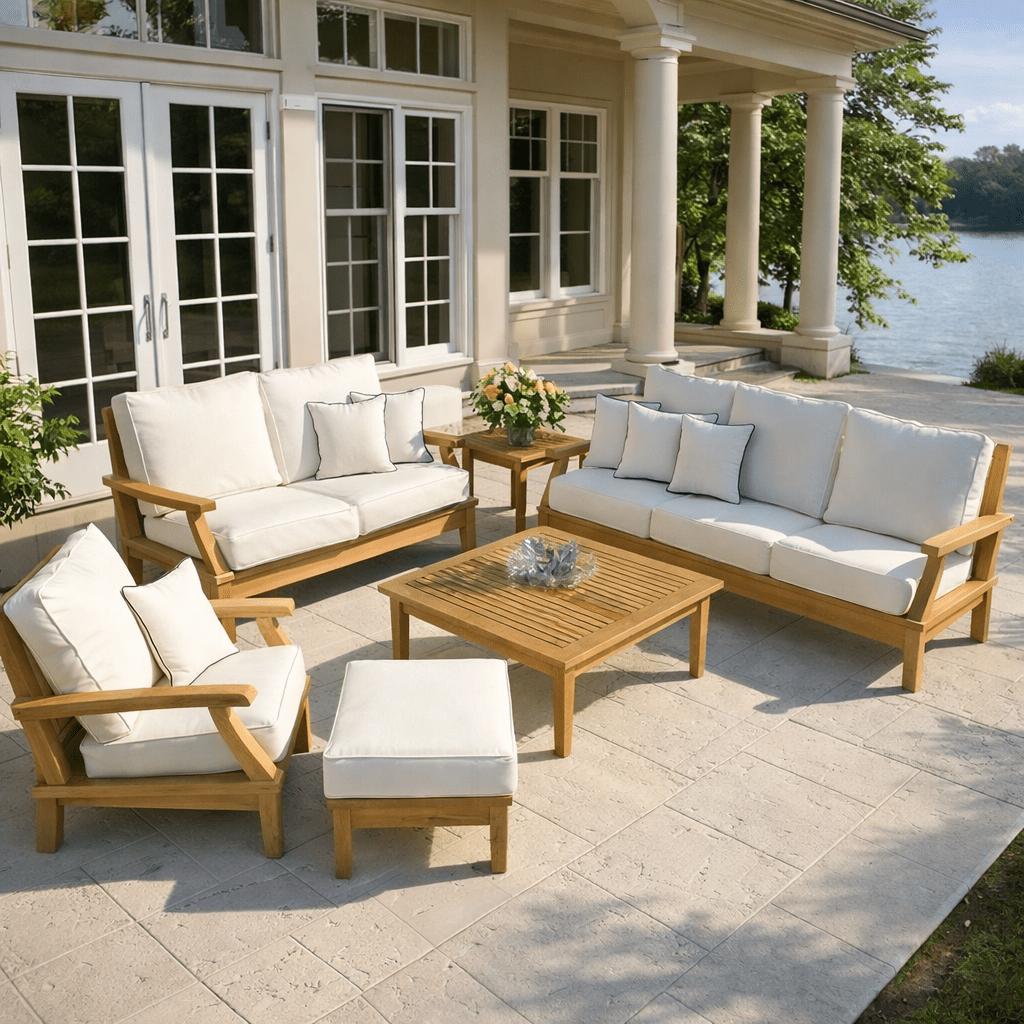
Covered patios are ideal for sofas, sectionals, club chairs, and swivel chairs because they create a comfortable destination during the hottest portions of the day. A sectional makes sense for larger households and frequent gatherings; separate sofas and chairs provide more flexibility when the patio has multiple views or traffic paths.
Most TeakHQ patio seating includes Sunbrella cushions, though inclusions vary by product. In an exposed desert setting, cushions should still be cared for according to their specific product instructions rather than assuming weather-resistant fabric means it should never be moved or protected.
A conventional dining set works well beside an outdoor kitchen when meals are the main event. Where an island or raised counter already anchors the cooking area, bar and counter-height teak furniture can create a more casual second seating zone.
The most useful setup often includes both: counter seating for conversation while food is being prepared and a proper dining table for longer meals. Keep enough separation that guests seated at the table are not blocking the grill or refrigerator.
Homeowners frequently focus on sofas and chairs while underestimating the surfaces around them. In a serious outdoor living room, every seat should have somewhere convenient to place a drink. Coffee tables handle the center of a grouping, while teak side and end tables solve the smaller gaps.
This is particularly useful around pools, where guests may be moving between wet and dry areas and are unlikely to carry items across the patio each time they sit down.
St. George's landscape creates an unusually strong case for swivel chairs. On a patio that faces both a conversation group and a red-rock, golf-course, or mountain view, swivel seating lets the same chair serve both orientations without repeatedly moving furniture.
That small functional choice can be more valuable than adding another chair. In a view-driven property, flexibility of orientation matters almost as much as seating capacity.
Premium teak fits particularly naturally into Southern Utah because its appearance is warm without trying to imitate the desert. Rather than introducing another painted faux-natural material, real wood can complement stone, stucco, concrete, black metal, desert plants, and the red and tan landscape surrounding many St. George homes.
One of the easiest design mistakes in St. George is trying too hard to make furniture look “desert themed.” The landscape already supplies the visual identity. Furniture generally works better when it is restrained enough to complement the surroundings rather than compete with them.
Natural teak is effective in that role. Its warm wood tone can sit comfortably against red sandstone, pale stucco, concrete pavers, dark window frames, and black metal details without requiring everything in the patio to match.
Contemporary Southern Utah homes often benefit from clean furniture lines, fewer oversized pieces, and deliberate negative space. A streamlined teak sofa, sectional, or rectangular dining table can introduce natural warmth without softening the architecture too much.
If the house already has dramatic geometry and expansive glazing, resist filling every edge of the patio. A few substantial pieces often look more architectural than numerous smaller ones.
Homes with stucco exteriors, stone details, tile, arched elements, or more traditional architecture pair naturally with classic teak dining and lounge furniture. Cushions can provide most of the color while the furniture frame remains visually quiet.
This also makes future updates easier. Changing cushion colors or accessories is simpler than replacing an entire furniture set because its frame color no longer works with the house.
Courtyards framed by desert plants, gravel, stone walls, or mature shade trees benefit from furniture that feels substantial but not visually heavy. A small dining table, bench, or pair of lounge chairs can create a destination without turning the courtyard into a second full-sized patio.
The memorable planning principle is simple: in St. George, shade is part of the furniture plan. A smaller collection in the right shaded location will usually be enjoyed more than a larger collection placed where the afternoon sun makes it uncomfortable.
 A patio that feels comfortable at 9 a.m. can behave completely differently at 4 p.m. Before buying furniture, observe where direct sun falls during the hours you actually expect to use the space. Otherwise, an expensive dining or conversation area may end up occupying the least comfortable part of the yard.
Teak is appropriate for exposed outdoor use, but material durability and human comfort are two different questions. Shade planning still matters.
A ten- or twelve-seat table can be useful for large family gatherings, but oversized furniture can consume valuable circulation space when most meals involve only four people. If occasional large gatherings drive your needs, an extendable teak dining table can preserve everyday usability while providing extra capacity when needed.
Pool loungers look complete in photographs without side tables, but real users arrive with drinks, towels, phones, sunglasses, and sunscreen. Leaving too little room between loungers often creates an awkward deck that looks organized but functions poorly.
Plan the entire poolside footprint—including tables and walking paths—before choosing how many loungers will fit.
Weather-resistant outdoor fabric is designed to perform outdoors, but cushions and teak frames are not identical materials and should not be treated identically. Most TeakHQ lounge seating uses Sunbrella cushions, which are weather-, fade-, UV-, and water-resistant, but sensible cushion care can still keep the patio looking better.
During long periods when seating is not being used, consider the product's recommended storage or protection practices rather than assuming every soft component should remain exposed indefinitely.
An umbrella can help, but it should not be the only thought given to summer comfort. Covered patios, pergolas, architectural overhangs, trees, and properly positioned umbrellas all influence whether the furniture actually gets used.
In St. George, we would decide where the usable shade will be first and then size the primary lounge group for that footprint.
Teak care in Southern Utah is relatively straightforward because homeowners can choose between two legitimate approaches: allow Grade A teak to weather naturally, or perform optional cosmetic maintenance to retain more of the original warm wood color.
 Dust is likely to be a more frequent visible nuisance than persistent dampness. Wipe or clean surfaces as needed rather than waiting for a fixed calendar date. Patios near gravel, undeveloped lots, landscaping projects, or high-traffic areas may require more frequent attention.
Follow the furniture manufacturer's cleaning instructions and avoid assuming that stronger cleaners produce better results.
If unfinished teak is left outdoors, it will naturally weather toward a silver-gray color. This is primarily an appearance decision rather than a requirement for outdoor durability.
If you prefer the original teak color, optional maintenance can help preserve that appearance. TeakHQ offers teak care products for homeowners who choose the maintained look.
Furniture near a pool will encounter wet towels, splashing, sunscreen residue, and more frequent use. Give surfaces routine cleaning and avoid allowing miscellaneous pool items to remain piled on furniture indefinitely.
Teak's natural resistance to moisture makes it well suited to poolside use, but good housekeeping still improves the overall ownership experience.
Grade A teak furniture is designed for year-round outdoor use, so moving large teak pieces into storage each winter is not necessary for basic durability. St. George winters are also far less demanding than the prolonged snow and freeze conditions found in northern Utah.
Owners may still choose covers for cleanliness or convenience. If covers are used, follow the cover manufacturer's instructions and avoid creating conditions where trapped debris or moisture becomes its own maintenance problem.
Outdoor furniture planning should distinguish between the teak frame and lighter components such as cushions, umbrellas, accessories, and serving items. When strong winds or storms are expected, secure or store movable pieces appropriately.
This is especially important with umbrellas. Their purpose is shade, not permanent resistance to severe winds, so they should be closed and handled according to the manufacturer's instructions when conditions warrant.
The best outdoor furniture for a St. George home is not simply the material that survives the climate. It is furniture that fits your shade, pool, views, household size, entertaining habits, and the hours when you actually use the patio. Premium Grade A teak is an especially strong fit when you want genuine wood, substantial construction, long outdoor service, and the freedom to either maintain its warm color or let it age naturally.
Start with the space you use most, choose the right configuration for that space, and build the rest of the patio around it.
Look for materials designed for prolonged sun, heat, outdoor moisture, and temperature changes. Premium teak and high-quality aluminum are both legitimate choices. Grade A teak is especially appealing if you prefer substantial natural wood, long-term durability, and flexible maintenance rather than a lightweight metal look.
Yes. TeakHQ's Grade A teak furniture is designed for year-round outdoor use and can withstand sun, rain, and temperature fluctuations. Winter storage is optional rather than necessary for the teak itself.
Premium Grade A teak is designed for outdoor sun exposure. Untreated teak will naturally change appearance over time, eventually developing a silver-gray patina. Homeowners who want to preserve more of the original golden-brown color can perform optional cosmetic maintenance.
Start with dedicated poolside seating such as chaise loungers and side tables, then create a separate shaded conversation zone if space permits. This lets the sunny portion of the patio serve swimmers and sunbathers while providing a more comfortable area for extended sitting.
No. Outdoor-grade furniture can be used in exposed areas, but shade strongly affects human comfort during hot summer afternoons. Reserve your most comfortable shaded area for the seating you expect people to use for longer periods.
No. Teak does not require sealing for outdoor durability. You can leave it untreated and allow it to develop a silver-gray patina or use optional care products if you prefer to maintain more of its original color.
Neither is universally better. Aluminum is lighter and often has a more contemporary metal appearance. Teak is natural wood, heavier, warmer in appearance, and well suited to homeowners who want a substantial, architectural feel. The better choice depends on your design preferences and how you use the space.
Choose for your normal household first and your largest gatherings second. If daily use involves four to six people but you periodically host larger family groups, an extendable dining table can be more practical than permanently occupying the patio with an oversized table.
Clean it as conditions require rather than following an arbitrary schedule. Desert dust, nearby landscaping, pool use, and wind can determine how frequently surfaces need attention. Follow the manufacturer's recommended cleaning methods and avoid unnecessary aggressive treatment.
Quality teak furniture can last for decades when appropriately used and cared for. That long ownership horizon is one reason premium Grade A teak often makes sense for homeowners who use their outdoor spaces frequently and prefer buying durable furniture rather than replacing short-lived patio sets.


