
FREE SHIPPING
within mainland USA
within mainland USA
Home ▸ Teak Outdoor Furniture ▸ By Location ▸ Sun Valley, Idaho
Outdoor furniture in Sun Valley has to fit two very different realities: bright, dry-season patio living and a mountain winter shaped by snow, freezing temperatures, and major seasonal change. Homes around Sun Valley and Ketchum also tend to make outdoor spaces part of the experience, from view-oriented decks and dining terraces to fire-side seating and hot-tub areas. That makes material quality, furniture weight, seasonal planning, and layout especially important. Premium Grade A teak is a strong option because it combines natural weather resistance with the substantial, architectural character that suits mountain properties.

Sun Valley is not simply a cold-weather market. The more useful way to think about outdoor furniture here is as a highly seasonal mountain environment: outdoor spaces can see substantial winter weather, then become valuable extensions of the home during the warmer months. That combination changes what matters when evaluating materials, layouts, cushions, and long-term ownership.
For outdoor furniture, winter planning is partly about cold but just as importantly about accumulated snow, moisture, and whether the furniture will remain accessible. A chair that technically can stay outdoors all year may still be inconvenient if it occupies the place where snow needs to be cleared or creates an obstacle on a frequently shoveled deck.
That distinction matters in Sun Valley more than it does in many lower-elevation Western markets. The question should not simply be, “Can this furniture survive winter?” A better question is, “Which pieces make sense to leave in place, and which spaces should be simplified for winter?”
Warm-season furniture also has to deal with sun exposure. UV is particularly relevant to cushions, finishes, and the appearance of materials over time. Grade A teak is designed for outdoor sun exposure and can be left unfinished; most TeakHQ lounge seating includes Sunbrella cushions, which are designed to resist weather, fading, UV exposure, and water.
For exposed decks, consider where the strongest afternoon sun actually lands before choosing the final furniture arrangement. An umbrella or architectural shade can improve comfort even when the furniture itself is suitable for sun.
One overlooked issue in mountain homes is that the transition into patio season can be messy. Melting snow, wet decking, dirt, pollen, and organic debris may all arrive before homeowners are ready to entertain. Furniture materials that tolerate outdoor moisture without requiring a painted protective finish simplify that transition.
Teak's natural oils, dense grain, and resistance to moisture and rot make it well suited to this pattern. That does not eliminate cleaning; it means the underlying material does not depend on an artificial stain or painted coating for outdoor durability.
Lightweight furniture has legitimate advantages when pieces must be moved frequently. In Sun Valley, however, many homeowners prefer outdoor furniture to feel visually and physically substantial enough for a large deck, stone terrace, or mountain home. Teak is heavier than aluminum and has a warmer, more natural character.
The tradeoff is straightforward: if you expect to carry every piece into storage twice a year, weight deserves consideration. If the furniture will largely remain where it is placed, the substantial feel can become an advantage rather than an inconvenience.
Several premium materials can work in mountain environments. Quality aluminum offers low maintenance and easy movement, while synthetic materials can simplify routine upkeep. Grade A teak becomes especially compelling when the goal is to combine outdoor durability with real wood, visual warmth, and furniture substantial enough to suit mountain architecture.
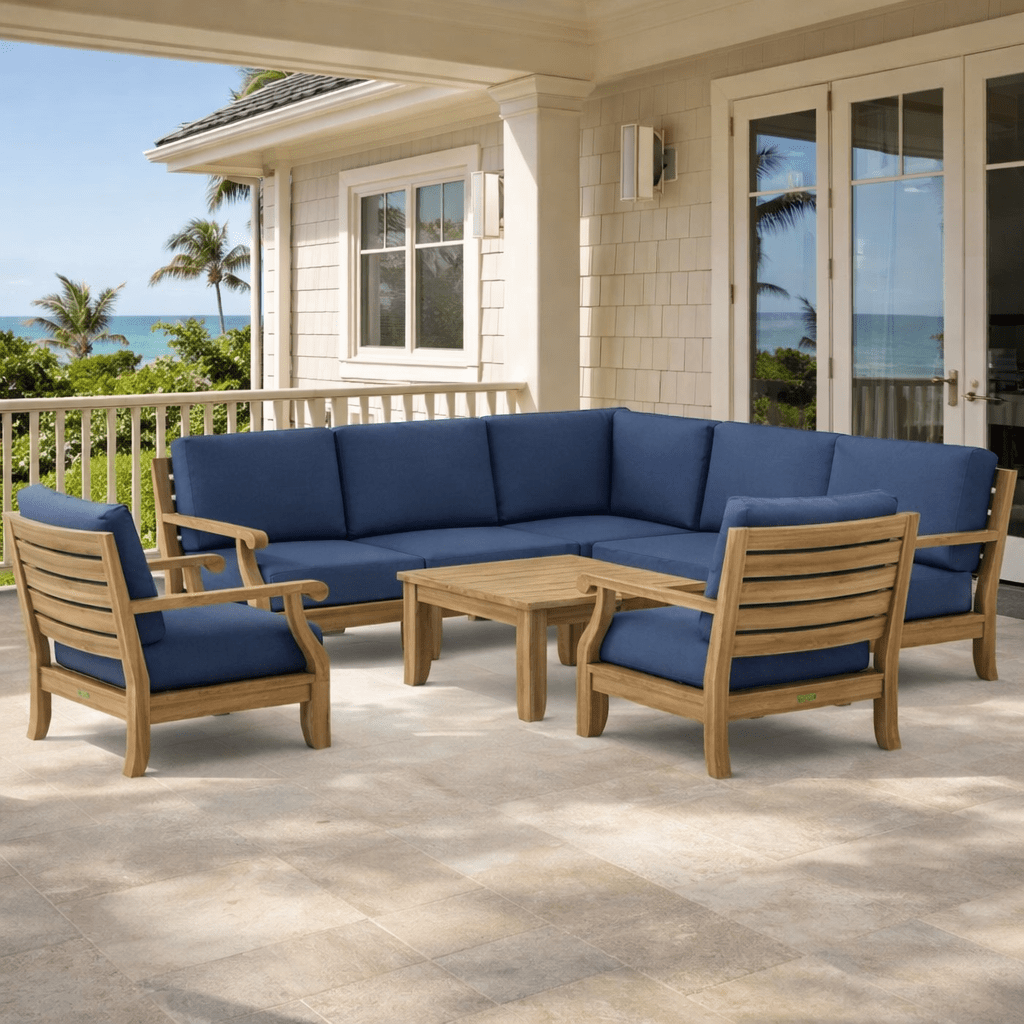 Teak's naturally high oil content and dense grain structure help it resist moisture, rotting, insects, and warping. Those qualities are valuable in a place where the same piece may experience summer sun, rain, major temperature changes, and winter conditions over its life.
Premium Grade A teak does not need an artificial stain for durability. That makes ownership fundamentally different from outdoor woods whose protective finish is central to their weather resistance.
TeakHQ's Grade A plantation teak is designed for year-round outdoor use and to withstand rain, sun exposure, and temperature fluctuations. That is particularly useful in Sun Valley because homeowners do not necessarily need to move every wood frame indoors simply because winter arrives.
There is still a difference between what furniture can tolerate and how you want to manage your property. Moving cushions or selected pieces can make snow management easier even when the teak frames themselves are suitable for outdoor exposure.
Natural teak changes appearance outdoors. Left untreated, it gradually develops a silver-gray patina. Homeowners who prefer the original golden-brown appearance can choose to maintain it with appropriate teak care products.
For mountain properties, either approach can work aesthetically. Golden teak brings warmth to gray stone, dark siding, and modern glass; weathered teak can develop a quieter appearance that works naturally with rustic and contemporary mountain palettes.
Grade A teak furniture is an expensive purchase compared with many mass-market patio sets. Its case is strongest when the homeowner expects to furnish the property for the long term: quality teak can last for decades rather than seasons.
That is especially relevant to a second home. Replacing an inexpensive patio set repeatedly is not merely a material cost; it creates another furnishing project to manage from a distance. Buying fewer, longer-lived pieces can be the simpler ownership strategy.
| Sun Valley Challenge | Why Premium Grade A Teak Performs Well |
|---|---|
| Snow and winter moisture | Natural oils and dense grain help resist moisture and rot. |
| Temperature fluctuations | Grade A teak is designed for year-round outdoor use and temperature changes. |
| Summer sun | Teak is designed for sun exposure and does not require artificial stain for durability. |
| Seasonal wet-dry cycles | Natural moisture and warping resistance suit changing outdoor conditions. |
| Long-term exposure | Premium teak can last for decades with appropriate ownership and care. |
| Mountain-home aesthetics | Real wood provides a warm, natural alternative to aluminum or synthetic furniture. |
If we were planning a Sun Valley property, we would begin with how the home is actually used rather than with a furniture catalog. Identify the outdoor zone your household uses most, the number of people you routinely host, and whether the property is primarily a full-time residence, weekend retreat, or vacation home. Then furnish that core zone exceptionally well before adding secondary pieces.
On a property with several decks or terraces, resist the temptation to furnish every square foot immediately. Determine which area has the best combination of views, access from the kitchen or great room, comfortable sun exposure, and protection from weather. That should receive the largest share of the furniture budget.
A multi-piece teak lounge set works well when conversation and scenery are the priority. For larger terraces, a sectional can define the seating zone without scattering numerous small chairs around the space.
For homes that entertain, we would usually create distinct dining and lounge zones rather than asking one furniture grouping to do both jobs. A dedicated teak outdoor dining set gives meals a proper home, while deeper lounge seating encourages people to stay outside after dinner.
Where space permits, place the dining table closer to the kitchen and orient the lounge furniture toward the view, fireplace, or fire feature. That simple hierarchy often makes a large terrace feel more intentional.
Sun Valley's vacation-home culture can create a common furnishing mistake: designing every day around the largest group that might visit once or twice a year. A better strategy is to make the space comfortable for its normal household, then build in expandable capacity.
An extendable teak dining table is particularly useful for this. The patio does not have to feel dominated by an oversized table during quieter weeks, yet additional dining capacity is available when family or guests arrive.
Before finalizing the layout, imagine the terrace under snow. Where does snow get pushed? Which door must remain clear? Where will roof shedding or accumulated snow create problems? Which furniture pieces will you want accessible around a fire feature or hot tub?
This is one of the most useful differences between planning a Sun Valley patio and a generic fair-weather patio: the best summer layout should also make sense when viewed as a winter snow-management plan. A beautiful arrangement that blocks the natural clearing route can become frustrating for months of the year.
Begin with the collection that supports the activity your household does most. For view-oriented terraces and evening conversation, deep seating and sectionals are logical starting points; frequent hosts may get more value from dining sets and expandable tables. Fire pit tables, Adirondack chairs, accent tables, and spa seating can then complete the secondary zones rather than competing with the primary space for attention.
Sun Valley outdoor living is strongly seasonal, but that does not make the patio secondary. The warmer months bring dining, lounging, and gatherings outdoors, while cool evenings and winter recreation create their own uses for fire-side and hot-tub spaces. The most successful furniture plan accommodates both the intensity of the summer season and the property's year-round mountain identity.
When outdoor season arrives, a well-positioned dining terrace can become one of the home's most useful rooms. Larger households and frequent hosts should prioritize comfortable circulation around the table rather than simply fitting the maximum possible number of chairs.
For households whose guest count changes from week to week, expandable dining is particularly practical. Smaller groups can enjoy a proportionate table while larger gatherings still have a place to eat together.
Mountain properties often have a natural focal point that is more compelling than a television or decorative feature: the landscape itself. That changes furniture orientation. Sofas and club chairs can be arranged to preserve sightlines while still allowing conversation, rather than automatically facing inward.
This is also where swivel seating can be useful. A teak swivel chair allows a guest to turn between the group, a view, and another activity without requiring the entire layout to point in one direction.
A comfortable afternoon terrace can become less inviting when temperatures fall after sunset. Instead of treating that as a reason to end outdoor living early, many spaces work better when the evening zone is deliberately more intimate: closer seating, reachable side tables, and a fire feature where appropriate.
The practical lesson is to furnish for time of day, not just square footage. The large dining terrace may be the center of a sunny afternoon, while a smaller protected conversation area becomes the preferred destination later.
Vacation properties benefit from furniture that does not create a lengthy arrival checklist. Natural teak can be left untreated and allowed to weather to gray rather than requiring a finish simply to remain durable outdoors.
Cushions deserve a separate plan. Most TeakHQ patio seating includes Sunbrella cushions, but fabric items are still easier to keep clean when they are protected during long periods when the property is unoccupied.
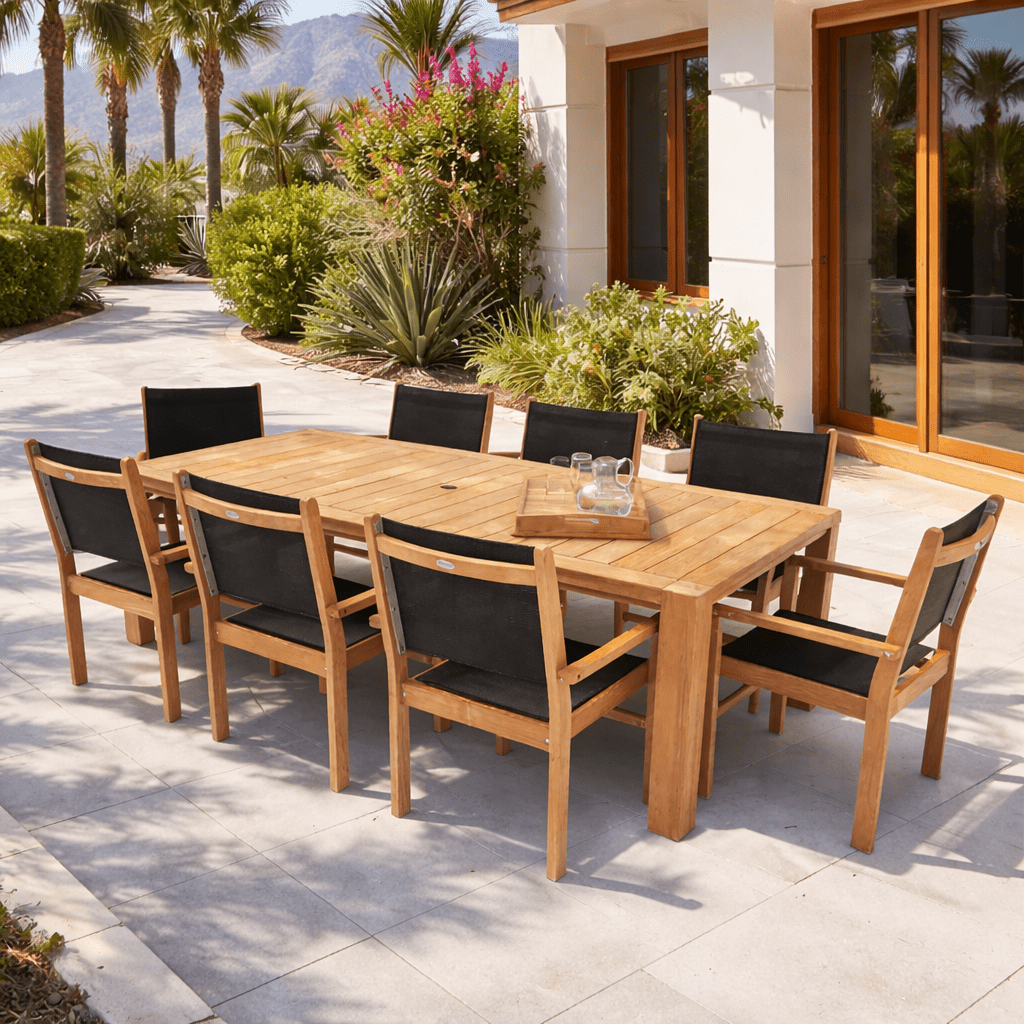 The right category depends less on whether a property is technically in Sun Valley or Ketchum than on how its outdoor spaces relate to the home. A compact village terrace, expansive Elkhorn property, and secluded Wood River Valley home can require very different furniture plans even though they share the same regional climate.
For an expansive deck, start with a clearly defined conversation zone rather than distributing individual chairs around the perimeter. Teak outdoor sectionals and multi-piece lounge sets can create the visual weight needed for a substantial mountain property.
Add a coffee table for the center of the grouping and side tables where individual seats need convenient surfaces. The goal is not to fill the deck; it is to create a destination within it.
For outdoor dining, choose capacity according to normal use and expansion according to entertaining habits. A household of four that frequently hosts visiting family may be better served by an extendable six- or eight-person arrangement than by a permanently enormous table.
Dining armchairs can create a more relaxed, substantial setting, while stackable or folding chairs may make more sense when overflow seating must be stored between visits.
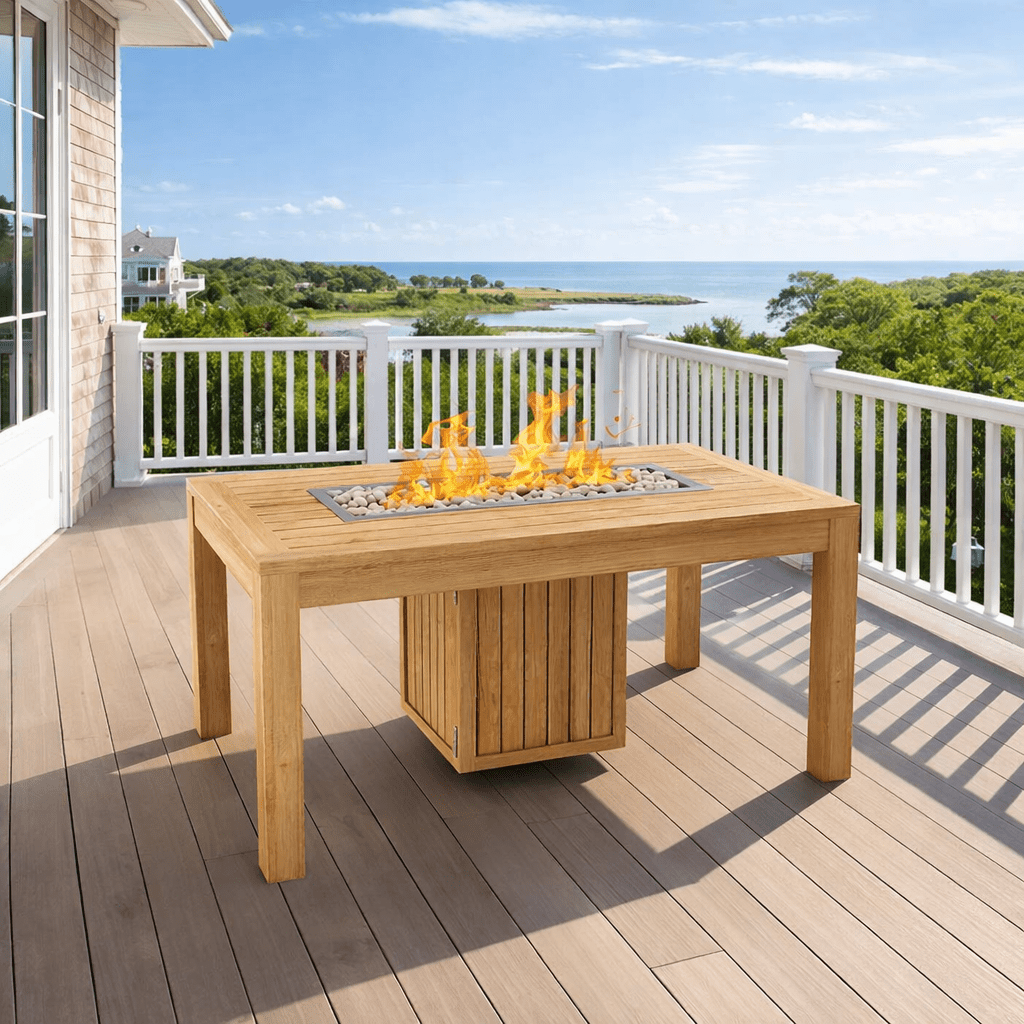 Cool mountain evenings make a dedicated fire-side arrangement especially useful. A teak fire pit table can anchor club chairs, swivel chairs, or a sofa-and-chair grouping and give the space a clear purpose after dinner.
Keep enough room for comfortable circulation and follow all manufacturer instructions and applicable requirements for the fire feature. If the terrace has a major view, arrange the furniture so the fire does not unnecessarily become the only focal point.
Hot-tub areas have different furniture needs than the main terrace. Here, utility often matters more than seating capacity: a bench for changing footwear or setting towels, a small table, and a clear path back to the house can be more useful than another full lounge set.
Teak's natural resistance to moisture makes teak bath and spa benches a logical complement to these spaces.
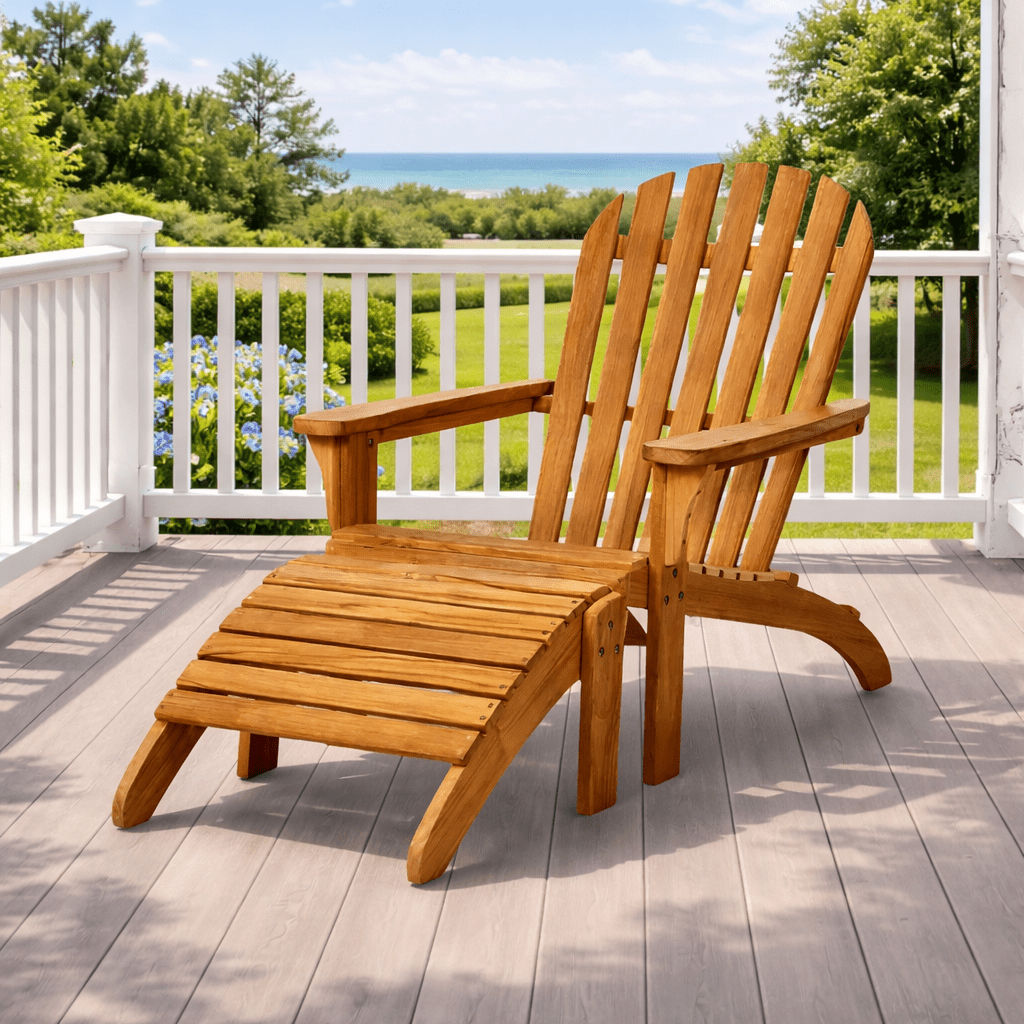
Not every outdoor area needs a complete furniture suite. A pair of Adirondack chairs near a fire feature or a garden bench positioned toward a view can turn an otherwise unused corner into one of the property's most appealing spaces.
These secondary destinations are particularly effective on larger properties because they encourage people to experience the landscape rather than remaining on the main terrace.
Sun Valley's outdoor spaces span classic lodge-inspired architecture, rustic mountain homes, contemporary residences with broad glass openings, and transitional properties that combine natural materials with cleaner modern lines. Teak works across these approaches because the material itself supplies warmth without requiring heavily rustic styling.
On contemporary homes with dark siding, stone, steel, and large expanses of glass, simpler teak profiles can soften the architecture without making it feel traditional. Natural golden teak creates contrast; weathered silver-gray teak produces a quieter, more tonal result.
Keep the furniture layout equally disciplined. Fewer substantial pieces generally complement clean architecture better than many unrelated small pieces.
Teak's natural grain pairs comfortably with stone terraces, timber detailing, planted gardens, and traditional mountain architecture. Dining armchairs, substantial tables, Adirondack chairs, and classic benches can reinforce the property's warmth without relying on synthetic wood-look materials.
Furniture should support the view rather than compete with it. Before buying tall-backed seating or a large sectional, sit at the intended location and identify the important sightline from both inside and outside the house.
This is especially important when large windows visually connect an interior great room with the deck. Outdoor furniture becomes part of the interior view even when nobody is sitting outside.
 A layout can be perfect in July and inconvenient once snow arrives. Blocking snow-clearing routes, placing furniture where winter accumulation becomes problematic, or leaving no logical off-season plan creates avoidable work.
Grade A teak can remain outside year-round, but that does not mean every piece should automatically stay in its summer position. Design the layout so selected furniture can be consolidated or moved when doing so improves winter access.
Oversizing the dining table or seating group for an occasional holiday crowd can make the terrace less comfortable the rest of the year. Circulation disappears, views get blocked, and an otherwise generous patio starts feeling crowded.
Expandable tables and movable individual chairs are often a better answer than permanently designing around maximum occupancy.
Teak frames and performance cushions are different materials with different ownership needs. Sunbrella fabric is weather-, fade-, UV-, and water-resistant, but storing or protecting cushions during extended non-use can reduce cleaning and keep the patio ready for guests.
For second homes in particular, establish a cushion-storage routine rather than leaving the decision to whoever happens to close the property after each visit.
Teak's substantial weight is often desirable, but buyers should think through seasonal movement before purchasing. If every chair must travel down stairs and into a distant storage room twice annually, a heavy material creates more work.
If pieces can remain outdoors or move only a short distance into a protected area, the tradeoff changes considerably. Match the material to the property's actual seasonal routine.
Large mountain terraces can tempt homeowners to keep adding furniture. Empty space, however, is part of a functional layout. It preserves circulation, makes snow management easier, and prevents the landscape from disappearing behind furniture.
Prioritize one excellent dining or lounge grouping, then add secondary pieces only where they create a distinct use.
Sun Valley teak care can be relatively straightforward because Grade A teak does not require paint, artificial stain, sealing, or covers for durability. The more important task is deciding what appearance you prefer and establishing sensible seasonal routines for snow, debris, cushions, and cleaning.
There is no useful one-size-fits-all cleaning calendar. An exposed terrace beneath trees may collect substantially more debris than a covered deck. Inspect furniture as outdoor season begins, clean accumulated dirt and organic material as needed, and repeat when use or exposure warrants it.
Avoid allowing leaves and debris to remain trapped against furniture for long periods, particularly where melting snow or rain can keep the area damp.
Untreated teak naturally weathers toward silver-gray. This is an appearance change rather than a requirement to refinish the furniture. If you like the weathered look, you can allow that process to occur naturally.
If retaining more of the original teak color matters to you, use appropriate care products according to their instructions. Make that aesthetic decision early so maintenance expectations match the look you want.
Grade A teak is designed for year-round outdoor use, so indoor storage is not required simply to protect the wood. Protective covers are likewise optional rather than necessary for durability.
Still, winter logistics matter. Consolidating furniture can simplify snow clearing, and removing cushions during long periods of non-use is sensible. Avoid creating covered situations that unnecessarily trap moisture or debris around furniture.
The ideal second-home maintenance routine is one that makes arrival simple. Before the primary outdoor season, inspect the furniture, remove accumulated debris, clean as needed, check cushions, and confirm that hardware and assembled pieces are ready for use.
For most owners, that practical routine is more valuable than trying to keep natural teak looking untouched by weather. Teak is outdoor furniture; its ability to age naturally is part of the appeal.
The right Sun Valley furniture plan starts with the property: where you spend time, what views matter, how many people you normally host, and how the space changes when winter arrives. Premium Grade A teak is particularly compelling when you want real wood, substantial construction, long-term outdoor durability, and the freedom to maintain its original color or let it weather naturally.
Start with the dining, conversation, fire-side, or spa area your household will use most, then build the rest of the outdoor space around it.
Several premium materials can work well. Aluminum is lighter and easy to move, while synthetic options can offer very low maintenance. Grade A teak is particularly well suited to homeowners who want real wood, natural weather resistance, substantial weight, and furniture designed for year-round outdoor exposure.
Yes. TeakHQ's Grade A teak is designed for year-round outdoor use and can withstand rain, sun, temperature fluctuations, and outdoor weather. You may still choose to consolidate furniture to make snow clearing easier, and cushions are best managed separately during extended periods of non-use.
Grade A teak does not require a cover for durability. A cover may be used for convenience or cleanliness, but it is optional. If you use one, follow the cover manufacturer's instructions and avoid creating conditions that unnecessarily trap moisture or debris.
Prioritize durable furniture and a simple layout that does not create a complicated arrival or departure routine. Deep seating, an expandable dining table, side tables, and a smaller fire-side or hot-tub zone can cover most needs without over-furnishing the property.
Neither material is automatically right for every homeowner. Teak is heavier, warmer, natural, and has a more substantial architectural feel; aluminum is lighter, typically more modern in character, and easier to move. Teak is often the stronger fit when natural materials and long-term visual warmth are priorities.
Yes. Natural unfinished teak gradually develops a silver-gray patina when exposed outdoors. That is normal. You can embrace the weathered appearance or use appropriate teak care products if maintaining more of the original color is important to you.
Choose for your normal household first and frequent guests second. If guest counts change significantly during holidays and vacation stays, an extendable dining table can provide extra capacity without consuming unnecessary deck space every day.
A simple setup is often best: a moisture-resistant bench, a small table, and clear circulation between the hot tub and house. A teak spa bench can provide a convenient place for towels, footwear, or changing while complementing the main outdoor furniture.
No. Premium Grade A teak does not need to be sealed for outdoor durability. Sealing or other teak care is primarily an appearance choice for owners who want to retain more of the wood's original golden color rather than allowing it to weather naturally.
Premium Grade A teak furniture can last for decades, which is one reason its higher upfront price can make sense for a long-term home or vacation property. Actual ownership experience still depends on the individual piece, use, care, and conditions.


