
FREE SHIPPING
within mainland USA
within mainland USA
Home ▸ Teak Outdoor Furniture ▸ By Location ▸ Telluride, Colorado
Outdoor furniture in Telluride has to work within a true mountain environment: strong high-elevation sun, substantial winter snow, rapid temperature changes and a relatively short but highly valued outdoor season. Homes range from historic in-town properties to ski residences, contemporary mountain retreats and expansive decks in Mountain Village and the surrounding mesas. That combination rewards furniture that feels substantial, works naturally with mountain architecture and can remain outdoors through changing conditions. Premium Grade A teak is particularly well suited to that balance of weather exposure, longevity and refined outdoor living.

Telluride is not simply a colder version of a lower-elevation Colorado market. Its high-alpine setting changes how an outdoor space is used and what furniture must tolerate. Telluride sits around 8,750 feet, while neighboring Mountain Village is even higher at roughly 9,545 feet. Snow, strong mountain sun, large seasonal temperature swings and exposed decks all deserve consideration before appearance or furniture style enters the conversation.
Mountain weather can make UV exposure easy to underestimate. A comfortable afternoon does not necessarily mean a lightly exposed patio. For furniture that will spend years on an uncovered deck, material stability and the way a finish ages are more important than whether the surface looks pristine after its first summer.
This is one reason natural materials that can weather gracefully make sense here. Grade A teak can remain outdoors in sun and changing weather, and unfinished teak gradually develops a silver-gray patina rather than requiring an artificial stain for durability.
Snow is not just an off-season inconvenience. It changes how a Telluride homeowner should think about furniture ownership. A mountain residence may be occupied intermittently, and owners of second homes may not want an outdoor space that requires a complicated furniture-moving routine every time winter approaches.
Grade A teak is designed for year-round outdoor use and withstands temperature fluctuations and moisture. Protective covers remain an option, especially when the goal is reducing spring cleanup, but the wood itself does not require a seasonal coating simply to be suitable outdoors.
The less obvious issue is what happens between storms and seasons. Snow accumulates, melts, surfaces become wet, and temperatures change again. Furniture therefore experiences repeated transitions rather than one consistent winter condition.
Material choice should account for those cycles. Teak's dense grain and naturally high oil content contribute to its resistance to moisture, rot and warping. Placement still matters: keep furniture where water can drain rather than allowing legs or bases to sit unnecessarily in persistent standing moisture.
A protected terrace in town and an open deck overlooking the San Juan Mountains are different furniture environments. Roof overhangs and covered patios reduce direct exposure, while elevated decks can receive more sun, precipitation and wind.
Before buying, evaluate the actual furniture zone rather than Telluride's climate in the abstract. Note which areas are covered, where snow is likely to accumulate, where meltwater drains and which portions of the deck receive the strongest afternoon exposure. That simple exercise often tells you more about what to buy than a generic weather-resistance rating.
Several premium outdoor materials can work in mountain environments. Quality aluminum can be practical for homeowners who favor a lighter, contemporary appearance, while synthetic materials appeal to buyers prioritizing low routine maintenance. Premium Grade A teak is particularly compelling in Telluride because it combines genuine wood character with the ability to remain outdoors through sun, moisture and temperature changes.
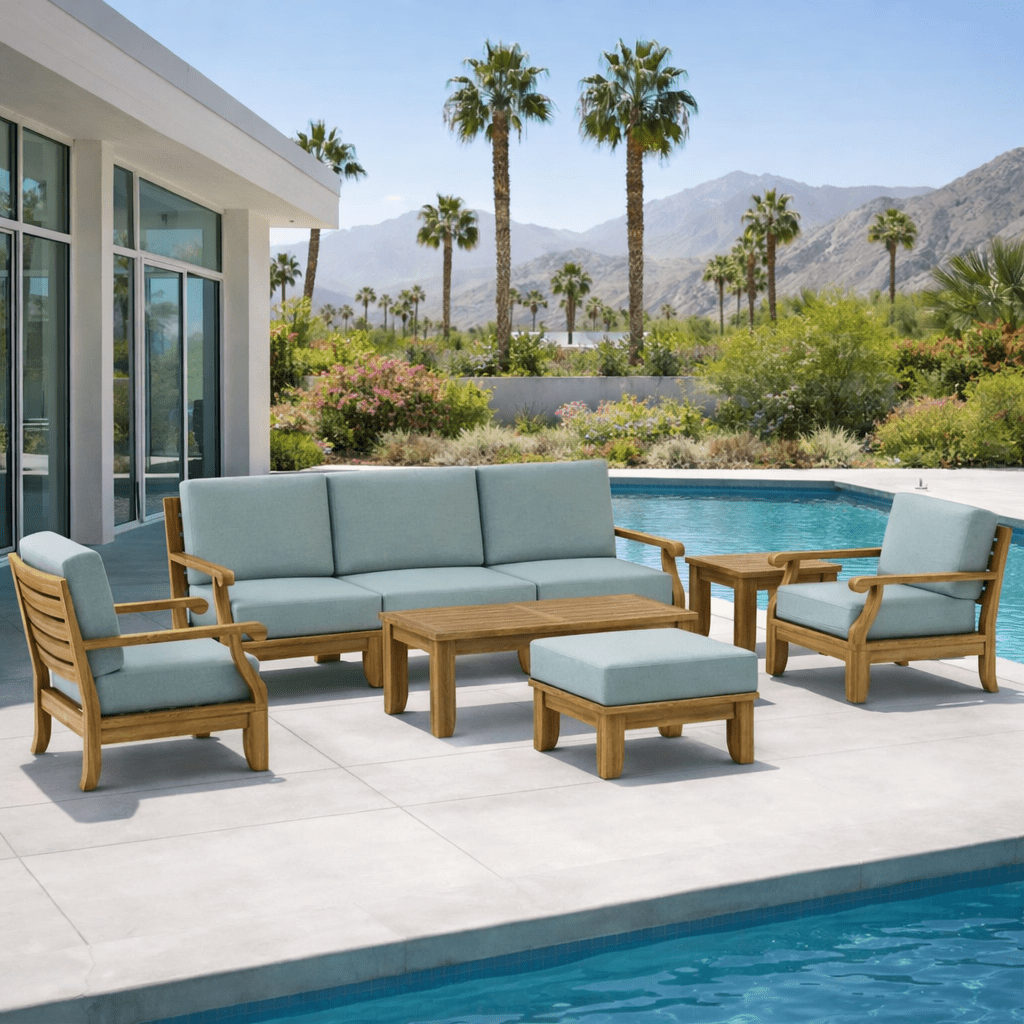 Grade A teak has naturally high oil content and a dense grain structure. Those properties contribute to resistance to moisture, rotting, insects and warping. In Telluride, that matters because outdoor furniture can move through summer sun, autumn temperature drops, snow, snowmelt and spring weather without the homeowner wanting to treat the furniture as a delicate indoor object.
The important distinction is not that teak is immune to weather. It is that weather exposure is part of the material's intended use. That makes it easier to plan a permanent, architectural outdoor furniture arrangement rather than furnishing the deck with pieces chosen primarily because they are easy to move indoors.
Natural teak does change visually outdoors. If left untreated, the original golden-brown color gradually weathers toward a silver-gray patina. Some owners prefer that aged appearance because it works particularly well with stone, weathered timber and other mountain-home materials.
If retaining the warmer original color is important, teak can instead be maintained with appropriate care products. The useful part is having the choice: aging naturally is an acceptable ownership path, not evidence that the furniture has failed.
Teak's dense construction and resistance to warping are useful where furniture experiences substantial environmental changes. Its naturally heavier, sturdier feel can also be appealing on open mountain decks where lightweight furniture may feel visually or physically out of place.
Royal Teak and Anderson Teak pieces use stainless-steel hardware, while Verandis Teak uses brass hardware. Hardware and assembly details vary by product, so individual specifications should still be checked when comparing pieces.
Premium teak costs more upfront than many mass-market outdoor furniture materials. For a primary residence that may be reasonable only if the homeowner values natural wood and long service life. For a high-end mountain property intended to be enjoyed for years, however, longevity deserves much more weight in the calculation.
Quality teak furniture can last for decades. Instead of asking only what a patio set costs today, compare the expected ownership experience: replacement frequency, refinishing requirements, seasonal handling and whether the design will still suit the property as the outdoor space evolves.
| Telluride Challenge | Why Premium Grade A Teak Performs Well |
|---|---|
| Strong mountain sun | Designed for sun exposure and can weather naturally to a silver-gray patina. |
| Snow and moisture | Natural oils and dense grain contribute to moisture and rot resistance. |
| Temperature fluctuations | Grade A teak is designed for year-round outdoor use and changing temperatures. |
| Snowmelt cycles | Moisture resistance makes teak well suited to changing wet and dry conditions. |
| Seasonal exposure | Furniture does not require paint or artificial stain for outdoor durability. |
| Long ownership horizons | Quality teak can last decades with appropriate use and care. |
We would begin with the property rather than a furniture catalog. The first questions would be: Which outdoor area gets used most often? How many people are normally there? Is the home occupied year-round or primarily for ski trips and summer stays? And is the main outdoor space a compact in-town terrace, an expansive Mountain Village deck or a more secluded mountain property?
On a mountain property, the best view often determines the furniture plan. We would usually give that position to a substantial deep-seating conversation area rather than automatically putting a dining table there. Why? Dining may occupy an hour or two of an evening; comfortable lounge seating can support coffee, reading, cocktails, conversation and simply watching the mountains change throughout the day.
A sofa or loveseat with club chairs allows the seating to orient toward both people and scenery. Add coffee and side tables so the arrangement functions without people constantly getting up or balancing drinks on chair arms.
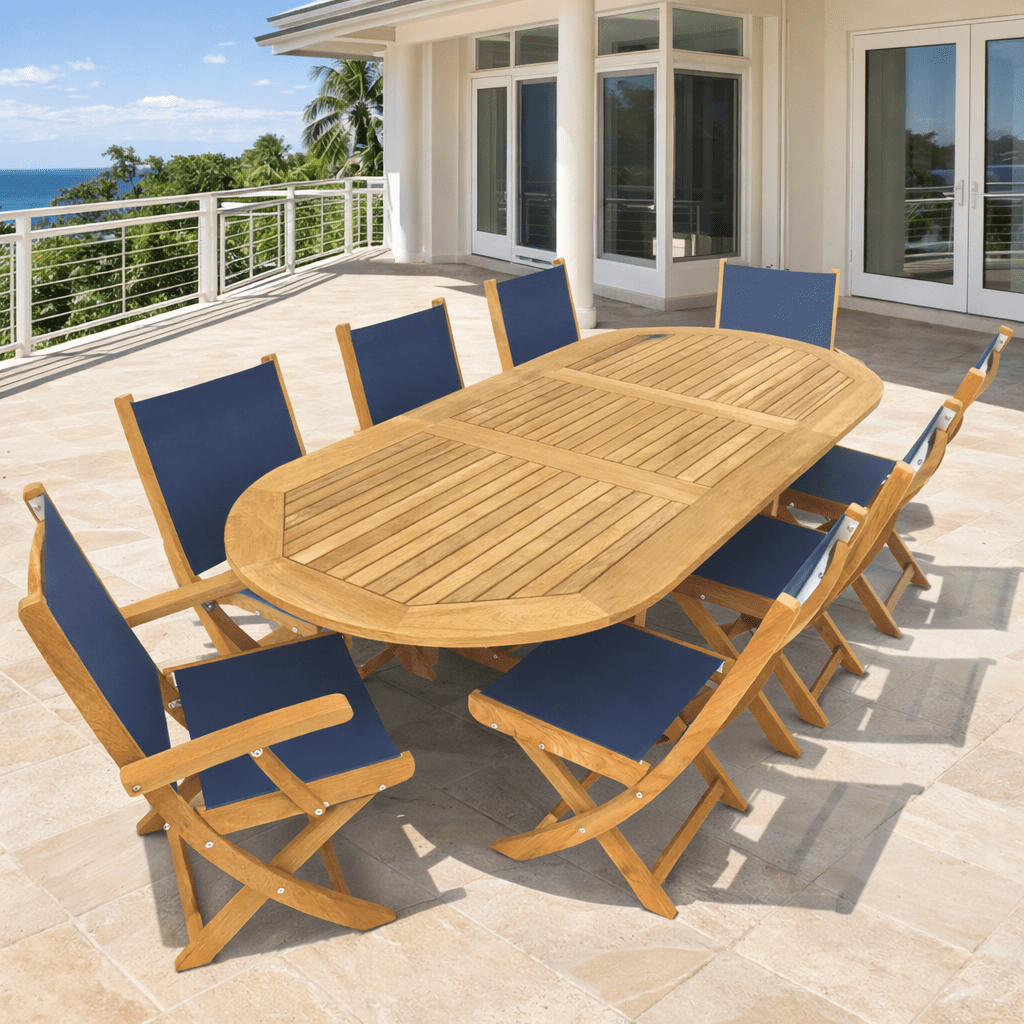
Telluride homes can alternate between quiet weekends and houses full of visiting family or friends. That makes an extendable teak dining table particularly useful. Size it for the number of people who use the property routinely, then use the extension capacity for larger gatherings.
This avoids one of the easiest mistakes to make in a vacation home: permanently sacrificing circulation space for the maximum number of guests who visit only occasionally. For properties with consistently large groups, a full teak dining set can create a more unified dining zone.
In a mountain climate, outdoor comfort is not just about shade from midday sun. Evening temperatures can make a protected conversation area especially valuable. Where the property and local requirements allow it, organize lounge seating around a fire feature or place it where the home's architecture offers some shelter.
A teak fire pit table can serve as the center of that zone. The design goal should be to extend the usefulness of the patio into cooler portions of the day rather than simply filling every available square foot with furniture.
One of the most useful Telluride-specific planning exercises happens before furniture is ordered: imagine the deck under snow. Where will people walk? Where does snow get moved? Which doors need uninterrupted clearance? Which rooflines may shed snow?
That winter map should influence the summer layout. Furniture that looks perfectly positioned in July can become an obstacle to snow management in January. Leave practical circulation routes and avoid treating every open section of deck as furniture space.
For a Telluride property, start with the space that drives outdoor life. Large decks and homes built for guests often benefit most from lounge seating or sectionals; dining-focused households should begin with a dining set or extendable table. Adirondack chairs and fire-pit tables work well as secondary gathering pieces, while club chairs can create smaller conversation zones without committing another large area to a full furniture group.
Telluride's outdoor season is valuable precisely because it changes so dramatically through the year. Summer dinners, festival weekends and long mountain afternoons give way to crisp fall gatherings and winter après-ski time. The most useful outdoor spaces are therefore not necessarily the ones with the most furniture; they are the ones that adapt easily as household size, weather and activities change.
Warm-season outdoor space can function almost like another room of the house. Breakfast outside, afternoon reading, grilling and dinner can all occur in the same general area. For homes with sufficient space, separating dining from conversation seating makes the deck much more versatile.
Instead of building one oversized arrangement, think in zones: dining near the kitchen, lounge seating where the view is strongest, and a smaller pair of chairs where morning sun or evening scenery makes that location worth using.
Winter outdoor use tends to be shorter and more social. People may step outside with drinks, gather around warmth or enjoy the mountain setting before returning indoors. That favors comfortable conversation seating over furniture that only serves formal dining.
It also argues for restraint. Preserve easy access from interior living spaces and avoid layouts that create unnecessary obstacles when snow is present.
Vacation-home ownership changes the definition of low maintenance. The concern is often not whether a task is difficult, but whether someone needs to be at the property at exactly the right time to perform it.
That makes teak's maintenance flexibility valuable. Owners can allow natural teak to weather rather than creating a mandatory refinishing schedule. Cushions still deserve their own plan: use included or optional performance cushions according to the individual furniture piece, and provide dry storage when the residence will be vacant.
Mountain homes frequently work differently when guests arrive. A household that normally needs four dining seats may occasionally host twice that number. Modular seating and extendable dining furniture allow the outdoor area to absorb those changes without being permanently arranged for maximum occupancy.
Furniture selection should follow the architecture of the outdoor space. Telluride's historic properties, Mountain Village residences, ski homes and surrounding mesa properties do not share one ideal layout, but several furniture combinations are particularly adaptable to mountain living.
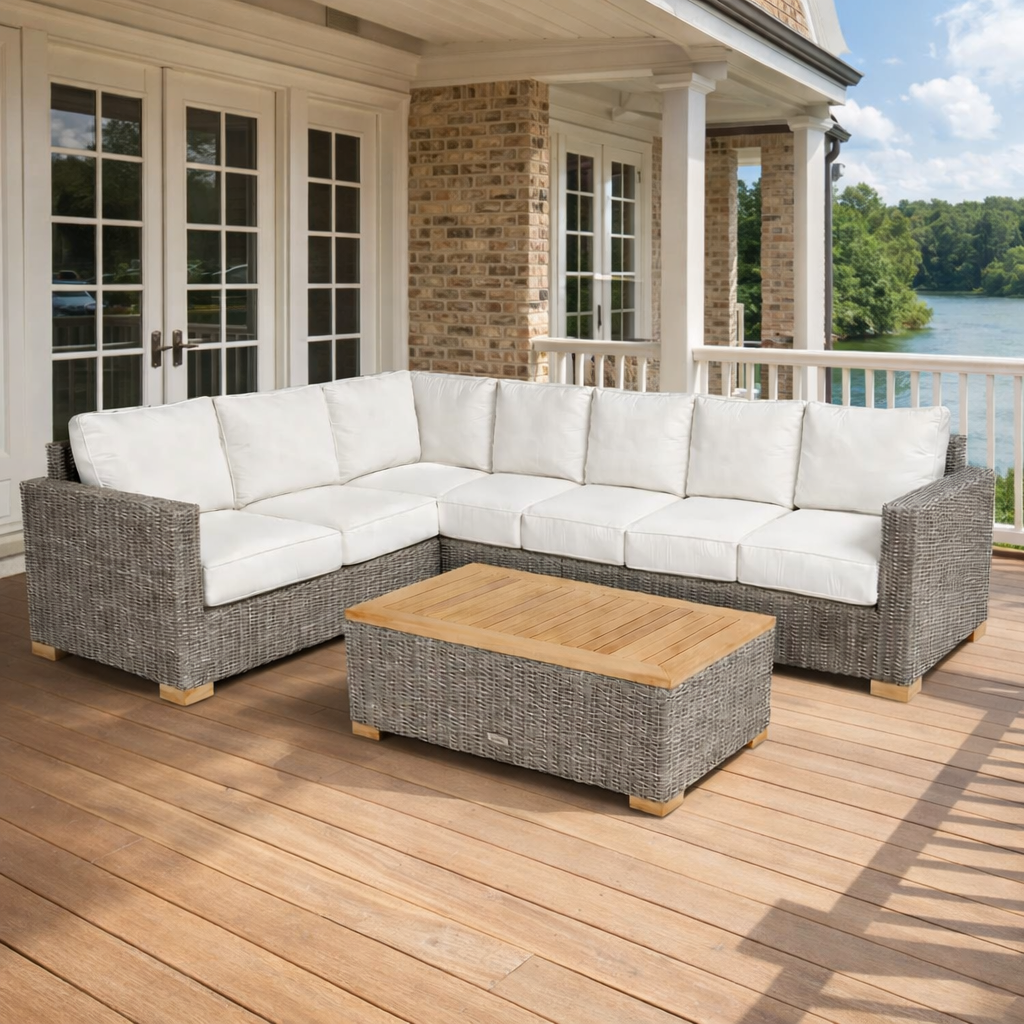 For a broad deck with a major mountain view, begin with the seating orientation rather than the deck perimeter. A teak sectional can define a generous conversation zone, but it should not automatically be pushed against the house or railing. Position it so seated guests can see both one another and the landscape.
If the deck is exceptionally large, resist the temptation to solve scale with one enormous furniture group. A sectional plus a smaller pair of club chairs can create more useful destinations than a single oversized arrangement.
Dining areas work best when they maintain a practical relationship with the kitchen or grill. For households that regularly entertain, choose enough everyday seating to avoid constant furniture rearrangement, but consider extension capacity for the largest gatherings.
Leave generous circulation around chair backs. On mountain decks, that clearance also helps preserve routes that may matter for winter access and snow management.
Conversation seating around a fire feature fits Telluride especially well because it addresses the part of the day when outdoor comfort becomes more challenging. Club chairs, swivel chairs or Adirondack chairs can create a flexible arrangement around the center point.
Teak Adirondack chairs are particularly useful where the setting is informal and the view is part of the experience. They can also work as secondary seating away from the main furnished terrace.
Not every Telluride property has a sprawling resort-style deck. On tighter terraces and historic in-town properties, scale becomes more important than furniture quantity. A loveseat with two chairs may offer more usable seating than a large sectional, while a compact dining table can preserve circulation.
The goal is to make the outdoor space feel intentionally furnished without blocking views, doors or pathways. In small mountain spaces, empty floor area is useful space.
Telluride provides an unusually broad architectural backdrop for outdoor furniture: historic Victorian-era character in town, contemporary ski residences, timber-and-stone mountain homes and resort architecture in Mountain Village. Teak works across those settings because natural wood can either reinforce traditional materials or soften a more contemporary exterior.
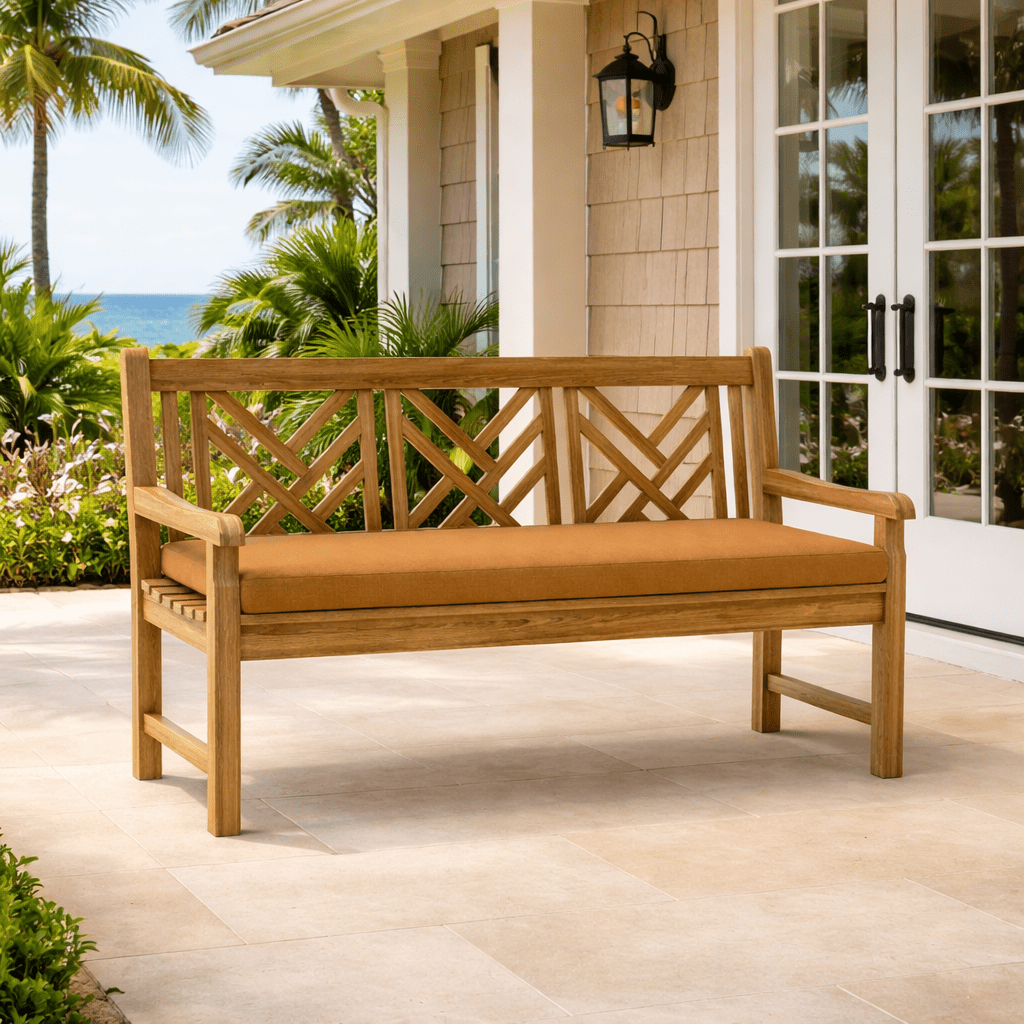
For properties where the architecture already carries significant visual character, outdoor furniture does not need to compete with it. Traditional teak dining chairs, benches and straightforward lounge silhouettes can complement older homes without making the patio feel themed.
Natural teak's warmer original color can provide contrast against painted exteriors, while weathered silver-gray teak offers a quieter, more established appearance.
Modern mountain homes often combine large expanses of glass with stone, steel and wood. Here, teak can introduce warmth without sacrificing clean lines. Look for simpler profiles, restrained cushion colors and furniture arrangements that preserve long sight lines from the interior through the deck toward the landscape.
On rustic or transitional mountain homes, natural teak sits comfortably beside heavy timber and stone because it adds another genuine material rather than imitating one. The key is avoiding too many competing wood tones. Allow the furniture to function as a consistent element while the architecture remains dominant.
A mountain deck rarely needs elaborate styling to become visually interesting. In Telluride, the landscape is usually the strongest design element available. Furniture should frame that experience rather than obscure it.
That means leaving deliberate openings in seating arrangements, keeping accessories controlled and positioning chairs around actual view corridors. The best furniture plan may contain fewer pieces than the deck can physically accommodate.
 A layout can be excellent in July and inconvenient once snow arrives. Blocking snow-removal routes, exterior doors or practical winter circulation creates a recurring problem. Plan the deck in both seasons before deciding where large tables and lounge groups belong.
Teak's year-round outdoor suitability reduces the pressure to move every wooden piece indoors, but good placement remains essential.
Furnishing every space for the largest gathering of the year often leaves an outdoor area overcrowded the other 95 percent of the time. Instead, size permanent furniture around normal occupancy and use extendable tables or flexible chairs when guests arrive.
This is especially valuable on decks where preserving mountain views and circulation is part of the property's appeal.
Cool air can disguise how exposed a deck actually is. Choose outdoor materials and fabrics based on UV exposure rather than temperature alone. Teak is designed for sun exposure, while Sunbrella cushions included with many TeakHQ lounge pieces are UV- and fade-resistant. Cushion specifications still vary by individual product.
Premium furniture does not eliminate the need to think about soft goods. If a second home will sit vacant between visits, leaving every cushion outside regardless of forecast or season can create needless cleaning and weather exposure.
Decide where cushions will go before buying the furniture. A nearby interior storage area or teak deck box can make the routine much easier.
Mountain properties tempt owners to furnish every overlook. The result can be a deck that feels more like a showroom than a retreat. Prioritize one excellent conversation area, one dining area if space permits, and then add secondary seating only where it creates a genuinely different experience.
Telluride teak care is less about protecting the wood from ordinary outdoor existence and more about managing appearance, seasonal debris and the practical realities of snow. Grade A teak can remain outside year-round, so owners can choose a maintenance routine based largely on how they want the furniture to look.
 A practical approach is to inspect and clean furniture when the outdoor season begins and again as conditions or use warrant. Remove dirt, pollen, leaves and other accumulated debris with appropriate teak-cleaning methods rather than creating an unnecessarily aggressive maintenance schedule.
Furniture in a protected location may need less attention than pieces beneath trees or on an exposed terrace. Let actual conditions determine cleaning frequency.
Untreated teak naturally transitions from its original warm tone toward silver-gray. That change is normal. If you like the weathered look, the furniture can be allowed to age naturally without artificial stain being required for durability.
If maintaining the original color is important to your design, use appropriate teak care products according to their instructions. The choice is primarily aesthetic rather than a requirement to make Grade A teak suitable for outdoor use.
Teak can remain outdoors, but that does not mean furniture should be positioned carelessly. Before winter, consider where snow is shoveled or blown, where roof snow may come down and where drainage occurs during melt periods.
If practical, move pieces away from locations where snow management will repeatedly pile heavy accumulations around them. Maintain drainage and avoid prolonged standing water around furniture feet.
Protective covers are optional rather than mandatory for teak's durability. In Telluride, their strongest argument may be convenience: they can reduce the amount of seasonal dirt and debris that reaches furniture surfaces.
If covers are used, follow the cover manufacturer's directions and avoid creating conditions that unnecessarily trap moisture. For second homes, also consider whether covers will realistically be installed, checked and removed when needed.
Furniture frames and cushions should not be treated as one maintenance problem. Many TeakHQ patio seating pieces include Sunbrella cushions, while others use synthetic rope, sling seating or offer cushions separately. Dining chairs and loungers vary as well.
For extended periods when a Telluride residence is vacant, dry cushion storage can simplify ownership and help keep the outdoor area ready for the next visit.
The right mountain furniture plan begins with how your property actually works: its views, exposure, guest patterns, outdoor season and winter circulation. Premium Grade A teak gives Telluride homeowners a natural, substantial material that can handle year-round outdoor conditions while fitting traditional, rustic and contemporary mountain architecture. Start with the area you use most, choose furniture at the right scale, and build the rest of the space around it.
Look for premium materials designed for sun, moisture and significant temperature changes. Grade A teak is a strong choice because its natural oils and dense grain provide resistance to moisture, rot and warping while allowing it to remain outdoors year-round. Quality aluminum and other premium outdoor materials can also be appropriate depending on the desired appearance and ownership priorities.
That depends on the material. TeakHQ's Grade A teak is designed for year-round outdoor use and can withstand rain, sun and temperature fluctuations. Even when furniture remains outside, position it so it does not interfere with snow removal, roof-snow zones, doors or drainage.
No. Protective covers are optional for Grade A teak rather than required for its outdoor durability. A cover may still be worthwhile if you want to reduce snow, dirt and debris accumulation and simplify seasonal cleaning.
Grade A teak is designed for outdoor sun exposure. Natural teak will change color over time, typically weathering toward a silver-gray patina when left untreated. That color change is normal and does not mean the furniture needs an artificial stain for durability.
Prioritize the primary view and normal household size first. A strong layout often combines a conversation area facing the scenery with a separate dining zone near the kitchen or grill. Preserve generous circulation and consider winter snow-management routes before positioning large pieces.
A sectional works well on a large deck used for groups, while a sofa or loveseat paired with individual chairs offers more flexibility for changing layouts. On smaller terraces, individual pieces often preserve circulation and sight lines better than a large sectional.
Size the table around your normal number of occupants rather than the largest gathering you might host. If guest counts vary significantly, an extendable teak dining table lets you increase capacity when needed without permanently consuming valuable deck space.
Teak offers flexible maintenance. Clean it as needed to remove seasonal dirt and debris, then either allow the wood to weather naturally to silver-gray or use appropriate teak products if you prefer to preserve its warmer original appearance. Sealing or oiling is optional rather than required for outdoor durability.
Quality teak furniture can last for decades. Its higher initial price therefore makes the most sense when you value long-term ownership, genuine natural wood and furniture intended to remain part of the outdoor space rather than being replaced every few seasons.
Each material offers a different ownership experience. Aluminum is lighter and can suit highly modern spaces, while poly furniture is synthetic and can require relatively little maintenance. Teak is heavier, natural and warmer in appearance, making it especially attractive when genuine wood, longevity and compatibility with mountain architecture are priorities.


